Tech & Wearables

Best Fitness Trackers of 2026

The trouble with fitness trackers is that the numbers look so convincing. A step count can drift by a few hundred, a heart-rate spike can show up minutes late, and a sleep score can sound more certain than the data behind it. What you want is a tracker that stays comfortable overnight, survives a sweaty run and a shower, and still has enough battery for the next morning. Over nine months, my team and I wore 12 trackers through workdays, workouts, and sleep—and compared how each one handled the basics.

Battery life is where the category separates fastest: some needed charging every few days, while others quietly lasted a week or more, and that changes how you live with one. I also care about size—a bulky case on a small wrist is a dealbreaker—and whether the app makes sense without a manual. The picks below are organized by what they do best, not by a spec sheet. If you want the shortest version: start with comfort and battery, then check the tracking and features you’ll actually use.

Best Overall

Our Score 9.2/10
Garmin Forerunner 165

Garmin

Garmin Forerunner 165

  • GPS Built-in
  • Weight 1.38 oz
  • Display 1.2-inch AMOLED
  • Battery Life Up to 11 days
Check Price on Amazon

Built-in GPS, accurate training data, and a week-long battery make it the default choice.

Built-in GPS is the line between the Forerunner 165 and every band on this list. Leave the phone at home and it still records pace, distance, and route, which is why it is our pick for anyone whose workouts happen outdoors. Add wrist-based heart rate, a 1.2-inch AMOLED screen that stays readable in direct sun, and daily suggested workouts that shift with how you have been recovering, and you have a watch that covers a first 5K and a regular runner's Tuesday intervals without asking for a subscription.

Battery is where we stopped worrying. Garmin rates it at up to 11 days in smartwatch mode and 19 hours with GPS running, and even with a daily workout we were charging roughly once a week, a habit that fits a Sunday morning far better than a nightly routine. The 39-gram case mostly disappears, and the morning report that rolls sleep, HRV, and training outlook onto one screen became the first thing we checked. Sleep tracking is detailed enough to argue with, which is the highest compliment we can pay a watch.

Where it stops: this is a running watch first, and the app assumes you want training status, race predictions, and recovery numbers. If you mostly want steps and sleep, the Xiaomi Band 10 covers that ground for a lot less and you will not spend evenings in Garmin's menus. That is not a flaw in the Forerunner, just the boundary worth naming before you spend.

Bottom Line

Our pick for anyone who trains outdoors: built-in GPS, dependable heart rate, and near week-long battery make it the most complete tracker here for the money.

Check Latest Price

Best for Android Phones

Our Score 8.8/10
Samsung Galaxy Fit3

Samsung

Samsung Galaxy Fit3

  • Display 1.6-inch AMOLED
  • Battery Life Up to 14 days
  • Compatibility Android only
  • Water Resistance 5ATM & IP68
Check Price on Amazon

A big bright screen and two-week battery, as long as your phone runs Android.

Start with the compatibility line, because it decides everything else: this international Galaxy Fit3 pairs with Android phones only, and Samsung Pay does not work on it. On an iPhone, none of the setup works. On Android, especially a Samsung, you are getting a 1.6-inch AMOLED band rated for 14 days at the low end of this list's prices.

That is why we think it is the value pick for Android households. The screen is big and bright enough to read a message at a glance, the aluminium case feels sturdier than the money suggests, and Samsung Health pulls sleep stages, blood oxygen, and more than 100 workout modes into one app. Battery is the usual caveat: 14 days is a ceiling reached with light notifications and the always-on display off, and heavy use pulls it down substantially.

The case is small and comfortable on a narrow wrist, and the 1.6-inch panel keeps text legible without a bulky body, though large hands will squint at split times mid-run. There is no built-in GPS either, so distance comes from your phone, which is fine for walks and a nuisance for phone-free runs. As a daily step, sleep, and notification band, though, it does the job without asking for a subscription.

Bottom Line

Our Android pick: a bright screen, two-week battery, and Samsung Health's tracking for the least money here, provided your phone is not an iPhone.

Check Latest Price

Best Smart Ring

Our Score 8.8/10
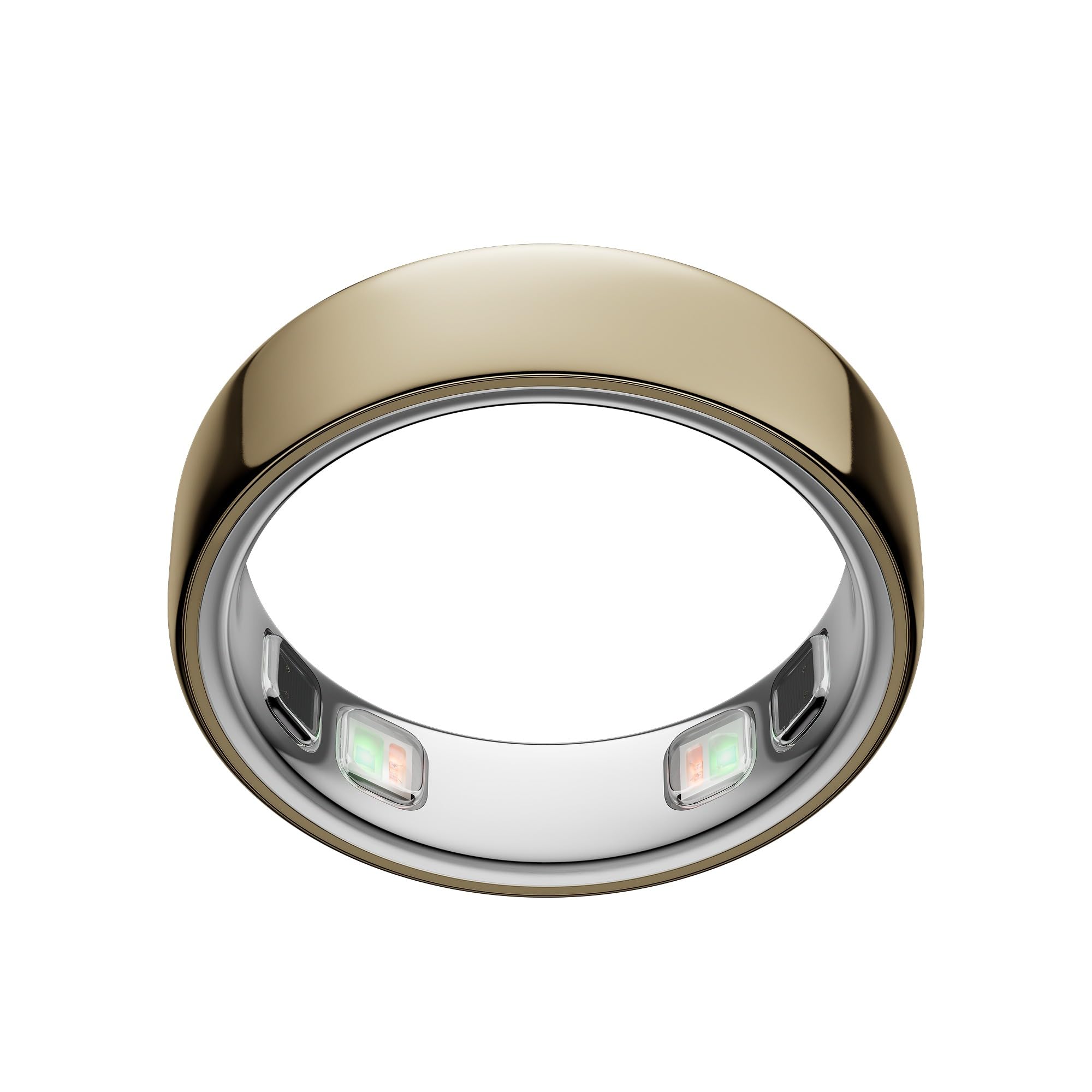
Oura Ring 5

Oura

Oura Ring 5

  • Material Titanium
  • Membership First month included
  • Battery Life Up to 6 days
  • Water Resistance IP68, 100 meters
Check Price on Amazon

Sleep and recovery detail from a titanium ring you never notice on your finger.

The first thing you do with an Oura Ring 5 is not wear it, it is order the sizing kit. Oura's sizes do not match jewelry sizes, this generation runs smaller than the last, and there are no half sizes, so guessing is how you end up shipping it back. Measure late in the day when fingers are at their largest, and make sure the ring clears your knuckle without spinning or pinching.

Once it is on, the appeal is what is absent: no band, no screen, nothing on your wrist. The titanium shell is 40 percent smaller than the previous generation and reads as a plain ring, which is why we wore it to dinner without anyone asking about it. Underneath, it tracks heart rate, SpO2, and skin temperature, then rolls them into sleep stages, readiness, and a temperature trend. That sleep picture is the most detailed in this roundup, and it is the reason to consider a ring at all.

Battery is rated at six days, and a full charge takes about 80 minutes, so a shower-and-coffee top-up every few days keeps it alive. It is rated IP68 and waterproof to 100 meters, which covers swimming and showers. What the form factor costs you is the glance: with nothing on the ring itself, a mid-set heart-rate check means reaching for your phone.

Then there is the ownership math. The ring includes your first month of membership, and the fuller analysis in the Oura app depends on that subscription continuing, on top of the highest price in this roundup. We recommend it to a specific buyer: someone who wants the best sleep and recovery detail available and refuses to sleep in a band. If a wristband is acceptable, the Fitbit Air tells you much of the same sleep story for far less.

Bottom Line

For the most detailed sleep and recovery picture without a band on your wrist, the Ring 5 earns its price, as long as the membership is part of your math.

Check Latest Price

Best Budget

Our Score 8.6/10
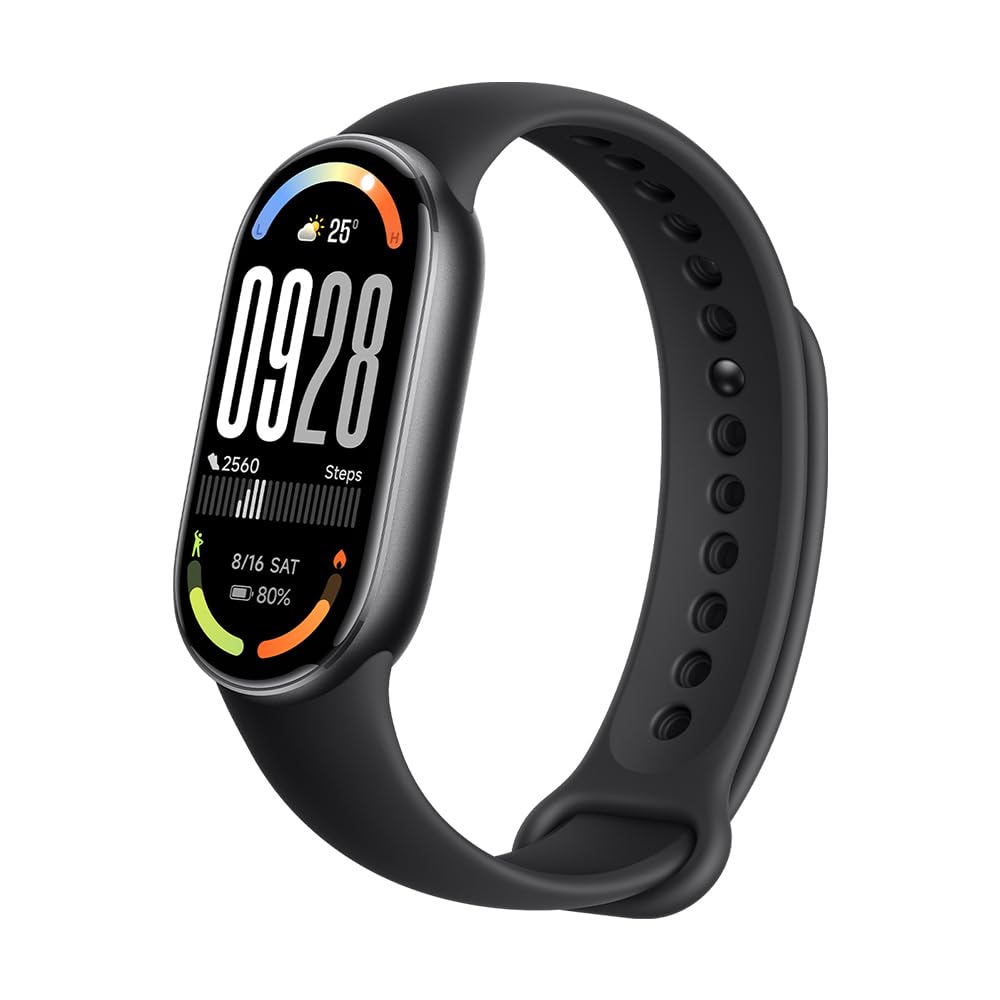
Xiaomi Smart Band 10

Xiaomi

Xiaomi Smart Band 10

  • Display 1.72-inch AMOLED
  • Brightness 1,500 nits
  • Battery Life Up to 21 days
  • Water Resistance 5 ATM
Check Price on Amazon

Three weeks per charge and a screen you can read outdoors on a tight budget.

Twenty-one days is the number that matters here. Xiaomi rates the Smart Band 10 for three weeks per charge, and in our use, with sleep tracking on and a few workouts a week, it sailed past a fortnight without complaint. That cadence changes the relationship: no nightly charging ritual, no dead band on a Saturday morning, no wondering whether the battery will survive a trip.

The 1.72-inch AMOLED panel is the other surprise. At 1,500 nits it stays legible in direct afternoon sun, and the 30-gram body is light enough that we forgot it overnight, which is the whole ballgame for sleep data. It is 5 ATM rated, so pool laps and sweaty sessions are fine, and there is no subscription attached to any of it. For the money, this is the sensible buy for someone who wants steps, heart rate, sleep, and the odd run.

The one that would drive us mad is regional: distances stay in kilometers, with no toggle to miles anywhere in the settings, which is a constant translation exercise if you think in miles. Syncing through Xiaomi's Mi Fitness is the other weak point, and pairings do drop, so do the initial setup at home on a stable connection rather than in a gym parking lot and keep the app updated.

Neither issue changes what this band is for. It is the pick that makes daily tracking cheap enough to try without a commitment, and the one we hand to people who are not sure they will stick with a wearable.

Bottom Line

This is the tracker we point to when the budget is tight: three weeks of battery, a screen you can read outdoors, and no subscription anywhere.

Check Latest Price

Best Screenless

Our Score 8.6/10
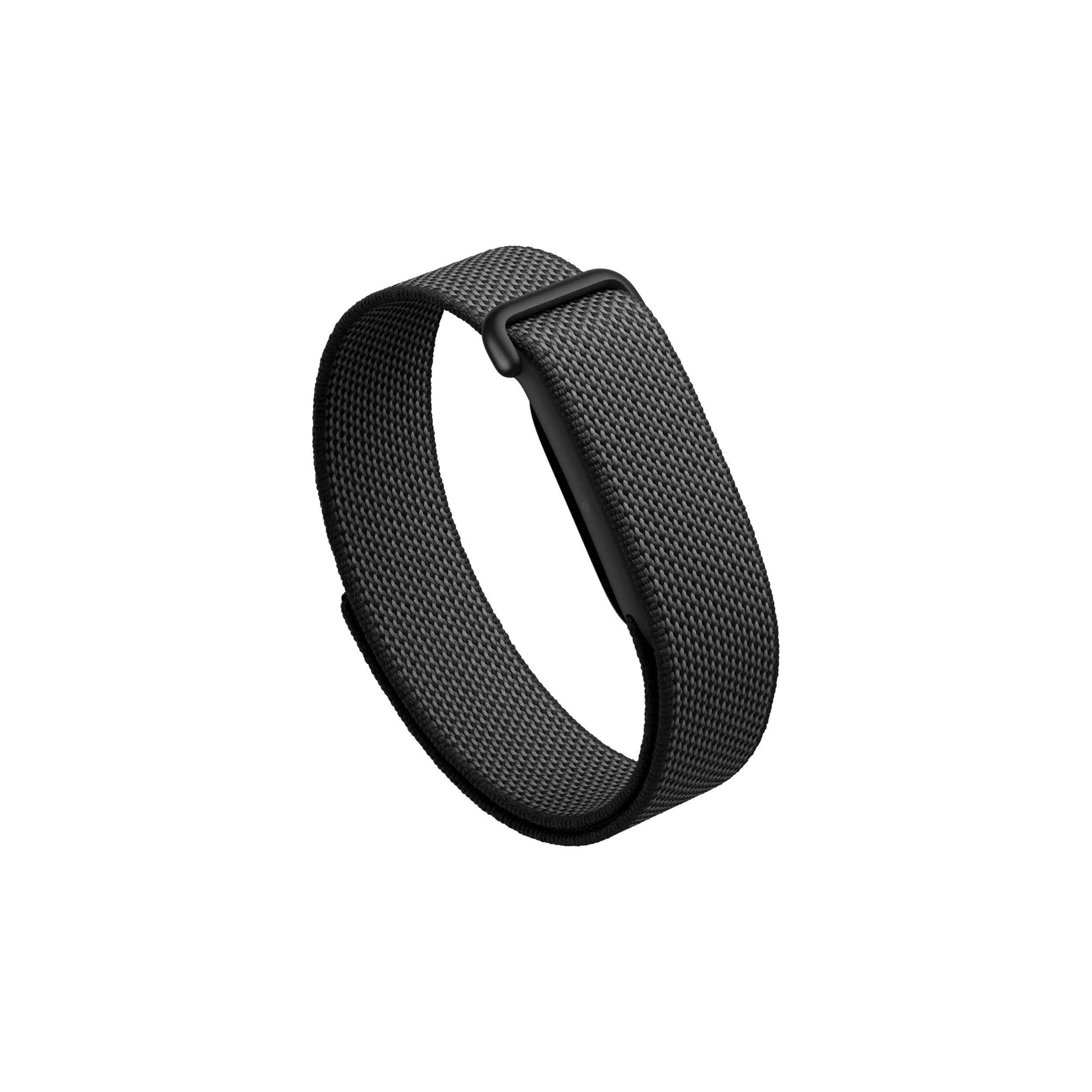
Google Fitbit Air

Google

Google Fitbit Air

  • Weight 0.18 oz
  • Display None (screenless)
  • Battery Life Up to 7 days
  • Water Resistance 50 meters
Check Price on Amazon

Five grams and no screen, so you forget it is there and sleep in it.

The Fitbit Air is built for people who do not want another screen in their life, and we count ourselves in that group. There is no display at all, just a 5.07-gram capsule on an 18 mm band, so every number waits in the app until you go looking for it. It is also the one tracker here we forgot we were wearing, including overnight, and that is not a small thing when the device's job is to be on your wrist around the clock.

What it tracks is more interesting than what it shows. Heart rate, skin temperature, and SpO2 feed Fitbit's sleep score, daily readiness, and irregular-rhythm notifications, and the sleep reporting is the reason to choose this over a cheap band, because it is detailed and it does not sit behind the optional Premium membership. Battery is rated up to a week, and five minutes on the charger buys a day, the sort of detail that rescues you on a morning you forgot. The single band size adjusts to fit wrists from 130 to 210 mm.

Syncing is the least smooth part of living with it. Ours settled down after a clean reinstall, but the first week involved retries, so set it up at home on solid Wi-Fi and give it a few days before judging. The optical sensor also wants bare skin, since dense wrist tattoos can interrupt the reading, so check that the green light has clear skin to work with before you commit.

Bottom Line

If you want your health data on the phone rather than your wrist, this is the one we hand people: five grams, a week of battery, and the strongest sleep reporting here.

Check Latest Price

Best for Recovery Coaching

Our Score 8.4/10
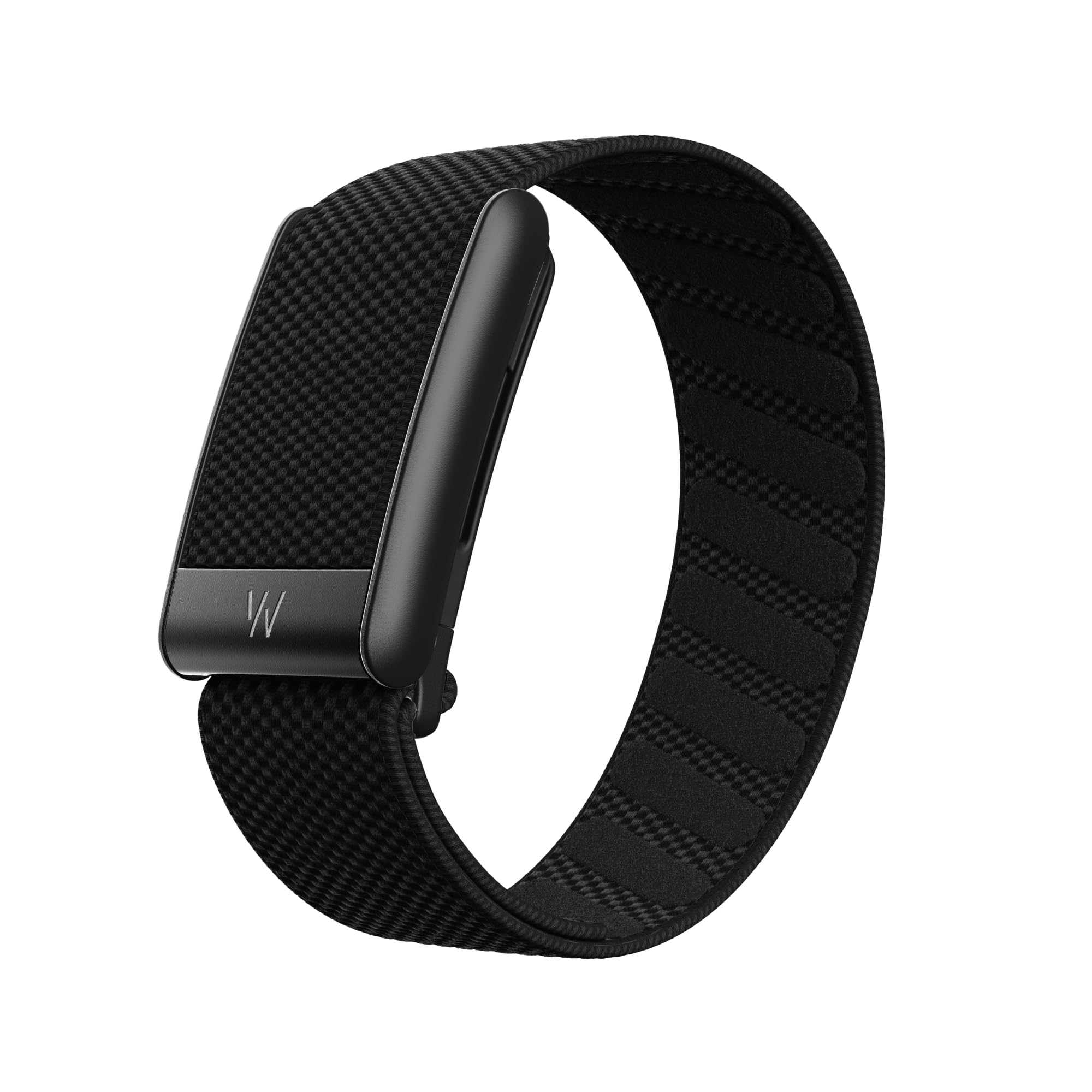
WHOOP 5.0

WHOOP

WHOOP 5.0

  • Device Included with plan
  • Display No screen
  • Charging Wireless, waterproof charger
  • Membership 12 months included
Check Price on Amazon

Turns strain, sleep, and recovery into a coach's plan for the day ahead.

What you are buying with the WHOOP 5.0 is a membership, not a gadget. The screenless band arrives included with a 12-month plan, and everything it does, from strain and recovery scores to sleep coaching and the AI coach in the app, depends on that plan staying active. It is also HSA and FSA eligible, which tells you how the company wants you to think about it: a health expense, billed yearly.

As hardware it is the simplest thing here: a SuperKnit strap, no display, no buttons, waterproof, and charged on a wireless puck. You put it on and forget it, including overnight, and that is the design intent. The value sits in the morning recovery number, the sleep breakdown into REM, deep, light, and awake, and the way 140-plus metrics get condensed into one recommendation instead of a dashboard you have to interpret yourself.

So the pitch is narrow and honest. If you train with intent, want to be told when to push and when to back off, and are fine paying every year for that guidance, nothing here does it better. If you prefer to own a device outright and read your own numbers, the Forerunner 165 is the better long-term deal, with no renewal and no lockout.

Bottom Line

If you want to be coached rather than measured, WHOOP is the pick, and the yearly membership is simply the price of that relationship.

Check Latest Price

Best For Cheap first tracker

Our Score 8.0/10
Bakoor Fitness Tracker

Bakoor Fitness

Bakoor Fitness Tracker

  • Display 1.10-inch AMOLED
  • Warranty None
  • Sports Modes 25
  • Water Resistance IP68
Check Price on Amazon

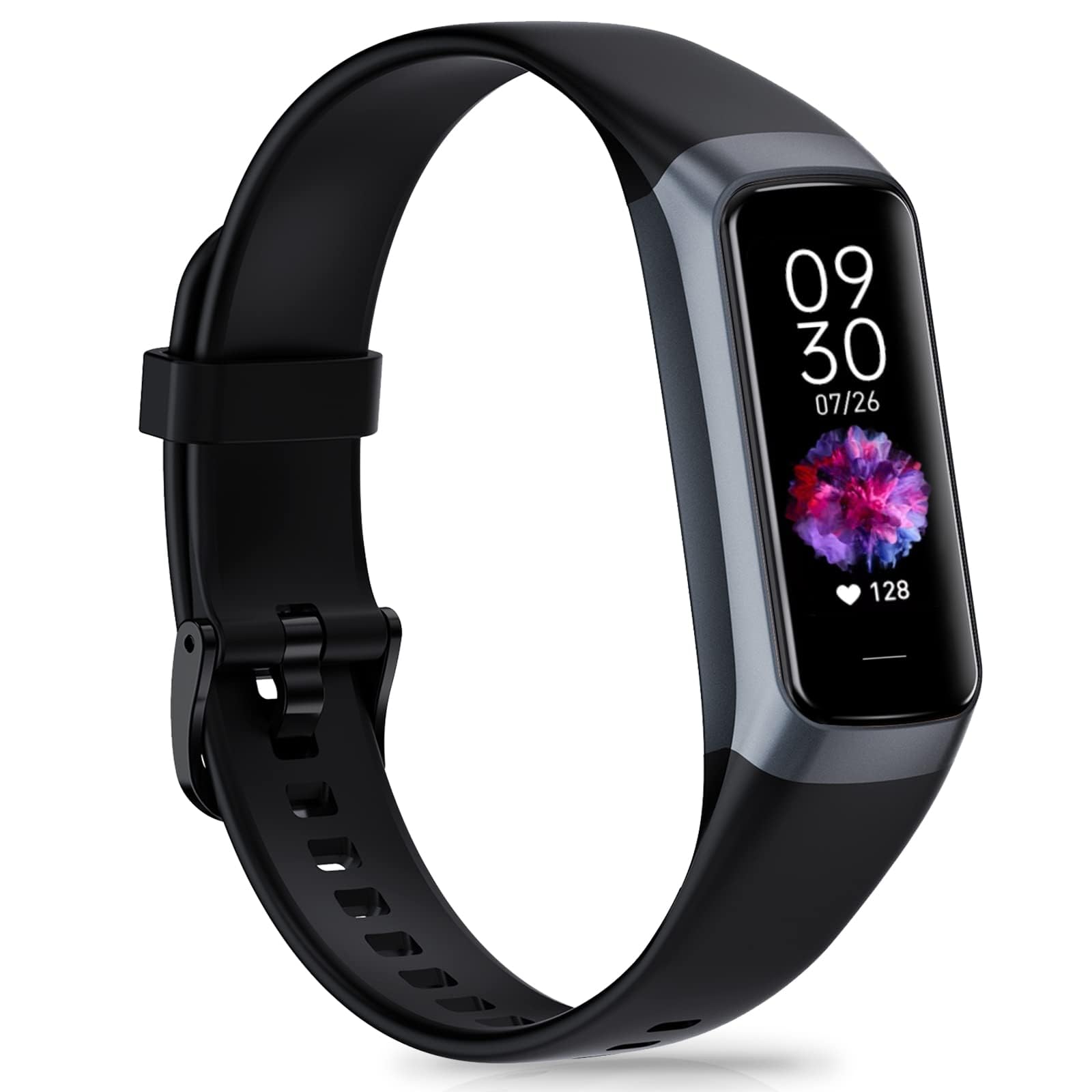
At the bottom of this list, the Bakoor is a reminder of how little hardware a fitness tracker really needs. You get a 1.10-inch AMOLED screen that is genuinely easy to read, 25 workout modes, IP68 sealing, and an app that logs steps, sleep, heart rate, and the blood-pressure and oxygen figures the listing advertises.

Accuracy is the first thing to wobble at this price, and it wobbles here. Step counts and heart rate are fine for a general sense of how much you moved and unreliable if you are training to a number, and the blood-pressure reading is entertainment rather than data. The look is cleaner than the money suggests, and the band is light enough to wear to bed, which is more than we expected at this end of the market.

What decided it for us is the warranty: there is not one. The listing says so plainly, and that changes the math on a cheap device, because if the charging pins or the screen give out in month five you are simply buying another. Buy it as a first tracker for a teenager, a spare for travel, or a low-cost way to learn whether step counts change your behavior. If you want something to keep, the Xiaomi Band 10 costs more and is worth it.

Bottom Line

A cheap way to find out whether you will actually wear a tracker: readable screen, basic tracking, and no warranty to fall back on.

Check Latest Price

How We Wore, Charged, and Compared 12 Fitness Trackers

We started by researching widely available trackers at different price points, then narrowed the list to 12 that covered different shapes, screen sizes, and feature sets while working with both iOS and Android. Over nine months, I wore each one for at least a week of ordinary life: desk work, errands, runs, gym sessions, showers, and sleep. I rotated them on the same wrist and logged charging dates, so battery life was judged by how often I actually reached for the cable, including nights when GPS and sleep tracking ran at the same time.

For accuracy, we counted steps by hand on a measured walk and compared that with each tracker’s count. We walked and ran known routes to see whether GPS distance and pace matched, and wore a chest strap during intervals to watch how quickly heart rate caught up. We also checked the small measurement settings that change the numbers—stride length, units, heart-rate zones—and noted how many taps it took to correct a wrong one. Connectivity got tested by leaving the phone in another room, starting a workout, and seeing whether the tracker held the session and synced cleanly afterward.

Comfort and appearance mattered as much as the data: I wore each tracker with a cuff and to bed, noted whether the band trapped sweat, and checked whether the case caught on sleeves. Reliability showed up over the long haul—dropped connections, failed syncs, scratched screens, stretched bands—and we compared what each model included for its price, including whether useful features sat behind a subscription. The trackers that scored best were not always the ones with the longest feature list; they were the ones that made the basics feel effortless.

How to Choose

Screen or no screen

Settle this before you compare anything else, because it shapes the rest of the ownership. A screen lets you read pace, heart rate, and messages without pulling out your phone; it also costs battery and gives you one more glowing rectangle at 6 a.m. A screenless model such as the Fitbit Air or the WHOOP pushes everything into an app and stays out of your way. If you know you will resent the display, buy the version without one instead of buying a watch and turning things off.

Battery life and the charging habit

Battery figures tell you how often you will negotiate with a charger, and the spread here runs from about five days to three weeks. GPS sessions, always-on displays, and overnight blood-oxygen sampling all eat into the top number. Pick a cadence you will actually keep, since a fixed weekly charge while you shower is easier to remember than a nightly one, and treat anything under five days as a device that will spend real time on a nightstand.

Built-in GPS or phone GPS

If you run, walk, or ride outdoors and want distance and pace without a phone in your pocket, pay for built-in GPS; the Forerunner 165 is the model here that has it. Phone-tethered GPS, as on the Fitbit Air and the Galaxy Fit3, does the same job as long as the phone comes along, which is exactly the habit many people are trying to break. Bands with neither estimate distance from arm movement, which is close enough on a treadmill and loose on a winding trail.

Check your phone before you check the specs

The Galaxy Fit3 pairs with Android only, so an iPhone makes it a non-starter no matter how good the price looks. Fitbit's app wants iOS 16.4 or Android 11 and up, and Xiaomi's Mi Fitness is the fussiest of the apps here. Because syncing is the most common trouble with wrist trackers, buy somewhere with a return window, pair on day one, and give it a week of real use before that window closes.

Subscriptions and the real cost of ownership

Two picks here are memberships wearing a device: the WHOOP includes the band with a 12-month plan, and the Oura Ring 5 includes the first month before a recurring fee. Neither is a trick, since the coaching and the analysis are what you are paying for, but a modest device with an annual fee costs more over three years than one you buy once. Fitbit's Premium tier is optional; the Air tracks sleep, heart rate, and steps without it.

Frequently Asked Questions

Final Verdict

The Garmin Forerunner 165 is what we recommend to most people, because it handles the hard parts, namely built-in GPS, dependable heart rate, a screen you can read in sunlight, and roughly a week between charges, without asking for a subscription. If the budget is tight, the Xiaomi Smart Band 10 covers steps, sleep, and swims for a lot less money. And if you want to be coached rather than measured, the WHOOP is the one that tells you what to do next.