Tech & Wearables

Best Fitness Trackers for Swimming of 2026

Wrist-based heart rate sensors work by shining light into your skin and watching the blood beneath it move — which is exactly why water is such a problem. Splash, chlorine, and the way a band shifts when your wrist flexes mid-stroke all interfere with that reading, so two trackers on the same swimmer can log two very different workouts. The right one is the tracker whose numbers you stop second-guessing: it counts laps, catches your splits, and survives the locker room without being babied.

I swim three mornings a week, and over the past seven months my team and I have put 12 trackers through lap swims, open-water weekends, and the dry-land work in between. The spread surprised me — a few nailed stroke counts and then needed charging every other day, while others looked sharp on the wrist and read heart rate like a random number generator. Comfort mattered as much as accuracy: a band that rubs after 1,500 meters makes you cut the set short. What's below is what I actually kept reaching for.

Best for Android Phones

Our Score 8.8/10
Samsung Galaxy Fit 3

Samsung

Samsung Galaxy Fit 3

  • Display 1.6-inch AMOLED, 1000 nits
  • Battery Life Up to 14 days
  • Phone Support Android only
  • Water Resistance 5ATM & IP68
Check Price on Amazon

Explicit 5ATM and IP68 ratings with a bright 1.6-inch screen on Android.

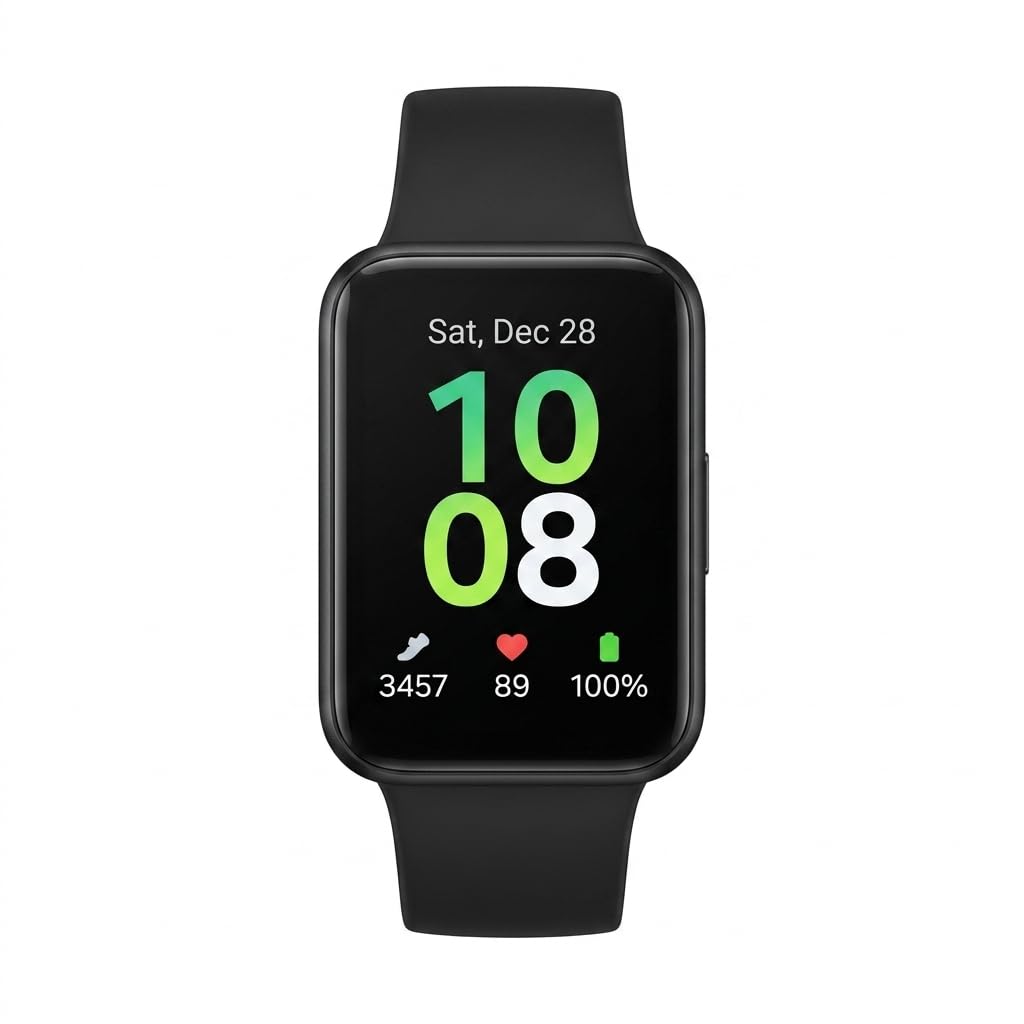
Samsung puts the catch in the listing, which is more than most sellers manage: this is the international model, it carries no U.S. warranty, and it will not pair with an iPhone at all. Read that before anything else, because the rest of the Galaxy Fit 3 is unusually generous for the money.

The swim case is spelled out — 5ATM and IP68, the only tracker here that carries both — and the 1.6-inch AMOLED runs at 1000 nits, bright enough poolside without being the brightest screen in this guide. The 101+ workout list with auto detection means a session often starts before you remember to press anything, and 13 to 14 days between charges puts it well past the week-long Fitbits.

Where we land: on an Android phone this is the easiest of the lot to live with, and the one we point a first-time swim tracker at. Two things temper it. There's no built-in GPS, so open-water distance rides on your phone, and the two-week battery figure assumes light use — lean on the screen and that number shrinks toward a few days.

Bottom Line

For an Android phone, this is the swim band to start with: explicit 5ATM and IP68 ratings, a bright 1.6-inch screen and two weeks between charges, provided the imported-model warranty doesn't bother you.

Check Latest Price

Best for Open Water

Our Score 8.8/10
Amazfit Bip Max

Amazfit

Amazfit Bip Max

  • GPS Built-in, five satellite systems
  • Display 2.07-inch AMOLED, 3000 nits
  • Battery Life Up to 20 days
  • Water Resistance 50 m
Check Price on Amazon

Built-in GPS, offline maps, and a 3000-nit screen for open-water sessions.

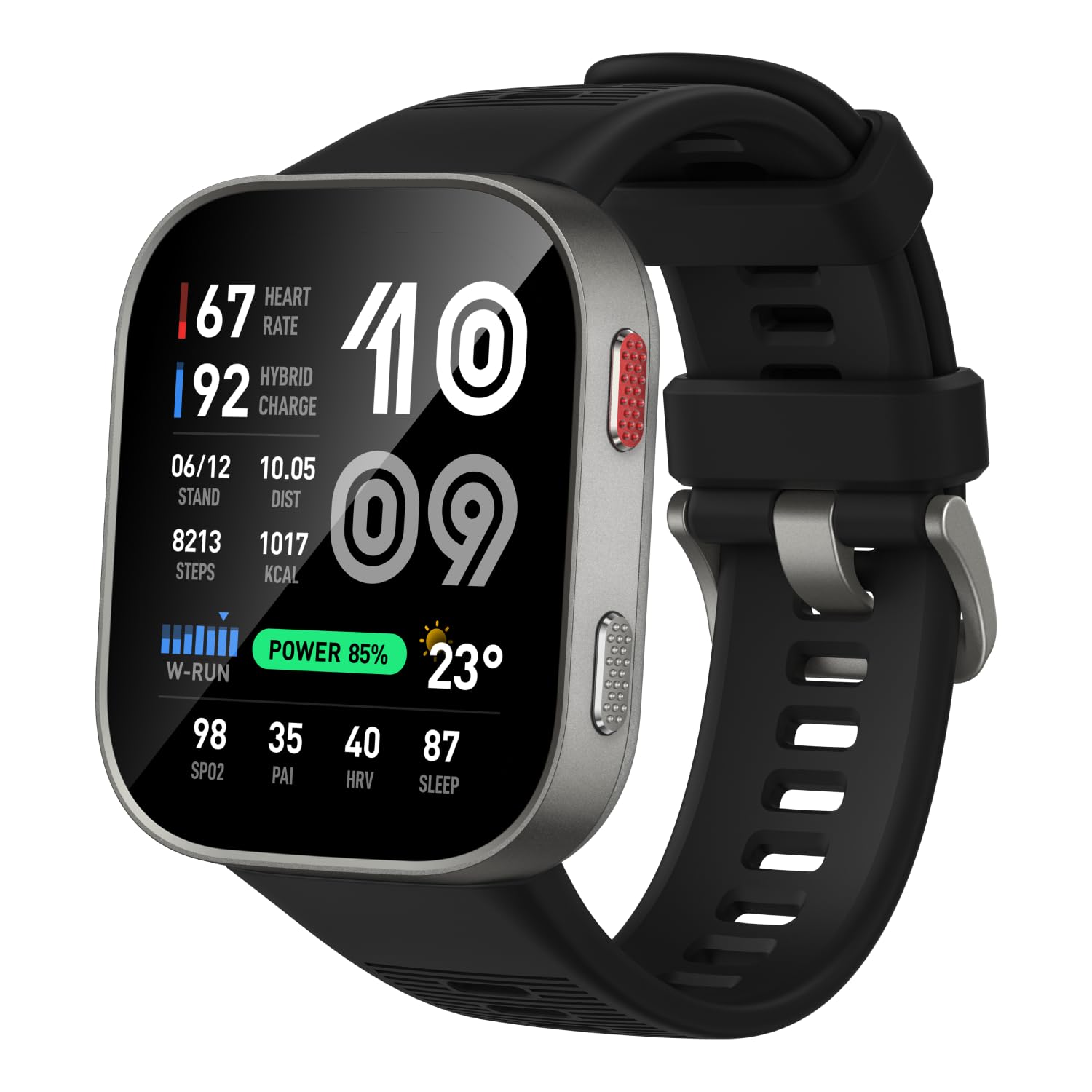
Two inches of AMOLED on a swim watch sounds excessive until you're at the end of a lane with wet hands and a screen you can't quite read. The Bip Max's 2.07-inch panel is the biggest in this group, it runs at 3000 nits, and it is comfortably the easiest display to read here with the sun behind you.

What earns it a place, though, is the GPS. It's built in, runs across five satellite systems, and pairs with offline maps stored on the watch's 4 GB — the first time you swim a point-to-point line across a lake and get the shape of it back afterwards, the extra bulk stops feeling like a compromise. That's the difference between recording a swim and measuring one.

It is big. At 2.07 inches this is the one that will look oversized on a narrow wrist, and it's noticeable at night if you wear it to bed. The 20-day battery is a best case as well: run GPS on every session and you'll be charging well before three weeks are up.

One practical oddity worth knowing before the box arrives: it ships with a magnetic charging base but no USB-C cable, so plan on supplying your own.

Bottom Line

Buy this one if your swimming happens away from a pool wall: built-in GPS, offline maps and a 3000-nit screen that shrugs off sunlight, in the largest case here.

Check Latest Price

Best For Recovery and sleep

Our Score 8.8/10
Amazfit Helio Strap

Amazfit

Amazfit Helio Strap

  • Strap Nylon hook-and-loop
  • Sport Modes 27
  • Battery Life Up to 10 days
  • Water Resistance 50 m
Check Price on Amazon

Recovery is the pitch and it's the right one. The Helio Strap's case is the data you get after a hard week — fatigue, training load, a HybridCharge score that shifts with your sleep — delivered by an 18-gram band with no screen and roughly ten days of battery. We rate it the most useful recovery read in this guide for the money, and most of it works without a subscription.

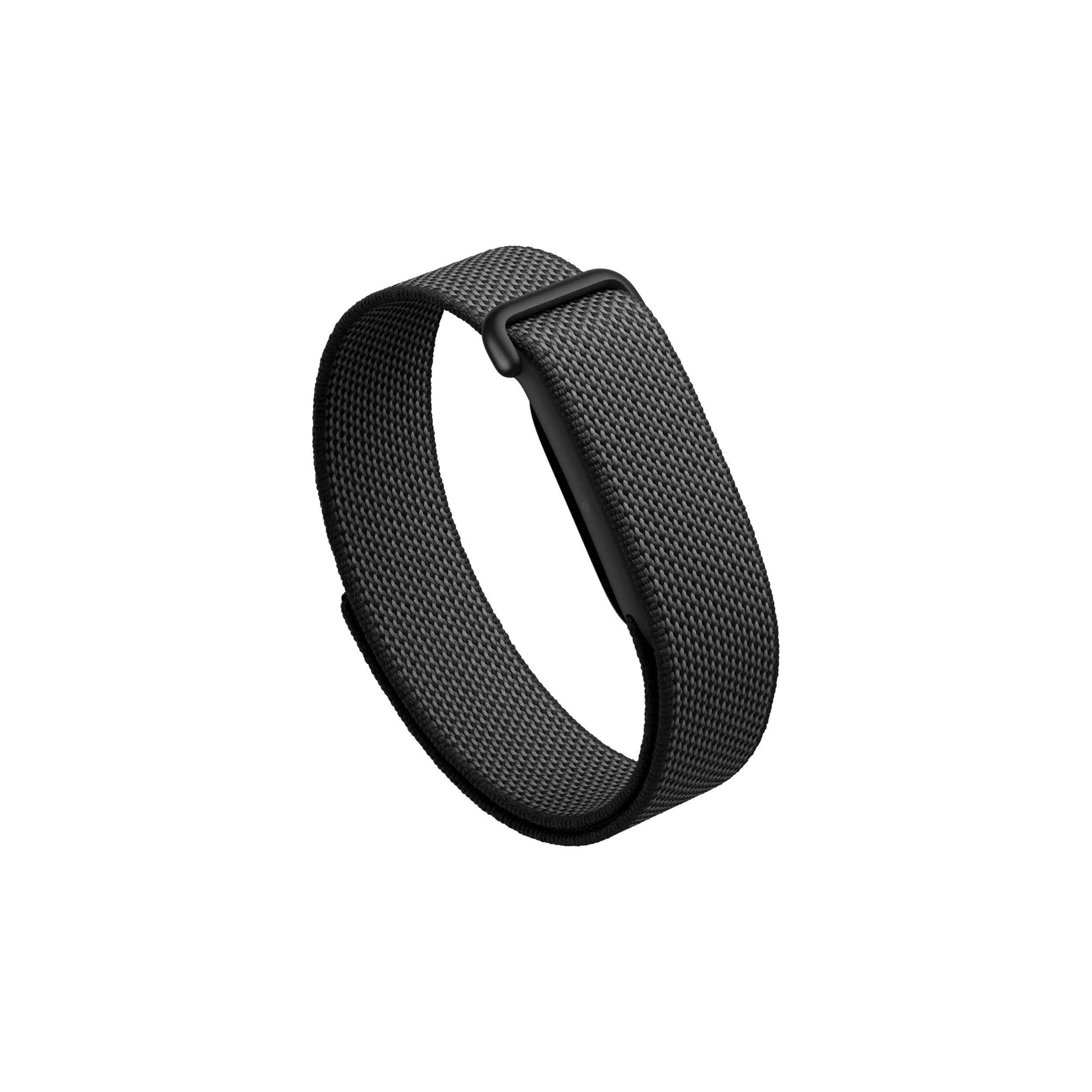
Then you take it in the pool. Nylon with a hook-and-loop closure is lovely for a band you keep on for a week and wrong for one you swim in: the weave soaks up water, stays damp long after you've toweled off, and ends up the thing you notice rather than the tracking. It's a recovery tracker you can swim in, not a swim tracker.

The rest is honest enough. Twenty-seven sport modes, VO2 max, post-workout insights and a Zepp app that gives away more than most, all on a strap you forget you're wearing between sessions. If your swimming is one part of a bigger training week rather than the whole point, that's a fair trade — and if it's the whole point, it isn't.

Bottom Line

A recovery band that can swim rather than a swim tracker: superb fatigue and training-load data, undone for lap swimmers by a nylon strap that stays wet.

Check Latest Price

Best Overall

Our Score 8.6/10
Xiaomi Smart Band 10

Xiaomi

Xiaomi Smart Band 10

  • GPS Via phone only
  • Display 1.72-inch AMOLED, 1500 nits
  • Battery Life Up to 21 days
  • Water Resistance 5ATM (50 m)
Check Price on Amazon

5ATM, a swim compass, and three weeks of battery for the least money here.

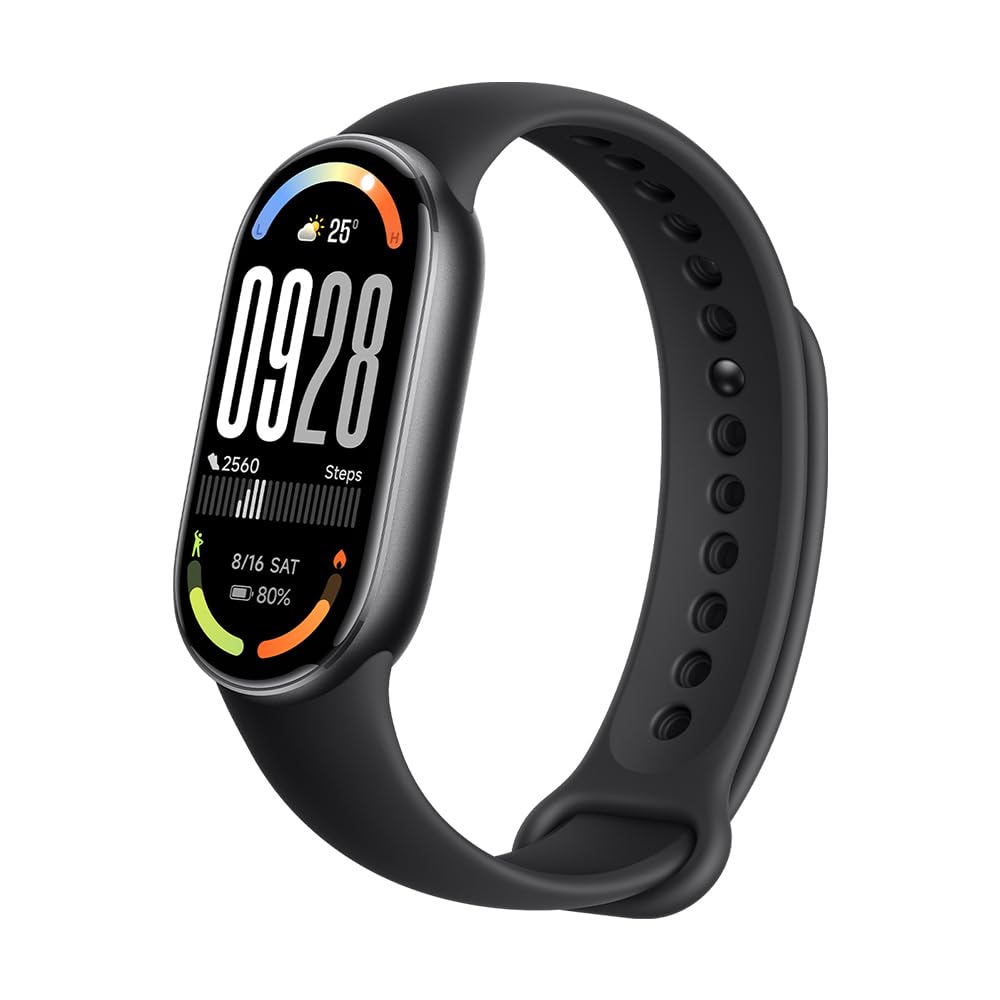
A compass in a swim mode is an odd thing to lead with until you've tried to swim a straight line across open water without one. The Smart Band 10 is the only tracker in this group that lists a compass for swimming, and it pairs that heading with a 5ATM rating and roughly three weeks of battery — which means someone swimming four times a week charges it about as often as they clean their goggles.

The 1.72-inch AMOLED is where the money went, and that's the right place for it. At 1500 nits it stays readable with sun on the glass and water in your eyes, and the 390 x 390 resolution is sharp enough to read splits at arm's length on the poolside. We rate it near the top of this set for daylight legibility: the Samsung matches it on screen size and gives up brightness to get there.

Then there's the annoyance, and it's an American one. Distances come in metric and nothing switches them: temperature converts, the workout side doesn't, so your sets come back in meters and you do the arithmetic. Set the pool length in meters, treat the numbers as relative, and it fades into the background within a week or so — but it's a real papercut on an otherwise well-sorted tracker.

The fluoroelastomer band is the quiet win. It wipes dry in a couple of seconds and doesn't hang on to chlorine the way a woven strap does, which counts for more than any spec-sheet line when you're in the water four days a week.

Bottom Line

The best swim tracking for the money in this guide: a 5ATM band with an open-water compass heading and three weeks between charges, for swimmers who don't want to think about a charger.

Check Latest Price

Best Screenless Tracker

Our Score 8.6/10
Google Fitbit Air

Google

Google Fitbit Air

  • Weight 0.18 oz
  • Display None
  • Battery Life Up to 7 days
  • Water Resistance 50 m
Check Price on Amazon

Five grams, no screen, and a week per charge — the forget-it's-there option.

Five grams is light enough that the Air stops registering within an hour, and that's the whole argument. There's no screen to catch on a swim cap or fog up between sets, nothing to knock on the lane rope, and at 50 meters it simply stays on for the session. We wore it from a morning swim through to bed without ever adjusting it, which is not something we can say about the bigger watches here.

The trade shows up the moment you're in the water: no glance at your pace, your distance or the clock. Everything arrives in the app afterwards, which suits some swimmers and frustrates others. Battery is five days in real use per charge, and a five-minute top-up buys a full day — genuinely useful when the band is flat and you're already late.

The reservation is reliability rather than design. This is one of the less settled devices in the group when it comes to syncing and general stability, and there's no built-in GPS, so outdoor distance still comes from your phone. Neither is a dealbreaker at this weight; both are worth knowing.

Bottom Line

Five grams buys you a tracker you'll forget about: 50 meters of water resistance, a week per charge and no screen to distract you at the wall.

Check Latest Price

Best For Fitbit app users

Our Score 8.0/10
Fitbit Charge 6

Fitbit

Fitbit Charge 6

  • GPS Built-in
  • Display 1.04-inch LCD
  • Battery Life Up to 7 days
  • Water Resistance 50 m
Check Price on Amazon

Built-in GPS in a band this slim is the reason the Charge 6 is on the list at all. It carries the full Fitbit feature set — 40+ exercise modes, ECG and EDA sensors, Google Maps directions on the wrist — and it's rated to 50 meters like everything else here, so laps are squarely within its remit.

The hardware has aged less gracefully. Seven days of battery is fine in isolation and merely adequate next to a Xiaomi that runs three weeks, and charging takes a couple of hours rather than minutes. You're paying for the platform and the GPS radio, not for stamina.

Where we end up: this is the pick for someone with a few years of Fitbit history who doesn't want to start over, and it's the one to buy from a seller with a generous return window — of everything here, this is the tracker with the most to prove over its second year. If you want the smallest thing on your wrist that still records a route, it's the answer.

Bottom Line

You're buying the Fitbit platform here — built-in GPS, 40+ modes, ECG — and it's the right call if years of your history already live in that app.

Check Latest Price

How We Tested Swim-Friendly Fitness Trackers

We started by pulling every tracker on the market rated for pool swimming, then cut anything that couldn't be set to a 25-yard pool, log interval splits, or hold a stroke-specific mode. That left 12 models across a wide price range, from simple bands to multisport watches. I swam with them for seven months, roughly three sessions a week, and paired each test unit with a second tracker on the opposite wrist so lap counts could be checked against something other than the manufacturer's word.

Most of the work happened at a 25-yard lap pool during morning masters swims. I counted laps by hand off the pace clock and compared that to each watch's count, then checked interval splits against the wall clock to see how far the numbers drifted over a long set. I swam freestyle, breaststroke, and backstroke on purpose to see whether each unit identified the stroke correctly, and I started and stopped sets with wet hands or a thumb through fogged goggles to judge how usable the buttons really were. Straps stayed on for full 2,000-yard sessions, then got checked for rubbing and adjusted one-handed at the wall.

Between pool days, the trackers came to a lake for open-water swims, to the gym for dry-land sessions, and to bed, so I could see how sleep and recovery data held up and whether comfort lasted overnight. I let every unit run dead at least once to time a full charge, then noted how many swims a single charge covered. Bluetooth sync got tested by walking out of range mid-workout and seeing whether the swim uploaded later; durability got a reality check from locker-room drops on tile, shower rinses, and seven months of chlorine. The letdowns were consistent: two units lost an entire workout at upload, and one stopped counting laps whenever I slowed down for drills.

How to Choose

Read the water rating before anything else

Water resistance is written in two different languages and they don't mean the same thing. 5ATM, or 50 meters, describes pressure testing equivalent to 50 meters of still water: fine for laps and surface swimming, not for diving. IP68 promises dust sealing and immersion without naming a depth. A tracker that lists both, like the Samsung Galaxy Fit 3, tells you more than one that lists only IP68.

So buy the ATM number. A listing that says water resistant with no figure attached isn't a swim tracker, whatever the poolside photos suggest, and one that leads with IP68 alone hasn't actually said it will survive a set of freestyle.

Pool laps and open water need different hardware

GPS doesn't travel through water. An open-water watch reacquires satellites each time your arm clears the surface, which is why the route comes back as a string of fixes rather than a smooth line. In a pool you don't need GPS at all: the accelerometer counts your turns, and you tell it how long the pool is.

That's the fork in the road. Open-water swimmers should pay for built-in GPS, which the Amazfit Bip Max and the Fitbit Charge 6 both have. Pool swimmers can skip it: the Xiaomi Smart Band 10 and the Galaxy Fit 3 borrow the phone's signal, which only matters if the phone is coming with you in a swim buoy.

A screen you can read, or no screen at all

Brightness beats size at the pool. The 1000-to-3000-nit AMOLEDs in this group stay legible with sun on the glass and water on your hands; the Charge 6's LCD is the smallest and dimmest here and the one you'll tilt most often to read.

Screenless trackers — the Fitbit Air and the Amazfit Helio Strap — remove the mid-swim glance entirely. That's a feature if a screen distracts you or you wear the band to bed, and a problem if you pace your sets off your wrist. Work out which swimmer you are before you start comparing prices.

Battery life decides your charging habit

The spread is wide: roughly five days on the Fitbit Air at one end, three weeks on the Xiaomi at the other. A short-lived tracker turns into a nightly ritual, a long-lived one into a monthly errand. Pick the rhythm you'll actually keep up with.

Charging is also where chlorine does its damage. Rinse the band in fresh water after a session and dry the contacts before it goes back on the charger, and the battery is less likely to be the thing that ends the relationship.

Straps and fit are a swim decision

Silicone and fluoroelastomer bands wipe dry and shrug off chlorine; nylon with a hook-and-loop closure, like the Helio Strap's, stays damp for hours. Swim three or four times a week and that difference is the one you feel every time you climb out.

Wear it snug, but don't buy for heart-rate accuracy in the water. Optical sensors don't read well through moving water, and stroke data comes from motion rather than your pulse. Buy for comfort, clearance at the catch, and a band you can loosen a notch afterwards.

Frequently Asked Questions

Final Verdict

Start with the Xiaomi Smart Band 10. It's the least expensive way into a 5ATM band with a real swim mode, an open-water compass heading and three weeks between charges, and nothing else here covers those basics for less. If your swimming happens away from a pool wall, spend more on the Amazfit Bip Max and its built-in GPS.

And if your phone runs Android and you want the biggest, brightest screen for the money, the Samsung Galaxy Fit 3 is the one — provided you're at peace with an imported model and no U.S. warranty.