Tech & Wearables

Best Fitness Tracker Bands of 2026

Fitness tracker bands are meant to melt into your day: light enough to sleep in, steady enough to trust on a run, and simple enough that checking your steps doesn't require a manual. The wrist is a noisy place for sensors, though, so a sleek band can still stumble on heart-rate accuracy, log phantom steps, or go dead before dinner. What a good band really fixes is visibility—it turns movement, rest, and recovery into something you can actually read without babysitting a gadget.

My team and I have worn a dozen bands over eight months—through gym sessions, desk days, overnight sleep, and weekend errands—and the differences in comfort, battery life, and usable data showed up fast. The best made connectivity and daily tracking feel invisible; the weak ones buried simple functions in clunky menus or overstated their sensors' accuracy. Value matters, but the right band earns its keep by being reliable every day, not by packing in features you'll never touch. The picks below held up.

Best Subscription-Free Screenless Band

Our Score 8.8/10
Amazfit Helio Strap

Amazfit

Amazfit Helio Strap

  • Weight 0.64 oz
  • Battery Life 10 days
  • Sports Modes 27
  • Water Resistance 50 meters
Check Price on Amazon

Screenless recovery tracking and gym rep counting with no monthly fee attached.

The Helio Strap is the answer for anyone who likes the sound of WHOOP's screenless recovery tracking but not the annual bill. There's no subscription anywhere in it: the band, the sensors and the Zepp app's data come with the hardware. For that you get a HybridCharge score that shifts with training, stress and sleep, plus continuous heart rate and blood oxygen — the same broad idea, at a fraction of the ongoing cost, which is why it's the pick we hand to people who wince at memberships.

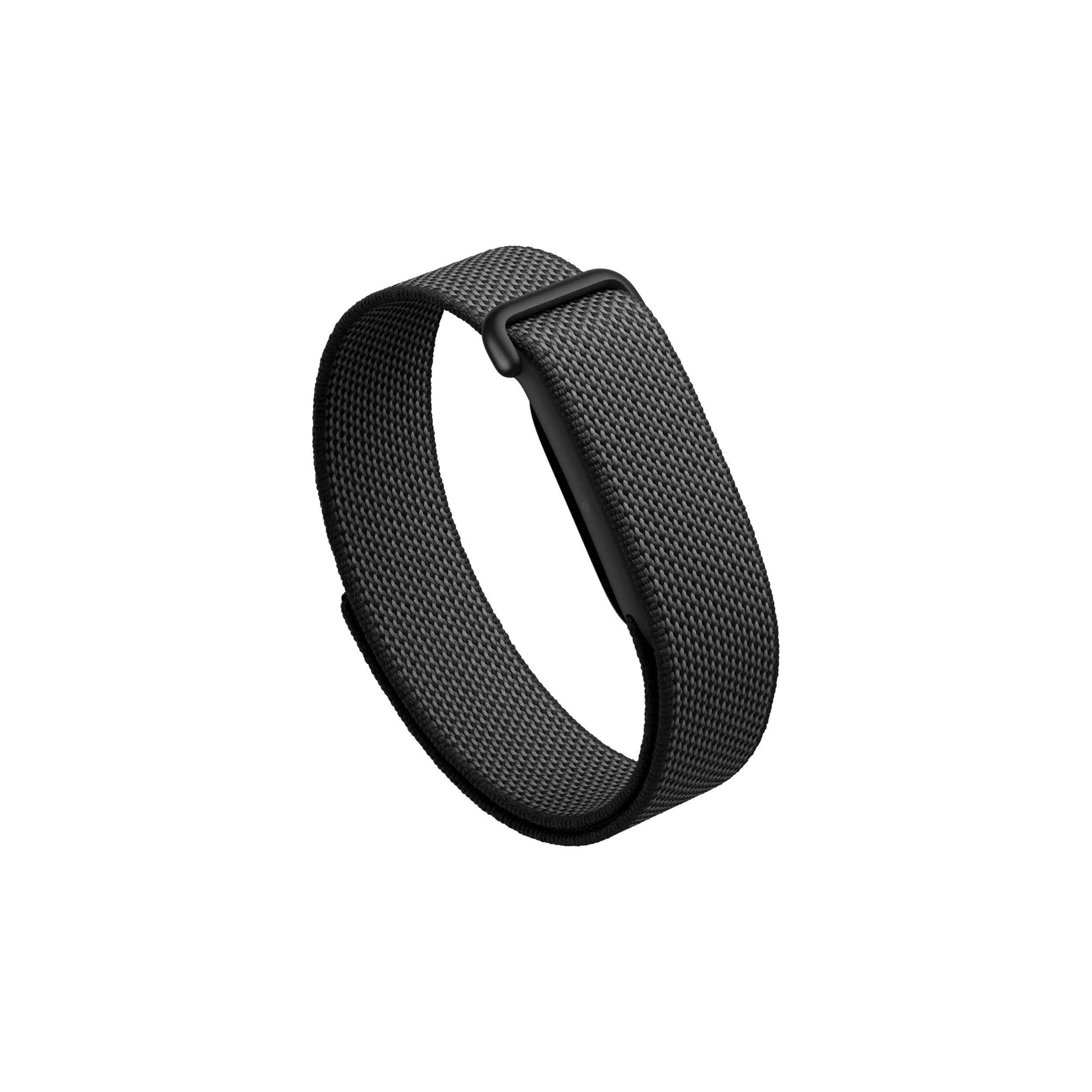
It's also the most pleasant of the screenless bands to wear in the gym. The nylon hook-and-loop strap weighs 18 grams and stays put through a sweaty session in a way silicone doesn't, and the 10-day battery means it isn't living on a charger. The strength work is the surprise: it counts reps and sets, tracks rest periods, and includes a dedicated HYROX race mode, which is more structure than most bands at this level bother with. Around that sit 27 sport modes and 50-meter water resistance.

Two caveats. Long-term reliability is the open question, with some units stopping charging or syncing inside six months, so buy it somewhere with an easy return. And swimming is the weak spot: the strap survives the water, but lap tracking is where it comes up short, so don't buy it as a swim trainer. As an everyday recovery band and a gym companion, it's the one we keep reaching for.

Bottom Line

The screenless recovery band for people who don't want another subscription — light, gym-focused, and honest about what it can't do in the pool.

Check Latest Price

Best Overall

Our Score 8.6/10
Fitbit Air

Fitbit

Fitbit Air

  • Display None (screenless)
  • Fits Wrists 130-210 mm
  • Battery Life 5 days
  • Water Resistance 50 meters
Check Price on Amazon

The lightest, most comfortable band here, with five days of battery and no screen.

The first thing we noticed was what wasn't there: no glow at 2 a.m. Worn overnight, the Air sits flat and light — 5.07 grams — and by the second night we had stopped registering it, which is more than we can say for anything else here with a display on it. The night's data is waiting in the Google Health app in the morning: sleep stages, resting heart rate, blood oxygen, and skin temperature variation.

It earns the top spot by asking almost nothing of you. Battery is rated at five days, and a five-minute top-up buys another full day, so leaving the charger at home isn't a disaster. The band is a single size spanning 130 to 210 mm and micro-adjusts finely enough that it doesn't pinch; if your wrist sits at either end of that range, measure before ordering, because there's no second size in the box. We were also struck by how much it measures for a screenless band — optical heart rate, blood oxygen, skin temperature, sleep stages — with no subscription needed to read any of it.

Two things to know before you buy. Hand-heavy work inflates the step count: a morning of sanding or waxing furniture reads as a walk, so treat days like that as an estimate. Syncing occasionally needs a second attempt, and there are units that quit inside the first week — that's what the one-year warranty is for, so keep the receipt. Neither changes our pick. A tracker only tells you something if you keep wearing it, and this is the one we forget is on, including at night and in the shower, where 50 meters of water resistance covers you.

Bottom Line

Our default pick: a five-gram band that tracks heart rate, blood oxygen, skin temperature, and sleep for five days a charge, with no screen and no required subscription.

Check Latest Price

Best Value

Our Score 8.6/10
Xiaomi Smart Band 10

Xiaomi

Xiaomi Smart Band 10

  • Weight 1.06 oz
  • Display 1.72-inch AMOLED
  • Battery Life 21 days
  • Water Resistance 50 meters
Check Price on Amazon

Three weeks per charge, a bright AMOLED screen, and the friendliest price here.

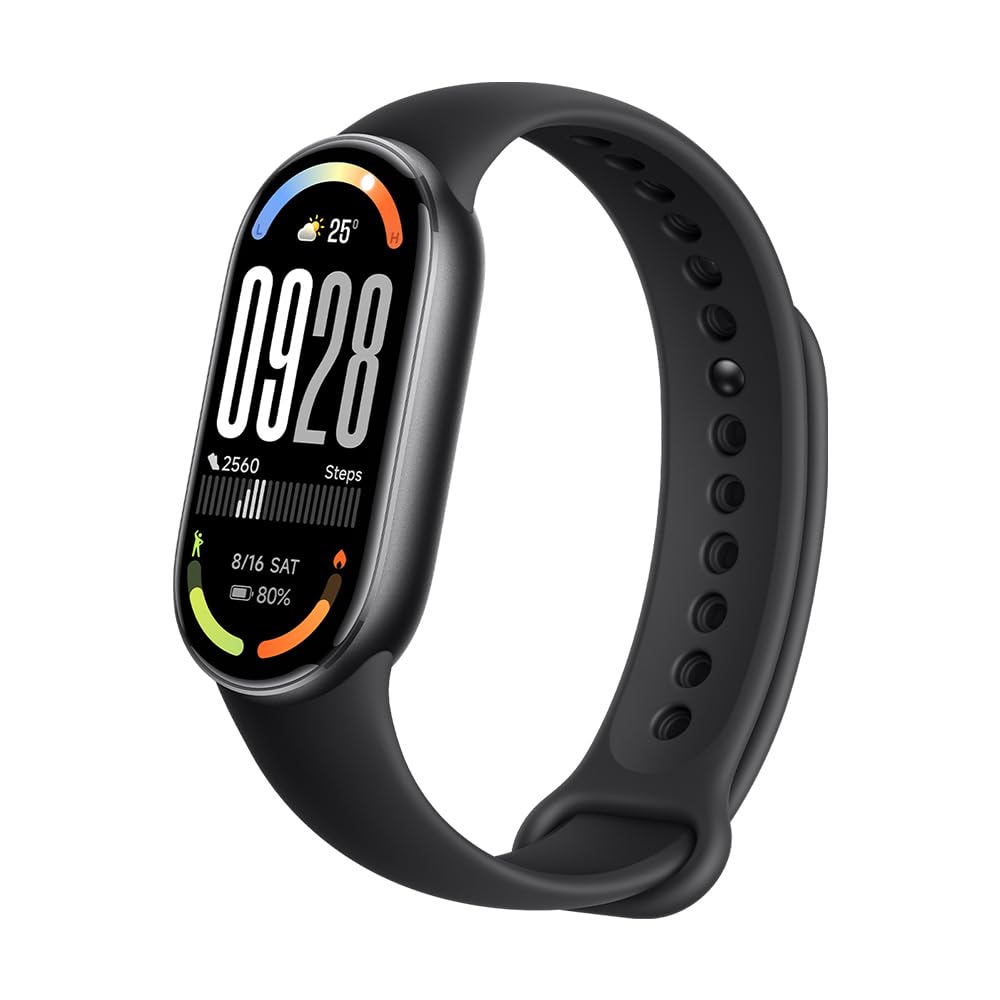
Twenty-one days is the number that changes how you live with a tracker, and the Mi Smart Band 10 mostly delivers it. Across our weeks of wear the gauge fell roughly in step with the rating, and we topped it up out of habit rather than necessity. That alone makes this the easiest band here to hand to someone who abandoned a smartwatch because of the charging cable.

The rest of the package is better than the money suggests. The 1.72-inch AMOLED runs 390 by 390 and hits 1,500 nits, which means it stays readable in direct sun — we could check a message mid-run without cupping a hand over the screen. 5ATM water resistance covers the pool, and the 22 mm fluoroelastomer band wipes clean after a sweaty session. There's no built-in GPS, so route tracking leans on your phone.

The catch is units. This global version is metric only — kilometers, kilograms — with no imperial switch, and that's a daily irritation if you think in miles. Heart rate and step data are solid enough for trends, though not the equal of the Fitbit Air under hard intervals. What you're buying is the longest stretch between charges in this group, on a screen bright enough to be genuinely useful, with one setting to swear at.

Bottom Line

Buy this if you want to charge your tracker monthly rather than nightly and still get a bright, readable screen — just be ready to think in kilometers.

Check Latest Price

Best for Recovery

Our Score 8.4/10
WHOOP 5.0

WHOOP

WHOOP 5.0

  • Membership 12-month Peak included
  • Battery Life 14 days
  • Water Resistance IP68
Check Price on Amazon

Recovery, strain, and sleep guidance for people who want coaching more than step counts.

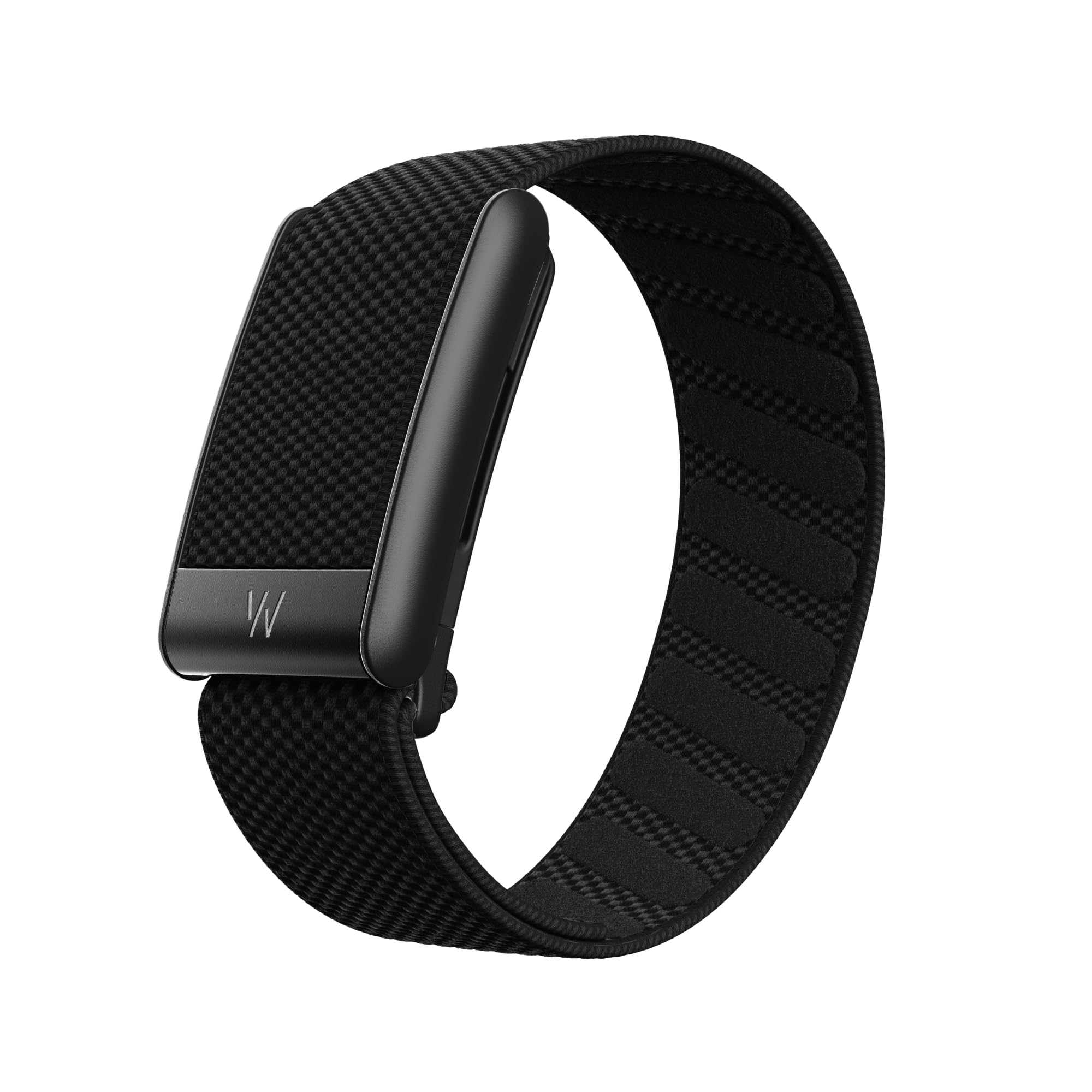
You're not really buying a gadget here. The WHOOP 5.0 arrives as part of a 12-month Peak membership — device, SuperKnit band and waterproof PowerPack included — so the honest way to think about it is a subscription that ships with a wristband. That framing decides everything else, from who should buy it to why the annual renewal is the number that matters.

What the membership buys is coaching rather than counting. Recovery, strain and sleep are the headline metrics, and the app turns them into a suggestion for the day: back off, or push. Sleep is the part that earns its keep, breaking the night into REM, deep, light and awake time with enough detail to be worth reading rather than skimming. The PowerPack is the piece of design we appreciated more than expected — it clips onto the band and charges the device while you wear it, so the 14-day battery never costs you a night of data. It's IP68, and the membership is HSA/FSA eligible, which is the detail almost nobody mentions and the one that can change the arithmetic.

Our reservation is the one that comes with any coaching service: you have to want the guidance. Setup and the metric names take a real learning curve, and accuracy varies by activity — good enough to steer training, not lab-grade. If you already follow a plan and want something to tell you when to ease off, this is the most useful tool in the group. If you want a step count and the time, it's an expensive way to get both.

Bottom Line

Worth the annual commitment if you train to a plan and want daily guidance on when to push and when to back off; skip it if you only want step counts.

Check Latest Price

Best For First tracker

Our Score 8.0/10
Bakoor Fitness Tracker

Bakoor Fitness

Bakoor Fitness Tracker

  • Display 1.10-inch AMOLED
  • Sports Modes 25
  • Water Resistance IP68
Check Price on Amazon

At the bottom of the price range, this band still gets you a 1.10-inch AMOLED screen that's bright and easy to read, IP68 water resistance, and 25 sport modes. For someone who wants steps, heart rate and the time without spending much, that's a reasonable package, and the display is a genuine surprise at this end of the market.

What we trust it for is narrower than the feature list suggests. Steps and heart rate are fine for spotting a trend across a week, not for pacing intervals, so read the numbers as directional. The blood-pressure readout in the listing is the one to ignore: a wrist optical sensor isn't a cuff, and nothing here should stand in for a measurement your doctor would take. Sleep stages are similarly rough.

Charging is the other risk, with some units refusing to charge or reconnect to the phone, so buy from somewhere with easy returns and don't count on years of service. What's left is a decent first tracker, or a cheap second one for someone testing whether they'll wear a band at all — and for the money, that's a fair trade.

Bottom Line

A bright screen and the basics for very little money — good enough for trends and for finding out whether you'll wear a tracker at all.

Check Latest Price

Best For Garmin fans

Our Score 0.0/10
Garmin CIRQA

Garmin

Garmin CIRQA

  • Weight 0.6 oz
  • Activities 80+
  • Battery Life 10 days
  • Water Resistance 50 meters
Check Price on Amazon

Garmin's take on the screenless band works differently from the rest: no display, almost no interface, just a button you press to start an activity and an app you open later. That's the whole pitch, and it's a good one if wrist notifications distract you more than they help. The nylon band at 17 grams sits like a fabric bracelet, and the 10-day battery means it's rarely off your wrist.

Underneath, it's a Garmin. More than 80 activity profiles, connected GPS through your phone, and automatic activity detection that sharpens as you confirm or correct entries in Garmin Connect. There's no subscription anywhere in the chain, which is the sentence that matters if you're weighing up the membership bands here. Water resistance is rated to 50 meters.

Two practical things keep it out of the top tier. Sizing is the first: the L-XL is the largest band Garmin offers here and runs snug on genuinely big wrists, so measure before you order and assume you need the bigger one if you're between sizes. The second is Garmin Connect itself — it holds more than Zepp or Google Health and takes longer to get around, so last night's sleep is a few more taps away. Add shipping estimates that often stretch past a month, and this is the pick for the patient Garmin loyalist rather than the impulse buyer.

Bottom Line

A button, a fabric band, and no subscription: the pick for Garmin users who want their data without a screen, once they've checked the sizing.

Check Latest Price

How We Tested the Best Fitness Tracker Bands

We began with the bands that keep resurfacing in owner reviews and retail best-seller lists, then filtered for wrist sizes, phone compatibility, price range, and the features each one promises—step and workout tracking, sleep insights, heart rate, and notifications. That left a dozen bands, which we wore for eight months. We handed them to staffers with different wrist sizes and routines so each one saw gym sessions, long desk days, outdoor walks, overnight sleep, and weekend errands.

Comfort got checked the honest way: by wearing each band overnight and noting whether the strap, clasp, or sensor pod left marks or felt annoying by hour 14. We charged every band to full, then timed how many days it lasted with notifications on and off, and how long a top-up took. For accuracy, we counted steps on a measured route and compared the band's tally, wore a chest strap during runs to spot heart-rate drift, and checked sleep and wake times against our own notes. We also paired each band with two different phones, walked out of range to see how quickly it reconnected, and tried to set alarms, start workouts, and read notifications without opening the manual.

Quality showed up in the small stuff—whether the strap stayed put after a sweaty workout, whether the screen survived a week of keys and coat sleeves, and whether the app kept syncing after a few weeks. We logged every dropped connection, phantom step count, and morning the battery died early, because reliability matters more than a long feature list. At the end, we asked which bands we kept reaching for after the novelty wore off and which extras actually earned their place; those answers shaped the picks below.

How to Choose

Screen or no screen

Four of the bands here have no display, and they're the lightest and least distracting of the group: the Fitbit Air, the WHOOP, the Amazfit Helio and the Garmin CIRQA. Those are the ones we're happiest sleeping in, because nothing lights up your wrist at 3 a.m. The trade is that every glance costs you a phone — the time, a notification, your pace mid-run. A display like the Xiaomi's 1.72-inch AMOLED puts all of it on your wrist and stays readable in direct sun, but it adds bulk, another thing to charge, and a screen that wakes you if you forget do-not-disturb. Decide which annoyance you'd rather live with before you compare anything else.

Battery life is really a question about timing

Ratings here run from five days to three weeks, but the number matters less than when you charge. Overnight is the trap: that's exactly when sleep data is collected, so a nightly top-up quietly costs you the metric these bands are sold on. Pick a fixed moment — the shower, breakfast, the commute — and keep it. The WHOOP answers this best, with a PowerPack that clips onto the band and charges it while you wear it; the Fitbit Air's five-minute top-up for a full day is next. If you want to touch a charger least often, the Xiaomi's 21 days is the longest stretch in this group.

What you pay after checkout

Three of these are a one-time purchase: the Xiaomi, Amazfit and Garmin bands hand over their data with no membership attached. The Fitbit Air shows its core metrics without a subscription, with Premium as an optional extra. The WHOOP flips the model — the 12-month membership is the purchase, the device comes with it, and renewal is the recurring cost. One wrinkle worth knowing: WHOOP memberships are HSA/FSA eligible, so eligible funds can go toward them. Before you compare what you pay up front, work out the cost across three years; that's where these models separate.

Accuracy, and the numbers to distrust

Wrist optical heart rate is good for trends and shaky at the edges — cold hands, a loose band, hard intervals. No band here escapes that, so use heart rate to compare weeks, not to pace a single mile. Step counting fails differently: arm movement gets read as walking, and a morning of sanding, painting or pushing a stroller can land in your total. Our test is unglamorous and effective — walk a route whose distance you know and see what the band says. Sleep stages are the softest number of all: treat the deep-sleep figure as a rough estimate and watch the trend across a month instead.

Fit, water, and the band itself

Comfort comes down to weight, material and closure. The Fitbit Air is the lightest at just over 5 grams, with a single band covering 130 to 210 mm; the Amazfit and Garmin use nylon straps at roughly 18 and 17 grams. If your wrist is large, check the range first — the Garmin's L-XL runs snug on bigger wrists, and the Fitbit's one size stops at 210 mm. For water, 50-meter and 5ATM ratings handle showers and laps, while IP68 handles splashes. And if silicone traps sweat under the band, swapping to nylon is the simplest fix you can make.

Frequently Asked Questions

Final Verdict

The Fitbit Air is the band we recommend to most people. At just over 5 grams it's the lightest thing here, it runs five days between charges, and it measures heart rate, blood oxygen, skin temperature and sleep without a screen competing for your attention or a subscription standing between you and the numbers. If the charger is your enemy, the Xiaomi Mi Smart Band 10 goes three weeks and hands you a bright screen — provided you can live in kilometers. And if you train to a plan and want to be told when to back off, the WHOOP's membership earns its renewal.