How to Clean a Yoga Mat Without Ruining Its Grip
The short answer: check the mat label, wipe the surface with a clean barely damp microfiber cloth or the manufacturer-approved cleaner, remove any residue with a second cloth when instructed, and let the mat air-dry completely before rolling it. Do not soak, shower, machine-wash, or leave a mat in direct sun unless its maker specifically allows that method.
Material matters more than internet recipes. Alcohol, petroleum solvents, soap, concentrated essential oils, bleach, vinegar, and heavy water exposure can discolor, dry, swell, delaminate, or make certain mats slippery. Test any approved cleaner on a hidden corner first.
Identify the Mat Before You Clean It
Look for a care label, order confirmation, model page, or manufacturer FAQ. If you cannot identify the material, use the least aggressive method: a well-wrung cloth with water, minimal pressure, and thorough air-drying. Stop if color transfers heavily, the surface becomes tacky, or layers start separating.
| Mat construction | Routine method | Common mistake to avoid |
|---|---|---|
| Natural rubber | Damp cloth or rubber-mat cleaner approved by the maker; dry out of direct sun | Alcohol, petroleum solvents, ordinary soap, concentrated essential oils, soaking, and prolonged sunlight |
| Closed-cell PVC | Surface wipe with the approved cleaner; wipe dry | Assuming waterproof construction means the mat should be submerged or machine-washed |
| Closed-cell TPE | Damp cloth or approved surface cleaner; air-dry before rolling | Heat, harsh solvent, abrasive scrubbing, and storing damp |
| Open-cell PU or absorbent top layer | Cleaner applied to a damp cloth, careful wipe-rinse if directed, then extended air-drying | Saturating the absorbent layer or applying disinfectant that cannot be rinsed out |
| Cork surface | Follow the exact brand method; some permit mild soap and water followed by indoor hanging dry | Treating every cork-and-rubber laminate as washable by immersion |
| Yoga rug or fabric cover | Use the sewn care label | Applying rubber-mat rules to a machine-washable textile—or vice versa |
How to Clean a Yoga Mat After Practice
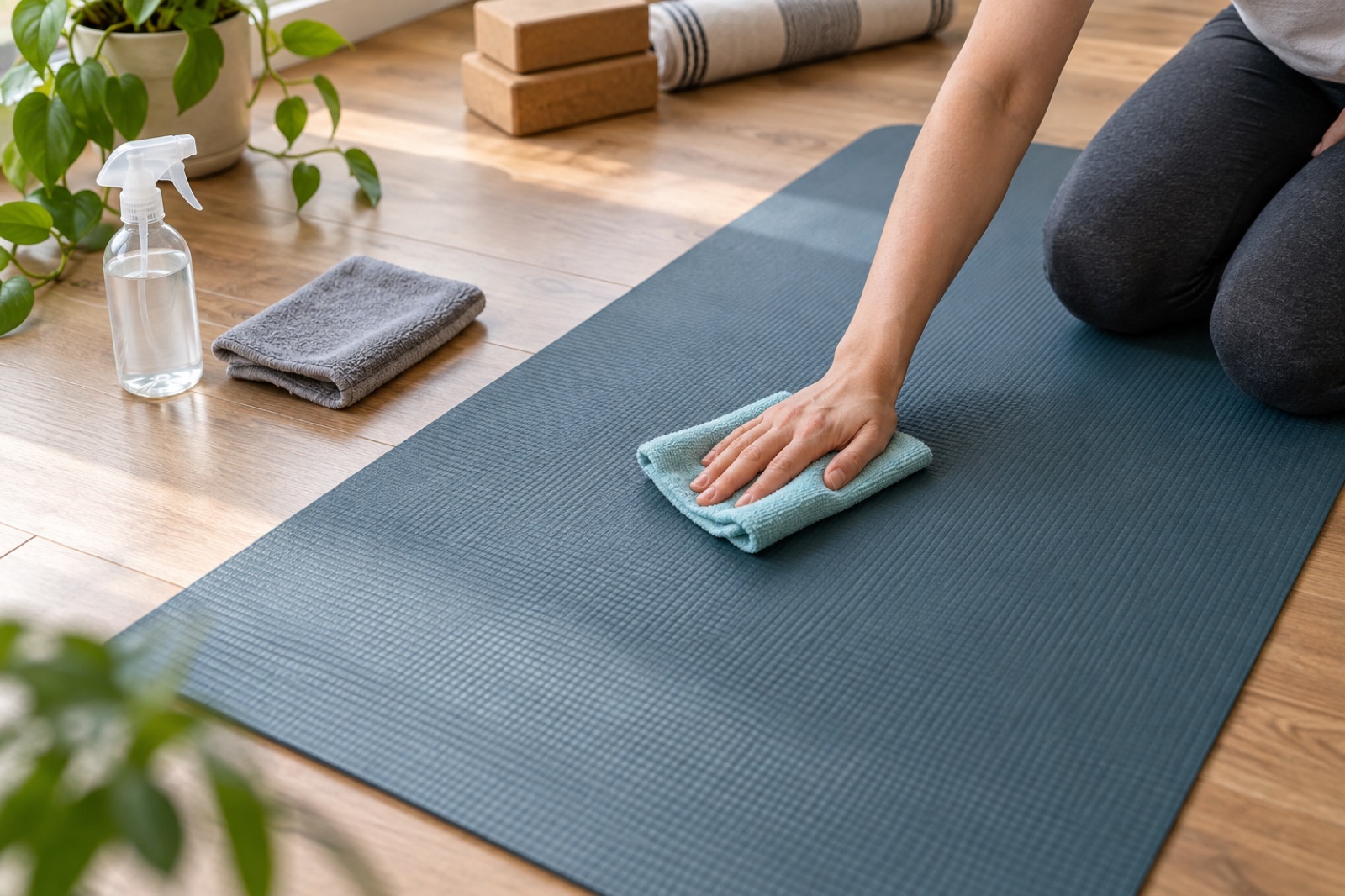
- Unroll it on a clean floor. Remove jewelry or grit that could scratch the surface.
- Check the care instructions. Confirm the material, approved cleaner, and whether rinsing is required.
- Apply cleaner to the cloth when possible. A fine, even application reduces overspray and prevents liquid pooling in texture, seams, or layers.
- Wipe both directions. Work the full practice surface with light pressure, paying attention to hand, foot, and head areas.
- Remove residue. If the cleaner or manual calls for it, use a second clean cloth dampened with water.
- Dry the surface. Blot moisture with a dry towel, then leave the mat fully open or hung in the maker-approved way.
- Roll only when completely dry. Store in a cool, dry place away from direct sunlight and heat.
When the Mat Needs More Than a Quick Wipe
Use the manufacturer’s deep-clean procedure rather than increasing the strength of a homemade mixture. Manduka, for example, gives different instructions for closed-cell PRO mats, natural-rubber eKO mats, absorbent PU-and-rubber GRP mats, and closed-cell TPE mats. Its guidance specifically warns against soaking most models and against using disinfectant on its absorbent GRP construction.
JadeYoga recommends a damp-cloth routine for its natural-rubber mats and warns that alcohol, petroleum-based solvents, soap, and high concentrations of essential oils can damage the rubber or make the surface slippery. Its cork model has a different care instruction, which illustrates why the brand name alone is not enough—you need the exact model and surface material.
Cleaning vs. Disinfecting a Shared Mat
Cleaning removes sweat, oil, and soil; disinfection uses a registered product for a specific microorganism and contact time. If a shared studio mat needs disinfection, first confirm that both the mat manufacturer and disinfectant label permit use on that exact surface type.
- Pre-clean visible soil as directed.
- Use an EPA-registered product whose label includes the surface and intended organism.
- Keep the surface visibly wet for the label’s full contact time.
- Rinse or wipe afterward if either label requires it.
- Let the mat dry completely before skin contact or storage.
Do not improvise with bleach or alcohol when the mat maker prohibits it. EPA registration establishes efficacy when label directions are followed; it does not guarantee compatibility with every yoga-mat material.
How to Fix Odor Without Masking It
- Sweat odor: clean the entire surface, not only the smelly area, and extend drying time before rolling.
- Musty odor: unroll immediately and inspect both sides. Persistent mustiness can mean the mat was stored damp or its absorbent layer is not drying completely.
- New-rubber smell: air the mat indoors in a ventilated, shaded place. JadeYoga warns against putting natural-rubber mats outside or in direct sunlight.
- Perfume or essential-oil residue: stop adding fragrance and use the maker’s residue-removal method. Oil can reduce grip even when the mat smells clean.
If odor returns immediately after full cleaning and drying, or the mat has widespread discoloration, tackiness, cracking, or delamination, replacement may be more practical than repeated chemical treatment.
How Often Should You Clean It?
- After a light personal practice: air it out; wipe high-contact areas if needed.
- After hot yoga or a sweaty workout: perform the maker-approved routine after every use and dry fully.
- Shared studio mat: clean after each user and follow the facility’s compatible disinfection protocol.
- Before storage or travel: clean and dry both sides so moisture is not trapped in the roll or bag.
A mat towel can reduce sweat loading during hot yoga, but it does not eliminate the need to dry and clean the mat beneath it.
Sources and Manufacturer Guidance
Requirements can vary by product, model, and situation. These primary sources informed this guide; official instructions for your exact product and current authoritative guidance take priority.
Frequently Asked Questions
-
Only if its sewn or printed care label explicitly permits machine washing. Manduka says its yoga rug can be machine-washed but its other mats should be cleaned by hand.
-
Not universally. Acid can affect color, adhesives, natural rubber, coatings, or grip. Use vinegar only when the exact mat manufacturer approves the dilution and method.
-
Only if both the wipe label and mat manufacturer approve the material, contact time, and any required rinse. Absorbent open-cell mats may retain disinfectant and are often poor candidates.
-
It depends on material, humidity, and how wet it became. Do not use a fixed number of minutes; leave it open until both sides, edges, texture, and any absorbent layer are completely dry.
-
Cleaner, soap, oil, or disinfectant residue is the usual cause. Use the model-approved residue-removal method, wipe with a clean cloth, let it dry fully, and test grip before practice.