Bumper Plates vs Iron Plates: Choose by Lifts, Space, and Drop Rules
Choose bumper plates when your training includes Olympic lifts or other manufacturer-approved drops. Choose iron plates when you lower the bar under control and want more weight to fit on each sleeve or storage peg.
Both can use an Olympic-style center hole, but that does not make their diameter, thickness, bounce, drop rating, accuracy, or floor requirements the same. Your bar, plates, collars, platform, and building must all suit the intended use.
Bumper Plates vs Iron Plates at a Glance
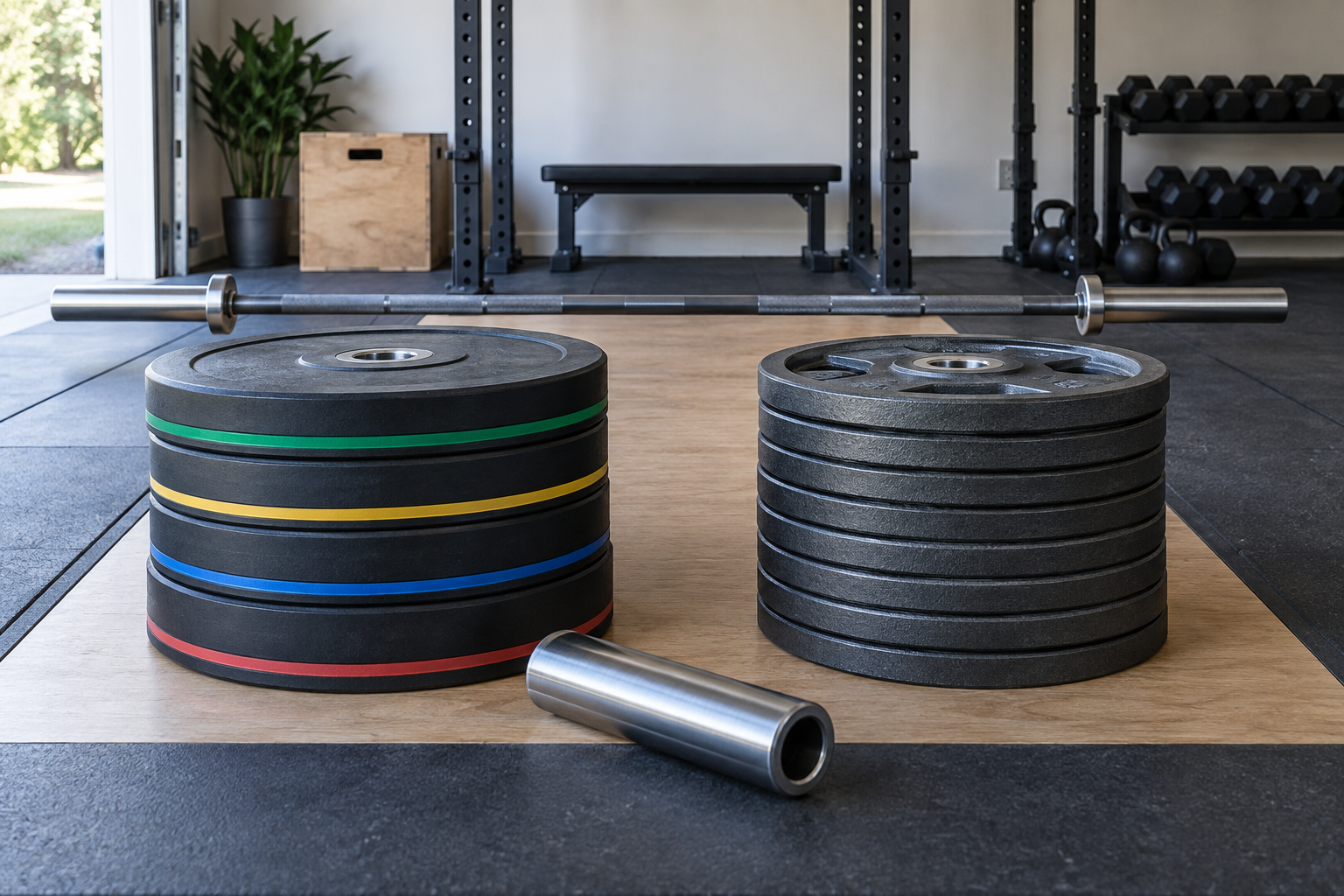
| Factor | Bumper plates | Iron plates |
|---|---|---|
| Construction | Thick rubber or urethane body with a metal hub or insert | Cast iron or machined steel; may have a thin coating |
| Dropping | Designed for impact only within the maker's stated conditions | Usually not drop-rated; lower under control |
| Outside diameter | Most training bumpers use a common full diameter across weights | Often varies by weight; calibrated powerlifting plates follow sport-specific dimensions |
| Sleeve space | Thicker; fewer heavy plates fit on a bar | Thinner; more weight fits on the same sleeve |
| Noise and bounce | Usually less metallic clang, but impact can still be loud and structure-borne; bounce varies | More clang and hard contact; little material compliance |
| Best match | Olympic lifting, technique work, general training where a full-diameter floor plate is useful | Squat, bench, controlled deadlift, machines, and high-load powerlifting |
| Typical cost and storage | Often costs more and needs wider storage | Basic iron is often cheaper and denser to store |
Choose by the Lifts You Actually Perform
| Training | Usually the better starting choice | Why |
|---|---|---|
| Snatch, clean and jerk, and Olympic derivatives | Bumper plates approved for repeated drops | Full-diameter plates and impact-tolerant construction suit the sport's release patterns |
| Squat and bench press | Iron or bumpers | The bar normally does not hit the floor; price, storage, accuracy, and sleeve capacity decide |
| Controlled deadlifts | Either | Full-diameter bumpers set a consistent start height; thin iron allows more load |
| High-load powerlifting | Thin calibrated or machined iron/steel | More plates fit on the sleeve and match competition-style loading |
| Beginner all-purpose home gym | Quality bumpers if drops may occur; iron if all weights stay controlled | Buy for the most demanding permitted use rather than appearance |
| Plate-loaded machines | Usually iron or compact coated plates | Slim plates preserve horn capacity; dropping is irrelevant |
Diameter Sets Floor Height—and Which Plate Takes the Impact
IWF weightlifting specifications set the largest competition discs at 450 mm in diameter, and common bumper plates use that full diameter across several weights. That gives light technique loads the same basic bar height as heavy loads.
Iron plates often get smaller as weight decreases. For floor pulls, the largest plate touching the platform sets the bar height. If mixed plates have different diameters and the bar is dropped, the largest pair can receive most of the impact.
Calculate Sleeve Capacity Before Choosing Bumpers
Use the bar's loadable sleeve length and each plate's published thickness:
required length per side = total plate thickness + collar space + specified clearance
If a 45-pound bumper is 3.25 inches thick, four per side require 13 inches before the collar. Four 45-pound iron plates at 1.5 inches each need only 6 inches. Those are example dimensions—calculate with the exact products you plan to combine.
Our barbell and plate compatibility guide covers sleeve diameter, collars, rack fit, and plate-hole checks.
Bumpers Reduce Some Harshness; They Do Not Soundproof a Gym
A rubber plate can reduce sharp metal-on-floor contact and protect equipment when used on a suitable platform. The combined bar may still create substantial airborne and structure-borne noise, especially on an upper floor. Softer crumb-rubber plates may bounce more than dense training or competition bumpers.
- Use flooring or a platform rated for the load and drop height.
- Confirm the bar is also approved for the intended drops.
- Follow the plate maker's minimum load, surface, and temperature rules.
- Do not drop an empty bar, small change plates, or a mixed setup unless every component permits it.
- Replace plates with a loose insert, cracked hub, split rubber, or severe deformation.
Can You Mix Bumper and Iron Plates?
They can share a compatible 50 mm sleeve for a controlled lift, provided the stack is balanced and the collar engages fully. But REP specifically advises against dropping a mixed stack when the plate diameters differ because the larger plates take the impact.
For floor work, use the same full-diameter, drop-approved plate type on both sides. For a squat or bench that never contacts the floor, mixing is mainly a question of fit, balance, and accurate loading.
Compare These Specs Before Buying
- Center-hole diameter and collar compatibility
- Outside diameter for every weight
- Plate thickness for every weight and total target load
- Weight tolerance and whether plates are sold singly or in pairs
- Drop rating, bounce description, and required flooring
- Hub construction and warranty exclusions
- Odor or material notes for indoor use
- Storage-post diameter, usable length, and rack balance
Do not pay for a competition label unless its accuracy, dimensions, and training feel solve a real need in your program.
Sources and Manufacturer Guidance
Requirements can vary by product, model, and situation. These primary sources informed this guide; official instructions for your exact product and current authoritative guidance take priority.
- International Weightlifting Federation: disc diameter and construction specifications
- International Powerlifting Federation Technical Rulebook (effective March 2026)
- REP Fitness: Bumper Plates vs Iron Plates
- REP Sport Bumper Plates 2.0: warning about dropping mixed plate diameters
- IWF Technical and Competition Rules: 50 mm sleeves and bar dimensions
Frequently Asked Questions
-
Neither is universally better. Bumpers are better for approved drops and consistent floor height; iron is better for maximizing sleeve and storage capacity in controlled lifting.
-
Yes, if the bar, plates, flooring, and technique are suitable and the weights are lowered under control. Check the plate diameter because it determines starting height.
-
Do not assume so. Follow the plate and bar manufacturers' rules and use an appropriate lifting platform or impact-rated flooring; bare concrete can damage equipment and the slab.
-
The resilient body needs material volume to withstand impact. Lower-weight economical bumpers are often especially thick, which reduces sleeve capacity.
-
They usually reduce metallic clang, but a loaded bar striking the floor can still be very loud and transmit vibration through the building.