Barbell and Weight Plate Compatibility Guide: Check More Than the Hole Size
Olympic plates with an approximately 2-inch center hole belong on 50 mm Olympic-style sleeves. One-inch “standard” plates belong on one-inch bars. Those two families are not directly interchangeable.
Hole size is only the first check. A complete match also requires enough loadable sleeve length, a collar made for that sleeve, suitable plate diameter and construction, adequate rack clearance, and a bar rated for the intended load and use.
Olympic vs Standard: The First Compatibility Gate
“Two-inch Olympic” is a convenient U.S. label, not a literal two-inch sleeve on every bar. IWF competition bars use 50 mm sleeves, while commercial Olympic plates often publish openings around 50.2 to 50.6 mm so they can slide over the sleeve. By contrast, CAP identifies its standard plates as having a 1-inch hole for 1-inch bars.
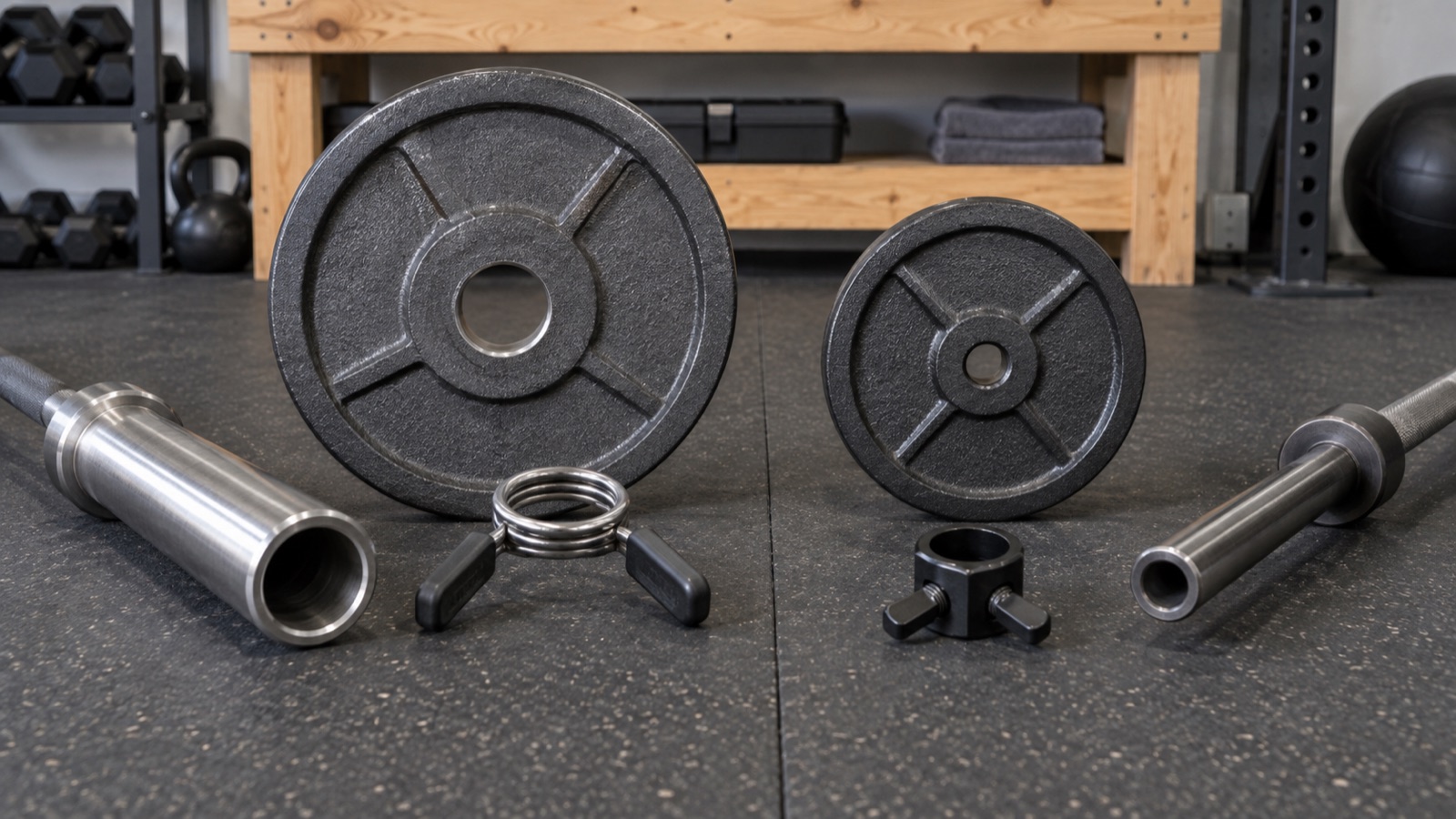
| System | Bar sleeve | Plate center hole | Collar |
|---|---|---|---|
| Olympic / 50 mm | Nominal 50 mm rotating or fixed sleeve; verify actual product | Often about 50.2–50.6 mm on commercial plates | 50 mm Olympic collar suited to the sleeve surface |
| Standard / 1 inch | Nominal 1-inch sleeve, often threaded or smooth | Nominal 1-inch opening | One-inch clamp, spring, or spin-lock collar specified for that bar |
| Specialty or proprietary | May be Olympic-sized, axle-sized, threaded, or unique | Must match the published sleeve | Use the maker's specified collar or retention system |
The Seven-Check Compatibility Worksheet
| Check | What to record | Failure it prevents |
|---|---|---|
| 1. Sleeve diameter | Published diameter and whether sleeve is smooth, ribbed, threaded, or axle-style | Plate will not fit, or fits dangerously loose |
| 2. Plate hole | Published center-hole diameter and insert material | Binding, excessive play, or incompatible family |
| 3. Loadable sleeve length | Usable straight length before the end and collar requirement | Plates or collar extending beyond usable sleeve |
| 4. Plate thickness | Thickness of every plate at its widest loading surface | Running out of sleeve before reaching target weight |
| 5. Collar fit | Collar diameter range and compatibility with smooth, ribbed, or threaded sleeve | Plates sliding during the lift |
| 6. Outside diameter and material | Plate diameter, bumper/iron type, and drop permission | Uneven floor contact or dropping plates not designed for it |
| 7. Bar, rack, and storage | Bar rating, distance between collars, rack width, J-cup position, storage peg size | A loaded bar that cannot rack, clear uprights, or store safely |
Calculate Whether the Plates Physically Fit
Use the manufacturer's loadable sleeve length, not total sleeve length. Then calculate each side:
required length per side = sum of plate thicknesses + collar space + any specified clearance
Example: four plates that are 3.25 inches thick require 13 inches before the collar. If the collar needs 1.5 inches of straight sleeve, the setup needs at least 14.5 usable inches per side. Published plate width can vary by weight within the same series.
Keep the stack symmetrical unless the exercise and equipment are specifically designed otherwise. Never load over the end or omit a required collar to reach a target number.
Plate Diameter Changes the Starting Height
IWF full-size competition discs are 450 mm in outside diameter. Many bumper plates follow that diameter so the bar starts at a consistent height from the platform. Iron plates and light technique or change plates can be smaller, although some technique plates maintain the full 450 mm diameter at low weight.
- For floor pulls, the largest plate touching the floor sets the bar height.
- Mixing different outside diameters is mechanically possible on the sleeve but can concentrate floor contact on the largest pair.
- Do not drop cast-iron grip plates or other plates whose manufacturer prohibits it simply because they fit an Olympic sleeve.
- Use flooring and a bar approved for the intended impact.
A Plate Can Fit the Bar While the Bar Does Not Fit the Rack
Measure the straight shaft distance between the inner sleeve collars and compare it with the rack's outside J-cup position. The sleeves and plates must clear the uprights during unracking, and the shaft must sit securely on both J-cups.
Short Olympic bars and some 15 kg, technique, curl, and specialty bars may accept 50 mm plates but are not rackable on a standard-width power rack. Likewise, some trap and safety squat bars use Olympic sleeves yet require special storage and collars. Check the complete product drawing.
Collars Are Part of the Compatibility Decision
- Olympic clamp collars: confirm the stated sleeve range and whether the inner surface works with a smooth or ribbed finish.
- Spring collars: quick and simple, but spring force, handle clearance, and sleeve finish vary.
- Spin-lock collars: must match the exact bar thread diameter and pitch; similar appearance is not compatibility.
- Competition collars: have defined weight and dimensions for the governing sport; include their weight in the loaded total.
- Specialty-bar collars: thick axle or powder-coated sleeves may require a dedicated size.
If a collar walks outward, cannot close fully, damages the sleeve, or leaves insufficient engagement, stop and replace it with a documented match.
Before You Buy a Mixed Set
- Download dimension drawings for the exact bar, plates, collars, rack, and storage.
- Confirm pound or kilogram markings and the unloaded barbell weight.
- Calculate target load using real plate thickness and sleeve length.
- Check whether the bar is rackable in your rack and whether loaded plates clear the uprights.
- Match the plate type to the lift: controlled strength work, Olympic drops, technique practice, or machine loading.
- Test one plate and one collar before committing to a full mixed-brand set when tolerances or coatings are uncertain.
Sources and Manufacturer Guidance
Requirements can vary by product, model, and situation. These primary sources informed this guide; official instructions for your exact product and current authoritative guidance take priority.
- International Weightlifting Federation: bar, disc, and collar specifications
- IWF Technical and Competition Rules and Regulations (2025)
- Rogue Calibrated KG Steel Plates: 50.4 mm center hole and plate dimensions
- Rogue HG 2.0 Bumper Plates: 50.4 mm opening, diameter, and plate widths
- Rogue Technique Plates: full-diameter low-weight plate example
- CAP Standard Grip Plate: one-inch plate family
- REP Rackable Curl Bar: 2-inch plate compatibility and rackable dimensions
Frequently Asked Questions
-
Most 50 mm Olympic-family products are intended to work together, but coatings, tolerances, specialty sleeves, plate inserts, and collar design can still cause a poor fit. Check published dimensions.
-
No. The plate hole is too small. Do not drill or modify plates to make them fit.
-
The hole is much too large for a secure direct fit. Use a properly rated manufacturer-approved conversion system or match the plates to the correct bar instead of improvising spacers.
-
They can share a compatible sleeve, but plate diameter, thickness, floor contact, and drop permission still matter. Do not drop a mixed load unless every component and the floor system are approved for it.
-
IWF-style 15 kg and 20 kg bars both use 50 mm sleeves, so compatible Olympic plates fit both. The 15 kg bar usually has shorter loadable sleeves, so maximum plate count may differ.