Strength & Weights

Best Weight Benches with Leg Extensions, Tested

A weight bench with a leg extension sounds like a smart trade: one footprint in the garage instead of two machines. The catch is that the bench usually gets all the engineering and the leg attachment gets whatever bracket was left in the parts bin, which is why so many of them rattle, wobble, and stop at an awkward half-arc that never lines up with your knee. Buy one that's genuinely built to do both jobs and you cover your pressing days and your quad days without giving up floor space or a second mortgage's worth of gym equipment.

My team and I have spent the past six months on nine of these benches — lifting on them four mornings a week, folding them up, dragging them across the garage floor, and rebuilding the ones that arrived in 60 pieces. The things that separate a good one from a frustrating one rarely show up on the spec sheet: whether the pop pins seat cleanly, whether the leg roller actually adjusts to your shin, and whether the frame stays quiet when you rack the bar.

Best All-In-One Setup

Our Score 9.0/10
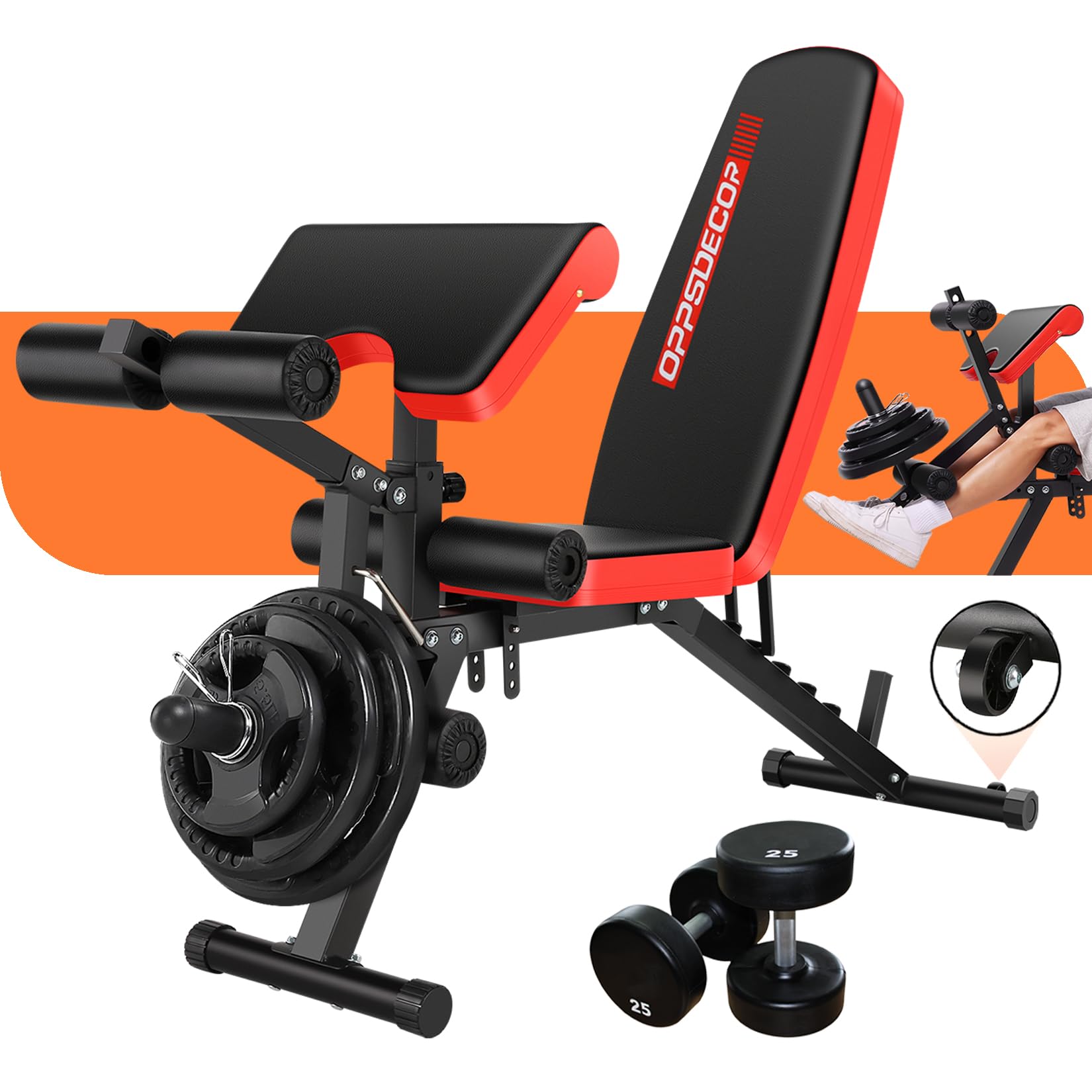
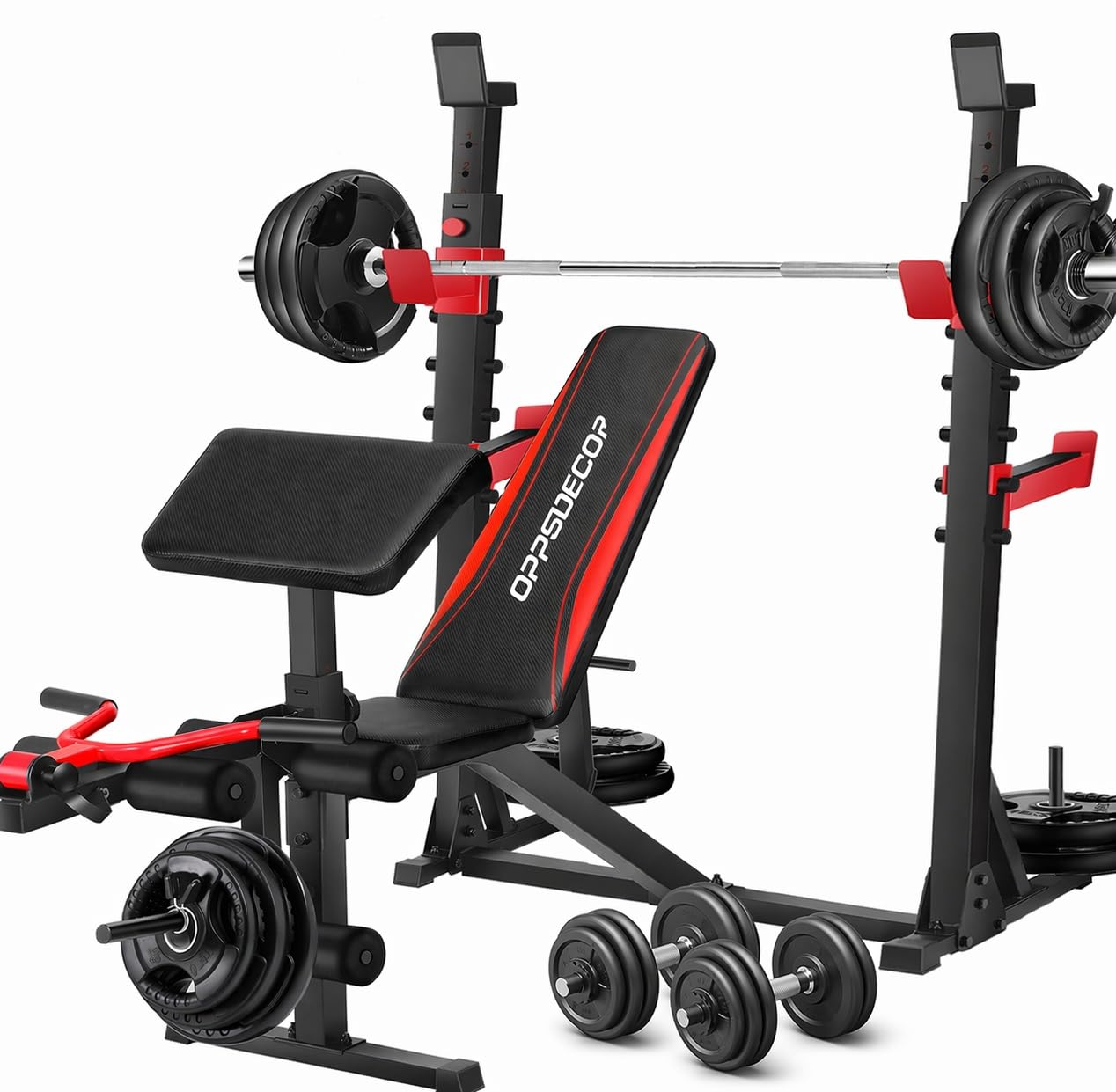
OPPSDECOR 900 lb Bench Set

OPPSDECOR

OPPSDECOR 900 lb Bench Set

  • Footprint 82.7"D x 40.2"W x 60"H
  • Weight Capacity 900 pounds total; 300-pound max user
  • Rack Adjustments 6 bar levels; squat rack 48.8"–60"
  • Backrest Positions 7
Check Price on Amazon

Bench, bar rack, squat stand, and leg station on one certified frame.

If your home gym is a bare corner and a pile of plates, this set is the fastest way to make it a gym. OPPSDECOR bundles an adjustable bench, a six-level barbell rack, a four-level squat stand running from 48.8 to 60 inches, a preacher pad, and a leg extension and curl station onto one frame — and it costs less than our top pick.

The details are better than the money suggests. Two independent rack systems mean bar height for pressing and bar height for squats don't have to be the same setting, so you aren't rebuilding the rack between lifts. The two plate posts hold your plates within reach and add ballast to the base at the same time. The bench runs seven backrest angles, and the set is certified to ASTM F3105-20 at a 900-pound total load that includes a 300-pound user — plates and person share that number rather than stacking on top of it.

Treat the bench as the bonus rather than the point. It is certified and it stays put, but a dedicated bench like the Keppi has denser pads and finer angle control. What you are really buying is the rack, the squat stands, and the plate storage, with the leg developer and preacher pad thrown in so that one order covers the whole room.

Bottom Line

Buy it when the rack is the missing piece and you want the leg station in the same order; nothing else here outfits a whole corner at once.

Check Latest Price

Best Feature Set for the Money

Our Score 9.0/10
XDDIAS Adjustable Bench

XDDIAS

XDDIAS Adjustable Bench

  • Footprint 70.85"D x 19.29"W x 49.21"H
  • Item Weight 41.9 lb
  • Weight Capacity 900 lb
  • Backrest And Seat 10 backrest levels; 4 seat levels
Check Price on Amazon

Ten backrest levels, adjustable headrest, and a removable leg attachment.

Cheaper than the Marcy and more adjustable, the XDDIAS is the bench to look at when your budget stops short of the premium picks but you still want a bench that changes shape. Ten backrest levels, four seat levels, an adjustable headrest, and a 17.5-inch preacher pad — plus a leg extension and curl attachment you can unbolt when you want the bench flat for hip thrusts or rows. That is a lot of hardware on a 41.9-pound frame, and the lightness is the point: you can move it by yourself.

The attachments are the reason to pick it. The leg developer comes off completely, so nothing digs into your shins during a flat press, and the preacher pad sits where your forearms actually land instead of forcing you into a stretch. On a smooth floor the feet can creep, so put a mat under the bench before you load the leg arm. The bench also sits high — shorter lifters will want their feet planted and checked before they trust the extension.

Bottom Line

A lot of bench for the middle of the price range — buy it if you want positions, preacher work, and a leg attachment you can take off.

Check Latest Price

Best for Shared Spaces

Our Score 9.0/10
OPPSDECOR LSL6005

OPPSDECOR

OPPSDECOR LSL6005

  • Footprint 70.87"D x 19.29"W x 36.81"H
  • Item Weight 48 lb
  • Weight Capacity 800 lb
  • Backrest And Seat 7 backrest angles; 4 seat angles
Check Price on Amazon

Rolls aside on wheels at 48 pounds, with a pin-loaded leg developer.

The back pad on the LSL6005 is short. It is the first thing you notice beside the longer benches here, and much past 5-foot-6 you will feel your shoulders hanging off the top when you lie back. That is the trade for a 48-pound frame with wheels that rolls into a corner when the car needs the garage back.

For a gym that shares a room with a car, this is the bench we point to. The leg developer is pin-loaded rather than plate-hung, adjusting through its own positions so you can extend and curl without swapping parts, the 17.7-inch preacher pad is wide enough for two-arm curls, and the triangular base with its upgraded footing is designed to sit flat on uneven concrete. Seven backrest angles and four seat angles cover flat, incline, and decline.

Assembly is the pleasant surprise: the hardware arrives bagged by step and one person can build it without a second opinion. The 19.29-inch width is the other thing you notice, because it slips into gaps a full-width bench won't and leaves the rest of the garage to the car.

Bottom Line

Buy it when the bench has to share the garage with the car: 48 pounds, wheels, and a pin-loaded leg developer that handles extensions and curls.

Check Latest Price

Best for Beginners

Our Score 8.8/10
Marcy SB-350

Marcy

Marcy SB-350

  • Footprint 23"D x 64.5"W x 42"H
  • Item Weight 51 lb
  • Weight Capacity 600 lb
  • Backrest Positions 6
Check Price on Amazon

A forgiving starter bench whose leg developer suits moderate dumbbell loads.

The back pad locks into a sawtooth ladder rather than a pull-pin, so each of the six positions drops into a solid seat with no rattle once it is in. It costs Marcy nothing and spares you a pad that shifts mid-set. Changing positions means getting up and lifting the pad, though, so plan your work in blocks instead of bouncing between flat and incline every set.

The leg developer is the reason this bench has stayed in so many garages: foam rollers with a vinyl cover rather than bare foam, a plate horn at the end, and enough travel for a proper leg extension. Around it, the frame is powder-coated steel with high-density foam padding, and the transport handle and wheels mean it doesn't have to live where you finish using it.

Fifty-one pounds is light for something you press on. On carpet it is fine; on painted concrete the feet want a mat under them, and at the two steepest backrest settings you can feel the frame give in a way the heavy benches don't. Dumbbells and bodyweight work sit comfortably inside the 600-pound rating — a 250-pound lifter under a loaded bar does not.

As a first bench with a leg developer, the SB-350 still earns its place: six solid positions, a leg arm that does what it says, and a price that leaves room for dumbbells. It stops making sense the moment the bar gets heavy, which is exactly when the Keppi's extra 40 pounds stops looking like overkill.

Bottom Line

The bench we hand to anyone setting up a first home gym: the sawtooth pad locks solid and the leg developer does extensions properly at moderate loads.

Check Latest Price

Best Folding Bench

Our Score 8.8/10
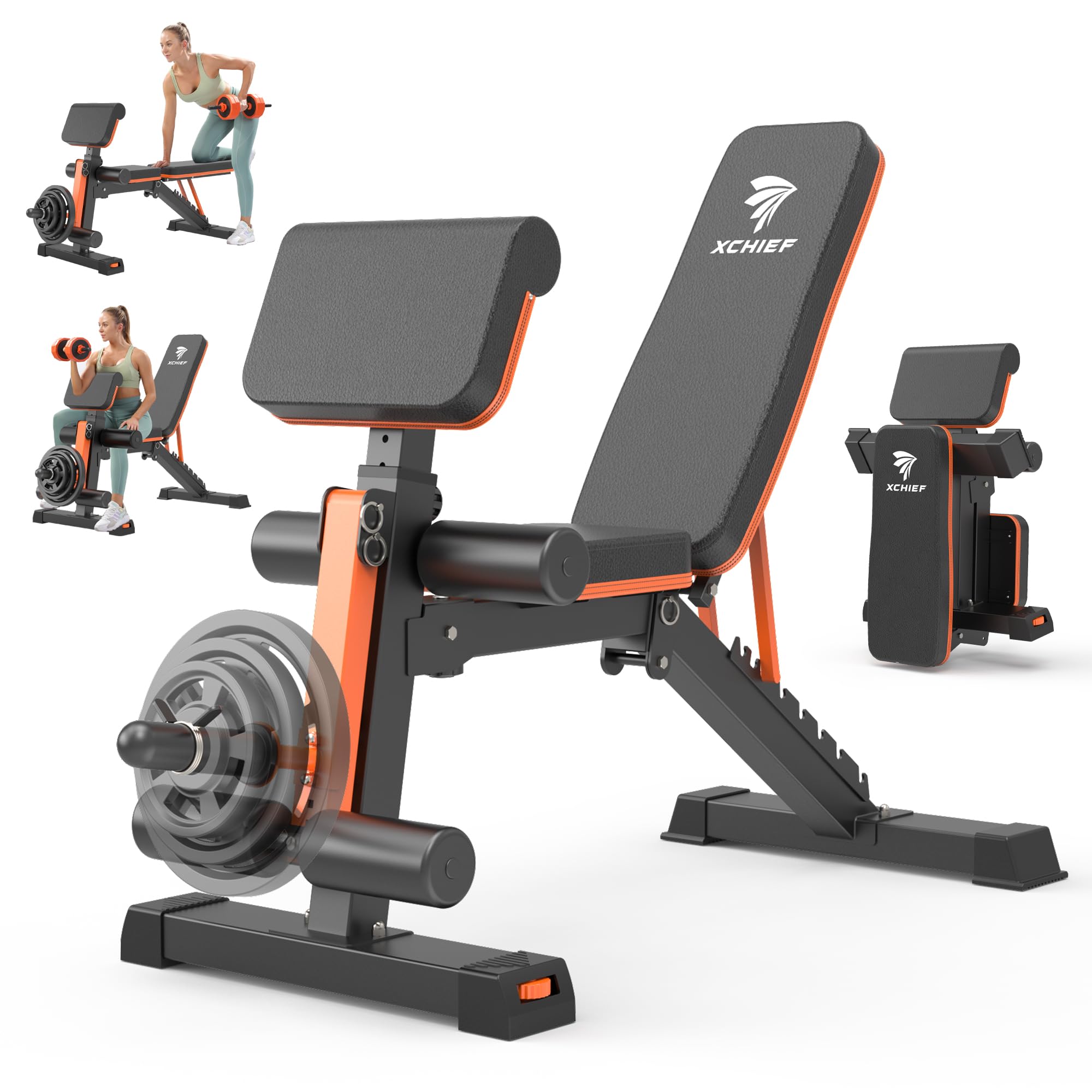
XCHIEF Adjustable Bench

XCHIEF

XCHIEF Adjustable Bench

  • Folding Folds for storage
  • Item Weight 42 lb
  • Weight Capacity 1,000 pounds
  • Backrest Positions 9
Check Price on Amazon

Folds away at 42 pounds, with nine backrest positions and a leg developer.

Nine backrest positions, five preacher pad positions, a leg developer, and a fold — for a bench at the bottom of this group's price range, that is an unusual amount of hardware. The frame is thickened steel under PU leather and dense foam, and most of the bench arrives pre-assembled, so the build is short and the tools are in the box.

Folding is the reason to buy it. The bench collapses, and 42 pounds is light enough to carry one-handed to a closet between sessions — a genuine difference from the 90-pound benches here if your gym is also your living room. Folded, it still occupies a wall's worth of space, so measure the gap before you assume it disappears.

The 1,000-pound rating is a design ceiling, not a working target. A 42-pound frame with a folding hinge is a bench for dumbbells and moderate bar work, and that is fine — it just isn't the bench to buy if you are chasing a heavy bench press or loading the leg arm with everything you own. For everything else it does more than its price asks of it.

Bottom Line

Buy it if the bench has to fold away between workouts: nine backrest positions, a leg developer, and 42 pounds you can carry to the closet.

Check Latest Price

Best For Tightest budgets

Our Score 8.8/10
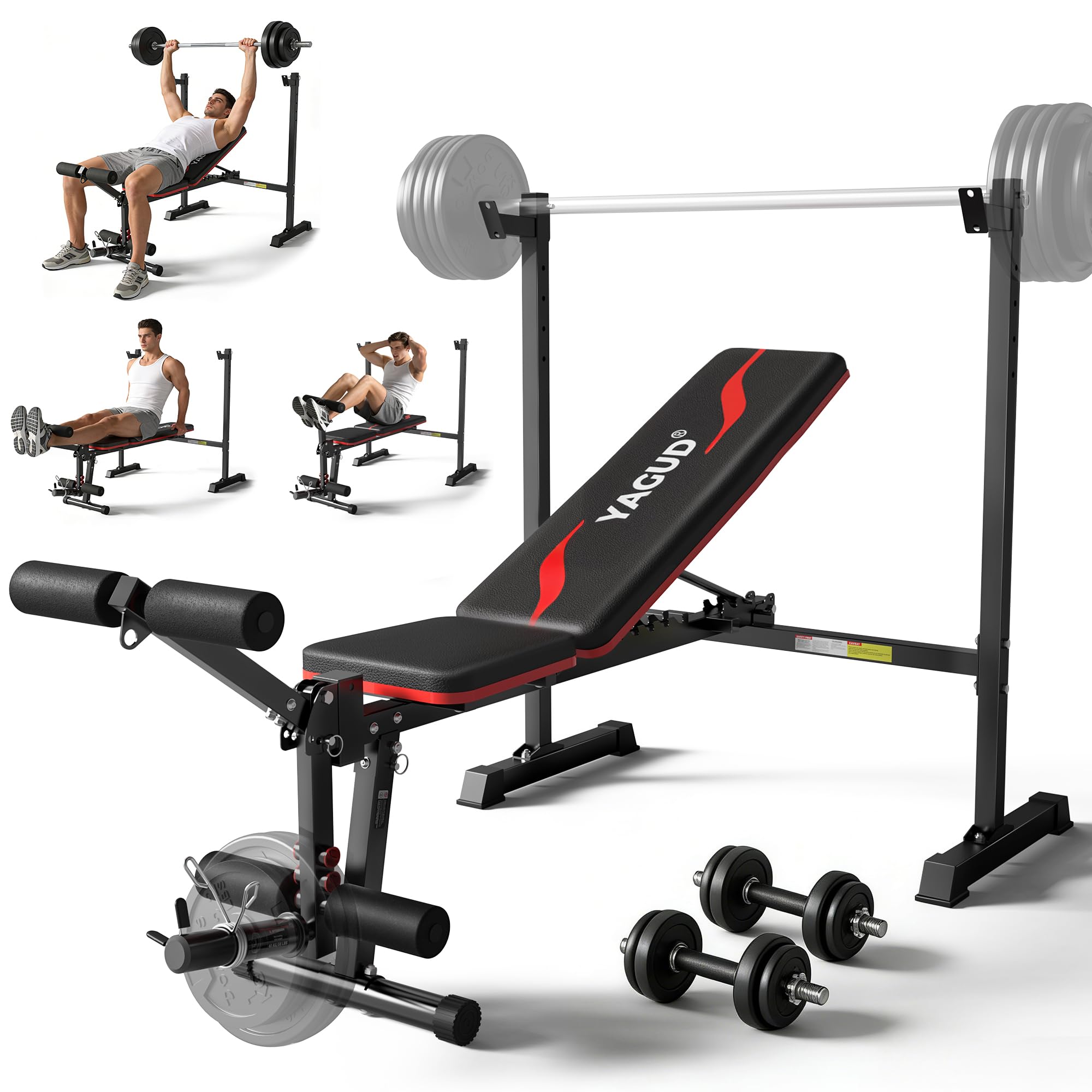
Yagud Bench Set

Yagud

Yagud Bench Set

  • Folding Folds flat on a single locking pin
  • Included Barbell rack and safety bar catches
  • Item Weight 42 lb
  • Backrest Positions 10
Check Price on Amazon

A barbell rack, safety bar catches, a ten-position backrest, and a dual-function leg developer on a bench that folds flat — at the bottom of this group's price range, nothing else packs in as much. The frame is triangular steel with high-density padding, and the catches give you something under the bar if a rep stalls.

It folds on a single locking pin, which is the difference between a bench you use and a bench you walk around. The 42-pound weight helps: you can collapse it and lean it in a corner without clearing the room first. The padding feels firmer than the price implies, and the bench is wide enough that your shoulders stay on the pad through a press.

Two things to settle before you order. The capacity figures don't agree with each other — the number in the title and the number in the specifications are far apart — so confirm the current rating against the weight you actually press and extend. And there is less long-term detail on this one than on the established benches, so treat the welds and the fold mechanism as things to inspect when it arrives.

Bottom Line

The cheapest complete setup here: a rack, safety catches, and a leg developer on a folding bench — just confirm the capacity before you load it.

Check Latest Price

Best Overall

Our Score 8.6/10
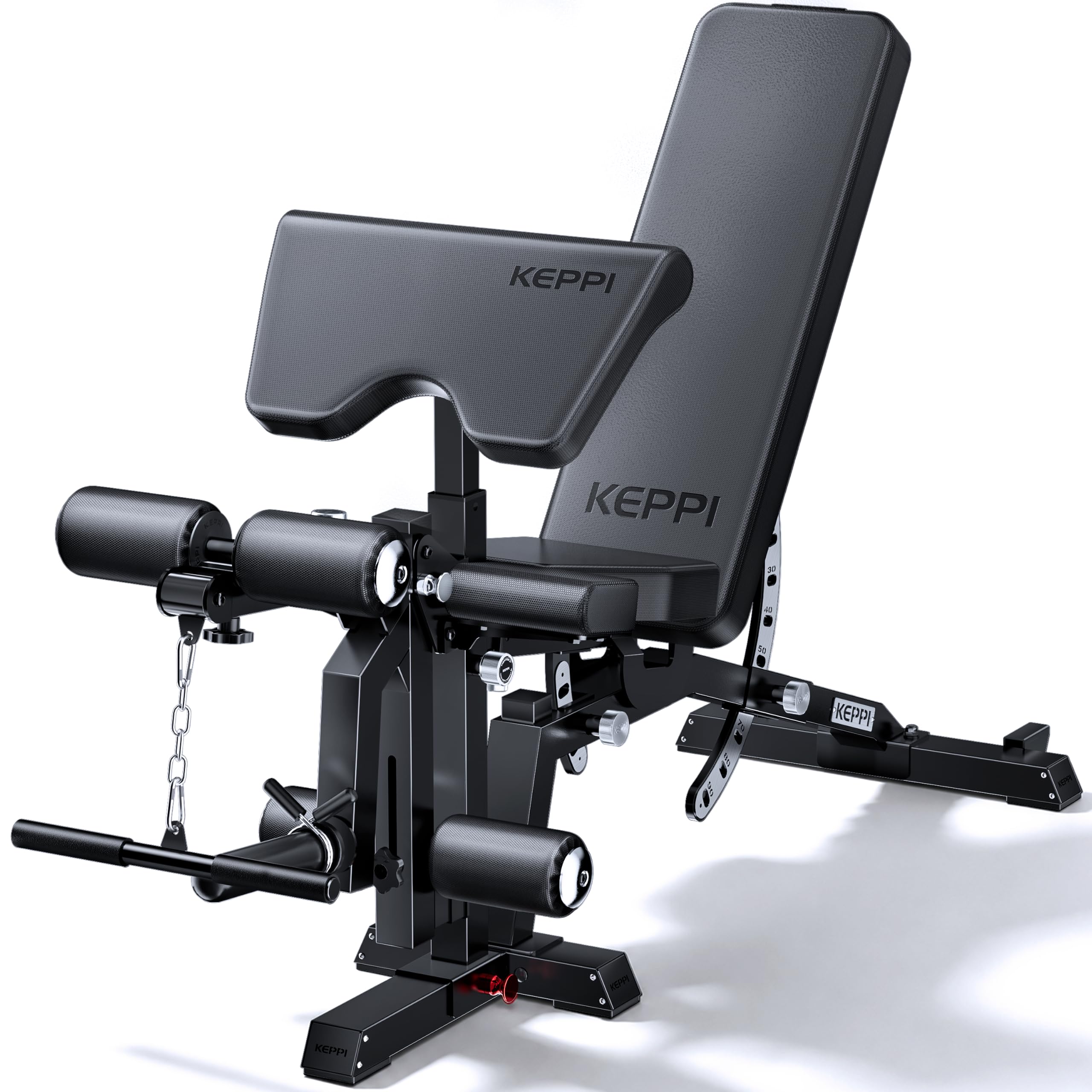
Keppi Bench3000 V2

Keppi

Keppi Bench3000 V2

  • Footprint 59.5"D x 23.3"W x 45.3"H
  • Frame Weight 93 lb
  • Weight Capacity 1,200 pounds in flat position
  • Backrest And Seat 12 backrest angles (-20° to 90°); 3 seat positions (0°, 10°, 20°)
Check Price on Amazon

Heaviest frame here, with 12 backrest angles and a leg developer that stays put.

A 93-pound frame is the whole argument for the Bench3000 V2. Plant it on the floor and it barely registers you climbing on; the flat-position rating runs to 1,200 pounds, and the 8/16-gauge steel and aluminum fittings show where the money went. Of everything in this group, this is the bench we trust under a loaded bar. The 12 backrest angles span -20° to 90°, and three seat positions let you close the gap between pad and backrest for incline work — the detail that separates a real adjustable bench from one that just has a hinge.

The leg extension and curl arm is the part you came for, and it is built like the rest of the bench. An oversized thigh pad keeps you anchored, and the rollers track through the extension without the flex you feel on lighter frames. A preacher pad comes with it, and the whole bench rolls on wheels when you want the floor back for mat work. It is the steadiest leg developer here, and steadiness is most of what a bench-mounted arm can offer.

What it doesn't do is fold. At 59.5 inches long and 93 pounds it wants a wall it can call its own, and the wheels are for shoving it aside rather than stashing it. In a garage or a spare bedroom that is a fair exchange for the stability; in a shared living room, measure twice before you order.

Bottom Line

Buy it if you press with a bar and want a leg developer that stays put: the heaviest frame here and the widest angle range, at a premium price.

Check Latest Price

How We Tested the Best Weight Benches With Leg Extensions

The shortlist came before anyone touched a barbell. I pulled roughly 30 models from retailer listings and brand catalogs, then cut the field using the specs that actually decide whether a bench works in a home gym: rated weight capacity, footprint with the leg extension deployed, seat and pad adjustment range, and price measured against the frame construction. Nine made the cut, and we spent six months with them.

Assembly came first, because it tells you a lot. I built each bench solo with a stopwatch running, counted the tools required, and noted whether the bolt holes lined up without a fight — two of the nine genuinely needed a second person. Once built, I racked and re-racked a loaded bar, shoved each bench hard from the side to check for rocking, and loaded plates plus a 220-pound tester to just under the stated capacity to listen for creaks and watch the frame flex.

For the leg extension itself, I measured the arc of the roller and noted whether it landed on the shin or jammed into the ankle, then ran the same sets with a 5'3" and a 6'1" tester to see how much the pad and seat adjustments gave each of them. Every bench got dragged across concrete and folded, if it folded, with the footprint measured both ways. Then I compared notes on price: what the extra money bought, and where a cheaper bench gave up nothing that mattered.

How to Choose

Judge the Bench Before the Attachment

A leg developer is a bolt-on: rollers on an arm with a plate horn or a pin-loaded pivot. It adds very little to how the bench behaves under a bar. What you actually press on is the frame, and in this group those run from 42 to 98 pounds. Heavier frames stay planted when you drive your feet; lighter ones ask you to be tidier with your setup.

If you press with a bar and plates, put frame weight and the way the back pad locks ahead of how many angles the leg arm offers. If your work is dumbbells, a lighter bench you can move out of the way is the better trade — portability you use beats stability you never need.

What a Bench-Mounted Leg Developer Can and Can't Do

Expect a leg extension, not a leg-extension machine. The roller arm on these benches is short, resistance is whatever plates you hang on it, and the movement is a compromise between your shin length, the roller height, and the seat angle. Taller lifters run out of range first, and that holds at every price in this group.

If quad isolation is a core lift for you, a dedicated machine — or a bench whose arm sits longer relative to the seat — earns its floor space. If the leg extension is the finisher after your pressing, an integrated developer does the job. Sit on the bench and check where the roller meets your ankle before you commit.

Read the Capacity Number Properly

Capacity figures are not interchangeable. Some rate the bench in the flat position only, some rate the total load including the person, and one set here splits it into a 900-pound total with an explicit 300-pound user cap. Subtract your own bodyweight from the total before deciding a bench is strong enough, because plates and person share that number rather than stacking on top of it.

The leg developer has its own limit, separate from the bench. A 600-pound bench is generous for dumbbell work and thin for a 250-pound lifter under a loaded bar, and the leg arm is rated below the bench in every case.

Match the Angles to the Lifting You Do

Six positions is not the same as a useful spread. What matters is whether the backrest drops below flat for decline work, climbs to near upright for shoulder press, and whether the seat tilts to close the gap between pad and backrest at incline. Our top pick spans -20° to 90° with three seat angles; the budget benches cluster their settings in the middle and offer one steep decline.

Count the positions you will actually use — flat, 30°, 45°, upright — rather than the total on the box. A bench that stops a few degrees short of upright is fine for incline pressing and wrong for seated shoulder work.

Plan the Floor Space and the Fold

Three storage answers show up here: a 93- to 98-pound frame that stays where you put it, a 48-pound bench on wheels, and a 42-pound bench that folds flat. Only the folding bench gives floor back, and even folded it needs a wall to lean against. Folding saves you tripping room, not a room.

Decide where the bench lives before you decide whether it folds. If it shares space with a car, wheels matter more than a hinge; if it lives behind a door in a hallway closet, the fold is the whole point.

Frequently Asked Questions

Final Verdict

The Keppi Bench3000 V2 is the bench we point to for a home gym that will see real weight: a 93-pound frame, 12 backrest angles from -20° to 90°, and a leg developer that does not wander while you use it. It costs the most here, and the stability is what that money buys.

If the rack is the piece missing from your setup, the OPPSDECOR set gets you a bench, a bar rack, and a squat stand on one certified frame. If you are starting out with dumbbells, the Marcy SB-350 will carry you further than its position in this group suggests.