Tech & Wearables

Best Open-Ear Headphones for Running of 2026

Sealed earbuds make a strange kind of sense until you take them running: your own footsteps boom, your breathing gets loud, and the car idling at the crosswalk is invisible to your ears. Open-ear headphones fix that by leaving the ear canal uncovered — either bone-conduction pads resting on your cheekbones or small speakers hovering just outside the ear — so the world stays audible while the music plays. What they don't do is hand you chest-thumping bass or a silent commute. The design trades isolation for awareness, and that trade is the whole point.

The trick is telling apart the pairs that actually stay put from the ones that rattle around after the first mile. My team has spent the past six months running in 12 pairs, on pavement loops and treadmill intervals and a few soggy mornings where sweat was the least of our problems, and the gaps in fit and sound were wider than the spec sheets suggested. The ones worth buying stay comfortable past the hour mark and don't broadcast your playlist to the whole trailhead. Below are the pairs we kept reaching for.

Best For Spare pair

Our Score 9.4/10
TRAUSI T6

TRAUSI

TRAUSI T6

  • Design Open-ear ear hook
  • Bluetooth 5.4
  • Battery Life 80 hours with case
  • Water Resistance IPX7
Check Price on Amazon

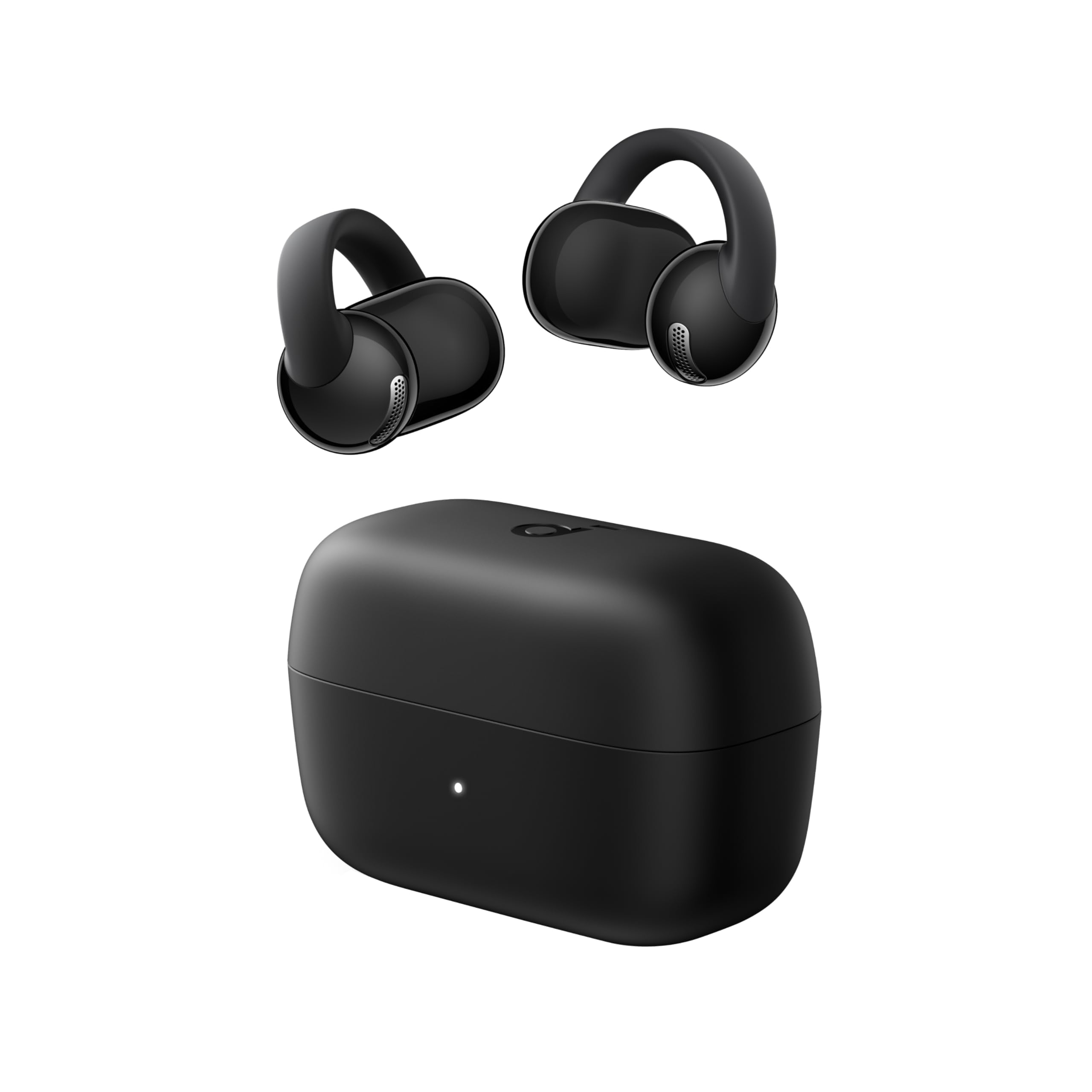
A top rating on a brand almost nobody has heard of is the sort of thing we check twice, and the T6 turns out to be a genuinely useful pair of cheap open-ear earbuds rather than a listing with good photography.

The spec sheet is unusually generous for the money. IPX7 is the same protection the OpenRun carries at several times the price, which means a wet run or a rinse under the tap is not a problem, and Bluetooth 5.4 with a 15-metre range holds the connection when your phone is in a belt or a bag rather than a pocket.

Eighty hours is the headline figure, and it is worth understanding before you buy: that is the case doing the topping up, not one charge. In practice it means you charge the case roughly once a fortnight and never think about it between runs, which is the useful version of that claim — and the earhook holds the driver outside the canal rather than pressing on it.

Where it lands for us is as the pair that lives in the gym bag or the car, where sweating through a cheap set or losing one costs you very little. The touch panel is the compromise: on a wet run we want a button we can find by feel, and a tap that misses is a tap that changes the volume instead of the track.

Bottom Line

We see the T6 as a second pair rather than your only one: IPX7 protection, a huge case and a price that makes a spare easy to justify.

Check Latest Price

Best Overall

Our Score 9.0/10
SHOKZ OpenRun

SHOKZ

SHOKZ OpenRun

  • Design Bone conduction
  • Weight 0.92 oz
  • Battery Life 8 hours
  • Water Resistance IP67
Check Price on Amazon

The most secure, weatherproof bone-conduction pair here, with awareness built in.

IP67 is the number that matters most here. Bone conduction puts the transducers on your cheekbones and leaves the ear canal completely open, which is excellent for hearing a car coming up behind you and terrible for keeping electronics dry, because sweat runs straight down onto the housing. A rating that survives a dunking is worth more on this shape than on an earbud tucked safely inside your ear.

What makes the OpenRun our default is how little there is to think about once it is on. The titanium band hooks over the ears and holds without clamping, the controls are actual buttons rather than a touch panel, and Bluetooth 5.1 with multipoint swaps between a watch and a phone without fuss. Eight hours is enough for a marathon plus the trip home, and the ten-minute quick charge adds another hour and a half on the morning you forget to plug in.

The charging cable is the detail that catches people out. It is magnetic and proprietary, so it lives in the hard case and travels with the headphones — there is no USB-C fallback if you leave it on the kitchen counter. Pack it in the case the day you unbox and you will never think about it again, which is more than we can say for the sound, which is clear through the mids and as thin at the low end as bone conduction always is.

Bottom Line

We recommend the OpenRun to anyone who wants one pair for sweat, rain and long miles — nothing else in this guide is as complete.

Check Latest Price

Best Budget

Our Score 8.8/10
Soundcore V20i

Soundcore

Soundcore V20i

  • Fit Four adjustable positions
  • Design Open-ear ear hook
  • Battery Life 8 hours (36 with case)
  • Water Resistance IP55
Check Price on Amazon

Four hook positions and a 36-hour case for a fraction of the price.

The V20i is our budget pick, and the reason is a small piece of engineering: the hook rotates through four positions. Hooks that sit in one fixed spot are why so many open-ear pairs feel loose a mile into a run, and adjustment is the cheapest cure there is. Nothing else in this guide offers four.

The rest of the package is generous for the money. IP55 covers sweat and rain, the 16mm drivers with titanium-coated domes turn out more bass than most bone-conduction designs manage, and the case brings total playback to 36 hours — a week of short runs without hunting for a socket. Four mics and an AI filter carry calls, and the equaliser in the Soundcore app is worth ten minutes of fiddling before your first run.

The soft spots are charging and pairing. A bud that stops taking a charge, or a connection that drops mid-run, can happen here, because the electronics are where the savings were made. Buy somewhere with a straightforward return window and test both in the first fortnight, then you are getting the fit adjustment and the sound for very little.

Bottom Line

This is the budget pick we are happiest to recommend: four hook positions, IP55, and a case that keeps going all week.

Check Latest Price

Best Battery Life

Our Score 8.6/10
TOZO OpenEarRing

TOZO

TOZO OpenEarRing

  • Design Clip-on open ear
  • Battery Life 10 hours (40 with case)
  • Water Resistance Water resistant
Check Price on Amazon

Ten hours per charge and thirty more in the case, with sound to match.

Ten hours on a charge, thirty more in the case, and a digital readout on the front so you know exactly where you stand. The OpenEarRing is built for people who do not want to think about charging: run two or three times a week and you are plugging in the case once a fortnight, not nursing the earbuds.

The shape is a clip rather than a hook, so it grips the ear itself and leaves nothing running round the back of your head to bump when you lean back or pull a hood up. Ten-millimetre drivers do the sound, the TOZO app carries a long list of EQ presets if the default tuning is not to your taste, and the case is small enough to live in a jacket pocket without a second thought.

Volume is the pleasant surprise. These get loud enough to cut through wind and passing traffic without turning harsh, which is not something we can say for every open design here. Charging is where it comes apart: a bud that stops taking a charge is the failure to watch for, and at this level of fit it is worth buying from a seller who will simply replace a bad unit rather than sending you to a support queue.

Bottom Line

We reach for the OpenEarRing when battery life decides the purchase: ten hours a charge, thirty more in the case, and sound that holds up loud.

Check Latest Price

Best Sound

Our Score 8.6/10
SHOKZ OpenRun Pro 2

SHOKZ

SHOKZ OpenRun Pro 2

  • Design Bone and air conduction
  • Weight 1.07 oz
  • Battery Life 12 hours
  • Water Resistance IP55
Check Price on Amazon

Dual drivers add real bass to bone conduction, plus twelve hours of running time.

Bone conduction has one obvious weakness, and it is bass. Vibrating a cheekbone is a poor way to move air, which is why most of these headphones sound thin the moment a track asks for low end. The OpenRun Pro 2 answers with two drivers — one conducting through bone, one pushing air at the ear from outside — and it is the only pair in this guide that does.

It works. Low end arrives with actual weight, the mids stay clear, and there is more headroom on volume than the OpenRun manages, which matters when you are running beside traffic rather than in a park. Twelve hours of playback, a 30-gram frame and a nickel-titanium wire that springs back into shape make it the pair for long days out; the app's EQ modes let you dial the bass back towards pure bone conduction when you want maximum awareness.

Two practical notes before you spend the money. The case is a hard shell with no battery in it, so twelve hours really is twelve — there is no top-up in your bag, and charging is by magnetic cable. SHOKZ also includes reflective stickers in the box, the sort of small, sensible thing we notice on a dark winter evening and never think about again.

Bottom Line

We rate the OpenRun Pro 2 the best-sounding bone-conduction pair here, and the second driver is why; twelve hours makes it a genuine race-day option.

Check Latest Price

Best Budget Bone Conduction

Our Score 8.4/10
PSIER X12

PSIER

PSIER X12

  • Design Bone conduction
  • Weight 0.81 oz
  • Battery Life 10 hours at 50% volume
  • Water Resistance IPX5
Check Price on Amazon

Light, cheap and reassuringly consistent — the bone-conduction pair to start with.

The X12 is the budget bone-conduction pair we trust most, and two facts on the spec sheet decide it: 23 grams and a memory-titanium frame. That combination bends to your head and then stays there, and there is little enough weight that you stop noticing it a mile in — which is the whole promise of bone conduction in the first place.

Everything else is sensible. Ten hours of playback, IPX5 for sweat and light rain, real buttons rather than a touch panel, and a box that includes foam earplugs and an adjustable strap. The earplugs are the interesting part: bone conduction still reaches you with your ears plugged, which is the trick for a treadmill in a noisy gym or a windy track where you would rather hear the music than the fan.

The trade-offs are honest ones. Ten hours is quoted at half volume, so plan on less if you run with the volume up, and the frame is a touch stiff for the first few outings before it takes the shape of your head. Neither bothers us at this end of the market, and the fit is the part that surprised us: nothing presses, even under a headband.

Bottom Line

The X12 is the cheapest bone conduction here that we can recommend without an asterisk, and the 23-gram frame is half the reason.

Check Latest Price

Best Clip-On

Our Score 8.4/10
Soundcore C50i

Soundcore

Soundcore C50i

  • Design Clip-on open ear
  • Bluetooth 6.0
  • Battery Life 7 hours (28 with case)
  • Water Resistance IP55
Check Price on Amazon

A featherlight clip that grips the ear instead of hooking behind it.

Clip-ons solve a specific problem: the ear hook that presses on the back of your ear or jostles against a glasses arm. The C50i grips the ear itself with a memory-titanium arm, opening wide and closing onto the ear rather than clamping in one fixed position, and that is the shape we suggest to anyone who has already given up on hooks once.

Inside, 12mm drivers and 86dB of maximum output put it nearer a normal earbud's tone than bone conduction manages, and IP55 covers sweat and rain. Playback runs seven hours on a charge with 28 in the case, which is enough for a daily runner who remembers to dock them, and the case is genuinely pocketable — the difference between carrying it and leaving it at home.

Fit is where it earns its place. The clip stays put through head turns and does not need reseating halfway round the park, and the memory arm opens far enough for thicker ears. Buttons rather than a touch panel are the right call for a sport pair, and the AI-filtered mics handle a quick call better than most open designs we have tried in the wind.

Bottom Line

We point anyone who finds ear hooks uncomfortable to the C50i — the clip holds without pressure and the sound sits closer to a normal earbud.

Check Latest Price

How We Tested the Best Open-Ear Headphones for Running

We built the shortlist by pulling spec sheets for two dozen current models and narrowing on the things that matter before a single run: bone conduction versus air conduction drivers, stated water-resistance rating, claimed battery life, weight, and what actually came in the box for the money. That left 12 pairs, which we rotated through six months of real training.

Every pair logged pavement loops in heat, treadmill intervals, a long weekend trail run, and at least one rainy session. For fit, we shook our heads hard, sprinted, and ran ten miles without touching the band — then noted whether anyone had to stop and readjust. For comfort, we wore each set for 90 minutes straight and checked whether the band pressed against sunglasses or dug in behind the ears. We also ran in a full downpour and tossed pairs loose into a gym bag afterward to see how the coating and charging contacts held up.

For sound, we compared bass response and vocal clarity at roughly 70 percent volume, then listened for wind noise once we picked up pace. Because these are open designs, isolation cuts both ways: we stood an arm's length away while a colleague played music at normal volume to hear how much leaked out, and we wore pairs at crosswalks to confirm an approaching car registered before we saw it. Battery life got timed from a full charge to shutdown at mixed volume, with notes on how fast a short top-up helped. We paired each set to both an iPhone and an Android phone, left the phone on a park bench and jogged a lap to find where dropouts hit, and took a call mid-run. After six months, the pairs that survived without connection quirks or crackling are the ones that made the list.

How to Choose

Bone conduction, air conduction, or a clip

The three designs solve the same problem differently. Bone conduction vibrates through your cheekbones and leaves the canal wide open, which gives the best awareness and the least bass. Air-conduction open designs aim a driver at the ear from outside, so you get more low end and volume for a little less separation from wind noise. Clip-ons grip the ear itself, so there is no band behind your head to bump against a hood or a headrest.

If you run on open roads, we lean toward bone conduction — the SHOKZ OpenRun is the shape we trust most there. For a treadmill, a park loop or a canal path, an air-conduction or clip-on pair gives you a fuller, louder sound for less outlay.

Fit is the specification nobody prints

Hooks, clips and bands all sit differently, and a pair that suits one head can press on another. Adjustment is what to look for: rotating hooks, a memory-titanium frame that bends to you, a clip that opens wide before it closes onto the ear. The Soundcore V20i's four hook positions are the most adjustment in this guide and the reason it fits people a fixed frame leaves loose.

Glasses are where fit goes wrong most often, because the arm and the hook want the same patch of skin above and behind your ear. Put the headphones on with your glasses in place before you commit to a long run; if hooks have slipped on you before, a clip-on is the safer place to start.

What a water rating actually covers

The two digits in an IP rating are dust and water, in that order. IPX5 means jets — sweat and spray, the realistic minimum for running. IP55 adds dust protection at the same water level. IP67 means dust-tight and able to survive a dunking, which is what lets you rinse a sweaty pair under the tap rather than wiping it down with a sleeve.

Waterproof with no number attached is marketing rather than a rating. If you run through the winter, look for at least IPX5; pay for IP67 if you want to wash them properly, which is exactly what the OpenRun and the much cheaper TRAUSI T6 both offer.

Battery: read the per-charge number

Playtime gets quoted in different ways, and the big figure is usually cumulative. The number that governs your week is hours per charge: seven to eight covers most training days, ten to twelve means charging at the weekend, and anything under six has you planning runs around the socket. Case hours are a bonus — handy, rarely decisive.

An eighty-hour claim almost always means the case tops the buds up several times over rather than one marathon charge. Ask what a single charge gets you before you compare anything, and treat the case figure as the fortnightly convenience it is.

Awareness is a volume setting, not a design

Open-ear headphones keep your canal clear, but the design alone will not keep you safe. A pair turned up loud enough masks the tyre noise you need on a shared path, and the open shape buys you nothing at that point. Set your volume on a quiet stretch and check you can still hear a bike coming up behind you; that is your ceiling for the run.

Wind is the other limit. It flattens the sound on a fast descent and it is why any open design sounds thinner outdoors than it does indoors, so judge volume and tone on the move rather than in a hallway.

Frequently Asked Questions

Final Verdict

We recommend the SHOKZ OpenRun as the default. It has the best water protection here, a frame that stays where you put it, and buttons that work with wet hands — the three things that actually decide a running headphone. If the outlay is too much, the Soundcore V20i covers most of a training week for a fraction of it.

If bass is the dealbreaker, the OpenRun Pro 2 is the upgrade that solves it. And if you want bone conduction as cheaply as it can be done well, the PSIER X12 is the one we point to.