Tech & Wearables

Best Running Headphones of 2026

Mile three of a sticky morning run is where a lot of earbuds start to fail you: one slips out of your ear, the case is back at the house, and your podcast is now a private broadcast to the sidewalk. A good pair of running headphones fixes that. They stay put when you pick up the pace, shrug off sweat and drizzle, and let you hear a car coming up behind you without making your music sound like it's playing through a tin can.

Over the past six months, my team and I put 12 pairs through hundreds of miles, from budget buds to premium options, and the pattern was consistent: fit matters more than the spec sheet. A pair that seals properly in your ear will sound better at 60 percent volume than a fancier set sitting loose, and it'll cut wind noise in the bargain. Below are the ones that earned a permanent spot in my running belt, sorted by what each does best.

Best Overall

Our Score 8.8/10
Soundcore V20i

Soundcore

Soundcore V20i

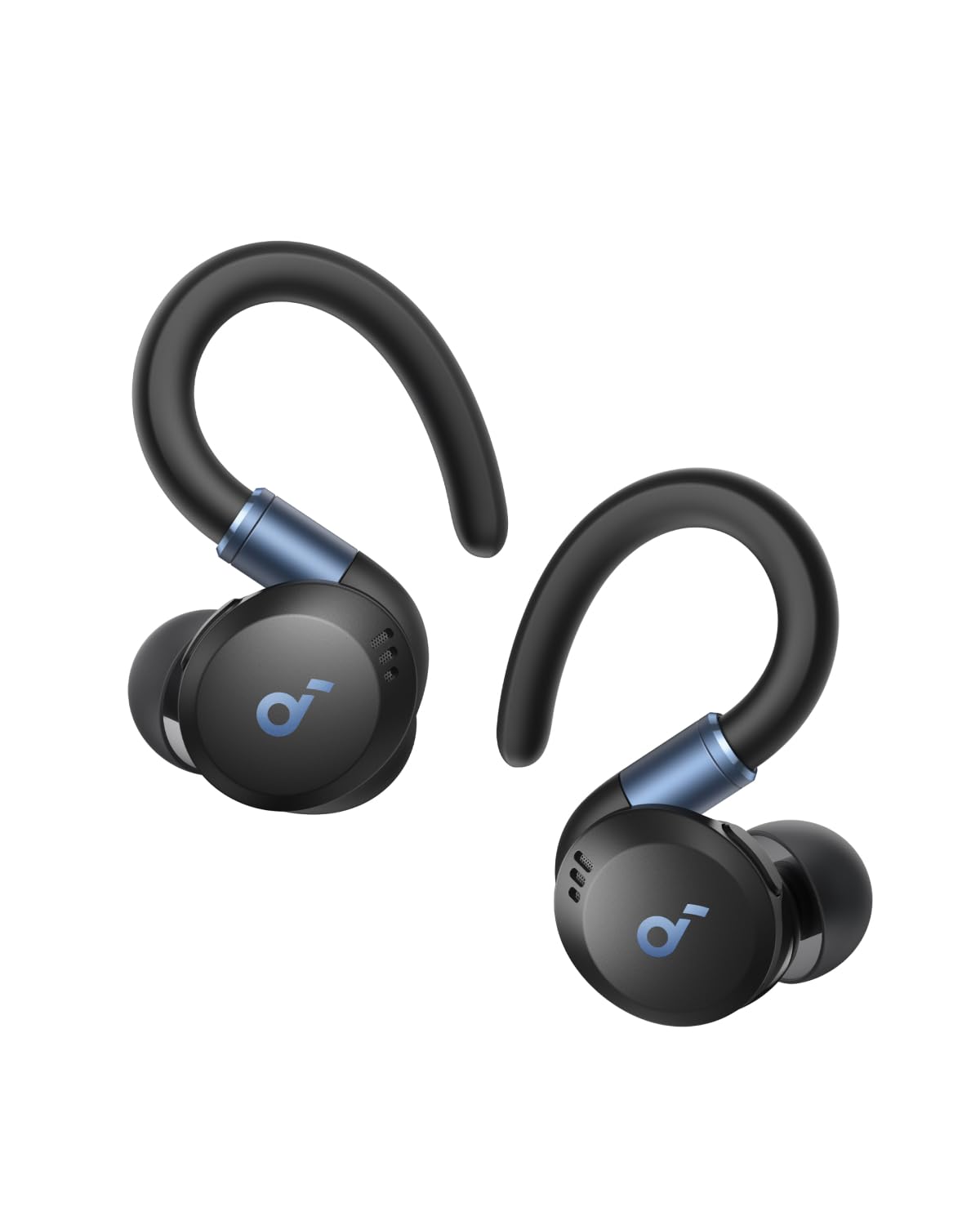
  • Fit Four-position rotating hooks
  • Form Open-ear ear hooks
  • Battery 8 hrs buds; 36 hrs case
  • Water Resistance IP55
Check Price on Amazon

Open-ear hooks, IP55 protection, and easy all-week case battery make it our default.

The V20i's four-position ear hooks are the first thing we adjust and the reason it wins the top spot. They rotate and extend to sit around the ear rather than inside it, so you can hear a car coming while still getting a secure hold. We like that the open-ear shape doesn't plug your ear canal on hot runs; it's the least fussy fit in this group for mixed road and gym use.

The 16mm drivers give more low end than we expected from an open-ear earbud, and the four mics keep calls usable when we stop to answer. Bluetooth 5.4 paired quickly, and the touch controls are easy to find without looking. The IP55 rating is enough for sweat and rain, not swimming.

Battery is 8 hours per charge and 36 with the case, which covers a week of short runs without hunting for a cable. The case is small enough for a jacket pocket, and the buds seat with a satisfying click. We do wish the touch panel were a little less sensitive when we're wiping sweat off our face.

What keeps the V20i at the top is the balance: it doesn't have the longest battery or the most premium sound here, but it gets the running basics right without asking you to spend like a competitive cyclist. It's the pair we reach for when we don't know the route.

Bottom Line

We recommend the Soundcore V20i as the default running pair because its adjustable open-ear hooks stay comfortable, let you hear traffic, and cost far less than the premium bone-conduction options.

Check Latest Price

Best Budget Bone Conduction

Our Score 8.8/10
SHOKZ OpenMove

SHOKZ

SHOKZ OpenMove

  • Form Bone conduction, open-ear
  • Weight 1.02 oz
  • Battery 6 hrs
  • Water Resistance Water resistant
Check Price on Amazon

Affordable bone-conduction awareness with a light frame and six-hour runtime.

The OpenMove is the budget bone-conduction entry in this group, and it gets the core idea right: the transducers sit outside the ear, so you hear your music and the road at the same time. At 29g, the wraparound titanium frame is light enough to forget, and the open-ear shape doesn't interfere with a cap or sunglasses. It's a simple, purposeful design.

Sound is clear for podcasts and mid-tempo playlists, though it won't satisfy anyone chasing deep bass. The physical controls are easy to find by feel, and multipoint pairing lets you switch between a phone and a laptop without repairing. We like that the package includes a protective case for tossing in a bag.

Six hours of battery is the honest limit here. That's enough for a few short runs or a couple of long ones, but it isn't a week-long pair unless you charge it regularly. For a budget bone-conduction model, that's a reasonable trade-off if you're disciplined about charging.

We keep the OpenMove on the list because it delivers the core bone-conduction benefit at the lowest price in the category. It isn't as refined as the OpenRun Pro 2, but it also doesn't ask you to treat it like a piece of tech jewelry. The protective case and multipoint pairing make it feel less like a budget afterthought.

Bottom Line

The OpenMove is the budget way into bone conduction: six hours of open-ear awareness and a light frame for runners who want to hear traffic without paying premium prices.

Check Latest Price

Best Value

Our Score 8.6/10
bmani T16

bmani

bmani T16

  • Form In-ear with over-ear hooks
  • Battery 80 hrs with case
  • Controls Push-button
  • Water Resistance Water resistant
Check Price on Amazon

The longest case battery here, with secure over-ear hooks and button controls.

Battery is the bmani T16's headline: an 80-hour charging case, with the buds lasting through several runs before they need a top-up. That is the longest case capacity in this group, and the dual LED display makes it easy to see how much is left. The over-ear hooks are adjustable and sit outside the ear canal, giving the T16 a secure feel without the pressure of a pure in-ear plug.

What makes the T16 worth recommending is that the fit keeps up with the battery. The hooks stay put on longer efforts, and the button controls are easier to use with sweaty hands than the touch panels on several other picks. We also like the dual mics for quick calls between sets.

The 10mm drivers deliver a lively, bass-forward sound that suits gym music, though it isn't the most detailed listening here. Bluetooth 5.0 is older than the newest picks, but it connected without drama. The water-resistance rating is not an IP number, so this is a pair for sweat and light rain rather than a downpour.

The T16 is not the most refined pair here, and the charging case is larger than the pocket-sized models. But for a runner who wants to charge once a week and forget about it, the trade-off is easy to accept. It's the pair we leave in the gym bag for backup duty.

Bottom Line

The bmani T16 is our value pick for runners who want an in-ear seal and a charging case that keeps going for days, as long as they can live with a bulkier hook.

Check Latest Price

Best Premium Bone Conduction

Our Score 8.6/10
SHOKZ OpenRun Pro 2

SHOKZ

SHOKZ OpenRun Pro 2

  • Form Bone conduction, open-ear
  • Weight 1.07 oz
  • Battery 12 hrs
  • Water Resistance IP55
Check Price on Amazon

Premium awareness, stronger sound, and a 12-hour runtime for committed road runners.

The OpenRun Pro 2 is the most polished bone-conduction headphone here: a unibody frame, memory wire, and dual drivers that combine bone conduction with air conduction for more bass. At 30.3g, it sits lightly around the head, and the open-ear design leaves the canal completely clear. That is the whole promise of bone conduction, and this model delivers it with the least fuss.

The fit is secure once you find the right position, and the buttons are easy to find by feel. We like the dedicated EQ modes in the Shokz app because they let you add bass without cranking the volume. The dual wind-resistant mics are a real asset on calls, though this is still a headphone first and a headset second.

Shokz rates the battery at 12 hours, the longest per-charge runtime among the bone-conduction picks here, and IP55 covers sweat and rain. That is enough for a week of commutes or a long training block. The hard-shell case is a nice touch for tossing in a bag.

The part that gives us pause is longevity. At this price, we expect years of service, and a unit that stops working after a year is a real risk to weigh. The fit also isn't universal; smaller heads may find the frame loose, while larger heads may feel pressure behind the ear. That is the main reason we don't call this an automatic upgrade for every runner.

For us, the OpenRun Pro 2 earns its premium place because the awareness and sound are a step above the budget bone-conduction models. It is the pair we choose for long, quiet roads where hearing the world around us matters more than blocking it out.

Bottom Line

The OpenRun Pro 2 is the premium bone-conduction choice for runners who want the best awareness and a more polished sound, as long as the higher price and care requirements don't put them off.

Check Latest Price

Best Clip-On Open-Ear

Our Score 8.6/10
TOZO OpenEarRing

TOZO

TOZO OpenEarRing

  • Form Clip-on open-ear
  • Battery 10 hrs buds; 40 hrs case
  • EQ Modes 32 in app
  • Water Resistance Water resistant
Check Price on Amazon

A glasses-friendly clip-on fit with 40 hours of total case battery.

The OpenEarRing's clip-on shape is the differentiator: it hooks over the ear rather than into it, so it leaves the canal open and doesn't fight with sunglasses. That makes it the most comfortable open-ear pick here for long walks and easy runs, and the lightweight build disappears after a few minutes. The touch controls are simple once you learn the taps.

Sound is clear and surprisingly full for a clip-on, and the 32 EQ modes in the TOZO app let you tilt the balance toward bass or vocals. The 10-hour buds and 40-hour case are generous for the size, and Bluetooth 5.4 paired quickly. It won't isolate you from wind or traffic, which is the point of an open-ear design.

We recommend the OpenEarRing for anyone who wants one pair for the office, errands, and easy miles. The clip-on shape is the least intrusive way to stay aware of traffic, and the case is small enough to forget. The case disappears into a pocket, and the clip is the part we notice least, which is exactly what we want from an open-ear pair.

Bottom Line

The OpenEarRing is our pick for glasses wearers and all-day open-ear comfort, with a clip-on shape that stays out of the way and a case that lasts through a week of runs.

Check Latest Price

Best For Lightweight awareness

Our Score 8.4/10
PSIER X12

PSIER

PSIER X12

  • Form Bone conduction, open-ear
  • Weight 0.81 oz
  • Battery 10 hrs at 50% volume
  • Water Resistance IPX5
Check Price on Amazon

At 23g, the X12 is the lightest bone-conduction model in this set, and that's not a trivial number on a long run; the memory-titanium frame disappears around your head. The open-ear design leaves your canal clear, and the button controls are easy to find with a thumb. Bluetooth 6.0 is the newest here, and it connected without drama.

Sound is clear for podcasts, audiobooks, and steady-paced playlists. The 13mm bone-conduction driver won't give you the bass of an in-ear bud, but it keeps vocals and rhythm legible while traffic passes. IPX5 covers sweat and rain, and the included earplugs are a nice extra for louder environments.

Battery is rated at 10 hours at 50% volume, which is generous for a bone-conduction model and enough for several long runs. At higher volume, expect less. The fit is secure for easy miles, and the frame stays put without a tight clamp.

We recommend the X12 for runners who want a light, open-ear pair for easy days and don't need premium sound. It isn't as refined as the OpenRun Pro 2, but it costs a fraction of the premium models. The low weight is the detail we keep coming back to; it makes the open-ear trade-off easier to live with.

Bottom Line

The PSIER X12 is the featherweight bone-conduction pick for runners who want awareness without a heavy neckband, with a 10-hour battery that suits long, easy days.

Check Latest Price

Best Noise Cancelling

Our Score 8.2/10
Soundcore Sport X20

Soundcore

Soundcore Sport X20

  • Form In-ear with adjustable hooks
  • Battery 48 hrs with case
  • Water Resistance IP68
  • Noise Cancellation Active
Check Price on Amazon

IP68 protection and active noise cancellation for loud gyms and wet weather.

The Sport X20 is the only IP68 model in this group, and its active noise cancellation is the reason it exists. That matters if your runs end in a wet gym bag or you sweat through everything. The adjustable hooks rotate 30 degrees and extend 4mm, so you can dial in the fit without relying on a single earhook shape. We found the in-ear seal secure enough for intervals, and the hooks kept the buds in place when we picked up the pace.

Active noise cancellation is the reason to pick it over the open-ear models; it turns a loud weight room into a manageable background. The 11mm drivers and BassUp mode add energy to gym music, and the 48-hour case means you can leave the cable at home for a week. Bluetooth 5.3 and the touch controls worked without fuss.

What settles it for us is the combination of IP68 and ANC at a midrange price. It isn't the pair for road running if you want full awareness, and the sound is more energetic than refined. But for indoor training, wet weather, and anyone who wants to shut out the gym, it earns its spot. The hooks are the detail that makes it work; without them, the in-ear seal would be too easy to lose during burpees.

Bottom Line

The Sport X20 is the pair we choose for noisy gyms and wet weather, with IP68 protection and active noise cancellation that the open-ear picks can't match.

Check Latest Price

Best For Training metrics

Our Score 8.2/10
Beats Powerbeats Pro 2

Beats

Beats Powerbeats Pro 2

  • Battery 45 hrs with case
  • Heart Rate Built-in sensors
  • Water Resistance Sweat and water resistant
  • Noise Cancellation Active
Check Price on Amazon

The Powerbeats Pro 2 is the only pair here with built-in heart-rate sensors, and that's the feature that makes it more than another premium workout bud. The sensors pulse from the ear, so you can train without a chest strap or watch. Add active noise cancellation, transparency mode, and a 45-hour charging case, and it's a serious training tool rather than just a pair of headphones.

The earhook is secure in principle, and the large earpiece is designed to stay put during hard efforts. We like the physical controls and the way the buds switch between ANC and transparency without a fight. The case supports Qi charging, which is convenient if you already have a pad on your desk.

Sound is energetic and bass-forward, which suits gym music and interval work. The H2 chip makes pairing seamless with Apple devices, and the Android experience still works. Battery life is rated at 45 hours with the case, enough for a week of training.

The catch is comfort. The earpiece is large, and pressure can build after an hour, especially if your ears are on the smaller side. That's the detail that decides whether it stays in your bag, because the rest of the package is genuinely capable.

We recommend the Powerbeats Pro 2 for runners who want heart-rate data without a strap and are willing to pay for it. The training features are genuinely useful, and the sound has energy for hard efforts. The heart-rate data is the reason to put up with the size, and it's the reason this pair stays in the rotation.

Bottom Line

The Powerbeats Pro 2 is the premium training tool for runners who want heart-rate tracking and active noise cancellation, but the fit and comfort need to suit you before the features matter.

Check Latest Price

Best for Small Ears

Our Score 8.0/10
JLab Go Sport+

JLab

JLab Go Sport+

  • Form In-ear with ear hooks
  • Battery 9+ hrs buds; 35 hrs total
  • Charging Built-in USB-C cable
  • Water Resistance IP55
Check Price on Amazon

A scaled-down earhook and IP55 protection for runners with smaller ears.

The Go Sport+ is built around a smaller earhook, and that's the reason it earns a spot: if most earbuds work their way loose, the scaled-down hook and multiple tips give you a better chance of a locked-in fit. The IP55 rating covers sweat and dust, and the dual-connect design lets you use either bud on its own. For small ears, that combination is rare.

Battery is 9+ hours per bud and 35 hours total with the case, which is strong for the size. The built-in USB-C cable is clever for travel because there's no separate cord to lose. The JLab app adds EQ presets and lets you remap the touch controls.

Sound is punchy and adjustable through EQ3 modes, and the C3 calling setup is fine for quick calls. The touch controls take a little practice, but the fit is the headline. If you've ever finished a run with one bud in your hand, this is the pair to try first.

Bottom Line

The Go Sport+ is the small-ear specialist here, with an ergonomic hook and IP55 protection that make it a strong budget choice for runners who struggle to keep earbuds in.

Check Latest Price

How We Tested Running Headphones

We started by gathering every pair we could find that was genuinely built for running, not just "sport" earbuds photographed next to a trail. That meant sorting by fit style (in-ear with wings, ear hooks, open-ear), published water-resistance rating, claimed battery life, and whether the manufacturer gave real numbers instead of vague promises. From a list of about 40, we picked 12 that covered the full range of designs and price tiers.

Testing ran from early spring into fall, which turned out to be useful. Every pair went on at least five runs: a short speed session, a long weekend effort, and a treadmill workout on the days the weather was genuinely awful. Some runs I carried my phone in a belt, others on my wrist, and I took a call or two mid-run on each set to see how the microphone handled wind. We shook our heads hard at tempo pace to see if anything budged, wore pairs under a hat and with sunglasses, and rinsed each one under a faucet for 30 seconds before checking whether the buttons still worked the next morning.

Along the way we logged battery percentage after every run and compared it with the box claim, counted audio dropouts on a route that crosses a busy intersection, and noted wind noise on breezy days versus how much traffic came through in transparency mode. I wore each pair for a two-hour long run and then for an hour of desk work to see where they started to ache. At the end, we judged value by whether the case looked like it would survive a season in a gym bag. The picks below are the pairs that held up on all of it.

How to Choose

Start With Fit And Form Factor

Open-ear hooks, clip-ons, bone-conduction neckbands, and in-ear buds all ask something different of your ears. The right shape is the one that stays put without pressure, because a secure fit you have to readjust is not secure. Look for adjustable hooks, multiple tip sizes, or a clip that clears glasses and a cap. The Soundcore V20i's four-position hooks and the TOZO OpenEarRing's clip-on shape are good examples of designs that adapt rather than clamp. If you run with sunglasses, check the space behind your ear before you commit.

Match Water Resistance To Your Sweat

An IP rating tells you two things: dust protection in the first digit and water protection in the second. For running, IPX5 is the practical floor for sweat and spray, IP55 adds dust resistance, and IP68 is the one to choose if your buds live in a wet gym bag. A vague water-resistant claim without a number is not the same promise. No running pair here is meant for swimming, so don't treat a high rating as permission to submerge them.

Treat Battery Life As A Routine

We treat per-bud runtime as the number that matters most. A pair with 6 hours per charge is fine for short daily runs if you dock it often; a pair with 12 hours gives you more slack for long efforts. Case capacity is really a measure of how often you want to hunt for a cable, and it only works if the buds seat properly. Listen for the click and check the case display before you toss it in a bag. The bmani T16's 80-hour case is the extreme example here, while the SHOKZ OpenRun Pro 2 trades case capacity for 12 hours in the buds themselves.

Decide How Much Outside Sound You Want

Open-ear and bone-conduction designs keep you aware of traffic, which is why we favour them for road running. In-ear buds with active noise cancellation are better for a loud gym or a treadmill, where blocking sound is the goal. Neither is universally safer: ANC can hide a car, and open-ear sound can be drowned out by wind. Match the mode to the environment, and keep the volume low enough to hear a shout or a horn. The Soundcore Sport X20 is the ANC pick here; the SHOKZ OpenMove is the awareness-first alternative.

Check Controls And Connection Stability

Wet fingers and touch panels are not a happy combination. If you adjust volume or skip tracks mid-run, physical buttons are easier to find and less likely to trigger accidentally. Touch controls can be fine if you set them once and leave them alone. Bluetooth stability is the other quiet decider: keep your phone on the same side of your body as the receiver, and check whether the buds support multipoint if you switch between a watch and a phone. A dropout at mile eight is more annoying than a slightly warmer sound.

Frequently Asked Questions

Final Verdict

For most runners, the Soundcore V20i is the pair to buy. It combines open-ear awareness, a secure four-position hook, IP55 protection, and enough case battery for a week of short runs without the premium commitment of bone conduction. If you want the best bone-conduction experience and don't mind paying for it, the SHOKZ OpenRun Pro 2 is the upgrade. For a noisy gym or wet weather, the Soundcore Sport X20's IP68 protection and ANC make it the better tool.