Tech & Wearables

Best Bone Conduction Headphones of 2026

Bone conduction headphones skip your eardrums, sending sound through your cheekbones so your ears stay open to traffic, coworkers, and the dog about to trip you. That openness is the point, but it comes with a tradeoff: bass often feels thinner than in traditional earbuds, and a loose fit can turn a podcast into a muffled rumble. The best pairs get the balance right—secure enough for a run, comfortable enough for a full workday, and clear enough that you don't crank the volume and leak your playlist to everyone nearby.

Over the past eight months, I've worn 12 pairs through morning runs, bike commutes, and plenty of video calls, and the differences come down to fit and battery honesty more than flashy features. A pair that presses too hard behind the ears will annoy you by lunch; one that sits too loose will slide when you look down. Battery claims deserve skepticism, too—a headphone that dies mid-run is worse than one with a little less thump. The picks below are the ones that survived all of it.

Best Lightweight

Our Score 9.4/10
Nanajorwa X7

Nanajorwa

Nanajorwa X7

  • Weight 0.92 oz
  • Battery Life 8 hours at 40% volume
  • Water Resistance IPX6
  • Bluetooth Version 6.0
Check Price on Amazon

26 grams, Bluetooth 6.0, and the most honest playtime rating on the page.

Twenty-six grams is light enough that the X7 stops being something you notice. The neckband is silicone over a flexible core, it sits clear of a bike helmet's rear cradle, and Bluetooth 6.0 with a 60 ms latency figure is the best-specified wireless here short of the flagship. For a mid-priced pair, that combination is unusual.

What sold us is the honesty of the battery rating. Eight hours is quoted at 40% volume, with about six at 60 to 70%, which is the only listing here that tells you what happens when you turn it up. IPX6 covers heavy sweat and rain, and charging is plain USB-C, so the cable you already own works. It is the pair we hand to someone who wants current wireless without paying flagship money.

Bottom Line

A light, well-connected pair with current Bluetooth at a mid-range price, and the one we hand to riders who wear a helmet.

Check Latest Price

Best For First-timers

Our Score 9.2/10
Yorlu X11

Yorlu

Yorlu X11

  • Weight 0.99 oz
  • Battery Life 10 hours
  • Water Resistance IP56
  • Bluetooth Version 5.4
Check Price on Amazon

For anyone who wants to find out what bone conduction is like without spending real money, the X11 is the low-risk way in. Twenty-eight grams, a memory titanium band, Bluetooth 5.4, ten hours of playtime, and USB-C charging — none of that reads like the least expensive pair here. We treat it as the spare: the one that lives in a gym bag or a desk drawer and is charged when you grab it.

The limits are the ones you expect at the bottom of the range. IP56 keeps sweat and splashes out but is not built for a soaking, and it has not been around long enough to have much of a track record, so treat the first few weeks as the trial. For the money, a flexible band and current Bluetooth are a fair trade.

Bottom Line

The cheapest way to find out whether bone conduction suits you, and a useful spare pair afterwards.

Check Latest Price

Best for Sweaty Workouts

Our Score 9.0/10
SHOKZ OpenRun

SHOKZ

SHOKZ OpenRun

  • Weight 0.92 oz
  • Battery Life 8 hours
  • Quick Charge 10 minutes for 1.5 hours
  • Water Resistance IP67
Check Price on Amazon

IP67 sealing plus a ten-minute charge that buys an hour and a half.

IP67 is the number that matters here. It is the rating that lets you stop thinking about sweat, and it covers rain and a rinse under the tap in a way the IPX5 and IP56 pairs do not. If you have already killed a set of headphones with sweat, start here.

Everything else is the Shokz package at its most sensible. Twenty-six grams, a wraparound titanium frame, eight hours of playtime, and a ten-minute top-up that buys an hour and a half — the quick charge is the feature we used most, because ten minutes on the charger before a run is easier to remember than a nightly routine. It ships with a protective case and a sport headband, and it holds two device connections at once.

Against the Pro 2, the difference is sound: this is eighth-generation bone conduction without the air driver, so the low end is thinner and the midrange sits further forward. We still reach for it over the flagship for wet weather and for travel, where soaking or losing a pair is a real risk. The headband is the part to watch over a couple of years of daily use, and the two-year warranty is what makes that a reasonable risk to carry.

Bottom Line

The pair we recommend for anyone who trains outdoors in all weather: IP67 sealing, a ten-minute quick charge, and a two-year warranty behind it.

Check Latest Price

Best for Swimming

Our Score 9.0/10
ZOVIMAX X7 MAX

ZOVIMAX

ZOVIMAX X7 MAX

  • Playtime 12 hours
  • Onboard Memory 8 GB MP3 mode
  • Water Resistance IPX8, 5 m for 2.5 hours
  • Bluetooth Version 6.0
Check Price on Amazon

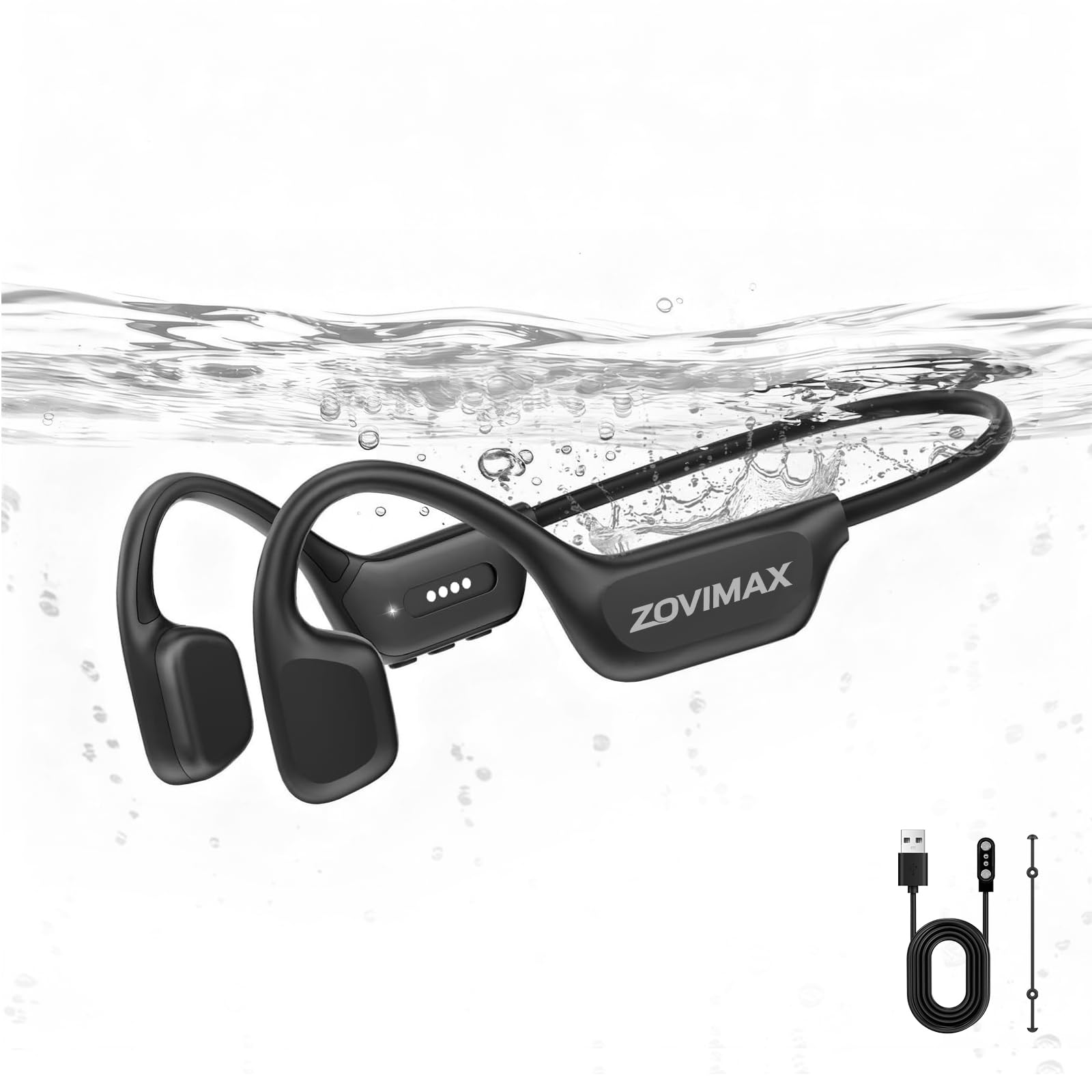
IPX8 sealing and 8 GB of onboard storage so the phone stays poolside.

No other pair on this page can come in the water with you. The X7 MAX carries an IPX8 rating — submersion to 5 meters for up to 2.5 hours — which is a different class of sealing from the sweat-resistant ratings everywhere else here.

The second half of the trick is the 8 GB of onboard memory, because Bluetooth and water do not mix. You load tracks over the cable, switch to MP3 mode, and leave the phone in your bag on the pool deck. Bluetooth 6.0 is there for dry land, alongside twelve hours of playtime and a two-year warranty.

One caveat worth hearing: waterproofing is a claim about new seals. Rinse the band in fresh water after a chlorinated session and let it dry fully before it goes back on the charger, and the 5-meter figure stays a description of a pair that has been looked after.

That caveat does not change what it is: a specialist. We treat it as the second pair you buy because you swim laps twice a week and want something to listen to while you do it. For the two or three sessions a week you spend in the water, nothing else here joins you, and that is the entire case.

Bottom Line

Buy it if you swim. Nothing else here goes in the water, and the onboard memory means your phone stays in the bag on the deck.

Check Latest Price

Best Overall

Our Score 8.6/10
SHOKZ OpenRun Pro 2

SHOKZ

SHOKZ OpenRun Pro 2

  • Drivers Bone conduction plus air conduction
  • EQ Modes Classic and boost via the Shokz app
  • Microphones Dual wind-resistant with AI noise reduction
  • Battery Life 12 hours
Check Price on Amazon

A second driver gives it the fullest sound here, with 12 hours of playtime.

Bone conduction's oldest weakness is low end, and the OpenRun Pro 2 is the only pair here that answers it with a second driver: a bone-conduction element for the mids and highs, plus an air-conduction driver for bass. The difference lands the moment a track with any weight in the low end comes on. Where the pure bone-conduction picks here sound like a voice inside your head, this one has body to it, and it is the pair we reach for when the session matters.

The rest of the package is built for long days. Twelve hours of playtime is the top figure in this set, the nickel-titanium memory wire and ear hooks hold position without clamping, and the Shokz app carries two EQ modes, including a Classic setting that strips the air driver back out for pure bone-conduction sound. That last part we appreciated more than we expected: one pair behaving like two is a real convenience when you move between a podcast and a hard interval session. Dual wind-resistant microphones with AI noise reduction cover calls.

Two things are worth knowing before you commit. The open-ear trade-off does not disappear at this level — a loud gym still eats the detail — and Shokz lists a water-resistance rating for the OpenRun but not for this model, so if a documented number for rainy runs matters to you, that sibling is the one to look at. For dry-land training, which is most of what these see, neither changes the verdict. What stayed with us is the fit: the ear hooks hold through a run without the pressure behind the ear that the cheaper bands leave after an hour.

Bottom Line

The one we point to first: a second driver gives it the fullest sound here, and twelve hours of playtime means charging is a weekly habit.

Check Latest Price

Best Budget

Our Score 8.4/10
PSIER X12

PSIER

PSIER X12

  • Weight 0.81 oz
  • Battery Life 10 hours at 50% volume
  • Water Resistance IPX5
  • Bluetooth Version 6.0
Check Price on Amazon

The lightest frame here, ten hours of playtime, and earplugs for loud gyms.

Twenty-three grams, a titanium memory frame, and a price that sits at the bottom of this set. The X12 is what we hand to anyone who wants to find out whether bone conduction suits them without committing real money, and nothing about it feels like a corner was cut: the band flexes and holds, the controls are physical buttons you can find with a glove on, and the whole thing settles onto your head and stays there.

What surprised us is how little the low price costs you in the basics. Bluetooth 6.0 and a 60 ms latency figure match anything here, 23 grams is the lightest frame in the set, and the 13 mm driver keeps voices forward and clear — exactly the tuning you want for podcasts, audiobooks, and pace updates.

Two details make it more useful than the price suggests. PSIER includes a set of earplugs, and with those in, the output arrives with the room shut out, which is the trick that makes an open design workable in a loud gym. The battery is quoted at ten hours at 50% volume, a qualification most listings skip, so plan on less when you listen loud. Small things, but they are why this sits above the other budget picks.

Bottom Line

Our value pick: the lightest frame in this set, ten hours of playtime, and a band that stays on through a run, for a fraction of the flagship's cost.

Check Latest Price

Best For Loud workplaces

Our Score 8.0/10
Raycon Bone Conduction

Raycon

Raycon Bone Conduction

  • Charging Magnetic cable
  • Earpieces Sliding adjustable
  • Water Resistance IP68
  • Bluetooth Version 5.3
Check Price on Amazon

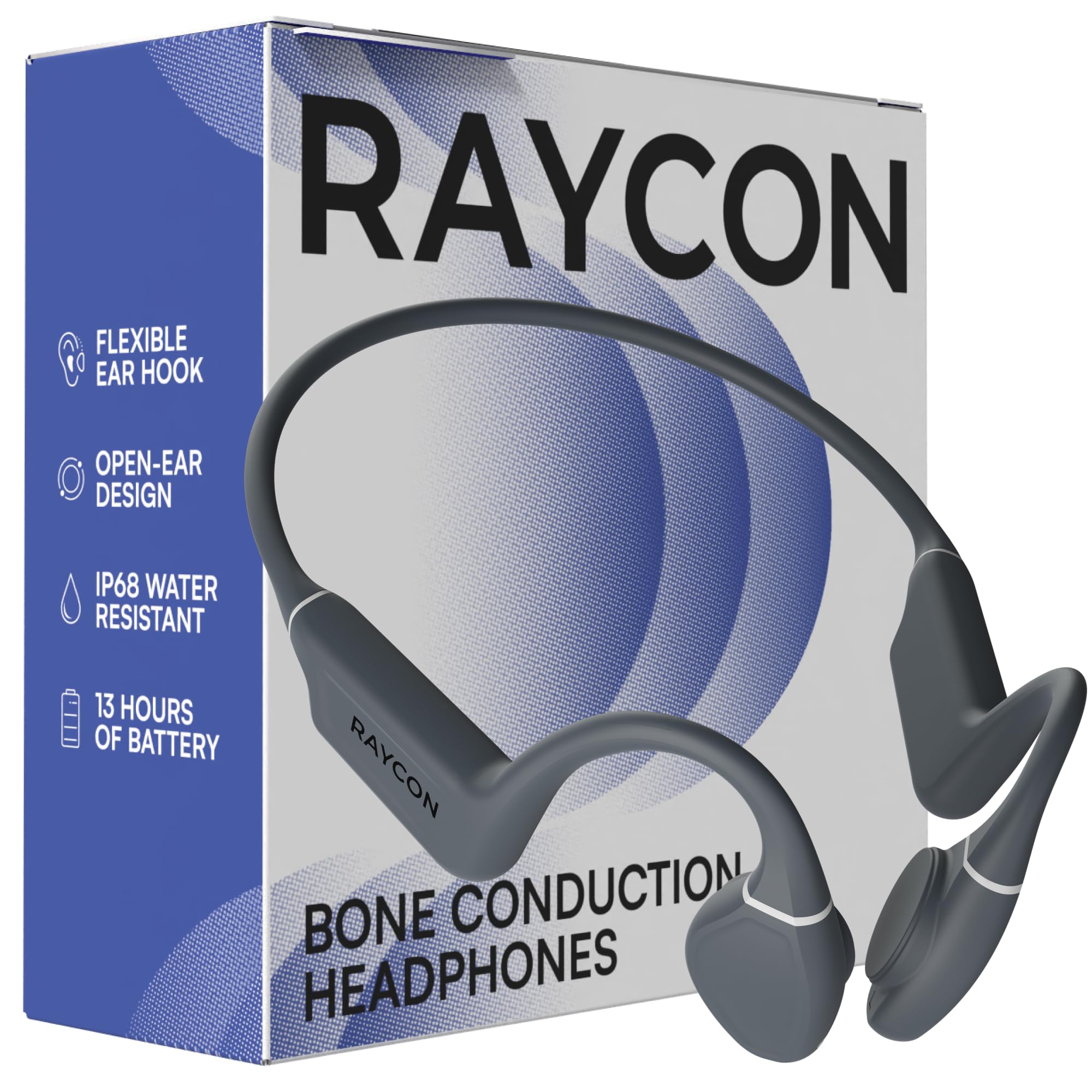
The band does not resize, and that decides everything. Raycon's frame is a fixed loop, so the fit you get on arrival is the fit you live with, and on a larger head it can sit away from the cheekbone instead of against it. That is the first thing to test if you order a pair.

What earns it a place is the adjustability elsewhere. The earpieces slide, so you can push the transducer closer for volume on a noisy street and pull it back when you want more of the room. No other pair here lets you change the mix mid-shift, and that, plus IP68 sealing, is the whole argument.

The rest is fine rather than special. The frame is light, the sound is loud enough for podcasts and calls, and the case for it is strongest off the road: a workshop, a factory floor, anywhere you want to move between hearing the room and hearing the audio without taking anything off. Slide the earpieces back before you cross the street and it doubles as a commuting pair.

Bottom Line

For loud workplaces rather than the road: sliding earpieces let you move between the room and the audio without taking anything off.

Check Latest Price

Best For Long playtime

Our Score 8.0/10
KORAVIS Open-Ear

KORAVIS

KORAVIS Open-Ear

  • Weight 0.9 oz
  • Battery 230 mAh, USB-C
  • Battery Life 12 hours
  • Water Resistance IPX6
Check Price on Amazon

Twelve hours of playtime matches the biggest figure in this set, and KORAVIS gets there with a 230 mAh battery and USB-C charging. For a pair priced with the budget models, that is an unusual place to start.

It is also one of the few picks here that comes with a case of its own — a nylon one listed at about 5 by 4 by 2 inches, roomy enough for the band and a cable. The frame weighs 25.5 grams, and the band is rated for 10,000 bending cycles, which matters if you roll it into a bag every day.

The 150 ms latency figure is the highest on this page, and it tells you what the KORAVIS is for: podcasts, audiobooks, and pace updates rather than lip-synced video. IPX6 covers sweat and rain, and the flexible nickel-titanium frame does the rest.

What keeps it in the also-consider tier is the tuning. Bone conduction at this price is clear on speech and short on body, and this is the pair where expectations need tempering most. If that is fine — and for a lot of training it is — you get the case, the playtime, and USB-C for less than the mid-range picks.

Bottom Line

A budget pair with twelve hours of playtime and a case of its own, best suited to speech rather than music.

Check Latest Price

How We Tested Bone Conduction Headphones

We started by pulling every bone conduction model we could find from established audio brands and smaller names, then narrowed the list by specs, water-resistance ratings, and whether the company publishes battery figures you can actually verify. We landed on 12 pairs and spent eight months living with them, not just unboxing them. They came on morning runs, bike commutes, long stretches of desk work, sweaty gym sessions, and weekend yard work.

On the road, I noted whether I could hear approaching cars and whether wind noise swallowed the podcast; at my desk, I wore each pair for three-hour stretches and checked for pressure behind the ears, jaw fatigue, and whether sunglasses or a bike helmet pushed the band out of place. For sound, I listened to the same bass-heavy tracks, acoustic recordings, and phone calls, then had a colleague stand an arm's length away to see how much audio leaked. I timed battery life from full charge to shutdown at a normal volume, and paired each pair with both an iPhone and an Android phone, walking away from the source to see where the signal dropped.

Connectivity got its own stress test: two devices at once, a pocketed phone, and a few walks through a busy train platform where interference is the norm. I also dropped each pair onto a wood floor from waist height and stuffed them into a bag without a case to see how the hinges and buttons held up. Bone conduction doesn't cancel noise the way over-ear headphones do, so we judged that concern differently—by how much ambient sound came through and whether a loud train platform forced the volume to unsafe levels. Value came down to what survived the full eight months without a loose band, a mushy button, or a battery that faded noticeably.

How to Choose

Match the Water Rating to Your Worst Session

Every pair here survives a sweaty hour. The differences show up on the bad day — a downpour, a river crossing, a pool. IPX5 and IP56 handle sweat and splashes, IP67 adds rain and a rinse under the tap, and IPX8 is the only rating in this set that permits swimming, which is why the ZOVIMAX X7 MAX stands alone on that count.

Buy for the worst thing you will do with them rather than the average, and read the rating as a description of a new pair. Chlorine, salt, and sunscreen all shorten the life of the seals, so rinse an IP-rated band in fresh water after a pool session.

Read Playtime at Your Own Volume

A ten-hour rating means ten hours at whatever volume the manufacturer chose, usually 40 to 50 percent. Turn it up to compete with traffic and the same battery delivers six or seven hours. The Nanajorwa X7 is the one listing here that publishes both numbers — eight hours at 40 percent, about six at 60 to 70 — and it works as a rule of thumb for the rest: assume two-thirds of the headline.

If you are the type who remembers to charge ten minutes before leaving the house, weight quick charging heavily. The SHOKZ OpenRun turns a ten-minute top-up into an hour and a half of listening.

Check the Band Against Your Helmet and Glasses

The frame is the part you cannot change later. Most of these are one size with a memory-wire band that flexes but never shortens, and the Raycon's loop does not adjust at all. Weight runs from 23 to 29 grams across this set, and after two hours the number matters less than where the hooks press behind your ear.

Try them with everything already on your head: helmet cradle, glasses arms, cap. The band has to occupy the gap between those, and on some people that gap is narrow.

Decide How Much Bass You Will Trade for Awareness

Open-ear designs give up isolation by definition, and bass is the first thing to go. Pure bone conduction — the PSIER X12, the Yorlu X11, the SHOKZ OpenRun — is clear on speech and thin on music. The SHOKZ OpenRun Pro 2 adds a second, air-conduction driver for the low end, and that is the single biggest sound difference in this set.

There is a cheaper trick: a pair that ships with earplugs lets you block the room and keep the audio, which is what we reach for in a loud gym where every open design otherwise struggles.

Know Which Cable You Are Signing Up For

USB-C pairs charge from the cable already in your laptop bag. The SHOKZ models and the Raycon use proprietary magnetic cables that snap on easily and are just as easy to leave in a hotel room. Neither approach is better for the battery, but one of them is far easier to replace.

If you travel with headphones, order a spare cable when you buy. It is the cheapest insurance against a dead pair on a trip.

Frequently Asked Questions

Final Verdict

The SHOKZ OpenRun Pro 2 is the pair we recommend to most people. Its second driver gives it the fullest sound in this set, and twelve hours of playtime turns charging into a weekly habit instead of a nightly one.

If the price is the obstacle, the PSIER X12 delivers a 23-gram frame and ten hours for a fraction of it. And if your training includes laps, nothing else here comes in the water with you — that is the ZOVIMAX X7 MAX's entire case.