Home Gym

Best Foam Gym Tiles of 2026

Two winters ago I rolled up the yoga mat on my basement floor and laid down foam tiles instead. The mat was fine for stretching and useless the second a dumbbell came off the rack. Tiles turn a slice of cold concrete into a floor you can train on: they absorb a dropped weight, save your knees during lunges, and muffle the clang enough that nobody upstairs asks what you're doing. The right set does all that without sliding apart underfoot or curling at the edges.

My team and I have assembled 12 sets over about nine months — in a garage, a spare bedroom, and that basement — and the gap between a floor that lasts and one that crumbles comes down to foam density far more than the thickness printed on the box. A thick, soft tile feels great barefoot and shifts under a loaded barbell; a denser one stays put. Color matters more than you'd expect, too, since dark tiles show every bit of chalk dust. The picks below earned their square footage.

Best for High-Impact Cushioning

Our Score 9.4/10
ProsourceFit Weaved Mat

ProsourceFit

ProsourceFit Weaved Mat

  • Coverage 72 sq ft
  • Thickness 1 in
  • Tile Size 24 x 24 in
  • Tile Count 18 tiles
Check Price on Amazon

One inch of foam softens jumps, strikes, and mat work.

One inch of foam is a different purchase from half an inch. The ProsourceFit Weaved set uses 24-inch tiles with a textured, woven-looking surface, and the extra depth is aimed at high-impact work: jump rope, plyometrics, martial arts drills, and floor work where knees and elbows need more than a thin mat. We put it down over concrete and the difference underfoot was obvious before we did anything strenuous.

The 18 tiles cover 72 square feet, so it suits a dedicated training area rather than wall-to-wall coverage. The pieces are lightweight and go together quickly, and the woven texture gives the surface a more finished look than a plain foam square. It also cuts easily if you need to fit around a post or a doorway; we trimmed a tile with a utility knife and the edge stayed clean.

What we did not expect was how much the one-inch depth changes the feel of the floor. It is cushioned enough for takedowns and mat work, but it is still foam. For a striking or bodyweight space that needs a softer landing, this is the pick; for a rack and dumbbell area, the firmer rubber-top tiles make more sense.

Bottom Line

This is our pick for jump, strike, and mat work: the one-inch surface is the most forgiving foam here, as long as the space is not built around a loaded rack.

Check Latest Price

Best Overall

Our Score 9.2/10
BalanceFrom Puzzle Mat

BalanceFrom

BalanceFrom Puzzle Mat

  • Coverage 48 sq ft
  • Thickness 0.5 in
  • Tile Size 24 x 24 in
  • Edge Pieces 24 borders
Check Price on Amazon

A 48-square-foot set with comfortable half-inch foam, clean borders, and tool-free assembly.

A 48-square-foot pack is the Goldilocks size for a first home gym: enough for a rack, a bench, and floor work without turning the whole garage into a mat. We laid this set over a hard floor and found the half-inch EVA has enough give underfoot without feeling like a mattress. The 12 tiles and 24 end borders make a clean rectangle, and assembly is as simple as lining up the puzzle teeth and pressing. For most people, this is the one we recommend first.

The surface has a double-sided non-slip finish, and it does a good job under a bench or rack. Where it can creep is under socks and quick pivots on smooth concrete. A few strips of double-sided tape at the seams solve that, and the tiles stay put once equipment weights the edges. We also liked that the borders finish the outside edge, which keeps the mat from looking like a pile of loose squares.

What we appreciated most is how easy it is to reconfigure. The 24-inch tiles cut with a utility knife if you need to notch around a post, and the whole set comes apart for storage or a move. The half-inch thickness is comfortable for yoga, floor work, and bodyweight circuits, and we kept a bench and a set of dumbbells on it without the surface feeling unstable.

The pack is light enough to carry up a flight of stairs in one trip, and the tiles stack into a compact bundle when the room goes back to being a garage. That matters if your gym shares space with a car or a laundry line. It is not the thickest or the firmest tile here, but it is the most sensible place to start for a typical home setup.

Bottom Line

We recommend this as the default foam gym floor for a first home gym: 48 square feet, a comfortable half-inch surface, and a clean finished edge.

Check Latest Price

Best for Full-Room Coverage

Our Score 9.2/10
ProsourceFit 144 Sq Ft Mat

ProsourceFit

ProsourceFit 144 Sq Ft Mat

  • Coverage 144 sq ft
  • Thickness 0.5 in
  • Tile Size 24 x 24 in
  • Tile Count 36 tiles
Check Price on Amazon

A 36-tile pack that turns a whole garage bay into a finished gym floor.

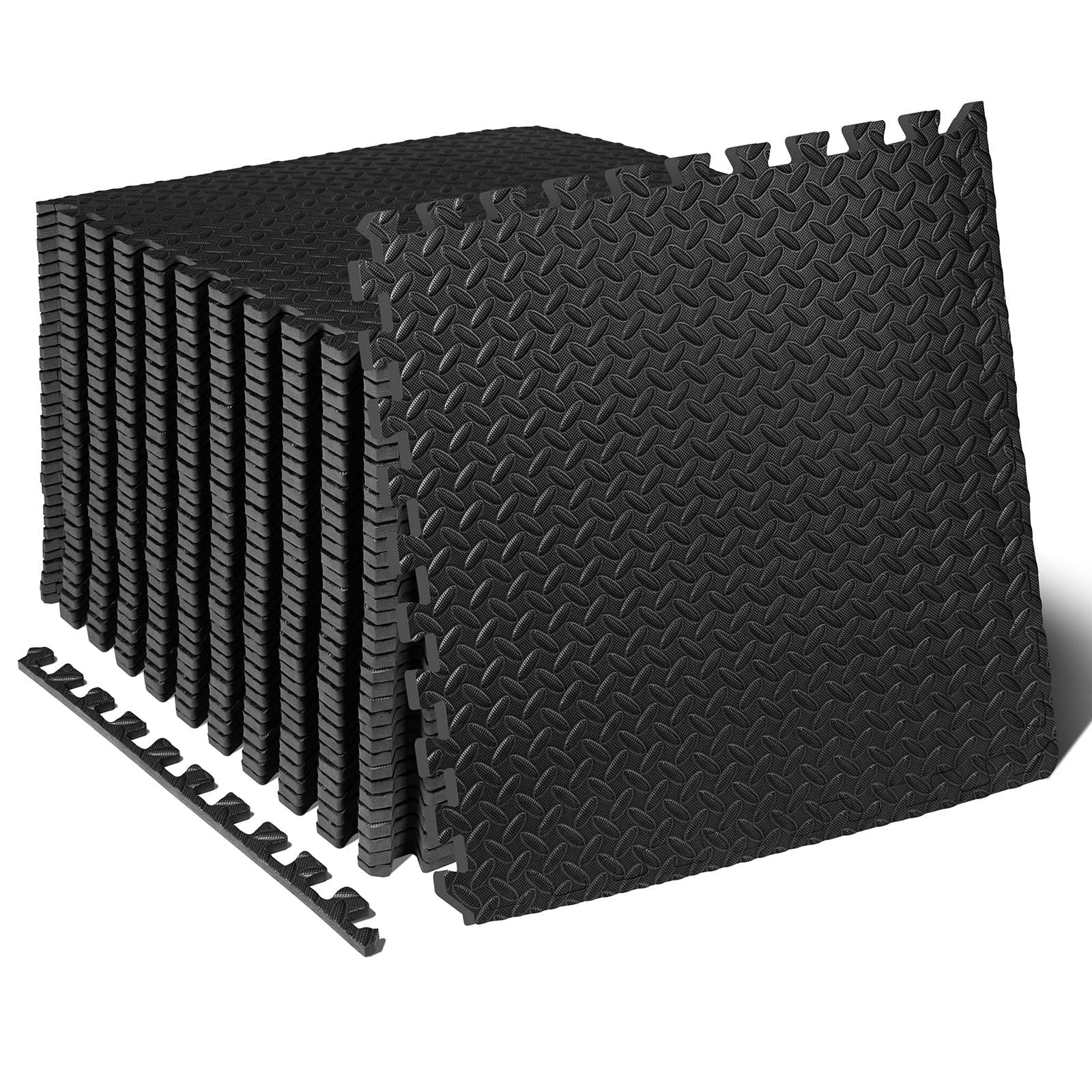
A full garage bay is where most foam tile packs run out of squares. This ProsourceFit set arrives with 36 tiles and enough edge pieces to cover 144 square feet, which is the difference between a workout corner and a room you can actually move in. The tiles are 24 by 24 inches and half an inch thick, so the coverage goes down quickly: we laid a large section in a grid and worked outward, and the puzzle teeth clicked without much persuasion.

That size is the reason to choose it, and the reason to think twice. The half-inch EVA is comfortable underfoot, but a 144-square-foot floor is a lot of seams, and the tiles can shift under fast lateral movement or heavy dragging. We used double-sided tape on the outer row and kept equipment on the edges, which made the floor feel much more settled. If your gym is a rack, a bike, and a bench that stay put, the large coverage is a real convenience.

The trade-off is that this is still foam, not a rubber platform. The surface is water-resistant and wipes clean, and the black finish hides scuffs better than a light color. We liked the finished border pieces because they make a 144-square-foot installation look intentional rather than temporary. For a garage gym that needs wall-to-wall coverage on a midrange budget, it is the practical pick; for a dropping station, look at the rubber-top option instead.

Bottom Line

This is the pick when one pack has to cover a whole garage bay; 36 tiles and edge pieces turn a large slab into a finished gym floor.

Check Latest Price

Best for Heavy Equipment

Our Score 9.2/10
AIRHOP Rubber-Top Mat

AIRHOP

AIRHOP Rubber-Top Mat

  • Coverage 48 sq ft
  • Material EVA foam with rubber top
  • Thickness 0.56 in
  • Tile Size 24 x 24 in
Check Price on Amazon

Rubber-top tiles stay firm under racks, benches, and treadmills.

The AIRHOP tiles are the ones we point to when the gym has a rack, a bench, and a treadmill rather than just a yoga mat. Each 24-inch tile has a recycled rubber top bonded to an EVA foam base, and the 0.56-inch sandwich feels firmer than a plain foam tile. We set a loaded rack on ours and the feet did not sink the way they do into softer EVA; the rubber surface also gives shoes something to bite.

The 12 tiles cover 48 square feet, so it is a one-bay floor rather than a whole-garage solution. The larger interlocking locks are a genuine improvement over the small puzzle teeth on cheap mats; we had to line up the first row carefully, then the rest went together with a firm press. The tiles are heavy enough to stay put in a home gym, though the rubber top makes the pack awkward to carry alone.

A rubber top does not make these indestructible. The seam is still a seam. For heavy equipment and mixed training, though, this is the most convincing foam-based option here; the extra firmness is what you are paying for.

Bottom Line

For a rack, bench, and treadmill in one bay, we trust this rubber-top set to stay firm and keep equipment feet from sinking into foam.

Check Latest Price

Best Large-Area Value

Our Score 9.2/10
Nazhura 32-Pack Mat

Nazhura

Nazhura 32-Pack Mat

  • Coverage 128 sq ft
  • Thickness 0.5 in
  • Tile Size 24 x 24 in
  • Tile Count 32 tiles
Check Price on Amazon

A 32-tile pack covers 128 square feet without buying two boxes.

The first thing you notice about the Nazhura pack is the square footage: 32 tiles at 24 inches each add up to 128 square feet, enough to cover a wide garage bay or a long basement wall without buying two boxes. The tiles are half an inch thick, with a textured grey surface and interlocking edges that click together without tools. We laid a large section and had enough left to line a small equipment corner.

At this size, the value is the point. The foam is not as firm as the rubber-top tiles, but the coverage per pack is hard to beat. We liked that the tiles are light enough to move alone and that the grey hides dust better than black. For a large home gym where coverage matters more than a premium surface, this is the set we reach for.

Bottom Line

When coverage is the priority, this 32-pack turns a large room into a gym floor without asking you to buy two boxes.

Check Latest Price

Best Small Starter Pack

Our Score 9.2/10
CAP Puzzle Mat

CAP

CAP Puzzle Mat

  • Coverage 24 sq ft
  • Thickness 0.5 in
  • Tile Size 24 x 24 in
  • Tile Count 6 tiles
Check Price on Amazon

Six finished-edge tiles make a useful first corner.

The CAP box is small on purpose: six 24-inch tiles, 24 square feet, and a diamond-textured surface that looks more like a gym floor than a play mat. We used it as a starter patch under a bench and a dumbbell rack, and the half-inch foam took the edge off a concrete slab without turning the area into a sponge.

The puzzle edges are simple and the finishing strips give the outside a clean line. Because the pack is only six tiles, layout matters more than with a big set; a 4-by-6-foot mat is the natural shape, and you will want to measure before you assume it covers a full rack footprint. We cut one tile around a floor drain and the foam trimmed cleanly with a utility knife.

The diamond texture adds a little traction. It is also not the thickest option here. For bodyweight work, a stationary bike, or a small garage corner, the size is an advantage: you can pick it up and move it out of the way.

What we appreciate most is the low commitment. Six tiles are enough to test whether foam flooring suits your space before you cover a whole room, and the finished edges mean the small patch does not look improvised. If you already know you need a full wall-to-wall gym floor, go bigger; if you are starting with one corner, this is the sensible first box.

Bottom Line

This is the box we suggest for a first corner or a rental: six tiles make a useful patch, and the finished edges keep it from looking temporary.

Check Latest Price

Best For Multipurpose rooms

Our Score 9.2/10
We Sell Mats Foam Tiles

We

We Sell Mats Foam Tiles

  • Coverage 100 sq ft
  • Thickness 0.38 in
  • Tile Size 24 x 24 in
  • Tile Count 25 tiles
Check Price on Amazon

At three-eighths of an inch, the We Sell Mats tiles are thinner than the half-inch sets that dominate this list. That is the first thing to know, because it changes who the mat suits: it is better for standing, stretching, light equipment, and playrooms than for a rack or heavy floor work. The 25 tiles cover 100 square feet, and the 24-inch squares go down fast over a flat floor.

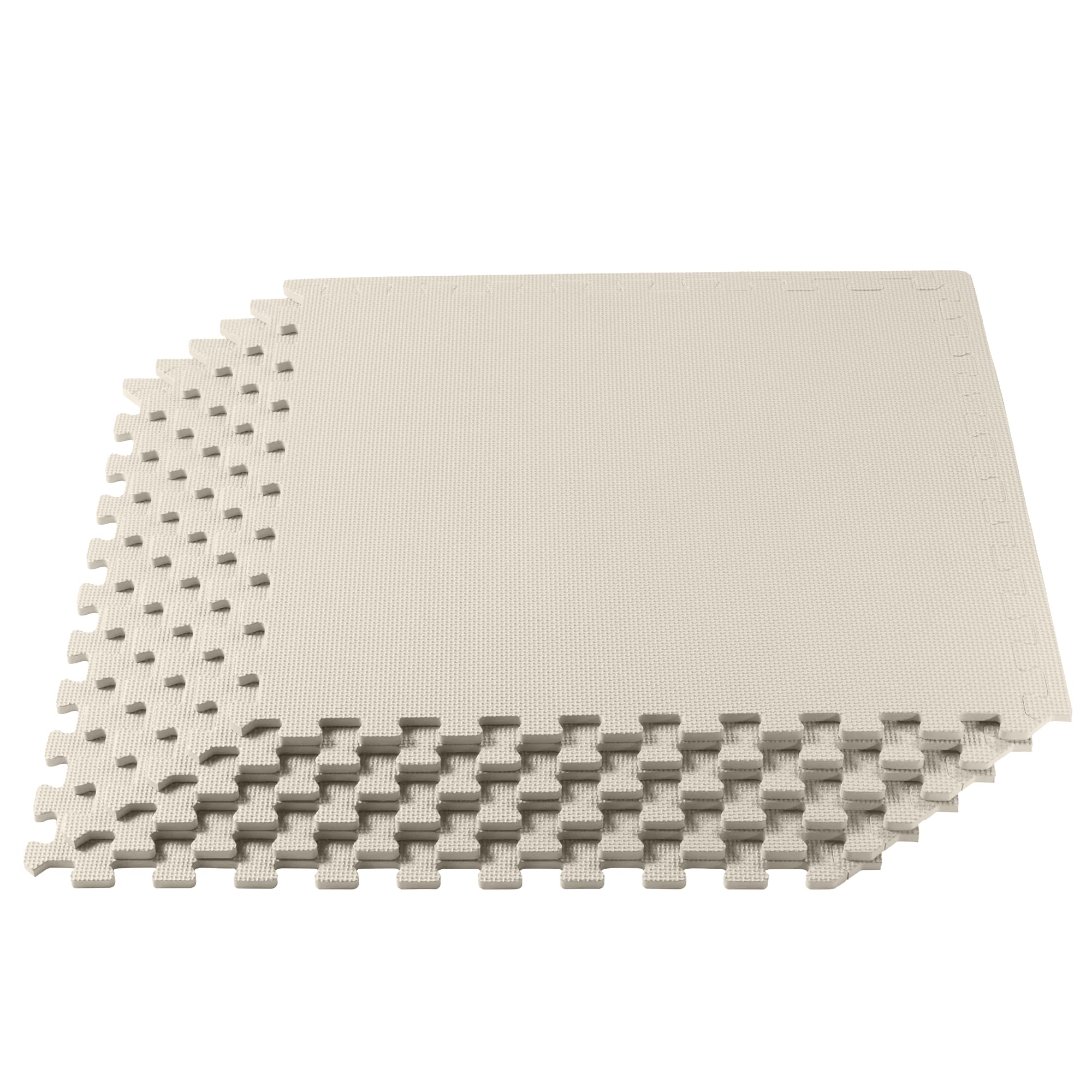
The upside of the thinner foam is a lower profile and a lighter pack. We unrolled a section in a basement room and the tiles locked together with a firm press; the cream color brightened the space. The surface wipes clean, and the pieces come apart without tools when you need to reconfigure.

Where this set earns a place is in a multipurpose room that doubles as a gym. The 100 square feet is enough for a yoga mat, a bike, and a small free-weight area, and the thinner foam lets a door pass over it more easily than a deep cushion would. If you need a soft landing for high-impact work, look at the one-inch option; if you want broad, light-duty coverage, this is a practical choice.

Bottom Line

For a basement or playroom that doubles as a light workout space, this broad 100-square-foot set is easy to live with and easy to move.

Check Latest Price

Best For Tight spaces

Our Score 8.8/10
BeMaxx Gym Mats Set

BeMaxx

BeMaxx Gym Mats Set

  • Coverage 17.98 sq ft
  • Thickness 0.4 in
  • Tile Size 12.6 x 12.6 in
  • Tile Count 18 tiles
Check Price on Amazon

The BeMaxx tiles are 12.6 inches square, not the 24-inch squares most gym mats use. That makes them slower to lay over a large area, but it also makes them easier to fit into a tight corner, a closet, or a small rental room where a full-size tile would need trimming. The pack includes 18 tiles and edge pieces.

The foam is 0.4 inch thick, which is thin for a home gym. We used it as a standing pad in front of a desk and under a compact bike, and it softened the hard floor without making the bike feel wobbly. The surface has an anti-slip texture, and the tiles lock together like puzzle pieces; the smaller size means more seams, so layout takes a little more patience.

This is not the set for a rack, a bench, or a room where you plan to jump. The smaller tiles can shift when you move across them quickly. The upside is portability: the whole pack is light enough to carry in one hand, and you can stack the tiles in a closet when the room goes back to normal.

We see it as a problem-solver rather than a full gym floor. If you need a washable, cushioned patch for a small workout corner or a standing desk, the compact tiles are genuinely useful; if you are covering a garage, the 48-square-foot and larger sets here are the better buy. Buy this one for the footprint, not for heavy training.

Bottom Line

This is the compact patch, not the full gym floor: choose it for a tight workout corner, a standing desk, or a rental where every inch counts.

Check Latest Price

How We Tested Foam Gym Tiles (and What Fell Apart)

We started with a shortlist of about 40 sets — everything from half-inch interlocking squares to one-inch puzzle mats — and narrowed it by whether edge and corner pieces were included, how much actual coverage a pack delivered, and whether the foam was closed-cell. Twelve made the cut, and those have been down on floors for roughly nine months.

Assembling each one myself, I timed how long a full floor took to lay down solo and noted whether the puzzle edges seated with hand pressure or needed a rubber mallet. I measured the coverage once assembled against what the pack claimed, cut border pieces around a foundation post and a doorframe with a utility knife, and checked a week later whether the edges had lifted away from the wall.

Every set went under real training: dumbbells dropped from waist height, split squats and lunges in socks, barefoot, and in lifting shoes, with a bench and rack parked in the same spot for weeks. I watched for seams opening under a loaded stance, tiles skating when I pushed off one foot, and grip under sweaty feet.

Over the months I looked for what only shows up late — edges crumbling into crumbs, surfaces pilling where hands and knees land, color fading in a sunny room, and how easily chalk and rubber dust wiped off. At the end I broke each floor down and rebuilt it to see whether the pieces still locked tight, and compared price per square foot once shipping was factored in.

How to Choose

Start With Coverage, Not Tile Count

A 24-inch tile covers 4 square feet, so a 12-tile pack gives you 48 square feet and a 36-tile pack gives you 144. Measure the footprint of your rack, bench, and floor-work zone rather than the whole room; covering every inch of a garage is often more seams and more cleaning than you need. We like the BalanceFrom 48-square-foot set for a first gym and the ProsourceFit 144 when the room itself is the gym. Order the full coverage at once so the tiles come from the same batch.

Pick Thickness for the Workout

Three-eighths of an inch is fine for standing, stretching, and light equipment, but it will not hide a hard floor under a bench. Half an inch is the sensible baseline for a home gym: enough cushion for floor work, still firm enough to stand on. One inch is for high-impact landings, not for a loaded rack; thick foam can dent under a stationary load. We Sell Mats covers the light-duty end, while the ProsourceFit Weaved mat is the one we choose for jump and strike work.

Choose the Surface for Grip and Equipment

Plain EVA is softer and usually less expensive; a rubber top is firmer and gives shoes more bite, which is why the AIRHOP tiles suit racks and treadmills. Neither surface is magic on a dusty smooth floor. If you train barefoot or in socks, plan on a little double-sided tape at the seams, and keep the mat on a clean, flat slab. A textured surface helps, but it does not replace a stable base.

Plan for Seams, Edges, and Storage

Every tile adds a seam, and seams are where dust collects and where a large floor can start to creep. Border strips finish the outside edge, but they do not lock the field together; tape or the weight of equipment does that. If the room has to do double duty, choose a pack you can take apart and stack. The CAP six-tile set is the easy one to move, while the Nazhura 32-pack is the one to leave down once a large room is covered.

Frequently Asked Questions

Final Verdict

Across this set, the BalanceFrom 48-square-foot mat is the one we recommend first. It covers a starter gym without a premium surface, and the half-inch foam is comfortable for lifting and floor work; the finished borders are a small detail that makes a garage look less improvised. If your gym is built around a rack or treadmill, the AIRHOP rubber-top tiles are the firmer alternative. For a full bay, go ProsourceFit 144; for high-impact work, the one-inch ProsourceFit Weaved mat earns its extra depth.