Adjustable Dumbbell Maintenance Checklist: Clean, Inspect, and Test Safely
After use, wipe sweat and chalk away, dry the dumbbell, return it squarely to its cradle, and keep it in a dry indoor location. Before the next workout, inspect the plates, handle, selector, locking parts, and base, then perform the exact low-risk function test in the model's manual.
Adjustment systems differ. Do not oil, disassemble, tighten, or repair an internal selector unless the manufacturer explicitly instructs you to do so. If a plate does not lock, a selector will not click fully, or any structural part is cracked or bent, stop using the dumbbell.
Maintenance Schedule at a Glance
| When | Checklist | Stop condition |
|---|---|---|
| Before every use | Inspect handle, plates, selector pins/dials, locks, add-on weights, and cradle; confirm the handle is fully seated before changing weight | Crack, bent plate, loose insert, missing pin, incomplete selection, or unexpected movement |
| After every use | Wipe sweat and chalk with a slightly damp cloth; dry completely; return to the base in a vertical, controlled motion | Moisture inside the mechanism or a plate that will not sit squarely |
| Weekly or after dusty use | Clear loose dust from plate channels and contact surfaces with a soft brush or maker-approved method | Debris that cannot be removed without opening the mechanism |
| Monthly | Inspect wear points and repeat every manufacturer-specified locking or retention test at the lowest setting | Failed test, grinding, selector skip, plate separation, or damaged cradle |
| After any drop or impact | Quarantine the dumbbell and follow the maker's inspection/service process | Do not assume it is safe because the outside looks normal |
How to Clean an Adjustable Dumbbell
- Set the unit to its lightest configuration and place it fully in the cradle on a stable surface.
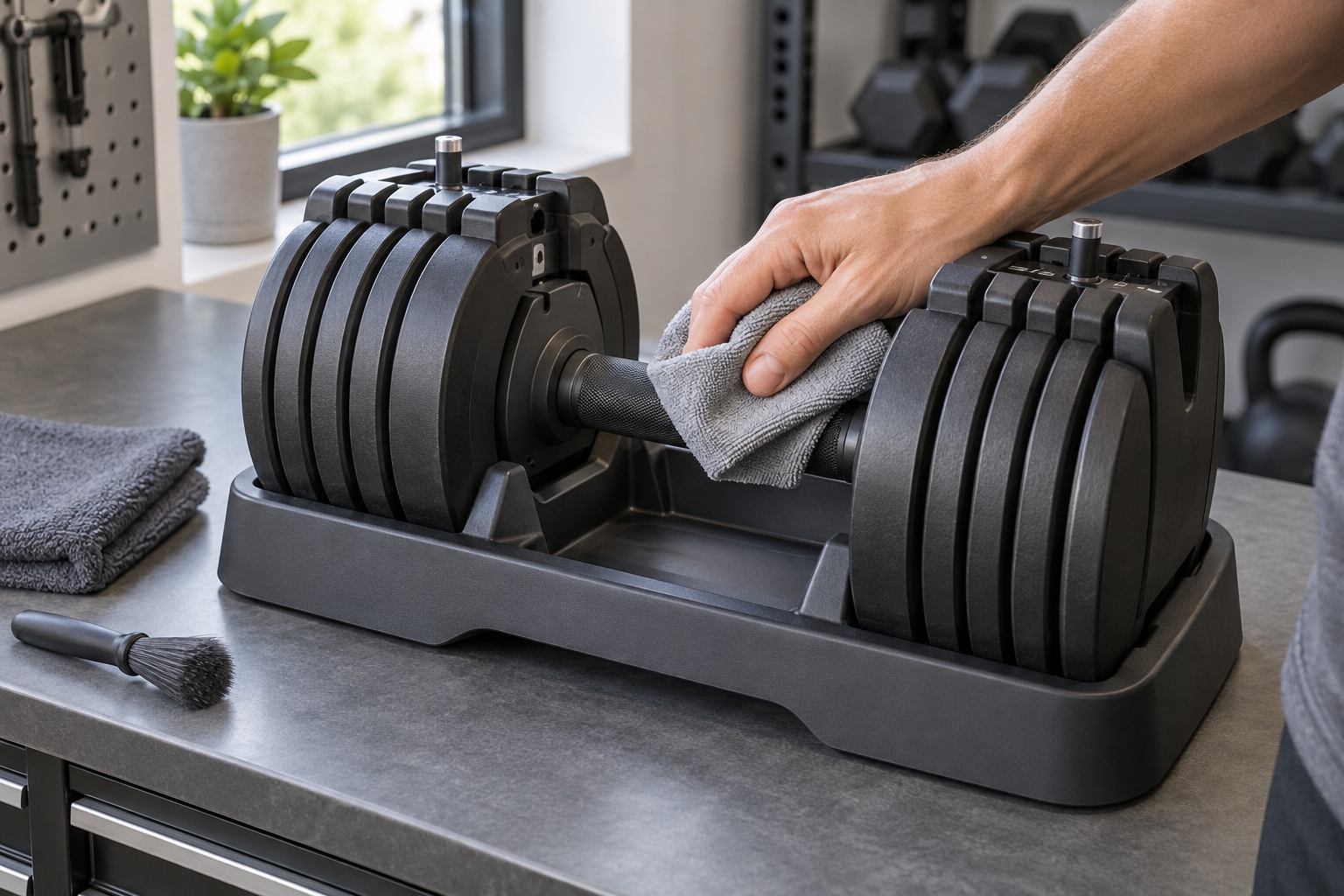
- Use a microfiber cloth lightly dampened with warm water and, only if permitted, a small amount of mild soap.
- Wipe the handle, accessible plate faces and edges, and the cradle. Do not flood seams or spray cleaner into the selector.
- Use a dry soft brush for loose chalk and dust around accessible plate interfaces.
- Dry every surface with a separate cloth before changing the selection or lifting the handle.
- Check the manual before applying any protectant, disinfectant, or lubricant.
Test Selection and Plate Retention
Use the test procedure in the product manual. A safe generic sequence is limited to observations, not internal adjustment:
- With the handle fully seated, move each selector through every setting without force.
- Confirm every dial, pin, or rail reaches its intended stop and gives the normal visual or audible indication.
- Select the lowest weight and lift straight up only a few inches over the cradle.
- Confirm the selected plates rise evenly and all unselected plates remain nested.
- Return the handle vertically, choose the next setting, and repeat only as the manual directs.
Never rotate a dial or force a pin while the handle is outside the base if the manual prohibits it. Do not hold the dumbbell over your foot while testing.
What a Symptom Usually Means
| Symptom | Safe first check | Do not |
|---|---|---|
| Selector will not move | Make sure the handle and plates are fully aligned and seated; remove visible loose debris | Force the selector or strike the base |
| One plate lifts unexpectedly | Return the handle immediately, unload, and inspect the matching selector/plate interface | Continue the workout or try to shake the plate free |
| Grinding or new resistance | Stop, clean only accessible surfaces, and compare with the manual | Add general-purpose oil without written approval |
| Rust or coating chip | Keep dry and ask the maker about approved surface care | Sand near a selector or paint moving contact surfaces blindly |
| Cracked plastic, bent plate, or damaged pin | Remove the dumbbell from service and contact the manufacturer | Glue, bend, or substitute an unapproved part |
| Cradle rocks | Place it on a firm, level surface and inspect the base | Select or lift plates from a tilted base |
Storage Prevents More Problems Than Deep Cleaning
- Store indoors in the temperature and humidity range in the manual.
- Keep the cradle level, off damp concrete, and away from direct rain or condensation.
- Leave the selector in a normal documented storage position; do not balance loose plates on the base.
- Keep children and pets away from pinch points and heavy removable plates.
- Do not use selector-style dumbbells as push-up handles unless the manufacturer specifically allows it.
- Do not drop adjustable dumbbells. BowFlex warns that drops can damage the plates or lock and allow a plate to disengage without warning.
Keep a One-Minute Maintenance Record
Save the model, serial number, purchase date, manual, and replacement-part link. Record a maintenance date only when you perform the inspection, and note drops, selector changes, or parts replaced. A short history helps customer support distinguish debris, alignment problems, and impact damage.
Sources and Manufacturer Guidance
Requirements can vary by product, model, and situation. These primary sources informed this guide; official instructions for your exact product and current authoritative guidance take priority.
- BowFlex SelectTech 1090 Owner's Manual: inspection, vertical handling, and drop warning
- BowFlex SelectTech 552 Owner's Manual: cleaning, lubrication, and service boundaries
- BowFlex current manuals directory
- PowerBlock Product FAQ: cleaning, moisture, storage, and drop guidance
- REP Fitness: Adjustable dumbbell cleaning and maintenance guidance
Frequently Asked Questions
-
Only when the exact manual says where and what to use. Some systems are internally lubricated and require no added oil; the wrong product can attract debris or damage plastics and coatings.
-
Check the manual first. A lightly dampened cloth and thorough drying are common; bleach, solvents, ammonia, alcohol, or other chemicals may damage certain finishes and plastics.
-
Assume no unless the exact manufacturer states a tested drop allowance. Many selector systems can suffer hidden locking damage from an impact.
-
A plate may be misaligned, the handle may not be fully seated, or debris may block a selector. Do not force it; follow the model's troubleshooting instructions or contact support.
-
Inspect before every use and after any impact. Repeat the manufacturer's detailed lock or retention test at the interval its manual specifies.