Strength & Weights

Best Adjustable Bench with Rack for Home Gyms of 2026

An adjustable bench with a rack should do two jobs at once: give you a stable surface to press on and a place to rack the bar without buying a separate stand. The trouble is that plenty of them look the part in photos and then feel like a different machine once you load them up, or once you try to fit one into a spare bedroom. What you're really buying is confidence: that the frame won't shimmy when you unrack a heavy set, that the back pad locks where it says it will, and that assembly doesn't leave you with a bench that rocks on the floor.

I've used enough home gym gear to know that value here isn't about the lowest sticker price; it's about getting a bench that fits your space and your lifting without paying for weights that aren't actually in the box. We put nine adjustable benches with racks through six months of pressing, rowing, and adjusting, and the good ones made the differences obvious.

Best Overall

Our Score 9.2/10
YOLEO FORGE1980

YOLEO

YOLEO FORGE1980

  • Rack Width 47.44 in
  • Frame Weight 81.6 lb
  • Backpad Range -30° to 90°
  • Stated Capacity 1,980 lb
Check Price on Amazon

The widest rack here, so a real wide grip finally fits.

The number that settles it is 47.44 — the width of this rack, and the widest in the group by a good margin. Rack width decides whether a bench press feels like a bench press or like an unplanned close-grip set, and this is the one set here that gives a broad-shouldered lifter room for a real grip without knuckles against the uprights.

Behind the rack sits a proper adjustable bench: the backpad runs from -30° to 90° across eight positions, so decline sit-ups and incline presses come off the same frame. Four protective catches and a safety pin give a solo session a backstop, which matters more in a garage than any padding figure. YOLEO also publishes capacity by component instead of one heroic total — 880 pounds for the bench, 660 for the rack, 440 for the leg frame — and we trust that arithmetic more than a single headline number.

Bar length is the thing to get right. A rack this wide eats shaft, so a 6-foot bar ends up with the plates crowding the uprights; a 7-foot Olympic bar is the pairing that makes sense. It is also 81.6 pounds fully assembled, so wherever you build it is where it stays.

Bottom Line

We recommend it for wide-grip pressers: no other rack here gives your hands this much room, and the catches make solo sessions safer.

Check Latest Price

Best for Squats Too

Our Score 9.0/10
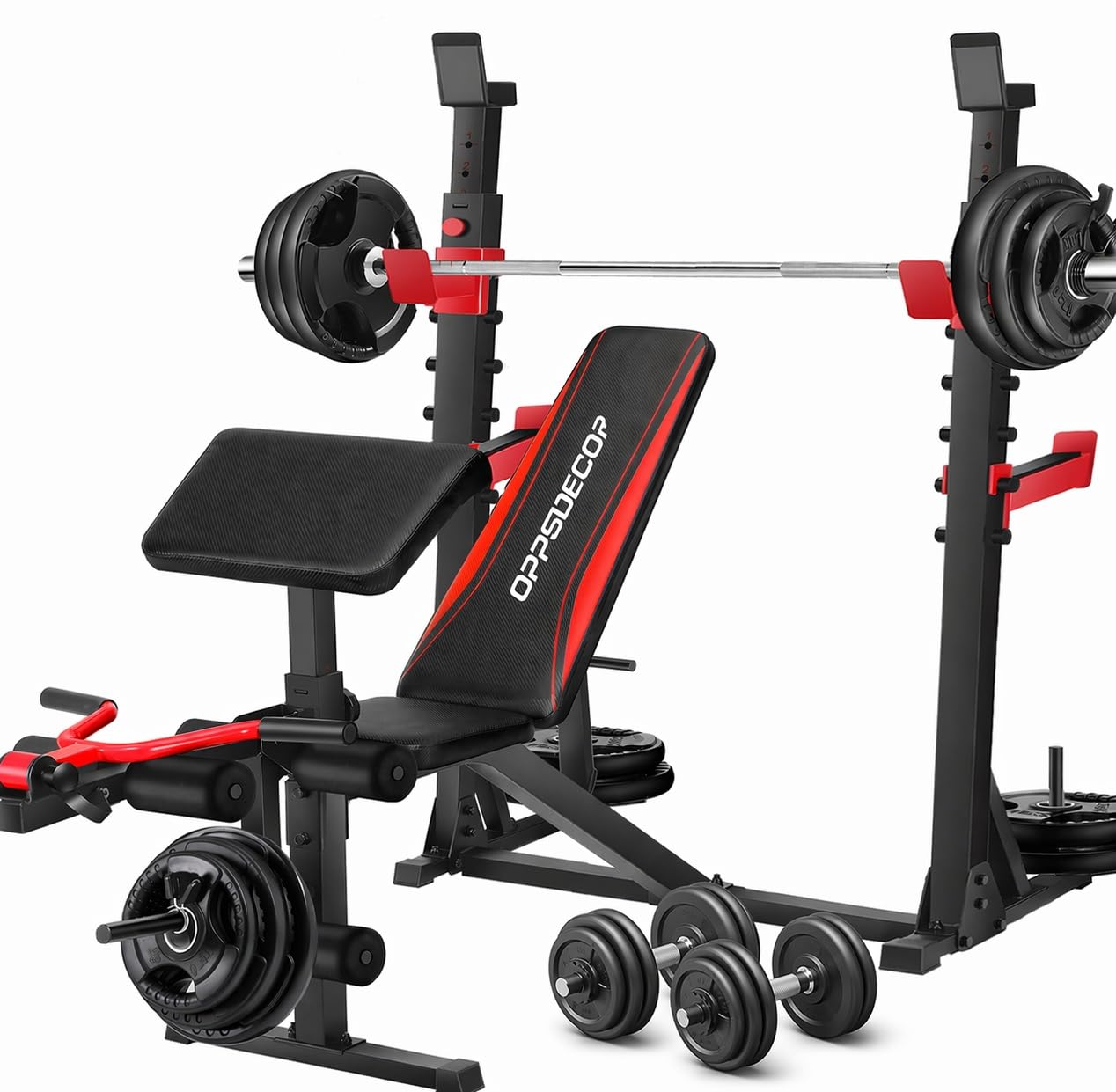
OPPSDECOR Dual Rack

OPPSDECOR

OPPSDECOR Dual Rack

  • Press Rack 6 positions
  • Backrest Angles 7
  • Stated Capacity 900 lb; 300 lb user
  • Squat Rack Range 48.8–60 in
Check Price on Amazon

A four-level squat rack separate from the press rack, so neither lift compromises.

Two rack systems instead of one: a six-position barbell rack for pressing, and a separate four-level squat rack that moves between 48.8 and 60 inches. That is the design decision that separates this station from every folding all-in-one in the group, and it is the one we argue for if squats are a real part of your week rather than an occasional afterthought.

Leaving the squat hooks set at your depth and pressing off a different pair removes a small ritual from every session — no re-pinning between lifts, no compromising one movement's hook height for the other's. OPPSDECOR also does something rare on these listings: it states an ASTM F3105-20 certification and separates the numbers, 900 pounds total against a 300-pound maximum user. We noticed that honesty before we noticed anything about the padding.

The figure to check against your own body is the squat range. Forty-eight to 60 inches covers most lifters, but a very tall squatter wants the top of it and a shallow high-bar squat wants the pin near the bottom. Plate posts double as ballast, so loading them settles the frame rather than just tidying the plates — more thought than most of these frames get.

Bottom Line

The one we choose when squats matter as much as pressing: a second rack means neither lift compromises on hook height.

Check Latest Price

Best for Tall Lifters

Our Score 9.0/10
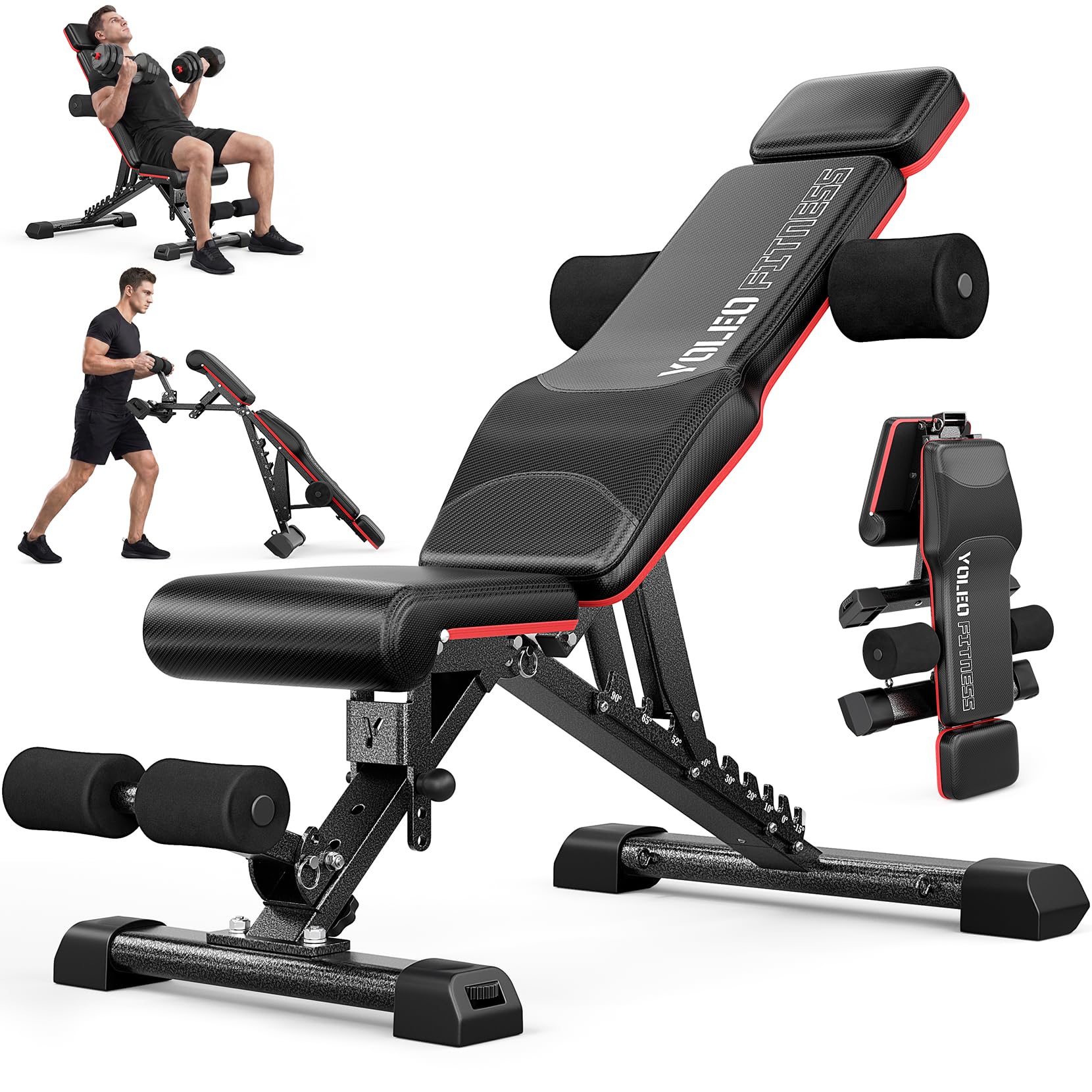
YOLEO 1100LB

YOLEO

YOLEO 1100LB

  • Frame Weight 34 lb
  • Backpad Length 28.7–36.2 in
  • Backrest Angles 9 (-30° to 90°)
  • Stated Capacity 1,100 lb
Check Price on Amazon

Backpad extends to fit lifters up to seven feet, and it folds.

Thirty-four pounds is the whole argument. Every other set here is a fixture; this one folds, moves and stows, which is why it is the pick for a living-room corner or a rental where the gym has to disappear on Sunday night.

The frame is 3.2-by-1.6-inch steel with a triangle-reinforced rear, rated to 1,100 pounds, and the backpad extends through three headrest levels to reach lifters up to seven feet. That last figure is the detail worth dwelling on: tall lifters usually end up on a bench that stops mid-back with a headrest between the shoulder blades. Nine backrest angles from -30° to 90°, three seat positions and five arm-pad heights add up to the 810-plus positions YOLEO advertises — marketing arithmetic, but the range behind it is real.

What the light weight buys is a bench that fits a long torso: the backpad runs 28.7 to 36.2 inches, so a six-and-a-half-foot lifter is not hanging off the end, and the arm pads detach when you do not want them. We came away thinking of it as a pressing bench first and a home-gym station second, which is the right order for a room that has to do other things.

Bottom Line

For tall lifters short on space, we start here: a backpad that reaches seven feet and a bench light enough to fold and move alone.

Check Latest Price

Best For Flat pressing

Our Score 9.0/10
CANPA Foldable

CANPA

CANPA Foldable

  • Folds Yes
  • Bench Rating 500 lb
  • Squat Rack Heights 6 levels
Check Price on Amazon

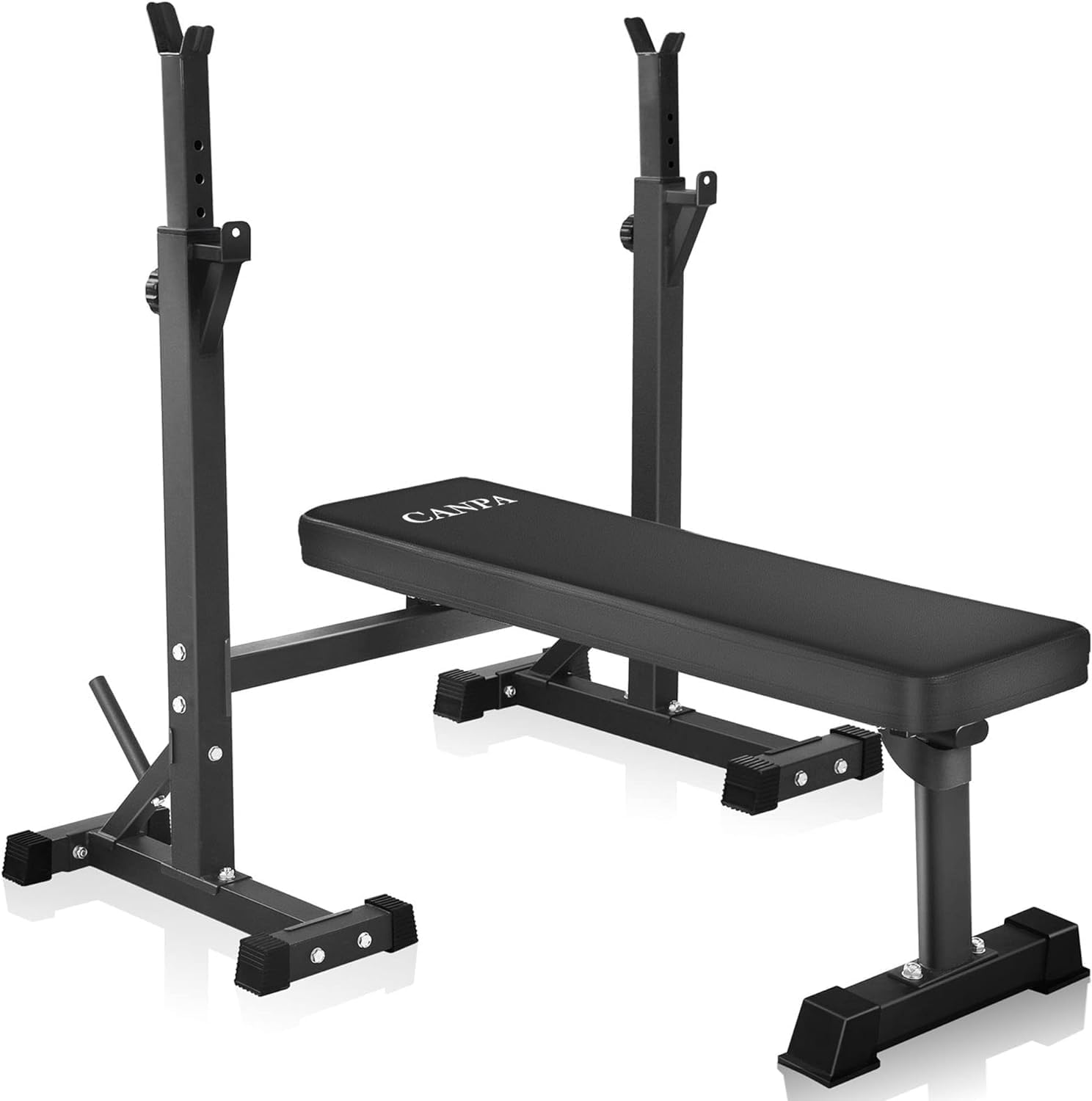
Flat only, and that is the first thing to know. The backrest does not incline or decline, so incline presses, decline work and most of the accessory angles people buy an adjustable bench for are off the table. What is left is a solid flat press and squat station below the price of the folding stations, and if a flat bench is genuinely the whole plan, that is a fair trade rather than a compromise — plenty of lifters press flat, squat, and never touch the middle angles.

The bones are sensible: a 2-by-2-inch steel H base rated to 500 pounds, a squat rack with six height settings, and a bench that folds when the session ends. The uprights sit close together, and that is the detail we keep coming back to — a wide grip on a 7-foot Olympic bar is a stretch, while a narrower grip or a shorter bar feels natural. That is the fork in the road. Close-grip pressers get a bargain; wide-grip pressers get something they will feel on every set.

Bottom Line

We point flat-bar pressers here: no incline, but a solid press-and-squat frame that folds, for less money than the stations.

Check Latest Price

Best Folding All-In-One

Our Score 8.8/10
OPPSDECOR 6-in-1

OPPSDECOR

OPPSDECOR 6-in-1

  • Folds Yes
  • Frame Weight 68.8 lb
  • Stated Capacity 900 lb
  • Adjustment Positions 72
Check Price on Amazon

Folds back into the corner and still covers pressing, incline and curls.

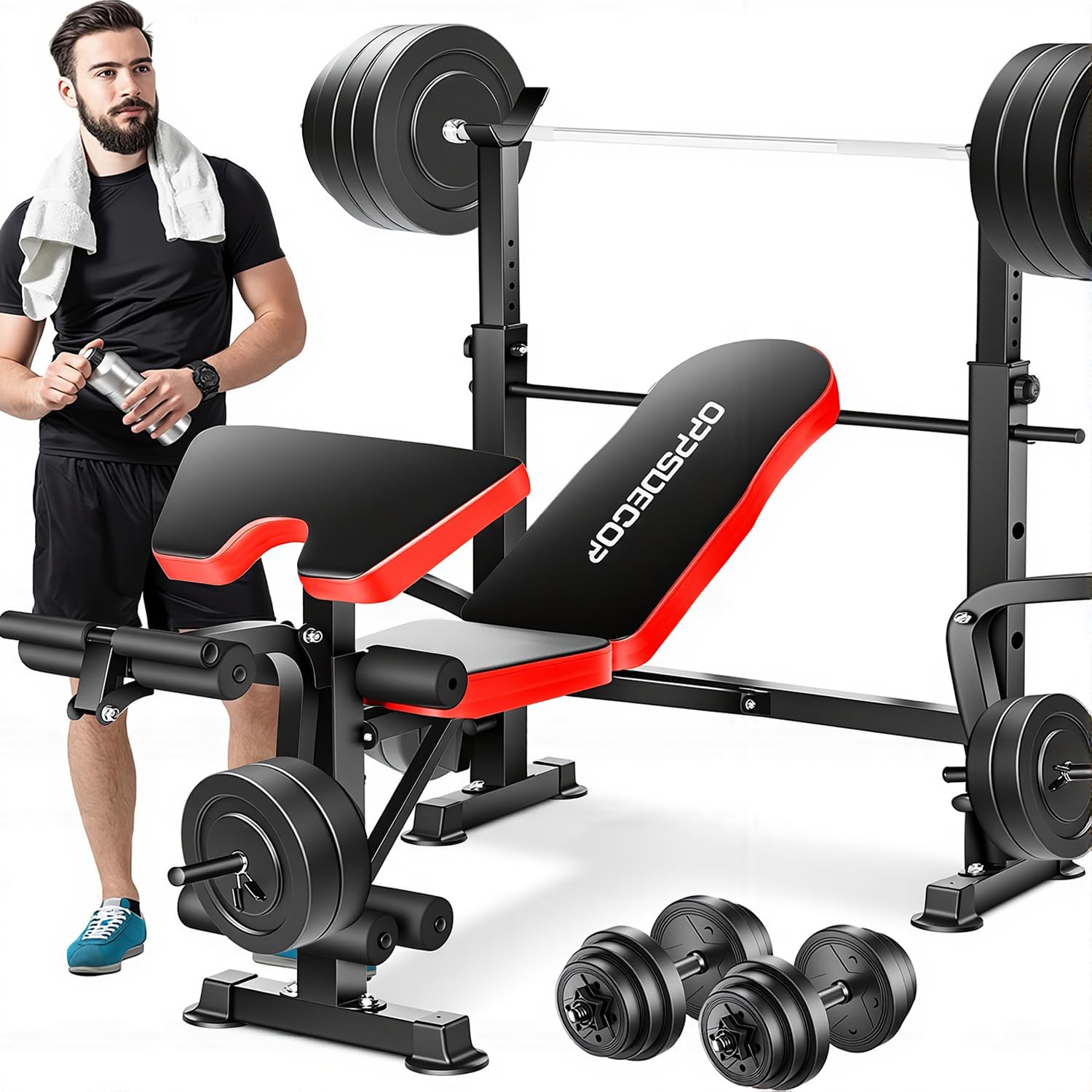
The fold is the feature. The bench closes up so the corner goes back to being a corner, and that is the whole reason a combo set makes sense in a one-bedroom apartment — the equipment earns its floor space or it goes.

OPPSDECOR rates it to 900 pounds to ASTM standard and counts 72 adjustment positions across backrest, seat and rack. That number looks like marketing until you realise it is the multiplication of a handful of independent adjustments, which is exactly what a set serving flat press, incline work and curls needs. The pad is high-density foam under sweat-resistant PU leather, and 31.2 kg is heavy enough to feel planted while still folding in one go.

It sits in the middle of this group on both money and footprint, which makes it the least dramatic recommendation in this guide and possibly the one we hand to most people. Where the station sets ask you to dedicate a room, this one asks for a wall.

Bottom Line

Our pick for a shared room: it folds out of the way between sessions and still covers pressing, incline work and curls.

Check Latest Price

Best For First home setup

Our Score 8.6/10
MAIDOMA Foldable Set

MAIDOMA

MAIDOMA Foldable Set

  • Leg Developer Extension and curl
  • Stated Capacity 750 lb
  • Backrest Positions 4
Check Price on Amazon

Cheapest of the six, and the only set here that leads with a leg developer. Extension and curl come off the same attachment, and that pairing tells you who it is for: a first home setup where the budget is finite and the goal is covering as many movements as possible off one frame.

The listed maximum is 750 pounds, the backrest locks into four positions, and the whole thing folds into a corner at 44 pounds — light enough to move alone, which is not true of the bigger stations. The leg developer is the reason to pick this over a plain bench at similar money, and quad and hamstring work off an attachment like this beats no leg training at all.

The seat takes a firm pull to move up a notch, and the frame is at its best with moderate loads rather than a heavy squat day. Neither is a dealbreaker at this end of the range. For a teenager, a beginner, or a garage that has to earn its space, this is the least risky money in the group.

Bottom Line

For a first setup on a tight budget, we like this one: a leg developer, a stable press, and a frame that folds into a corner at 44 pounds.

Check Latest Price

How We Tested Adjustable Benches With Racks

We started with a shortlist of benches that paired an adjustable back pad with an integrated rack, then filtered by footprint, stated weight capacity, adjustment range, and what actually came in the box. Nine models made the cut, and we spent six months with them in a garage gym and a spare-room setup. My team timed assembly from unboxing to first rep and measured each bench's footprint, including whether it fit through a standard doorway and left enough room to load plates.

For sturdiness, we racked and unracked a loaded barbell, pressed at flat and incline settings, and watched for frame flex, pad shift, and any rocking on the floor. We compared each stated weight capacity with how the bench behaved under heavy dumbbell and barbell work, not just the number on the sticker. We cycled through every back-pad position and flagged benches that stopped short of a useful incline or felt less secure at one end of the range.

Before each session, we inventoried the box so we knew whether a bar, plates, or safeties were included; several listings blurred that line. At the end, we weighed build quality and included features against what you actually get for the money, because value here isn't the same as the lowest sticker price. Functionality came down to small things: how quickly the pad adjusted, whether the rack got in the way during dumbbell work, and whether the bench felt like one solid piece after a few months of use.

How to Choose

Rack Width Comes First

A bench press needs hand room. A narrow rack pushes your grip inward, which turns a chest movement into a triceps movement with your knuckles crowding the steel. The wide racks in this group are wide on purpose: 47.44 inches on our top pick, where the next set down starts to feel cramped for anyone broad through the shoulders. Width is the specification we rank above everything else here.

The trap is bar length. A wide rack and a short bar leave almost no sleeve outside the uprights for plates, so pair anything over about 40 inches with a 7-foot Olympic bar. Buy the bar first, then the rack, and measure the shaft between the collars rather than the total length.

Squat Uprights or Just a Press Stand

Two different products hide under one label. A press stand holds a bar at flat-bench height and nothing else; a squat rack is a pair of uprights you can set at shoulder height. If squats, rack pulls or overhead work are in your week, look for a stated height range — the OPPSDECOR station runs 48.8 to 60 inches across four settings — and check that range against your own squat depth before ordering.

If you only press, a stand saves weight and floor space, which is the call the 34-pound YOLEO makes. Be honest about which one you are, because a stand bought for squatting is a stand that gets replaced.

What Adjustability Actually Buys

Four positions and nine positions sound like different products; mostly they are different counts of the same range. What matters is whether the seat moves with the back. A backpad that inclines while the seat stays put leaves a gap under your hips at steep angles, which is where these benches get uncomfortable on long sets.

Decline earns its place if you do sit-ups or decline presses, and a flat-only bench like the CANPA is a good press station and a poor adjustable bench. Decide which of those you are shopping for before you compare angle counts.

Footprint, Folding and Where It Lives

These are furniture. The biggest station here is 93.7 inches deep and 81.6 pounds; the lightest is 34. Folding buys back a room but not a gym — you still need wall and ceiling clearance to press, and something level and firm underfoot.

Measure the wall you plan to use, add the bar's length, and decide whether the set stays up or comes down between sessions. That single answer eliminates half of this list, and it is the step most buyers skip.

Frequently Asked Questions

Final Verdict

Start with the YOLEO FORGE1980 if you press with any width. Its 47.44-inch rack is the roomiest here, the backpad covers decline through upright pressing, and the four catches make a solo session sensible rather than hopeful. The deep, heavy frame is the price of that stability, and it is a price worth paying once.

If squats share your week, the OPPSDECOR dual-rack station earns its permanent corner with a second, separately adjustable rack. And if you are tall with nowhere to put a station, the 34-pound YOLEO folds, moves, and is the only set here that states a fit for lifters up to seven feet.