Sleep Tracker Accuracy Comparison: Watch, Ring, Bed Sensor, or Phone?
No consumer sleep tracker is a home substitute for polysomnography, and the form factor alone does not determine accuracy. Watches and rings infer sleep from motion and optical signals; bed sensors infer it from movement, vibration, or other contactless signals; phone apps have even less direct access to the sleeper unless paired with another sensor.
The most useful comparison is metric by metric. Bedtime, final wake time, and multi-week total-sleep trends are generally more actionable than treating every minute of REM, deep sleep, or wake as exact. A 2025 meta-analysis found significant differences between wrist-worn trackers and polysomnography for several common sleep measures, including total sleep time, sleep efficiency, sleep latency, and wake after sleep onset.
What Each Tracker Type Can Observe
| Type | Typical inputs | Strength | Common limitation |
|---|---|---|---|
| Wrist watch or band | Wrist motion, optical pulse, sometimes temperature or oxygen-related signals | Convenient 24-hour trend and exercise context | Quiet wakefulness can resemble sleep; loose fit weakens signals |
| Smart ring | Finger motion, optical pulse, temperature-related signals | Low-bulk overnight wear and strong finger pulse signal when fit is correct | Fit, finger temperature, model, and algorithm matter; ring evidence is device-specific |
| Under-mattress sensor | Bed movement, vibration, and sometimes ballistocardiography | Nothing to wear and good adherence | Partner, pet, mattress construction, and side of bed can contaminate signals |
| Bedside radar or sonar | Contactless movement and respiration-related motion | No charging or body contact | Room geometry and another moving person can affect classification |
| Phone-only app | Phone movement, microphone, or user input | Low cost and useful schedule/noise diary | Weak basis for sleep stages, especially when the phone is not on the body |
Trust the Metric Before the Score
Consumer apps compress many estimates into one sleep score, but the components do not have equal certainty. Review them in this order:
- Was the night captured? Missing or split nights make trend analysis unreliable.
- Were bed and final wake times plausible? Compare with a diary and obvious events.
- Was total sleep directionally reasonable? A tracker can mistake reading in bed for sleep or restless sleep for wake.
- How stable is wake after sleep onset? Brief awakenings are difficult for consumer algorithms.
- Are stage minutes merely explanatory? REM and deep-sleep labels are algorithmic classifications, not direct brain-wave measurements.
Do not compare one brand's “deep sleep” number directly with another brand's. Stage definitions, sensor windows, and algorithms differ.
Run a 14-Night Consistency Audit
- Use one device, the same finger or wrist, the same fit, and the same bed setup for 14 nights.
- Before opening the app each morning, record lights-out time, estimated sleep onset, remembered awakenings, final wake time, and unusual factors such as alcohol, illness, late exercise, a partner, or a pet.
- Then record the tracker's sleep start, sleep end, total sleep, and any missing-data warning.
- Mark disagreements greater than 30 minutes rather than debating every five-minute difference.
- At the end, count missing nights, false sleep while awake in bed, missed awakenings, and large start/end errors.
- Judge whether the device is consistent enough for the decision you want to make—for example, protecting bedtime regularity—not whether its sleep score looks flattering.
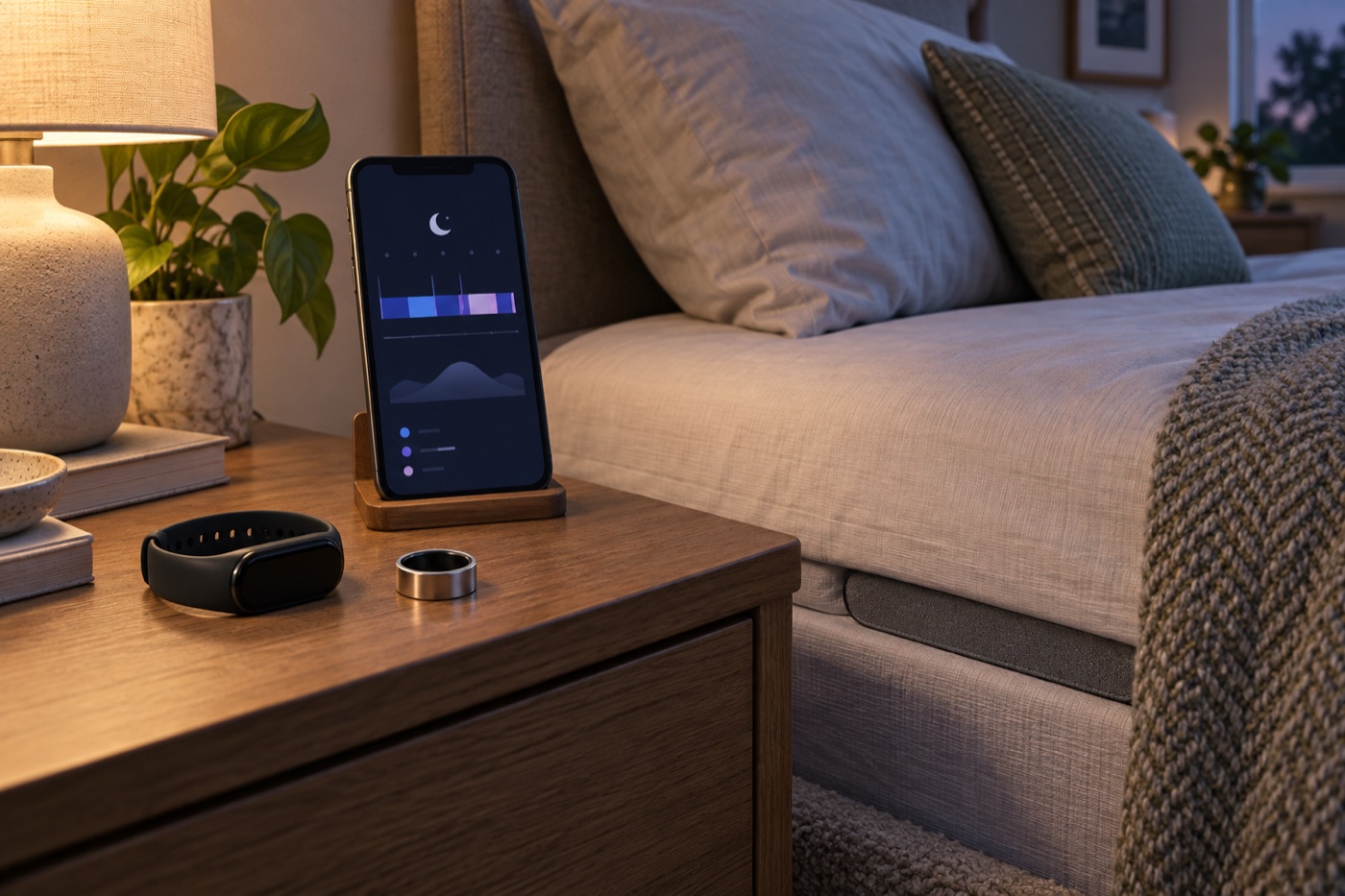
Choose by Failure Mode, Not Marketing Score
Choose a watch or band if you already wear it consistently and want sleep alongside training data. Choose a ring if wrist comfort is the main reason you skip nights, but verify sizing and charging habits. Choose an under-mattress or bedside sensor if wearing anything disrupts sleep and your bed environment is stable. Use a phone app primarily for schedule, habits, alarms, and a manual diary unless the app clearly identifies and validates an external sensor.
A 2023 systematic review of contactless devices found promising sleep/wake performance but substantial heterogeneity across devices and study designs. A recent review of finger-worn devices likewise found varied sensors, algorithms, and validation methods. That is why “rings beat watches” or “radar is clinical-grade” is too broad to be useful.
If You Compare Two Trackers
Wear both for at least 10–14 nights, not one night. Compare start time, end time, total sleep, and missing nights—not just each app's proprietary score. Keep notes about charging, fit, illness, travel, and firmware changes.
Do not declare the tracker closer to your memory “accurate.” People do not precisely remember sleep onset or brief awakenings. Your diary is useful for obvious events and usability; a formal validation requires simultaneous polysomnography scored under an established protocol.
Do Not Use a Tracker to Rule Out a Sleep Disorder
The American Academy of Sleep Medicine states that consumer sleep technology cannot diagnose or treat sleep disorders. Bring a concise trend and symptom diary to a clinician if you have persistent insomnia, excessive daytime sleepiness, loud habitual snoring, witnessed breathing pauses, gasping, unusual nighttime behaviors, or another concerning symptom.
Sources and Manufacturer Guidance
Requirements can vary by product, model, and situation. These primary sources informed this guide; official instructions for your exact product and current authoritative guidance take priority.
- Journal of Clinical Sleep Medicine: Meta-analysis of Wrist-Worn Sleep Tracker Accuracy
- Journal of Clinical Sleep Medicine: Systematic Review of Contactless Sleep Trackers
- Journal of Clinical Sleep Medicine: Review of Finger-Worn Sleep Trackers
- American Academy of Sleep Medicine: Consumer Sleep Technology Position Statement
Frequently Asked Questions
-
No form factor wins universally. Accuracy depends on the exact model, firmware, metric, sleeper, fit, and validation method. Compare device-specific evidence and the failure mode that matters for your bedroom.
-
They are algorithmic estimates based on motion and physiological signals, not direct EEG stage scoring. Use stage charts as rough patterns, not exact minute counts or diagnoses.
-
A general consumer tracker cannot diagnose or rule out sleep apnea. Some devices have specifically authorized features with defined limits, but symptoms and abnormal results still require appropriate clinical evaluation.
-
Quiet wakefulness can produce little movement and stable signals that resemble sleep. Reading or watching television in bed is a common source of false sleep.