Rowing Machine Maintenance: A Checklist for Air, Magnetic, and Water Rowers
The short answer: wipe sweat after every workout, keep the rail and seat rollers clean, inspect the handle, foot straps, cord or chain, and fasteners regularly, and follow the exact drive-system instructions in your manual. Chain oil belongs on approved chain rowers; purification tablets belong only in compatible water tanks. Neither treatment is universal.
The maintenance schedule below separates the tasks most owners can perform from work that should remain with the manufacturer or a qualified technician.
Rowing Machine Maintenance Schedule
Use the calendar as a reminder, but let operating hours and the model manual control the interval. A rower used by several people reaches a 50-hour service point much sooner than a lightly used home machine.
| When | Owner checks | Applies to |
|---|---|---|
| After each workout | Wipe sweat from the handle, seat, rail, footrests, frame, and console; let surfaces dry before storage. | All rowers |
| Weekly | Clean the rail and seat rollers, inspect straps and the handle connection, and listen for new rubbing or skipping. | All rowers |
| About every 50 operating hours | On models that specify it, clean and oil the exposed chain with the approved oil; wipe off excess. | Chain-drive rowers only |
| About every 250 operating hours | Inspect accessible fasteners, chain or cord, return action, foot straps, seat rollers, and flywheel intake according to the manual. | Model dependent |
| At the manual's tank interval | Add the approved purification tablet or refresh the water exactly as instructed. | Compatible water rowers only |
| Immediately | Stop for chain skipping, frayed cord or strap, cracked tank, leaking water, loose structural parts, electrical odor, or erratic resistance. | All rowers |
Clean the Rail, Rollers, and High-Touch Areas
- Power down. Let the handle return and unplug a powered rower before cleaning near moving parts or electronics.
- Wipe sweat first. Use a slightly damp soft cloth on the handle, seat, frame, footrests, and console housing. Put cleaner on the cloth rather than spraying the machine.
- Clean the rail. Dark residue on a metal monorail is commonly a mix of dust, sweat, lubricant, and roller wear. Wipe the full travel path.
- Inspect the seat rollers. Rotate each accessible roller and remove stuck debris with a cloth. A recurring bump at the same point often comes from a dirty roller or rail.
- Dry the machine. Do not leave pooled liquid around fasteners, the monitor, flywheel intake, or a wooden frame.
Avoid bleach, abrasive pads, and strong acidic cleaners unless the manufacturer explicitly approves them. Concept2, for example, warns against mineral acids, bleach, and coarse abrasives on its rowers.
Maintain a Chain-Drive Rower Without Over-Oiling It
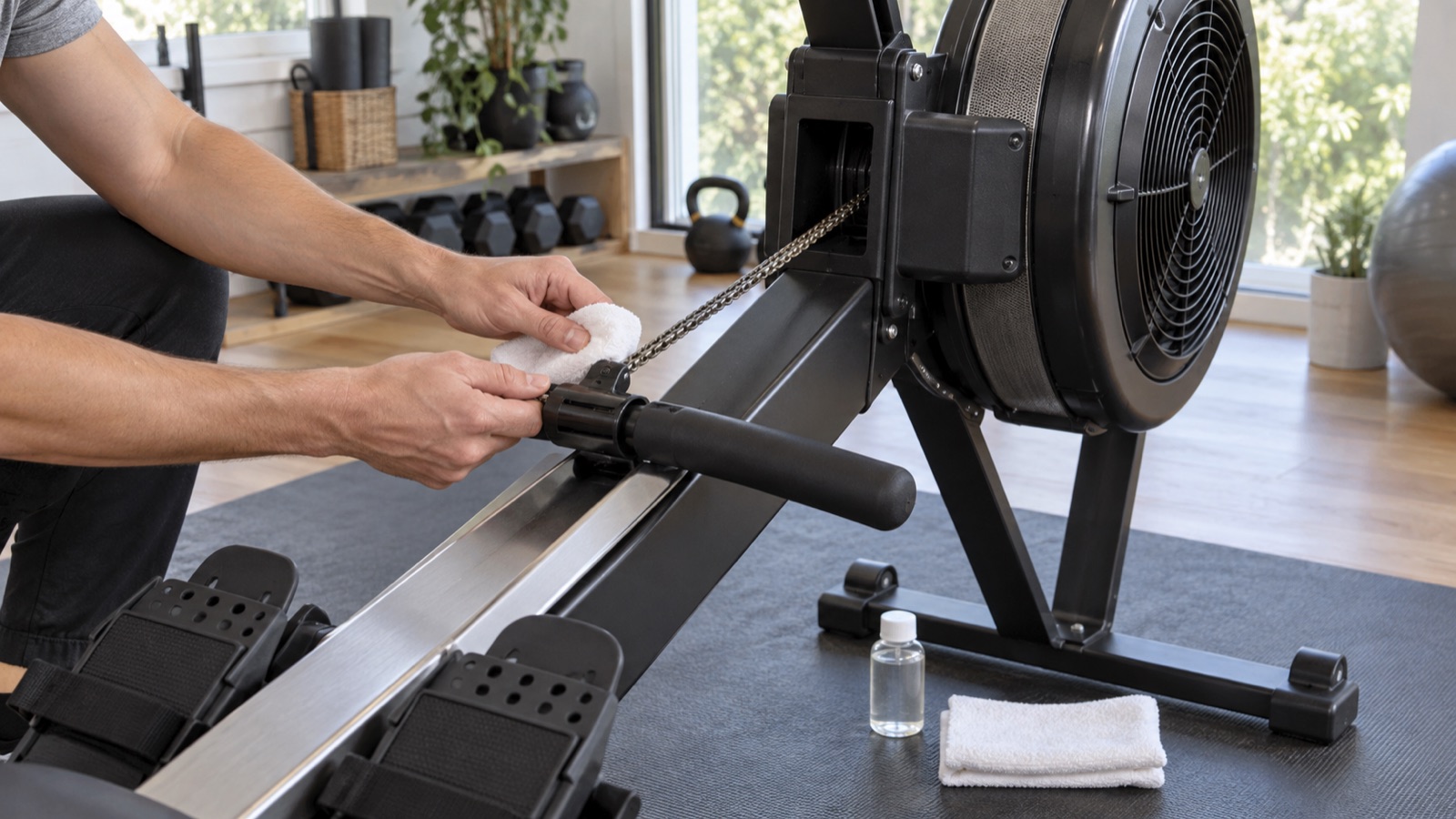
For Concept2 chain rowers, the published 50-hour procedure uses roughly one teaspoon of purified mineral oil, 3-IN-ONE oil, or 20-weight motor oil applied with a paper towel while the chain is pulled out. The chain is then worked through its travel and wiped clean. That is a manufacturer-specific example, not a dose for every rower.
- Confirm the oil and interval in your manual.
- Pull out only the length of chain the instructions specify and secure the handle safely.
- Apply a small measured amount with a cloth; keep oil away from the rail, handle, floor, and braking surfaces.
- Move the chain through its normal travel, then wipe away visible excess.
- Check for stiff links, corrosion, damaged links, unusual noise, or skipping under light load.
Do not clean a rowing chain with solvent or WD-40. If a lubricated chain skips, Concept2 advises stopping and contacting support rather than continuing to row.
Care for a Water Rower Tank
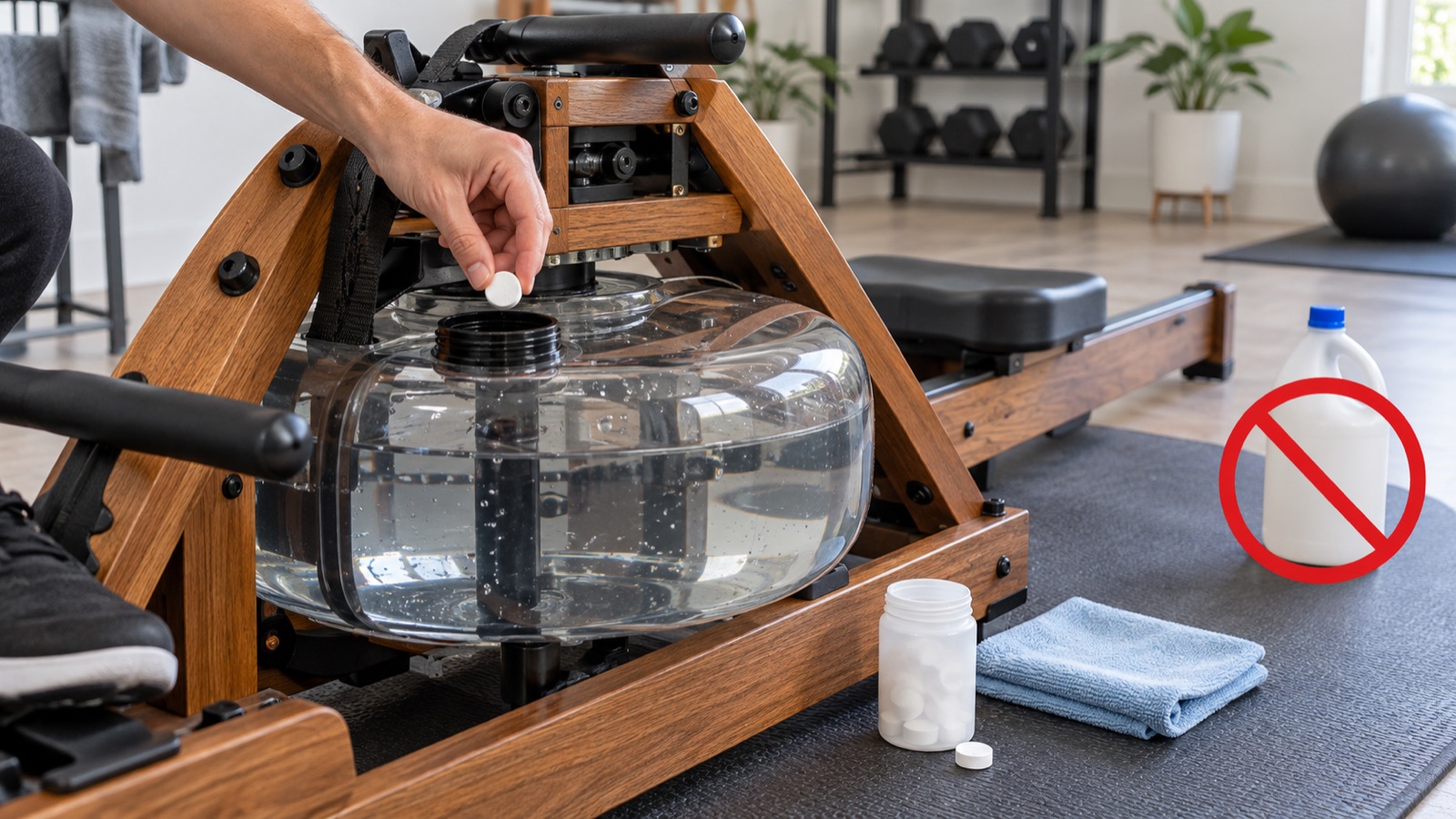
Tank care is about controlling water quality without damaging the polycarbonate shell. WaterRower directs owners to use municipal tap water and its approved purification tablets; its guidance says never to use chlorine bleach or pool chlorine because they can damage the tank.
- Follow the tablet interval in the manual. WaterRower's current manual uses roughly one tablet every six months, with more frequent treatment possible in strong light.
- Keep the tank away from prolonged direct sunlight where practical.
- If discoloration remains after treatment, follow the manufacturer's drain, flush, and refill procedure.
- Inspect around seals, fasteners, and the tank body for moisture. A leak or crack is a service issue, not a reason to tighten every visible screw.
- Never add essential oils, household cleaners, dye, bleach, or pool chemicals unless the manufacturer approves that exact product.
Inspect the Parts That Keep You Attached to the Machine
- Foot straps: replace frayed webbing, cracked buckles, or straps that slip under tension.
- Handle and connection: stop if the handle, chain connector, belt, or cord is cracked, frayed, bent, or loose.
- Seat: confirm it rolls smoothly without side play, binding, or a recurring knock.
- Fasteners: check only accessible hardware identified in the maintenance guide. Use the listed torque when one is provided.
- Flywheel and vents: vacuum external dust with power disconnected. Open a housing only when the owner procedure explicitly permits it.
- Power cord and monitor: inspect for pinching, damaged insulation, battery leakage, intermittent display, or error messages.
After maintenance, perform a short low-effort test. The seat should roll smoothly, the handle should return consistently, and resistance should build normally without catches or skips.
| Symptom | First safe check | Stop and seek service when |
|---|---|---|
| Bumpy seat | Clean the rail and accessible rollers | A roller is cracked, loose, or still binds |
| Handle returns slowly | Look for an obstructed path and follow the manual's return-system check | A cord is frayed or internal access is required |
| Chain or belt skips | Stop; inspect only visible damage | Always before rowing again |
| Resistance feels erratic | Check settings, vents, power, and the manual's calibration steps | There is grinding, burning odor, leaking water, or an error that returns |
| New knock or structural movement | Verify the machine is level and accessible fasteners are secure | A frame, rail joint, tank, or support is cracked or moving |
Watch: Official Chain-Rower Maintenance Walkthrough
This official Concept2 walkthrough is useful because it shows the amount of chain oil and the difference between daily, 50-hour, and 250-hour tasks. Use it for a compatible Concept2 RowErg; owners of other rowers should follow their own manuals.
Sources and Manufacturer Guidance
Requirements can vary by product, model, and situation. These primary sources informed this guide; official instructions for your exact product and current authoritative guidance take priority.
Frequently Asked Questions
-
Wipe sweat after every session and clean the rail and rollers weekly. Use the manual's operating-hour intervals for chain oil, fastener inspection, flywheel cleaning, and tank treatment; usage matters more than a generic calendar.
-
Not on a Concept2 chain, whose maintenance guidance specifically says not to use WD-40 or a cleaning solvent. Use only the oil listed for your model.
-
Start by cleaning the rail and seat rollers. If the bump remains in the same place or a roller is cracked, loose, or binding, stop and replace or service the damaged part.
-
Do not put bleach or pool chlorine in a WaterRower tank; the manufacturer warns that it can damage the polycarbonate. Use the approved purification treatment and the model's flush procedure.
-
Only if the owner documentation provides a user procedure. Otherwise clean the external intake with power disconnected and leave internal work to authorized support.