Road vs Trail Running Shoe Durability: What Actually Wears Out First?
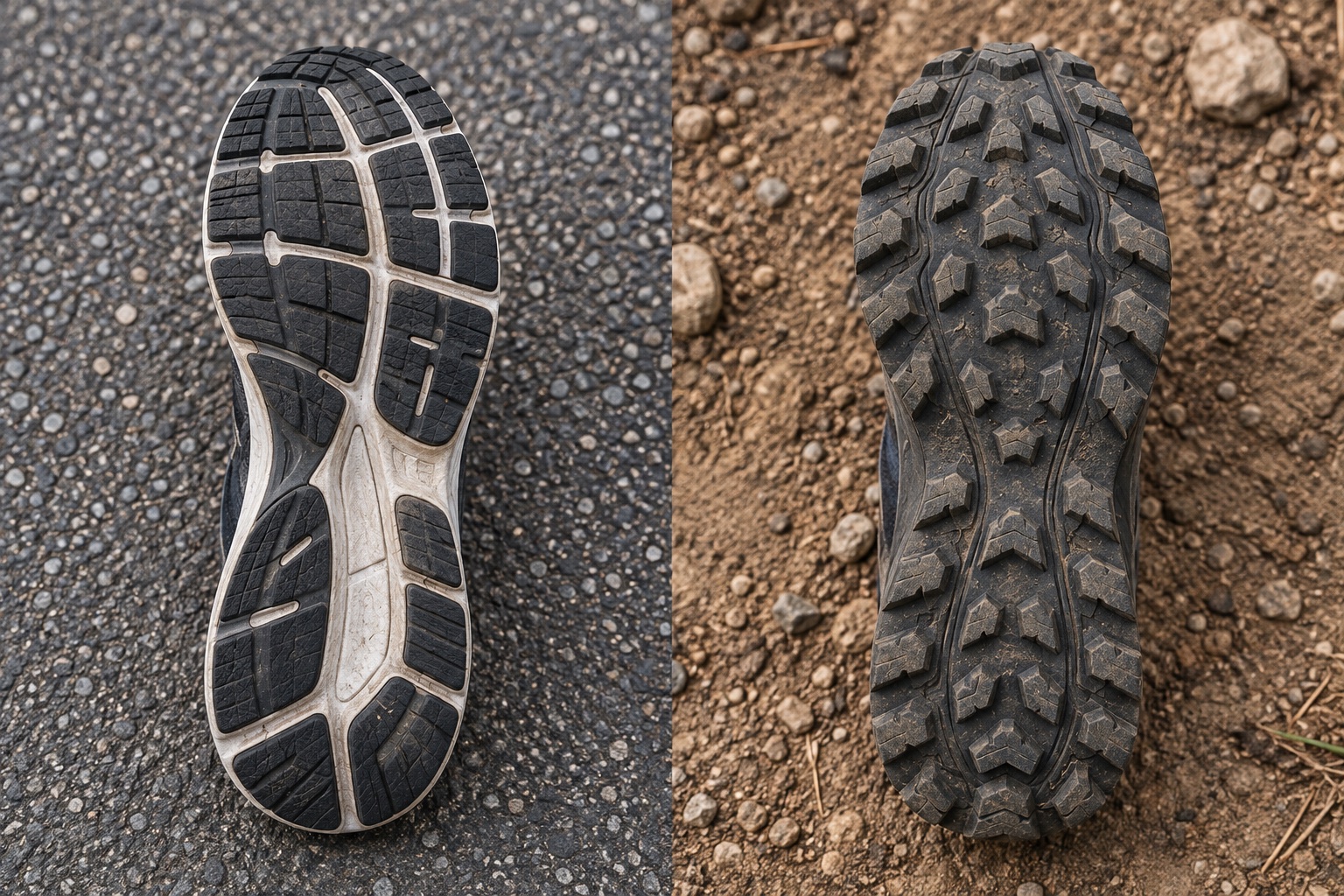
Neither road nor trail running shoes are universally more durable. Trail shoes often add rubber coverage, protective overlays, and lugs for rough terrain, but soft or deep lugs can round off quickly on pavement. Road shoes may last well on asphalt yet expose foam or mesh to damage on sharp rock and debris.
Match the construction to the surface, then inspect function rather than retiring shoes from mileage or appearance alone. A 2025 end-of-life study found that visible shoe wear was the most common replacement reason reported by both road and trail runners, but the worn component and useful life varied.
Match the Outsole to the Route
| Route | Construction that usually fits | Durability risk |
|---|---|---|
| Mostly pavement or treadmill | Road outsole with rubber placed at high-contact zones | Deep soft lugs can round off; exposed foam may abrade at your strike zone |
| Hard-packed dirt and short road connectors | Road-to-trail or gravel shoe with broad, shallow lugs | A highly specialized road or mud shoe may wear or feel awkward on half the route |
| Loose dirt, moderate rock, and roots | Trail outsole with suitable lug spacing plus toe and sidewall protection | Road mesh, exposed foam, and flat tread are more vulnerable |
| Deep mud or soft ground | Deeper, well-spaced lugs designed to shed mud | Frequent pavement transfers can wear the lug tips and reduce their intended bite |
| Sharp, abrasive rock | Durable rubber coverage and reinforced upper chosen for that terrain | Cuts, delamination, sidewall abrasion, and torn mesh can end the shoe before cushioning does |
The Durable Part Must Match the Damaging Surface
Road outsoles tend to use flatter contact geometry for smooth surfaces. Trail outsoles add lugs whose pattern and compound influence grip, protection, and wear. More rubber can protect foam, but it also adds weight; a grippy compound is not automatically the hardest-wearing compound.
Upper durability follows the same rule. A breathable road mesh can remain intact for hundreds of smooth miles but snag on brush or rock. A reinforced trail upper resists contact better, yet repeated grit in the shoe can still abrade fabric and skin.
Use a Four-Part Durability Audit
| Component | Normal monitoring | Replace or stop using when |
|---|---|---|
| Outsole | Rubber scuffing, gradual lug rounding, and your usual asymmetric wear pattern | Traction is unreliable for the route, rubber is worn through, lugs tear away, or the shoe rocks unevenly |
| Midsole | Cosmetic creasing and dirt | Ride has changed materially, the platform is permanently tilted, foam is split, or impact feels harsh despite normal recovery |
| Upper | Surface abrasion and minor cosmetic pulls | Foot no longer stays centered, a tear spreads, or toe/sidewall protection separates |
| Bonding and structure | Edges remain fully bonded and the shoe flexes consistently | Delamination, plate exposure, sharp internal edges, or a structural crack appears |
For Mixed Routes, Choose the Compromise Deliberately
If every run includes both road and nontechnical trail, a road-to-trail or gravel outsole with broad, moderate lugs is often a more coherent compromise than rotating between a smooth road shoe and an aggressive mud shoe. For technical terrain, prioritize off-road grip and protection even if the road transfer feels less smooth.
Keep a dedicated trail shoe when losing lug depth would change safety on your regular route. Keep a road shoe when most mileage is pavement and the trail portion is maintained, dry, and nontechnical.
Track Surface and Symptoms, Not Just Miles
- Photograph both outsoles when new.
- Log approximate road, gravel, and technical-trail distance separately.
- Repeat photos in the same light every 50 to 100 miles or after a damaging run.
- Note new slipping, sidewall instability, hotspots, unusual soreness, or a changed ride.
- Retire the shoe from its primary use when the relevant traction, structure, fit, or cushioning no longer works.
For a broader replacement framework, see how long running shoes last. Do not transfer a universal mileage number from one shoe and route to another.
Sources and Manufacturer Guidance
Requirements can vary by product, model, and situation. These primary sources informed this guide; official instructions for your exact product and current authoritative guidance take priority.
- Salomon: Differences among road, gravel, and trail running shoes
- Footwear Science: End-of-life of running shoes and reported replacement reasons
- Gait & Posture: Gait kinetics and shoe tread wear rate
- ASICS: How trail outsole needs change with off-road terrain
- Salomon: Factors that change running-shoe life
Frequently Asked Questions
-
Not necessarily. Trail shoes may have more outsole and upper protection, but terrain, rubber compound, lug design, gait, and construction determine what wears first.
-
Short pavement connectors are commonly manageable, but repeated road mileage can round aggressive or soft lug tips and change the grip they provide off-road.
-
They may work on dry, smooth, nontechnical paths. Loose, muddy, rocky, or steep terrain generally calls for more suitable traction, foothold, and protection.
-
Compare them with the original profile and the terrain. Rounded lugs may be acceptable for casual dry paths but no longer reliable for the mud or loose surface the shoe was bought to handle.
-
A rotation is useful when your routes demand meaningfully different traction or protection. It is optional when one well-matched road-to-trail shoe safely covers the entire route.