How to Soundproof a Home Gym: Fix Impact, Vibration, and Echo Separately
You cannot reliably soundproof a home gym by covering the walls with foam. First identify whether the complaint is weight impact, machine vibration, airborne music and voices, or echo inside the gym. Each travels differently and needs a different fix.
For most homes, the best first moves are behavioral and layout changes: stop uncontrolled drops, move impact zones away from shared walls, maintain vibrating machines, isolate equipment with a compatible system, and test one change at a time. Structural wall, floor, or ceiling work should be designed for the actual building—not copied from a generic online assembly.
Identify the Noise Path Before Buying Materials
Ask the person in the receiving room what they hear and feel. A phone recording can document timing, but it is not a substitute for calibrated acoustic or vibration measurements.
| Symptom | Likely path | First test |
|---|---|---|
| Sharp thump below the lifting area | Impact and structure-borne vibration | Replace the drop with a controlled set-down at the same load; compare the receiving room |
| Low hum or buzz while a treadmill, fan, or bike runs | Equipment vibration coupled into the floor or wall | Run the machine empty where permitted, then inspect levelers, fasteners, belt, and wall contact |
| Music, coaching, or grunts through a door or wall | Airborne sound and leakage paths | Turn off impact sources, close the door, and listen around gaps, ducts, and outlets |
| Gym sounds harsh but adjacent rooms are acceptable | Excess reverberation inside the room | Clap once and listen for a long decay; add temporary absorptive furnishings and compare |
| Noise appears far from the gym | Flanking or structural transmission | Check connected joists, pipes, stairs, ducts, and rigid equipment contact points |
Run a Repeatable Before-and-After Test
- Choose one representative event: five treadmill footfalls at a fixed speed, one controlled deadlift set-down, or 30 seconds of normal speech.
- Keep equipment position, load, machine speed, doors, HVAC, and receiving location the same.
- Have one person operate the gym source and another describe sound and vibration in the affected room.
- Change only one variable—machine position, mat, platform, door seal, or training behavior.
- Repeat at the same time of day when practical and keep short notes.
A consumer phone meter can help compare the same event under the same conditions, but its absolute decibel reading and low-frequency response may be inaccurate. For neighbor disputes, lease requirements, or construction decisions, use an acoustical professional.
Start at the Source: The Highest-Value Changes
- Eliminate avoidable impacts: place dumbbells down under control and prohibit intentional drops unless the building and floor system were designed for them.
- Move the zone: use a slab-on-grade room when available; keep lifting and motors away from bedrooms, shared walls, and lightweight floor spans.
- Maintain machines: level feet, correct belt and roller issues per the manual, tighten approved fasteners, and replace worn parts.
- Interrupt rigid contact: keep racks, plates, and machines from touching walls, pipes, trim, and storage that can transmit vibration.
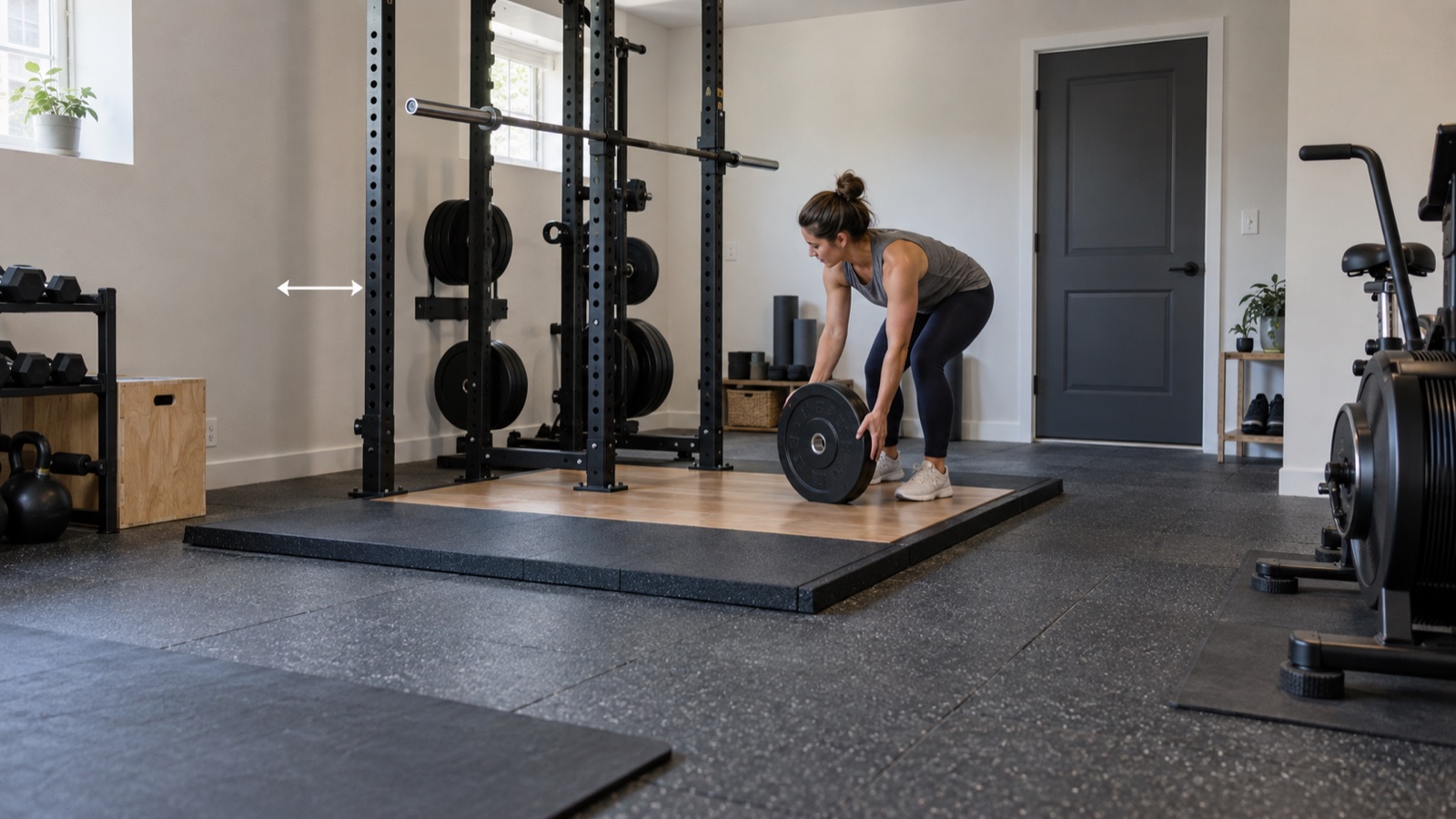
- Use a designed impact system: match platform or flooring test data to the activity and supporting assembly. A thicker mat is not automatically a tested solution.
Match the Treatment to the Problem
| Treatment | What it may improve | What it cannot prove |
|---|---|---|
| Dense rubber flooring or equipment mat | Surface protection, some impact and vibration reduction, equipment grip | That drops are acceptable on an upper floor or inaudible below |
| Layered lifting platform or tested gym floor | Impact distribution and source isolation when designed for the slab or floor assembly | The same lab result in a different building or installation |
| Vibration isolators | A specific machine's structure-borne vibration when correctly selected and loaded | Compatibility based only on pad thickness or softness |
| Absorptive ceiling or wall panels | Echo and reverberation inside the gym | Meaningful isolation of heavy impacts through floors and walls |
| Door seals and a heavier door | Airborne leakage through the doorway | Control of flanking through structure, ducts, or impacts |
| Decoupled wall or ceiling assembly | Airborne and sometimes structure-borne transmission when professionally designed | A simple DIY result without attention to flanking, fire, electrical, and structural details |
Read Acoustic Ratings as Assembly Tests
IIC and related impact ratings describe tested floor-ceiling assemblies, not a magic score that belongs to a loose mat in every building. Ecore describes IIC as a measure of structure-borne sound isolation between spaces. REGUPOL publishes system-specific test data with exact layer thickness and reference construction.
When comparing products, request the complete report and match the slab or joist construction, ceiling below, flooring layers, adhesive, thickness, load, and impact method. Do not subtract a laboratory decibel claim directly from a phone reading in your home.
When the Project Needs an Acoustical or Structural Professional
- The gym is above or adjacent to another dwelling, office, or bedroom.
- Weights will be dropped, not merely set down.
- Vibration is felt several rooms away or rattles building services.
- A lease, HOA, building code, or neighbor agreement sets a limit.
- You are considering resilient channels, floating floors, ceiling isolation, or changes to fire-rated assemblies.
- The floor feels springy, cracked, or structurally uncertain.
An acoustical consultant can measure source and receiving rooms and identify flanking paths. A structural engineer determines whether the floor can support the equipment and dynamic loads. Those are separate questions.
Sources and Manufacturer Guidance
Requirements can vary by product, model, and situation. These primary sources informed this guide; official instructions for your exact product and current authoritative guidance take priority.
Frequently Asked Questions
-
No. They may reduce echo inside the room, but thin foam does little to isolate heavy impact and structure-borne vibration from adjacent spaces.
-
They may reduce some surface impact, but results depend on mat construction, load, drop height, floor assembly, and receiving room. Controlled set-downs and a purpose-designed platform are more reliable starting points.
-
There is no universal soundproof thickness. Use an assembly tested for the relevant impact and building construction, then verify performance on site.
-
A slab-on-grade space away from bedrooms and shared walls is often easier to manage than an upper floor. Confirm moisture, ventilation, egress, electrical, and structural requirements as well.
-
Use it only for rough comparisons of the same event in the same location. For compliance, disputes, or expensive construction, use calibrated measurements and qualified analysis.