How to Remove Odor From Workout Clothes Without Damaging Them
Do not seal damp workout clothes in a gym bag. Air them until wash time, turn them inside out, wash with the care-label temperature and the detergent's measured dose, leave enough room for agitation and rinsing, then dry completely. More detergent and more fragrance are not automatically more cleaning; residue can make the next wash harder.
Polyester can retain odor differently from cotton. Controlled studies have found stronger post-exercise malodor in polyester and incomplete removal of odorants from polyester after repeated soil-and-wash cycles. A repeatable routine matters more than masking the smell.
Diagnose the Odor Before Rewashing
| When it smells | Likely place to investigate | First action |
|---|---|---|
| Immediately after washing | Under-dosing, overloaded drum, wrong cycle, poor rinsing, or washer residue | Recheck detergent directions, load size, cycle, and washer-cleaning instructions |
| Clean when dry, then odor returns as the fabric warms | Residual body oils and odorants in synthetic fibers | Pretreat high-contact zones and use a label-compatible enzyme or activewear detergent |
| Musty after drying | Clothes stayed damp too long or dried too slowly | Rewash promptly and improve airflow; confirm the item is fully dry before storage |
| Only the underarms, waistband, or bra band smell | Localized skin contact and product buildup | Apply the detergent's approved pretreatment to that zone, then wash inside out |
| Every load and the washer smell musty | Washer drum, seal, filter, dispenser, or drain issue | Follow the appliance maker's cleaning and service instructions before treating every garment |
| Odor persists with coating breakdown, sticky elastic, or damaged fabric | Garment degradation rather than a wash-only problem | Stop escalating chemicals; consider replacement |
Use This Care-Label-First Wash Routine
- Empty the gym bag. Hang damp items or place them in a ventilated basket until wash time.
- Read every care label. Separate incompatible temperatures, colors, and drying instructions.
- Turn garments inside out. This exposes the skin-contact surface where residue concentrates.
- Close abrasive hardware. Keep activewear away from open zippers, hook-and-loop fasteners, and heavy rough items.
- Measure detergent. Follow its water-hardness and load-size directions; do not add an extra dose just because the load smells.
- Leave drum space. Clothes need movement and rinse water.
- Dry completely. Air-dry when the label favors it, or use the permitted low-heat setting.
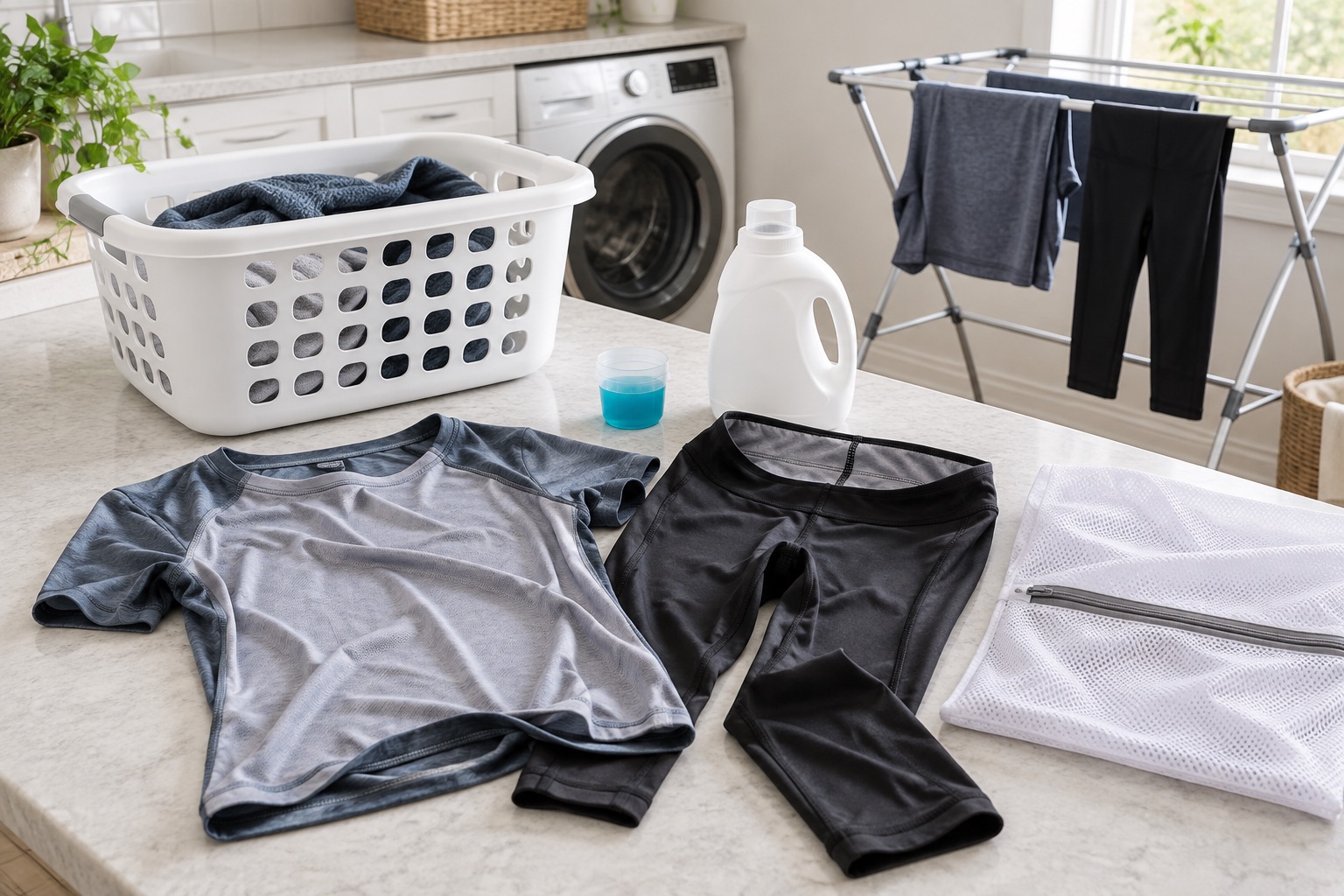
For Persistent Odor, Change One Variable at a Time
- Identify the affected garment and the exact odor zone.
- Use the detergent maker's approved pretreatment or soak for that fabric and follow the stated concentration and time.
- Wash at the warmest temperature allowed by the garment label—not a guessed universal temperature.
- Add an extra rinse if detergent residue is suspected and the appliance permits it.
- Smell the item only after it is fully dry, then again after it warms during brief wear.
- If several controlled attempts fail, stop adding products; accumulated coatings, a washer problem, or material degradation may need a different solution.
Fabric softener and dryer sheets are commonly discouraged on next-to-skin performance clothing. Patagonia explains that waxy residue can impair moisture management, odor control, and spandex longevity; the care label still decides for the specific garment.
Do Not Turn the Laundry Room Into a Chemistry Experiment
Internet recipes often combine vinegar, baking soda, sanitizer, oxygen bleach, and detergent without considering chemistry, elastane, dye, finishes, or washing-machine materials. A branded garment, detergent, or appliance instruction is safer than a universal recipe.
Prevent the Next Odor Cycle
| Habit | Why it helps |
|---|---|
| Air gear immediately | Reduces the time warm, damp fabric sits before washing |
| Wash skin-contact side outward | Improves direct contact with water and detergent |
| Use the measured dose | Avoids both insufficient cleaning and hard-to-rinse excess |
| Skip incompatible softeners and dryer sheets | Avoids waxy deposits on many performance fabrics |
| Dry fully before storage | Prevents damp, enclosed conditions from creating a musty cycle |
| Clean the washer as directed | Prevents the appliance from reintroducing odor to multiple loads |
Sources and Manufacturer Guidance
Requirements can vary by product, model, and situation. These primary sources informed this guide; official instructions for your exact product and current authoritative guidance take priority.
- Applied and Environmental Microbiology: Microbial odor profile of polyester and cotton after exercise
- Textile Research Journal: Retention and release of odorants in cotton and polyester after repeated soil and wash cycles
- Nike: Workout-clothing washing and care guidance
- Patagonia: Product care, softener residue, performance fabrics, and spandex
- Whirlpool: Care-label-first workout-clothing washing guidance
Frequently Asked Questions
-
Synthetic fibers can retain body oils and odorants, especially after repeated wear. An overloaded machine, excess or insufficient detergent, poor rinsing, slow drying, and washer residue can also contribute.
-
Wash promptly when practical. If you cannot, remove them from the sealed gym bag and let them air rather than leaving them damp in a heap.
-
Many performance-garment makers advise against it because residue can affect wicking, odor control, or elastane. Follow the exact garment label.
-
No. Use the product's dose for load size, soil level, machine type, and water hardness. Excess that does not rinse away can leave residue.
-
Only at the setting allowed by the care label. Air-drying or low heat is common for synthetic stretch garments because high heat can damage elastic and alter fit.