Yoga & Mobility

Best Yoga Blocks of 2026

A yoga block has one job, and it sounds almost too simple: bring the floor closer. In practice it's the piece of gear that decides whether a pose feels accessible or like a negotiation with your own hamstrings — hands on a block in a forward fold, a hip propped in a long pigeon, a heel lifted in triangle pose. The trouble is that blocks look interchangeable on a shelf and absolutely are not: some skid the moment your palms get damp, some crumble at the corners within a month, and some are so dense you stop carrying them. A good one disappears under you and simply holds.

I've cycled through a shoebox of them over the years, and for the past four months my team has been living with 15 blocks across studio classes, living-room flows, and plenty of restorative work on hardwood. The thing first-time buyers get wrong is that thickness changes a pose far more than material does, and spending more doesn't automatically buy you a better block. The picks below are grouped by who they actually fit.

Best Overall

Our Score 9.6/10
Gaiam Yoga Block 2-Pack

Gaiam

Gaiam Yoga Block 2-Pack

  • Set 2 blocks
  • Weight 4.6 oz per block
  • Material Latex-free EVA foam
  • Block Size 9 x 6 x 4 in
Check Price on Amazon

Two standard-height foam blocks with soft edges at a low price.

Put a hand on the Gaiam block and the first thing you notice is the give. It's latex-free EVA foam that compresses a millimeter or two under your palm instead of stopping dead the way cork does, and that softness is most of the case for it. The rest is the size: 9 by 6 by 4 inches, the height most studios stock, so the block you learn on at home doesn't move your hand in class. Two come in the pack, which matters more than it sounds.

Beveled edges look like a marketing line until you've held a block through a long set of lunge variations. The chamfer gives your fingers somewhere to sit, and the surface has enough tack to stay put under a dry hand. Soft foam has a cost too: corners scuff, the surface picks up the pattern of a grippy mat, and heavy daily use leaves dents where a cork block would still look new. Spot clean with mild detergent and let it air dry instead of dropping it back in a damp bag.

The cushioning earns its keep in the poses you hold longest — a block under the sacrum in a supported bridge, one under each hip in a long seated fold, knees propped in savasana. Hard cork under a bony wrist or a knee can feel like furniture. This one doesn't.

Buying two rather than one is the other reason this is our default: a single block runs out of uses almost immediately. Stack them for a seated fold when the floor is too far away, set one under each hand in a standing pose to bring the floor up to you, or leave the pair by the sofa for hip openers during a phone call. For less than a single premium cork block, that's the sensible place to start.

Bottom Line

The pair we tell most people to buy first: standard height, soft enough for long holds, and two blocks for less than one premium cork block.

Check Latest Price

Best Cork Block

Our Score 9.6/10
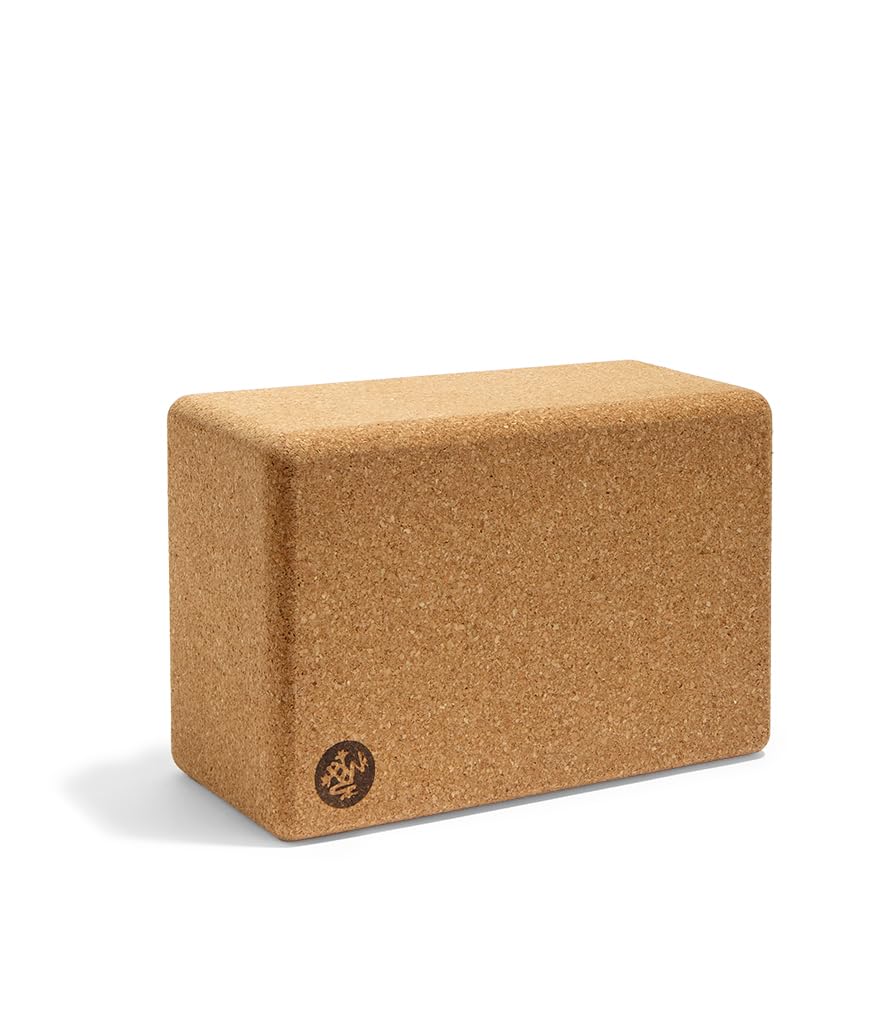
Manduka Cork Block

Manduka

Manduka Cork Block

  • Set 1 block
  • Weight 2.2 lb
  • Material Fine-grain cork
  • Block Size 9 x 6 x 4 in
Check Price on Amazon

The firmest, heaviest block here for restorative holds that need zero give.

The Manduka block weighs 2.2 pounds, and you know it the second you lift it out of the box. Fine-grain cork, no give at all: press a palm into it and nothing moves. In a studio that mass is the point — the block stays exactly where you set it under a hip or a shoulder and doesn't skate when you shift weight onto it.

We keep this one for the poses where the block is genuinely carrying you: a supported bridge with it under the sacrum, a balance pose with it under one foot, a long pigeon with a hip propped. Cork also grips better than foam once hands get damp, and it doesn't take on the pattern of your mat. The catch is that one is half a kit — working both sides at once means buying two.

Carrying it is the other consideration. Two pounds in a tote next to a mat is noticeable, so this is a block for a home practice rather than a commute; in a spare room the weight becomes an asset, holding the block still while you settle into a pose. Wipe it with a damp cloth and let it dry. Cork doesn't want a soak or a dishwasher.

Bottom Line

We keep this one for restorative holds and any pose where a block carries real weight — dense cork with no give, and worth the premium over foam.

Check Latest Price

Best Cork Pair

Our Score 9.6/10
Volcano Cork Yoga Blocks

Volcano

Volcano Cork Yoga Blocks

  • Set 2 blocks
  • Material Natural cork
  • Warranty 180 days
  • Block Size 9 x 6 x 4 in
Check Price on Amazon

Two 4-inch cork blocks that grip better as your hands get damp.

Open the box and the first thing that hits you is the smell — an earthy, smoky cork aroma strong enough to notice across a room. It fades over a few days in open air, so unbox them early and let them breathe before you carry them into a class.

Under the hands these are the real thing: solid cork at 9 by 6 by 4 inches with rounded edges, dense enough that your palm gets no answer when you press. Cork's advantage shows up late in a practice, when hands are damp — the textured surface keeps its grip where smooth foam starts to slide — and the blocks stay put on a mat in a way lighter foam ones don't, which matters most in balance poses with one foot on a block.

Weight is the cost. The pair adds real heft to a tote, so these are blocks for a home setup rather than a walk to the studio. In a spare room the same weight becomes the benefit: they sit where you leave them and don't wander out from under a hip mid-pose. Wipe with a damp cloth, skip the soak, and keep them out of a hot car.

What earns them a place is the pairing. A single premium cork block costs about what this pair does, so if your practice wants a block under each hand — or two stacked under the hips in a seated fold — this is the cork set we point to. Buy it for the room where you practice, not for the bag you carry.

Bottom Line

We recommend this pair when you want two cork blocks under your hands — they grip better as your palms dampen, for about one premium block's price.

Check Latest Price

Best For Cheap spare pair

Our Score 9.6/10
Amazon Basics Yoga Blocks

Amazon Basics

Amazon Basics Yoga Blocks

  • Set 2 blocks
  • Material High-density foam
  • Block Size 9 x 6 x 4 in
Check Price on Amazon

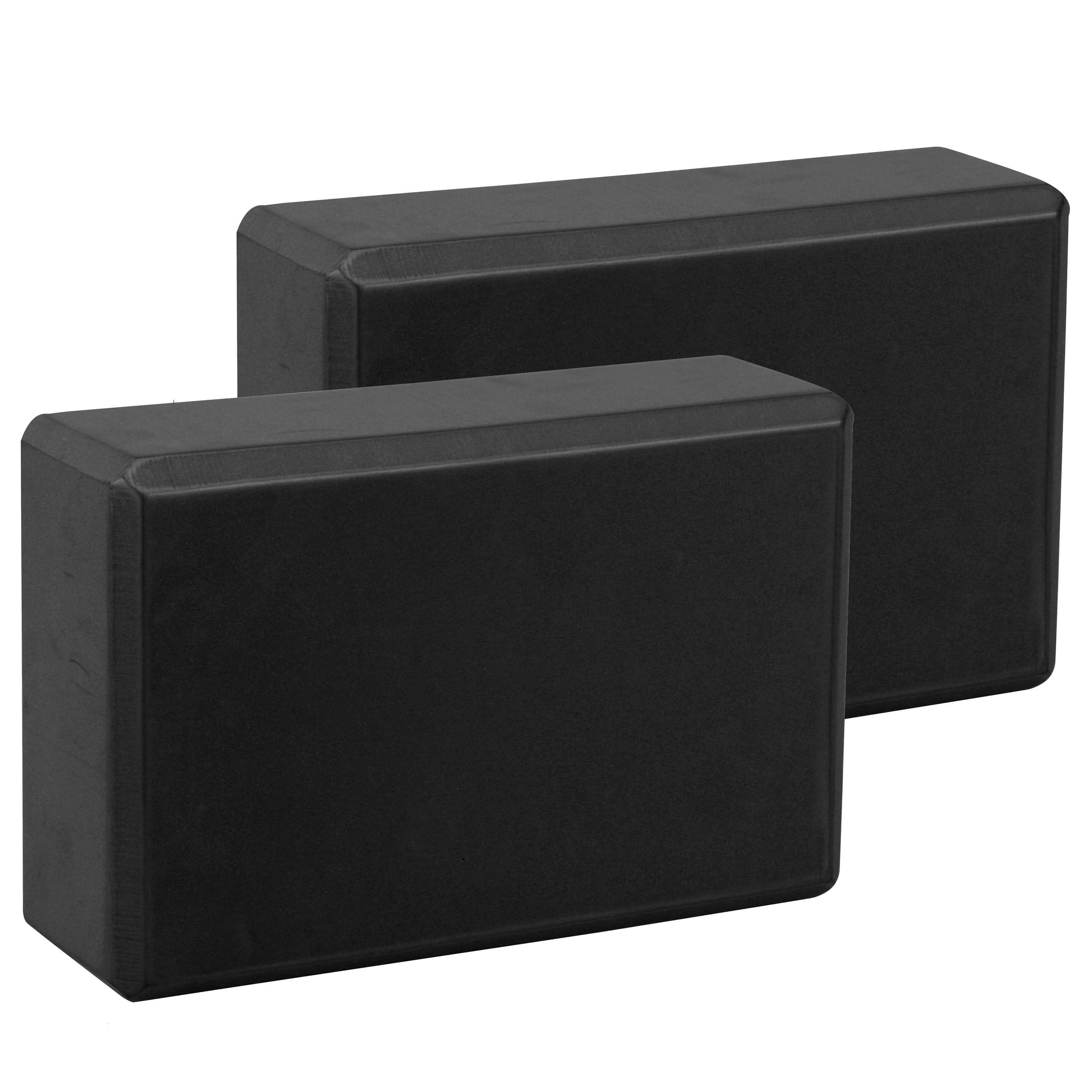
Black foam, 9 by 6 by 4 inches, rounded edges, two to a pack. The Amazon Basics set doesn't try to be anything more than a block, and that's where its charm sits: high-density foam that holds its shape under a palm, a slip-resistant surface, and no branding on the side to stare at while you're in a pose.

What surprised us is how far past the mat they go. A dense foam block makes a stable riser under a monitor or a speaker and a footrest under a desk, and a pair is light enough to move around the house without thinking about it. For practice they're unremarkable in the best way: standard height, enough grip, no wobble, and a surface that stays comfortable under a wrist through a long hold. Two of them cost less than most pairs here, which is why we suggest them as the second set — the ones you leave wherever you actually stretch.

Bottom Line

This is the pair we suggest buying twice — plain black foam that does the mat work and the odd jobs around the house.

Check Latest Price

Best For Lower lift, easy travel

Our Score 9.6/10
Exerz Yoga Blocks 2-Pack

Exerz

Exerz Yoga Blocks 2-Pack

  • Set 2 blocks
  • Weight 360 g (pair)
  • Material EVA foam
  • Block Size 9 x 6 x 3 in
Check Price on Amazon

Three inches of EVA foam instead of four is the whole personality of this set. At 9 by 6 by 3 inches it lifts you an inch less than a standard block, which is either exactly right or a waste of money depending on what your hips do — a tight hamstring that a 4-inch block overshoots, a hand that wants a small step up rather than a big one. We think of it as the specialist of the group.

The pair weighs 360 grams, light enough to live in a tote without noticing it, and a dry cloth handles the cleaning. The surface is smooth and slightly grippy rather than tacky, and the black finish hides scuffs better than a pastel will.

Where it earns its place is stacking. Two 3-inch blocks make 6 inches where two 4-inch blocks make 8, and there are seated and supine poses where 6 is the number that works. It's not the pair for standing work or for anyone who wants maximum lift: less height means less to push against when your hands are reaching for the floor. Buy it because the standard block is too much, not because it's the cheapest way in.

Bottom Line

We point people to these when three inches is the lift they need: a tight hamstring, a small step up, a stack that stops at six.

Check Latest Price

Best For Lower cork option

Our Score 9.6/10
Trideer Cork Yoga Blocks

Trideer

Trideer Cork Yoga Blocks

  • Set 2 blocks
  • Extras Illustrated pose guide
  • Material Cork
  • Block Size 9 x 6 x 3 in
Check Price on Amazon

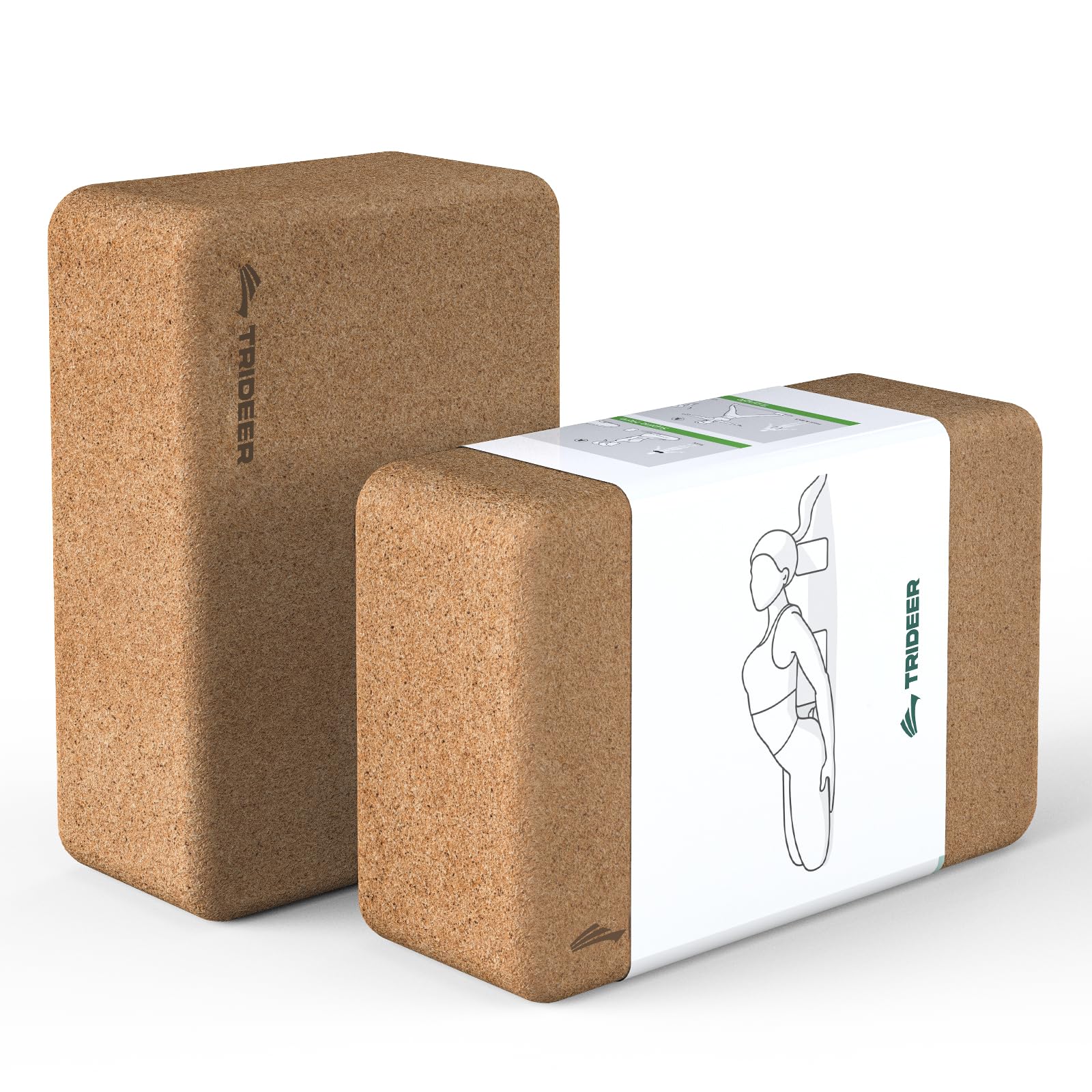
Cork at 3 inches thick is a specific thing: dense and unyielding the way cork should be, but an inch lower than a standard block, so your hands sit lower when you use it under a palm and your stack tops out at 6 inches rather than 8.

The texture is where we came around. Fine-grain cork can arrive rough and scratchy; this one is smooth to the touch without being slick, and it keeps its grip as hands dampen. It also doesn't collect the pattern of a grippy mat or pick up lint the way foam does, and a damp cloth keeps it looking new.

They're stable. Cork's density means no compression under a hip or a hand, and the blocks don't skate when you shift weight. What you give up is height, and that shows up most in standing poses, where the extra inch of a 4-inch block is what brings the floor within reach.

Alongside the cork you get an illustrated pose guide, which is more than most sets bother with and genuinely useful if nobody has ever shown you where a block goes in a backbend. This is the pair for someone who wants cork's density, two blocks instead of one, and a lower working height. If four inches is what your practice is built around, look at a standard-height cork pair instead.

Bottom Line

We reach for this one when cork's density is right but four inches is too much lift — a lower, smoother block for tighter bodies.

Check Latest Price

Best Budget

Our Score 9.4/10
Fitvids Yoga Block 2-Pack

Fitvids

Fitvids Yoga Block 2-Pack

  • Set 2 blocks
  • Material High-density foam
  • Warranty 2 years
  • Block Size 9 x 6 x 4 in
Check Price on Amazon

A dense two-block set with a two-year warranty at the lowest price here.

We reach for this pair when the budget is the deciding factor, and the numbers make the case: two blocks, a two-year warranty, and a lower price than every other pair here. It holds up to inspection, too — 9 by 6 by 4 inches, high-density foam, a slip-resistant surface, and rounded edges, which is the same basic specification as blocks selling for noticeably more.

The foam feels denser than a bargain block usually does. It holds its shape under a palm pressed down hard, arrives without the dents and nicks cheap foam often ships with, and doesn't puncture when a heel catches an edge. The rounded edges are comfortable enough to grip through a long standing sequence, and the bright colors are the kind you won't leave behind in a studio.

It's foam, not cork, and for a first set that's the right call. Nobody's first pair needs to last a decade — you need two blocks at the right height while you find out whether you'll still be practicing in six months. As a second set for a rental, or the blocks you keep in the car for stretching after a run, the same logic applies.

Bottom Line

When the budget decides, this is the pair we point to: standard height, dense foam, and a two-year warranty at the lowest price here.

Check Latest Price

Best Set With a Strap

Our Score 9.4/10
Syntus Cork Block Set

Syntus

Syntus Cork Block Set

  • Set 2 blocks + strap
  • Strap 8 ft, D-ring buckle
  • Material Solid cork
  • Block Size 9 x 6 x 4 in
Check Price on Amazon

Cork blocks, an 8-foot strap, and a pose booklet in one box.

What lands on the doorstep: two 9-by-6-by-4 cork blocks, an 8-foot poly-cotton strap with a D-ring buckle, and a small illustrated booklet of poses. As a starter kit it's the most complete box here, and the booklet does more than the usual folded card — it shows where the strap goes, which is the part most people guess at.

The blocks are solid cork with rounded edges, dense and stable under a hip or a hand, and heavy enough that they stay where you put them. Cork's grip improves as your hands dampen, and the surface doesn't pick up the pattern of a grippy mat the way foam does. Wiping with a damp cloth is the whole maintenance routine, which we appreciate in a prop that gets sweaty.

Put together, it's the most complete cork setup in this guide for the least money — two blocks and a working strap for well under the price of two premium cork blocks. If you're building a prop shelf from nothing, this box covers the two things you'll actually use.

Bottom Line

The most complete set we handled — two cork blocks, a strap, and a pose booklet — without paying the premium cork price.

Check Latest Price

How We Chose and Tested the Best Yoga Blocks

We started by rounding up every block we could find in the three materials shoppers actually encounter — foam, cork, and wood — then cut the list to 15 based on stated dimensions, density claims, price per block, and whether reviews mentioned blocks going soft or shedding grit. Every one that made the cut got measured against its own spec sheet and weighed on a kitchen scale, because a block you resent carrying is a block that stays home.

For four months those 15 blocks went where blocks actually go: into weekly studio classes, including a hot room where damp hands are the real test, onto a living-room floor for daily flows, under hips and knees in long restorative holds, and into a tote on the walk there. We noted whether palms slid during downward dog twenty minutes into a heated class, pressed a thumbnail into each edge to feel how the surface gave, and dropped each block from waist height onto hardwood to see which corners dented.

Size and smell got their own check. We compared actual height and footprint to what was advertised, since a block that reads as four inches and sits closer to three changes a pose more than you'd expect, and we sniffed each one straight out of the box and again a week later — foam is the usual offender. Durability came down to a few weeks of hard living: two blocks spent a weekend in a hot car trunk, one sat against a radiator, and we wiped every surface with mat cleaner to see whether cork stained or foam turned tacky. Value we judged at the end of four months, against how each block looked and behaved after all that, not how it looked on day one.

How to Choose

Foam or Cork Comes Down to Give

The difference you feel first is compression. Foam yields a little under a palm, which is forgiving on a bony wrist, a knee, or a sacrum in a long hold. Cork doesn't move at all, and that rigidity is what makes it feel secure under real weight; it also grips better once your hands are damp.

The trade is price and heft. A cork pair runs roughly twice what a foam pair costs and weighs several times more. Choose foam for restorative work and blocks that travel, cork for standing poses, balance, and anything where you want the block to feel like part of the floor.

Four Inches Is Standard, Three Is a Choice

A standard block is 4 inches thick, and that's what most studios stock, so a 4-inch pair keeps home practice consistent with class. Three-inch blocks are a real option rather than a lesser one: less lift for a tight hamstring or a smaller frame, and two of them stack to 6 inches instead of 8.

The trap is reading a listing's measurements in the wrong order. The 9-by-6 face is the same on both heights; it's the third number that changes, so match it to the lift you actually want rather than to the word 'block'.

Buy Two Before You Buy a Strap

One block runs out of uses fast. You can prop a hip or a hand, but you can't work both sides, stack for a seated fold, or set up a supported bridge. A pair is the unit worth buying, which is why the single blocks here only make sense if you already own one.

A bundled strap is genuinely useful for hamstring and shoulder stretches you can't reach otherwise, but it's usually the cheapest thing in the box — narrow, with little body. If the strap is your reason for choosing a set, check it's wide enough to hold without cutting into your foot.

Weight, Grip, and Where the Blocks Live

Where the blocks live decides the material more than anything else. A pair that stays beside your mat can be cork: two pounds a block means they stay put, and you never have to carry them. A pair that goes to class in a tote should be foam, which is a few ounces a block.

Grip is mostly about surface and moisture. Textured cork holds a damp hand; smooth foam gets slick once your palms are wet. Whatever you buy, wipe it down after a sweaty session and let it dry fully before it goes back in a bag.

Frequently Asked Questions

Final Verdict

Buy the Gaiam pair first. Two blocks at the standard height, soft enough to spare your wrists in long holds, for less than a single premium cork block — that's the default we hand to anyone building a home practice from nothing.

If your practice runs to restorative holds and you want zero give, the Manduka cork block is the one we reach for, and a second one is worth the outlay. Carry props to class? Foam wins on weight every time.