Tech & Wearables

Best Triathlon Watches of 2026

A triathlon watch earns its place when everything goes sideways: the open-water buoy you can’t sight, the bike computer you forgot to charge, the run split you swear felt faster. It has to switch sports without fuss, keep GPS and heart rate honest, and still look like something you’d wear to coffee the next morning. That last part matters more than spec sheets admit—most of us aren’t swapping watches between workouts. The right one turns three sports into one continuous record and takes battery worry off the table.

Over eight months, I swam, biked, and ran with seven triathlon watches, from pool laps and trainer intervals to open-water starts and race-day transitions. My team and I compared battery drain on long GPS days, checked satellite lock-on, and wore them through ordinary weeks to see which designs disappeared on the wrist. Some packed every feature but felt fussy; others were simpler and far more reliable. Value isn’t the cheapest watch—it’s the one you trust at the start line. The picks below earned that trust.

Best Overall

Our Score 9.2/10
Garmin Forerunner 970

Garmin

Garmin Forerunner 970

  • Case Titanium bezel, sapphire lens
  • Display 1.4-inch AMOLED
  • GPS Battery Up to 26 hours
  • Water Resistance 50 meters
Check Price on Amazon

Brightest screen, toughest case and a flashlight — the most complete race-day watch here.

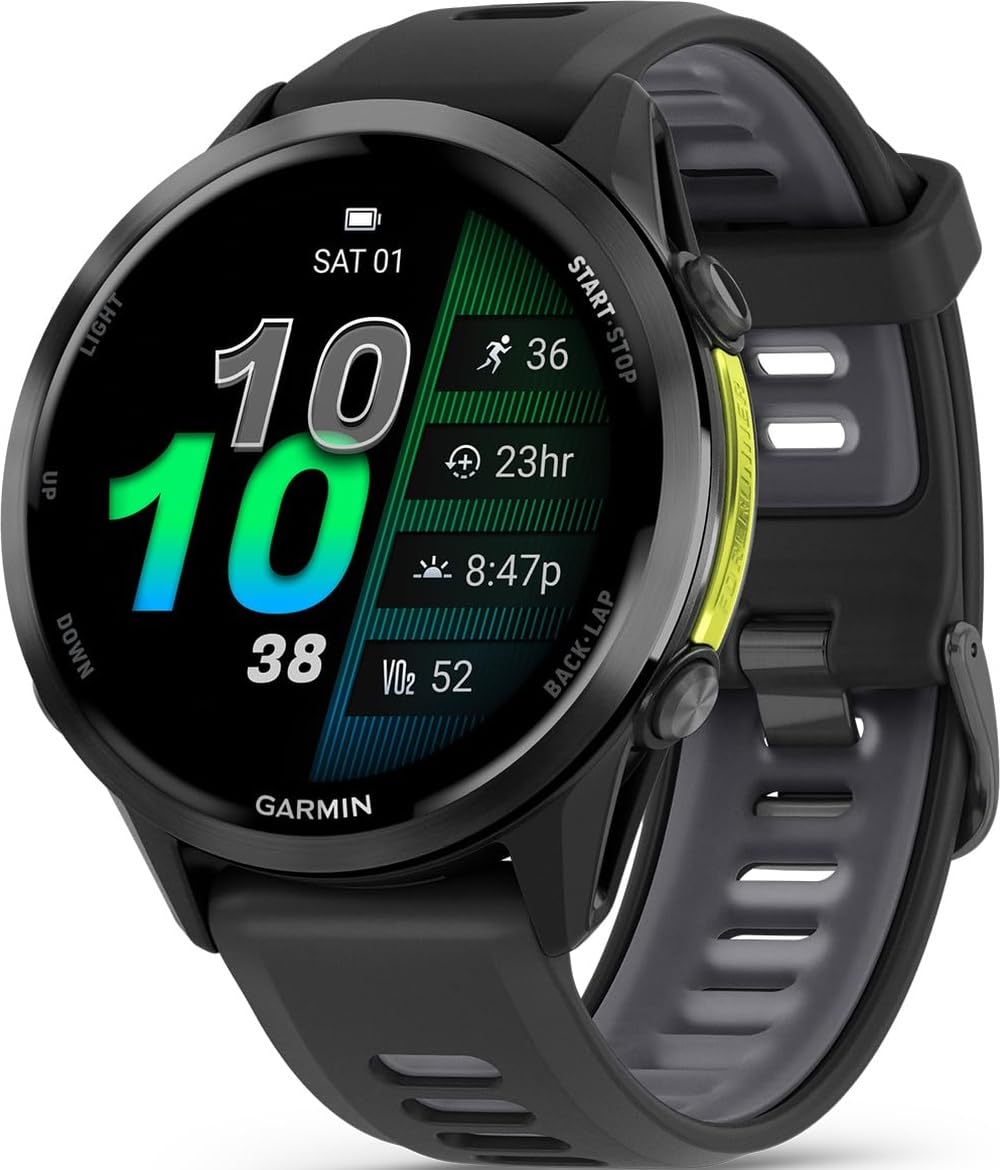
The built-in LED flashlight is the detail we did not expect to lean on. It is on your wrist at 5 a.m. when the porch light is behind you, and it is there at nine at night when you are digging a gel out of a transition bag. Above it sits the brightest AMOLED in this group — a 1.4-inch, 454 x 454 panel that holds up in flat afternoon sun, which is the difference between glancing at your pace and squinting at it.

Multisport recording is why it earns top billing for a triathlete: one activity carrying you from the swim through T1, the bike, T2 and the run, with the transitions counted rather than stitched together afterwards. Garmin's triathlon training plans build the week around those sessions, and the case is made for how the watch actually gets treated — a titanium bezel and a sapphire lens on something that goes into chlorinated water, under a wetsuit sleeve and against a bike frame. The speaker and microphone are a bonus on long days: calls from the wrist while your phone stays in the race bag.

Twenty-six hours of GPS and 15 days in smartwatch mode cover any single-day race, full distance included, with hours of margin, and 32 GB of storage leaves room for music and updates. It is the priciest watch of the three, and the money buys the screen, the sapphire and the light rather than more hours — the endurance argument belongs to the other two.

Bottom Line

Buy this one if you want the brightest screen, the toughest case and a flashlight on your wrist — it is the most complete triathlon watch in this group.

Check Latest Price

Best for Navigation

Our Score 9.2/10
Garmin Forerunner 965

Garmin

Garmin Forerunner 965

  • Maps Full-color, built-in
  • Weight 1.87 oz
  • GPS Battery Up to 31 hours
  • Water Resistance 50 meters
Check Price on Amazon

Longer GPS battery and full-color maps, for meaningfully less than the flagship.

Thirty-one hours of GPS is the number that makes this the long-course pick — five more than the 970, and the difference between watching the clock on the bike and ignoring it. Smartwatch mode runs to 23 days, the longest of the three, so the charger stays in a drawer between training blocks. For a race that takes you past twelve hours, that reserve is the whole point.

Navigation is the other half of the case. Full-color built-in maps put an unfamiliar course on your wrist instead of in your head, which is worth more on race morning than another training score. Multi-band GPS is the part that matters in a city or a canyon, where a single-band fix drifts and your pace graph turns into a rumour. Add the triathlon and multisport profiles and this is a watch that already knows what a brick session is before you tell it. Titanium bezel, a 50-meter water rating, and a display that stays legible when you are breathing through your ears.

Longevity is the one thing we cannot promise. The failure worth knowing about is a watch that stops powering on after a couple of years of use. Buy it new with the one-year limited warranty behind you, register it the week it arrives, and keep the receipt — that is the practical answer to a risk this size.

Bottom Line

The pick for long-course racing: five more hours of GPS than the top pick and full-color maps, for a lot less money.

Check Latest Price

Best Value

Our Score 9.0/10
COROS PACE 4

COROS PACE

COROS PACE 4

  • Display 1.2-inch AMOLED
  • GPS Battery Up to 41 hours
  • Case Thickness 11.8 mm
  • Water Resistance IP68, 5 meters
Check Price on Amazon

Lightest watch here with the longest GPS runtime, at the lowest price.

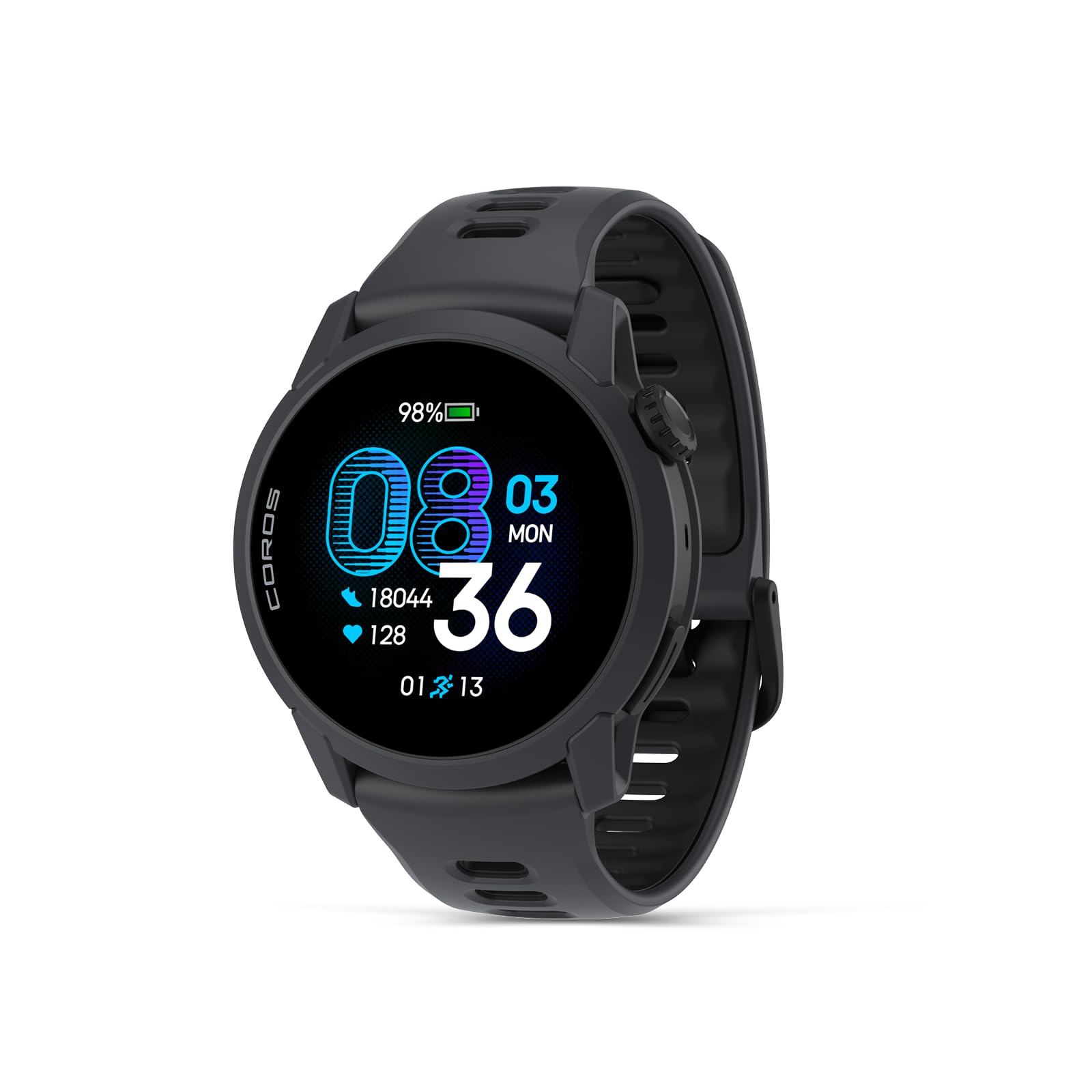
The cheapest watch here is also the lightest, and that is not a coincidence — COROS has put the money into battery and grams rather than materials. COROS quotes 32 grams on the nylon band and an 11.8 mm case, and the result is a watch you can sleep in, race in and forget about in between. It is the one we point a first-time triathlete at, because there is nothing here you have to learn before your first race.

Forty-one hours of GPS is the longest runtime in this group by a wide margin, and 19 days in smartwatch mode means a training block without a charger. The 1.2-inch AMOLED stays readable in bright sun, and the controls are the part that matters most when you are moving: a tactile crown and two buttons you can find without looking, with the touchscreen there when you stop. Swim, bike and run modes are all present, along with a voice-note tool for logging how a session felt while it is still fresh.

What you trade away is the 965's built-in maps: on an unfamiliar course you will be following arrows or glancing at a bike computer. For pool swims, a weekly group ride and a calendar of local sprints, that is a fair swap, and the difference in price is better spent on entry fees and a wetsuit that fits. If you race the same three courses every summer, the mapping you would be paying for elsewhere is the first thing you can live without.

Bottom Line

Our value pick: the lightest watch here and the longest between charges, with everything a first triathlon season needs.

Check Latest Price

How We Tested the Best Triathlon Watches

We built a shortlist from current multisport watches, filtering by price, case size, battery claims, and whether each could log swim, bike, and run as one activity. From that group, we tested seven watches over eight months, the same seven you’ll see ranked below.

Testing happened in the places triathletes actually train: early pool laps, open-water swims, trainer intervals, long road rides, treadmill and track runs, and the awkward minutes in transition. With wet hands, we programmed brick workouts and switched modes; we wore each watch for at least a full week, including sleep and office days, to judge size, strap comfort, screen glare, and whether it looked out of place with a shirt.

We charged every watch to 100 percent before a six-hour GPS ride or run, then noted the percentage left and how long a recharge took; standby drain got checked between workouts. For accuracy, we compared swim laps against the pool count, GPS traces on measured loops, and heart rate against a chest strap. We also watched for the boring failures that ruin race day: dropped satellites, crashed apps, failed syncs, and auto-pause mistakes. Finally, we weighed what each watch included—maps, multisport modes, app support—against its price, because value here is trust per dollar, not the lowest sticker.

How to Choose

Battery: read the GPS hours, not the days

Almost every listing leads with smartwatch-mode life, which assumes you are mostly telling the time. Race day is the opposite: continuous GPS, optical heart rate on, screen lit, often a sensor paired. The number that matters is the one printed next to GPS mode, and the spread in this group is 26 hours on the 970, 31 on the 965 and 41 on the COROS.

All three clear a full-distance cutoff with hours of margin, so the choice comes down to how much reserve you want and whether your calendar includes multi-day or ultra events. Treat the days figure as a charging habit rather than a race plan.

Multisport mode and the two transitions

The structural difference between a triathlon watch and a running watch is the multisport profile: swim, T1, bike, T2 and run recorded as a single activity, with the time between legs counted instead of stitched together afterwards. Without it you finish with three files and a guess at how long you spent in the change tent.

Both Garmins here list triathlon and multisport profiles. On anything you consider, check whether transitions are captured automatically or need a button press, and check that the buttons work with cold, wet fingers — that is the moment the whole feature is for.

Fit, weight and the swim rating

Two numbers get compared less than they should: grams and meters. A 32-gram watch disappears on the wrist, and that matters because sleep and recovery scores only work if you keep the thing on overnight; a 53-gram watch is perfectly raceable, you just know it is there.

On water, both Forerunners list 50 meters and the COROS lists IP68 with a 5-meter depth figure. Every rating here covers pool laps and surface open-water swimming; the deeper number leaves more headroom. One trap: quoted weights are often given for a particular strap, so compare cases, not grams.

Maps, courses and what they cost you

Built-in maps are the feature you pay for and then forget about, until you reach an unmarked junction on a course you have never ridden. If you travel to races or ride unfamiliar roads, mapping earns the premium, and the 965 pairs full-color maps with multi-band GPS for exactly that.

If your season is three local sprints and a long ride you know by heart, mapping is the first thing to live without. Decide that before you fall for a screen.

Frequently Asked Questions

Final Verdict

The Garmin Forerunner 970 is the one we point a triathlete at first. The screen is the brightest in this group, the sapphire lens and titanium bezel suit a watch that lives on your wrist through chlorine, sweat and wetsuit tugs, and the flashlight is the small thing you will use every week.

If your A-race is a full-distance day, or you navigate courses you have never ridden, take the 965 instead: five more hours of GPS and built-in maps for a lot less money. And if this is your first season, the COROS does everything a first triathlon asks at a fraction of the commitment.