Cardio Machines

Best Treadmills for Heavy People of 2026

The fear with a treadmill is specific: you step on, and the deck flexes, the frame shudders, the belt hesitates under your foot. I've cut workouts short on machines that felt like they were deciding whether to hold me. A good heavy-duty treadmill fixes that — a sturdier frame, a motor with headroom, a deck that doesn't sag — so the only thing on your mind at mile three is your pace. Over the past year, my team and I logged miles on six treadmills rated for higher weights, from compact folders to gym-style decks.

One thing I'd tell any first-time buyer: mind the gap between the weight rating and the person using it — a machine rated barely above you works harder and wears out sooner. We also noted how much assembly each one demanded, how quickly the incline responded mid-run, and whether the controls made sense without the manual. The picks below are the ones that felt solid underfoot and stayed that way, including a few plain machines with almost no extras — which, on a treadmill, I've come to read as a compliment.

Best Overall

Our Score 8.8/10
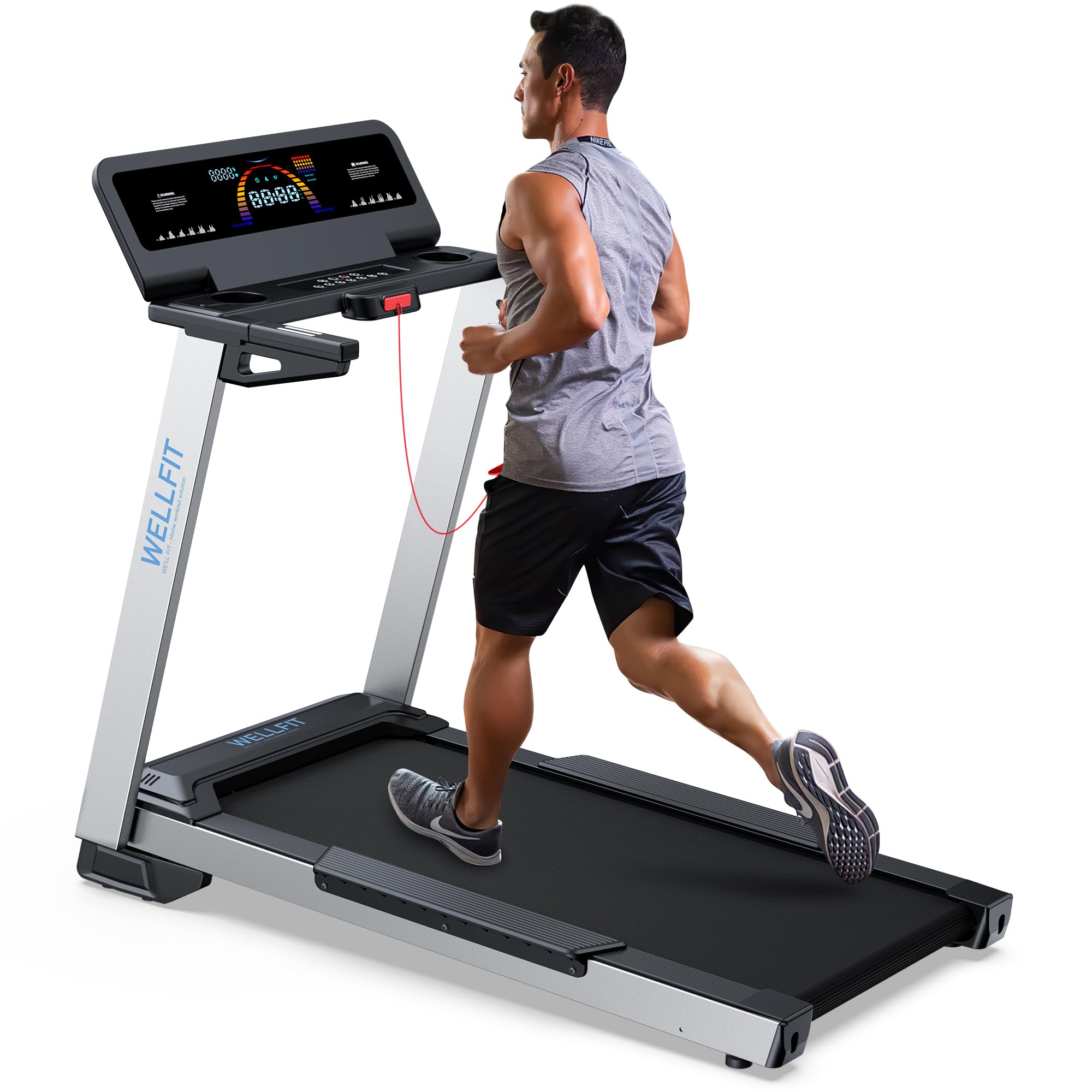
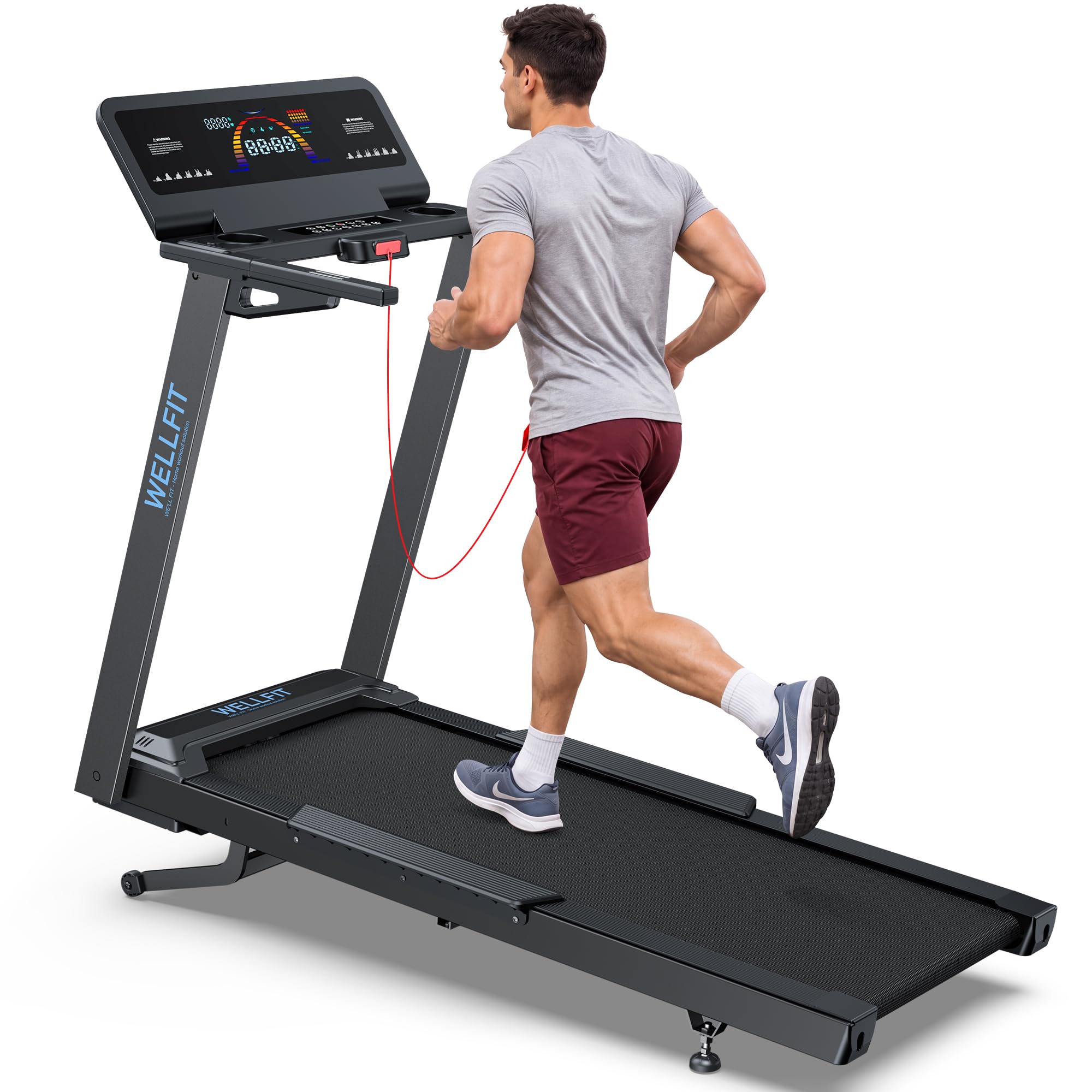
WELLFIT TM029 Treadmill

WELLFIT

WELLFIT TM029 Treadmill

  • Motor 4.5 HP brushless
  • Warranty 3 years
  • Running Belt 20 x 55 inches
  • User Weight Capacity 500 lb
Check Price on Amazon

A 500-pound rating, 55-inch belt, and 4.5 HP motor that never feels strained.

Five hundred pounds is the number that earns this machine its place. That is the user weight it is rated for, the highest in this roundup, and the gap to the next treadmill here is smaller than the headline suggests. But headroom is not about bragging rights. A frame rated well above your own weight, driven by a 4.5 HP brushless motor, means the deck is not working at the edge of its design every time you land a stride. That is the difference between a treadmill you trust at a jog and one you treat carefully.

Underfoot you get 20 by 55 inches of belt, the second-longest running surface in this group and long enough that a long stride never hunts for the front roller. Twenty inches of width is the figure we care about most: it is what keeps a wider stance off the side rails, and it is the first thing that feels cramped on cheaper machines. Speed runs to 10 mph and the automatic incline reaches 15%, which is plenty for walk-and-climb intervals.

Living with it takes some logistics. The deck folds to about 38 by 20 by 43 inches and rolls on casters, but the machine weighs 120 pounds, so folding it away is a two-person job unless you leave it set up. Noise is not the weak point: the brushless motor is the quiet part, and what you hear is your own feet. What you give up for that deck is the wall it stands against.

Coverage is stated plainly as three years, which matters more on a machine a heavier body works hard every day. Sunny splits its coverage between three years on the frame and 180 days on parts; this one states three years flat. On a listing that reads like a footnote, and in year two it is the whole decision.

Bottom Line

The treadmill we point heavier buyers to first: a 500-pound rating, a 20-by-55-inch deck, and a 4.5 HP brushless motor that holds its speed when you push.

Check Latest Price

Best For Easy setup

Our Score 8.8/10
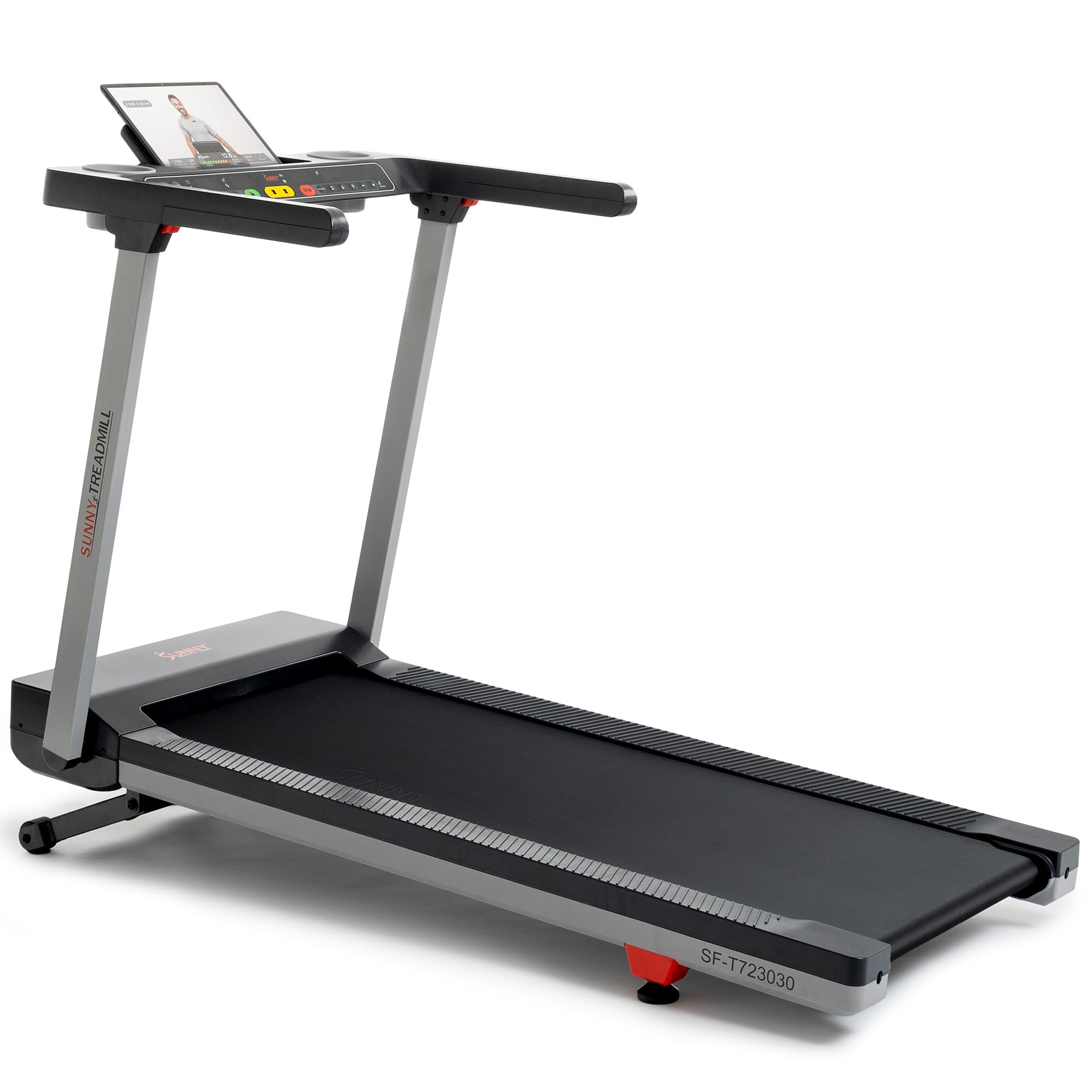
Sunny SF-T723030 Treadmill

Sunny

Sunny SF-T723030 Treadmill

  • Incline Automatic, 15% max
  • Assembly Fully assembled
  • Running Belt 20 x 53 inches
  • User Weight Capacity 300 lb
Check Price on Amazon

Unboxing is where this one wins. It arrives fully assembled, so setup is raising the handlebar and locking it into place, and the deck folds flat to roughly 11 inches deep when you are finished. Anyone who has spent an evening with an Allen wrench and a half-labeled manual will recognize the value in that, and it is why this is the machine we suggest when the treadmill has to share a room with everything else.

The rest of the package is competent rather than exciting: a 2.5 HP brushless motor to 10 mph, a 20-by-53-inch belt, 15% of automatic incline and 24 preset programs, with no subscription attached to any of it. The deck is wide enough that a heavier walker will not feel pinched, and the console is simple enough to read from a standing start without opening the manual.

Two things surface over months rather than days. Belt noise can develop into a squeak that was not there in month one, and a little lubricant plus a tracking adjustment is usually the cure. The other is the machine's own weight: at 130 pounds it sits solid underfoot but is awkward to reposition, so pick a spot and leave it there. Neither is a dealbreaker, and both are the kind of thing you learn in month three rather than week one.

Bottom Line

The easiest one to live with, arriving assembled and folding to about 11 inches, for households whose heaviest user stays under 300 pounds.

Check Latest Price

Best Value

Our Score 8.6/10
WELLFIT T24-1 Treadmill

WELLFIT

WELLFIT T24-1 Treadmill

  • Motor 4.0 HP brushless
  • Incline Manual, 5% max
  • Running Belt 20 x 45 inches
  • User Weight Capacity 450 lb
Check Price on Amazon

450 pounds of capacity and a full 20-inch belt without paying for auto incline.

Take the top pick, drop the automatic incline and ten inches of belt, and you have this machine for appreciably less money. What stays is the part that matters to a heavier user: a 450-pound rating on an alloy steel frame, a 4.0 HP brushless motor, and a full 20-inch-wide belt that does not squeeze a wider stance against the rails. We point people here when the goal is capacity rather than features, because that is exactly the trade this one makes.

The manual incline is the honest compromise. It tops out at 5% and you set it by hand before you start, so it suits a fixed standing walk and does nothing for changing grade mid-session. What you keep is the belt width and the capacity, the two things a heavier user actually feels underfoot, and you keep them for less than the top pick costs. If your routine is a steady 3 to 4 mph with the occasional push, that is the right set of sacrifices.

Where it earns its keep is the quiet, unremarkable walking it does. The belt runs smooth at a walking pace, the dashboard is bright and readable from a standing position, and assembly is a short job with the tools in the box. Taller users may find the handrails sit low, since the uprights are not adjustable, so stand at one before you commit if you are well over six feet. At 94 pounds, two people can walk it into a corner when the room needs to be something else.

Bottom Line

The value play: 450 pounds of capacity and a full 20-inch belt, with the money left over from dropping the incline motor going into the deck.

Check Latest Price

Best for Runners

Our Score 8.2/10
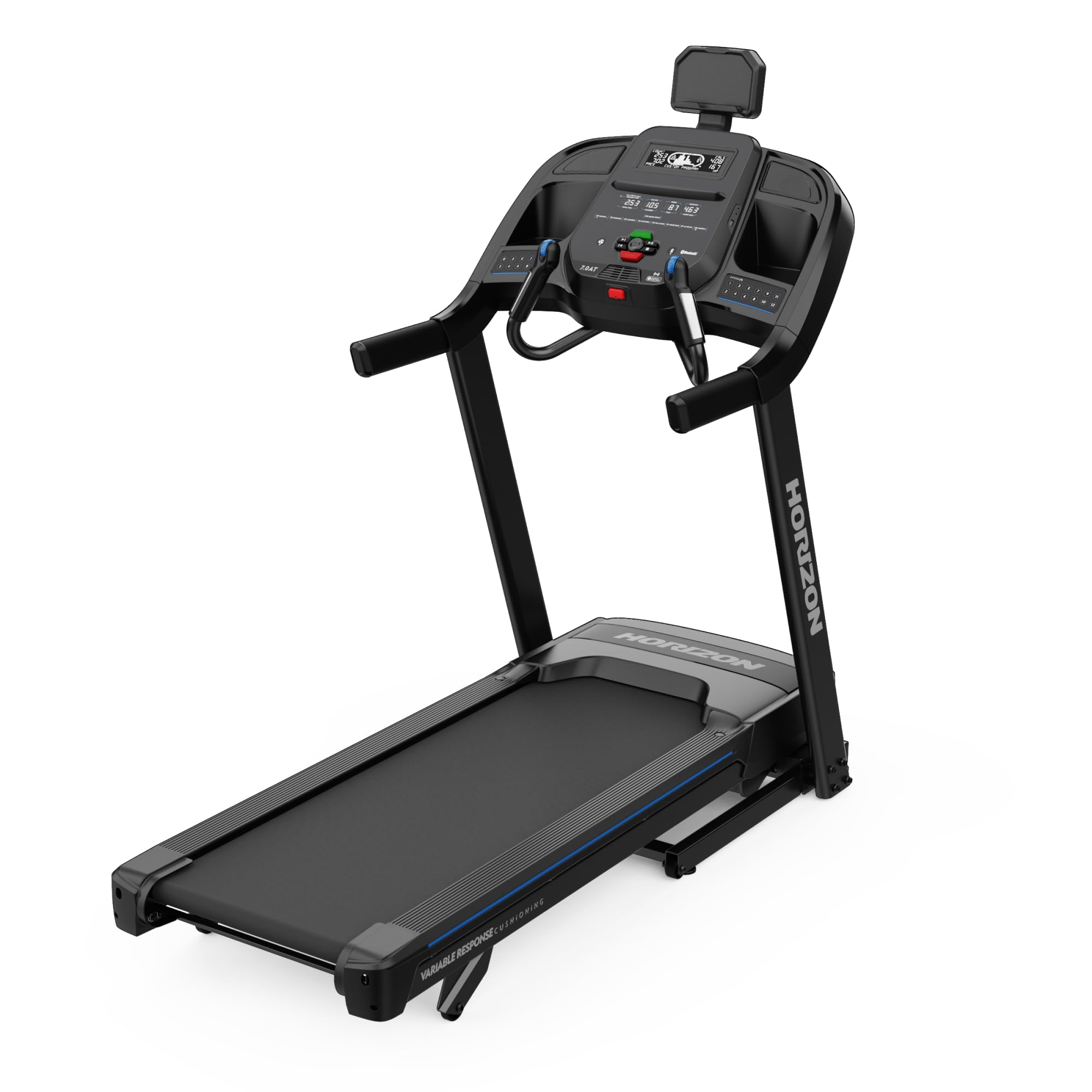
Horizon 7.0AT Treadmill

Horizon

Horizon 7.0AT Treadmill

  • Top Speed 12 MPH
  • Running Belt 20 x 60 inches
  • Machine Weight 257 lb
  • User Weight Capacity 325 lb
Check Price on Amazon

Longest deck and fastest top speed here, with cushioning built for distance.

Sixty inches of deck is what you are paying for. It is the longest running surface in this group by five inches, and for a tall or heavy runner it changes the workout: you stop shortening your stride to stay centered, and the front roller stops being something you think about. Add a 12 mph ceiling and three-zone cushioning, and this is the only machine here built for running first and walking second.

The limit is the rating. At 325 pounds it sits near the bottom of this group, so if you are above that line this is not your treadmill, because the WELLFITs carry 450 and 500. Under it, the 257-pound frame is the most planted machine here; nothing about it shifts when you pick up the pace.

Two things to know before ordering. The quick-dial controls sit on the arms where a swinging hand can clip them and knock the speed up without you meaning to, and a few sessions of hand position fixes it. Reliability is the weakest part of the story: motor and belt trouble is what turns up, and this is the most divided record in the group. The lifetime motor and frame warranty softens that; the one-year labor term is the part to read.

What wins us back is the software and the incline. It pairs with Peloton, Strava and Zwift without a subscription, syncs with an Apple Watch, and drives its 15% grade from the console instead of by hand. Set against a 20-inch belt and a deck this long, those are the kind of compromises you notice once and then stop noticing.

Bottom Line

The runner's pick: a 60-inch deck, a 12 mph ceiling, and cushioning that still feels supportive an hour into a session.

Check Latest Price

Best for Incline Work

Our Score 8.0/10
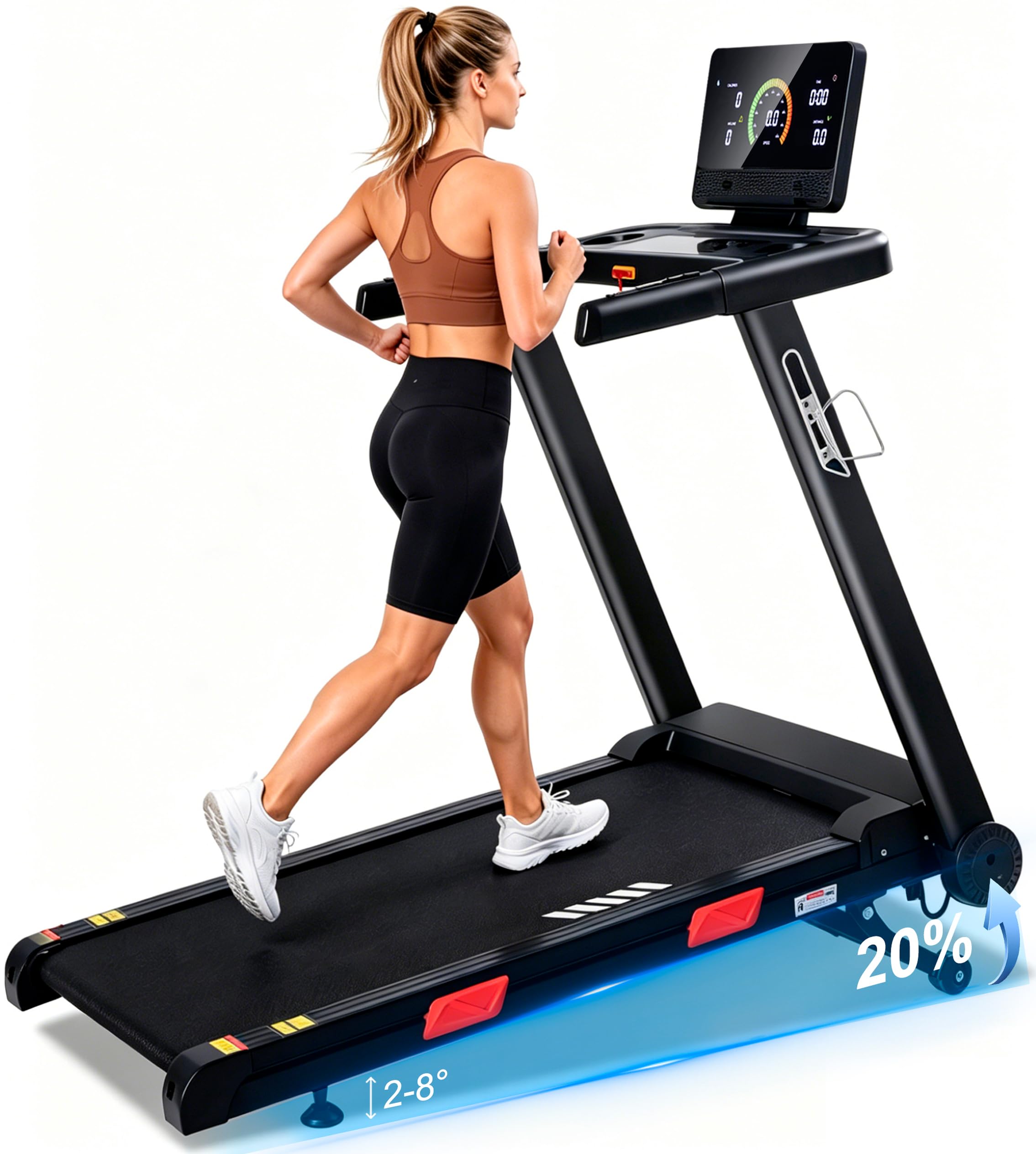
Ateedge Auto Incline Treadmill

Ateedge

Ateedge Auto Incline Treadmill

  • Motor 3.0 HP
  • Incline Automatic, 20% max
  • Running Belt 18.5 x 45.5 inches
  • User Weight Capacity 350 lb
Check Price on Amazon

A 20% auto incline and 36 programs in a footprint that fits a corner.

Twenty percent is what separates this machine. It is the steepest automatic incline in the roundup, and at that grade a walk turns into a climb: calves and glutes make themselves known inside a couple of minutes, and the motor feels it too, which is why the 3.0 HP rating is the number to weigh against your own before you buy.

Thirty-six preset programs is more than most people touch, but the hill-interval ones earn their place here, and the handlebar buttons let you bump speed and grade without breaking stride. The deck is where the compromise sits: 18.5 inches wide by 45.5 long is the narrowest belt in this group, and we do not love it for a heavier runner. Walkers with an average stride are fine; a wide gait will find the rails.

Test the incline mechanism in week one. The grade can stick near its top position, and a treadmill that will not come back down is a treadmill you stop using, so run it through the full range while the return window is open. Coverage is a single year, the shortest here, which is a real consideration on a machine rated to 350 pounds. What you get in exchange is a compact unit: 54 inches deep, folding to 27 by 27 by 12, and quiet enough to keep in a room you actually use.

Bottom Line

For grade work this is the steepest machine here, with 20% of automatic incline and 36 programs, at a price below every other pick in this guide.

Check Latest Price

How We Tested the Best Treadmills for Heavy People

We started by pulling specs on more than 40 treadmills and ruling out anything that couldn't carry a heavier user with room to spare. That meant a user weight rating well above our testers' own weights, continuous-duty motors rather than peak numbers, running decks at least 20 inches wide, and long warranties on the frame, motor, and deck. We also weighed price against warranty length instead of against feature lists. Six machines made the cut, and we assembled and lived with all of them for a full year.

Testing happened where treadmills actually live: a carpeted upstairs bedroom, a garage on a concrete slab, and a low-ceilinged basement. A machine that feels rock-solid on concrete can shudder on a second-floor joist, and we wanted to know which ones did. Two testers — one around 240 pounds, one closer to 280 — ran intervals and did long incline walks early in the morning and after work, noting when the frame shook, the belt slipped, or the motor changed pitch.

Assembly was timed solo, from box to first step, and rated on whether one person could stand the deck up and walk it into place. We measured footprint flat and folded, checked how much floor it ate in a small room, and tested rolling it across carpet. Noise got a decibel reading at 4 and 7 mph, plus the practical test: could someone hold a call in the next room? We watched how fast the incline responded mid-run, whether the controls made sense without the manual, and whether the simpler consoles were actually easier to live with. Then we kept a running log of squeaks, belt drift, and anything that loosened over twelve months.

How to Choose

Read the weight rating before anything else

Most home treadmills top out between 250 and 300 pounds. The machines here are rated from 300 up to 500, and the honest advice is to buy more headroom than your own weight: a rating that matches you exactly means every step uses the whole allowance, and the deck and belt take that wear first. Check that the figure refers to user weight rather than shipping weight.

The machine's own weight is a useful cross-check. The treadmills in this guide run from about 94 to 257 pounds, and the heavier frames are the ones that sit still when you pick up the pace.

Deck size: width matters more than length

Twenty inches of belt width is the practical floor for a heavier runner. Narrower decks of 17 to 18.5 inches show up on compact and folding machines, and they push a wider stance into the side rails. Length is about stride: 55 inches and up suits running, while 45 to 50 is fine for walking.

One trap worth knowing: a deck length quoted in a title is sometimes the overall machine length. Look for the belt measurement specifically. The 20-by-55-inch deck on the WELLFIT TM029 is the size we point runners toward.

Motor: what the horsepower number tells you

Horsepower on home treadmills is usually a peak rating rather than continuous output, so a 3.0 HP motor on one machine is not the same as 3.0 HP on another. What matters for a heavier user is whether the belt holds speed when you land on it; a motor that surges and recovers is working near its ceiling.

Walking is comfortable at 2.5 to 3.0 HP. For running at 300 pounds or more, we look for 4.0 HP and a brushless design, which is where the top pick sits.

Incline: automatic, manual, and how much you'll use

Manual incline means stepping off to change the grade, which in practice means setting it once before you start; the WELLFIT T24-1 tops out at 5% for exactly that reason. Automatic incline lets you change grade from the console mid-session, and 10 to 15% is plenty for serious walking intervals.

More than that, like the Ateedge's 20%, is a climbing tool. It is genuinely useful, but grade loads the motor harder, so pair a steep deck with a motor and a weight rating that can carry it.

Floor space, machine weight, and where the noise goes

Measure the footprint rather than the folded size: the machines here run 52 to 76 inches deep, and you need clearance behind the deck plus headroom at full incline. Check the route in, too, because a 257-pound treadmill arrives in one heavy box and does not turn a tight stairwell well.

If the machine goes above a living space, put a dense rubber mat underneath. A heavier runner generates impact noise that travels through a floor far more than the motor does.

Frequently Asked Questions

Final Verdict

For most heavier buyers the WELLFIT TM029 is the answer. The 500-pound rating is the highest here, but what makes it the default is the combination: a 20-inch belt long enough to actually run on, a motor that does not bog down, three years of coverage, and a price below the Horizon.

If auto incline is a feature you will set once and forget, the T24-1 keeps the same belt width and a 450-pound rating for a lot less money. And if you are a runner sitting under 325 pounds, the Horizon's 60-inch deck is worth the step up.