Cardio Machines

Best Treadmills for Tall People, Tested of 2026

The first thing a tall runner notices on a treadmill isn’t the screen or the motor — it’s whether the belt runs out from under them mid-stride. I’m 6-foot-2, and I’ve clipped the front housing of more than one machine that looked spacious in the showroom. Over the past 10 months, my team and I logged miles on seven treadmills chosen for longer decks, wider belts, and higher handlebars, judging build quality and how each felt at a walking pace and at a run.

What separates a good tall-person treadmill from a cramped one comes down to a few unglamorous details: usable deck length, a belt that doesn’t force your feet into a narrow line, and a console that doesn’t sit at eye level. We assembled each machine ourselves, ran the inclines up and down, listened for motor whine and footfall thump, and lived with the footprint and weight long enough to know whether moving it was a two-person job. Reliability and value only became clear after weeks of use — those are the ones worth your money below.

Best Overall

Our Score 9.2/10
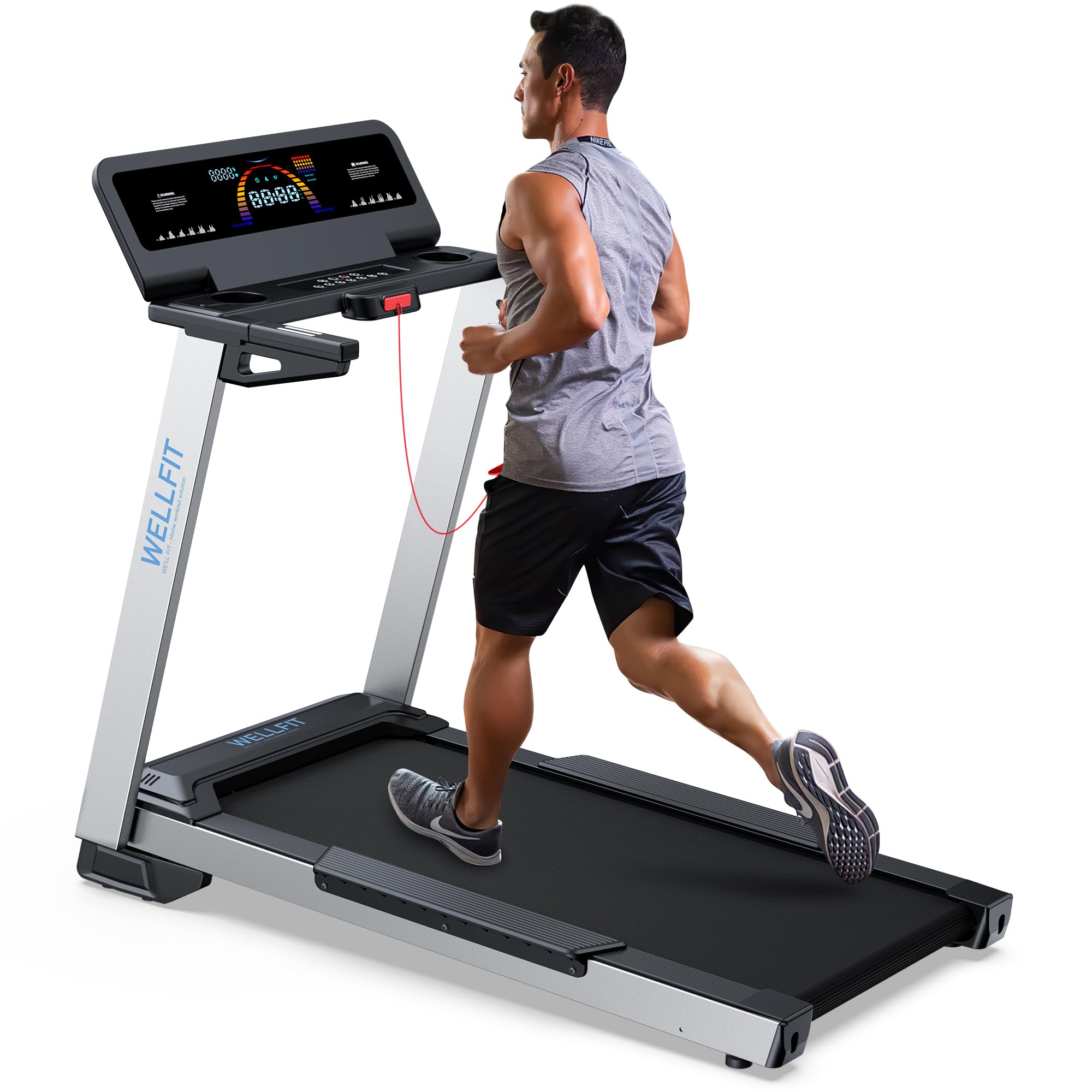
WELLFIT WFTM032

WELLFIT

WELLFIT WFTM032

  • Auto Incline 0 to 10%
  • Running Belt 44" x 17"
  • Handrail Height 30.5" to 41"
  • Weight Capacity 400 lb
Check Price on Amazon

Handrail rises to 41 inches so tall users walk upright, not stooped.

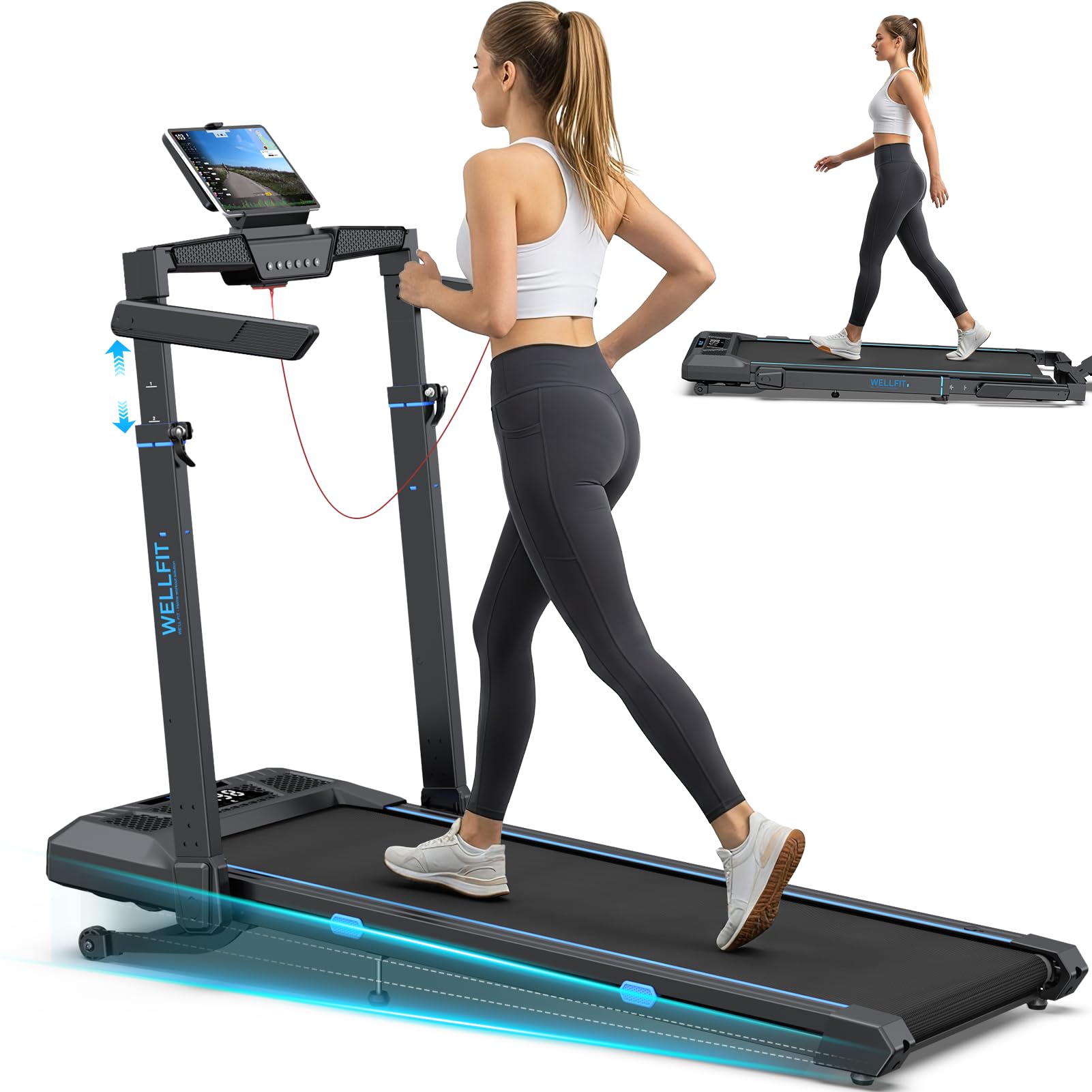
Five locking positions between 30.5 and 41 inches is the detail that put this machine on top. Most home treadmills weld the handlebar where it sits, and on a frame that stands around 44 inches tall, that leaves the rail near hip height for anyone over six feet: you either walk with your arms hanging or you hunch over the console. We ran the WELLFIT's rail up to the top setting and walked upright with our hands where they naturally fall. It is one of two machines here with an adjustable rail, and the one that reaches higher.

The rest of the package is sensible rather than flashy. The 44-by-17-inch belt takes a long walking stride and a steady jog up to 8.6 mph, the 3.5 HP motor is rated for 400 pounds, and the 10% auto incline changes grade from the console, the remote or the app without breaking pace. Folded, the deck stands about six inches deep, which is the difference between a machine you keep set up and one that lives under the bed.

Small things earned their keep, too: the fold drops softly instead of slamming, the speed range starts low enough for a slow desk walk, and the rail comes back down for a shorter household member without fuss. What none of that changes is the fit. If your complaint about home treadmills has always been that the controls sit somewhere near your knees, this is the machine that fixes it, and it fixes it for everyone else in the house at the same time.

Bottom Line

This is the machine we point tall buyers to first: the handrail rises to 41 inches, the deck takes a long stride at jogging pace, and 400 pounds of capacity covers most households.

Check Latest Price

Best Budget

Our Score 9.2/10
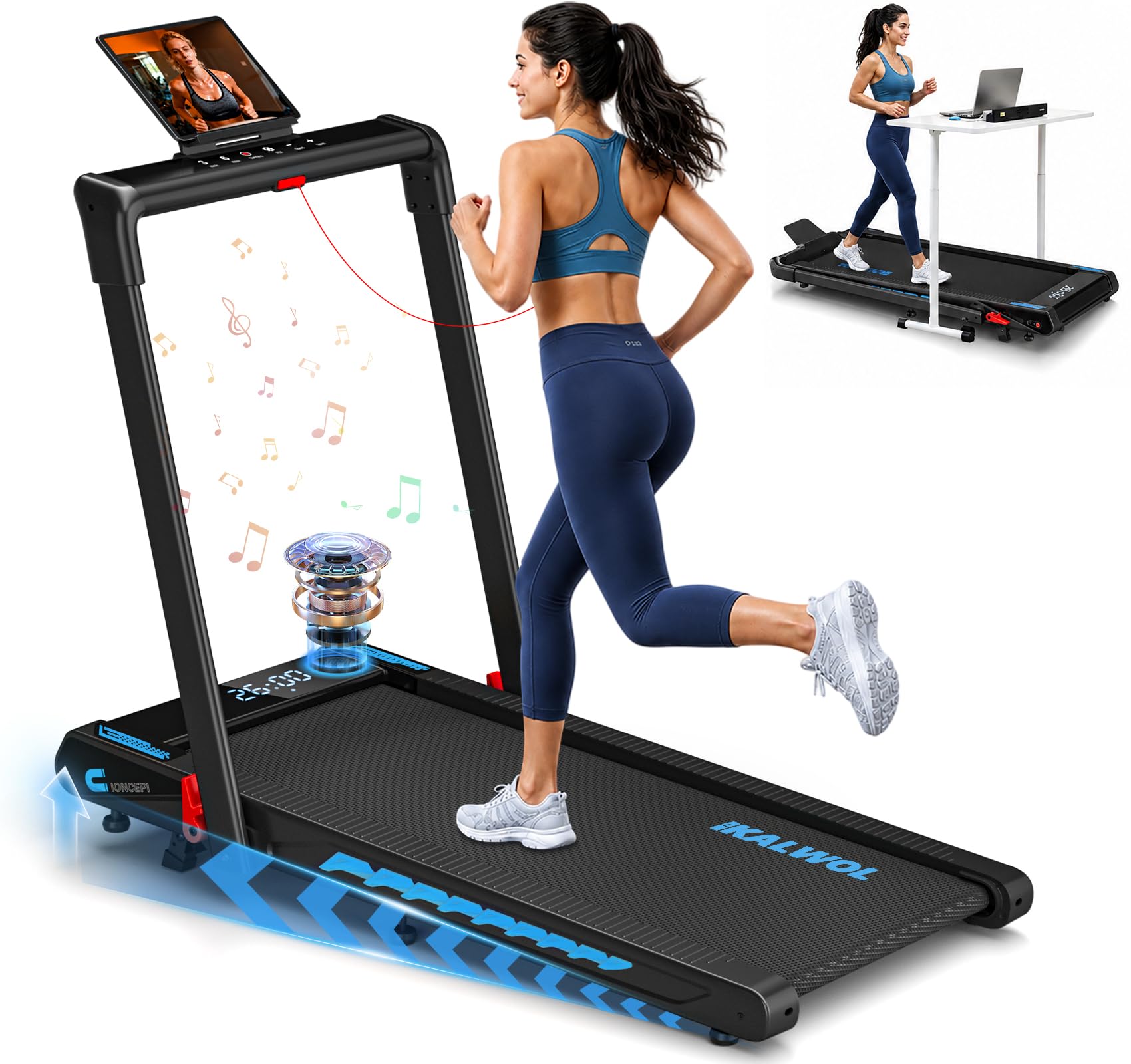
KALWOL X382PT

KALWOL

KALWOL X382PT

  • Incline 10% manual
  • Max Speed 7.5 mph
  • Running Belt 40" x 16"
  • Weight Capacity 350 lb
Check Price on Amazon

The cheapest machine here that still reaches 7.5 mph.

The least expensive machine here that still runs, and it does run, up to 7.5 mph. For a tall walker on a tight budget this is where we start: a 3.0 HP brushless motor, a 350-pound capacity, a handle that folds down to turn it into a flat pad, and a built-in speaker that is better than it has any right to be.

The extras are the reason it holds up under daily use. It pairs with Zwift, Kinomap and FITSHOW for route-based sessions, the 12 HIIT programs give the manual incline something to do, and at walking speeds it is quiet enough to use in the same room as someone working. Folded, it drops to about five inches, which is how it earns its keep in a small apartment.

The belt is where the money was saved: 40 by 16 inches. For a tall walker at desk pace that is plenty, and a light jog is comfortable. If you are over six-two and planning to run, your stride will find the edges of it. That is the trade, and for a lot of tall buyers — apartment, budget, walking-focused — it is the right one to make.

Bottom Line

Our budget pick: the least expensive machine here that still reaches 7.5 mph, and a good fit if you want steps rather than speed.

Check Latest Price

Best for Tall Runners

Our Score 8.8/10
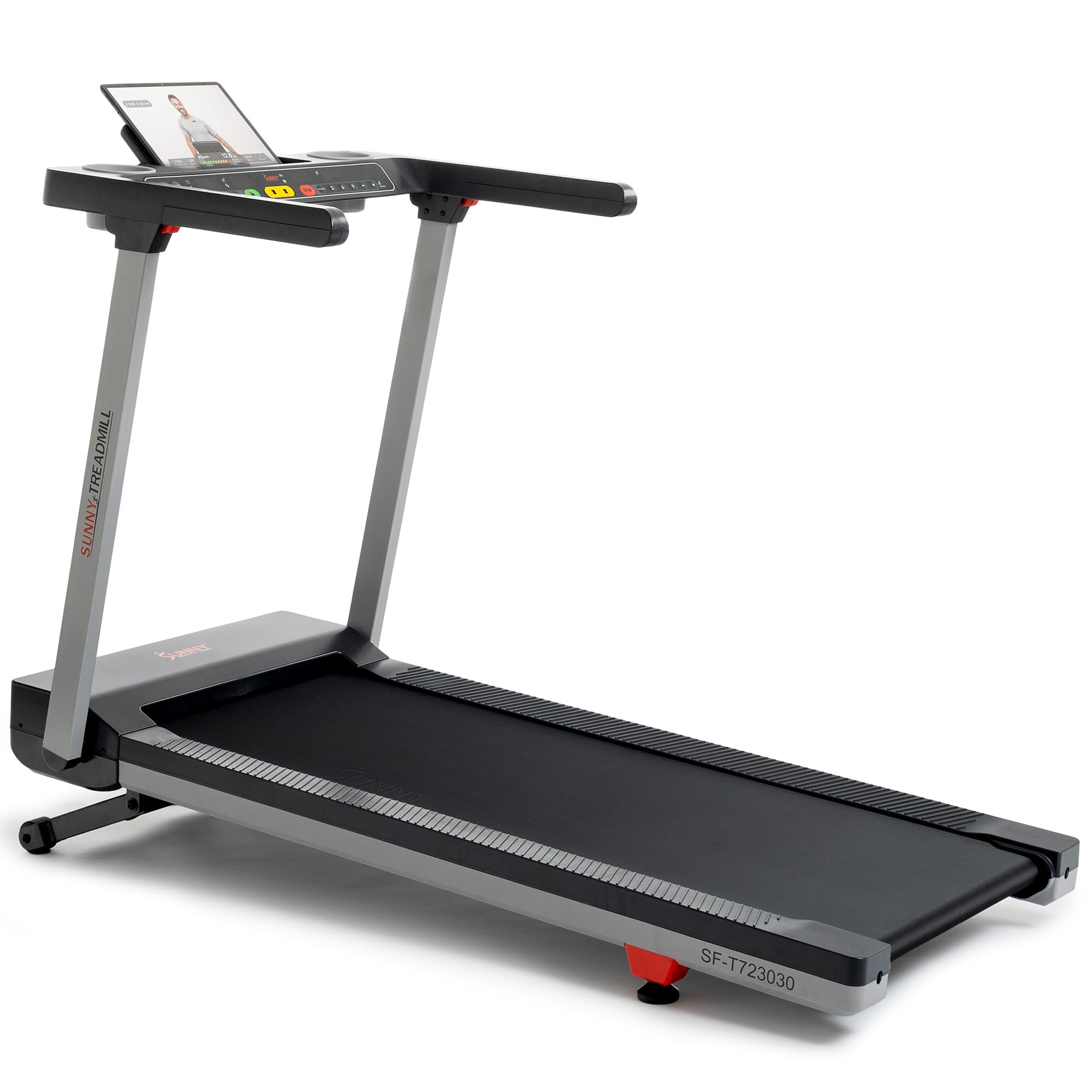
Sunny SF-T723030

Sunny

Sunny SF-T723030

  • Max Speed 10 mph
  • Auto Incline 0 to 15%
  • Running Belt 20" x 53"
  • Weight Capacity 300 lb
Check Price on Amazon

The longest belt here at 53 inches, with 15% auto incline.

Fifty-three inches of belt, twenty wide. That is eight inches more running surface than the next-longest machine in this guide, and it is the difference between a tall runner shortening their stride to stay on the deck and simply running. On the Sunny, a long-legged stride lands inside the belt instead of clipping the front cover.

For anyone who plans to run rather than walk, this is the machine we reach for. The 2.5 HP brushless motor holds up to 10 mph, the 15% auto incline climbs through 15 levels on quick buttons, and there are 24 programs plus USB charging and Bluetooth for the app. It also arrives fully assembled, so the first session starts as soon as you get it out of the box.

The one thing we keep coming back to is durability. This is the machine with the longest deck and by far the largest body of feedback, and its reliability record is the shakiest of anything we recommend, with machines that stop early and a noise picture that splits down the middle. What keeps it here is the cover: a three-year structural frame warranty, the longest in this guide, with 180 days on parts behind it. For a tall runner who wants one machine and a decade of use, that is the deal on the table.

Bottom Line

Tall runners should start here: the 20-by-53-inch belt is the longest we tested, and the 15% auto incline adds hills without stepping off.

Check Latest Price

Best For Steep-grade walking

Our Score 8.8/10
CURSOR X5FD

CURSOR

CURSOR X5FD

  • Incline Five settings to 40%
  • Running Belt 38.6" x 15.4"
  • Handrail Height 51"
  • Weight Capacity 350 lb
Check Price on Amazon

The first thing you notice stepping on is how far above you the rails sit. At 51 inches they are the tallest handrails in this guide, high enough that a six-four walker stands upright with both hands on them. That is not a small thing at a steep grade, where the alternative is folding over the console to stay balanced.

The grade is the point. Five settings run from flat to 40%, and at the top the front of the deck lifts 15 inches, so you are hiking rather than walking — closer to a stair climber than to a treadmill. That is a genuinely different workout from the 10% and 15% machines here, and it is why the machine weighs only 57 pounds and folds to six inches: there is no motorized incline to build around.

Underfoot there is a seven-layer belt over eight silicone dampers, a combination that soaks up more impact than we expected at this price, and the 3 HP brushless motor runs under 45 dB at walking speeds, quiet enough for an apartment floor. The 350-pound capacity sits mid-pack, and the folded deck stands six inches, so it goes against a wall or under a bed.

Our read: this is the best machine here for steep, slow, supported walking in a tight space, and the wrong one for anyone who wants to run. If running is on the plan, the Sunny's 53 inches of belt is where the money goes. If you want a hill that actually hurts and a rail you can stand under, nothing else in this guide reaches 40%.

Bottom Line

For tall walkers who want steep grade work, this is the one: 51-inch handrails, a 40% climb, and a folding frame that tucks away.

Check Latest Price

Best for Tall, Heavy Users

Our Score 8.6/10
WELLFIT T24-1

WELLFIT

WELLFIT T24-1

  • Incline 5% manual
  • Max Speed 10 mph
  • Running Belt 45" x 20"
  • Weight Capacity 450 lb
Check Price on Amazon

450-pound capacity and a 20-inch belt for bigger, taller bodies.

This is the treadmill for the tall user who is also heavy, the combination that knocks most home machines out of contention. The belt is 45 inches long and 20 inches wide, the frame is rated to 450 pounds, and the 4.0 HP motor runs to 10 mph. If you have been shopping by weight capacity and finding everything tops out at 300, this is the machine that ends the search.

What 45 inches buys is landing room. A tall runner's stride fits without clipping the front roller, and the 20-inch width leaves space between your feet and the edges of the belt. Underfoot it feels planted and quiet at speed, the console carries handrail pulse sensors, Bluetooth speakers and 12 preset programs, and the whole thing is built around a heavy steel frame that does not shiver when you pick the pace up.

Assembly is the other thing that stood out; the machine arrives close to built, and the setup feedback is the cleanest in this guide. What that leaves you with is a treadmill that stays exactly where you put it. There is no folding mechanism to work loose and no reason to move it between sessions, which for a heavy runner is one less thing to go wrong.

Bottom Line

If you are tall and heavy, start here: 450 pounds of capacity and a 20-inch-wide belt, with a 4.0 HP motor that runs to 10 mph.

Check Latest Price

Best For Hill training

Our Score 8.6/10
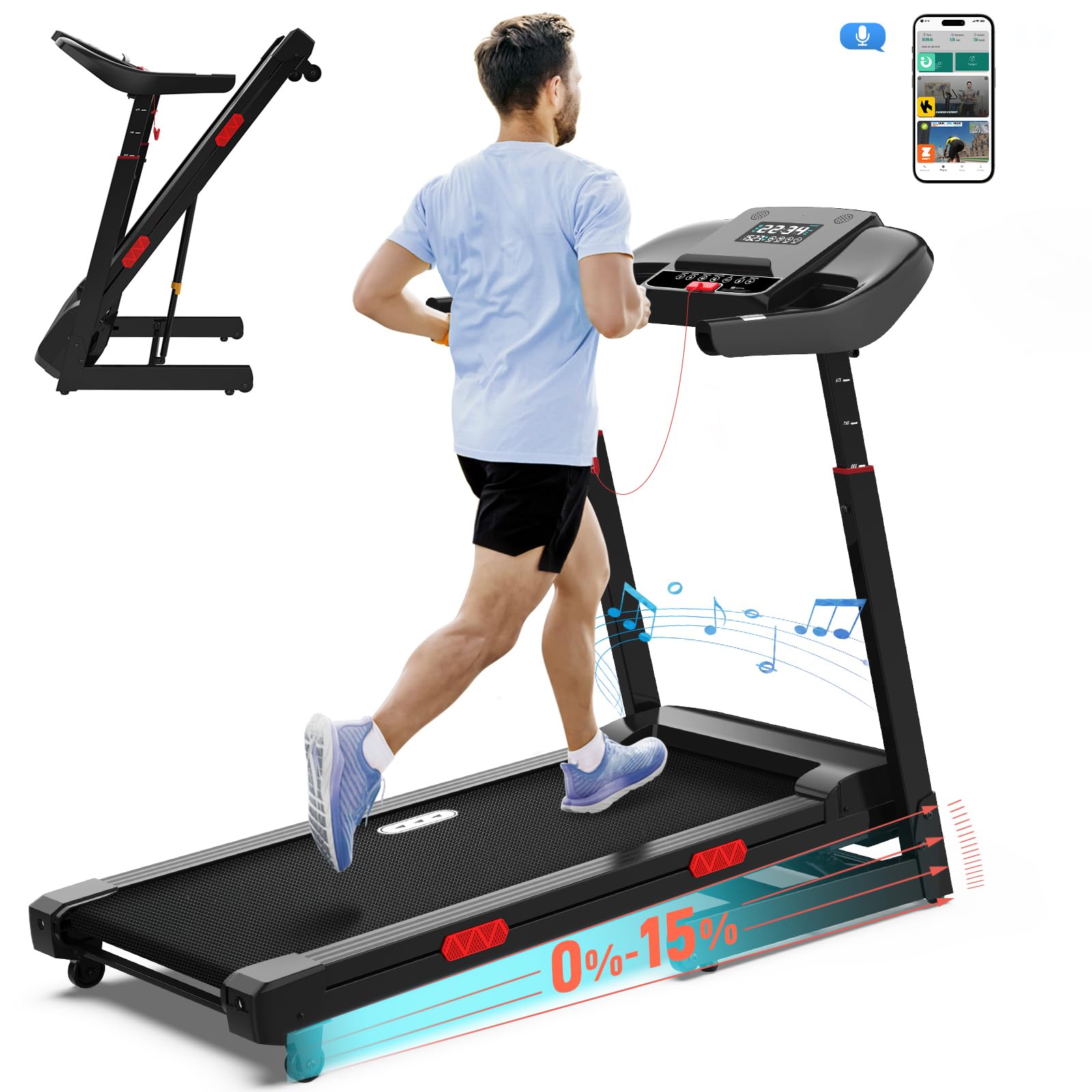
CIIHI Auto Incline Treadmill

CIIHI

CIIHI Auto Incline Treadmill

  • Auto Incline 0 to 15%
  • Running Belt 43.31" x 16.93"
  • Handrail Height 26.5" to 39.5"
  • Weight Capacity 400 lb
Check Price on Amazon

This is the closest thing in the guide to our top pick: an adjustable handrail across six heights, 15% auto incline against the WELLFIT's 10, the same 400-pound rating, and a folding frame for about the same money.

The differences decide it, and they are small. The rail tops out at 39.5 inches rather than 41, the belt is a shade tighter at 43.31 by 16.93, and at 103 pounds this is the heaviest folding machine here, which means a two-person setup and a grunt to shift. Our call: if you are under about six-two and you want the steeper hills, this is the better buy of the two. Above that, the extra inch and a half of handrail matters more than five points of grade.

Two details we appreciated. The soft-drop fold keeps a 103-pound deck from slamming shut, and voice control runs speed and incline by command when your hands are on the rails. Both are the kind of thing you stop noticing after a week, until you use a machine that does not have them.

Bottom Line

A near-match for our top pick with more incline for the same money, and the right call if 39.5 inches of handrail is high enough for you.

Check Latest Price

Best For Desk walking

Our Score 8.4/10
MERACH UltraWalk W60

MERACH

MERACH UltraWalk W60

  • Deck 16.5" x 41.3"
  • Max Speed 4 mph
  • Auto Incline 0 to 12%
  • Weight Capacity 400 lb
Check Price on Amazon

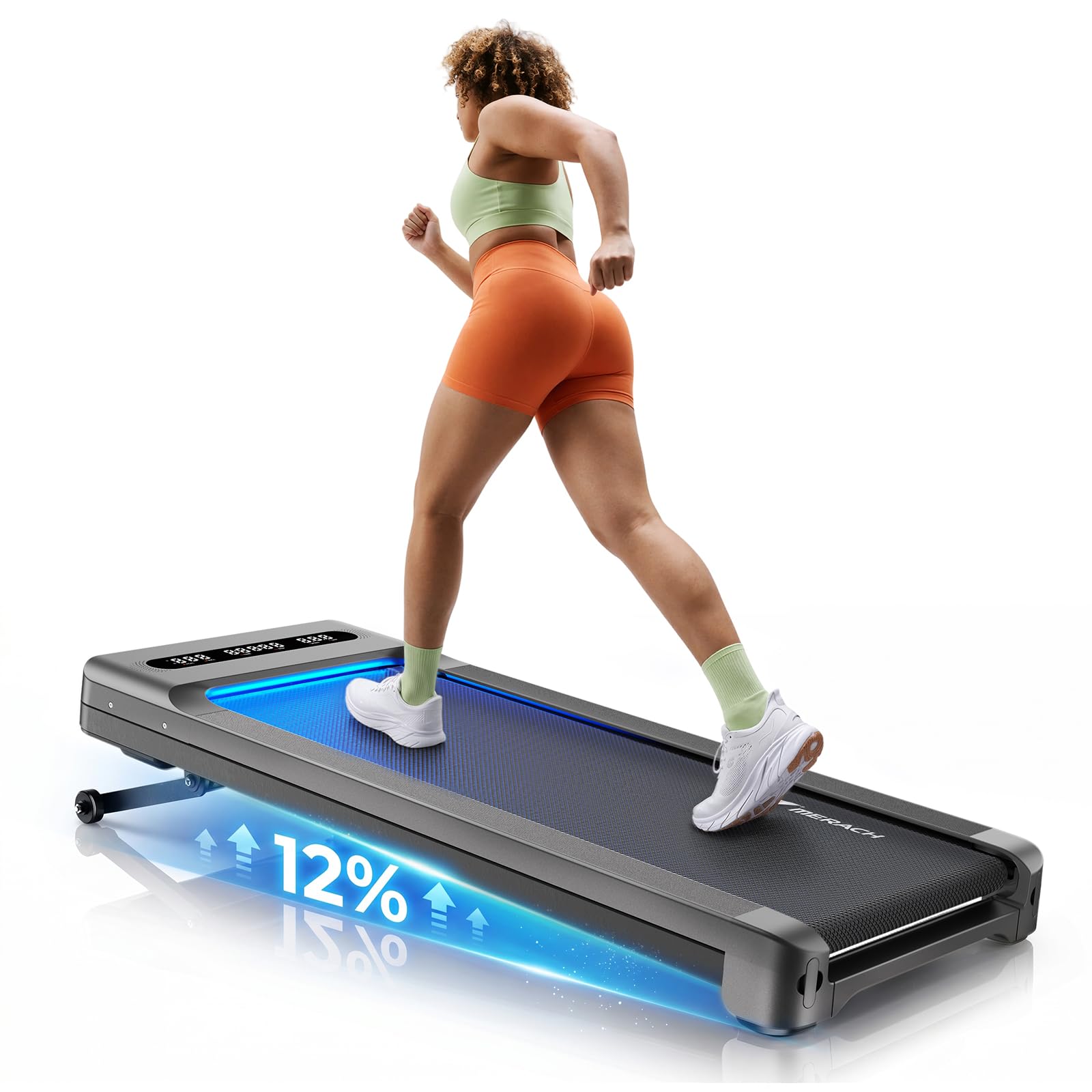
Four miles per hour. That ceiling defines this machine: it is a walking pad, not a treadmill you will ever run on, and 4 mph is a brisk walk rather than a jog. Within that limit it is the most tall-friendly pad in the guide — the deck is 41.3 inches long and 16.5 wide, and MERACH builds the extra stride room into its pitch for taller users.

The rest is aimed at desk work and daily steps. The 12% auto incline adjusts from the remote or the app, so you can ramp mid-walk without stopping, and the 400-pound peak rating (330 sustained) is generous for a pad this slim. There is a Bluetooth speaker, lighting under the deck, and a two-year warranty that doubles what most budget machines here offer. At 67.7 pounds and 6.5 inches tall it slides under a sofa, though it is not the lightest thing to haul out every morning.

Where it earns its place is a tall user who wants incline walking under a standing desk and has no interest in running. The auto incline is the reason to pick it over a flat pad, and the stride room is the reason to pick it over the shorter pads. One fault worth knowing about: the console can throw an E8 error and stop the belt mid-session, which is a warranty conversation rather than something to nurse along.

Bottom Line

If walking is the whole plan, this is the tall-friendly pad we recommend: 12% auto incline, a 41-inch deck and 400 pounds of capacity.

Check Latest Price

How We Tested Treadmills for Tall Runners

We started with a shortlist built from spec sheets, filtering for usable deck length, belt width, handlebar and console height, continuous horsepower, and folded footprint, then cut anything that couldn’t fit a 6-foot-2 stride or justify its price. That left seven treadmills, which we used for 10 months.

Two testers, one 6-foot-5 and one 6-foot-3, put each machine through a morning walk, an evening run, and incline intervals from flat to the steepest setting. We assembled every unit ourselves, noting how long it took, which steps required two people, and whether the instructions matched the hardware. We measured belt width and usable deck length, then watched whether our stride changed near the front and rear rollers. We stood a few feet away while each treadmill ran at a walking and running pace, listening for motor whine over footfall, and checked whether vibration traveled through the floor below.

We rolled and lifted each machine to judge footprint and weight in a real room, not just on paper. Over the 10 months, we kept a shared log of belt drift, console glitches, strange noises, and any service calls, which gave us a clearer read on reliability and build quality than the first mile ever could. When we compared price against deck size, incline range, and how well each unit held up, the value picture got sharper — and the machines that earned a spot below were the ones that stayed comfortable for tall walkers and runners alike.

How to Choose

Belt length comes first

Deck length runs from 38 inches to 53 in this guide, and that spread is what you are really shopping. A tall walker wants enough room that their heels never reach the rear roller; add running and you need more again, because stride grows faster than height suggests. The Sunny's 53 inches is the generous end, the WELLFIT's 44 is the practical middle, and anything around 40 is a walking deck.

Width matters almost as much. Twenty inches leaves room for broad shoulders and a foot that wanders; 15 to 16 inches is tight for a big frame, especially at speed. If running is even a possibility, buy the longest belt your room and budget allow.

Handrail height is the number listings hide

Machines get sold on overall height, which is not the same thing as handlebar height. A treadmill listed at 44 inches tall can put the rail somewhere around your hip. What you want is either an adjustable rail — the WELLFIT runs 30.5 to 41 inches, the CIIHI 26.5 to 39.5 — or a fixed one high enough to hold without stooping.

There is a quick test. Stand on the belt at your usual walking incline with your arms at your sides. If you cannot rest a hand on the rail without bending forward, you will spend every session hunched over the console.

Match the motor to your pace and your weight

These machines range from 2.5 to 4.0 HP and top out anywhere between 4 mph and 10. If you will only ever walk, a 3 HP machine with a 4 mph ceiling does the job, which is exactly what the MERACH is. If running is on the table, buy for speed and weight rating together: 400 pounds at 8.6 mph, 450 at 10, 300 at 10.

Horsepower is quoted inconsistently from brand to brand, so treat the weight rating as the more honest signal of a solid frame. A 450-pound machine rarely flexes under a 220-pound runner.

Auto incline is worth paying for; manual is not

Manual incline means stepping off the belt to change grade, which in practice means you set it once and never touch it again. Auto incline lets you ramp mid-walk or mid-run from the console or a remote, and it is the feature worth paying for first on a folding machine.

Steepness matters less than adjustability. Ten percent that you actually use beats 40% you have to dismount to change — unless steep hiking is the entire point, in which case the CURSOR's five fixed settings up to 40% are a different kind of workout altogether.

Weight, footprint and where it lives

Machine weight ranges from 57 to 130 pounds here, and that number decides two things: whether you move it and whether it feels planted under a running stride. Folding depth matters more than footprint for storage — a deck that stands six inches deep slides under a bed, while a 130-pound runner wants a permanent wall.

If there is a room below you, plan on a mat and check the noise picture before you buy. Several machines here are quiet at walking speeds and noticeably less so once the belt is moving at a run.

Frequently Asked Questions

Final Verdict

Most tall buyers should start with the WELLFIT WFTM032. The handrail rises to 41 inches, so you walk upright instead of stooping to a fixed console, and the 44-inch deck with a 400-pound rating handles daily walking and jogging without drama.

If you actually run, the Sunny SF-T723030's 53-inch belt justifies the extra weight and money. And if hills matter more than miles, the CIIHI's 15% auto incline is the better trade — provided 39.5 inches of handrail is high enough for you.