Strength & Weights

Best Trap Bars of 2026

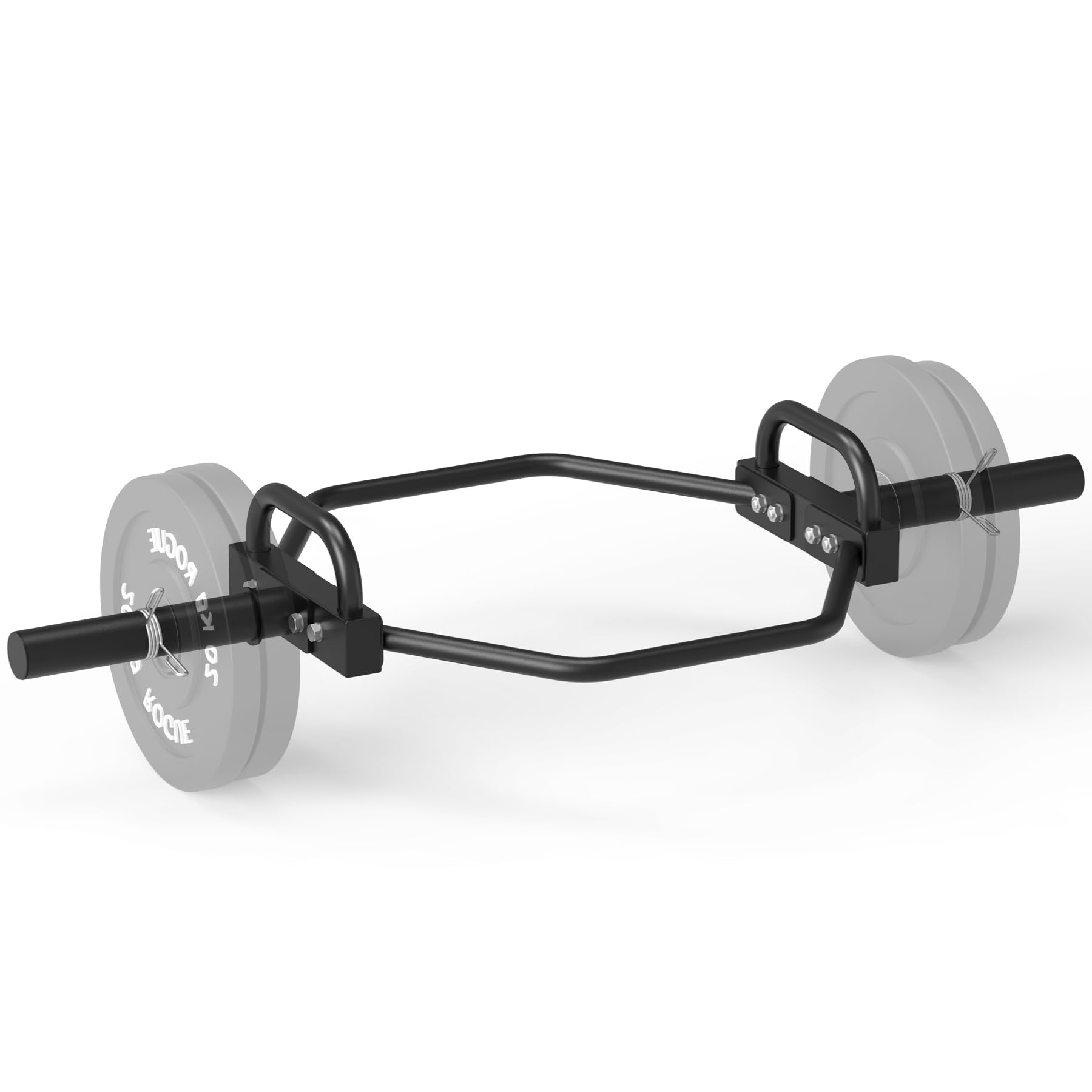
A trap bar puts the load in line with your body instead of out in front of you: you step inside the frame, grab the handles at your sides, and the weight stays centered over your midfoot. That's the whole appeal for anyone with a temperamental lower back or a deadlift that never quite clicked. The catch is that two bars look identical in photos and feel nothing alike once they're loaded.

I've spent the past six months loading, carrying, and lifting with eight trap bars, and the differences show up in the welds, the knurling, and whether the frame still sits flat after a few hundred reps. There's no standard handle height or frame width — high handles turn a deadlift into something closer to a rack pull, and a wide frame can crowd your stance or refuse to sit in a jack. The picks below account for that, plus the garage-gym practicalities: footprint, finish, and whether you'll be assembling it on the floor.

Best Open-Frame

Our Score 9.6/10
Bells of Steel Open Hex Trap Bar

Bells of Steel

Bells of Steel Open Hex Trap Bar

  • Frame Open hex with loading feet
  • Sleeves Rotating
  • Bar Weight 47 lb
  • Weight Capacity 700 lb
Check Price on Amazon

Open end and built-in loading feet make lunges and carries easier.

The frame is open at one end, which lets you walk into the bar from the side instead of lowering yourself into a hex — and, more usefully, walk out of it at the end of a carry without the frame catching your legs. That single design change is why this is the bar we reach for when a session includes lunges or split squats.

Two small feet under the sleeves turned out to be the detail we used most. Tip the bar onto them and plates slide on at an angle, no jack, no heaving a loaded bar off the floor to add a pair. The sleeves revolve as well, so a carry that ends in a turn does not wind up your wrists.

It is the priciest bar here and also the one with the fewest compromises in the frame: a 700-pound rating, 47 pounds of steel, and no assembly out of the box. Two things come with the open design. Set it down empty and it tips toward the open end. And the sleeves run out of plate room before the rating does — three 45s a side is comfortable, and beyond that it gets tight.

Bottom Line

Worth the premium if lunges, split squats, and loaded carries are part of your week; the open end and loading feet earn it.

Check Latest Price

Best Overall

Our Score 9.4/10
Titan Fitness Olympic Hex Trap Bar

Titan Fitness

Titan Fitness Olympic Hex Trap Bar

  • Handles Two knurled heights
  • Bar Weight 44 lb
  • Overall Size 56"L x 22.75"W
  • Weight Capacity 500 lb
Check Price on Amazon

A 500-pound bar with two handle heights at a fair midrange price.

Two of the bars in this guide cost noticeably more than the Titan, and for a straight-up deadlift neither one pulls better. What the extra money buys on those bars is features. What the Titan gives you is a welded chrome frame, two sets of 25 mm knurled handles, and a 500-pound rating.

That is why it is the default here. A 500-pound rating covers what a home gym actually loads, the 44-pound bar feels planted when you set it down between reps, and the two handle positions — flip the bar and you get raised or flush — cover both a shorter pull and a full-range one. At 56 inches long and 22.75 wide, it also fits a garage floor without rearranging anything.

The chrome is the part to keep an eye on. Sleeves are where moisture shows up first if the bar lives somewhere that swings between humid and cold, and a wipe-down after a session does more for it than any coating claim. Stand it on end against a wall rather than flat on a damp floor.

Run the arithmetic and the capacity makes more sense than it looks: 500 pounds of plates on a 44-pound bar is a 544-pound pull, which is past what most of us will ever trap-bar deadlift. If you are already beyond that, the CAP's 750-pound rating is the reason to keep reading.

Bottom Line

The bar we point most home lifters to: 500 pounds of capacity, two handle heights, and a 44-pound frame that does not flex under load.

Check Latest Price

Best for Smaller Lifters

Our Score 9.4/10
Sunny Health & Fitness Olympic Hex Trap Bar

Sunny

Sunny Health & Fitness Olympic Hex Trap Bar

  • Handles 360-degree swivel
  • Bar Weight 22 lb
  • Sleeve Length 11.5 in
  • Weight Capacity 400 lb
Check Price on Amazon

Narrow handle spacing and swivel grips suit smaller frames under 400 pounds.

Price is why this bar made the list, but it is not why it stayed. The Sunny gets the parts that matter right: 2-inch sleeves, a knurled neutral grip, a frame that holds the load in line with your mid-line, and a pair of weight clips in the box.

The handles swivel through 360 degrees, which sounds like a gimmick until you do a set of carries and notice your wrists are not fighting the bar. At 22 pounds it is light enough to move around a small gym and light enough to hand to a teenager. The 11.5-inch sleeves give you appreciably more plate room than the 9-inch CAP, so the bar grows with you within its rating.

The handle spacing runs narrow, which suits smaller lifters and feels cramped for broad shoulders — worth comparing against your own stance before ordering. Our practical fix is the clips: the included pair feels like an afterthought, so use your own collars. As a first bar for a smaller lifter, it is hard to argue with — the swivel handles and light frame make it the least intimidating bar in this guide.

Bottom Line

The budget bar with the best manners: swivel handles and long sleeves for lifters working under 400 pounds.

Check Latest Price

Best for Heavy Loads

Our Score 9.4/10
CAP Olympic Hex Bar with Combo Grips

CAP

CAP Olympic Hex Bar with Combo Grips

  • Grip Raised and flush combo
  • Bar Weight 52 lb
  • Sleeve Length 9 in
  • Weight Capacity 750 lb
Check Price on Amazon

750-pound rating and 52 pounds of steel for lifters still adding plates.

A 750-pound rating on a 52-pound bar — the heaviest bar in this guide, and the second-highest rating in the group. That combination is the whole pitch: when you set this down between reps, it stays exactly where you put it.

The combo grips are the better reason to choose it. Two sets of handles, one raised and one flush, let you change your range without turning the bar over, and the 25 inches between the grips is generous — worth having if you are broad through the shoulders or lift in a wide stance. The 25 mm shaft is solid steel under a black powder coat, and the warranty runs two years.

The finish is the weak point. The powder coat can arrive scuffed and it marks up in storage, so a bar you plan to keep looking new is not this one. The 9-inch sleeves will also run out of plate room before the rating does — three or four iron 45s a side is about the practical ceiling, which is fine for a lifter working in that range and a limit for anyone chasing the 750.

Bottom Line

The heavy-load pick: 750 pounds of rating and 52 pounds of steel for lifters who plan to keep adding plates.

Check Latest Price

Best Grip Variety

Our Score 9.4/10
XMark Tri-Grip Hex Trap Bar

XMark

XMark Tri-Grip Hex Trap Bar

  • Finish Chrome
  • Handles 30 / 38 / 45 mm tri-grip
  • Sleeves 2 in with elevated storage
  • Overall Size 69.25"L x 26.25"W
Check Price on Amazon

Three grip diameters and elevated loading for grip and carry work.

Three handle diameters — 30, 38, and 45 mm — on revolving sleeves, all knurled. That is the detail that separates this bar from every other one here: a fat grip for carries and a thin one for heavy pulls, without owning two bars or swapping anything mid-session.

Where it earns its price is the loading height. The sleeves sit high on elevated plate storage, so you slide plates on at height rather than bending to a bar flat on the floor, and the bolt-on rubber feet protect a concrete slab and keep the bar from skating. It is also the best-looking bar in this group by a distance, with an even chrome finish and clean joints.

Two costs come with the design. At 69.25 inches it is the longest bar here, so it wants dedicated floor space rather than a corner it can be tucked into. And the revolving handles carry noticeable play — you feel the slack picking the bar up empty, though it stops mattering once there is weight on it.

Bottom Line

Three grip diameters and elevated loading make this the bar for anyone who trains grip and carries as hard as deadlifts.

Check Latest Price

Best For Tight storage

Our Score 9.2/10
GYMAX Folding Olympic Trap Bar

GYMAX

GYMAX Folding Olympic Trap Bar

  • Grip Dual heights, knurled
  • Bar Weight 35 lb
  • Overall Size 56"L x 24.5"W
  • Weight Capacity 800 lb
Check Price on Amazon

800 pounds is the highest rating anywhere in this guide, and it sits on the second-lightest bar here. That gap is the thing to understand before you buy: the number describes what the frame is rated for, not what it feels like to lift.

The handles are the interesting part. You can take a high grip or a low one without turning the whole bar over, which makes switching between a short pull and a full-range one quicker than on the flip-the-bar designs.

The rest is sensible. A 56-inch by 24.5-inch frame gives you room to step into, the grips are knurled, the chrome wipes clean, and spring collars come in the box. The folding handles let it tuck into less space than a 56-inch frame suggests, which is the reason to look at it over a fixed bar if your gym shares a room with a car.

For heavy pulls we take the Titan or the CAP every time, and the light bar is why. For a garage gym where the bar does high-rep deadlifts, carries, shrugs, and then gets folded against the wall, this one earns its place.

Bottom Line

A big rating on a light bar — fine for high-rep work and tight storage, less so for maximal pulls.

Check Latest Price

Best For Small spaces

Our Score 9.0/10
PROIRON Olympic Trap Bar

PROIRON

PROIRON Olympic Trap Bar

  • Bar Weight 22.5 lb
  • Sleeve Length 30 cm
  • Weight Capacity 551.2 lb
  • Plate Compatibility 2 in Olympic
Check Price on Amazon

It arrives as a kit: two frame halves, bolts, and the hardware to join them. You will be lifting the same day, but this is a bar you assemble rather than one that shows up welded.

The steel is 5 mm thick, the sleeves run 30 cm, and the whole bar weighs about 22 pounds. Four gap rings let you space plates away from the handles, a small thing that keeps a wide bumper plate from crowding your grip, and the matte finish resists the damp better than a painted bar would.

Rated to 250 kg — about 550 pounds — it is more bar than the price suggests, and for a lifter working in a corner of a room with a couple of plates it does what the expensive bars do. No collars in the box, so plan on your own. Check the bolts after the first few heavy sessions and it stays tight.

Bottom Line

A bolt-together bar that gets a small home gym into trap-bar training without taking over the floor.

Check Latest Price

Best For First trap bar

Our Score 8.8/10
PONE FIRST Hex Trap Bar

PONE FIRST

PONE FIRST Hex Trap Bar

  • Bar Weight 14.5 lb
  • Overall Size 48.4"L x 23"W
  • Sleeve Length 10 in
  • Weight Capacity 400 lb
Check Price on Amazon

At 14.5 pounds it is the lightest bar in this guide by a wide margin, and the frame is built around that: 48.6 inches long, 23 inches wide, easy to carry in one hand and easy to stand in a corner. If your training space doubles as a parking spot, that matters more than a rating.

The raised handles sit 3.4 inches up with 7 inches of effective width, which shortens the pull and keeps your hands clear of your thighs while you are still finding the position. Ten-inch sleeves take Olympic plates, and the black coating wipes clean after a session.

It is also the bar most likely to spot if it lives somewhere damp, so a shed in a humid climate is not the home for it. And 400 pounds is the boundary: loads past that are outside what the bar is rated for, which is a real ceiling once your pulls get serious.

For a beginner, a teenager, or a lifter who wants a second bar for carries without giving up floor space, none of that is a problem. It is the least expensive way to find out whether trap-bar training suits you.

Bottom Line

The lightest, shortest bar here, and the easiest way to find out whether trap-bar training suits you.

Check Latest Price

How We Tested the Best Trap Bars

We started with a shortlist of roughly 30 trap bars pulled from manufacturer specs and owner reviews, then narrowed to eight based on frame gauge, handle height and diameter, sleeve length, footprint, finish, listed weight, and whether the bar shipped assembled. Those eight lived with us for six months — in a garage gym for twice-weekly pulls and carries, and on a commercial floor where they got handled by people who didn't know they were being tested.

During the garage sessions we loaded each bar with both bumper plates and older iron plates and noted which ones slid on easily and which needed a shove. We listened for rattling at lockout, checked whether the frame stayed flat and square after a few hundred reps, and carried them loaded up and down the driveway to see how the handles sat in the hand — bare, chalked, and with straps. Handle height got the same scrutiny: we marked where the high and low handles actually put a lifter's starting position, whether the step-in opening was wide enough for a real stance, and whether the frame cleared the arms of a deadlift jack.

Rust got its own test. Each bar was wiped with a damp rag and left in an unheated garage through humid weeks, then checked at the welds and sleeve seams for flash rust. We timed assembly solo with only the included tools, weighed every bar against the number on the spec sheet, measured how much floor it ate in storage, and watched the finish for chips after setting the frame down on concrete. Value came down to whether the bar felt like what it weighed — and looked like it would outlast the plates.

How to Choose

Sleeves and plate fit come first

Every bar here is built for 2-inch Olympic plates, but that phrase in a listing is not a guarantee. Sleeve diameter varies enough that a bar can swallow plates too loosely, and a loose stack rocks and rattles on every rep. Measure a plate's hole — Olympic plates are 2 inches, standard plates are 1 inch — then match it to the sleeve rather than trusting the title.

Sleeve length decides how long the bar grows with you. The 9-inch sleeves on the CAP combo grip run out of room sooner than the 11.5-inch sleeves on the Sunny, and that matters the moment you pass three plates a side.

Match the rating to the weight you load

Capacity starts at 400 pounds and runs to 800 in this group, and the rating covers plates only — the bar's own weight comes on top. A 14.5-pound bar with 400 pounds of plates is a 414-pound lift; a 52-pound bar with the same plates is 452.

Most home lifters will not outgrow 500 pounds of rating. If you are already past that, buy headroom: the CAP's 750 pounds and the Bells of Steel's 700 exist for exactly that lifter.

Handle height, grip, and knurling

Raised handles shorten the pull, which helps if the bottom of a conventional deadlift is where you feel it; flush handles give full range. Bars with two sets of handles let you choose per exercise, and on some you flip the whole bar to switch. Revolving handles, as on the Sunny and the XMark, let your wrists turn naturally during carries.

Knurling is the trade nobody warns you about. Sharp diamond knurling grips through sweat and through skin, so budget for chalk or gloves before your first heavy session.

Closed hex or open frame

A closed hex frame centers you over the load and covers deadlifts, shrugs, jumps, and rows. An open frame leaves one end free so you can step in from the side, walk out of a carry, or set up a split squat without the frame in the way.

Open bars cost more and they tend to tip when set down empty. If your training never leaves the hex, a closed frame is all you need.

Size, weight, and where it lives

Trap bars run from roughly 48 to 69 inches long, and that is floor space you give up permanently unless the bar stores upright or folds. Weight matters too: a 14.5-pound bar is easy to move and easy to warm up with, while a 44- or 52-pound bar feels planted at the top of a pull and adds real load before you touch a plate.

Check handle spacing against your own stance as well. Narrow-spaced bars suit smaller lifters and feel cramped for broad shoulders.

Frequently Asked Questions

Final Verdict

Start with the Titan Fitness Olympic Hex Trap Bar. It carries the loads most home gyms actually put on a trap bar, gives you two handle heights without buying a second bar, and feels more planted than its 44 pounds suggests.

If your training has moved past straight pulls into lunges, split squats, and loaded carries, the Bells of Steel open frame is the upgrade that changes what you can do rather than how much you can load.