Strength & Weights

Best Smith Machines of 2026

A Smith machine is a bargain with gravity: the bar stays on a fixed path, so you can push closer to failure without a spotter—but that same path has to fit your body, your ceiling, and your room. The machines that work feel solid when you rack a heavy squat and smooth when you press overhead; the ones that don't remind you every session with a wobble, a sticky guide rod, or a manual that assumes two people and a forklift. I’ve spent the past nine months with six Smith machines in my garage gym and a couple of borrowed basements, and the differences come down to build quality, assembly, and whether the thing actually gets used.

What I didn’t expect was how much value comes down to what’s in the box: safeties, attachments, and a clear manual matter more than a fancy finish. A good Smith machine should let you squat, press, row, and rack without feeling like you’re negotiating with it, and it should still feel tight after months of use—the picks below are the ones that did.

Best Overall

Our Score 9.8/10
pooboo P43

pooboo

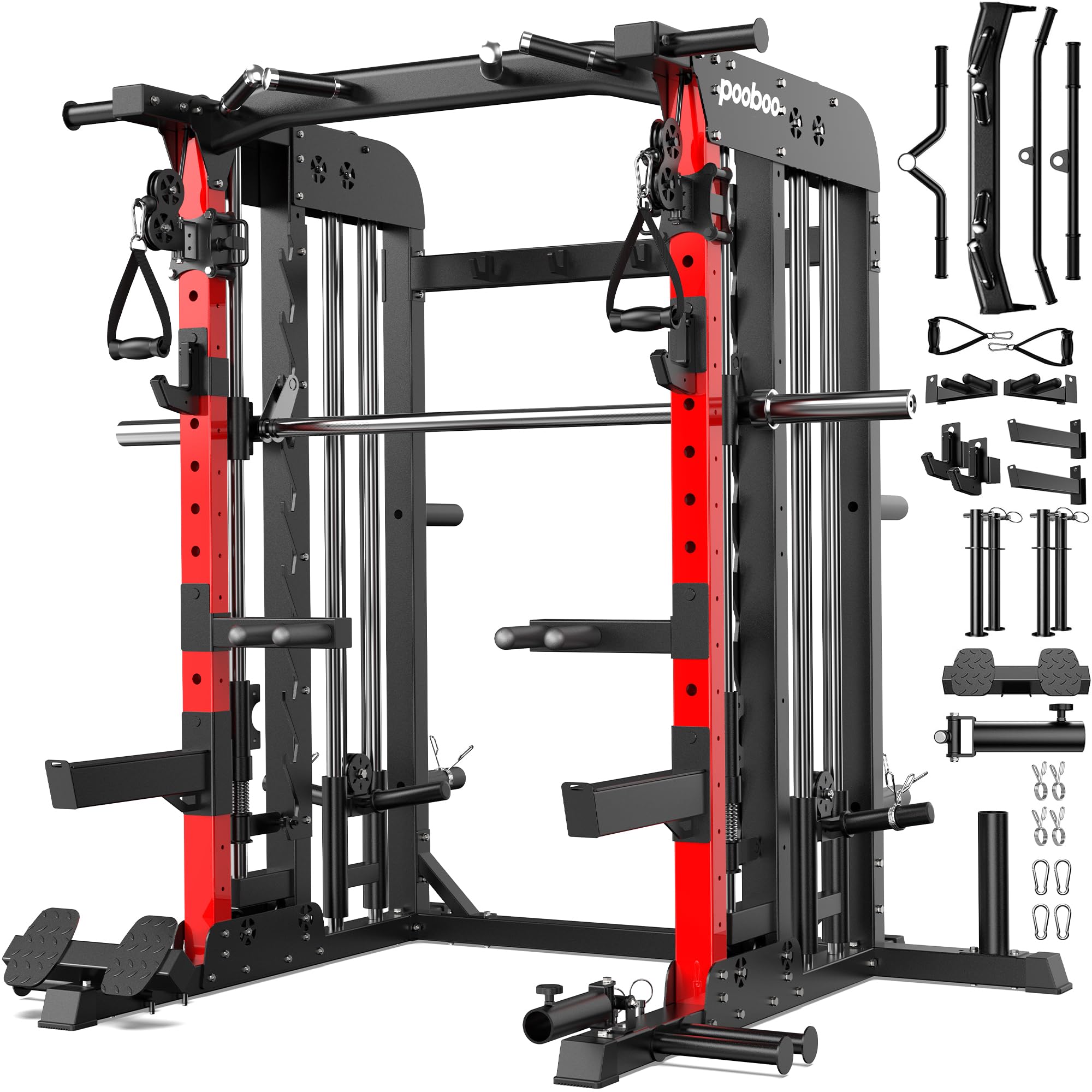
pooboo P43

  • Footprint 62.9"D x 43.3"W x 82.6"H
  • Item Weight 417 lb
  • Cable Capacity 1,000 lb
  • Weight Capacity 2,000 lb
Check Price on Amazon

The most planted all-around Smith setup, with a strong cable system and plenty of attachments.

The 417-pound frame is the first clue that the pooboo P43 is built to stay put. Its 2,000-pound rating is more than most home lifters will ever approach, but the practical benefit is how little the cage shifts when you rack a heavy squat or press. The 62.9-inch depth and 43.3-inch width also make it easier to fit into a garage bay than the wider stations here.

What we appreciate most is the balance. The bearing pulleys and PU wire rope give the 1,000-pound cable system a smooth, controlled pull for lat pulldowns and rows, and the 20+ attachments include the J-hooks, spotter arms, dip bars, and cable handles that cover most of a home program. You do not need a second set of basics to start training.

Assembly is the trade-off. The frame arrives in several boxes, and the 82.6-inch height leaves little room for error under a low ceiling. The instructions are adequate, but this is a two-person job if you want to avoid wrestling the uprights into place. Route the cables before you tighten everything down; that is the step that saves a rebuild later.

The P43 is the default because it does not force a choice between a cage and a cable machine. If you mainly want a guided bar and a bench, it is more machine than you need; if you want one station for squats, presses, pulldowns, and rows, it is the one we kept coming back to.

Bottom Line

The pooboo P43 is our default for a home Smith machine: a planted 417-pound frame, a 1,000-pound cable system, and 20+ attachments cover the full workout without a turnkey premium.

Check Latest Price

Best Cable Feel

Our Score 9.0/10
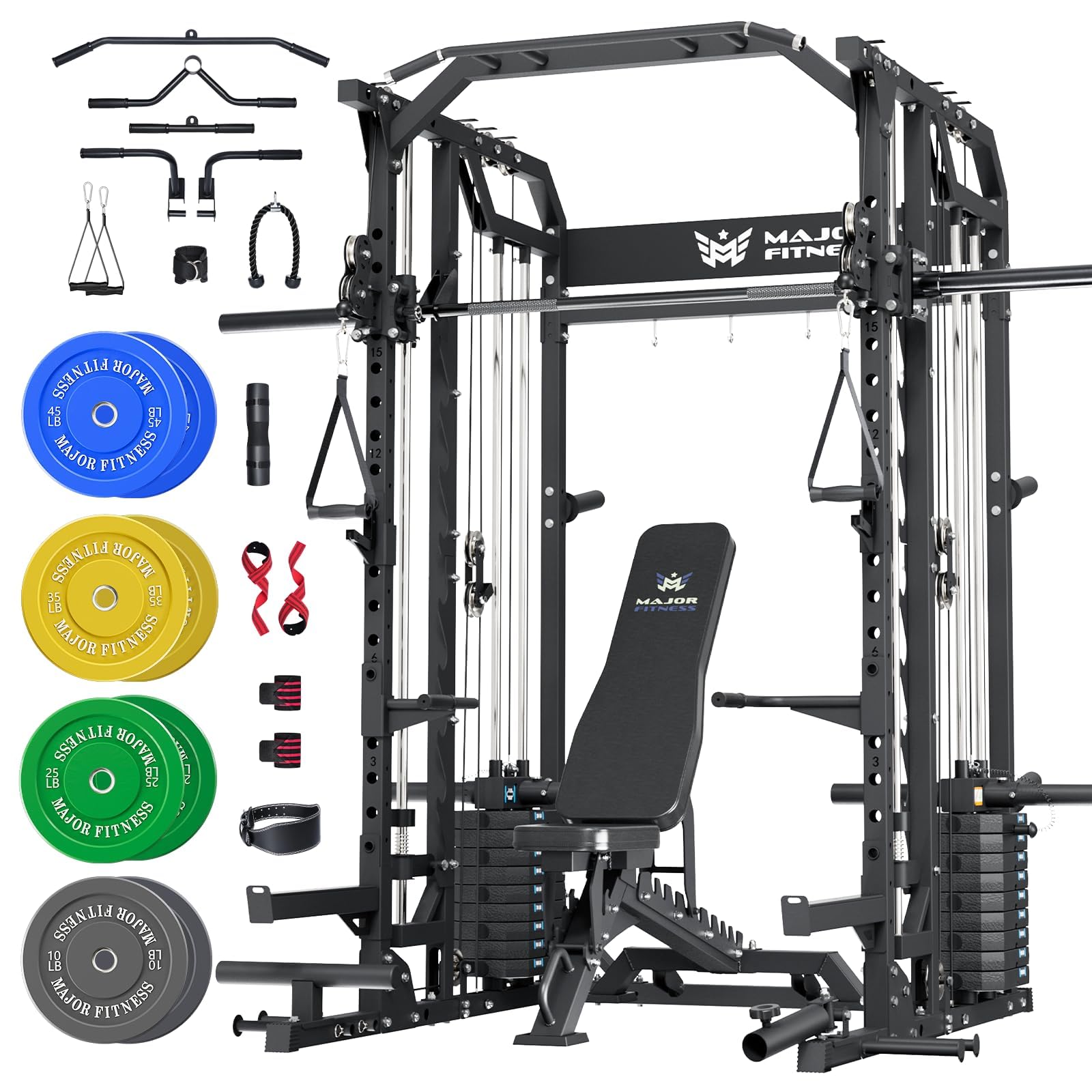
Major Fitness Drone2

Major Fitness

Major Fitness Drone2

  • Uprights 2 x 2 in steel
  • Warranty 1 year
  • Pulley Ratio 1:1
  • Weight Capacity 2,000 lb
Check Price on Amazon

A 1:1 pulley makes cable work feel heavier and more like free weights.

A 1:1 pulley ratio is the detail that sets the Drone2 apart from most of this group. It means the cable load feels closer to the plate load, so a lat pulldown or cable row has a heavier, more deliberate resistance curve than the 2:1 systems on the Mikolo and others. We liked that for strength-focused work; for high-rep drop sets, it takes more weight to get the same feel.

The 2x2-inch steel uprights and 2,000-pound rating put it in the premium bracket, and the aluminum pulley set gives the cable a clean, direct feel. You load your own plates rather than a weight stack, which keeps the station simpler and lets you use the plates you already own. The frame is tall, so check your ceiling before delivery.

The warranty is one-year coverage, not the lifetime frame coverage some rivals offer, though Major Fitness backs the machine with lifetime after-sales support. Assembly is a project, and the instructions are better than average but not the best here. We were impressed by how solid the rack felt once it was together, and we trusted it for slow, heavy cable rows.

If cable feel is the reason you are buying, this is the upgrade. If you want a weight stack, more included attachments, or a lower entry point, the pooboo and Mikolo make more sense.

Bottom Line

We point cable-focused lifters to the Drone2: its 1:1 pulley gives heavier, more direct resistance, and the 2x2 steel frame is built for strength work.

Check Latest Price

Best Dual Weight Stack

Our Score 9.0/10
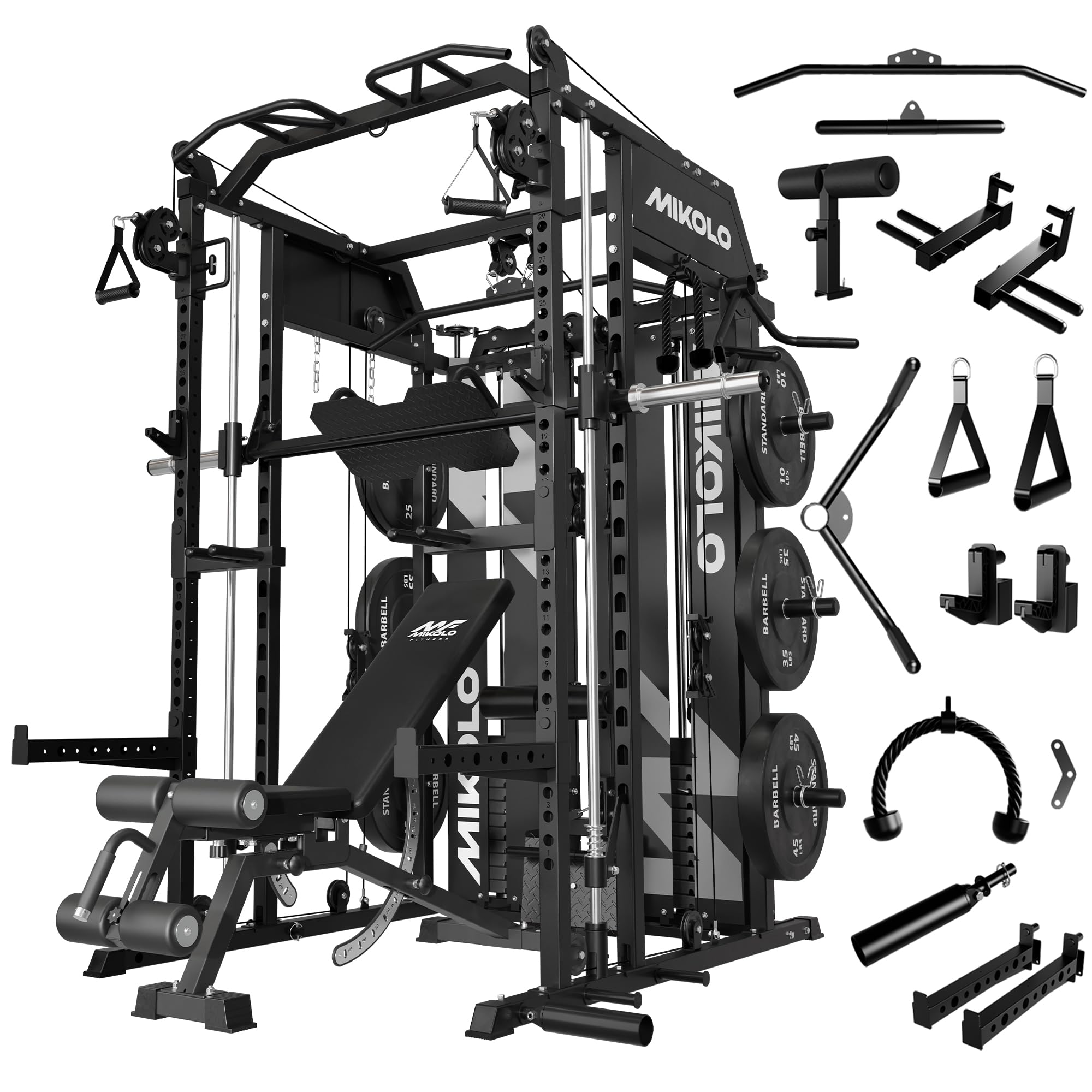
Mikolo SM02

Mikolo

Mikolo SM02

  • Footprint 68"D x 56"W x 87"H
  • Frame Steel 2 x 2 in
  • Pulley Ratio 2:1
  • Weight Stacks Dual 128 lb
Check Price on Amazon

Two independent stacks let two people train at once without swapping plates.

Two independent 128-pound weight stacks are the reason to look at the Mikolo SM02. Each side works on its own, so one person can use the lat pulldown while another works the Smith bar, or you can superset without changing a pin. That is a rare convenience in a home rack, and it is the feature we noticed first in a room where two people often train together.

The 2:1 pulley ratio makes the cable feel lighter than the stated stack weight, which is friendly for high-rep work and rehab-style movements but less direct for heavy cable presses. The 2x2 steel frame and 15-degree elevated lat and row path give the machine a commercial feel, and the package includes a bench and plates. The 68-inch depth and 87-inch height are the numbers to check against your room.

Assembly is the weak spot. The instructions are not as clear as the better-documented racks here, and the cable routing takes patience. Plan for two people and a full day, and check every pulley before you load the stacks. We liked the dual-stack setup enough to forgive some of that, but we wished the manual matched the machine's quality.

If you train alone and mostly want a Smith bar, the second stack is money you do not need to spend. If two people share the gym or you use cables as much as the bar, the Mikolo earns its premium.

Bottom Line

We recommend the Mikolo SM02 for two-person gyms: independent 128-pound stacks let you train side by side, though the assembly takes patience.

Check Latest Price

Best Turnkey Package

Our Score 8.8/10
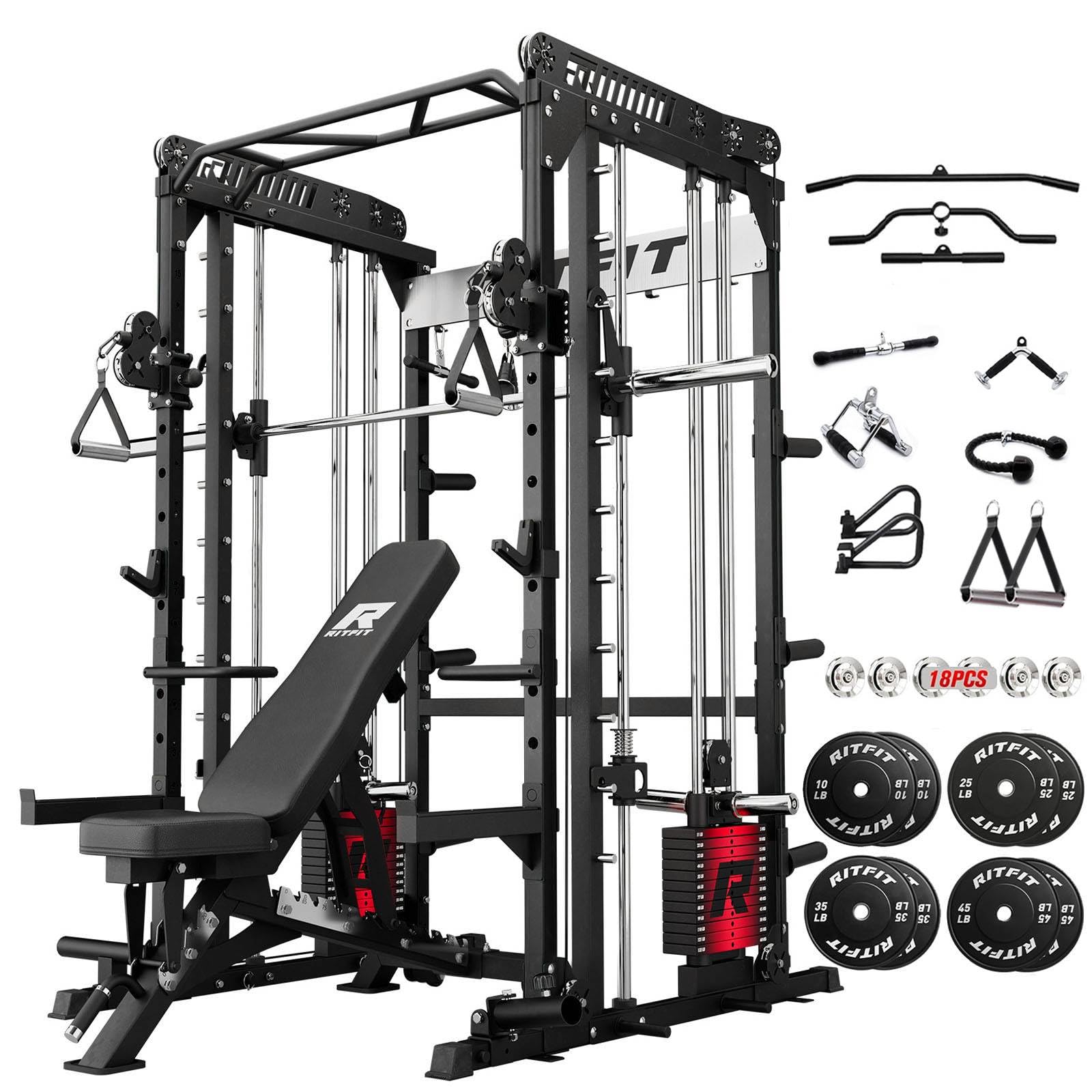
RitFit M1 Pro

RitFit

RitFit M1 Pro

  • Footprint 63"D x 47.8"W x 85.2"H
  • Weight Stacks Dual, pin-select
  • Frame Warranty Lifetime
  • Weight Capacity 1,850 lb
Check Price on Amazon

Comes with stacks, a bench, and plates, so there is less to buy separately.

The M1 Pro is the closest thing here to ordering a finished gym. It arrives with dual weight stacks, a bench, bumper plates, and a full attachment set, so you are not piecing the station together one order at a time. That completeness is the reason it costs what it does, and it is also why we point a busy household to it before a bare rack.

The 1,850-pound frame rating and 2x2 steel uprights are backed by a lifetime warranty on the frame and welds, the strongest structural coverage in this group. The dual stacks use quick pins, and the 63 x 47.8-inch footprint is compact for a machine with this much built in. The 830-pound assembled weight is the trade-off: once it is in place, it stays in place.

The Smith bar is the part to watch. The hook engagement can feel less positive than the pooboo's, and it asks for a deliberate rack, especially when you are tired. We liked the package, but we want the bar to catch cleanly every time, and this one needs a practice session before heavy loading.

If you want one purchase that covers the bar, cables, bench, and plates, this is the most complete answer in the group. If you already own plates and a bench, the pooboo or Major gets you the same core training for less.

Bottom Line

We see the RitFit M1 Pro as the turnkey premium pick: stacks, bench, and plates arrive together, backed by a lifetime frame warranty.

Check Latest Price

Best Budget

Our Score 8.8/10
SunHome SH-999

SunHome

SunHome SH-999

  • Footprint 72"D x 60"W x 90"H
  • Frame Steel 2 mm
  • Item Weight 440 lb
  • Max Weight Recommendation 800 lb
Check Price on Amazon

A full-featured Smith station for the least money, with a huge exercise range.

The SunHome is the budget machine that makes the biggest first impression: a 3-in-1 station with a Smith bar, cable crossover, butterfly chest station, and storage for plates and bars. At 440 pounds, the frame has enough mass to feel planted once it is assembled, and the 2-mm steel is a step up from the thin tubing on some cheap racks.

The bar is where our enthusiasm cools. The Smith bar can wobble slightly in the uprights, and the hook takes a deliberate rerack, especially when you are tired. We kept the load conservative until we were sure of the catch, and we suggest the same. That is the difference between a budget machine you can live with and one you regret.

The listed 800-pound max is the number to plan around, not the 2,000-pound headline, so strong lifters should look at the pooboo or Major. The instructions are also inconsistent: some steps are clear, others leave you sorting hardware by eye. For a budget buyer who wants variety and can live with a fussy bar, it is still a lot of machine.

Bottom Line

We keep the SunHome on the list for budget buyers who want variety, but the fussy bar catch and 800-pound listed max are real limits.

Check Latest Price

Best For Smaller home gyms

Our Score 8.0/10
Goimu S1-V4

Goimu

Goimu S1-V4

  • Footprint 59.84"D x 46.85"W x 85.75"H
  • Item Weight 250 lb
  • Weight Capacity 2,000 lb
  • Included Accessories 25+
Check Price on Amazon

At 250 pounds, the Goimu S1 is one of the lighter frames here, and that changes where it makes sense. It is easier to move into a basement or spare room than the 400-plus-pound cages, but it also needs a level floor and a careful check of the assembled height before you commit. The 2,000-pound rating and 25+ accessories are ambitious for the weight, so we judge it as an entry machine rather than a commercial substitute.

The linear-bearing Smith bar and high-low cable system give you the core exercises, and the package includes a long list of attachments. We liked the red finish and the smaller footprint, but assembly is the caution flag: the instructions can be vague, and the pulley system needs checking before you load it heavy.

If you want a low-cost way to add guided squats and cable work, the Goimu gets you there. If you are a heavy lifter or you train alone with near-max loads, spend more on a planted frame with a more predictable bar catch. The lighter frame is not a defect; it is the reason this one fits spaces the big cages do not.

Bottom Line

We like the Goimu S1 for lighter home spaces, where its 250-pound frame and 25+ attachments make guided training affordable.

Check Latest Price

How We Tested Six Smith Machines Over Nine Months

We started by reading spec sheets, owner manuals, and long-term reviews, then narrowed a longer list to six machines that fit typical garage and basement ceilings and didn't require a commercial-gym budget. Each one was assembled by me or a two-person team using only the included instructions, and we timed the build, noted where the manual skipped a step, and marked the points where one person clearly needed a second set of hands.

For nine months, the machines lived in a garage gym and two basements, and we used them four or five days a week for squats, bench presses, rows, overhead presses, and calf raises. We racked the bar hard from the top and watched for walk, flex, or a guide rod that caught mid-rep; we loaded and unloaded plates, moved the safeties through every notch, and checked whether the catch hooks actually landed at bench and squat heights.

We also looked at what came in the box—safeties, attachments, floor anchors, and storage—because a lower sticker price often hides the cost of missing parts. Quality showed up in welds, powder coat, pad stitching, and whether the bar still slid smoothly after months of use; value was whether the machine did squats, presses, rows, and accessory work without a second rack. The six that held up are the ones below, and we'll keep using them and update if anything loosens.

How to Choose

The Bar and the Catch Matter More Than the Badge

The Smith bar is only as good as the hook that catches it. A smooth glide matters, but a predictable lock and safety stops matter more, especially when you train alone. Run the empty bar through the full range before you load it, set the catches just below the bottom of your squat or bench, and practice racking at several heights. We trust the pooboo's catch for heavy solo work; the SunHome's budget bar needs a more deliberate rerack, which is the kind of detail that changes how you train.

Measure the Footprint, Not Just the Width

Measure the assembled footprint and the ceiling, not just the width. A 43-inch-wide cage still needs room for a bench, plates, and your feet, and a tall rack can crowd an overhead press. The pooboo stands 82.6 inches tall, the Mikolo 87 inches, and the SunHome 90 inches, so a low basement ceiling changes the shortlist quickly. Leave clear space in front of the bar for loading plates and for a spotter to stand, even if you usually lift alone.

Pick a Cable System You Will Actually Use

Plate-loaded cables are flexible and let you use the plates you already own; weight stacks are faster to change and easier to share. Pulley ratio matters too: a 1:1 system like the Major Drone2 feels heavier and more direct, while a 2:1 system like the Mikolo is smoother for high-rep work. If two people train together, dual stacks are worth the premium. If you mostly use the Smith bar and only occasionally touch the cables, a plate-loaded system is the better use of space.

Budget for the Whole Station

Price the whole station, not just the rack. A bare cage may need a bench, plates, collars, a floor mat, and attachments before it is ready to train. The RitFit M1 Pro includes dual stacks, a bench, and bumper plates, which is why it suits a household that wants one order and no shopping list. The pooboo includes a deep attachment set but not plates or a bench, so it is the better value if you already own the basics.

Read the Load Rating Carefully

Read the fine print on load ratings. A headline capacity can be much higher than the maximum recommendation in the spec sheet; the SunHome is the clearest example, with an 800-pound listed maximum under a 2,000-pound title. Use the lower, specific number and remember it covers the bar and plates, not just the weight you add. If you are a heavy lifter, choose a machine with a rating that leaves headroom, like the pooboo or Major.

Frequently Asked Questions

Final Verdict

For most home gyms, the pooboo P43 is the one we point to first. It has the rare combination of a 2,000-pound frame, a 1,000-pound cable system, and 20+ attachments in a footprint that still fits a garage bay, and it costs less than the premium turnkey machines here. If cable feel is your priority, the Major Fitness Drone2's 1:1 pulley is the upgrade. If you want stacks, a bench, and plates in one order, choose the RitFit M1 Pro.