Accessories

Best Safety Alarm for Runners, Tested of 2026

A safety alarm is one of those purchases you hope never earns its keep. The idea is simple: a small thing that clips to your gear and makes a horrible noise when you pull the pin, so you're not counting on your voice or your phone at the exact moment neither is reliable. What separates a good one from a dud isn't the decibel number on the package — it's whether the alarm is actually on your body and reachable without looking. We've spent the past four months running with 14 of them to find out.

The differences show up on the first mile. Some clips let go of a waistband, some pins need two hands and a fingernail, and one alarm that looked loud on paper went muffled against a fleece jacket. The smallest models vanish on a keyring but have switches you can't work in gloves. The picks below are the ones that stayed put, woke up fast, and still sounded like themselves after a season of use.

Best Overall

Our Score 9.2/10
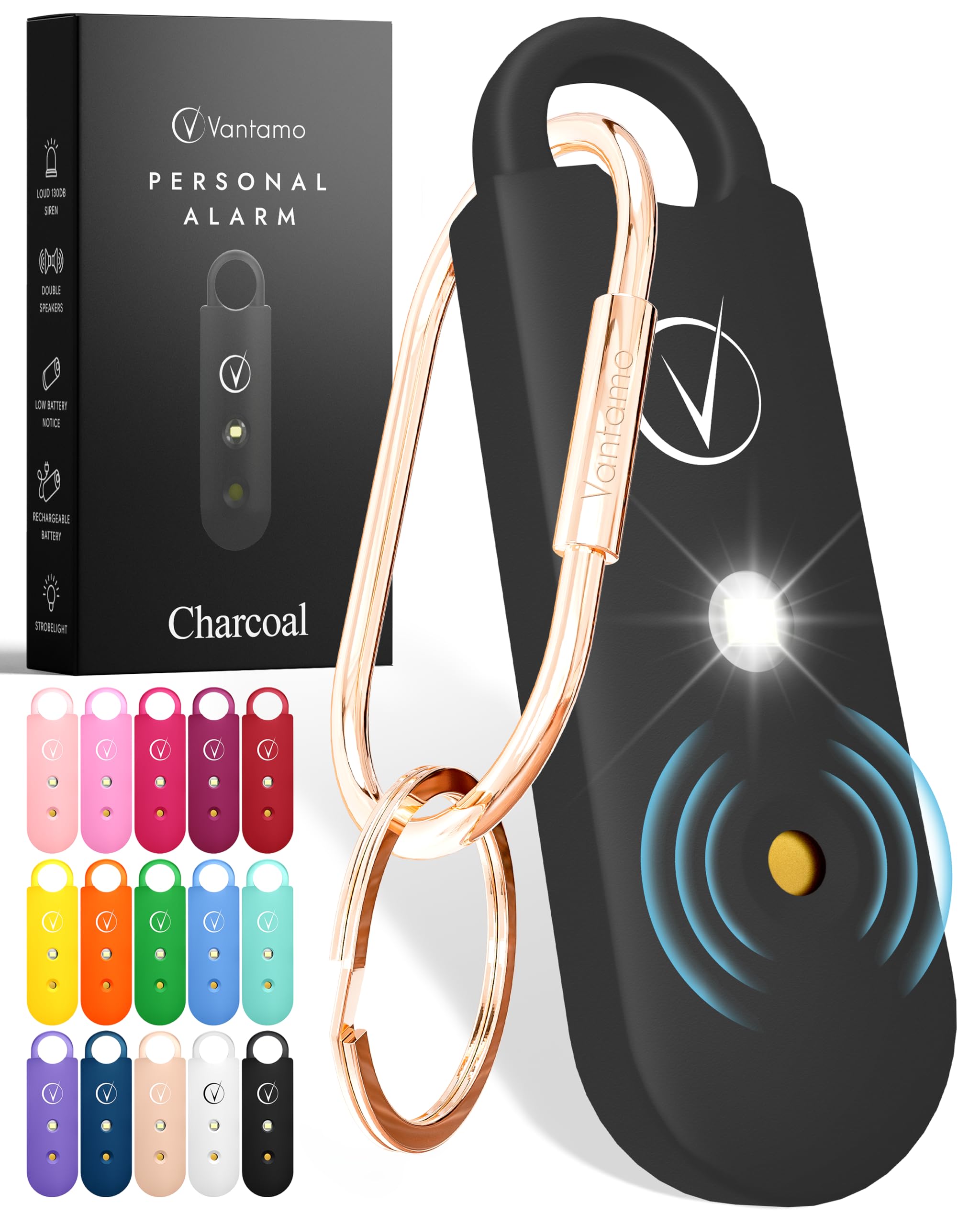
Vantamo Personal Alarm

Vantamo

Vantamo Personal Alarm

  • Size 0.98 x 0.66 x 3.81 in
  • Power USB-C rechargeable
  • Battery Alert Low-battery indicator
  • Alarm Loudness 130 dB
Check Price on Amazon

Rechargeable, pocketable, and it warns you before the battery dies.

Every alarm in this guide is loud; the Vantamo is the one that tells you whether it will still be loud next month. A small indicator warns when the charge is running down, and that single feature did more to settle our top pick than any siren rating. The rest is sensible: a 130 dB siren from two speakers, a strobe, USB-C charging, and no battery drawer to open.

At 0.98 by 0.66 by 3.81 inches it slides into a vest pocket or hangs off a keyring without swinging into your leg. We appreciate the switch-free design — you pull the top pin and the siren goes, push it back and everything stops. Nothing to hold down while you are moving, and nothing to remember in the dark.

The pull is a firm yank, and once it is out the alarm body comes free in your hand while the pin stays behind on your keys. That is the nature of a pull-pin design, and it means the part making the noise is the part you can drop. Loop it onto a wrist or keep it in your palm when you are running somewhere that feels wrong.

About that 130 dB figure: treat it as a starting point rather than a promise. Wind and traffic eat into any siren, so pull it once in the open before you trust it on a route. And because it charges from the same cable as most phones, topping it up before a long run costs you nothing but a few minutes.

Bottom Line

We recommend it as the default because a low-battery indicator and USB-C charging make it the alarm most likely to work the night you need it.

Check Latest Price

Best Value

Our Score 9.2/10
KOSIN Personal Alarm 6-Pack

KOSIN

KOSIN Personal Alarm 6-Pack

  • Size 2.7 x 1.7 x 0.7 in
  • Power 3 LR44 batteries
  • Pack Size 6 alarms
  • Alarm Loudness 140 dB
Check Price on Amazon

Six alarms for the price of one, each with a 140 dB siren.

Six alarms arrive in one box, each about the size of a matchbox at 2.7 by 1.7 by 0.7 inches, and each rated at 140 dB — level with the loudest figure in this group. There is a small LED for finding a keyhole, the shells are ABS, and the cells are ordinary LR44s you can buy anywhere.

Where these earn their place is dispersal. One on the house keys, one in the running vest, one in the car, one in the gym bag: the alarm you actually have is the one clipped to whatever you grabbed on the way out. Judged alone, a single KOSIN is basic — nothing to recharge, nothing to check, no wrist strap. Judged as coverage for a household, nothing else here comes close for the money.

The pin sits on a long string, which is exactly why it is easy to grab and pull, and exactly why it catches on a belt loop or a jacket zip. If you carry it on a keyring, seat the pin before you head out; a snag mid-run is the most likely way this one sounds off on its own. Replaceable LR44s also mean a small errand every few years rather than a charging routine.

Bottom Line

We keep coming back to the six-pack: it is the least expensive way to put a loud alarm in every bag you own, and the coverage is the point.

Check Latest Price

Best Discreet Design

Our Score 9.2/10
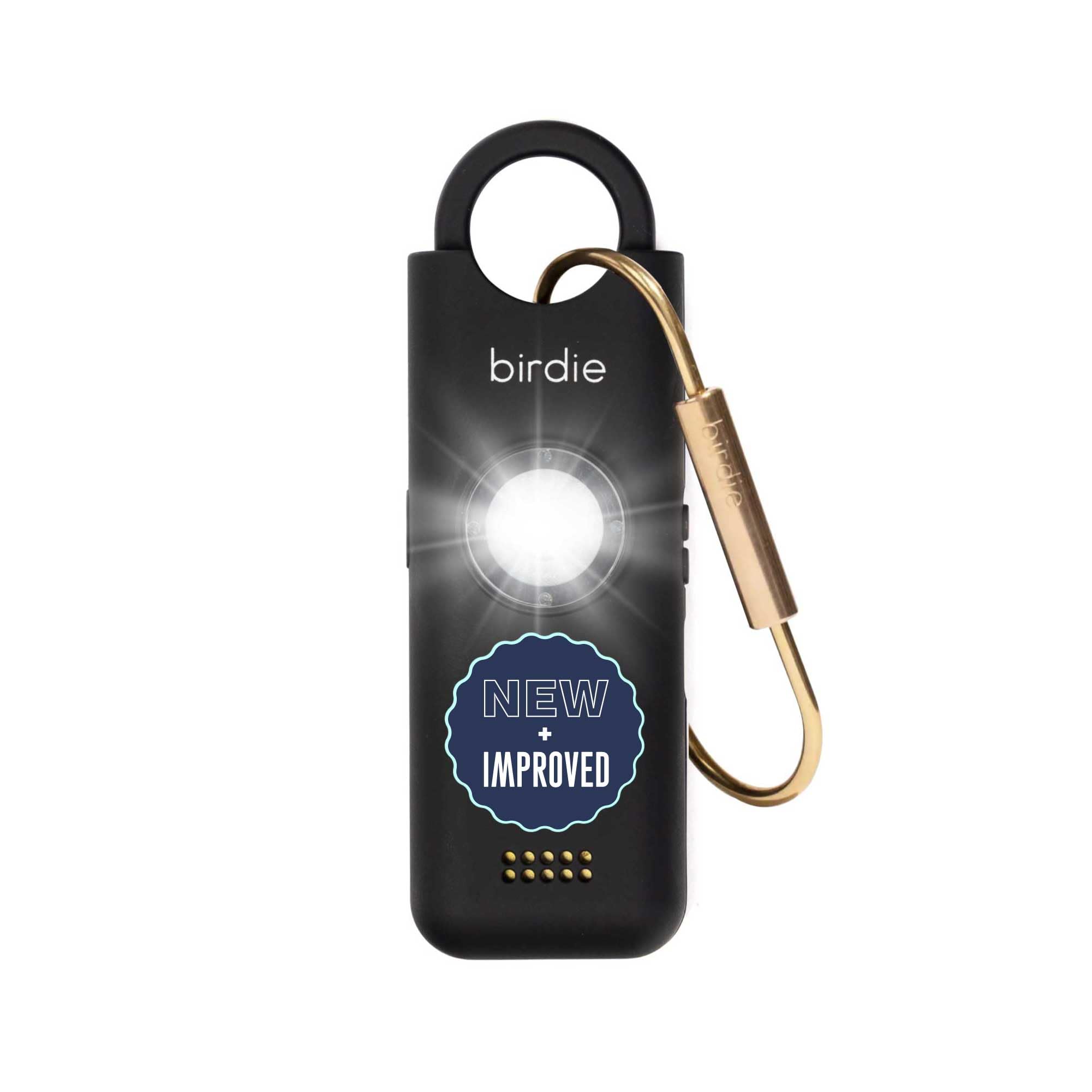
She's Birdie 3.0

She's

She's Birdie 3.0

  • Size 3.7 x 1.25 x 0.6 in
  • Power Rechargeable lithium-ion
  • Activation Pull top ring
  • Alarm Loudness 130 dB
Check Price on Amazon

Looks like a key fob, so you will actually keep it with you.

Hanging next to a car key, the Birdie 3.0 reads as a fob: 3.7 inches of colored plastic with a ring at the top, in more finishes than anything else here. That is the whole idea, and it is why this one so often stays on a keyring instead of migrating to a drawer. It does not announce itself as a safety device, and sometimes that is the point.

Pull the top ring and you get a 130 dB siren plus a flashing strobe; push the ring back and it stops. The ring stays tethered to the body, which means no loose pin to hunt for at the bottom of a bag. It ships charged and tops up over USB rather than asking for coin cells, so putting it on the same cable as your watch every few weeks keeps it ready.

We think it justifies the premium on looks and carry alone: a safety alarm you leave at home is worth less than a plain one that goes in your pocket every time. The siren is the same 130 dB rating as most of this group, and the strobe is the part that registers first — on an unlit stretch of road, being seen matters as much as being heard.

The pull takes a deliberate yank rather than a light touch, which is the right trade for something rattling around with keys, and pushing it home silences it cleanly. It is also the pick here that doubles as a gift without looking like a piece of tactical gear.

Bottom Line

Our pick for anyone who wants an alarm that does not look like one — it is the easiest of these to carry every single day.

Check Latest Price

Best Budget Rechargeable

Our Score 9.2/10
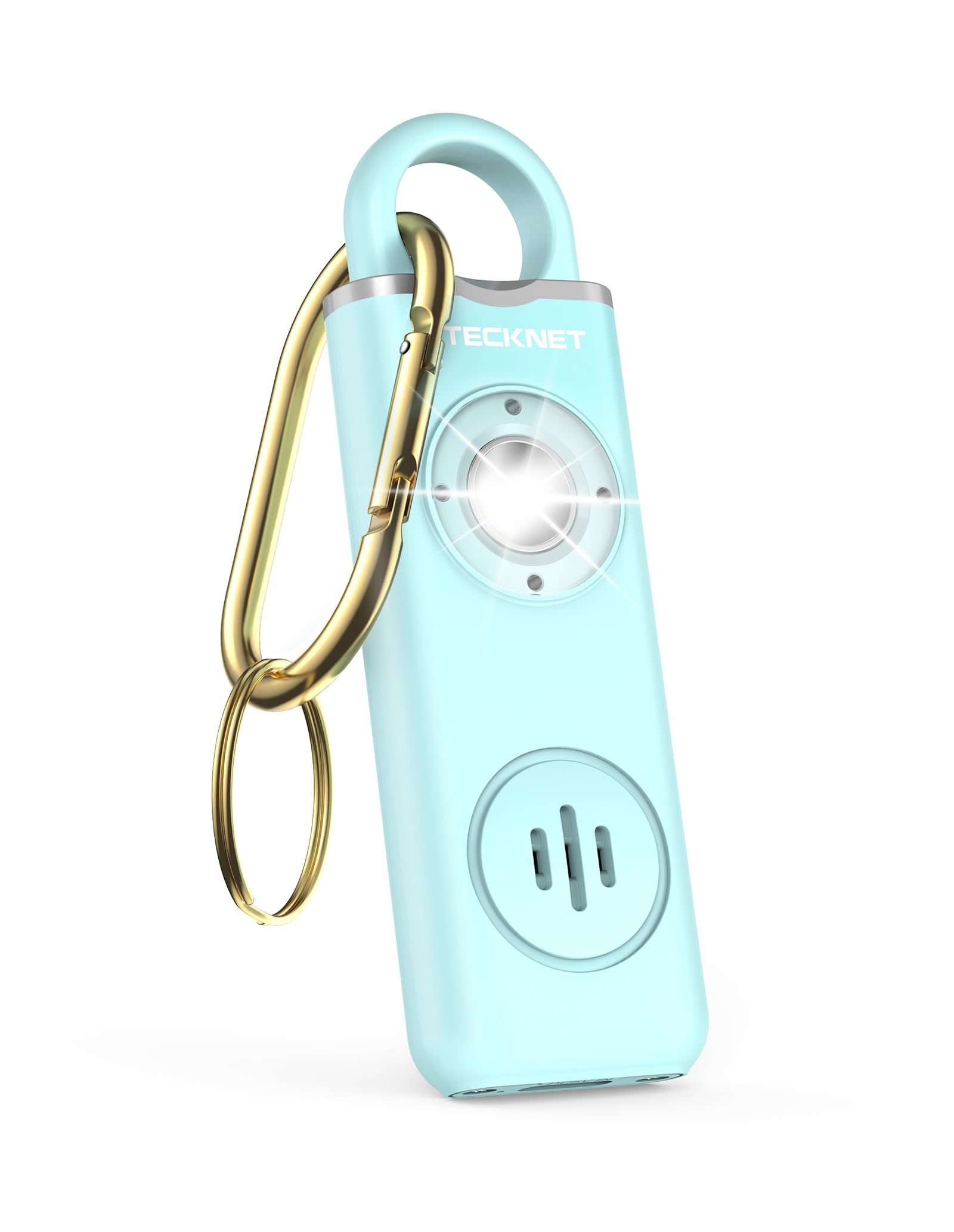
TECKNET Rechargeable Alarm

TECKNET

TECKNET Rechargeable Alarm

  • Power USB-C rechargeable
  • Standby Up to 500 days
  • Activation Pull pin or double-press
  • Alarm Loudness 130 dB
Check Price on Amazon

USB-C charging and a quiet double-press trigger for very little money.

Two ways to set it off is why this one is on the list. Pull the pin for a straight yank-and-scream, or double-press the ring to trigger it when you would rather not make a performance of reaching for a pin — a busy car park, a doorway, a conversation that has turned. Both routes end in the same 130 dB siren and strobe.

At 28 grams it disappears on a keyring, and the rechargeable cell is rated for up to 500 days of standby, so the charging routine is closer to twice a year than twice a week. We rate it the value pick of this group: the same 130 dB siren and strobe as alarms asking several times the price, plus a low-battery indicator, which is the one feature that keeps a cheap alarm honest.

The trade is length. At 3.94 inches it has the longest body here, and in a small shorts pocket it rides at an angle and pokes. On a keyring, a pack strap, or a jacket zip pull it is unnoticeable — and it is worth remembering that this is a 130 dB unit, so it will not out-shout the 140 dB picks.

Bottom Line

We think it is the best value here for a rechargeable alarm, and the double-press trigger is the reason to choose it over a plain pull pin.

Check Latest Price

Best for Wet Weather

Our Score 9.0/10
Thopeb Personal Safety Alarm

Thopeb

Thopeb Personal Safety Alarm

  • Power CR2032 batteries
  • Carry Options Keyring, carabiner, belt clip, wrist strap
  • Alarm Loudness 130 dB
  • Weather Rating IP54
Check Price on Amazon

IP54 sealing and four ways to strap it on before a rainy run.

The hardware is what separates this one from a shelf of identical keyring alarms. There is a 360-degree swivel clasp for keys, a carabiner for a pack strap, a military-style clip that grabs a waistband, and a detachable wrist strap for the days you want the thing in your hand. Four ways to carry it means one of them will suit how you actually run.

It is IP54-rated, the only explicit weather rating in this group, and the CR2032 cells are rated at 18 months of standby. Add a three-year replacement warranty and the case is clear for anyone running through rain, sleet, or a climate that soaks a shirt in ten minutes. Nothing else here is specified for wet weather at all.

For a runner who wants the alarm clipped to a waistband and forgotten until needed, this is the one we point to. The 130 dB siren is standard for the group; the sealing and the mounting are not. What we cannot promise is that every unit leaves the factory perfect — reliability across these is uneven, which is why we would buy it early enough to test it for a week before it becomes part of the routine.

Bottom Line

We rate it the best-sealed pick here, and the belt clip makes it the one to choose if you want the alarm on your waistband rather than your keys.

Check Latest Price

Best For Family multi-packs

Our Score 8.8/10
Fauxomor Safety Alarm 3-Pack

Fauxomor

Fauxomor Safety Alarm 3-Pack

  • Power Replaceable batteries
  • Pack Size 3 alarms
  • Battery Alert Low-battery notice
  • Alarm Loudness 140 dB
Check Price on Amazon

Three alarms in three colors, each rated at 140 dB — the top of the range in this group — and each with a low-battery notice that budget alarms usually skip. We would split the set: pink on the house keys, blue in a partner's bag, black in the glovebox. A dead alarm you are relying on is worse than no alarm at all, and the notice is what stops that.

The rest is straightforward. Replaceable button cells mean no cable and no charging routine, but they also mean a small purchase every few years. The bodies are key-sized and easy to forget on a ring. As a first alarm, a gym-bag spare, or a way to put one in every coat pocket before winter, it does the job without asking much of you.

Bottom Line

We suggest the three-pack when you are covering more than one person: a 140 dB alarm with a low-battery notice at a price that makes sharing easy.

Check Latest Price

Best For Clipping to shorts

Our Score 8.2/10
SABRE Clip-On Personal Alarm

SABRE

SABRE Clip-On Personal Alarm

  • Power 4 LR44 batteries
  • Attachment Built-in clip
  • Light Modes 3
  • Alarm Loudness 120 dB
Check Price on Amazon

A small clipped puck with a button on the face, this is the one alarm here built to sit on a waistband rather than hang from a keyring. The built-in clip grabs a shorts pocket or a pack strap and stays there, so the alarm is already under your hand when you want it. No pin, no string, nothing to reinsert.

Three light modes — steady, slow flash, fast flash — make it a visibility light as much as an alarm, and the housing is weatherproof. At 2.5 inches tall and 2.4 ounces it is the closest thing in this group to something designed for a running belt, and the size keeps it out of the way of arm swing.

The catch is the siren. At 120 dB it carries the lowest rating here, in a group where 130 dB has become the floor, so it is the one pick we would test in the open before relying on it. Even then, the flashing light may be the part that does the most work on a road at dusk.

So we recommend it for a specific runner: someone who wants the alarm fixed to their clothes with no pin to fumble, and who runs lit streets where a bright flasher matters as much as the noise. If raw volume is what you are buying, the 140 dB options above are the better answer.

Bottom Line

We like it for the clip and the flasher rather than the siren — it suits the runner who wants the alarm on their body with nothing to fumble for.

Check Latest Price

Best For Hands-free mounting

Our Score 8.0/10
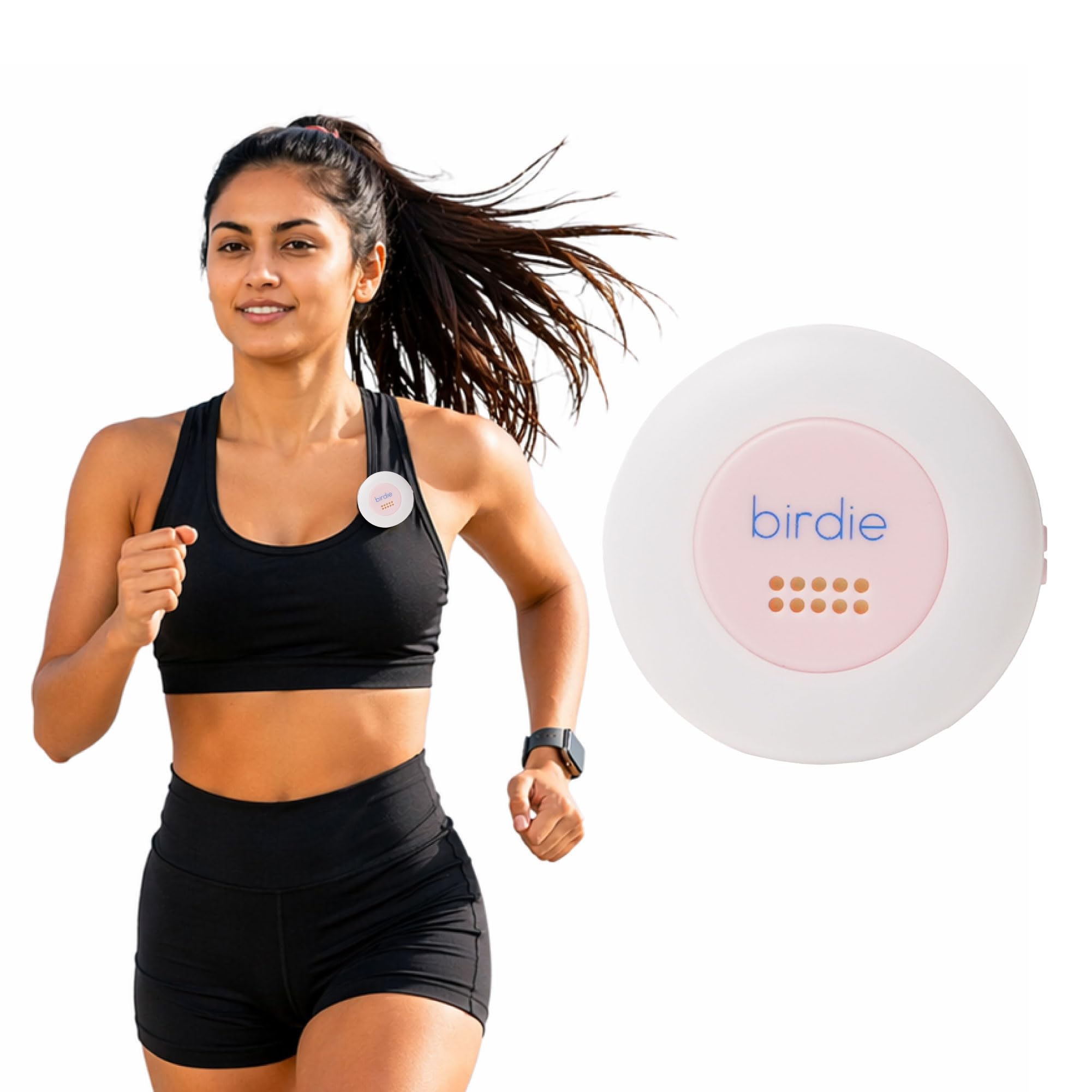
She's Birdie Disc

She's

She's Birdie Disc

  • Power USB-C rechargeable
  • Attachment Clip and silicone strap
  • Light Modes 3
  • Alarm Loudness 130 dB
Check Price on Amazon

Instead of a pin, the Disc has a button you hold for about a second and a half. That is slower than a yank and much harder to trip by accident — a swinging arm, a bag strap, a hand shoved into a pocket. For anyone who has set off a pin alarm pulling keys out of a bag, that trade is the entire argument.

It clips to clothing, or the silicone strap loops around a bike bar, a leash, or a stroller handle, and three light modes — steady white, flashing white, flashing red — make it a visibility light as much as an alarm. USB-C charging, a 130 dB siren, and a body 3 inches across.

The light is the part that earns its keep on a road. Flashing red at hip height is exactly what a driver picks out at dusk, and the housing is water resistant for wet mornings. It will not replace a headlamp for lighting your own way, and it is not meant to.

The mount is the piece to vet. The clip and the strap are what keep the Disc with you, so wear it once in the exact setup you plan to run in before trusting it on a long route — and if the clip feels marginal on a thin waistband, the strap is the more secure answer. That caveat aside, it is the only alarm here that mounts hands-free.

Bottom Line

We reach for the Disc when hands-free mounting matters: it holds the alarm on your body and will not fire every time you brush past something.

Check Latest Price

How We Tested Safety Alarms for Runners

We started with a list of about 50 alarms sold through running shops, outdoor retailers, and general marketplaces, then cut anything without a stated volume rating, anything that required two hands to trigger, and anything with a battery door that needed a tool to open. Fourteen made the cut, and we ran with them for four months.

Loudness got measured the same way for every unit: triggered at arm's length, again from 20 feet away, and once more through a closed car window, with a decibel meter logging each try. Few matched their packaging claims. Direction mattered as much as raw volume — a siren that fired into a hip or a folded jacket lost badly to a slightly quieter one that pointed outward.

Each alarm rode on a waistband, a sports bra strap, a jacket zipper, and a hydration vest through predawn greenway loops, after-dark park runs, and the walk from a train station to a parking garage. We timed how long it took to set off by feel in the dark, tried it with cold hands and gloves, and counted how often a unit fired by accident in a coat pocket or during a finish-line hug.

Battery life we checked the boring way: fresh cells, a dated note, and a monthly trigger to see whether the siren still hit its original volume after weeks in a gym bag. We also dropped each one on pavement, ran with it in rain, and yanked the pin hundreds of times to watch for frayed cords, sticky switches, and clips that had lost their grip.

How to Choose

Decibels Tell You Less Than You Think

Ratings in this group run from 120 dB on the SABRE to 140 dB on the KOSIN and Fauxomor, and it is tempting to buy the biggest number. Two things temper that. Sirens are rated close to the source, so wind, traffic, and a jacket pocket all take a bite out of what a listener actually hears. And a 120 dB alarm you can reach in two seconds beats a 140 dB one buried in a belt pouch.

Set your alarm off outdoors once, roughly the distance away you would expect help to be, and judge with your ears instead of the box. It is also the only way to find out whether the sound is a siren or just a shrill chirp.

How You Will Trigger It

Pull pins are the default and they work, but the pull takes a firm yank, and the moment the pin comes out the noisy part separates from whatever the pin was attached to. On a keyring that leaves the alarm body in your hand and the pin still on your keys — so keep the body in your palm or on a wrist loop once you are somewhere that feels wrong.

Button designs avoid the separation entirely. The SABRE puts a button on the face and the Birdie Disc asks for a deliberate press-and-hold, which is harder to trip with a swinging arm or a strap. Either is easier to work one-handed while you are moving.

Where It Lives on a Run

A bunch of house keys is a poor home for a running alarm: it swings, it is slow to grab, and the body digs into a pocket. Look for a belt clip, a carabiner, or a wrist strap, and check that the clip grips a thin waistband rather than only a pack strap. The Thopeb includes a swivel key clasp, a carabiner, a belt clip, and a wrist strap.

Weather is the other half of attachment. Sweat is the everyday hazard and rain is the occasional one, so an explicit rating helps: the Thopeb is IP54, while the Disc and the SABRE are described as water resistant and weatherproof.

Charging and the Six-Month Question

Rechargeable alarms save you the battery errand; replaceable cells mean no cable but a small purchase every so often. Whichever you choose, the feature that matters most is a low-battery indicator. The Vantamo and the budget TECKNET both have one, and it is the difference between a safety device and a lucky charm.

Then check the attachment. A keyring loop that works loose is how people quietly lose an alarm, and it is worth a glance every few weeks — along with actually setting the thing off once a month, outdoors, so you know it still works.

Frequently Asked Questions

Final Verdict

Start with the Vantamo. It is the alarm we recommend to most runners: rechargeable, small enough to forget you are carrying it, and honest about its battery, which is the failure that actually catches people out. Spend less and the KOSIN six-pack puts a genuinely loud siren in every bag you own; spend once on a gift and the Birdie 3.0 is the one that keeps getting carried.

If pressing beats pulling for you, the SABRE clips to a waistband and flashes at traffic, at the cost of the quietest siren here. And for a bike, a leash, or a stroller, the Birdie Disc mounts hands-free where a keychain alarm cannot go.