Accessories

Best Running Sunglasses of 2026

A good run should not involve a negotiation with your face. Yet most sunglasses I've tried either slide down my nose the second I sweat, fog up at the first hill, or pinch behind my ears after mile three. What you want is simple: a pair that stays put, cuts glare without turning the world into a cave, and feels so light you forget you're wearing it. That's what this list is about—pairs that fix the squint-and-adjust loop so you can focus on your pace.

Over the past six months, I've run in 12 pairs of running sunglasses—on road loops, dusty trails, and one very sunny track workout—and my team and I rated each on fit, sun protection, weight, and how they held up after repeated wipe-downs. A few looked sharp enough for post-run coffee; others were strictly function-first. Some felt overpriced for what they deliver; the best ones earn their keep. Below are the pairs that made the cut.

Best Under a Helmet

Our Score 9.2/10
Tifosi Swank

Tifosi

Tifosi Swank

  • Fit Unisex adult
  • Use Running, cycling, golf
  • Model Swank
Check Price on Amazon

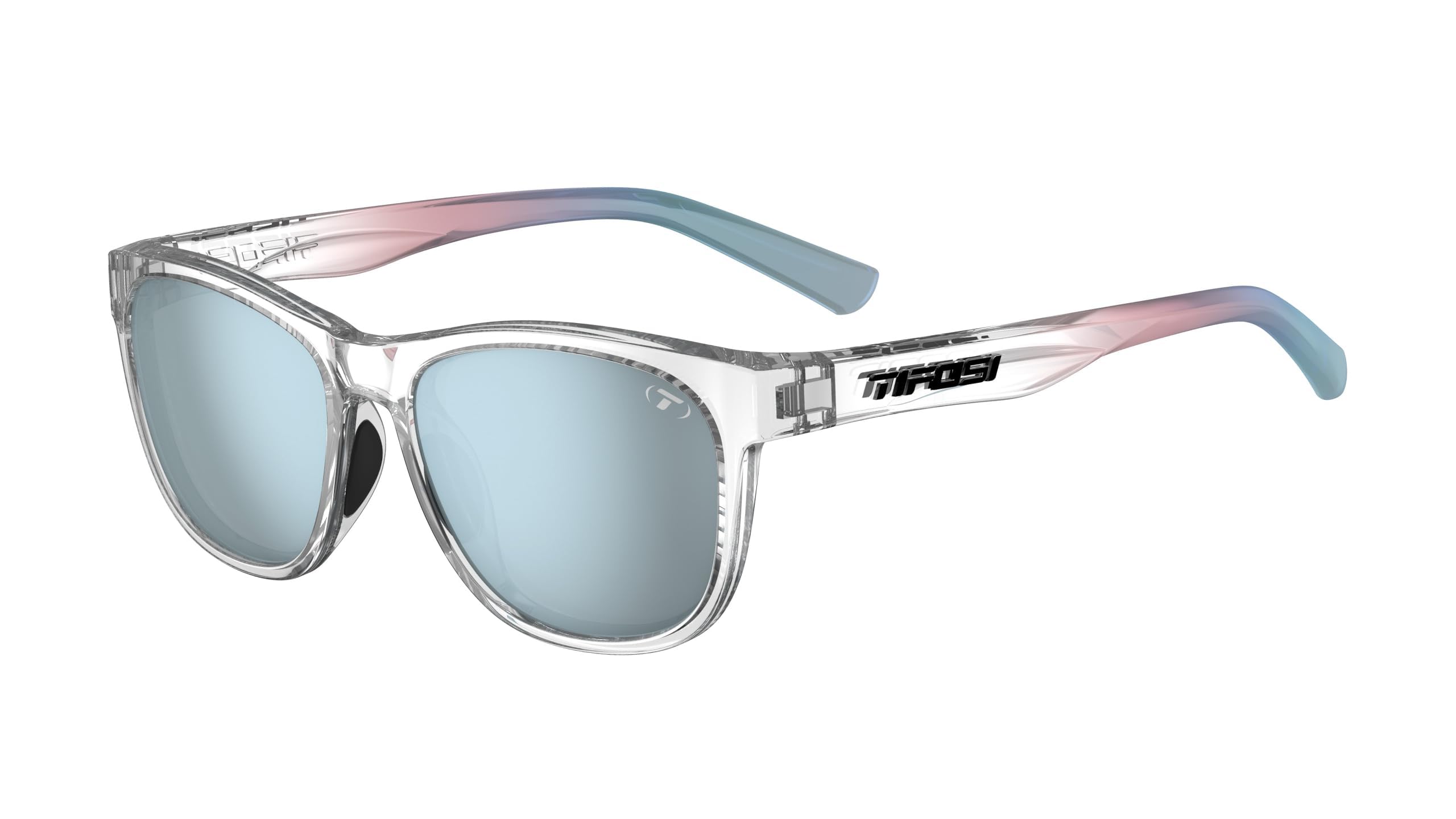
A small, close-fitting frame that slots under helmet straps without fouling them.

Helmets are where most sunglasses stop being sunglasses. The temples jam against a strap, the frame gets pushed down your nose, and by the descent you are wearing them on your forehead. The Swank's answer is size: the frame is cut small and sits close, so it slots under a helmet edge with room to spare and the arms do not foul the strap.

We like it best as the bike-and-run pair. It is light enough to forget on a run, grippy enough to stay on a sweaty nose, and small enough that a cap does not shove it down. Two things to know before you commit: Tifosi sells this one on tint and coverage rather than on polarization, so do not expect the glare-cutting of the goodrs, and there is less lens at the brow than a full wrap gives you.

That smallness is also the boundary. On a narrow or average face the Swank looks like a normal pair of sunglasses; on a wide one it feels undersized, and one of the wraps here will serve you better. Everywhere else the build holds up its end, and the frame and hinges feel like a more expensive pair, which is the part we did not expect.

Bottom Line

Buy the Swank if your runs happen under a helmet: a small, close frame that slots under a strap and stays put, as long as you do not need wide coverage.

Check Latest Price

Best Everyday Style

Our Score 9.2/10
goodr Mach G

goodr

goodr Mach G

  • Fit Unisex
  • Lens Polarized
  • Model Mach G
Check Price on Amazon

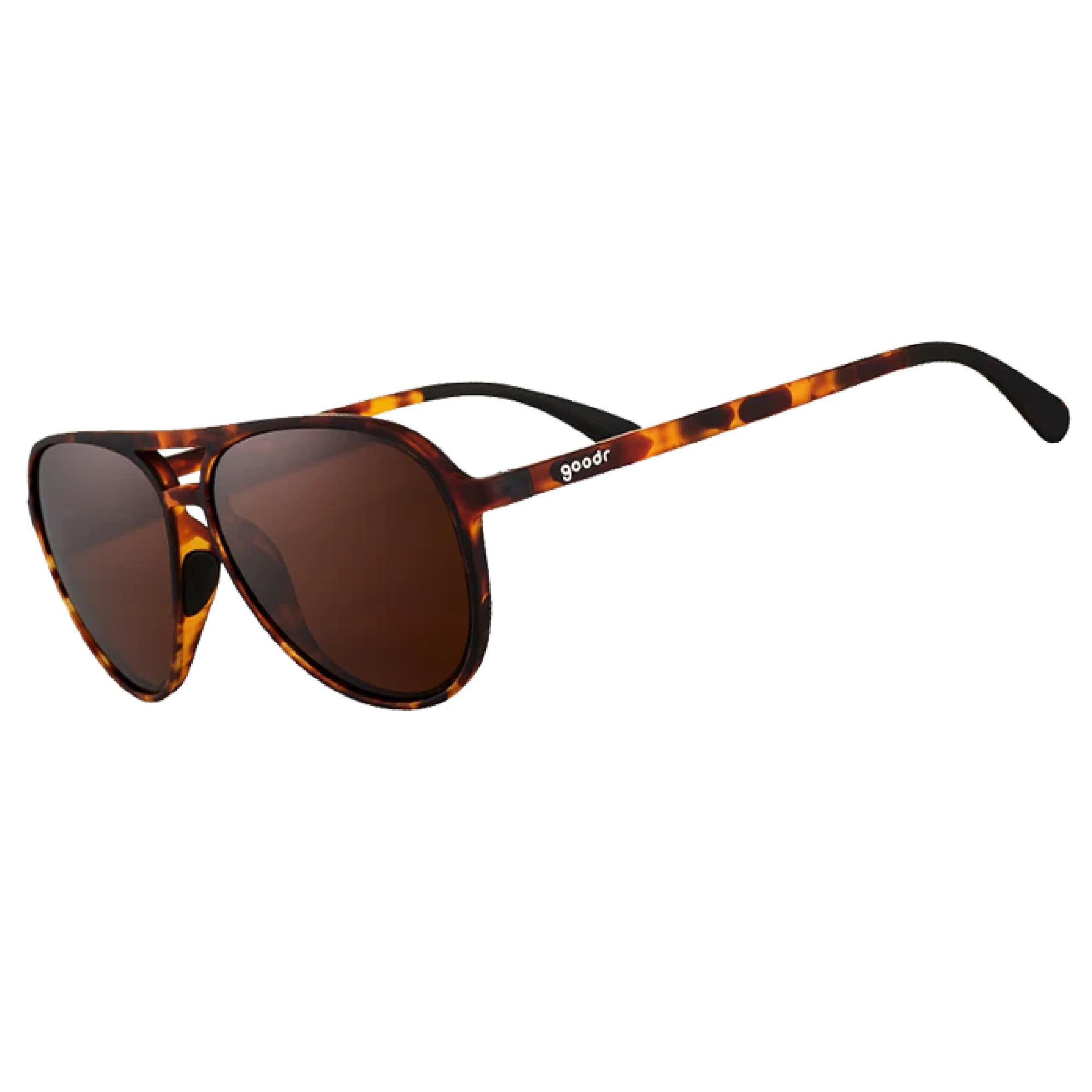
Aviator-leaning and soft-finished, light enough to run in and normal enough to wear after.

Most running sunglasses announce themselves: a shield, a mirror finish, a logo on the temple. The Mach G goes the other way. It is a rounded, aviator-leaning frame in a soft, slightly rubbery finish, and it is the pair we reach for on runs that end at a coffee shop or a train platform.

Comfort is where it wins us over. It is light, the finish keeps the frame from sliding when you sweat, and the shape sits well under a cap. On a long day it stops registering, which is the highest compliment we can pay a pair of sunglasses.

It crosses over better than anything else here, covering driving, hiking, a walk with the dog and then a run. The finish has a practical side too: it does not grab your hair when you push the glasses onto your head. That is a small thing that stops being small halfway through a hot run.

Bottom Line

The Mach G is the pair that looks like sunglasses rather than gear: light, comfortable all day, and grippy enough to run in.

Check Latest Price

Best Overall

Our Score 9.0/10
goodr OG

goodr

goodr OG

  • Fit Unisex adult
  • Lens Polarized
  • Model OG
Check Price on Amazon

Grippy, feather-light and polarized, the pair most runners should buy first.

Grip is the first thing we judge a running pair on, and the OG is the surest of the bunch. The frame holds the bridge and the temples with a soft, slightly textured finish rather than a hard clamp, so it stays where you put it through a sweaty hour without leaving a dent behind your ears. Nothing about the shape is clever. It just works.

Weight is the second thing, and these disappear. We stopped noticing them somewhere in the first mile, with no pressure on the nose and no arms pressing at the temples, and that is the whole point of a running pair. Heavier frames make themselves known at hour two, when you are tired and every small annoyance is louder.

Polarization does the visible work. Glare off wet asphalt, car hoods and open water drops away, and the tint is dark enough for midday without turning shade into a cave you cannot see through. On a road run in full sun, that is the difference between squinting and not thinking about your eyes at all.

What makes it our default is the fit range. The frame is forgiving enough for a lot of head sizes, so it is the pair we hand over when someone wants to try a set on, and the one we are least precious about. That matters more than it sounds, because sunglasses you worry about do not come out of the case.

Bottom Line

For most runners this is the pair to buy: it grips a sweaty face, sits light on the bridge, and its polarized lens kills glare on bright road.

Check Latest Price

Best Budget Multipack

Our Score 9.0/10
Foliful 3-Pack

Foliful

Foliful 3-Pack

  • Lens Polarized
  • Frame Polycarbonate wrap
  • Included Case, cloth and pouch
  • Pairs Per Set 3
Check Price on Amazon

Three polarized wraps and a shared case for spares, travel and lending.

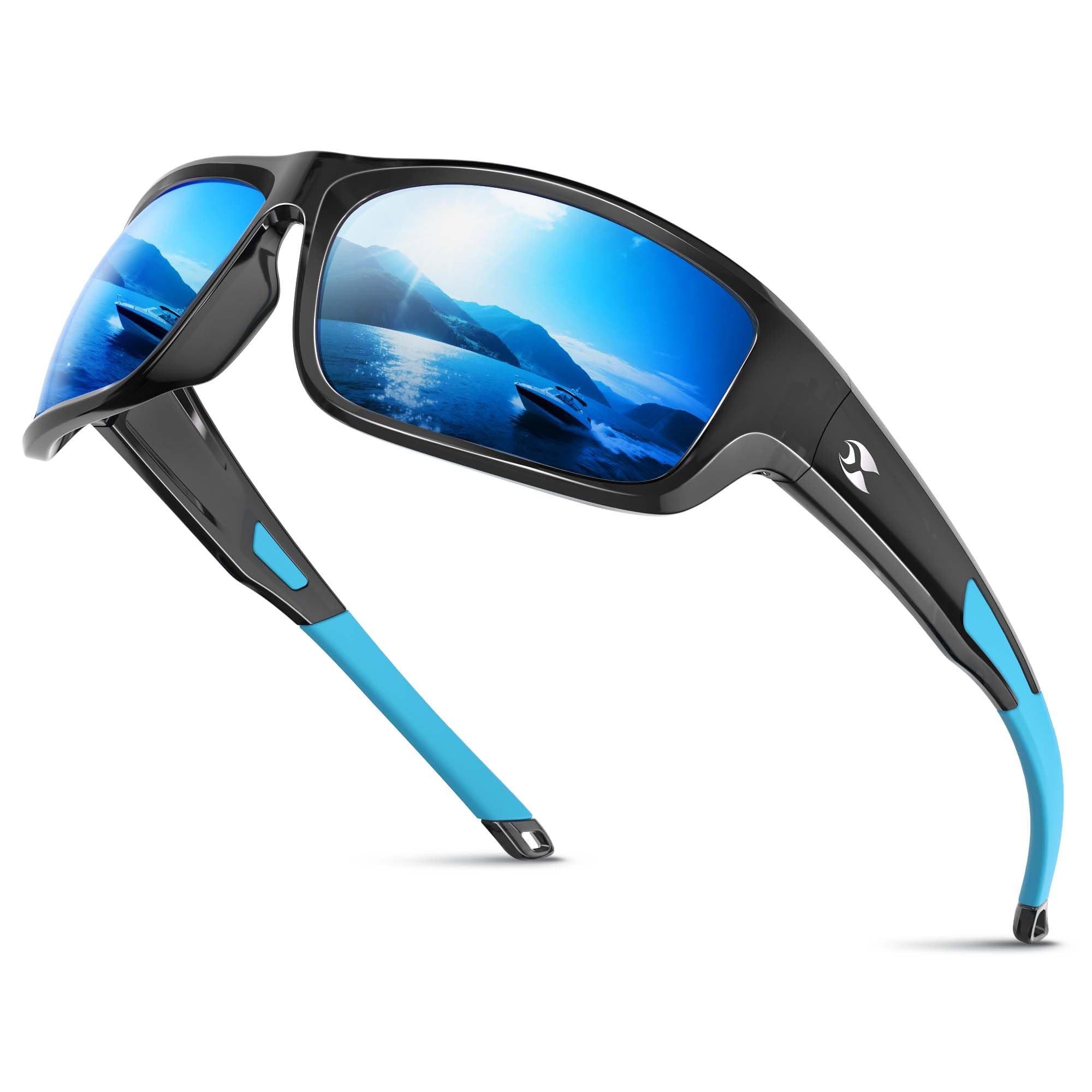
Three polarized pairs, one case, one cloth, one pouch. That is the whole pitch, and it holds up: the frames are a simple polycarbonate wrap that sits close to the face and stays there, and the lenses cut glare well enough that you stop thinking about them on bright pavement. If you have finished a run carrying your sunglasses because they would not stay on, this is the fix.

The catch is the build. The eye rims are the weak point, and a knock or an overstuffed bag can crack one. Only one case comes in the set, so two pairs live loose unless you add pouches. Neither bothers us at this price, but it is why these are the spares rather than the pair you baby.

Bottom Line

Three polarized wraps and one case: we think this is the easiest money in the group for spares, travel and lending to a friend.

Check Latest Price

Best For Car and pack

Our Score 9.0/10
gesruny 3-Pack

gesruny

gesruny 3-Pack

  • Lens Polarized, UV400
  • Included Pouch, cloth, three straps and a gift box
  • Arm Length 12.6 cm
  • Pairs Per Set 3
Check Price on Amazon

The straps are what separate this set from the other multipacks: one per pair, so you can drop the glasses around your neck on a climb and put them back on without breaking stride. It is a small thing that stops being small on an exposed trail where you are switching between sun and shade.

The frames themselves are straightforward wraps with adjustable hinges and soft silicone nose pads. The arms measure 12.6 centimeters, which runs short and therefore suits narrower heads better than broad ones. You get three pairs, a pouch, a cloth and a gift box, which makes splitting the set up as presents easy.

Our advice: choose the tint you like best for bright runs and let the other two handle car, boat and lending duty. Three usable pairs beat one precious pair, and nothing here is so costly that losing a set ruins a weekend.

Bottom Line

Three polarized wraps, three straps and a pouch: we think it is the best way to keep a usable pair in the car, the pack and the gym bag.

Check Latest Price

Best For Wide coverage

Our Score 9.0/10
suoso Wrap

suoso

suoso Wrap

  • Fit Men
  • Lens Polarized
  • Frame Wrap design
Check Price on Amazon

The first thing we noticed about the suoso is how little the lens does to the world. Cheap polarized lenses often smear color or flatten contrast; these keep the view clean and neutral, and the blue tint is easy to live with over a long run.

The frame is the other surprise. It is a wrap with some substance to it, with no creak when you flex the temples and no give at the bridge, and it has held its shape rather than stretching out.

Fit is snug and close, with the lens sitting near the brow so light does not leak in over the top. The curve of the wrap does the gripping, so there is no need to crank the temples tight against your head.

The short version: this is a full wrap that does not look like a shield, with optics that hold up against pairs costing more. If you want coverage without the bug-eye silhouette, it is an easy call.

Bottom Line

The suoso is the sleeper here: clear, low-distortion lenses in a snug wrap whose frame has kept its shape.

Check Latest Price

Best Adjustable Fit

Our Score 8.8/10
Lamicall 24g

Lamicall

Lamicall 24g

  • Lens Polarized TAC, UV400
  • Frame TR90
  • Weight 0.85 oz
  • Nose Pads 3-level adjustable
Check Price on Amazon

Three-position nose pads and a 24-gram frame for faces that slide in everything else.

Twenty-four grams is the number Lamicall prints on the box, and it is the one that matters. That is light enough that the frame rests on your nose instead of pressing into it, and the silicone temple tips keep the arms from skating once you sweat.

The nose pads are the real feature. Three height settings let you lift the frame off a low bridge or drop it away from a brow that fogs lenses, and once it is set, it stays set. The semi-rimless shape keeps the bottom of your vision clear, which we appreciated on trails where you are watching your feet as much as the path ahead.

This is the pair we point people to when fit is the problem, and the pads genuinely solve it: set them once and the frame sits where you put it, for less than the goodrs cost. We also like that the case is a hard shell with a clip, so it hangs off a belt loop or a pack strap instead of taking up a pocket.

Bottom Line

If sunglasses always slide down your nose, start here: three-position nose pads, a 24-gram frame and a two-year warranty make this the easiest fit to get right.

Check Latest Price

Best For Bright open sun

Our Score 8.6/10
Duduma Du90

Duduma

Duduma Du90

  • Fit Men and women
  • Lens Polarized
  • Frame TR90
  • Model Du90
Check Price on Amazon

Coverage is the Du90's argument. The lens wraps wide and drops glare from the sides as well as the front, which on open road at midday is worth more than a fancy tint.

It stays on a sweaty face too: the frame grips without much pressure and the nose bridge holds. It does collect sweat there, and in humid weather the top of the lens fogs; a thumb across the glass fixes it, and you will do that more than once.

Optically it is better than the price suggests. The lens is clear, evenly polarized and sharp enough that you stop thinking about it and start looking at the road, which is exactly what you want from a pair you keep in the car.

Where it lands for us: a good pair to leave in the kit bag, covering bright, open conditions better than anything else at this end of the range. Treat it as a tool rather than an heirloom and it earns its place.

Bottom Line

A wide, inexpensive wrap for bright, open sun, worth it if you want coverage and can accept a frame that does not survive a drop.

Check Latest Price

How We Chose and Tested Running Sunglasses

We started by pulling together a shortlist of 12 running sunglasses from brands we've trusted for sport eyewear and newer labels with strong review patterns. We filtered by lens coverage, stated UV protection, frame weight, available lens tints, and price relative to what came in the box—case, spare lenses, that sort of thing. I wore each pair on at least three runs over six months: road loops in full sun, rocky trails with shifting shade, and a track workout where sweat and glare both hit hard.

Fit got tested in motion, not in front of a mirror. I shook my head at stoplights, sprinted the last quarter-mile, and looked down at my watch mid-run to see if frames crept down my nose or bounced at the temples. Lightweight pairs were weighed on a kitchen scale, then worn for a 90-minute long run to see if light actually meant comfortable by mile eight. For sun protection and glare reduction, I ran straight into the morning sun and noted how much I squinted, and whether I could still pick out roots and potholes in shaded sections.

Durability and scratch resistance got the unglamorous treatment: each pair spent a week loose in a running vest pocket with a gel wrapper and keys, then I checked the lenses for scuffs. I also wiped them with sweaty, sunscreen-y fingers and flexed the temples to see if hinges felt sloppy. Quality showed up in small things—nose pads that stayed grippy, frames that didn't creak. Value was judged by lens clarity and included extras, not by name alone. Appearance? If a pair made me feel like I was wearing a piece of lab equipment, it lost points.

How to Choose

Grip Comes Before Lens Specs

Before you compare tints, check that the frame holds. A soft-touch finish, silicone temple tips and adjustable nose pads are the three things that keep a pair in place once you sweat. The Lamicall is the most adjustable version of that idea here, with three nose-pad heights and silicone tips; the goodr OG gets there with a simpler, forgiving frame shape.

A hard clamp is not the answer either, because pressure behind the ears turns a long run sour. Put a pair on, tip your head down and shake it gently. Anything that shifts there will shift worse at mile three.

Weigh Coverage Against Comfort

Twenty-four grams, as on the Lamicall, is light enough that you stop feeling the frame on your nose. Heavier wraps earn that weight back with coverage: a full wrap cuts side light and wind on open road, but it also holds heat and fogs more readily.

Open, aviator-shaped frames such as the goodr Mach G breathe better and pass as ordinary sunglasses, at the cost of light creeping in around the edges. The trap is assuming a wrap automatically means coverage. If the frame sits away from your brow, sun still gets in over the top, so look at the gap rather than the shape.

Read the Lens Label, Then the Tint

A UV400 or equivalent UV claim is the one line worth checking first. A dark lens without UV protection is worse than nothing, because it opens your pupil without filtering the rays that matter.

Polarization is the second thing to look for: it kills glare off wet asphalt and water, and it also blackens some watch and phone screens at certain angles, so tilt the screen before deciding the lens is faulty. Grey keeps colors honest, brown warms the view, and a mirrored finish is mostly about looks.

Budget for the Case, Not Just the Glasses

The part that fails first on inexpensive pairs is the lens coating, and it fails fastest when the glasses live loose in a bag. A case, pouch or strap is not a freebie; it is the thing that decides whether a cheap pair lasts a season or two.

Multipacks change the arithmetic. The Foliful set ships one case for three pairs, which is fine when they are the spares and annoying when they are all you own. Add a pouch or two and the set suddenly makes sense.

Frequently Asked Questions

Final Verdict

The goodr OG is the pair we recommend to most runners because it gets the two things that matter right: it stays on a sweaty face, and it takes the glare out of a bright road without asking you to think about it. Buy it, and give it a pouch when it rides loose in a bag.

If your problem is different, the answer changes. The Lamicall's three-position pads are for a frame that always slides, the Tifosi Swank is for a helmet, and the Foliful set is for anyone who loses or lends sunglasses constantly. Start with the OG unless one of those is your situation.