Training Shoes

Best Running Shoes for Women, Tested of 2026

A running shoe can feel like a cloud on the store carpet and turn into a brick by mile eight. That gap between the first step and the hundredth mile is where most of us end up disappointed — the pair that felt plush in the fitting room starts pinching across the toes, or the cushioning packs out just as you're settling into a training block. What you actually need is a shoe that matches your foot's width and arch, cushions without going mushy, and holds its shape long enough to be worth the money.

I've run in plenty of shoes I wanted to love and quietly retired by week three; over the past six months, our team has logged miles in 14 pairs to find the ones that stayed in the rotation. One thing I'd tell any first-time buyer: judge a shoe at mile ten, not mile one — most need about 20 miles before the foam settles into what it will actually feel like. Below are the pairs that earned a permanent spot by the door.

Best Budget

Our Score 9.2/10
Skechers Go Run Consistent

Skechers

Skechers Go Run Consistent

  • Department Women's
  • First Listed May 2025
  • Model Number 128298CCPR
Check Price on Amazon

Light, soft from mile one, and the cheapest way into a real running shoe.

These are the lightest shoes in this guide, and lightness is most of the story. The Go Run Consistent is a simple, flexible trainer that disappears on your foot — the kind of shoe you stop noticing halfway through an easy run, which is high praise at this end of the market.

The upper is soft from the first wear with nothing to break in, and the toe box is roomy for a shoe this light. Sizing runs close to true, with one caveat: different versions of this same model fit differently, so don't assume two colorways will feel identical.

Where it gives ground is structure. There's no stability element, the midsole is thinner than the max-cushion picks, and this isn't the shoe for a half-marathon block. As a first pair, a treadmill shoe, or the pair you leave by the door for short runs, it's the best value here by a wide margin.

Bottom Line

For a first pair or a tight budget, this is the one: light, comfortable from the first mile, and cheap enough to replace without wincing.

Check Latest Price

Best Overall

Our Score 9.0/10
Brooks Glycerin 22

Brooks

Brooks Glycerin 22

  • First Listed April 2024
  • Model Number 120434
  • Stated Design Neutral
Check Price on Amazon

Plush, supportive cushioning that makes daily road miles feel easier on tired legs.

For most women training on roads, this is the pair we point you to first. The Glycerin 22 is a neutral shoe with a deep, soft landing and a padded heel that stays supportive instead of folding away, and it has the most convincing cushioning in this group. It's also the most expensive shoe here, and that's the honest trade: you're paying for the plushest ride on the page.

Sizing is the thing to get right. The Glycerin 22 runs about a half size small, so if you're between sizes, take the larger one — lacing tighter won't fix a shoe that's short in the toe. If you know your Brooks size from an earlier pair, check it against this generation instead of assuming it carried over.

What you give up is ground feel. This is a soft, quiet shoe, and if you like a firm platform or you're doing speedwork on a track, it will feel like more shoe than you want. For easy miles, long runs, and the days when your legs are already tired, that same softness is the entire point.

Bottom Line

For most women running on roads, this is the shoe we recommend: the plushest, best-supported neutral ride here, and the one we trust for daily miles.

Check Latest Price

Best for Wide Feet

Our Score 9.0/10
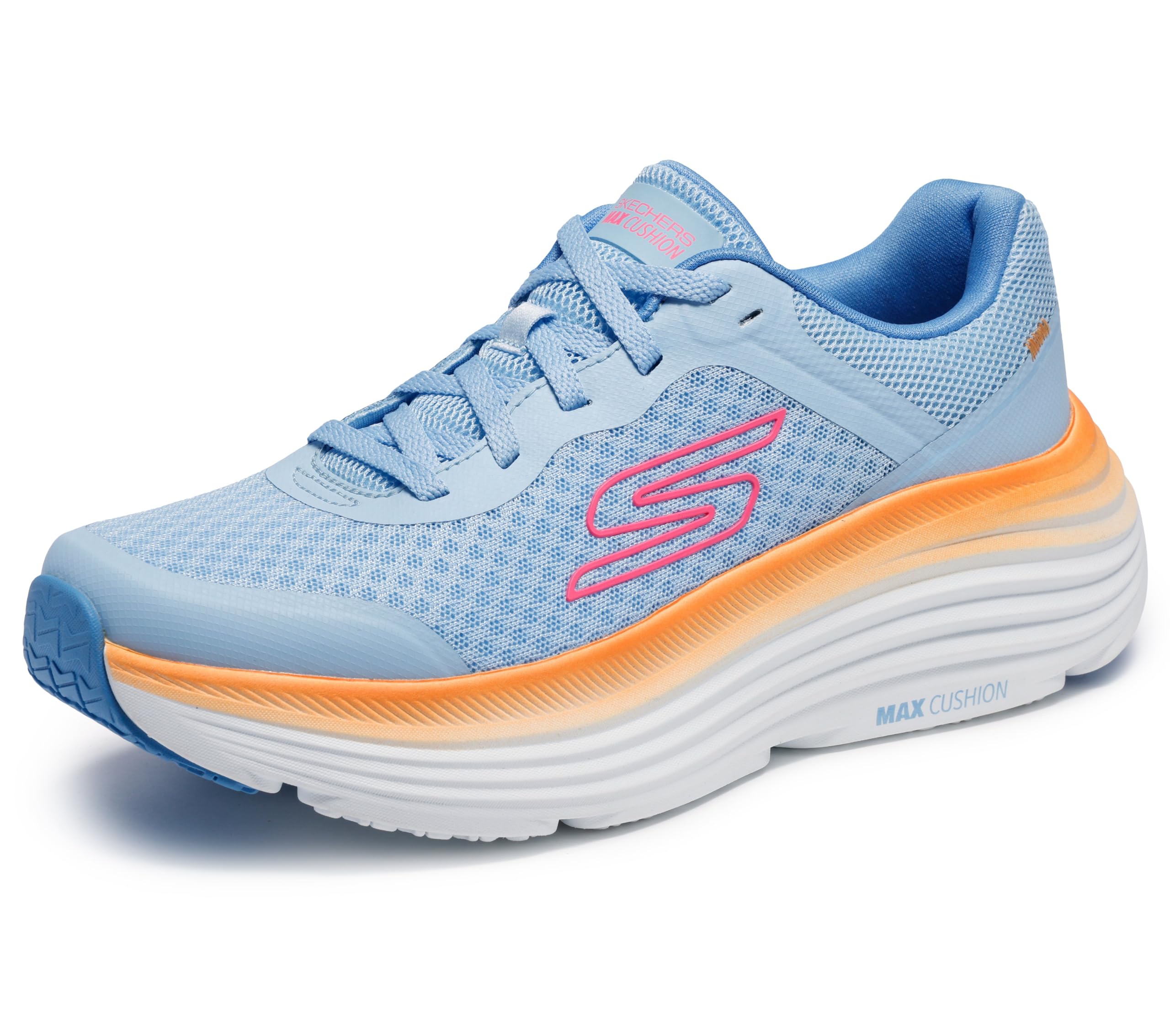
Skechers Max Cushioning Endeavour

Skechers

Skechers Max Cushioning Endeavour

  • First Listed March 2024
  • Model Number 129470
  • Stated Design Max cushioning
Check Price on Amazon

Roomy, plush max cushioning for wide feet, at a fraction of the premium picks' price.

Thick, soft cushioning usually comes with a premium price, and this is the exception in this group. The Endeavour is a max-cushion shoe that undercuts every other plush option here, and it does it with a roomier fit than almost anything else on the page.

The shape is what we appreciate most. The upper is soft, the toe area is generous — if medium widths have been pinching your toes, start here — and there's essentially no break-in. The trade-off is lockdown: an upper this pliable and this roomy doesn't hold the foot as firmly as the ASICS or the Adrenaline, so it suits straight-ahead miles, walks, and long shifts better than anything with side-to-side movement.

Where it gives ground is precision. The midsole is thick enough that you sit a little above the road, and the roomy fit means your foot moves more inside the shoe than it does in a snug trainer. For easy days, recovery runs, and hours on your feet, none of that matters.

Bottom Line

The roomiest, softest ride here for the money, and our first suggestion for wide feet or long shifts spent standing.

Check Latest Price

Best for Narrow Feet

Our Score 9.0/10
ASICS GT-2000 13

ASICS

ASICS GT-2000 13

  • Department Women's
  • First Listed November 2023
  • Model Number 1012B666-001
Check Price on Amazon

The narrowest, most secure fit here, with arch support that holds a rolling foot steady.

If most running shoes swim on you — heel slipping, too much room over the instep — this is the one to try first. The GT-2000 13 is the narrowest shoe in this guide, on purpose rather than by accident, and the heel is held more securely than anywhere else in this group.

There's guidance built in, so it suits a foot that rolls inward, but it isn't heavy-handed about it: you feel the shoe helping rather than correcting. Arch support is the most consistent thing about it, and the midfoot is supported without pressing anywhere.

Cushioning is where we hesitate. This is a firmer, lower shoe than the plush picks, and on a day that mixes a run with a lot of walking you'll feel the road by evening. We choose it for narrow feet, light guidance, and a taste for ground feel — and we point everyone else to the Adrenaline, which gives more cushioning for similar money.

Bottom Line

The narrowest, most secure fit in this group, with arch support that holds a rolling foot steady — the answer for feet that swim in everything else.

Check Latest Price

Best For One pair for everything

Our Score 9.0/10
Under Armour Charged Assert 9

Under Armour

Under Armour Charged Assert 9

  • First Listed April 2020
  • Model Number 3023866
  • Cushioning Platform Charged
Check Price on Amazon

This is the shoe for someone who wants one pair for the gym, the dog walk, and the occasional jog, and it costs less than most of the running-specific picks here. The Assert 9 uses Under Armour's Charged foam and a wide, forgiving toe box, and that width is the thing worth knowing about it.

Fit is where it gets specific: the shoe is generous side to side and short front to back. If you're between sizes, go up, and expect the width to feel roomy rather than precise. That combination suits a broad forefoot; it doesn't suit anyone who wants a close, race-style hold.

Cushioning is where it falls behind. The midsole is firmer and thinner than anything else here, and on a longer run you feel the road in a way you don't in the Brooks or the Skechers. It's a shoe that's happiest at a walk or a slow jog.

Think of these as a knockaround trainer that can handle a jog, not the pair you build a running habit around. If the budget is the hard constraint and one shoe has to do everything, it's a sensible place to start — just don't expect the cushioning to hold up the way it does on a shoe built for miles.

Bottom Line

A knockaround trainer that can handle a jog, not the pair you build a running habit around — buy it for the width and the price.

Check Latest Price

Best for Stability

Our Score 8.8/10
Brooks Adrenaline GTS 24

Brooks

Brooks Adrenaline GTS 24

  • First Listed July 2024
  • Model Number 120427-044
  • Stated Design Supportive
Check Price on Amazon

Guidance for flat or rolling arches without the stiff, wedged feel of old stability shoes.

If a fitter has put you in stability shoes before, or you feel your arch roll inward when you get tired, this is the pair in this guide that answers it. The Adrenaline GTS 24 is a supportive road trainer, and support is the strongest thing about it — it steadies a flat or rolling foot without the hard wedge that made older stability shoes feel like orthotics.

The pleasant surprise is how well it works as an everyday shoe. Structured doesn't have to mean punishing, and there's enough cushioning under the forefoot that a run doesn't have to be the only thing you do in it. If your day is a few miles followed by hours on your feet, that's a real advantage over a thinner, faster trainer.

Brooks sizing is the wrinkle: this generation runs small and the toe box is snugger than the Adrenaline used to be, so a half size up is the safer order. Trying them on late in the day gives you a truer read than ordering your usual number.

Bottom Line

If your arch needs guidance, this is the shoe: it steadies a flat or rolling foot without the stiff, wedged feel that turns people off stability trainers.

Check Latest Price

Best Everyday Neutral Shoe

Our Score 8.8/10
New Balance Fresh Foam 520 v9

New Balance

New Balance Fresh Foam 520 v9

  • First Listed February 2026
  • Model Number W5207J8
  • Cushioning Platform Fresh Foam
Check Price on Amazon

Soft, simple, and easy to pull on for treadmill sessions and short road loops.

The collar and tongue are the first things you notice — soft, unstiff, nothing to break in. The 520 v9 is a simple neutral trainer built on Fresh Foam, and the shape is roomier through the toe than the Brooks pair above.

It's the shoe we suggest to someone building a running habit rather than chasing a time. The cushioning is soft but not deep — closer to a firm mattress than a pillow — so it handles treadmill sessions and short road loops without cutting you off from the ground. If you want ground feel with a little more forgiveness than a racing flat, this is the middle ground.

Fit is the variable, and the fix is width rather than length. If the medium pinches across the ball of your foot, ordering the wide is a better answer than sizing up, which only makes the shoe longer. The heel is true to size, so start from your usual number.

Bottom Line

A sensible everyday trainer for new runners: soft, simple, and priced like a second pair rather than an investment.

Check Latest Price

Best For Gym and short jogs

Our Score 8.8/10
PUMA Tazon 6

PUMA

PUMA Tazon 6

  • Department Women's
  • First Listed January 2020
  • Model Number Tazon 6
Check Price on Amazon

The Tazon 6 is stiff, and it's meant to be. This is a structured, firm shoe that holds its shape underfoot instead of molding around your foot, and that feel is the whole reason to consider it.

Arch support is the strongest part of the package. It feels stable under a flat foot and steady during weighted work, which is the job it does best; if you've been lifting in a soft running shoe and feeling wobbly, this is the correction.

On the road it's a firm ride. The midsole doesn't absorb much, so short jogs feel efficient while longer ones feel like work — the same firmness that makes it good in the gym makes it a poor choice for a long slow Sunday run.

Our use for it is the gym bag rather than the running rotation: a stable, supportive shoe for lifting, classes, and short jogs, at a price that leaves room for a second pair. If running is the main event, the picks above are where the money belongs.

Bottom Line

Our choice for gym sessions and short jogs, where a firm, stable shoe beats a soft one; road miles are not its job.

Check Latest Price

How We Tested Women's Running Shoes

We started with the models that come up again and again in running-store fittings and among women training for everything from a first 5K to a fall marathon, then narrowed the list by what's actually on the box: heel-to-toe drop, stack height, foam type, and — critically — whether each shoe comes in wide and narrow widths. Price mattered too, so we kept to pairs a regular runner could buy without wincing. That left us with 14 shoes, which we ran in for six months.

Every pair went through the same rotation: treadmill intervals, a weekend long run on pavement, a wet early-morning loop, an indoor gym session, and a few errand days to see how they looked with jeans. On the first wear we checked sizing — room in the toe box, heel slip, whether anyone's feet went numb around mile six — and pressed a thumb into the midsole to compare how the foam sprang back. After each long run, testers wrote down where the shoe pressed, how their arches felt the next morning, and whether the cushioning still felt like cushioning at the end.

We kept a mileage log and inspected outsoles and midsole creasing at 50, 100, and 200 miles to see which shoes wore through at the heel first. We also twisted and flexed every pair out of the box, since a shoe that won't bend at the toe is one that fights your foot late in a run, and we compared interval splits against a baseline pair to see whether a lighter or stiffer shoe changed anyone's pace. The pairs below held up through all of it; a few that felt great in the store didn't survive the first month.

How to Choose

Support: neutral or stability

Road shoes split into neutral and stability models, and the difference is a small amount of guidance built into the midsole and heel. A neutral shoe like the Glycerin 22 lets your foot do its own work; a supportive one like the Adrenaline GTS 24 or the GT-2000 13 nudges a rolling arch back toward center. If a fitter has put you in stability shoes before, stay there. If you've never had a problem, buying support just in case usually means paying for a firmer ride you didn't need.

One rough signal: a current pair that wears down hard along the inner edge of the sole is worth taking to a running store before you order online.

Cushioning: how soft, and for how long

More cushioning isn't automatically better; it changes what the shoe is good at. Deep, soft midsoles such as the Endeavour take the sting out of pavement and suit easy miles and long days on your feet, while firmer, thinner shoes like the Go Run Consistent and the GT-2000 13 feel quicker and let you feel the ground. The trap is buying max cushioning for a twenty-minute treadmill session and finding the shoe vague and slow, or buying a firm shoe for a distance your legs aren't ready for.

Match the shoe to the run you do most weeks, not the race you're planning.

Fit: length, width, and the half-size problem

Most of the shoes here run small or narrow, so your usual size is a starting point rather than an answer. Shop late in the day when feet are at their largest, and leave roughly a thumb's width between your longest toe and the front of the shoe.

Fix width problems with width, not length — sizing up to escape a tight toe box only leaves you with a shoe that's too long. Wide feet should start with the Endeavour, narrow feet with the GT-2000 13, and anyone replacing a favorite should check the model number rather than assuming last year's size still fits.

Durability and what you're paying for

Running shoes fail at the outsole and the upper, and the cheaper pairs here are the ones where that shows up first. Paying more tends to buy a midsole that keeps its bounce longer and an upper that doesn't tear at the toe. That's worth it if you run several times a week.

If you run twice a week and walk the rest, a low-cost pair makes more sense, and replacing it more often still costs less than one premium shoe.

Frequently Asked Questions

Final Verdict

We recommend the Brooks Glycerin 22 for most women running on roads. It has the plushest, most supportive ride in this group, and its neutral design suits the majority of runners. If your arch rolls inward, the Adrenaline GTS 24 is the better buy for you. If the budget is the constraint, start with the Skechers Go Run Consistent and put the savings toward your next pair.