Training Shoes

Best Minimalist Running Shoes of 2026

Minimalist running shoes ask a lot of your feet — and that's the point. They strip away stack height and rigid overlays, leaving you closer to the road and your own stride. But less shoe means less forgiveness, so the good ones still need a comfortable fit, a toe box wide enough for your toes to splay, reliable traction, and durable construction. I've run in stripped-down shoes for years, and over the past six months my team and I logged miles in 12 pairs on pavement, packed dirt, treadmills, and errands around town.

Fit and size mattered more than I expected. A half-size short can turn a promising shoe into a black toenail, while a narrow toe box defeats the whole point of letting toes spread. We also watched how each pair aged and whether it looked presentable enough to wear beyond a run. The picks below are the ones that balanced comfort, quality, grip, and everyday versatility; they won't suit every stride, but if you want a lighter, more natural ride, one should.

Best Overall

Our Score 8.8/10
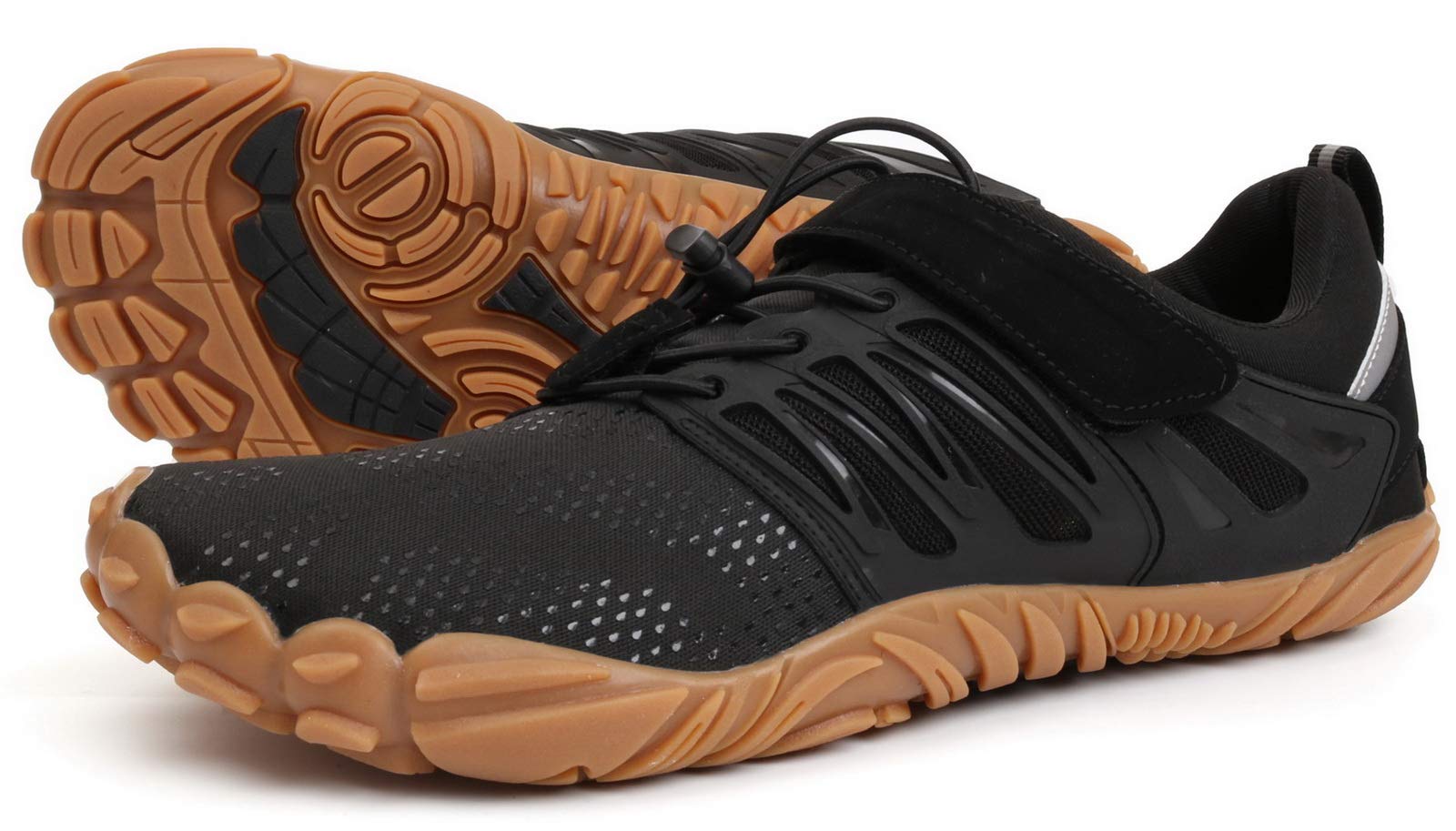
WHITIN W20 Minimalist Trail Runner

WHITIN

WHITIN W20 Minimalist Trail Runner

  • Design Minimalist trail runner
  • Cushioning Minimal
  • Department Men's
  • Barefoot Feel Flexible, low-profile
Check Price on Amazon

A budget-friendly first minimalist shoe with a flexible ride and useful trail grip.

At the budget end of this group, the men's W20 still delivers the barefoot-feel essentials: a flexible sole, a low-to-the-ground ride, and a light upper that lets your foot move instead of holding it in place. That combination is why it's our top pick for a first minimalist shoe. It gives you a real taste of the category without asking you to commit to a premium price before you know whether minimal running suits you.

The toe box is the detail we appreciate most. There's enough room for toes to spread on push-off, which is the whole point of a shoe like this, and the upper stays snug through the midfoot so the room doesn't turn into slop. The tread has enough bite for packed dirt, smooth singletrack, and the walk back to the car.

This isn't the shoe we reach for on wet roots or sharp, loose rock, where a more protective trail shoe earns its keep. The flexible sole is happiest on smoother ground, and the light upper doesn't shield the foot from every stone.

What keeps it from feeling disposable is how easy it is to live with: it slips on quickly, doesn't feel bulky when you're not running, and the price leaves room for a second pair. The upper is the part that gives us pause. Seams and the toe area are the places to watch on rough ground, especially if you log a lot of miles.

Bottom Line

For men shopping for a first minimalist running shoe, the W20 is our top pick: a flexible, low-profile ride and useful trail grip without a premium commitment.

Check Latest Price

Best for Gym and Road

Our Score 8.6/10
Xero Shoes Prio Barefoot Sneaker

Xero

Xero Shoes Prio Barefoot Sneaker

  • Design Barefoot sneaker
  • Terrain Gym, road, light trail
  • Cushioning Minimal
  • Department Men's
Check Price on Amazon

A versatile barefoot sneaker for gym sessions and short road runs.

Where the W20 leans toward trail, the men's Prio is the pick we reach for when the week includes gym work and short road runs. The sole is flat and flexible enough to let you feel the ground, but the upper has a little more structure than the purest barefoot shoes here, so it doesn't feel like a sock with a rubber bottom. It also looks like a normal sneaker rather than a minimal shoe with a clown-wide silhouette.

The fit is the part we normally put first, except the Prio is unusually split. The toe box gives some runners the splay they want; others find the midfoot narrow and the shoe stiff. That makes it a harder recommendation without trying them on. What we can say is that the shoe is at its best when you want one pair for lifting, short runs, and errands, not when you want a dedicated trail shoe.

Traction is another compromise. On dry pavement and gym floors it feels secure, but wet trails and smooth, wet surfaces are where we lose confidence. That's the line we draw: the Prio is a dry-condition, mixed-use shoe, not an all-weather trail runner. If your week includes more pavement than dirt, it's a compelling one-pair option.

Bottom Line

Choose the Prio if your week mixes gym work and short road runs; its flat, flexible ride and normal sneaker profile make it the most versatile pick here.

Check Latest Price

Best for Women

Our Score 8.6/10
Joomra Women's Trail Running Barefoot Shoes

Joomra

Joomra Women's Trail Running Barefoot Shoes

  • Design Zero-drop barefoot trail shoe
  • Toe Box Wide
  • Cushioning Minimal
  • Department Women's
Check Price on Amazon

A women's zero-drop trail shoe with a roomy toe box and dry-surface grip.

The Joomra is the women's pick we point to first, and the reason is simple: it combines a zero-drop, wide-toe-box shape with enough tread for packed trail and everyday walking. The shoe feels soft and sock-like, which makes it an easy choice for someone who wants natural movement without a harsh, rigid platform.

The wide toe box is the standout. Toes have room to spread, and the upper doesn't press across the top of the foot the way a narrower trail shoe can. The cushioning is minimal, so you feel stones and roots, but not in a way that made us wince on smoother trail. The outsole grips well on dry dirt and pavement; wet, smooth surfaces are where we slow down.

On smoother trail and pavement, it's an easy shoe to recommend for women who want a natural stride. It doesn't have the protective feel of a heavier trail shoe, but that's the point of a minimalist pick. The soft upper is comfortable against the foot, the shoe is light enough to forget about after a few minutes, and the shape is simple enough to wear beyond running.

Bottom Line

Women shopping for a zero-drop trail shoe should start here, where a roomy toe box and reliable dry-surface grip meet a comfortable, sock-like upper.

Check Latest Price

Best For Wide feet

Our Score 8.4/10
WHITIN W51 Wide Barefoot Trail Runner

WHITIN

WHITIN W51 Wide Barefoot Trail Runner

  • Width Wide
  • Design Wide barefoot trail runner
  • Cushioning Minimal
  • Department Men's
Check Price on Amazon

If the problem you're trying to solve is width, the men's W51 is the obvious place to start. It's the only shoe in this group sold as a wide barefoot trail runner, and the extra room runs through the toe box rather than just the midfoot. The toe box is roomy without feeling floppy, and the upper wraps the midfoot closely enough that the width doesn't turn into instability. For runners who have been squeezing into standard widths, that alone makes it worth a look.

The ride is light and flexible, with a thin sole that lets you feel the trail without feeling every pebble. We like it best for dry dirt, gravel, and easy hiking; the tread is not what we trust on wet pavement or slick roots. The upper is soft and comfortable against the foot, and the shoe doesn't feel bulky even with the wider fit.

The W51 is simple, comfortable, and easy to live with on easy trail days. It doesn't pretend to be a technical mud shoe, and that's fine: for wide-footed runners who want ground feel, the generous fit is the feature that matters. It's also one of the more affordable picks here, which makes it an easy second pair to keep for dry trail days.

Bottom Line

Wide-footed runners get the most generous fit in this group from the W51, a light, flexible trail shoe that puts ground feel ahead of technical protection.

Check Latest Price

How We Tested the Best Minimalist Running Shoes

We started by sorting through current minimalist running models — low drop, flexible midsoles, minimal cushioning — and narrowed the field by price, available sizes, and whether a shoe was built for running rather than gym-only wear. We ordered 12 pairs in our usual running sizes, plus a half size up or down when a model sat between sizes. Over six months, each pair went on road runs, packed-dirt path runs, treadmill sessions, and errands around town; we rotated them so no single shoe got all the easy days.

On the first wear, we noted where the shoe pressed, whether the heel slipped, and how much room the toe box gave our toes to spread. We checked comfort over a few strides and a longer run, then looked for hot spots, numbness, and whether the fit changed after the upper warmed up. For traction, we took them onto wet pavement, loose gravel, and a damp wooden bridge, watching for slips on turns and downhills.

Every few weeks we inspected durability: outsole wear at the heel and forefoot, fraying around the collar, loose stitching, and whether the midsole still felt lively or had packed out. We also wore each pair for a normal day of errands to judge appearance and versatility beyond the run.

How to Choose

Fit Is the First Filter

Start with room in the toe box and a secure hold through the midfoot and heel. A minimalist shoe should let your toes spread on push-off, but your foot shouldn't slide forward or sideways inside it. Several shoes here run small or large, so use the size chart as a starting point and expect to adjust. The W20 and Xero Prio are men's models; the Joomra is the women's-specific pick, and the W51 is the clearest wide-fit option. Try shoes at the end of the day, when feet are largest, and leave a thumb's width ahead of your longest toe.

Understand Cushioning and Drop

Minimalist running shoes reduce cushioning, and many use a low or zero heel-to-toe drop. That changes how your foot and calf work, so the transition matters more than the number on the listing. A zero-drop shoe isn't automatically better; it's a different load. Start with short, easy runs and build gradually rather than swapping all your miles at once. The W20 and Joomra are the clearest barefoot-feel options here, while the Xero Prio is a good bridge for gym work and short road runs.

Match the Outsole to Your Surface

Most of this group leans toward trail use, but trail shoes vary in how much grip they put under you. A shallow, flexible tread is happier on pavement and packed dirt; deeper lugs help on loose climbs and wet roots but can feel clumsy on the road. Choose for the surface you run most, not the one you visit occasionally. If most of your running is pavement, start with the Xero Prio; for packed dirt and easy trail, the W20 or Joomra make more sense.

Check the Wear Points

Minimalist shoes save weight by using thin uppers and less structure, so the places where the sole meets the upper and the toe bumper are the first to show wear. We look for a reinforced toe and tidy stitching if you run on rough ground. Rotating two pairs is more realistic than expecting one lightweight trail shoe to handle every day. Check the outsole under the forefoot and heel, and treat separation at the upper as a sign to replace the shoe rather than something to glue and forget.

Frequently Asked Questions

Final Verdict

For most men, the WHITIN W20 is the pair we point to first. It gives you the flexible, low-profile feel that makes minimalist running worth trying, adds enough grip for packed trail, and does it at the budget end of this group. If your week mixes gym work and short road runs, the Xero Prio is the more versatile alternative.

Women should start with the Joomra for its zero-drop fit and roomy toe box; wide-footed runners will be better served by the W51. The common thread is fit: get the size and width right, then build your miles gradually.