Recovery

Best Inversion Tables of 2026

If your lower back aches by 3 p.m. every day, you've probably wondered whether hanging upside down would help—and whether you'd actually feel safe doing it. An inversion table has to hold you securely while you're upside down, adjust to your height, and feel comfortable enough that you'll use it. The right one takes pressure off your spine after a long day at a desk; the wrong one wobbles, pinches your ankles, or arrives with instructions that might as well be in another language.

I've tried a few tables over the years, mostly at the urging of a physical therapist friend who swears by decompression. Over the past six months, my team and I assembled and used 12 inversion tables—adjusting them for testers from 5-foot-2 to 6-foot-4, and inverting daily to see which ones actually delivered relief and which ones just made us dizzy. The keepers shared sturdy frames, clear assembly, and ankle holders that didn't leave bruises. Below are the ones worth your money.

Best Overall

Our Score 9.4/10
Teeter FitSpine X3

Teeter

Teeter FitSpine X3

  • Backrest 8-point floating suspension
  • Warranty 5 years
  • Item Weight 74.1 lb
  • Weight Capacity 300 lb
Check Price on Amazon

The most secure, supportive table we tested, with a five-year warranty.

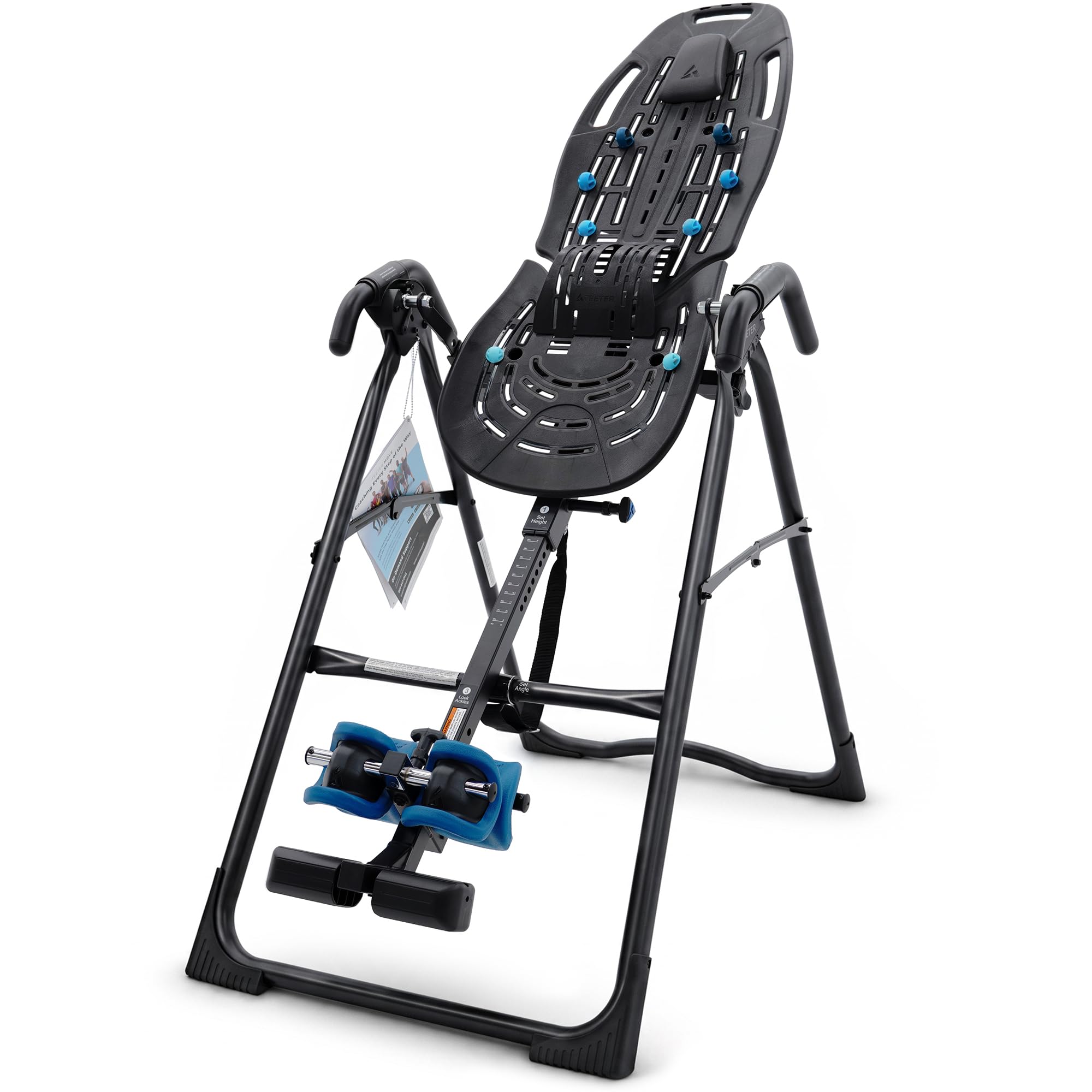
A five-year warranty and FDA registration are not what you feel while hanging upside down, but they are the first reasons the Teeter FitSpine X3 earns our top spot. The frame is rated to 300 pounds, the backrest uses Teeter's eight-point floating suspension, and the ankle system is built around a long stainless-steel handle rather than a hard reach behind your calves. That combination matters because the table has to feel secure before you will relax enough to get a stretch.

What we noticed in use is how little drama there is in the ankle lock. The EZ-Reach handle lets you close the cups without folding yourself in half, and the wrap-around shape spreads pressure across the ankle instead of digging into one spot. The eight-point backrest flexes under your back as you rotate, which makes the stretch feel less like lying on a board and more like being supported along the spine. The acupressure nodes are a matter of taste; the lumbar bridge is the accessory we kept set in place.

The X3 is a substantial table, and that solidity is the point. Once it is in position, the frame does not wander, and the rotation control responds smoothly to small arm movements. We did not have to fight the table to come back upright, which is the part beginners worry about most. The traction handles give your arms a useful job on the way down and back up, and the five-year warranty is the longest in this group.

What the premium buys is a longer warranty, a more secure ankle system, and a backrest that moves with you rather than against you. If those details matter less, the EP-560 is the simpler Teeter, and the ITM5900 adds heat and massage for less. The X3 is the one we keep coming back to when we want the table to disappear from our thoughts and let the stretch do the work.

Bottom Line

This is the inversion table we recommend for most homes, thanks to its secure ankle hold, flexible backrest, and five-year warranty.

Check Latest Price

Best Value with Heat and Massage

Our Score 9.2/10
Innova ITM5900

Innova

Innova ITM5900

  • Backrest Heat and massage pad
  • Warranty 1 year limited
  • Height Range 4 ft 10 in to 6 ft 6 in
  • Weight Capacity 300 lb
Check Price on Amazon

Heat, vibration, and solid inversion for less than the premium Teeter tables.

The heat and massage pad is the reason to look at the Innova ITM5900, but it is not the reason it earns a recommendation. We were pleasantly surprised by how much the warm pad takes the edge off a cold morning session; it makes the first few minutes more comfortable. The inversion itself is the main event, and the six-position pin makes it easy to set a repeatable angle.

The 300-pound frame and 60-pound table feel stable, and the heat pad runs the length of the spine with a contoured lumbar section. We like that the heat and massage controls are separate from the inversion angle, so you can warm up before you rotate. The true balance system lets you start with a small shift rather than a sudden drop, which is reassuring if you are new to inversion.

The height range of 4 feet 10 inches to 6 feet 6 inches covers a wide spread of users, and the 300-pound capacity gives bigger users room. Assembly is the part to plan for: the parts are grouped and the instructions are usable, but this is still a project that goes faster with two people and a couple of real tools. Once it is together, the value is obvious: you get heat, massage, and a stable frame for less than the premium Teeter tables.

The heat is most useful before you rotate, when your back is still tight. The massage pad is a comfort extra, not a substitute for getting the ankle setting right. If you want a table that does the basic job well and adds a little warmth on the way in, this is the one we point to first.

Bottom Line

Choose this if you want heat and massage built into a stable 300-pound inversion table without paying premium Teeter money.

Check Latest Price

Best Budget Teeter

Our Score 9.2/10
Teeter EP-560

Teeter

Teeter EP-560

  • Backrest ComforTrak
  • Warranty 5 years
  • Item Weight 65 lb
  • Weight Capacity 300 lb
Check Price on Amazon

Teeter's essential build and ankle system at a lower price.

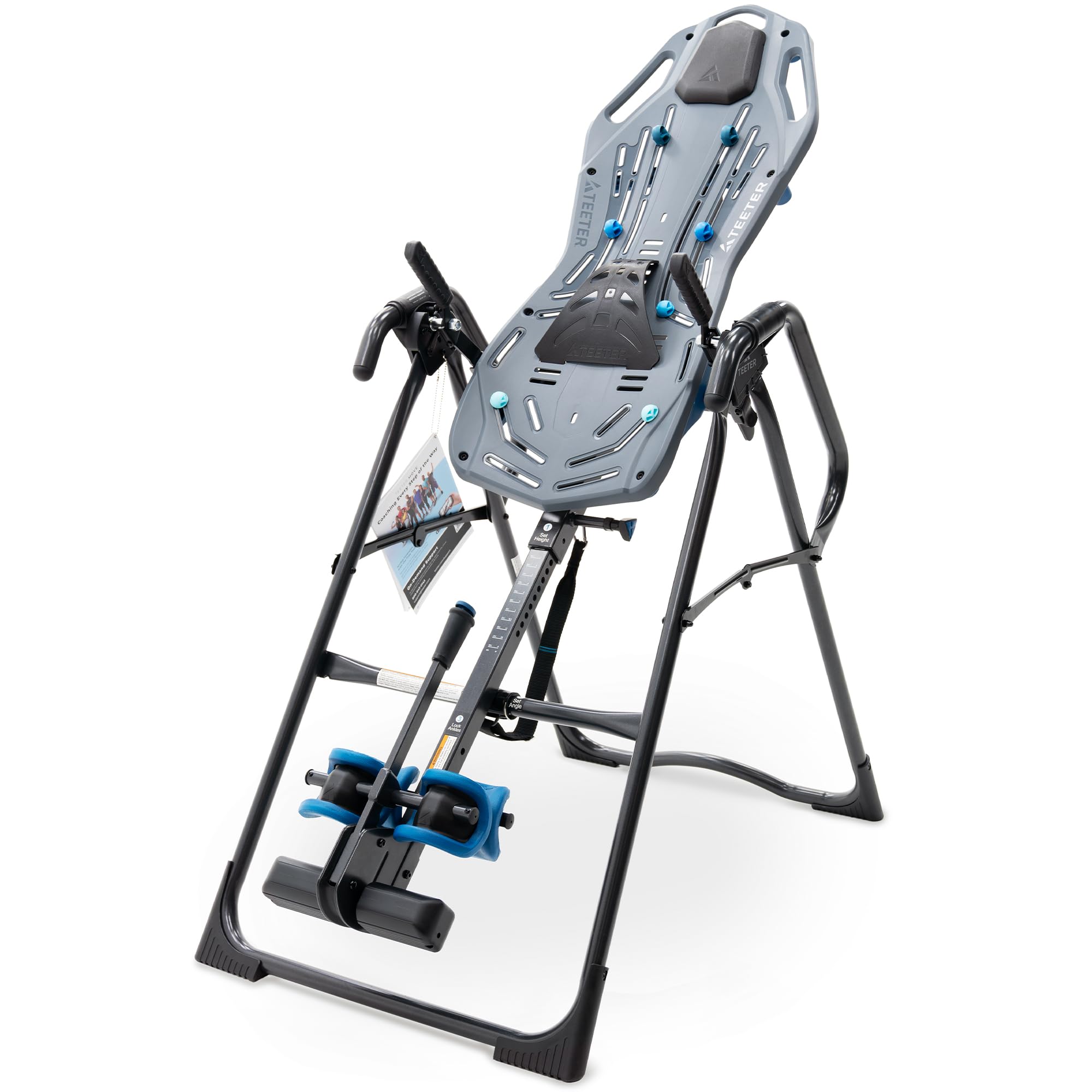
The EP-560 uses a simple angle-limit strap instead of a multiposition pin, and that single design choice tells you most of what this table is about. You set the strap where you want the table to stop, then use your arms to control the rotation. It is less precise than a pin system, but it is also harder to overthink. For a lot of people, that is the right trade.

We like the EP-560 for the same reason we like the X3: the ankle system feels sorted. The wrap-around cups and two-position foot platform hold you securely without a wrestling match, and the long handle keeps the release within reach. The ComforTrak backrest flexes enough to support a stretch. The 300-pound capacity and heat-treated steel frame give it a substantial feel.

The folding design is a real advantage in a small room, but this is still a full-size table, and the folded package is not something you tuck into a closet shelf. It needs a dedicated corner. The five-year warranty is the part that makes the lower price feel less like a compromise; it is the same coverage Teeter gives its premium tables.

The EP-560 is the quiet, sensible Teeter. It does not have the X3's accessory set, and the strap takes a little practice, but the core experience is secure and uncomplicated. If you want a table that feels trustworthy without paying for extras you may never use, this is the one.

Bottom Line

This is the Teeter to buy if you want the brand's ankle system and five-year warranty without the X3's premium price.

Check Latest Price

Best Adjustable Lumbar Support

Our Score 9.2/10
Innova ITX9900

Innova

Innova ITX9900

  • Warranty 1 year limited
  • Height Range 4 ft 10 in to 6 ft 6 in
  • Lumbar Support Inflatable air lumbar
  • Weight Capacity 300 lb
Check Price on Amazon

An inflatable lumbar pad lets you fine-tune support for your lower back.

The air lumbar support is the reason to pick the Innova ITX9900 over a plain padded table. An inflatable pad sits under the lower back, and you can add or release firmness until the arch feels right. We like that kind of control because lower-back relief is not a one-setting thing; what feels supportive on Monday can feel like a pressure point by Friday.

The rest of the table is familiar Innova: a six-position pin, a true balance system, and a 300-pound frame. We found the angle changes easy to make, and the ankle holders are a step up from simple roller pads, though the pressure is still noticeable after a few minutes. Thick socks help, and the release handle is reachable without a deep crunch.

The ITX9900 is the middle of the Innova range, and it feels that way. The 300-pound capacity covers big users, the height range runs from 4 feet 10 inches to 6 feet 6 inches, and the frame is stable once you are centered. It does not have heat or massage, but it keeps the useful air-lumbar adjustment and costs less than the premium Teeter tables.

If you want a simple table with one genuinely useful comfort adjustment, this is the one. The air pump is the detail that makes it worth choosing over a fixed pad, and the six-position pin gives you a repeatable way to work up to a deeper stretch.

Bottom Line

Pick this if you want adjustable air-lumbar support and a 300-pound frame at a midrange price, and you can live with a simpler warranty.

Check Latest Price

Best Budget Inversion Table

Our Score 9.2/10
YOLEO ITX320

YOLEO

YOLEO ITX320

  • Warranty 1 year
  • Item Weight 52.9 lb
  • Height Range 4 ft 10 in to 6 ft 6 in
  • Inversion Positions 4
Check Price on Amazon

A low-cost, stable table with a wide backrest and simple height adjustment.

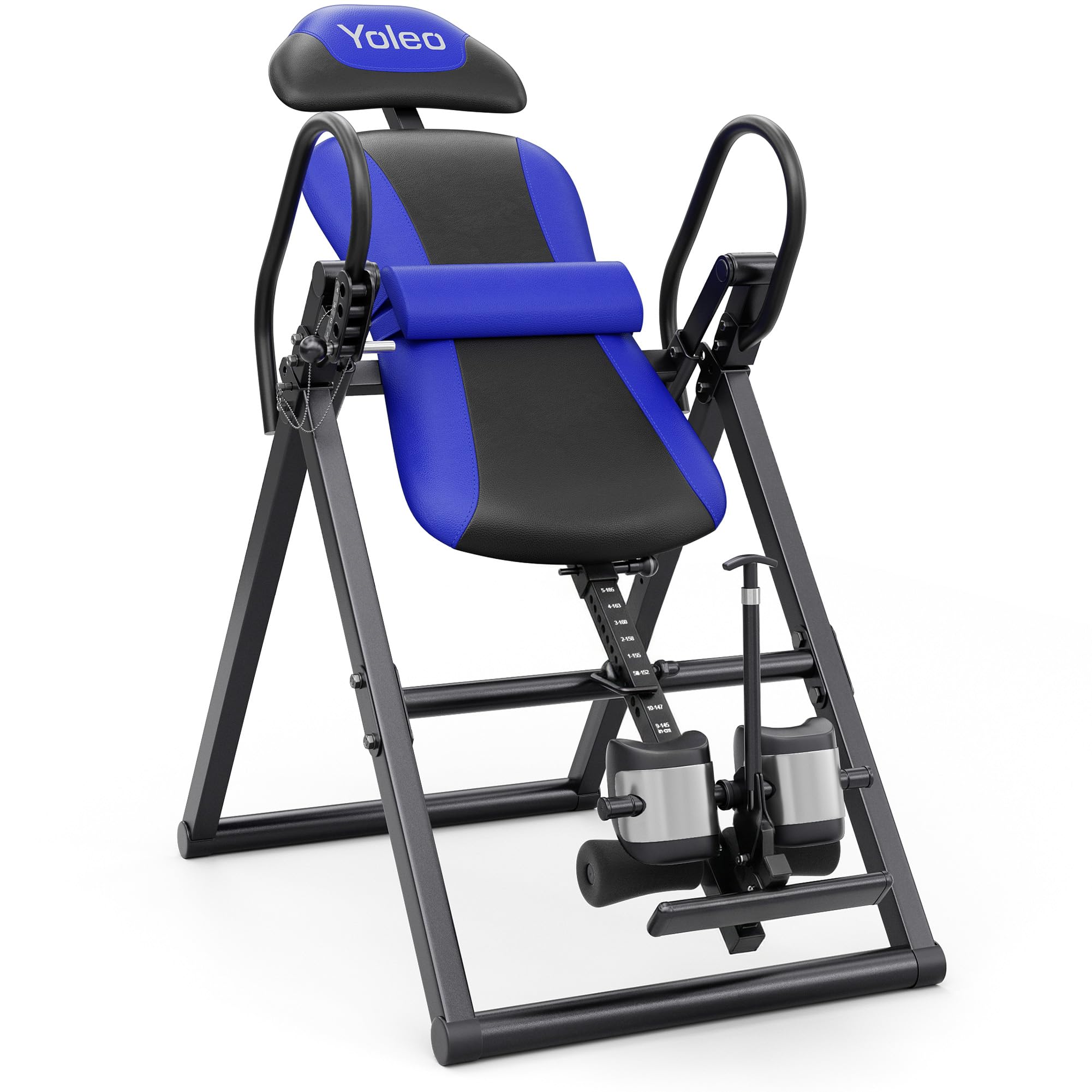
The YOLEO ITX320 is the table we point to when the budget is the first filter but you still want a full-size inversion table. It has a four-position pin, an adjustable headrest, and a padded backrest that is more generous than the cheapest tables. At 24 kilograms, it is not a lightweight, but that mass helps it feel planted once you are on it.

We like the wide backrest because it gives your shoulders somewhere to land, and the adjustable headrest keeps your neck from craning when you are at a shallow angle. The ankle holders release with a long handle, and the four positions cover the useful range from a gentle stretch to a deeper hang. The aluminum frame feels stiff rather than flexy.

The height range of 4 feet 10 inches to 6 feet 6 inches covers a lot of users. The listing does not state a weight capacity, so check with the seller before ordering if you are a larger user. For a first table, it is a low-cost way to try inversion without committing to a premium model, and the wide backrest is the part that makes it feel less like a starter table.

Bottom Line

This is our budget pick for a first inversion table, with a wide backrest and four-position pin that make the basics feel sorted.

Check Latest Price

Best For Lighter users

Our Score 9.2/10
Body Vision IT9550

Body

Body Vision IT9550

  • Item Weight 46 lb
  • Backrest Size 38 x 16 x 1.5 inches
  • Weight Capacity 250 lb
  • Assembled Dimensions 40.5 x 26 x 50 inches
Check Price on Amazon

At 46 pounds, the Body Vision IT9550 is the table we move without thinking twice. That matters in a home where the table has to share space with a guest bed or a home gym. The footprint is smaller than the Teeter and Innova tables at 40.5 by 26 by 50 inches, and the red frame is easy to spot in a corner.

The backrest is a memory-style foam pad with a removable headrest pillow and an adjustable lumbar pad. We like that the lumbar pad can be moved to target the lower, middle, or upper back, which is more useful than a fixed bump in one spot. The foam is comfortable for short sessions, and the removable headrest keeps your neck from landing at an odd angle.

What we noticed in use is that the lighter frame is easier to set up and move, but you do feel that lightness when you first rotate. Once your weight is centered, it settles. The ankle system uses four foam rollers, and they are the part we appreciate most: they leave room for your calves and make the release easy to find without looking.

Bottom Line

This is our pick for a lighter user who needs to move the table between rooms, with a compact foam-padded frame that is easy to live with.

Check Latest Price

How We Chose and Tested Inversion Tables

We started by scanning specs and customer reviews for models with solid weight capacities, adjustable ankle and backrest settings, and frames that didn't rattle. We ruled out anything with vague assembly instructions or a flimsy hinge design, then ordered 12 tables that ranged from budget-friendly to high-end.

Each table arrived in a box, and we timed how long it took two people to assemble—and then how long it took one person alone, since many buyers set these up solo. We noted whether the instructions were actually illustrated, whether the hardware was labeled, and whether we needed tools beyond the included Allen wrench. Once built, we checked for wobble by shaking the frame at the pivot point and by having testers of different weights (from 120 to 220 pounds) hang fully inverted.

For six months, testers used the tables daily—morning before work, after long desk sessions, and post-gym. We adjusted the ankle holders and backrests for each person, noting whether the padding dug in or felt supportive, and whether the height setting matched the markings. We also tracked how easy it was to get in and out, and whether the safety handles or straps felt secure.

Finally, we asked testers to rate their lower-back pain before and after each session. The tables that earned a permanent spot in our homes were the ones that delivered consistent relief without requiring a physics degree to adjust. We also factored in price—a table doesn't need to cost a fortune, but it does need to feel solid and safe.

How to Choose

Start With Height and Weight Fit

A full-size inversion table is built around your height and weight, so start there. Most tables in this group fit users from 4 feet 10 inches to 6 feet 6 inches, and the better ones carry a 300-pound rating; the Body Vision IT9550 is the exception at 250 pounds. If you are near the top of the range, choose a table with a longer backrest and an adjustable headrest. The trap is assuming a higher weight rating makes a table fit you; the height setting still has to match your body before the balance point feels right.

The Ankle Hold Is the Safety System

Your ankles take the load while you are inverted, so the ankle system deserves more attention than the angle count. Wrap-around cups with a long release handle are easier to trust than small rollers, and a two-position foot platform helps you set the hold without pinching. The Teeter tables use this approach; the Innova and Body Vision tables use rollers or reversible holders. Wear thick socks for your first sessions, and test the release before you rotate. If the hold feels painful rather than snug, stop and adjust it.

Balance and Return Control

An inversion table should let you start with a small shift and come back up without a jerk. Pin systems and balance mechanisms give you repeatable stops; a strap system is simpler but less precise. The table also has to be set to your height before the balance feels neutral, and it will feel different for a second user. When you try one, practice the return motion at a shallow angle before you go deeper. A table that feels tippy at the start is usually a setup problem first, not a reason to force it.

Backrest, Lumbar Support, and Extras

A flat padded backrest is fine for short sessions, but a flexible surface or an adjustable lumbar pad can make a longer hang more comfortable. Air lumbar support, like the Innova ITX9900's inflatable pad, lets you change the pressure under your lower back without adding another machine. Heat and massage are comfort features, not decompression; they make it easier to relax into the stretch, but they do not replace a secure ankle hold. Pay for them only if you know you will use them.

Assembly, Space, and Storage

Most full-size tables arrive partly disassembled, and the frame is easier to build with two people and a couple of real tools. Plan for an evening, not ten minutes. The footprint is roughly 46 by 28 by 62 inches on several models, and you need clear space behind the table for the backrest to swing down. A folding design helps for storage, but it does not make a 60-pound table portable. Measure the corner and the ceiling clearance before you order, then assemble it where it will live.

Frequently Asked Questions

Final Verdict

After testing the full set, we recommend the Teeter FitSpine X3 for most homes. Its ankle system is the easiest to trust, the flexible backrest supports a real stretch, and the five-year warranty makes the premium easier to justify. If your budget is tighter, the Innova ITM5900 is the value pick: you get heat, massage, and a 300-pound frame for much less. Choose the Teeter EP-560 if you want Teeter's build without the extras, or the Body Vision IT9550 if you need a lighter table and fit within its 250-pound limit.