Yoga & Mobility

Best Hot Yoga Mats of 2026

You learn what a yoga mat is really made of about 40 minutes into a hot class, when your hands start creeping forward in downward dog and the towel you brought is already soaked. A mat that grips when it's dry is not the same mat that grips when it's wet, and in a heated room that difference is the entire practice. The right one keeps your hands and feet planted, cushions knees and wrists without turning balance poses into a wobble, and doesn't leave you second-guessing the purchase on the walk home.

I've owned a cheap foam mat that smelled like a tire for a month and a thick, plush one that was wonderful for floor work and miserable for standing balances — that's the tradeoff most hot yoga shoppers hit. Over the past six months, my team and I have practiced on 12 mats, from thin travel styles to cushioned 6-millimeter ones, in heated studio classes and in my very warm living room. Thickness, weight, and price all factored in, but grip when wet and stability underfoot are what separated the keepers. The ones below are the mats that earned a permanent spot in my bag.

Best For Warm classes

Our Score 9.4/10
Gaiam Premium Print

Gaiam

Gaiam Premium Print

  • Weight 3.1 lb
  • Surface Closed-cell PVC
  • Thickness 6 mm
  • Dimensions 68"L x 24"W
Check Price on Amazon

Most mats in this group are black or a solid color; the Premium Print is the one you choose because you like looking at it. The prints are genuinely good — Sublime Sky is a soft, calm blue rather than the neon you get from a lot of patterned mats — and underneath the design sits six millimeters of closed-cell PVC, which is the right family of material for a warm room.

Warm, not scalding. Dry grip and wet grip are different problems, and this mat solves the first one well: through a normal vinyasa it holds hands and feet without fuss. Once your palms are actually wet the surface gives, and in a hot class that means a towel at the top of the mat every single time. We don't count on it alone in a genuinely hot room.

Sixty-eight inches is the other thing to weigh — a standard length, but four inches shorter than the 72-inch mats here, which matters if you are tall. What you get instead is a mat that is easy to live with: light enough to carry, quick to wipe down, and handsome enough that you won't mind it rolled up in the corner of the living room. If your studio runs warm rather than hot, this is an easy, good-looking choice; if it runs at sweat-dripping temperature, start with the Manduka.

Bottom Line

A good-looking 6mm closed-cell mat for warm classes and everyday practice — just not the one we rely on for a real sweat.

Check Latest Price

Best Budget

Our Score 9.2/10
Gaiam Essentials

Gaiam

Gaiam Essentials

  • Weight 3 lb
  • Texture Raised circular pattern
  • Thickness 6 mm
  • Dimensions 72"L x 24"W
Check Price on Amazon

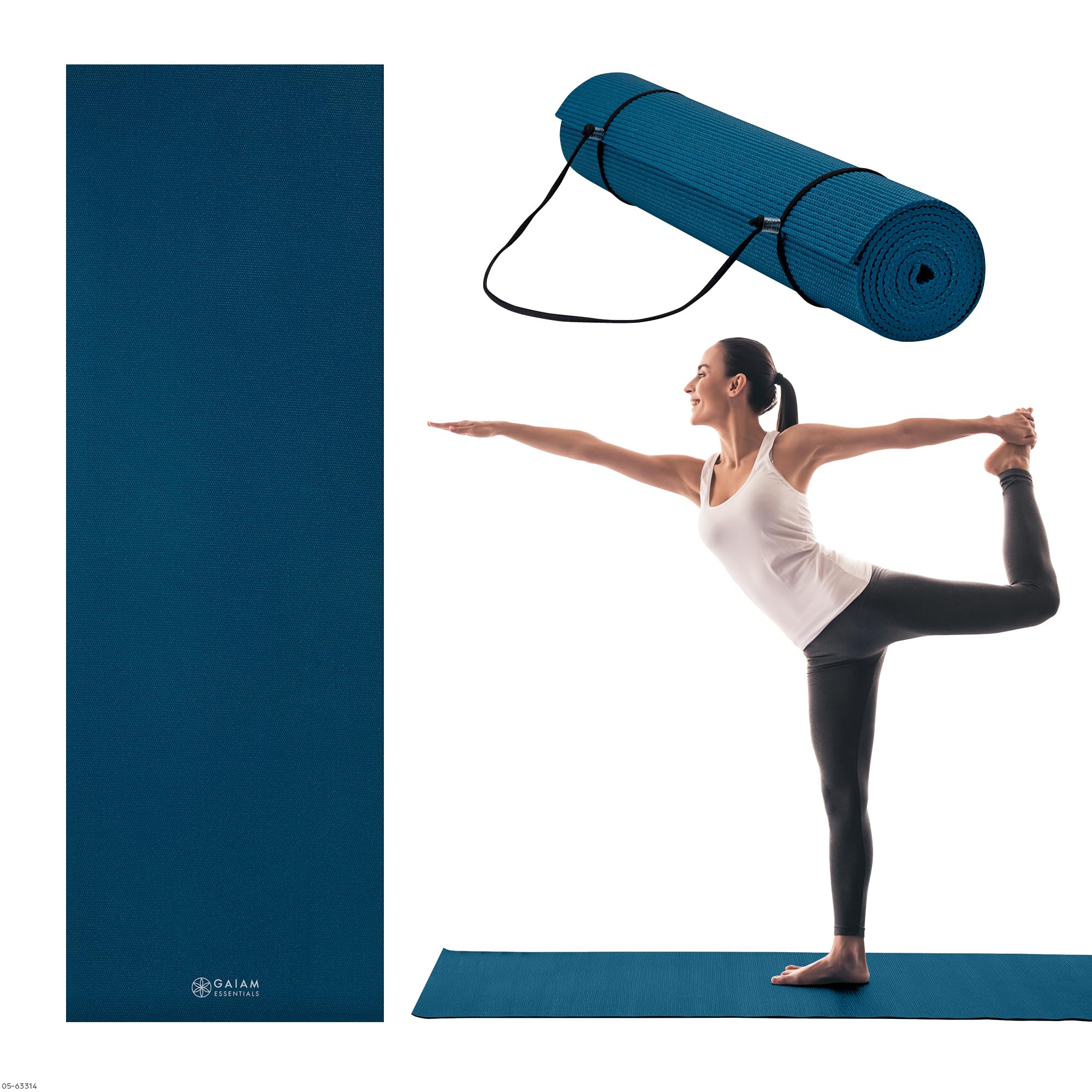
A full 72-inch mat with a raised texture for the least money here.

The Essentials is the least expensive way here to get a full 72-inch mat, and for a lot of people that settles it. Six millimeters of textured mat, a cinch strap, three pounds — plain and competent, and it gets you into a heated room without a decision to agonize over.

We think it earns more than its place at the bottom of the price list. The raised circular texture gives sweaty hands something to push against instead of a smooth sheet to slide on, and the length is the quiet advantage: at 72 inches, tall practitioners keep their heels on the mat in a long lunge where a 68-inch mat runs out. It also wipes down in a couple of passes, which matters more in a hot room than any printed slogan.

Where it falls short is density, and that shows up as wet grip. The material is softer than a studio mat's, so it compresses a little under a standing pose, and once your hands are properly wet this is not the stickiest surface in this group — the Gruper handles sweat better. But as a first hot yoga mat, or a second one that lives in the car for the classes you squeeze in, it is the sensible place to start.

Bottom Line

A no-frills 72-inch mat with a texture that helps wet hands, and the least expensive sensible place to start a hot yoga habit.

Check Latest Price

Best For Tall practitioners

Our Score 9.2/10
CAMBIVO Extra Long

CAMBIVO

CAMBIVO Extra Long

  • Weight 5 lb
  • Surface Textured PVC top, honeycomb base
  • Thickness 6 mm
  • Dimensions 84"L x 30"W
Check Price on Amazon

Eighty-four inches long and 30 wide. That is close to a foot longer and half a foot wider than most mats here, and if you are over six feet — or you simply want room to land a wide warrior without hanging off the edge — the space is not a luxury.

The 6mm PVC has a textured top and a honeycomb underside that grips the floor, and size is what makes it work: hands and feet stay on the mat through a long flow instead of creeping toward the edges. What we didn't love is how it behaves wet. With sweat on your palms the top surface gets slick, and a mat this big is awkward to reposition mid-sequence. Plan on a towel across the top in a hot room.

Five pounds and a bulky roll are the other half of the trade: this is a mat that lives at home. As a home mat for a tall practitioner in a warm room, it delivers a lot of surface for the money, and the honeycomb base stays put on hardwood. As a class mat in a crowded studio, the footprint becomes a nuisance.

Bottom Line

The pick for tall or broad practitioners who practice at home: 84 by 30 inches of cushioning, as long as you add a towel in the heat.

Check Latest Price

Best Overall

Our Score 9.0/10
Manduka PRO

Manduka

Manduka PRO

  • Weight 7.5 lb
  • Surface Closed-cell PVC
  • Thickness 6 mm
  • Dimensions 71"L x 26"W
Check Price on Amazon

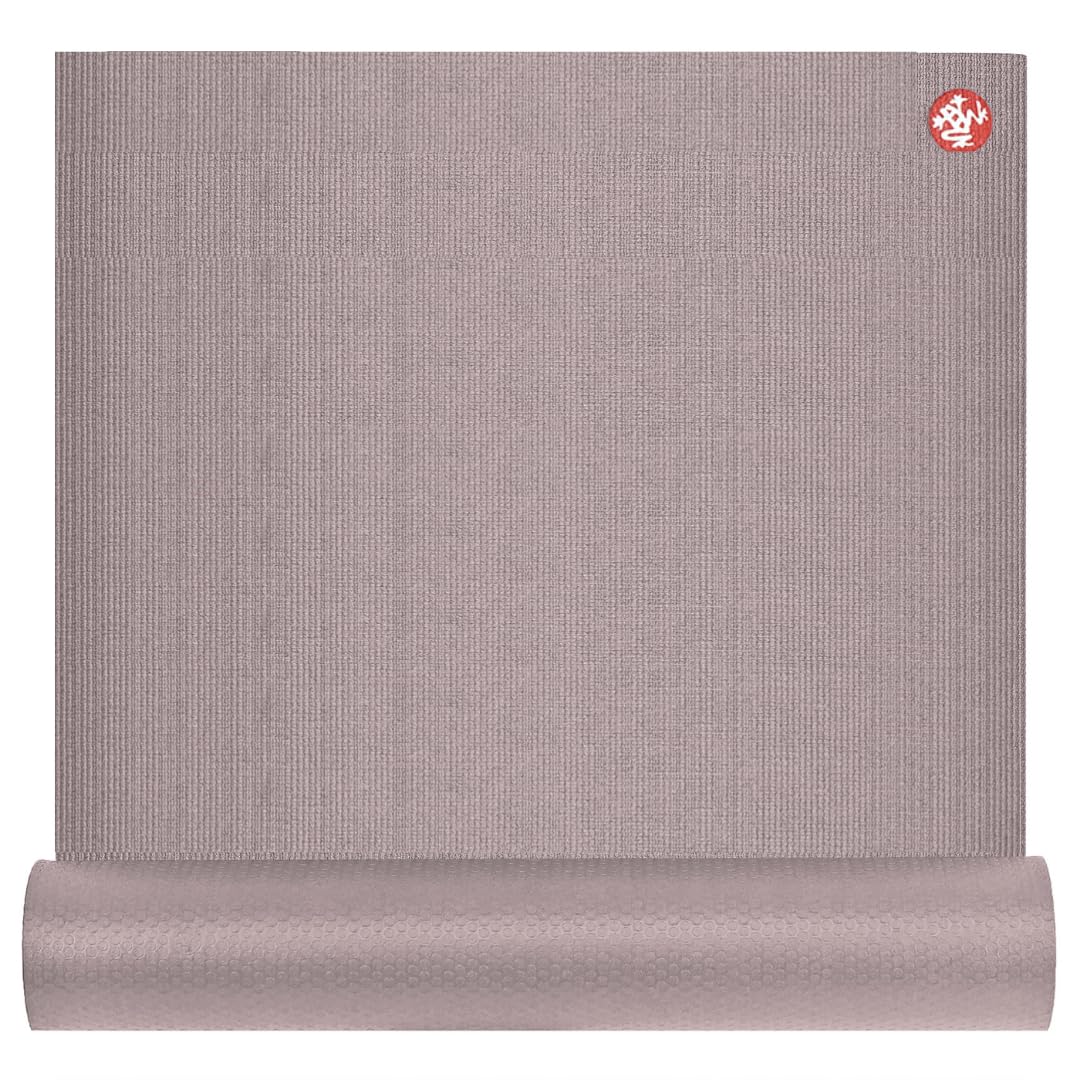
Closed-cell PVC and dense 6mm keep sweat on the surface and standing poses steady.

Sweat is the whole problem in a heated room, and the Manduka PRO is the one mat here built around it. The surface is closed-cell PVC, which means it doesn't drink: moisture beads on top where a towel or a palm can deal with it, instead of soaking into foam and turning the mat slick from the inside. That single property separates a real hot yoga mat from a padded exercise mat, and it is why this is the first one we recommend.

Density is the second reason. Six millimeters of very firm PVC doesn't compress under a standing pose or bunch at the edges halfway through a long hold, and at 71 by 26 inches it is wider than most of the others here — useful in wide-legged sequences and for anyone with broad shoulders. The honest caveat is break-in: a new PRO is slick, and it takes a stretch of regular practice before the surface grips the way it eventually does. Keep a towel at the top of the mat until then.

The 7.5 pounds is the part we minded. Hauling it to a studio three mornings a week is real work, and if that is your routine the Gruper further down is a far easier thing to carry. Where the weight pays you back is at home: this is the mat here that sits flattest and steadiest on a hardwood floor, and it is guaranteed for a lifetime of practice, which nothing else in this group is. Buy it once and stop thinking about mats.

Bottom Line

For a heated practice at home, this is the mat we point you to: a sealed surface, dense 6mm, and a lifetime guarantee behind it.

Check Latest Price

Best For Learning alignment

Our Score 9.0/10
YOGATI Alignment

YOGATI

YOGATI Alignment

  • Weight 1.81 lb
  • Thickness 6 mm
  • Dimensions 72"L x 24"W
  • Alignment Lines Laser-etched center markings
Check Price on Amazon

Laser-etched lines down the center of the mat are the YOGATI's whole idea, and for a beginner they do something a teacher's cues can't: they show you where your hands belong before you set them down. Line your palms up on the marks and your shoulders land where they should more often than not.

The rest is a competent 6mm TPE mat. It is light at 820 grams, closed-cell, reversible in two tones, and it rolls small enough for the included harness. The sweat claim is the one to discount: in a hot room, with your hands wet for a full hour, that surface can turn slippery, so treat it as a mat for learning in a warm room rather than a sweat-heavy class.

Where it fits is a first mat for someone learning alignment at home, or a spare for a partner who joins now and then. The lines genuinely help, the bundle includes a strap and bag so there is nothing else to buy, and the two-tone finish looks better than most at this end of the range. It just shouldn't be the mat you take into a 90-minute heated flow.

Bottom Line

A beginner's mat whose markings actually teach alignment — good for a warm room, not what we take into a hot class.

Check Latest Price

Best Lightweight

Our Score 8.8/10
Gruper TPE

Gruper

Gruper TPE

  • Weight 1.65 lb
  • Included Carry strap and bag
  • Thickness 6 mm
  • Dimensions 72"L x 24"W
Check Price on Amazon

Under a kilo with a strap and bag, and the best wet grip here.

At 0.75 kilograms, the Gruper is the mat we reach for when it has to leave the house. It rolls tight, comes with both a strap and a drawstring bag, and adds almost nothing to a tote already carrying a towel and a bottle.

The surface is the part that surprised us. It is a dual-layer TPE with texture on both faces, and it holds its position through a wet flow better than anything else in this group — no creeping across a hardwood floor, no skating under a sweaty downward dog. TPE is closed-cell, so sweat stays on top and wipes off with a damp cloth, and 72 by 24 inches is the standard class footprint.

What you don't get is density. Six millimeters of TPE feels softer underfoot than the Manduka, and in a long standing sequence you can feel it give slightly where a denser mat stays put. For a home practice or a couple of classes a week that is a fair trade for a mat you can carry with two fingers. Just know that a genuinely dripping palm will still want a towel at the top of the mat.

Bottom Line

The lightest mat here with grip that holds through a wet flow — our pick if you carry your mat to class rather than practice at home.

Check Latest Price

How We Tested Hot Yoga Mats in a 95-Degree Room

We built the shortlist by reading through specs and customer reviews for mats sold as hot-yoga-specific, then filtering for closed-cell surfaces, thickness between 3 and 6 millimeters, and weights that a person could reasonably carry to a studio four times a week. We cut anything with a pattern of odor complaints or edges that reviewers described as curling within a few months, and landed on 12 mats spanning thin travel styles to plush cushioning.

Each mat came to at least six heated vinyasa classes with me, and the rest of the team practiced on them at home in rooms we pushed to 90 degrees or warmer. Before every downward dog and warrior sequence, we wet our palms and the mat surface and noted whether hands stayed put or slid forward. We weighed each mat on a kitchen scale and carried it rolled to class on foot and on the subway to see how it felt on a shoulder.

Thickness got measured with calipers at three points, then tested with held kneeling lunges and forearm planks to see whether knees and elbows felt supported or bruised. We ran tree pose and warrior III on hardwood and carpet, watching for the mat sliding or squishing underfoot, and noted whether surface markings actually helped us line up hands and feet or were just decorative. Each new mat was unrolled in a small closed room and checked at 24 and 72 hours for smell.

For durability, every mat was rolled and unrolled at least three times a week for six months, and we checked edges for curling, tops for pilling, and surfaces for any separation between layers. We also weighed price against how many weekly classes each mat seemed likely to survive, since a bargain that flattens in a season isn't one.

How to Choose

Sweat Has to Go Somewhere

A closed-cell surface — PVC, TPE, or dense rubber — is sealed, so sweat beads on top and wipes away between poses. An open-cell foam mat drinks it, and once the material is damp from the inside, no amount of texture will stop a palm from sliding. That is why a plush, inexpensive foam mat that feels lovely in the store can be the worst possible choice for a hot class.

The quick test is a thumbnail: press it into the surface. If the mat is spongy and porous under your nail, it is a floor-work mat. If the surface resists, wipes dry, and shows no drink line after a spray of water, it will survive a heated room. We put more weight on this than on any other specification in this guide.

Grip Is a Wet Question, Not a Dry One

Every mat here is sold as non-slip, and most of them are, with dry hands. The useful question is what happens at minute forty, when your palms are wet and your feet are planted. Test before class rather than during it: wet your hands at the sink, run three downward dogs, and see whether you slide forward.

Expect a break-in period on the denser mats — the Manduka in particular starts slick and grips better after weeks of regular practice. Until then, a thin microfiber towel across the top of the mat does the work the surface can't, and it is far cheaper than replacing a mat that has gone slick.

Thickness and Density: Cushion or Balance

Four to six millimeters of dense material is the sweet spot for a hot flow: enough to protect knees in a low lunge, firm enough that you don't wobble in tree pose. The half-inch and one-inch mats feel wonderful in savasana and unsteady in a standing sequence, because foam that deep compresses unevenly under a bare foot.

If your knees are the real problem, buy a dense 6mm mat and fold a blanket under them for kneeling poses. Adding thickness trades away the stability you need for every standing pose in the room.

Length, Width, and the Walk to Class

Seventy-two inches is the working standard and 68 is common, which is short for anyone past about five-ten. Width surprises people more than length: 24 inches is standard, while 26 or 30 gives real room in a wide stance. Match both to your body rather than to the photograph.

Then weigh the thing. A dense studio mat runs around seven and a half pounds, a light TPE mat well under two. If you practice at home, weight is irrelevant and density is essentially free; if you carry a mat to a studio three mornings a week, it becomes the specification you curse every time.

Frequently Asked Questions

Final Verdict

Buy the Manduka PRO. For hot yoga the deciding facts are simple: a closed-cell surface that keeps sweat out of the foam, enough density that standing poses stay steady under a bare foot, and a build that is guaranteed for a lifetime of practice. The 7.5 pounds is the price of that density, and it is the one thing that might send you elsewhere.

If you carry a mat to a studio several times a week, take the Gruper instead — under a kilo, with a strap and a bag, and wet grip that holds better than anything else here. And if standard mats leave your heels off the end, the CAMBIVO's 84 inches solve a problem the others don't.