Tech & Wearables

Best Cadence Sensors of 2026

A cadence sensor is a small pod that straps to your crank arm and counts how many times you turn the pedals each minute, then sends that number to your bike computer or phone. The number sounds trivial until you watch it on a long climb — most riders grind at a lower cadence than they think, and the sensor turns "I feel sluggish today" into something you can actually work on. It's also the cheapest way to make a training plan mean anything, because effort without data is just guessing.

I've had sensors that needed three tries to pair and one that came loose mid-ride, so I'm picky about the boring parts. Over four months, our team rode with 14 cadence sensors on road bikes, a gravel bike, a commuter, and two indoor trainers, and the good ones all disappeared once mounted. Something first-time buyers don't always realize: cadence and speed sensors are often the same hardware running in a different mode, so one unit can frequently do both — worth knowing before you buy two. The picks below are the ones we stopped thinking about.

Best Overall

Our Score 9.2/10
Garmin Cadence Sensor 2

Garmin

Garmin Cadence Sensor 2

  • Battery Replaceable lithium manganese dioxide
  • Mounting Crank arm; 3 bands included
  • Dimensions 1.5 x 1 x 0.25 in
  • Connectivity ANT+ and Bluetooth Low Energy
Check Price on Amazon

Fits any crank arm, broadcasts ANT+ and Bluetooth, and disappears once it's fitted.

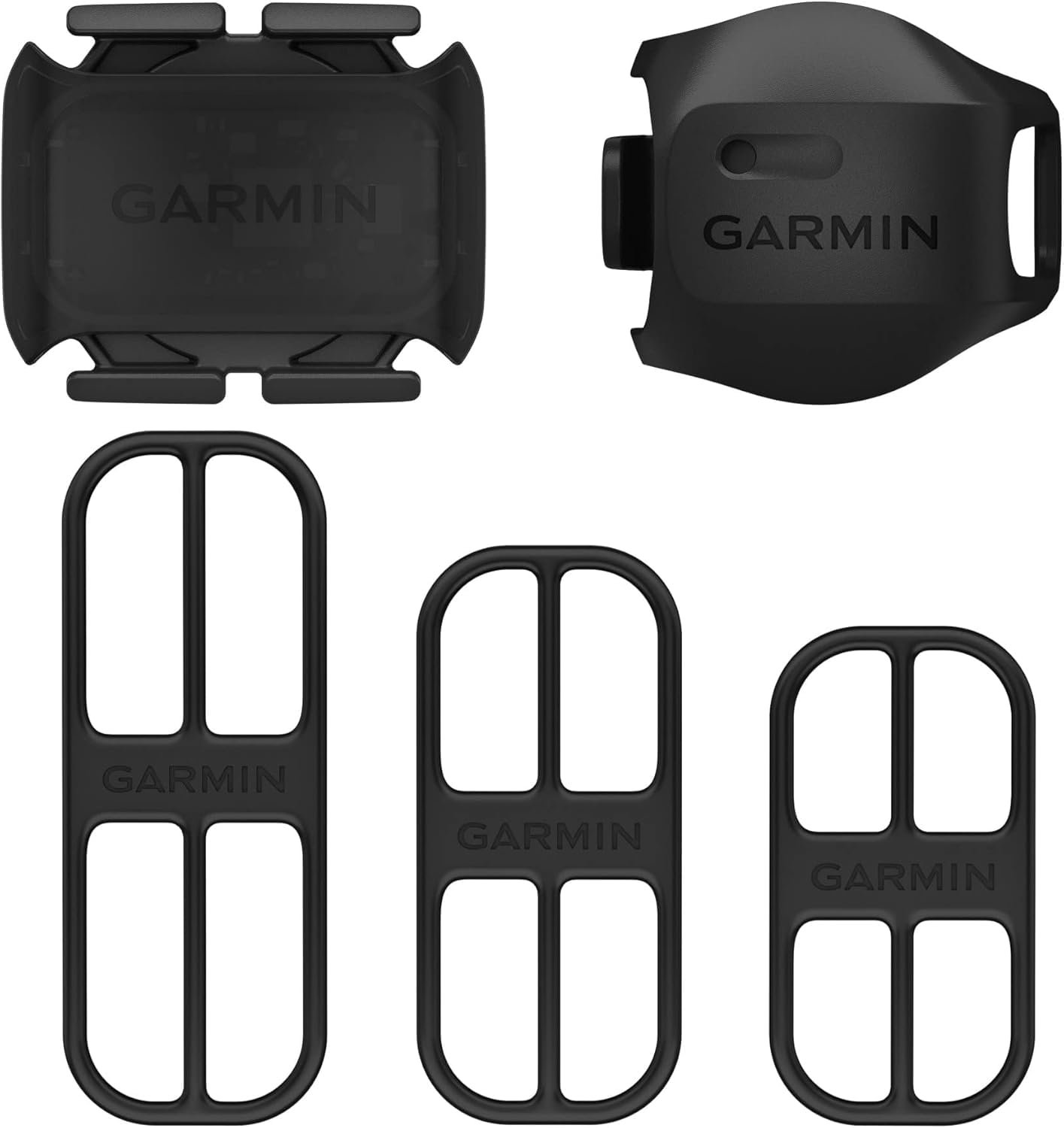
The Garmin Cadence Sensor 2 is the most expensive cadence-only pod here, and nothing in the box makes a show of why. What earns the money is fit: one of the three rubber bands wraps any crank arm, the body is a quarter-inch thick, and the pod broadcasts ANT+ and Bluetooth Low Energy, so the same sensor feeds an Edge, a Wahoo, a watch, or a phone app without an adapter.

Thinness turned out to be the specification we cared about most. The gap between a crank arm and the chainstay is tight on plenty of road frames, and a pod that sits inside that gap can't be knocked sideways by a heel. Pairing is the other half of it: this one appears in a device menu quickly, and the cadence number settles into a rhythm instead of hunting for the first few seconds of a ride.

There's one fussy detail worth knowing before you fit it. The coin cell sits in a small cradle, and when you change the battery that cradle has to click back exactly the way it came out, or the pod stays dark and you conclude it has died. Keep the spare bands in the toolbox too; they're the part that ages fastest.

Cadence alone won't give you speed or distance, which matters if you train indoors where GPS has nothing to say. The Speed 2 and Cadence 2 set solves that in one box. Outdoors, with a head unit doing the mapping, cadence is the one number a GPS can't invent for you, and this is the pod we trust to keep sending it.

Bottom Line

The sensor we fit and stop thinking about: it suits any crank arm, speaks ANT+ and Bluetooth, and holds a steady number. Worth the premium if you want cadence once and done.

Check Latest Price

Best Speed and Cadence Combo

Our Score 9.2/10
Garmin Speed 2 & Cadence 2

Garmin

Garmin Speed 2 & Cadence 2

  • Sensors Speed and cadence
  • Odometer Speed sensor only
  • Connectivity ANT+ and Bluetooth Low Energy
  • Water Resistance IP54
Check Price on Amazon

Adds hub-mounted speed and an odometer for riders who want distance without GPS.

Two sensors arrive in the Garmin bundle: the cadence pod we recommend on its own, plus a hub-mounted speed sensor that self-calibrates once it's paired with an Edge. The speed half is the reason to look at the set, and it's also the half that needs the most explaining.

Speed from the hub is distance that holds up when the GPS can't help — on a trainer, under heavy tree cover, in a tunnel, or on a setup where the rear wheel is the only thing turning. The sensor also keeps an odometer, which turns drivetrain maintenance from guesswork into a number you can look up. Fitting both is a bands-and-go job, and the same bands work on hubs and crank arms of very different sizes.

The caveat is the speed channel. Readings can jump to a number the wheel isn't doing, or drop away just as the effort picks up, and that is exactly the kind of glitch that spoils a trainer session's data. Cadence has been the steadier of the two for us, which is why the cadence-only sensor is still our default recommendation.

Where the bundle earns its place is a bike that splits its time between the trainer and the road. You get speed from the wheel indoors and cadence everywhere, both landing in the same app, and the odometer quietly tracks wear on a chain that otherwise goes unmeasured. If you only ride outside with a GPS head unit, the cadence-only sensor is the cleaner buy.

Bottom Line

Buy the pair if you want distance as well as cadence: two sensors, one box, and a speed reading that keeps working indoors where GPS gives up.

Check Latest Price

Best Budget

Our Score 8.8/10
COOSPO BK9C

COOSPO

COOSPO BK9C

  • Connectivity ANT+ and Bluetooth 5.0
  • Measuring Range 40–160 RPM
  • Water Resistance IP67
  • Measured Accuracy ±1 rpm
Check Price on Amazon

A waterproof, magnet-free pod that pairs fast for a fraction of the premium price.

The BK9C's spec sheet makes a promise the rest of the budget field avoids: plus or minus one rpm, measured across a 40 to 160 rpm window. The decimal interests us less than the window, which runs wider than anything a road rider or a spin class will produce — so the sensor isn't the part limiting your data.

IP67 sealing, no magnets, and a band mount that goes on without any alignment fuss. Ours paired from inside the app on the first attempt, which is not something we can say for every budget sensor here, and the sealed shell means rain and wheel spray aren't a reason to take it off. Position matters: sit the pod too close to the frame and the reading gets choppy, so leave a gap before you tighten the band.

What you give up is the safety net. The Garmin has years of pairing history and a much larger installed base behind it; the COOSPO carries a twelve-month warranty and a shorter record. If cadence is a number you glance at mid-ride rather than the backbone of a training plan, that is an easy trade to make.

Bottom Line

Our value pick: a waterproof, magnet-free pod that pairs with a head unit or an app in seconds and costs a fraction of the Garmin. The one to fit if cadence is all you want.

Check Latest Price

Best for a Second Bike

Our Score 8.8/10
iGPSPORT CAD70

iGPSPORT

iGPSPORT CAD70

  • Weight 0.34 oz
  • Battery CR2025, rated one year
  • Connectivity ANT+ and Bluetooth
  • Measuring Range 60–120 RPM
Check Price on Amazon

Light, quick to pair, and inexpensive enough to leave on the winter frame.

The number to notice on the iGPSPORT CAD70 is in the small print: a stated measuring range of 60 to 120 rpm. For most riders that covers the whole useful band and then some. For a track sprinter, or anyone doing high-cadence drills, it is a ceiling — and it is the clearest example here of a specification deciding the purchase before the brand does.

For everyone else, this is the sensor we reach for when a second bike needs cadence without a second big spend. It weighs almost nothing, it runs on a CR2025 that the listing rates at a year of hour-long rides, and it broadcasts both ANT+ and Bluetooth, so it moves between a Garmin-equipped road bike and a phone-only trainer setup without complaint. Pairing is the strong point: ours showed up in a computer's sensor menu straight away.

The weak spot is the long game. Readings are steady while a unit is working, but these are inexpensive electronics and some of them go quiet; keep the receipt and check it again after a few months of wet weather. Buy it as the sensor that lets you try cadence on a second bike, not as the one you expect to outlive the frame.

Bottom Line

For a second bike, this is the one: light, instantly pairable, and inexpensive enough to leave on the winter frame. Check the range if you sprint.

Check Latest Price

Best for Indoor Bikes

Our Score 8.6/10
Sunny Health & Fitness CB110S

Sunny

Sunny Health & Fitness CB110S

  • Modes Cadence or speed, switchable
  • Mounting Crank arm, magnet-free
  • Connectivity Bluetooth and ANT+
  • Water Resistance IP67
Check Price on Amazon

Magnet-free and app-friendly, with a button that switches between cadence and speed.

If the bike in your life is a spin bike with a phone holder rather than a road bike with a head unit, this is the sensor that fits the way you ride. It straps to the crank with elastic bands or zip ties, has no magnet to line up, and switches between cadence and speed at a button press, so one pod covers both jobs. The free SunnyFit app is the real draw: a cadence number on its own is trivia, but cadence next to a class or a target is a reason to keep pedaling.

Two practical notes. The instructions are thin, and the mounting step is the fiddly part — on a shorter crank arm the pod can end up where your shoe passes, so fit it, spin the pedal, and shift it up the arm until your heel clears. Pairing with a phone has been the easy part; pairing with a watch is worth testing in the first week, while the return window is still open.

Bottom Line

If the bike in your life is a spin bike rather than a road bike, start here: magnet-free mounting, button-switchable modes, and a free app that makes the number mean something.

Check Latest Price

Best For Polar watches

Our Score 8.4/10
Polar Speed and Cadence Set

Polar

Polar Speed and Cadence Set

  • Sensors Speed and cadence
  • Battery Life 3,000 hours claimed
  • Connectivity Bluetooth Smart
Check Price on Amazon

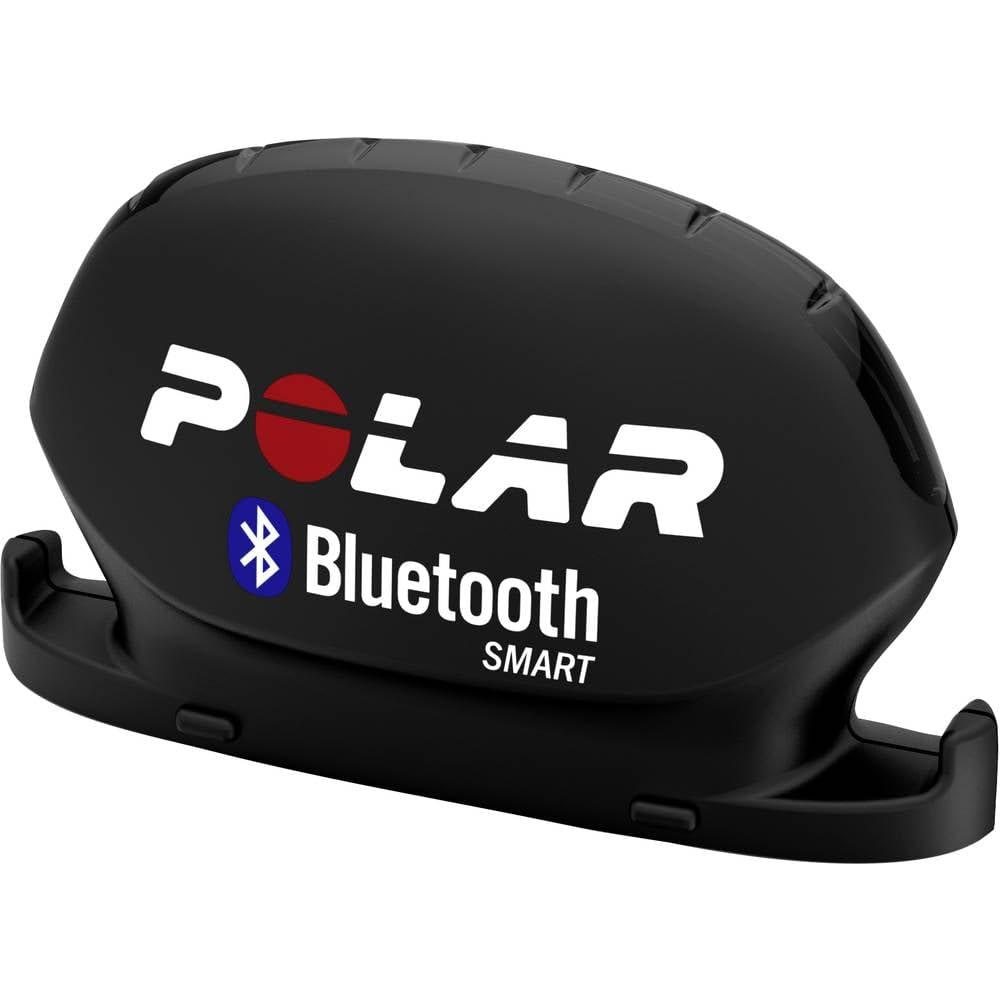
The Polar set is the pick here that leaves ANT+ off entirely. Both pods are Bluetooth Smart only, which is fine when your watch or phone is the display and a problem when your head unit speaks ANT+ and nothing else. That single fact decides more of this purchase than anything else about the sensors.

If you ride with a Polar V800 or V650, the appeal is obvious: native pairing, a claimed 3,000 hours of battery, and pods small and light enough that the firm bike attachment is the only thing you notice. They work on training rollers, which is a harder test of a speed sensor than a road ride, and the Wahoo app takes the wheel circumference if you prefer logging rides on a phone.

The snags are app-shaped. The pods pair happily with the watches they were built for, but the phone side is less settled — the Polar Beat app is the specific gap to check before you buy, and some iPhones have been awkward with these. The set also costs more than the Garmin cadence-only sensor while adding a speed pod you may not want.

So the recommendation is narrow and real. If the display on your bars is a Polar watch, this pair links without a bridge and logs speed and cadence the way that watch expects. If it isn't, the Garmin and the COOSPO broadcast on both radios, cost less, and don't care what's on your wrist.

Bottom Line

For riders already using a Polar watch: speed and cadence from the same ecosystem with the fewest pairing steps. Everyone else has cheaper, more flexible options here.

Check Latest Price

Best For Trainer bikes

Our Score 8.2/10
moofit CS8

moofit

moofit CS8

  • Sensors Cadence and speed
  • Mounting Crank arm and wheel hub
  • Connectivity ANT+ and Bluetooth 4.0
  • Water Resistance IPX6
Check Price on Amazon

The moofit pair comes in orange, and we ended up liking that more than expected: a sensor you drop in a dim garage is easier to find when it isn't the same black as everything else on the bike. Style aside, you get two pods — one for the left crank, one for the hub — with no magnets to line up and IPX6 sealing for rain and spray.

Installation is genuinely quick: the bands go on without tools, and the whole job is done before your phone has finished booting. What the money buys is two sensors where the premium brands sell you one, which is the argument for a trainer bike that needs both numbers going into Zwift at once. As a way to feed indoor miles, it earns its place; as the only sensor on a race bike, it does not.

Bottom Line

A matching speed and cadence pair for the price of a single premium sensor, with the caveat that you'll be pairing it inside someone else's app.

Check Latest Price

Best For First cadence sensor

Our Score 8.2/10
GEOID CS600

GEOID

GEOID CS600

  • Modes Speed or cadence, one at a time
  • Warranty 1 year
  • Connectivity ANT+ and Bluetooth
  • Water Resistance IP54
Check Price on Amazon

We fit the GEOID to the bike we're least precious about. It is the least expensive route to both ANT+ and Bluetooth in this set, which makes it the natural try-it sensor: if you've never trained with cadence, a season with this pod tells you whether the number changes anything, and the outlay is small enough that the answer doesn't have to justify itself.

The compromises are honest ones. It handles one mode at a time, so speed and cadence need two units, and the rubber mounting ring is the part that lets it down — swap in a zip tie if you have one and the pod stays where you put it. Set it high enough on the crank that your heel clears it, and check the band after the first wet ride.

Bottom Line

The cheapest way to get both radios onto your crank. Buy it to find out whether cadence changes your riding, not to keep for years.

Check Latest Price

How We Rode With 14 Cadence Sensors for Four Months

We started by pulling every cadence sensor we could find from the brands that dominate bike computers and trainer apps, then trimmed the field by the specs that actually change the experience: Bluetooth and ANT+ pairing, magnet-based versus magnetless accelerometer design, battery type, water resistance, and whether the same unit could run as a speed sensor. Price mattered too — we wanted to know whether the cheap ones were cheap for a reason. That left 14 units, which we mounted and rode from early spring into midsummer.

Every sensor got the same first test: install it on the sidewalk before a ride, clock running. We noted whether the mount needed a tool or just a rubber band, whether the pod cleared the chainstay, and whether we could pair it to a phone and a bike computer without reading the instructions twice. Then we walked down the street with the app open to see how fast it reconnected, and checked whether it stayed paired once we came back.

Then we rode. Each sensor went on the crank of a road bike for interval sessions, a gravel bike for chunky washboard, and an indoor trainer where we counted pedal revolutions by hand for 30 seconds and compared that to the readout. Units that doubled as speed sensors got a rollout test on a measured stretch of pavement to check the wheel circumference calibration. Rainy commutes and a couple of deliberate hose-downs answered the build-quality question, and a few accidental drops in the driveway answered it faster.

We logged app-reported battery levels every couple of weeks so the numbers weren't a surprise mid-season, and we kept track of what came in the box — a sensor that ships with both cadence and speed mounts is a better deal than two separate pods. Four months in, the ones still bolted to our cranks are the ones that never gave us a reason to check on them.

How to Choose

Start with the radio

Your display decides the sensor. ANT+ is the head-unit standard and broadcasts to several devices at once; Bluetooth Low Energy connects to one app or device at a time. A pod that does both is the flexible choice, because it moves between a bike computer, a watch, and a phone without an adapter.

The trap is pairing. These sensors are found inside the app or the head unit's sensor menu, never in your phone's Bluetooth settings, and searching there gets you nowhere. If you want a head unit and a training app running together, check that the pod broadcasts on ANT+ rather than Bluetooth alone.

The mount fails before the electronics

A cadence pod hangs off a crank arm on a rubber band, a zip tie, or a plastic cradle, and those parts age faster than the circuit does. When one of these comes off the bike, it's usually a perished band or a snapped ear rather than a dead sensor.

Choose a magnet-free design so there's nothing to align, and use the zip ties where the box includes them. Give the band a firm tug every few rides: a stretched band lets the pod rotate into the frame, and the mark it leaves is the cheap version of the problem.

Cadence alone, or speed as well

A hub speed sensor gives you distance when GPS can't — indoors, in tunnels, under dense trees — and pairs naturally with cadence for trainer sessions. On the road, with a head unit doing the mapping, cadence alone covers what GPS cannot.

Watch the switchable single sensors: they measure speed or cadence, one mode at a time, so buying one expecting both means re-mounting it between rides. For a bike that lives on a trainer, a two-sensor set is the better buy.

What the number is actually worth

Resolution matters less than reaction time. A pod that updates smoothly over a pedal revolution or two tells you what your legs are doing now; one that trails behind tells you what they were doing at the bottom of the hill.

Check the stated measuring range as well. A sensor that caps at 120 rpm is fine for steady riding and useless for sprint drills, and it's the sort of limit that only ever shows up in the spec table, never on the packaging.

Batteries and the long game

Almost all of these run on a coin cell, and the ones worth owning let you change it yourself. Claimed runtimes are optimistic, but the pattern holds: a CR2032 covers a season of regular riding, and the pod sleeps when the crank stops, which is why the first few pedal strokes after a long coffee break can show nothing at all.

Keep a spare cell in the toolbox, check the seal on the battery door when you swap it, and treat a sensor that needs a new battery every month as a faulty one rather than a thirsty one.

Frequently Asked Questions

Final Verdict

Most riders should buy the Garmin Cadence Sensor 2. It fits any crank arm, broadcasts on both radios, and it's the sensor we fitted and then stopped thinking about, which is the entire job. If you also want distance, or you train indoors where GPS has nothing to say, the Speed 2 and Cadence 2 set is the same sensor with a hub-mounted partner.

If the budget decides the purchase, the COOSPO BK9C pairs just as eagerly for a fraction of the money. It simply hasn't built the same long-term record yet, and that difference is what you're paying for at the top.