Recovery

Best Back Stretchers of 2026

A back stretcher looks almost too simple to work: a curved piece of plastic or foam that you lie back on and hope your lower back unknots. That simplicity is exactly why the category is so hit-or-miss. The right one can make a ten-minute stretch feel like a reset after a day at a desk, while the wrong one digs into your spine, feels flimsy, or is so awkward to adjust that you stop using it after a week. What you're really shopping for is a device that delivers a real stretch and genuine pain relief without making comfort or durability an afterthought.

I've tested 12 back stretchers over the past six months, from simple fixed arches to adjustable models with foam padding, and the differences come down to more than how they look. The best ones made it easy to find a setting that matched my stiffness that day, and they felt stable enough that I could relax into the stretch instead of bracing. Value matters here too: a basic stretcher can be perfectly effective, but only if the plastic doesn't flex and the padding doesn't flatten. The picks below reflect what actually earned a spot on my living room floor.

Best Padded Fixed Arch

Our Score 8.8/10
North American Healthcare Arched Back Stretcher

North

North American Healthcare Arched Back Stretcher

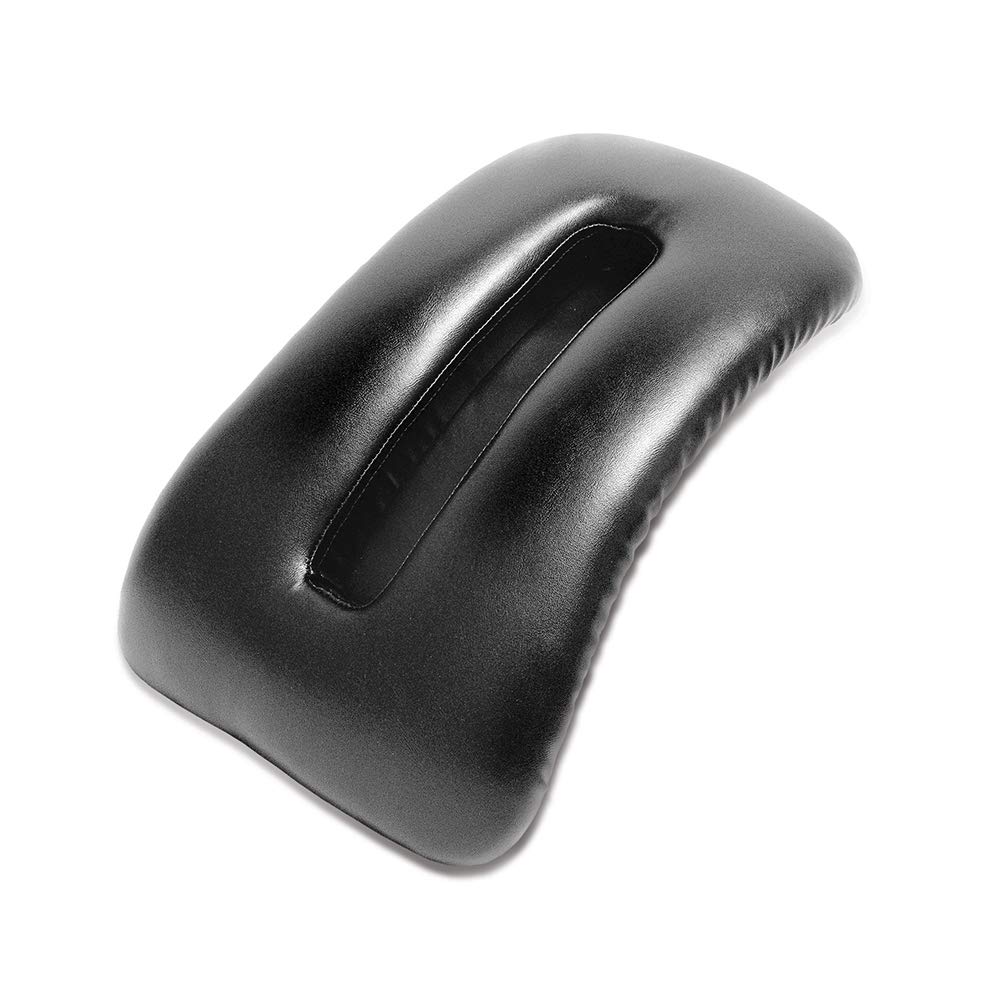
  • Arch Fixed, firm padding
  • Cover Synthetic leather
  • Weight 2.43 lb
Check Price on Amazon

Firm foam padding and a simple contour make this the lie-back-and-relax option.

There is nothing to assemble, nothing to click into place, and nothing to get wrong. You put this on the floor, lie back, and gravity does the stretching, and that simplicity is the whole pitch. It is also the catch: the contour is fixed, so the arch you buy is the arch you live with.

The padding is what separates it from the plastic boards here. Firm foam under a synthetic leather cover takes the edge off a curve that would otherwise press straight into your spine, and because it is a single piece you can shuffle it up or down your back, peak under the lower back one session and under the mid-back the next. We liked that more than we expected to; a padded board that only hit one spot would have been a much narrower purchase.

At 2.43 pounds it moves from the floor to the couch without a second thought, and the cover wipes clean instead of soaking in sweat. It suits someone who already knows they like a deep, sustained arch, who has used a foam roller or a friend's board and wanted more of the same. If you have never stretched your back this way, start on something you can dial back.

Bottom Line

Buy this one if you want padding and zero setup and you already know a deep arch suits you; there is nothing to adjust, and that is the point.

Check Latest Price

Best For Hip and hamstring

Our Score 8.6/10
ProStretch CoreStretch

ProStretch

ProStretch CoreStretch

  • Handles Rotate 360°
  • Material Aluminum
  • Warranty 1 year
  • Height Settings 10 positions
Check Price on Amazon

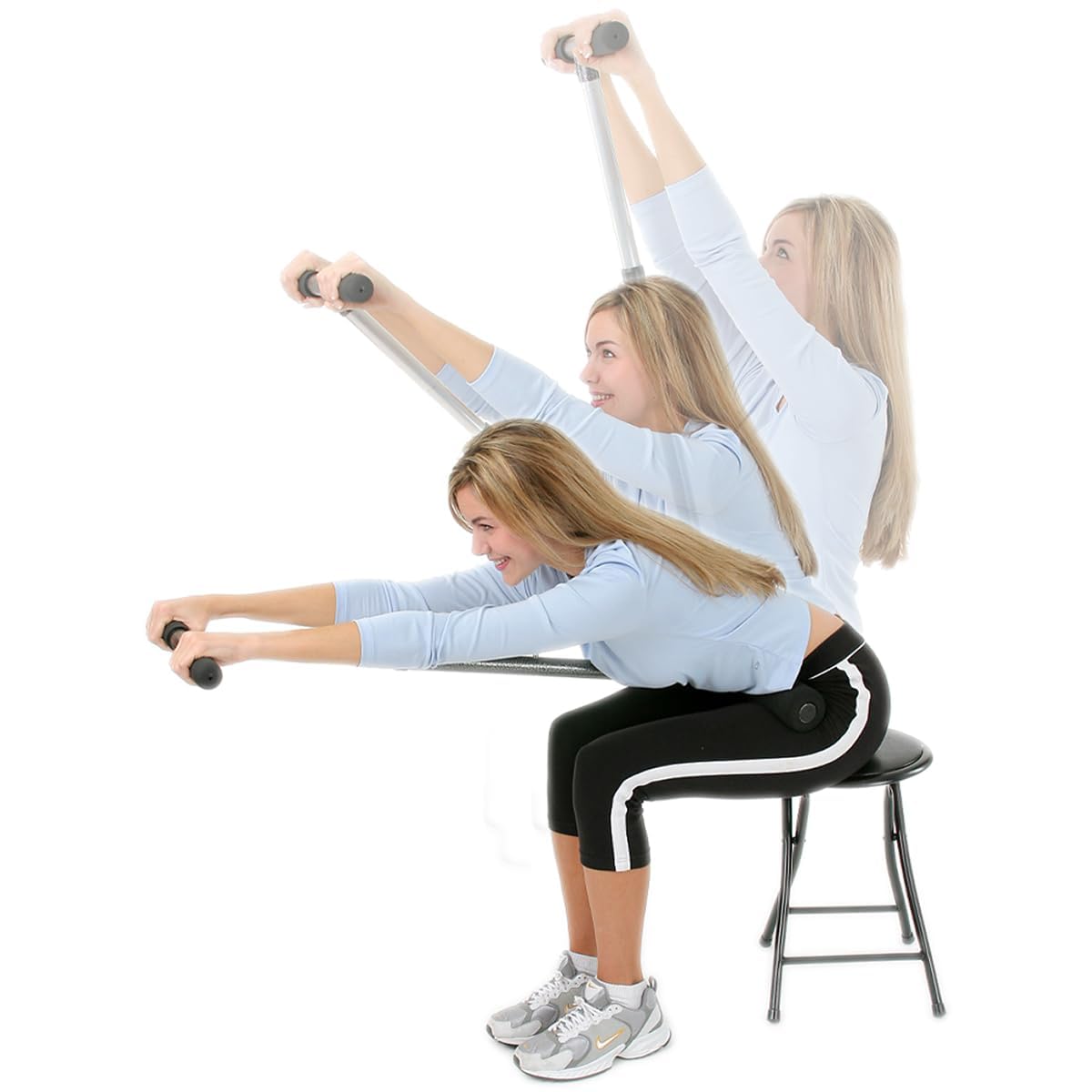
You brace your feet against this frame and pull with your arms, and the stretch runs through your hips and hamstrings at the same time as your lower back. It is a different idea of what a back stretcher is, and for the right person it is the more useful one.

Ten push-button positions set the frame's length to your leg, and the upper handles rotate a full 360 degrees, so you can pull straight back, out to the side, or into a twist. It is aluminum, it carries a one-year warranty, and it is 32 inches long, which means it lives against a wall rather than under the couch.

We think it earns a place for a specific reader: someone whose lower-back tightness tracks back to tight hamstrings and hips, the runner or lifter or desk sitter who feels it down the back of the legs as well. It is the most expensive product here by a wide margin, and if what you want is passive decompression after a workday, it is the wrong purchase. For pulling yourself actively into a stretch you feel in three places at once, nothing else in this group comes close.

Bottom Line

Buy it if your lower-back tightness starts in your hamstrings and hips, because it works those in a way a floor arch cannot.

Check Latest Price

Best Overall

Our Score 8.4/10
MINOLL Adjustable Back Stretcher

MINOLL

MINOLL Adjustable Back Stretcher

  • Weight 13.8 oz
  • Material High-strength PP plastic
  • Dimensions 15.16 x 9.84 x 1.57 in
  • Arch Settings 15°, 28°, 42°
Check Price on Amazon

Three arch levels, a broad base of support, and a price that suits daily use.

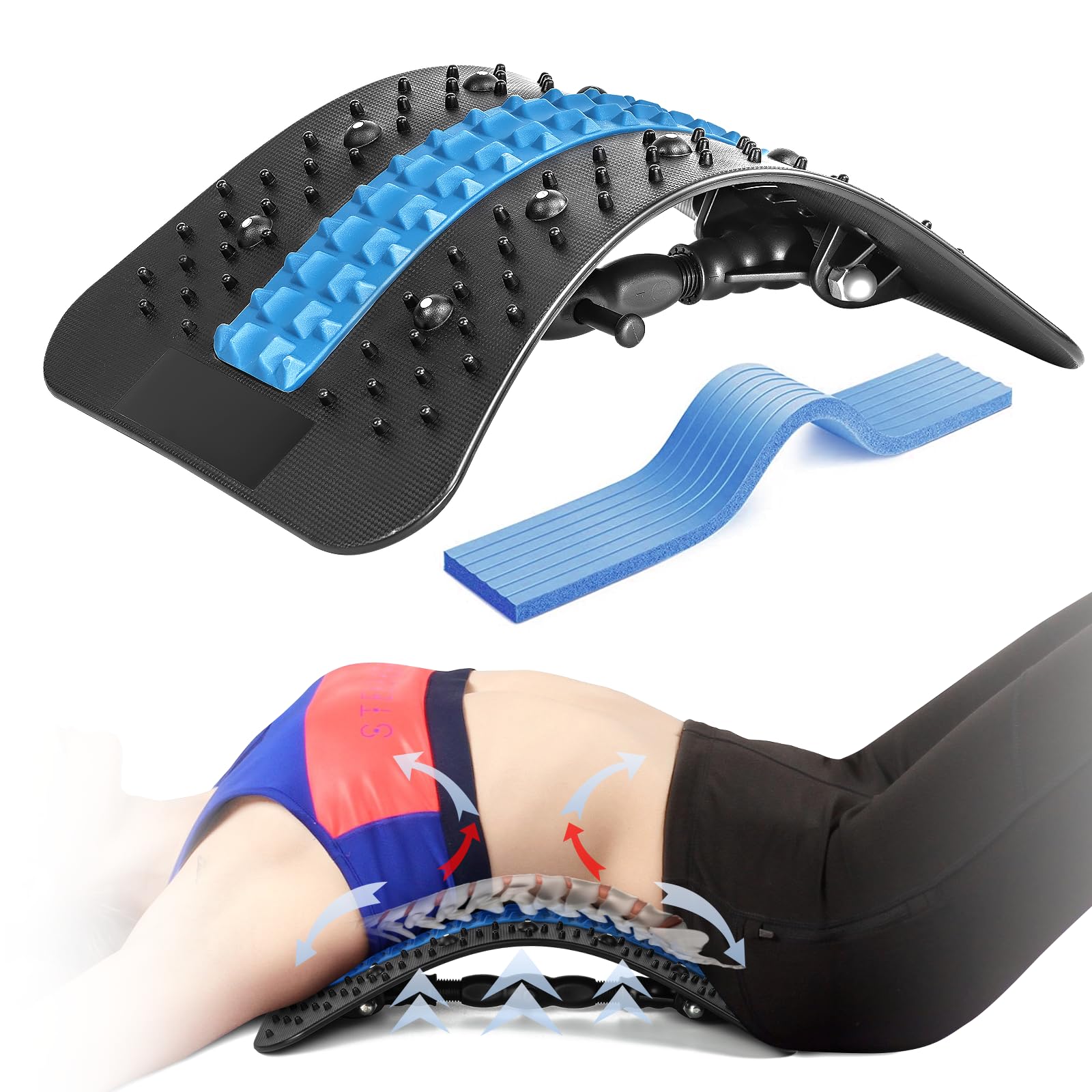
Three arches, at 15, 28 and 42 degrees, and the shallowest one is why this board is our default. Lying on an arch board for the first time is a gamble: if the curve is deeper than your back is ready for, you get a few seconds of stretch and a day of stiffness. Fifteen degrees is shallow enough to stay on while your back lets go, and it is where most people should spend the first week. The jump from 28 to 42 is a big one, and the top setting is not a place to begin.

The surface is bare plastic with acupressure ridges running its length, and that is the part we argue about. Through a thin shirt they feel sharp; put a folded towel between your back and the board and the same ridges become useful pressure along the spine rather than something to endure. If you want cushioning built in, this is not the board that offers it.

What makes it easy to live with is the size. At 13.76 ounces and a little over an inch thick, it slides under a couch or stands against a wall, and we moved ours between a bedroom floor and the rug in front of the television without thinking about it. That sounds trivial until you own a stretching board that lives in a closet; those do not get used.

If you already know a deep, fixed curve suits your back, or you want padding rather than plastic under you, the North American Healthcare arch is the better buy. The MINOLL earns its place on the option to start shallow and move up, which is the thing a first-time stretcher actually needs.

Bottom Line

We recommend the MINOLL as the default because its shallowest setting is genuinely gentle, so you can start there and work up instead of bracing against the arch.

Check Latest Price

Best For Fine angle control

Our Score 8.4/10
GUBENCI Stepless Back Stretcher

GUBENCI

GUBENCI Stepless Back Stretcher

  • Pads Two: memory foam and silicone
  • Arch Range 0°–60°, stepless
  • Load Rating 275 lb
  • Acupressure Points 112 small, 10 large
Check Price on Amazon

Every other board here offers a handful of positions and hopes one of them fits. This one adjusts anywhere from flat to 60 degrees without stops, and if you have ever clicked a three-position board into its middle setting and found it too much, that range is the entire argument.

The two pads matter as much as the angle. A thick memory-foam pad goes on for the early sessions, and a firmer silicone one swaps in when you want the nubs, 112 small points plus 10 larger ones along the curve. It answers the thing that makes people give up on these boards: what feels like a good stretch on day one can feel like lying on gravel by day ten, and changing the pad changes that without touching the angle.

The frame is rated to 275 pounds, the only stated limit in this group, so check it against your own weight before ordering. What we cannot tell you yet is how the plastic ages, because this is the newest board here by a wide margin while the rest have been on sale for years. Buy it for the fit rather than the longevity.

Bottom Line

The board we point to when every fixed setting has landed wrong, because its stepless range lets you find the angle in between.

Check Latest Price

Best Budget

Our Score 8.0/10
ChiFit Multi-Level Back Stretcher

ChiFit

ChiFit Multi-Level Back Stretcher

  • Weight 1.14 lb
  • Dimensions 15 x 4 x 2.8 in
  • Arch Settings 3 levels
  • Acupressure Points 92
Check Price on Amazon

A low-cost way to try acupressure stretching, with three fixed levels.

This is one of the two cheapest boards here, and that changes the job it has to do. If you are not sure an arch board will do anything for your back, a low-cost one answers the question in a week without turning it into a commitment. What the savings buy you is a firm, narrow plastic arch with three settings and more acupressure points than anything else in this group.

There are 92 of those points along the arch, and they are not subtle. We found them sharper than the photos suggest, so a shirt is not optional and a towel over the top makes the first few sessions a great deal easier. The narrow shape is the nicer surprise: at four inches wide and under three inches tall, it slides under a couch, into a gym bag, or behind a door, which is more than the wider boards here can claim.

Plastic is the part to watch. A board like this takes your full upper body weight every time you lie back, so run a hand along the base and the hinge line before a session and stop using it if you find a crack. For finding out whether arching helps your back at all, that is a reasonable trade; for a board you plan to lie on every day for years, put the money into one with a longer record.

Bottom Line

Our pick when you want to find out whether an arch board helps at all without spending much, as long as you are ready for a firm surface.

Check Latest Price

How We Tested Back Stretchers

We started by comparing arch height, adjustment range, foam density, weight limits, and return policies across dozens of models, then narrowed the field to 12 that represented different shapes and price points. For six months, each stretcher lived on the floor of my living room or home office. I used them for 10 to 15 minutes in the morning before sitting down to work and again after long writing days; a colleague with a physically demanding job tried them after shifts, and my partner used them on weekend mornings.

To judge effectiveness, we focused on back stretching and pain relief: where each arch pressed, how deep the stretch felt, and whether lower-back stiffness eased by the next morning or just moved elsewhere. Ease of use got checked in real time: getting into position, changing settings while lying down, and finding a comfortable place on the floor. We ran each adjustable model through every setting, not just the middle one, and noted whether the controls were reachable without sitting up. Comfort and feel came down to foam density, edge pressure, and whether the surface felt grippy or slick under a T-shirt.

After repeated use, we checked for flattened padding, cracks around hinges, and hardware that loosened, since durability is the difference between a tool you keep and one you stash in a closet. For value, we compared construction, range of adjustment, and how often each stretcher actually got used over the six months. The models that scored highest were the ones we reached for without thinking, not the ones with the longest feature list.

How to Choose

Start With How Much Adjustment You Need

Your back's tolerance changes from week to week, and a board with three fixed positions can put every one of them either side of comfortable. We lean toward an adjustable board for anyone lying on one for the first time, which is exactly what the MINOLL's 15-degree start is there for. If you have used an arch before and know a deep curve suits you, a fixed contour like the North American Healthcare removes a decision. The trap is assuming more levels are always better: three wide jumps can leave you with no good option, while a stepless range lets you stop where your back stops.

Nubs, Padding, and What It Feels Like

Acupressure points concentrate pressure along the spine, and they feel sharper than they look in the photos. A folded towel or a heavier shirt is the cheap fix, and it is worth trying before you write off a board as too aggressive. If you would rather skip that stage, buy padding instead of nubs: the North American Healthcare arch is firm foam under a synthetic leather cover, and the GUBENCI comes with a memory-foam pad you can swap for a firmer one later. Nubs are a preference, not an upgrade.

Check the Load Rating and the Frame

The arch boards here carry your upper body weight through a frame, and that frame is the part that fails first. Only one of these five states a limit, the 275 pounds on the GUBENCI, so check it against your weight before you order; if you are close to it, look for a board with a higher stated rating rather than assuming. Run a thumb along the base and the hinge line before each session and stop using the board if you find a hairline crack. Storing it flat, rather than under a stack of boxes, helps it last.

Where It Will Live

A stretcher that has to be unpacked does not get used, so measure before you buy. The arch boards here run about 15 inches long, and the ChiFit is narrow enough at 4 inches to slide under a couch or stand behind a door, while the ProStretch is 32 inches long and wants wall space. Weight is less of an obstacle than you would expect, since the lightest is under a pound, so the real question is whether the board can live in the room where you already sit. Pick that room, not the one with the most floor space.

Frequently Asked Questions

Final Verdict

Three honest settings, a starting angle shallow enough for a first-timer, and a shape that stores easily: the MINOLL is the board we point most people to, and the one that makes a daily three-minute habit easy to keep.

If you already know a deep, fixed curve suits you and want padding rather than plastic under your back, the North American Healthcare arch is the better fit. If every three-level board has landed in the wrong place, the GUBENCI's stepless range solves that first and answers the durability question later.