Waterproof vs Water-Resistant Running Jacket: Choose by Exposure
Use a water-resistant shell for brief drizzle, wind, and high-output runs where ventilation matters most. Use a waterproof jacket with protected seams for sustained rain, cold wet weather, remote routes, or events that require a waterproof shell.
Do not judge the complete jacket from the fabric label alone. Water can enter through untaped seams, zippers, cuffs, neck openings, or a poor hood. A highly waterproof fabric can also feel wet inside when sweat production exceeds vapor transfer and ventilation.
Choose by Duration and Consequence
| Run condition | Better starting category | Feature to verify |
|---|---|---|
| Dry but windy | Breathable wind-resistant shell | Air permeability, secure hem, and packability |
| Short light drizzle near shelter | Water-resistant shell | Surface repellency and ventilation |
| Steady rain on a local route | Lightweight waterproof running shell | Taped or sealed critical seams, hood control, and venting |
| Cold rain, long event, or exposed route | Fully waterproof shell appropriate to the event | All seams, zipper protection, cuffs, hood, required rating, and room for layers |
| Warm humid rain | The lightest protection compatible with exposure | Mechanical vents and a plan for sweat; no shell eliminates condensation |
| Race with mandatory kit | Exactly the garment specification in the rules | Required waterproof rating, hood, seam construction, and inspection standard |
Waterproof Fabric and a Waterproof Garment Are Not the Same Claim
- Membrane or coating: resists liquid water penetration through the fabric.
- DWR finish: encourages droplets to bead on the face fabric; it supports comfort but is not the waterproof membrane.
- Seam tape or sealing: covers stitch holes that can otherwise leak.
- Zippers and openings: need flaps, water-resistant construction, and a shape that limits entry.
- Ventilation: pit, back, pocket, or front-zip venting can move more heat than fabric breathability alone.
ISO 811 and AATCC TM127 describe hydrostatic-pressure testing of fabric. ISO 6956:2026 goes further by testing clothing in artificial rainfall on a moving manikin, illustrating why garment design matters.
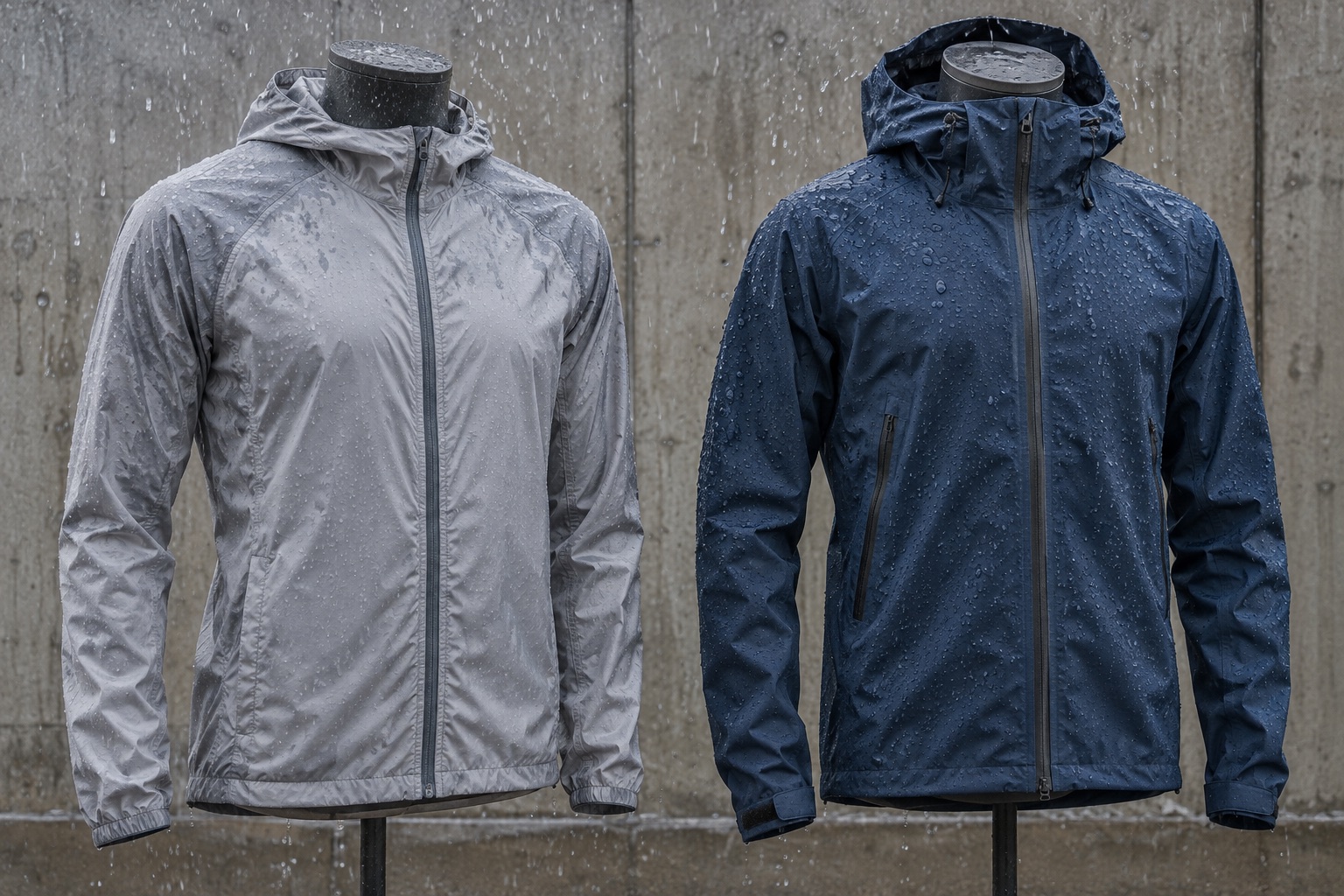
Read Ratings Without Comparing Incompatible Tests
| Claim | What it can tell you | What it cannot prove alone |
|---|---|---|
| Hydrostatic head or water-column result | Fabric resistance to water penetration under a specified lab method | Seam, zipper, hood, fit, long-term durability, or comfort |
| MVTR | Water-vapor transmission under the named test | Comfort at every temperature, humidity, pace, or test method |
| RET | Resistance to evaporative heat loss under the named method; lower is generally more breathable within that system | Direct comparison with unrelated MVTR numbers |
| DWR or water-repellent finish | Surface beading and reduced face-fabric wet-out when performing | A waterproof barrier or sealed garment |
| Waterproof garment claim | The maker asserts complete product performance to its standard | Performance after poor care, damage, or use outside stated limits |
Run a Jacket Fit and Ventilation Test
- Wear the base and midlayers planned for the run.
- Reach forward, swing the arms, rotate the torso, and raise the hood. The hem should stay covered without excess fabric flapping.
- Adjust the hood and confirm side vision, brim stability, and compatibility with a cap or light.
- Open every vent while moving. Make sure pockets do not become unusable under a vest.
- Jog for 10 minutes in safe conditions. Notice condensation, noise, cling, overheating, and cuff or neck leakage.
- Pack and redeploy the jacket with cold or wet hands if the route makes that likely.
When the Face Fabric Stops Beading
A jacket can feel clammy when the exterior face wets out even if the waterproof layer has not leaked. Dirt, body oil, and worn surface treatment can reduce repellency and breathability. Follow the exact care label and membrane maker's instructions for washing, drying, heat reactivation, and any approved DWR renewal.
Do not diagnose every dark wet patch as membrane failure. Check whether moisture is outside, inside from condensation, entering at an opening, or penetrating a damaged seam. Pair this guide with our running-by-temperature layering guide.
Sources and Manufacturer Guidance
Requirements can vary by product, model, and situation. These primary sources informed this guide; official instructions for your exact product and current authoritative guidance take priority.
- ISO 811:2018: Hydrostatic pressure test for resistance to water penetration
- ISO 6956:2026: Rain protection test for clothing on a moving manikin
- AATCC: TM127 Water Resistance—Hydrostatic Pressure
- Patagonia: H2No waterproofness, breathability, and durability testing
- GORE-TEX: DWR, waterproof construction, and garment care FAQs
Frequently Asked Questions
-
It can be for brief light rain near shelter. Sustained rain, cold conditions, exposed routes, or mandatory race rules usually call for a properly constructed waterproof shell.
-
No. Sweat and condensation can accumulate when output exceeds vapor transfer and ventilation, especially in warm humid rain.
-
A durable water-repellent finish helps the outer fabric bead water instead of wetting out. It is different from the waterproof membrane or coating beneath it.
-
For a complete waterproof-garment claim, stitch holes need protection. Some lightweight jackets tape only critical seams; verify whether that matches your exposure or race rules.
-
Use the exact garment and membrane instructions. Compatible washing can restore performance by removing oils and dirt; the wrong detergent, softener, heat, or treatment may damage it.