Running Sock Cushioning and Material Guide: Fit the Sock to the Shoe
Start with shoe fit, then choose the least bulky sock that gives the warmth, moisture handling, and underfoot feel you need. Extra cushioning can soften pressure, but it also occupies shoe volume. A thick sock inside a close-fitting shoe may increase compression, heat, and rubbing instead of preventing them.
Material matters, but construction matters too. Research comparing cotton and acrylic socks found that fiber differences did not reliably change blister outcomes when the knit lacked adequate anatomical padding. Treat the fiber label, cushioning level, seam design, and shoe fit as one system.
Choose Cushioning by Shoe Space and Run Conditions
| Cushion level | Useful when | Check before keeping |
|---|---|---|
| Ultralight or no cushion | Close-fitting shoes, hot weather, racing fit, or runners who want less fabric | Shoe does not feel loose and seams do not create hotspots |
| Light cushion | Everyday running when a little heel and forefoot padding fits without crowding | Toes remain free and heel hold stays secure |
| Medium cushion | Longer runs, colder conditions, or a slightly higher-volume shoe | Instep is not compressed and the foot does not slide on the thicker knit |
| Maximum cushion | Roomy footwear, cold use, or a specific comfort need confirmed on a run | The shoe still bends correctly and no new pressure appears at toe joints or nail beds |
| Double-sock or liner system | A planned system tested in the exact shoe | Total bulk, heat, wrinkles, and layer movement remain controlled |
Cushioning Is Structure, Not Just Softness
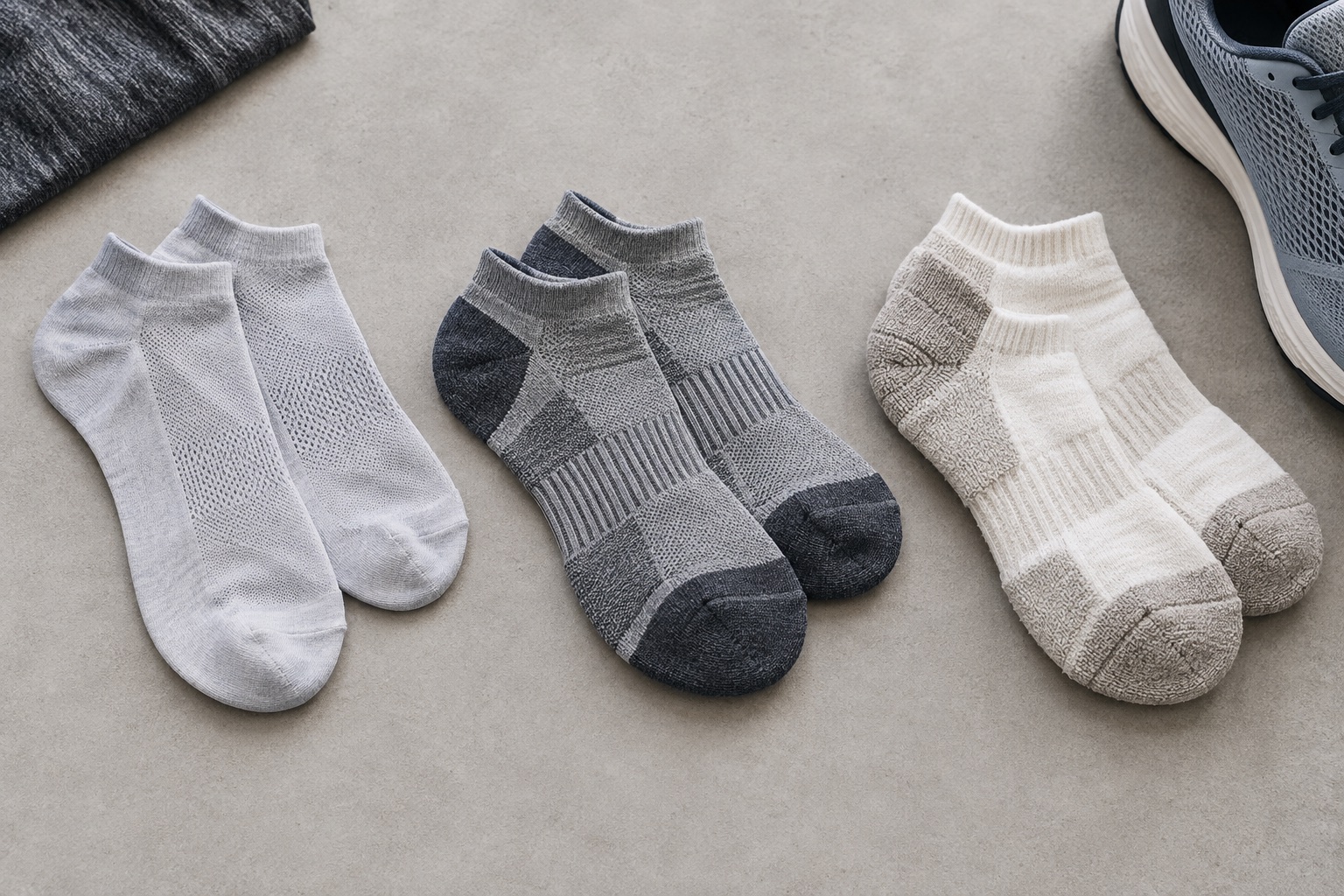
Running socks commonly place denser terry loops or thicker knit under the heel, forefoot, and toes while keeping the instep lighter. A 2025 laboratory and treadmill study found that specialized socks reduced impact more than regular socks, with fabric thickness strongly related to cushioning in the tested samples. That does not prove that the thickest sock is best for every runner or injury.
Compare Materials by Their Job in the Blend
| Material | Typical role | Trade-off to test |
|---|---|---|
| Polyester | Moves little moisture into the fiber, dries quickly, and supports durable technical knits | Odor retention and feel vary by yarn and finish |
| Nylon or polyamide | Adds abrasion resistance, stretch recovery, and a smooth fit | A dense high-nylon sock can feel warmer than expected |
| Acrylic | Synthetic moisture management and soft cushioning | Performance depends on knit density and padding, not the fiber name alone |
| Merino wool | Temperature comfort, moisture buffering, and reduced odor perception for some runners | Can hold more moisture than hydrophobic synthetics and may dry more slowly |
| Cotton | Soft familiar feel and moisture absorption | Often stays wet longer; high-cotton socks need an especially careful long-run test |
| Elastane or spandex | Keeps the sock close to the foot and supports recovery | Too much compression or a tight cuff can create pressure |
Run a Sock-and-Shoe Fit Test
- Put the sock on smoothly with the heel pocket aligned and no wrinkles underfoot.
- Lace the running shoe normally. Toes should lie flat and the instep should not feel compressed.
- Walk, jog, turn, and descend a short slope if relevant. Notice heel movement, toe contact, seam pressure, and heat.
- After 10 to 20 minutes, inspect red areas and damp zones before they become blisters.
- Repeat the same test with one cushioning level lighter or heavier if the result is unclear.
If adding cushion makes the shoe tight, do not solve it by buying extra shoe length blindly. Recheck width, volume, and the shoe model with our running-shoe fit guide.
Troubleshoot the Location of the Hotspot
| Hotspot | Inspect first | Possible sock change |
|---|---|---|
| Toe tips or nails | Shoe length, downhill movement, and thick toe padding | Thinner toe box and smoother toe seam |
| Between toes | Moisture, toe crowding, and skin-on-skin friction | Different toe-box fit; toe socks may help some runners but evidence is limited |
| Heel | Heel slip, sock wrinkles, worn heel knit, and shoe counter fit | Secure heel pocket or a tested liner system |
| Ball of foot | Forefoot platform, insole surface, sock bunching, and pressure | Targeted cushion only if the shoe has room |
| Cuff or ankle | Tight elastic, swelling, and cuff height against the shoe collar | Lower compression or a different cuff height |
Sources and Manufacturer Guidance
Requirements can vary by product, model, and situation. These primary sources informed this guide; official instructions for your exact product and current authoritative guidance take priority.
- Materials: Cushioning performance of specialized running socks
- Journal of Athletic Training: Critical assessment of friction-blister prevention strategies
- Journal of the American Podiatric Medical Association: Cotton and acrylic socks in a generic cushion construction
- Textile Research Journal: Running-sock structures and blister-related friction
- U.S. Army: Friction-blister formation and prevention guidance
Frequently Asked Questions
-
Only when the shoe has enough volume and the extra thickness improves comfort without creating compression, heat, or sliding.
-
Not automatically, but high-cotton socks often stay damp longer. Research suggests construction and padding can matter as much as fiber, so test the complete sock-and-shoe system.
-
They can reduce some friction, moisture, and pressure problems, but no sock prevents every blister. Shoe fit, distance progression, skin condition, and individual gait still matter.
-
They should stay smooth without bunching, but should not cause numbness, deep cuff marks, or toe compression.
-
Replace them when holes, flattened padding, rough seams, stretched cuffs, or a loose heel pocket change fit or create friction.