How to Measure Feet for Running Shoes: Length, Arch Length, and Width
Measure both feet while standing with weight distributed evenly. Record heel-to-longest-toe length and forefoot width; when a Brannock-style device is available, also measure heel-to-ball or arch length. Begin try-ons from the larger relevant measurement, but treat the number as a starting point—not a guaranteed size across brands.
Use the socks and prescribed orthotics you plan to run in. Then verify the actual shoe while standing and running because foot volume, toe shape, heel width, and each model's internal shape are not captured by a single length number.
The Three Measurements That Matter
| Measurement | What it records | Why it helps |
|---|---|---|
| Heel to longest toe | Overall foot length to whichever toe extends farthest | Provides the basic length starting point |
| Heel to ball / arch length | Distance from heel to the big-toe ball joint, not arch height | Helps align the shoe's flex point and widest region with the foot |
| Forefoot width | Width across the ball of the foot while loaded | Helps identify narrow, standard, wide, or extra-wide options within that brand |
Best Method: Use a Brannock-Style Device Correctly
- Wear the socks intended for the shoes and place the device on a firm, level floor.
- Stand with the heel fully seated in the correct heel cup and weight distributed evenly.
- Read length over the longest toe; do not assume the big toe is longest.
- Locate the ball joint at the base of the big toe and slide the arch-length pointer to it.
- Compare heel-to-toe and heel-to-ball readings. Official Brannock instructions generally use the larger as the starting shoe size.
- With that size established, bring the width bar firmly—not painfully—against the foot and read the corresponding width.
- Rotate the device and repeat for the other foot.
A trained fitter can reduce reading and positioning errors, especially when the two lengths disagree.
At-Home Wall and Paper Method
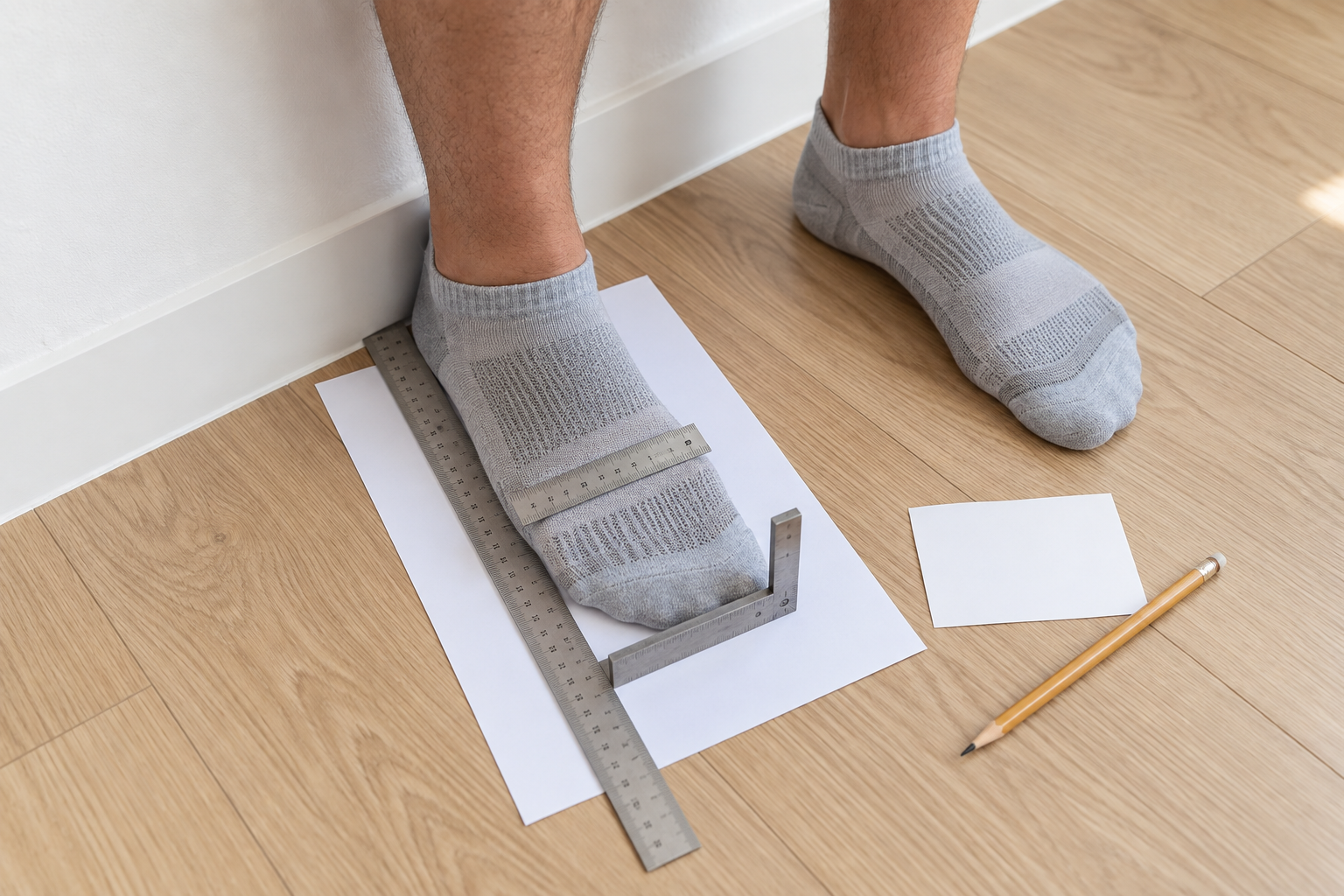
- Place a sheet of paper on a hard floor with one edge flush against a straight wall.
- Wear the intended socks. Stand on the paper with the heel gently touching the wall and toes pointing forward.
- Keep full, even weight on the foot. Do not curl the toes.
- Mark the end of the longest toe with a rigid square or an upright pencil; avoid tracing with the pencil angled under the foot.
- Measure from the wall edge to that mark in millimeters or centimeters.
- Mark the widest points at the ball of the foot and measure straight across.
- Repeat at least once, then repeat the complete process for the other foot.
This method estimates length and loaded width but not heel-to-ball length as reliably as a fitting device.
Record the Result Without Converting Too Early
Write the left and right measurements separately in millimeters or centimeters, plus the date, socks, and any orthotic used. Keep the raw numbers and apply the current size chart for the exact brand and model.
Do not convert through several generic charts. A U.S. men's size, U.S. women's size, UK size, and EU size are different systems, and brand charts may round differently. Order from the chart attached to the actual product listing.
Measurement Chooses the Starting Box—Running Confirms the Fit
| Fit check | Pass | Fail |
|---|---|---|
| Toe length | Longest toe remains clear while standing and on a gentle decline | Toe contacts the front or the foot slides excessively |
| Toe width and height | All toes lie flat and can spread | Side pressure, curled toes, or upper pressing on nails |
| Ball alignment | Widest foot area aligns with the shoe's widest region and flex feels natural | Shoe bends under the arch or squeezes the ball |
| Midfoot volume | Secure with normal lacing | Numbness, lace pressure, or needing to over-tighten |
| Heel | Minimal lift without collar pressure | Repeated slip, rubbing, or Achilles irritation |
| Running test | No new pressure or instability at intended pace | Hot spot, blistering, numbness, pain, or changed gait |
When to Measure Again
- Before buying from an unfamiliar brand or last shape
- After pregnancy, major weight change, injury, surgery, or prolonged swelling
- When one foot begins hitting the front or the upper wears in a new location
- When changing orthotics, sock thickness, or intended activity
- When the last reliable measurement is old or was taken seated
Seek professional assessment for sudden size change, marked swelling, numbness, skin breakdown, or a large new difference between feet. Shoe measurement is not a medical diagnosis.
Sources and Manufacturer Guidance
Requirements can vary by product, model, and situation. These primary sources informed this guide; official instructions for your exact product and current authoritative guidance take priority.
Frequently Asked Questions
-
Yes—wear the type of running sock and any orthotic you plan to use so the starting measurement reflects the intended setup.
-
Begin with the larger relevant measurement and fit both feet. If the size difference is substantial or one shoe remains loose, a professional fitter can discuss model choice and safe volume adjustments.
-
No. Read or mark the toe that actually extends farthest.
-
It is heel-to-ball length—the distance from the heel to the big-toe ball joint. It is not a measurement of how high the arch is.
-
It provides a starting point, but width, heel-to-ball length, instep volume, toe shape, and the shoe's last still require an actual fit and run test.