Strength & Weights

Best Wrist and Forearm Exercisers of 2026

Grip strength is one of those things you don't think about until a jar lid won't budge or the bar slips on the last rep. A wrist and forearm exerciser is a cheap fix — a handle, a roller, a spring-loaded gripper — but the differences between models show up almost immediately. Some adjust in seconds and still feel solid after a year of daily use; others slip mid-set, pinch your palm, or crank the resistance so unevenly that your elbow complains before your forearm does.

Over the past four months, my team and I have worked 14 of them into desk breaks, gym bags, and slow evenings in front of the TV. The mistake most first-timers make is chasing the heaviest resistance they can find — a device you can dial up as you get stronger beats one that's brutal on day one and stays brutal. Value matters here, but so does a handle that doesn't shred your palm or spin under sweat. What follows are the ones that held up, sorted by what they're actually good for.

Best Overall

Our Score 9.6/10
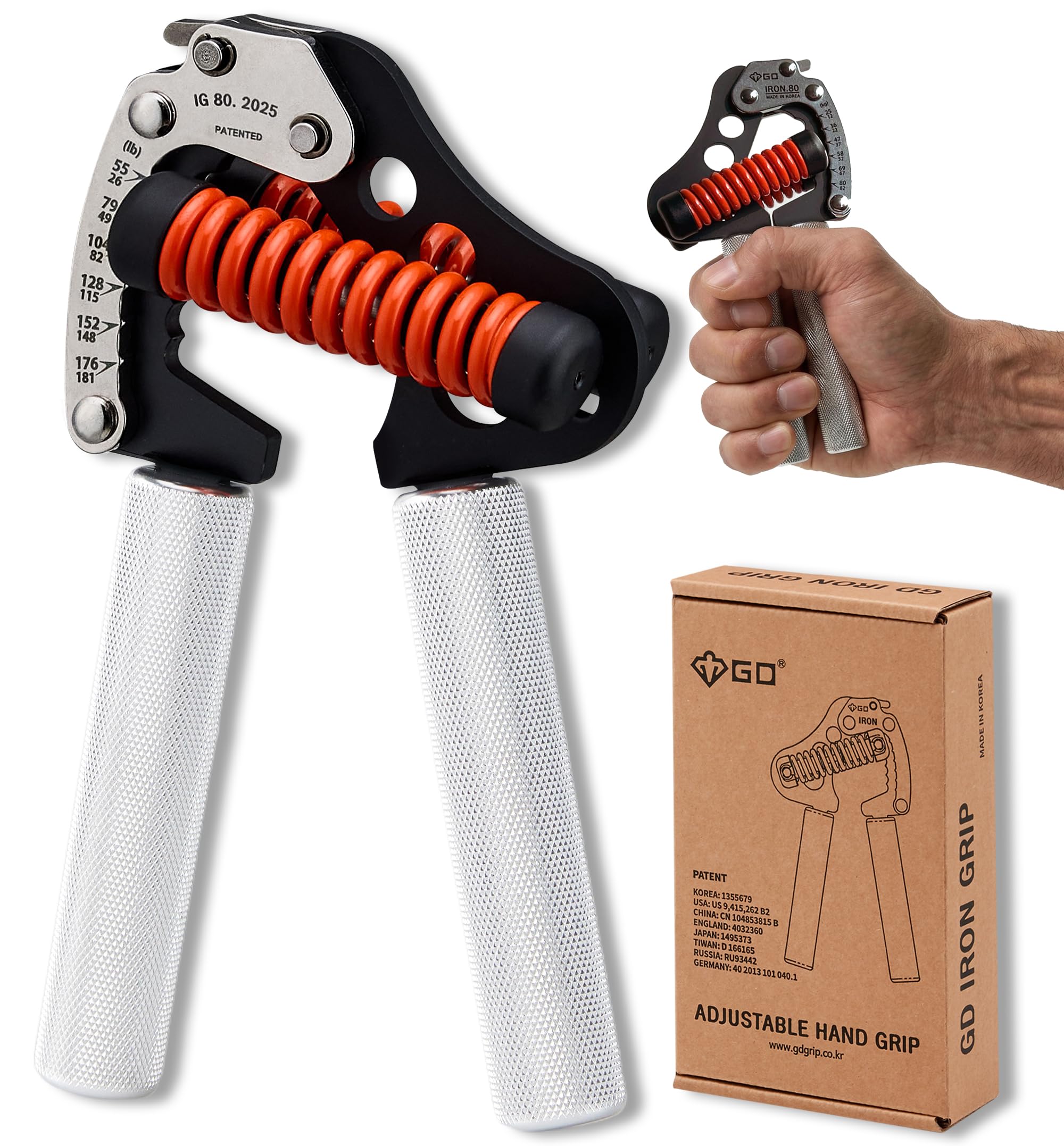
GD IRON GRIP

GD IRON GRIP

GD IRON GRIP

  • Weight 1.08 lb
  • Handle Widths 3 levels
  • Frame Material 4T steel
  • Resistance Range 26–181 lb
Check Price on Amazon

The most adjustable metal gripper here, ready to use without extra weights.

The first thing we noticed about the GD IRON GRIP is the heft. At 489 grams, it feels like a small hand tool rather than a plastic gadget, and that impression holds through the reinforced steel frame, aluminum handles, and smooth spring action. It is ready to use out of the box, with no plates or dumbbells to track down.

The range is the practical part. Twelve settings run from 26 to 181 pounds, so the same trainer can serve a warm-up, a hard closing set, and a long progression. We especially like the three handle-width positions. Hand size is the detail that makes many grippers feel wrong, and being able to open the span gives larger hands room without forcing smaller hands into a stretch.

The knurled aluminum handles feel secure, and the spring runs quietly enough for desk use. This is the most expensive trainer here, so it makes sense if you want one gripper to cover years of progression rather than a cheap experiment. For a self-contained trainer, no other pick here combines this range with adjustable width and metal construction.

Bottom Line

We tell anyone who wants one do-it-all gripper to start here: the wide resistance range, adjustable width, and metal build make it the most complete self-contained trainer in this group.

Check Latest Price

Best for Serious Forearm Work

Our Score 9.6/10
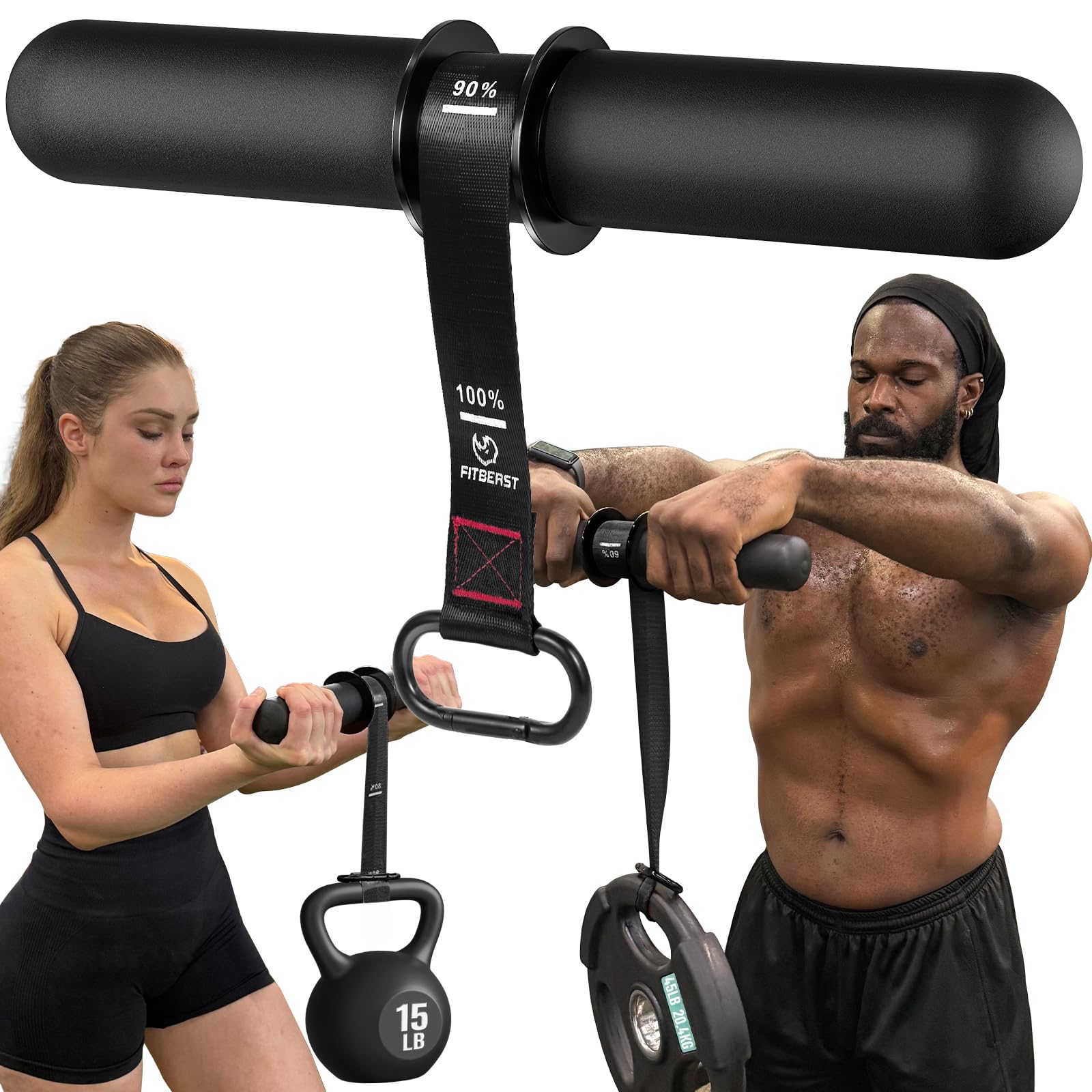
FitBeast Wrist Roller

FitBeast

FitBeast Wrist Roller

  • Handle 25% thicker
  • Warranty 5 year
  • Max Strap Load 240 lb
  • Extension Strap 20.4 in
Check Price on Amazon

A thick-handled roller with a 240-pound strap and a five-year warranty.

A wrist roller is only as useful as the weight you hang from it, and the FitBeast does not include any. If you already own plates or dumbbells, that is not a drawback so much as the point: the 240-pound nylon strap lets you load the movement progressively, and the 20.4-inch extension strap gives you more ways to set it up.

The thick handles are the detail we appreciated most. They make even a light plate feel more demanding because the hold is wider and less forgiving, which is exactly what we want from a forearm tool. The steel body feels robust, and the five-year warranty is unusually generous for this category.

Use it with a slow up-and-down tempo and the burn arrives quickly; rushing the roll turns it into a grip-and-flail exercise. You also need a clear space for the hanging weight. For direct wrist and forearm work, though, this is the one we reach for first.

Bottom Line

If you already own weights and want the most direct wrist and forearm work here, this is the roller we reach for first.

Check Latest Price

Best Budget Wrist Roller

Our Score 9.4/10
Orangelight Wrist Roller

Orangelight

Orangelight Wrist Roller

  • Weight 1.5 lb
  • Handle Type Foam-covered
  • Frame Material Alloy steel
  • Strap Material Nylon
Check Price on Amazon

A comfortable foam-gripped roller that makes the basic wrist-rolling motion affordable.

The Orangelight is a wrist roller with foam-covered handles and a steel bar. The foam is softer than bare steel, and the nylon strap runs from the center of the bar. It is a simple tool with no dials or separate parts to keep track of.

Load the strap, roll the weight up, and lower it slowly; the motion is easy to settle into. We found the foam comfortable for longer sets, but the strap can shift out of its winding path, so you may need to reset it between sets. That is a small annoyance at this level, not a reason to skip it. For a first roller or a second one for travel, it does the job without much fuss.

Bottom Line

This is our pick for a first wrist roller: it feels sturdy, costs little, and gives you the rolling motion without gym equipment beyond a plate.

Check Latest Price

Best Budget Gripper

Our Score 9.2/10
NIYIKOW Grip Trainer

NIYIKOW

NIYIKOW Grip Trainer

  • Weight 4.94 oz
  • Material Metal and plastic
  • Dimensions 6.1 x 3.93 in
  • Resistance Range 22–132 lb
Check Price on Amazon

A packable adjustable gripper that covers light warm-ups and hard closes for very little.

The NIYIKOW is the one that disappears into a bag. At 140 grams and 6.1 by 3.93 inches, it takes up less room than a water bottle and needs no plates, cables, or setup. We kept it within reach for short sets and found the resistance dial easy to nudge between 22 and 132 pounds.

That range is the reason to choose it over a fixed gripper. A beginner can start near the bottom, and a reasonably strong lifter will still have room to progress. It is a simple plastic-and-metal tool, and the dial moves without drama. The low price makes it an easy second trainer for travel or a desk drawer.

Bottom Line

We recommend this compact gripper to anyone building grip strength on a tight budget who wants a wide resistance range in a small package.

Check Latest Price

Best For Standard plate owners

Our Score 9.2/10
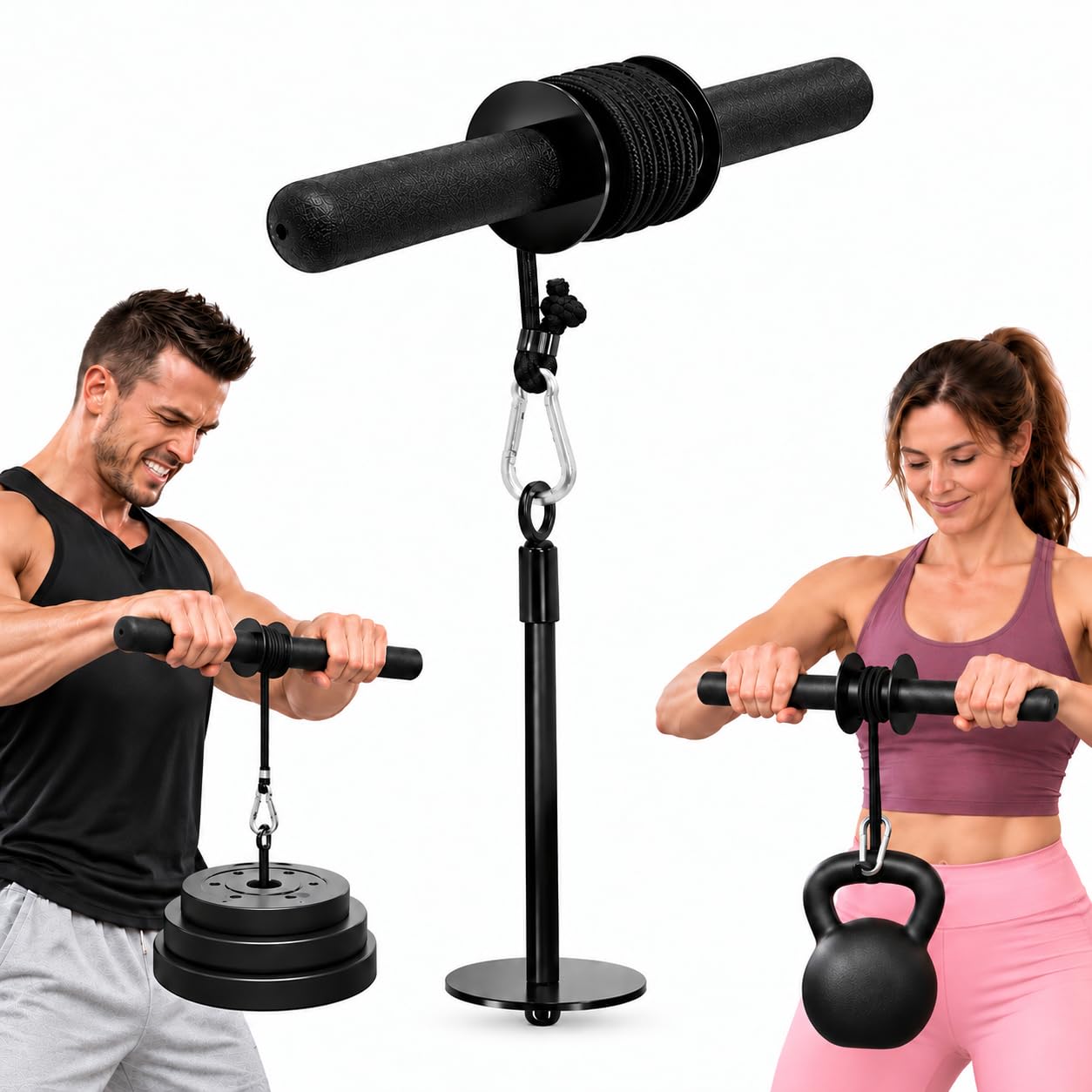
Yes4All Wrist Blaster

Yes4All

Yes4All Wrist Blaster

  • Weight 16 oz
  • Max Load 100 lb
  • Rope Length 52.85 in
  • Plate Compatibility 1-in and 2-in
Check Price on Amazon

The Yes4All takes the plates you already own. Its clip accepts standard 1-inch and 2-inch plates, and the 52.85-inch nylon rope gives you a long, slow pull. A pair of small plates, a dumbbell, or a kettlebell can all load the movement.

The 100-pound ceiling is the number to know. That is plenty for most home lifters and enough for high-rep wrist work, but it is well below the FitBeast's 240-pound strap rating. The steel bar feels solid, and the clip is easy to change.

For a basic plate-loaded roller, this is the one we hand to someone with a pair of standard plates and no interest in extras. It covers the everyday wrist and forearm work without fuss or a long setup.

Bottom Line

We recommend this roller for anyone with standard plates who wants a simple, cheap way to add wrist and forearm volume at home.

Check Latest Price

Best For Desk and couch

Our Score 8.8/10
Marcy Forearm Developer

Marcy

Marcy Forearm Developer

  • Weight 1.2 lb
  • Warranty 2-year limited
  • Dimensions 14.5 x 6 x 7.75 in
  • Resistance Levels 5
Check Price on Amazon

The Marcy does not look like the other trainers here. You rest your forearm in the foam cradle, grip the handle, and rock back and forth; the motion works wrist flexion and extension without a plate or a cable. The five-level dial changes resistance between sets.

The frame is plastic with a padded cradle, and it measures 14.5 by 6 by 7.75 inches. It sits on a desk, a couch arm, or a gym bench without needing to be clamped down. The motion is short and controlled, more like pumping a small lever than rolling a weight.

We like it most for light, frequent work: a few sets while watching TV or between emails, where the convenience matters more than the load. The top resistance is moderate, though, so a strong lifter will run out of challenge before the forearm does. That is the boundary: it is a convenience tool, not a heavy strength builder.

Bottom Line

We like this for low-impact desk or couch sessions, where its rocking motion and dialed resistance make forearm work easy to fit in.

Check Latest Price

How We Tested the Best Wrist and Forearm Exercisers

We started by gathering every wrist and forearm exerciser we could find that offered a real resistance range and a mechanism you could change without both hands and a flat surface. From there we filtered by price, handle diameter, materials, and the complaints that kept repeating in customer reviews — bands fraying at the anchor, foam grips twisting loose under load, and tension that jumped in uneven steps instead of scaling smoothly. That left 14 devices, ranging from simple grip rings to adjustable rollers and spring-loaded units.

Each one spent four months where it would actually live: on a desk during calls, in a gym bag, on the floor next to the couch, and in the hands of one tester working back from a climbing tweak. We counted how many turns or clicks it took to change resistance and whether we could do it one-handed between sets. We noted handle diameter, whether the texture bit into a sweaty palm or turned slick, and whether the surface rubbed a hot spot on the thumb webbing after a few minutes.

Durability got its own pass — repeated sets, then a close look for frayed bands, loosened screws, cracked plastic, and grip material that had started to rotate on the handle. We also tracked how each one felt the following morning: a good session should leave your forearm pleasantly tired, not your wrist joint sore or your elbow grumbling. The units that survived all of that without a wobble, a pinch point, or a resistance jump are the ones we recommend below.

How to Choose

Choose the Motion First

A gripper is the most self-contained option: you squeeze, release, and can use it almost anywhere. A wrist roller is more direct for wrist flexion and extension because you raise and lower a hanging load, but it needs plates or dumbbells and enough clear space. A forearm rocker like the Marcy sits between them: it braces your arm and lets you rock through the range without loading a plate. If you want one tool for a gym bag, start with a gripper; if you want the most targeted wrist work and own weights, start with a roller.

Match Resistance to Your Next Few Months

Adjustable grippers here span roughly 22 to 181 pounds, while wrist rollers are rated by the load their strap or rope can support. Those numbers are not interchangeable: a gripper's rating describes closing tension, while a roller's rating describes the weight you hang from it. Choose a range with an easy starting point and several steps above it, not a single max setting you can barely close. A resistance you can control for 8 to 15 slow reps gives you room to progress; if you have to swing or cheat the range, it is too heavy.

Check Hand Fit and Grip Comfort

Hand size decides whether a trainer feels secure or cramped. A gripper with adjustable handle width, like the GD, fits more hands than a fixed span, while thick roller handles increase the challenge but can overwhelm smaller hands. Texture matters too: knurling gives a locked-in feel but can irritate soft palms, and foam is gentler but wears faster. If you are between sizes, choose the narrower or softer grip first; you can add tape or gloves, but you cannot shrink a handle that is too wide.

Decide What You Already Own

A wrist roller is only as useful as the weights you can attach. Check whether the clip or strap accepts your plates—1-inch and 2-inch compatibility is not universal—and whether you have a clear place to let the load hang. A gripper needs nothing else, which makes it the easier first purchase; a rocker needs no weights but gives up top-end resistance. If you already own plates, a roller adds a direct loading angle that a gripper cannot match.

Frequently Asked Questions

Final Verdict

For most people, the GD IRON GRIP is the one to buy. Its 26–181-pound range, three handle widths, and all-metal build make it the most complete self-contained trainer here, and it is ready to use without plates or dumbbells. If you already own weights and want the most direct wrist and forearm work, choose the FitBeast wrist roller; its 240-pound strap and thick handles make even light plates feel serious. On a tight budget, the NIYIKOW covers the squeeze side in a package that fits in a drawer.