Cardio Machines

Best Walking Pads of 2026

A walking pad is the one piece of home fitness gear that has to earn its keep mid-workday. You're on a call, answering email, shaking off the 2 p.m. slump — not training — so top speed and incline programs barely matter next to whether the deck feels solid under a full stride and whether the motor is quiet enough that nobody on the other end asks what that noise is. It solves the day that ends with 2,000 steps on it, without a gym trip or a treadmill taking over the living room.

I've walked on 12 of them at my own desk over the past six months, and my team ran each one through the same routine in their home offices. Setup ranged from five minutes out of the box to a video and two attempts. The remote is the part you touch every day and the first thing to feel cheap, which tells you a lot about the rest of the machine. The picks below are the ones that held up, sorted by who each one actually suits.

Best Budget Incline

Our Score 9.6/10
Wilpkracy Walking Pad

Wilpkracy

Wilpkracy Walking Pad

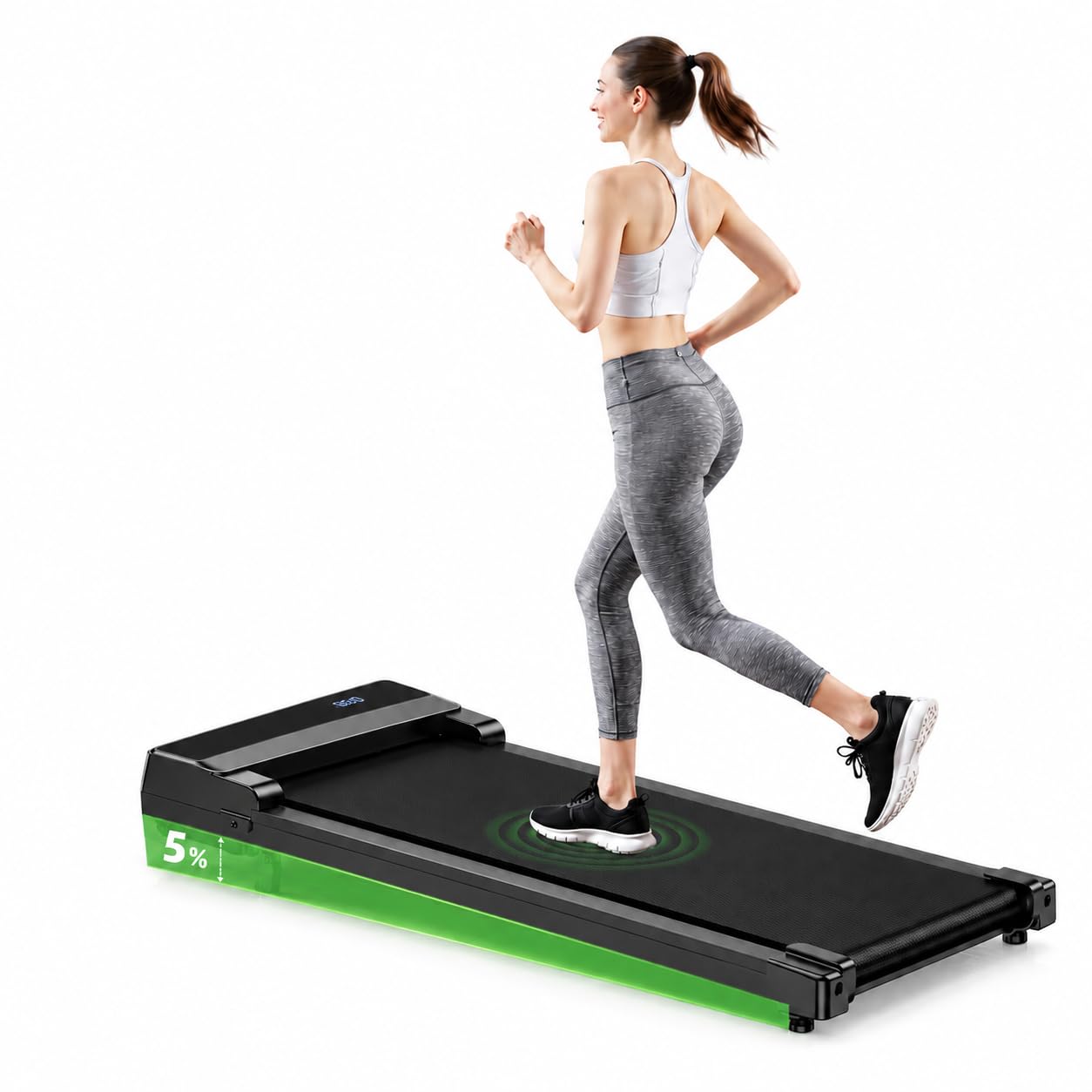
  • Incline 5% manual
  • Item Weight 37.5 lb
  • Speed Range 1–6 km/h
  • Weight Capacity 264.6 lb
Check Price on Amazon

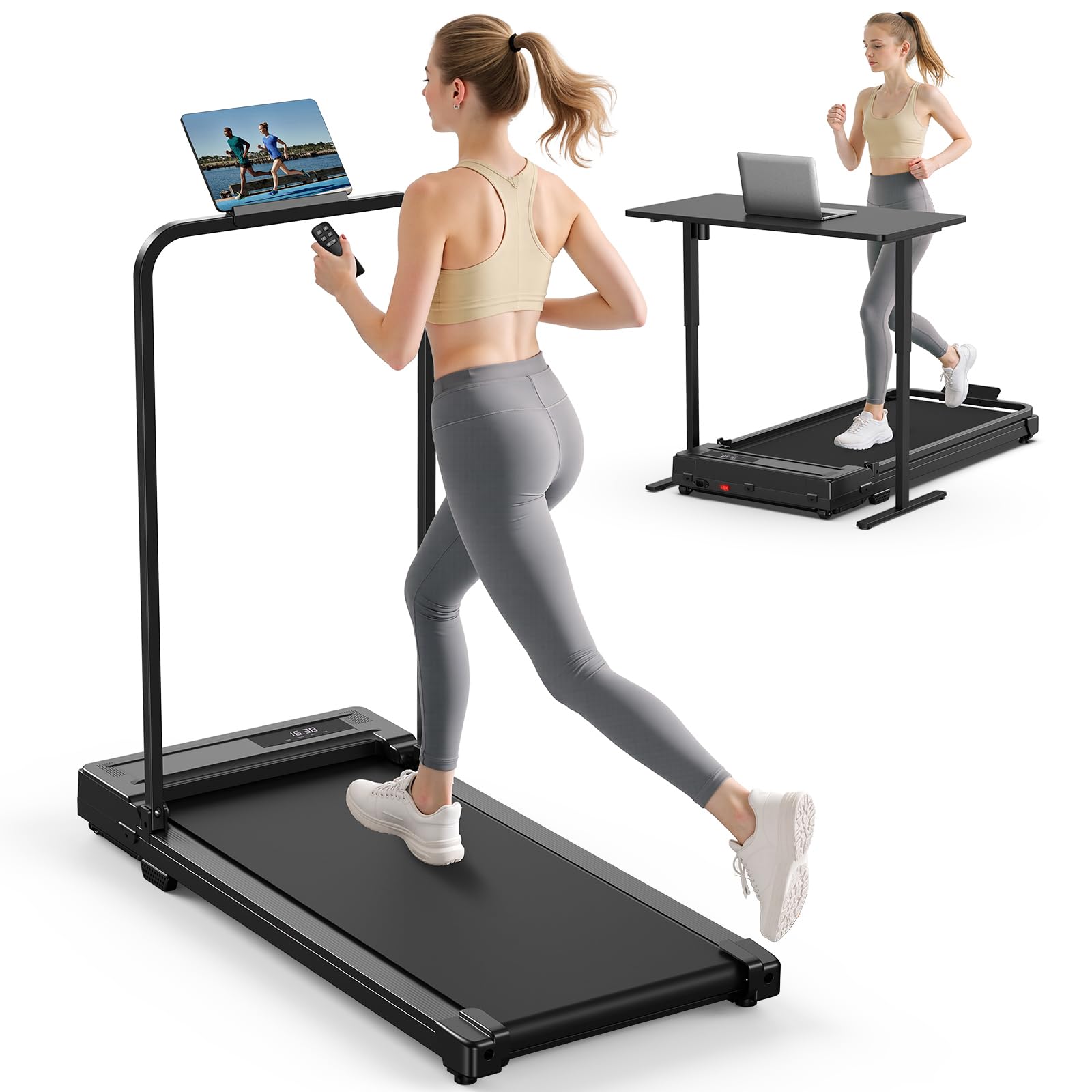
A simple, no-assembly pad with a manual incline for more effort at a low price.

A 5% incline at the budget end is the Wilpkracy's calling card. It adds resistance without the complexity of a motorized incline.

We like that it arrives ready to use. There is no assembly, the remote handles speed, and the 17-kilogram body has a slim enough profile to slide under a bed. The 120-kilogram user limit is worth checking before you buy.

The deck is compact, and the 5% grade is enough to make a flat walk feel different without turning it into a hike. We did find the manual incline takes a moment to set, so decide your grade before you start and leave it there.

At the budget end, we think the Wilpkracy is the right pick if you want a little resistance and a pad that disappears under furniture. If you need automatic incline changes, the TRAILVIBER is the upgrade.

Bottom Line

A budget incline pad we like for simple, no-assembly walking: the fixed 5% grade adds effort, but the 3.7-mph ceiling keeps it firmly in walking territory.

Check Latest Price

Best for Incline Training

Our Score 9.4/10
TRAILVIBER Walking Pad

TRAILVIBER

TRAILVIBER Walking Pad

  • Incline 12% auto
  • Deck Size 41 x 16.5 in
  • Item Weight 44 lb
  • Weight Capacity 450 lb
Check Price on Amazon

Automatic 12% incline and a 450-pound capacity turn a flat walk into a real workout.

A 12% automatic incline is the feature that earns the TRAILVIBER its premium: you can change the grade from the remote instead of stopping to move a manual wedge. The 450-pound user capacity is the other standout, and the 44-pound body is lighter than that number suggests.

We like the 41 by 16.5-inch deck for a walking pad; it gives you room to drift without feeling like a full treadmill. The 2.5-hp motor and 4-mph top speed are built for walking, not running, and the three-year warranty is the detail that tips it for us at this end of the range. The incline is automatic, so you can warm up flat and add grade without breaking stride. The 44-pound body is not a one-hand carry, but it is light enough to move without a fight.

Bottom Line

The best pick for incline walking: an automatic 12% grade and a 450-pound capacity make it the most capable walker here.

Check Latest Price

Best for Tight Storage

Our Score 9.4/10
Ulfario Walking Pad

Ulfario

Ulfario Walking Pad

  • Deck Size 90 x 38 cm
  • Handlebar Removable
  • Folded Size 104 x 47 x 10.5 cm
  • Weight Capacity 264.6 lb
Check Price on Amazon

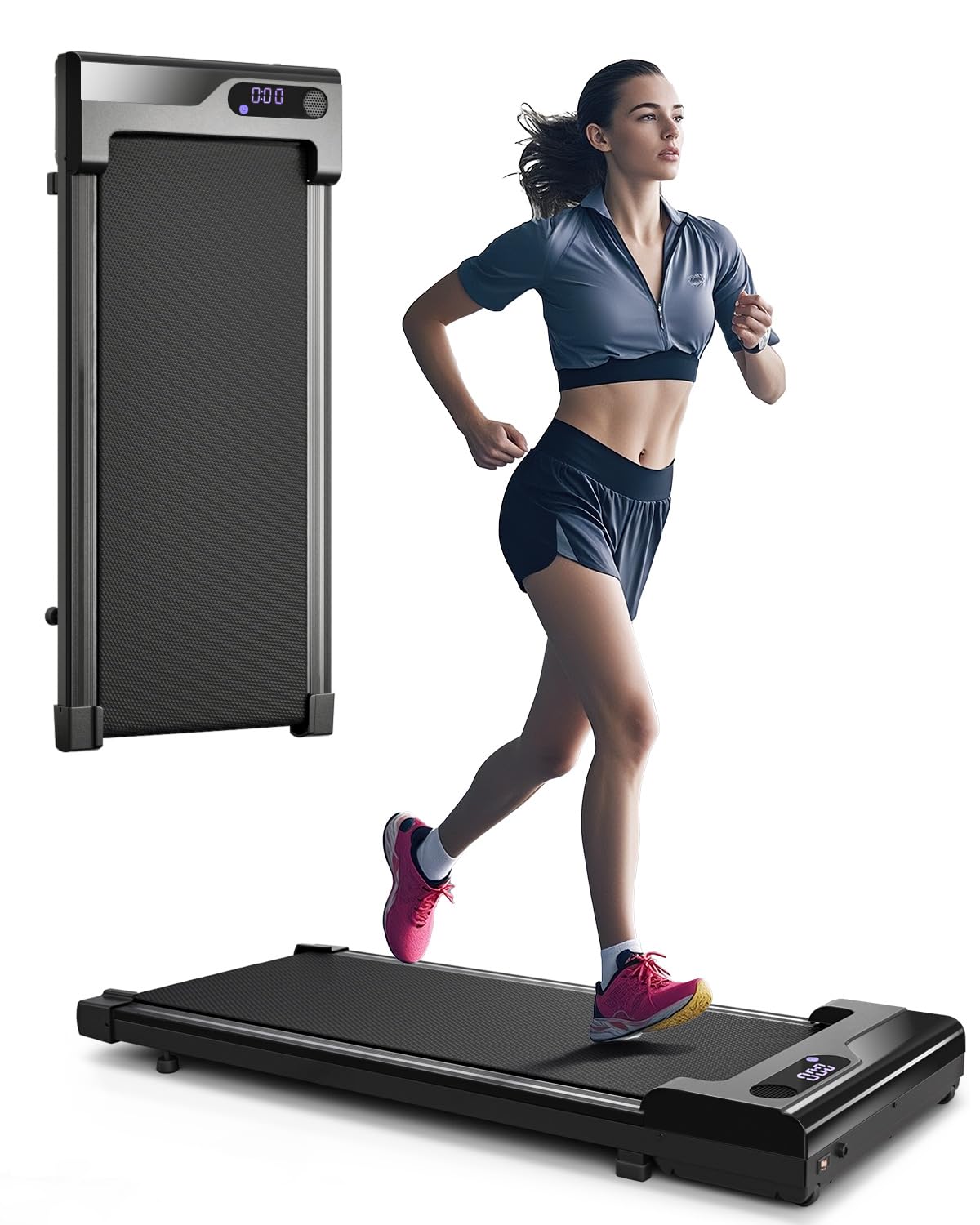
The folding handlebar and slim profile help it tuck under a bed or desk.

The Ulfario treats the handlebar as removable hardware, not a permanent fixture. It can be lowered or taken off, then the 10.5-cm-tall deck slides under a bed or desk. We think that is the right call for a room where the pad has to disappear between walks.

The 38.5-pound body is easy to move, and the 4-mph top speed suits a steady walk. The 440-watt motor is quiet in a small room, and the 120-kg capacity covers most users. If you want a handlebar without a permanent footprint, this is the one.

In use, the handlebar gives you something to hold without the footprint of a full treadmill. We liked the simple remote and the clear LED readout for time, distance, speed, and calories. For a small room where the pad has to do double duty as storage, that is a useful package.

Bottom Line

The storage-first pick: a handlebar that lowers or comes off and a 10.5-cm folded height make it easy to tuck away, with a 4-mph ceiling for walking only.

Check Latest Price

Best Overall

Our Score 9.0/10
Vhorilix Walking Pad

Vhorilix

Vhorilix Walking Pad

  • Motor 2.5 hp
  • Top Speed 4 mph
  • Folded Size 41.3 x 19.3 x 4.1 in
  • Item Weight 36.4 lb
Check Price on Amazon

A no-assembly, roll-away walking pad that makes daily steps feel easy and affordable.

The first thing you notice about the Vhorilix is how little setup it asks for: it arrives assembled, and the only prep is putting two AAA batteries in the remote. The 36.4-pound body rolls aside on built-in wheels, and the folded profile is 41.3 by 19.3 by 4.1 inches, so it can live under a bed or sofa between walks.

At the budget end of this group, we think that makes it the best default for flat desk walking. The 2.5-hp motor and 0.6-to-4-mph range are modest, but they are well matched to a steady walk, and the 264-pound user limit covers a lot of buyers. We found the deck stable enough for a flat pace, and the five-layer belt has a diamond texture that feels less slick than a plain belt.

The LED display and remote keep the essentials in view: speed, time, and distance. The catch is the 4-mph ceiling, which rules out jogging. For daily steps and a pad you can move without thinking, this is the one we reach for first.

Bottom Line

We recommend it for flat, daily desk walking: it arrives assembled, rolls out of the way, and keeps the price low without skimping on the quiet motor or simple controls.

Check Latest Price

Best For Tall/heavy users

Our Score 8.4/10
MERACH UltraWalk W60

MERACH

MERACH UltraWalk W60

  • Incline 12% auto
  • Deck Size 16.5 x 41.3 in
  • Item Weight 67.7 lb
  • Weight Capacity 400 lb
Check Price on Amazon

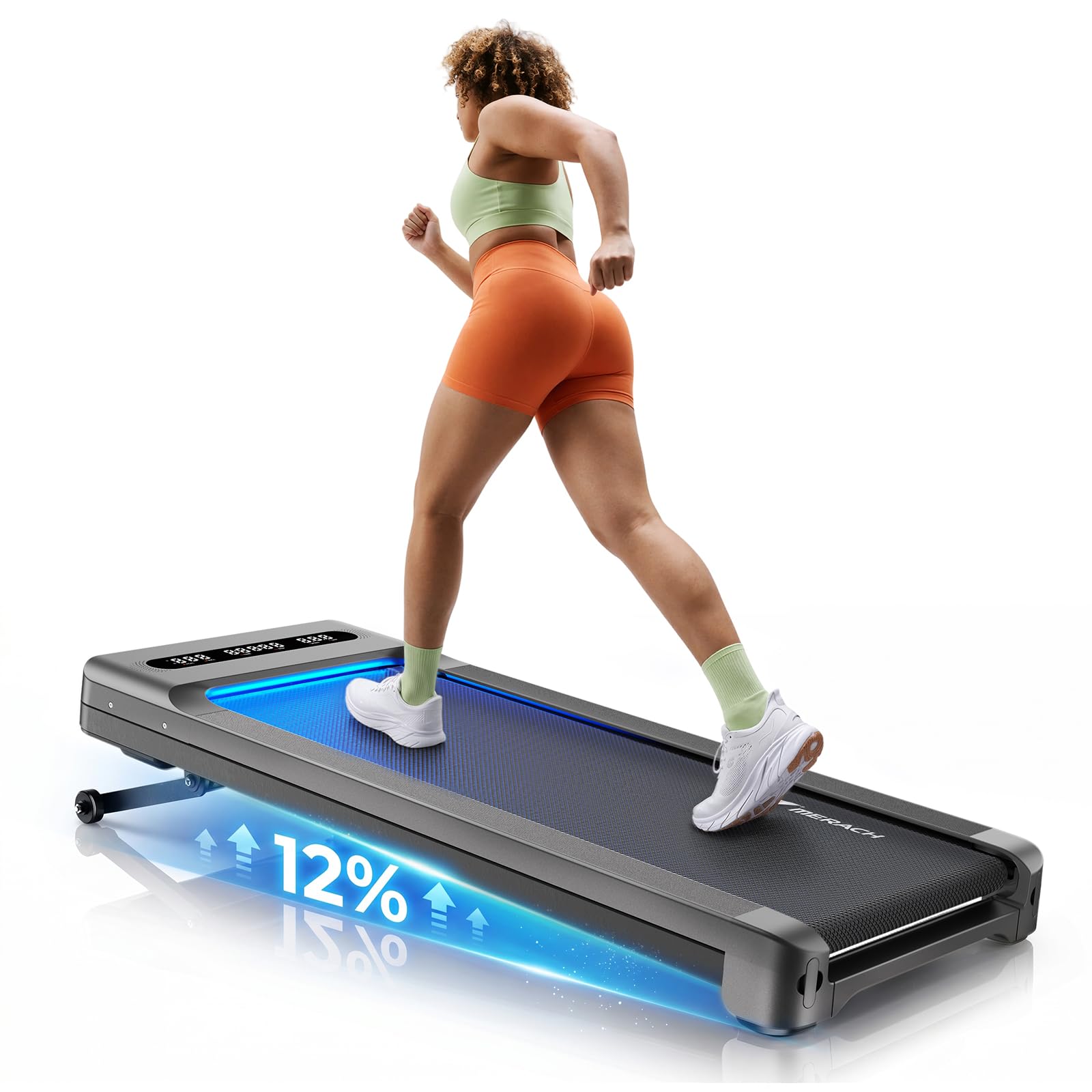
The MERACH's 400-pound capacity and 16.5-inch-wide deck are the numbers that matter if you are tall or heavier. Most walking pads here run narrower, and that extra width changes how relaxed your stride feels. The 12% automatic incline is the other reason it stands out; you can add grade from the controls without stopping.

The 3.5-hp peak motor and 4-mph top speed keep it in walking territory, but the build feels more like a small treadmill than a mat with a belt. The app and Bluetooth speaker are extras we did not need, though the incline control is genuinely useful.

We think the W60 is the right choice for a dedicated home gym or a home office where it can stay put. For a bigger walker who wants room and automatic hills, it earns its place.

Bottom Line

The pick for tall or heavier walkers: a 400-pound capacity and a wide 16.5-by-41.3-inch deck give you room, with a 12% automatic incline for harder sessions.

Check Latest Price

Best with Handlebar Support

Our Score 8.2/10
Viamotion Walking Pad

Viamotion

Viamotion Walking Pad

  • Incline 4%
  • Handlebar Included
  • Top Speed 3.8 mph
  • Item Weight 39.7 lb
Check Price on Amazon

Upright handles add confidence for balance-focused walkers who want a slower pace.

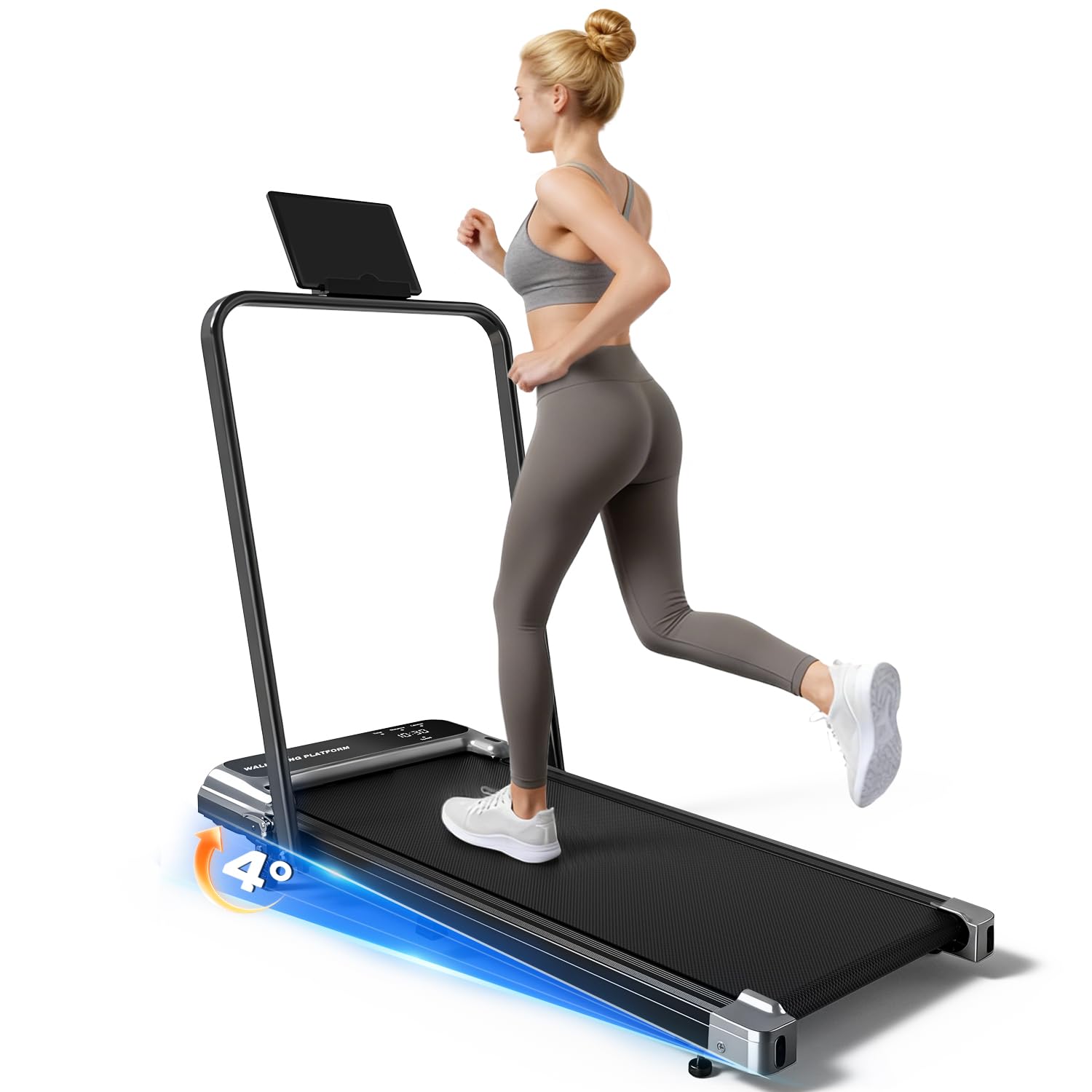
The Viamotion adds something most pads here leave out: an upright handlebar. It is the feature that changes how the pad feels in use, especially if you are stepping on after a long day or want something to grab when you look away from your feet.

The 4% incline is modest, and the 45 dB motor is quiet enough for a shared room. We noticed the belt can slip if it is not tracked carefully, so check it before you step on; that is the one thing we watch with this design. The folding design lets the handlebar come down with the deck, so support does not cost you floor space.

We think the Viamotion earns its place for anyone who wants a handhold and does not need a fast pace. For a balance-focused walker, that is a fair trade.

Bottom Line

The pick for added balance support: a fixed handlebar and 4% incline help you feel steadier, with a slow-and-steady 3.8-mph ceiling.

Check Latest Price

Best for Faster Paces

Our Score 8.0/10
UREVO Strol 2E Pro

UREVO

UREVO Strol 2E Pro

  • Incline 12% manual
  • Item Weight 44 lb
  • Speed Range 0.6–4 / 0.4–6.2 mph
  • Weight Capacity 265 lb
Check Price on Amazon

A 6.2-mph top speed and app control suit walkers ready to add jogging intervals.

The UREVO Strol 2E Pro is the one here that can do more than walk: its top speed is 6.2 mph in running mode, so it can handle a jog interval or a faster walk when you want one. The 12% incline adds hill work, and the deck folds to 4.2 inches high.

We think that makes it the best choice for a small-space treadmill that still walks well. The 44-pound body is heavy enough to feel planted and light enough to move, and the app adds workout tracking. The remote is the control we kept within reach for everyday speed changes.

We also appreciate that the running mode does not turn it into a bulky machine; it stays a walking pad you can tuck away. For a walker who wants a jogging option without a full treadmill footprint, this is the one.

Bottom Line

The pick for walkers who want to pick up the pace: a 6.2-mph running mode and 12% incline add range without turning into a full treadmill.

Check Latest Price

How We Tested 12 Walking Pads Over Six Months

We started with roughly 40 walking pads from brands we could verify, then filtered on specs that affect daily use: belt width and length, motor rating, weight capacity, folded height, and whether a remote comes in the box. Anything with a narrow belt or a remote that felt like an afterthought got cut. That left 12, which we bought at retail and lived with for six months.

Setup was timed from box open to first step, working alone with no tools. Then each pad went into a real workday: a 20-minute walk before coffee, an hour under a standing desk during calls, longer evening sessions in front of the TV. We watched whether the belt drifted to one side over an hour of walking and whether the frame crept across hardwood or sank into carpet. For noise, we recorded the same video call through a laptop mic at a slow stroll and at 3 mph, then listened back to hear whether the motor carried over the speaker.

Compactness got measured rather than eyeballed: footprint, weight, whether it rolled on wheels or had to be dragged, and whether it slid under a couch or a standard desk without unplugging anything. We used every remote one-handed and without looking, since that's how you'll use it mid-meeting, and noted response lag and whether the battery door stayed shut. Because value is the entire point of this category, we kept running notes on what each price jump actually bought — a quieter motor and a better deck, or just a nicer display.

How to Choose

Measure the floor space and the desk gap first

Clearance decides whether a walking pad becomes a habit or a hurdle. Check the folded height if it will slide under a bed or sofa; the Vhorilix folds to 4.1 inches, while the Ulfario folds to 10.5 centimeters. Under a standing desk, measure the gap from floor to desk, then subtract an inch for your shoes. We also look at deck width: a 50-centimeter deck feels roomy in a hallway but tight in a narrow office, and the Ulfario's 38-centimeter deck is the storage-first compromise.

Leave clear space behind the deck for your stride, and put the pad on a level, hard surface. If the pad has to live in the same room as your desk, measure the path you will roll it along, not just the spot where it parks.

Decide whether you want flat walking or incline

After fit, incline is the feature we prioritize. A manual incline is set before you start; an automatic one changes from the remote while you walk. If you plan to switch grades mid-session, automatic is worth the step up. If you will set a grade and leave it, manual is enough. The Wilpkracy's 5% manual grade adds resistance at the budget end; the TRAILVIBER's 12% automatic incline is the more capable choice for hill work.

Be honest about speed, too. A 4-mph ceiling is a walking pad; a 6-mph mode is a small treadmill. Most desk walkers stay under 2 mph, so do not pay for speed you will not use.

Match the motor and weight limit to the walker

A 2.0-to-2.5-hp motor is enough for steady walking; higher peak ratings matter more for jogging or heavier users. Check the user weight limit rather than the shipping weight, and leave a margin below the ceiling. The TRAILVIBER is rated to 450 pounds, the MERACH to 400, and the Vhorilix to 264. If you want a handhold, a handlebar changes the purchase more than a small motor difference; the Viamotion and Ulfario are the pads here with that option.

Stability is the other half. A lighter pad is easier to move, but it can feel less planted; a heavier frame is steadier but harder to tuck away. We treat that as a storage decision, not just a performance one.

Listen for noise and plan for controls

Noise is relative: a quiet motor can still transmit sound through a hard floor, and the surface underneath changes what you hear. If you take calls while walking, test the pad at your working speed before a meeting and keep the remote within reach. A remote is the control that matters under a desk; an app is extra. The Vhorilix and Wilpkracy keep controls simple, while the UREVO adds app tracking.

Check the speed steps, too. Small increments make it easier to settle into a desk pace, and a clear display helps you keep an eye on time without breaking concentration.

Frequently Asked Questions

Final Verdict

For most people, the Vhorilix is the walking pad we recommend first. It arrives assembled, rolls out of the way, and keeps the daily ritual simple enough to repeat. The 2.5-hp motor and 4-mph ceiling are sized for a desk walk, not a gym workout.

When incline is the point, the TRAILVIBER is the better buy; its automatic 12% grade and 450-pound capacity justify the premium. If you want a handhold, the Viamotion is the alternative. Choose based on the feature you will use every day, not the longest spec sheet.