Activewear

Best Swimsuits for Lap Swimming of 2026

A lap suit has one job, and it's harder than it sounds: stay put for 2,000 yards of freestyle without riding up, going sheer at the bust, or stretching into a shapeless sack by week six. Chlorine is the culprit — it eats through elastane, so a suit that looks fine on the hanger can turn thin and baggy the moment it's wet. I once watched a favorite go transparent under the lane lines mid-set, which is why I now judge a suit by how it moves in the water, not how it looks in the mirror.

Over the past six months, my team and I swam three mornings a week in 14 suits, from budget training staples to pricier chlorine-resistant cuts. One thing to know first: lap suits are meant to feel tight, and most loosen about half a size once they're wet, so sizing up out of nerves is the most common mistake I see. The picks below are the ones still holding their shape, color, and coverage when the rest had gone slack.

Best Men's Jammer

Our Score 9.0/10
Speedo Endurance+ Jammer

Speedo

Speedo Endurance+ Jammer

  • Rise Low rise
  • Fabric 50% polyester, 50% PBT
  • Weight 3.2 oz
  • Closure Drawstring waist
Check Price on Amazon

Endurance+ fabric and a compressive cut that hold up to daily chlorine.

Half polyester, half PBT — that second fiber is what separates this jammer from a fashion suit. PBT resists chlorine and holds its stretch, so the fabric does not go limp and translucent the way ordinary swimwear does after a couple of months of laps. Speedo's claim of twenty times the life of conventional swimwear is marketing arithmetic and we cannot verify a multiple that large, but the direction is right: this is a suit built for the chemical you are actually swimming in.

The cut is unapologetically compressive. Four-way stretch pulls the fabric against the leg, the low rise sits below the waistband line, and the drawstring means the waist stays where you tied it instead of creeping down on every push-off. The first ten minutes feel tight; the next hour feels correct. It is a training suit rather than a race-day suit, and it behaves like one.

Where it earns the men's slot is the arithmetic of ownership. Three or four swims a week destroys a cheap jammer inside a season, and this one keeps its shape and its color while it happens. We watched the waistband and the seat, the two places a jammer gives out first, and neither went soft. Rinse it after every swim, keep it out of the machine, and it should outlast most of what is in your bag.

Bottom Line

Our men's pick: a chlorine-resistant jammer with a genuinely compressive cut and a drawstring that holds. Size up once and it will outlast most of the bag.

Check Latest Price

Best Jammer for a Lighter Fit

Our Score 9.0/10
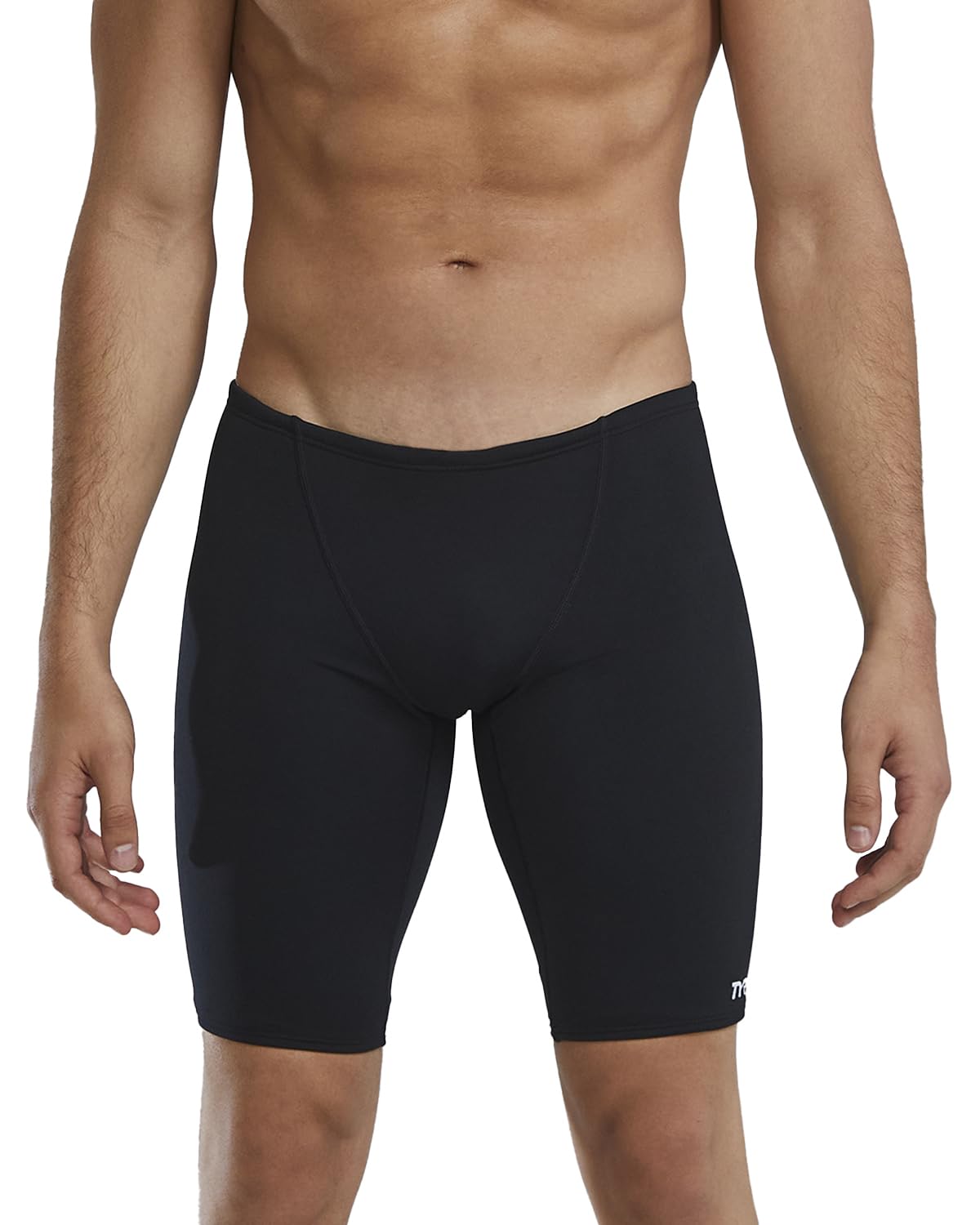
TYR Durafast One Jammer

TYR

TYR Durafast One Jammer

  • Style Compressive jammer
  • Waist Flat drawstring
  • Fabric 100% polyester
Check Price on Amazon

Less squeeze than the Speedo, in a polyester that keeps its color.

The Speedo above squeezes; this TYR skims. The cut sits close without clamping, which is the difference between a jammer you forget about mid-set and one you are aware of on every turn. It is 100% polyester as well — the fiber that comes through chlorine without going sheer — so the suit keeps its color instead of fading to a chalky version of itself by midsummer.

That combination of light, secure and colorfast makes it our pick for men who swim for fitness rather than for the clock. The flat drawstring is a small pleasure: it lies smooth under a wetsuit and does not bunch at the waist halfway through a long set. Nothing about the suit competes with your stroke.

Value is where it quietly wins. The price sits in the middle of this group, and a polyester jammer that holds its color is one you replace because you want to, not because the suit has gone transparent. It is also the better starting point if you have never worn a jammer before and do not yet know how much compression you like.

Bottom Line

For men who hate compression: a light, all-polyester jammer that keeps its color, stays put, and does not clamp your waist.

Check Latest Price

Best Overall

Our Score 8.8/10
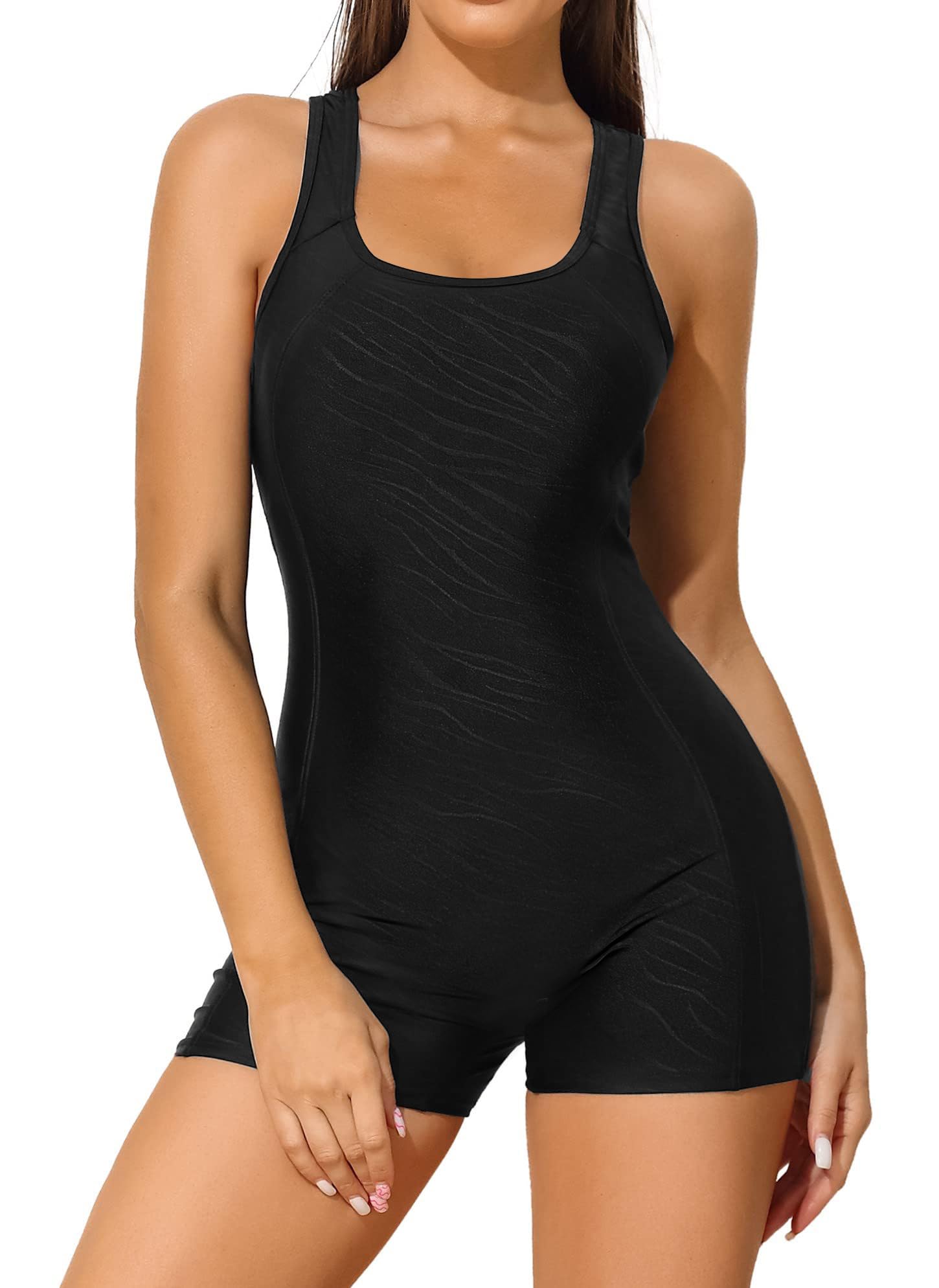
baleaf Women's Racerback One Piece

baleaf

baleaf Women's Racerback One Piece

  • Fit Athletic, non-compressive
  • Style Racerback one-piece
  • Coverage Full seat coverage
Check Price on Amazon

Full coverage that stays put, in a thick chlorine-tolerant fabric, for the best value here.

The baleaf is the least expensive women's suit in this roundup, which is usually the point where a review starts apologizing for the fabric. Nothing here needs an apology. It has real weight in the hand, thick enough that you stop wondering about opacity two laps in, and the racerback sits flat across the shoulder blades instead of digging in under a cap strap.

What earns it the top spot is what it does not do: it does not move. The leg opening stays where you put it and the seat does not creep up between turns, which is the failure that ruins more lap sessions than drag ever will. Forty minutes into a set you want to be thinking about your stroke, not your hemline, and this suit gets out of the way of that. For a first lap suit, or the one you keep in the bag for back-to-back days, that is a lot of suit for the money.

It is a fitness cut rather than a compression cut, and that is the boundary worth knowing: if you are training for a meet, the TYR Diamondback or the Speedo ProLT will do more for you. For everyone swimming for fitness, the coverage and the price are the whole argument. The fabric has held its color through regular pool use, and the stitching on ours is still intact.

Bottom Line

The suit we point most lap swimmers to: full seat coverage that stays put, fabric with real weight to it, and the best value in this roundup. Start here, then buy a second one.

Check Latest Price

Best Boyleg Coverage

Our Score 8.8/10
beautyin Boyleg One Piece

beautyin

beautyin Boyleg One Piece

  • Leg Boyleg shorts
  • Back Racerback
  • Style Boyleg one-piece
Check Price on Amazon

Thigh coverage that does not ride up, for laps and water aerobics alike.

A boyleg suit solves a specific problem: it covers the upper thigh, so there is no chafe where the legs meet and nothing to tug at between exercises. This one does it with shorts that sit where you put them and a racerback top that stays flat. We like it most for water aerobics and mixed sessions where you are upright as often as you are horizontal, and it is the pick we point to when coverage matters more than speed.

The detail we appreciate most is a small one: there are openings in the chest lining so you can slide the pads out for washing, or out for good if you would rather swim unlined. That is the kind of thing that makes a suit easier to live with than its price suggests, and it spares you the bunching that sewn-in pads eventually develop.

It is a fitness suit, not a race suit. The extra fabric around the thigh catches a little water and slows a flip turn, and if you are swimming timed sets you will feel that. For laps at an easy pace, aqua classes, and anyone who wants their thighs covered without a skirt, the trade goes the right way.

Bottom Line

The one to buy when you want your thighs covered: a boyleg cut that stays where it is put through aqua classes and easy laps.

Check Latest Price

Best for Training and Racing

Our Score 8.6/10
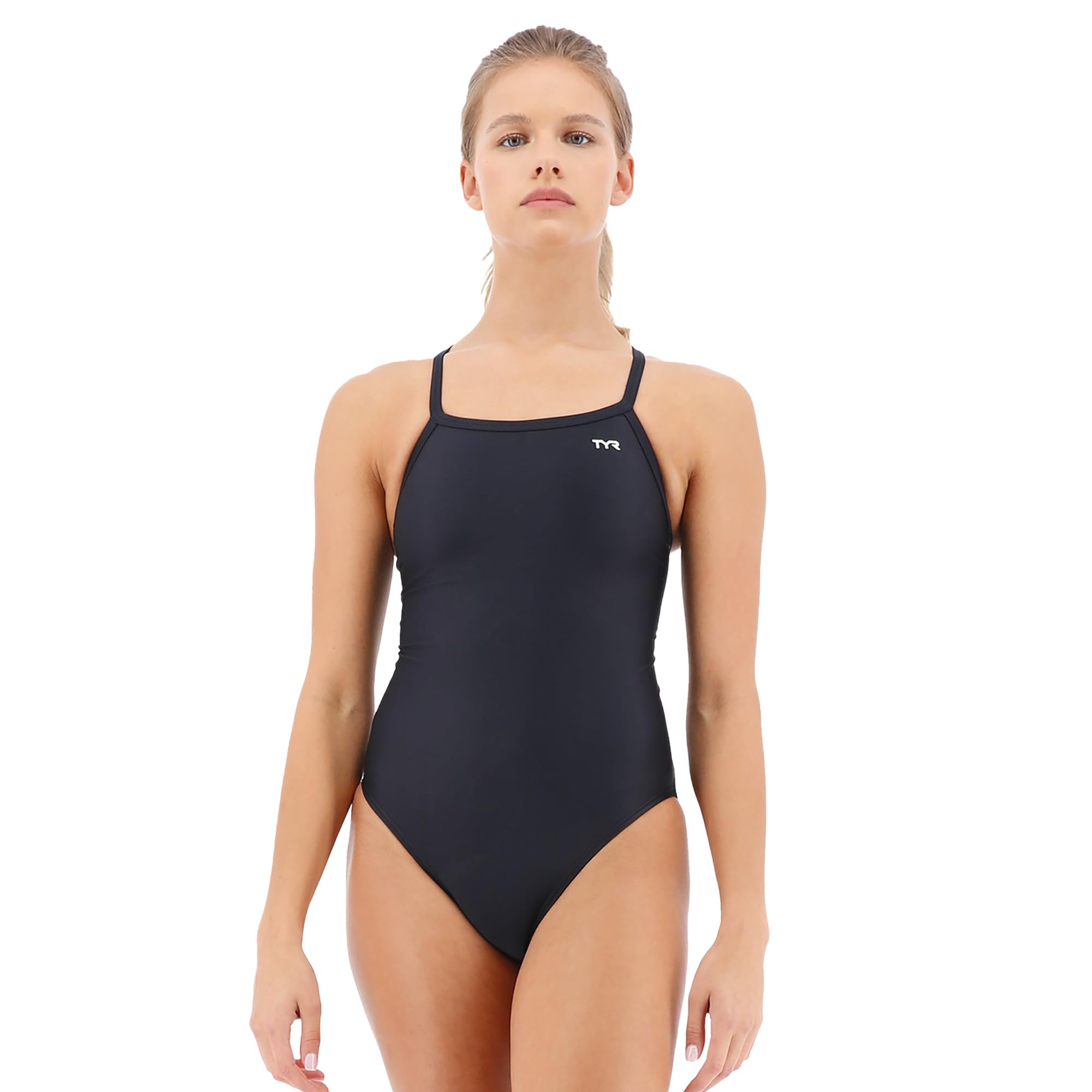
TYR Diamondback Solid

TYR

TYR Diamondback Solid

  • Back Diamondback
  • Type Competitive swimwear
  • Model DSOL1A
Check Price on Amazon

A snug classic training cut that stays put through turns and intervals.

Thin straps, a scooped back and a cut that sits against the body — the Diamondback is the classic training silhouette, and it behaves like one in the water. The straps stay flat on the shoulder, the leg does not gape on a turn, and there is nothing to adjust between repeats.

Snug when dry, still snug when wet: that is the property that matters, because a suit that relaxes in the pool starts moving on you exactly when you are working hardest. The model number, DSOL1A, is worth writing down. When you find your size in this cut, you reorder the number rather than shopping the category again.

Sizing is where people go wrong. The chart runs small and the suit is meant to be tight, so measure rather than assuming your usual size; if you land between two, take the larger and let the fabric do the compressing.

For interval sets and the occasional meet, this is the suit we point to. It is the closest thing in this roundup to a proper racing cut, and it handles the training that gets you to the block.

Bottom Line

The closest thing here to a racing suit: a snug diamondback cut that stays put through intervals, at a price that makes sense for training.

Check Latest Price

Best For Budget practice suit

Our Score 8.6/10
Fiteng Men's Jammer

Fiteng

Fiteng Men's Jammer

  • Leg Wide at the knee
  • Style Competitive jammer
  • Department Men's
Check Price on Amazon

Swim-team families know the arithmetic: a growing swimmer needs two or three jammers a season, and a technical suit at technical-suit prices makes that painful. This is the suit that fixes the math. It is comfortable, the material feels better than the price suggests, and it does its job in the water without complaint.

The cut is generous rather than compressive — forgiving on a teenager who is still growing, less useful if you want the squeeze of a race suit. The waistband stayed up through a full practice, which is the first thing to go on a jammer at this end of the market, and the legs finish wide at the knee instead of gripping it.

Where it gives ground is longevity. The fabric is thinner than a technical jammer's and will not take daily year-round swimming the way the Speedo will. For a high-school season or a summer league, though, it is an easy yes, and the price leaves room for a second one to rotate.

Bottom Line

The jammer to buy in multiples: comfortable, forgiving and priced for a practice rotation rather than a single big purchase.

Check Latest Price

Best For Race-day compression

Our Score 8.2/10
Speedo ProLT Super Pro

Speedo

Speedo ProLT Super Pro

  • Fit Ultra-compressive
  • UPF UPF 50+
  • Care Hand wash only
  • Fabric 85% polyester, 15% spandex
Check Price on Amazon

Everything about the ProLT is aimed at speed: the high rise, the wide fixed straps, the fabric that pulls the suit tight against the torso so there is nothing for the water to grab. We rank it the most competition-minded women's suit here, and the difference is obvious the moment you push off — it feels less like swimwear and more like equipment.

Buying one is the hard part. Speedo's own listing calls the cut ultra-compressive and points you to a separate competitive-fit chart, and that is not marketing hedging: the number on the label is not the number on a fitness suit. Order up, and expect the first swim to feel like getting into a wetsuit.

Hand wash only, per the listing, and the UPF 50+ rating earns its place if your laps happen outdoors, which is more than most pool suits bother with. The blend is 85% polyester and 15% spandex: the polyester is the part that shrugs off chlorine, and the spandex is the part that delivers the compression this suit is built around.

Bottom Line

The most competition-minded women's suit in this roundup — high-rise, wide-strapped and genuinely compressive. Buy it for intervals and meets, not easy laps.

Check Latest Price

Six Months in Chlorine: How We Tested 14 Lap Swimsuits

We started with more than 40 lap suits and cut the list using fabric content and construction. Suits built mostly from chlorine-resistant polyester blends went to the front of the line, while nylon-and-elastane styles — the ones that fade and stretch fastest — stayed in for comparison. We also filtered for swim-specific cuts: straps that stay on the shoulders, leg openings high enough not to drag, and coverage that doesn't shift at the bust, plus wide size ranges that include extended and tall options.

Fourteen suits made the cut, and each one went into rotation three mornings a week for six months. A typical session ran about 1,800 yards — freestyle sets with flip turns, some backstroke, and a handful of open-water lake swims once the weather warmed. After every swim I noted whether the seat rode up on push-offs, whether straps slid down during sprints, and whether the leg openings gaped when I kicked.

Coverage got a hard look in the locker room mirror while the suit was soaking wet, since that's when fabric goes see-through. At home, each suit was rinsed in cold water and hung to dry out of direct sun; every two weeks I held it next to a first-day photo taken under the same light to catch color fading, then tugged the straps to see whether they sprang back or stayed stretched. When I landed between sizes, I ordered both and swam a week in each to see which one bagged water in the seat or cut into my shoulders. At the end, we set each suit's cost against the number of weeks it held its shape — the real value question.

How to Choose

Start With the Fabric, Not the Fit

Chlorine attacks spandex. A suit that is mostly spandex feels wonderful in the fitting room and goes limp and pale within a couple of months of regular swimming. Look for polyester or a polyester-PBT blend: Speedo's Endurance+ is an even 50/50, and TYR's Durafast One is all polyester. The Speedo ProLT is an 85/15 polyester-spandex blend, which is the competition compromise — more stretch, shorter life.

If you swim three or more times a week, buy the higher polyester content and accept a slightly firmer hand. If you swim once a week for fitness, a stretchier blend is fine and will feel more forgiving on the shoulders.

Expect It to Feel Tight When Dry

A properly fitted lap suit feels tight before you get in and right once it is wet, because the fabric relaxes in the pool. That is not a sizing error. The trap is the chart: competitive suits are cut to compress, so a size in a race suit is not the same number in a fitness suit. Both technical suits here run small, and their own listings point you to a separate competitive-fit chart.

On a fitness cut, the opposite problem is more common — the baleaf runs generous for some swimmers, so if you are between sizes, take the smaller one. Either way, order by your measurements rather than the size you wear in street clothes.

Straps, Legs and What Stays Put

Racerbacks and thin fixed straps both hold, but they hold differently. A racerback spreads the pull across the shoulder blades, which is easier on the shoulders over long sets, while thin straps free up the shoulder for a full reach. Leg openings matter more than necklines: a high-cut leg looks fast and needs adjusting, while a boyleg stays where it is put at the cost of a little fabric and a little drag on the turn.

Whatever the cut, check the seat and the leg band before your first swim. Those are where a suit moves, and a suit you are tugging at is a suit you will stop wearing.

Rinse, Rotate, Replace

Rinse the suit in fresh water as soon as you are out of the pool, keep it out of the washing machine, and dry it away from direct sun. Two suits in rotation beat one suit rinsed carefully, because a suit that never dries fully between sessions ages faster than one that does.

Count the cost per swim rather than the price on the tag. A polyester training suit that lasts several seasons works out cheaper than three cheap suits that go sheer, and rotating two mid-priced suits gets you the same benefit for less.

Frequently Asked Questions

Final Verdict

The baleaf is the one we recommend first: full seat coverage, fabric with real weight to it, and a price that makes a second suit a sensible purchase rather than an indulgence. It is the suit most lap swimmers should own, and the one they will stop thinking about once they are in the water.

If you are training for a meet, the TYR Diamondback gives you a proper racing cut and the Speedo ProLT gives you real compression — budget for the ProLT's sizing and for a shorter life. Men who swim three or more times a week should start with the Endurance+ jammer, one size up from their usual.