Accessories

Best Speed Ropes of 2026

A speed rope looks like the simplest thing in your gym bag, which is exactly why the wrong one is so annoying. The cable kinks, the handles slip, and you spend more time resetting the length than actually jumping. What you want is a rope that turns cleanly, stays untangled, and feels substantial enough to control without dragging your wrists down. It should also be easy to adjust once and forget.

Over the past four months, I've jumped with 14 speed ropes in my garage, on my driveway, and at a local gym, and my team and I compared how each one handled warm-ups, quick conditioning intervals, and longer sessions. Weight mattered more than I expected: too light and the rope skips in the air, too heavy and your forearms pay for it. We also paid attention to value and build quality, because a cheap cable that frays after a few weeks is no bargain. The picks below are the ones that held their length, stayed stable at speed, and made me want to keep jumping.

Best For Outdoor practice

Our Score 9.2/10
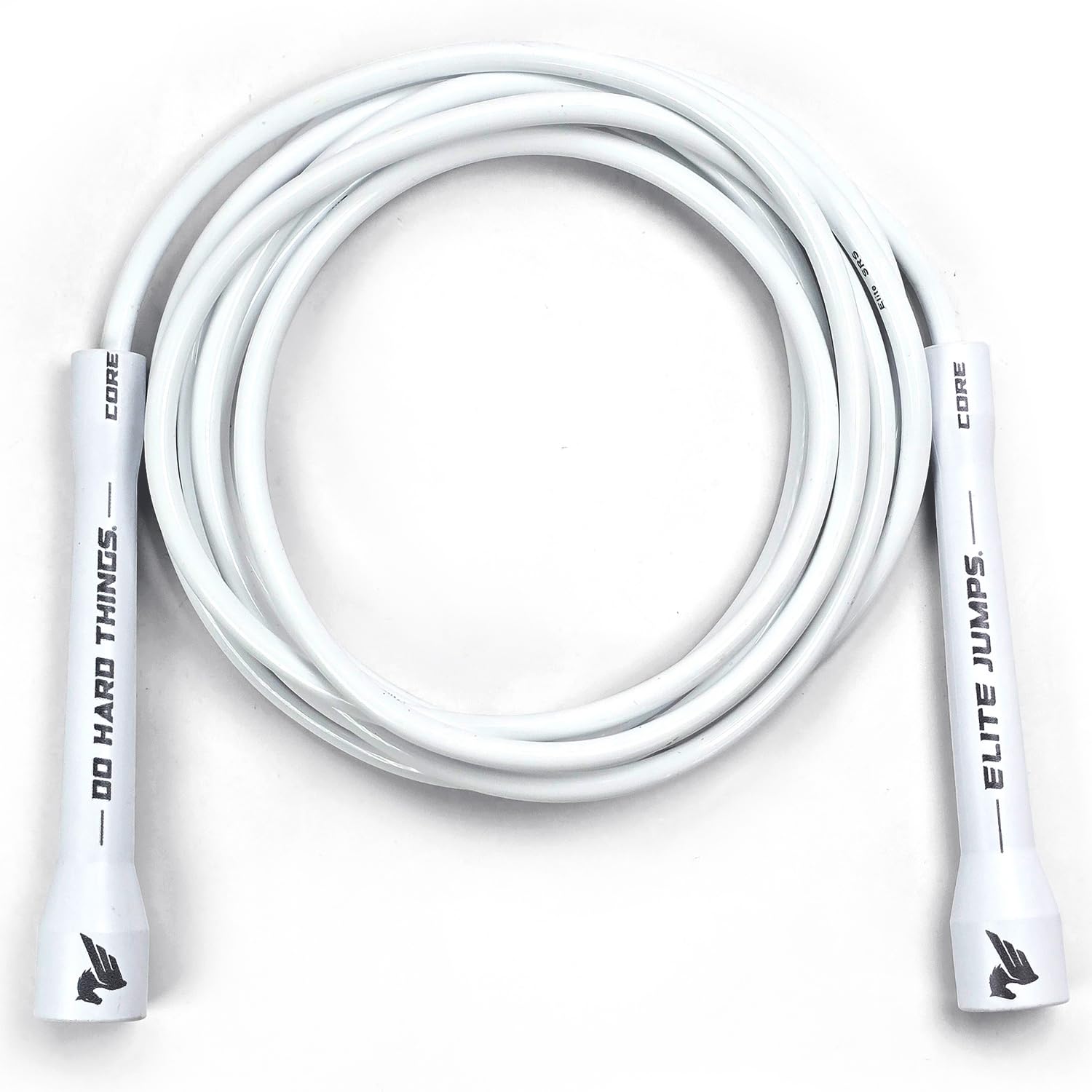
Elite Jumps 6mm PVC Jump Rope

Elite

Elite Jumps 6mm PVC Jump Rope

  • Cord 6mm PVC
  • Cord Length 10 feet
  • Handle Diameter 0.75 inches
  • Handle Material Plastic
Check Price on Amazon

Six millimeters of PVC is thick for a speed rope, and that's the point of the Elite Jumps cord: an inner string core inside a solid PVC sheath, heavy enough that you can hear and feel the arc coming around. What struck us is how much feedback it gives back — a cord like this hands a beginner something to time against instead of a blur.

It's also the rope here built for rough ground. The same thickness that slows it down shrugs off asphalt and playground concrete in a way the coated steel wires on this list won't, and the plastic handles are plain but comfortable at 0.75 inches across. If your jumping happens in a driveway, that matters more than a fast spin.

For pure double-under speed, a wire rope is the better tool — the Elite's cord is slower to come around and won't reward a wrist flick the way the WOD Nation or the Wastou do. What it will do is survive a season outdoors and teach you the timing you need before you get there. Rope work is a timing skill before it's a speed skill, and this is the cord that lets you build it on ground where a wire rope would fray.

Bottom Line

The durable practice rope of the group: a thick PVC cord and plastic handles that take rough ground, at the cost of out-and-out speed.

Check Latest Price

Best Overall

Our Score 9.0/10
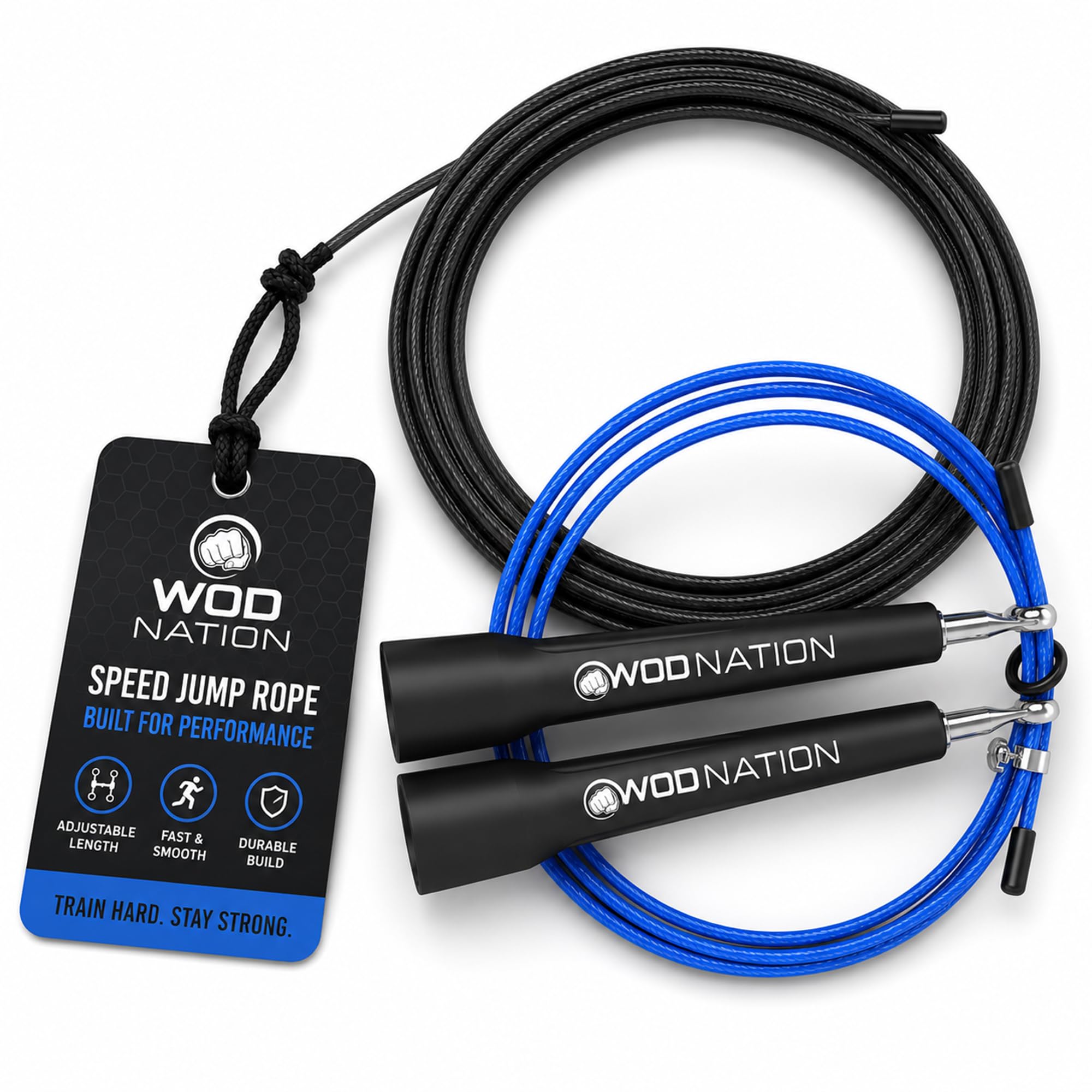
WOD Nation Adjustable Speed Rope

WOD

WOD Nation Adjustable Speed Rope

  • Handle Plastic with urethane grip
  • Weight 6.35 oz
  • Cord Material Alloy steel
Check Price on Amazon

Quick bearings and a spare cable in the box make double-unders easier to learn.

Two steel cables come in the box, and the spare is the detail that decided our top pick. A speed rope's cable wears where it leaves the handle, and when the coating gives out you're done jumping until a replacement arrives. A factory-cut second cable already in the bag turns that from an order into a five-minute swap.

The spin is the other half of it. Bearings at the top of each handle let the cable come around on a flick rather than a full arm circle, and the rope is listed at 0.18 kg — light enough that a long set tires your calves before your shoulders. We paid close attention to the handfeel, because plastic handles under a urethane grip aren't the plushest option on this list. What they do is stay put once your palms get damp, and that's the part that decides whether your rhythm survives the back half of a workout.

Length is set with a screw at the top of each handle: measure, jump, then trim the tail in small steps. Keep it on smooth ground — that's WOD Nation's own instruction, and it's honest, because the cable is steel under a plastic sleeve and a gritty driveway grinds that sleeve away. Hardwood, rubber gym flooring, a swept garage slab: all fine.

Nothing about a coated wire rope lasts forever, and the second cable is the straight answer to that. It turns a frayed sleeve into a five-minute pause instead of a week without a rope.

Bottom Line

The speed rope we hand people first: quick bearings, a light build, and a spare cable in the box so a worn coating never ends your training.

Check Latest Price

Best Budget

Our Score 9.0/10
Wastou Speed Jump Rope

Wastou

Wastou Speed Jump Rope

  • Weight 5.29 oz
  • Bearings Dual 360-degree
  • Cord Length 9.8 feet
  • Handle Material Aluminum
Check Price on Amazon

Aluminum handles and a smooth dual-bearing spin at the least expensive end here.

Hollow aluminum handles are the surprise at this end of the list. Metal doesn't flex the way plastic does under a hard grip, and the silicone wrap stays usefully tacky after twenty minutes of skipping. At 0.15 kg the rope disappears into a gym bag, and the dual bearings in each handle turn the cable without the scratchy hesitation a plain bushing gives you.

The detail we didn't expect in a rope this inexpensive is a second, longer cable in the packet. Most budget ropes give you one length and expect you to live with it, but a speed rope is trimmed rather than extended — cut it short and it's finished. Swap in the longer cable before you cut anything and both options stay open, which is what makes this one work for taller jumpers as well as average ones.

Adjustment takes the small tool that ships in the packet and a bit of trial and error. The screws are tiny, the right length is a feel as much as a measurement, and you'll set it, jump ten times, and set it again. Once it's dialed, nothing asks for attention: no twists to shake out, no drag at the handles.

Bottom Line

An aluminum-handled speed rope for very little money, with a longer second cable that keeps taller jumpers from cutting themselves short.

Check Latest Price

Best for Quick Length Changes

Our Score 9.0/10
LIFEEZY Self-Locking Jump Rope

LIFEEZY

LIFEEZY Self-Locking Jump Rope

  • Weight 7.41 oz
  • Cord Length 10 feet
  • Cord Material PU-coated steel
  • Handle Material Aluminum
Check Price on Amazon

Push-in handles reset length without tools, in seconds, between sets.

Self-locking handles solve the smallest and most irritating job in jump roping: the tiny screw that holds the cable at your length and disappears into a gym floor the first time you loosen it. On the LIFEEZY you push the cable into the handle until the length feels right and it stays there. No tool, no screw, no hunting on your hands and knees. That one decision is why this rope is on our list.

The rest is solid rather than fancy. The PU-coated cable runs 10 feet out of the box, the aluminum handles measure 1.2 inches across — the chunkiest in this group, and comfortable if you have larger hands — and the double bearings turn without complaint. One quirk we noticed: the bottoms of the handles are open, so any cable you leave long hangs out and swings into your wrist. Trim it close.

Where the design asks for care is at the collar. The cable is the wear item on any speed rope, and this one is no different — check it before a session and retire it once the coating frays. For anyone who shares a rope, or resets length between a warm-up and a workout, tool-free adjustment is worth more than a fancier grip.

Bottom Line

The pick for anyone who resets rope length often: push-in handles make sizing tool-free, and the chunky aluminum grips suit bigger hands.

Check Latest Price

Best for Taller Jumpers

Our Score 8.8/10
BRANK SPORTS Speed Rope Set

BRANK SPORTS

BRANK SPORTS Speed Rope Set

  • Weight 12.7 oz
  • Cord Length 145 inches
  • Handle Material Aluminum
  • Included Cables 3 steel cables
Check Price on Amazon

145-inch starting rope and three cables, so tall jumpers trim once and keep spares.

At 145 inches, the BRANK rope starts longer than anything else in this group — long enough that a tall jumper trims to length and still has margin, which isn't true of the nine- and ten-foot ropes that make up most of this list. If you've ever cut a rope to your height and found it a handspan short, that number is the whole argument.

Three steel cables come in the set, along with aluminum handles and a stated 365-day guarantee. Metal handles are the right call for a rope that lives in a gym bag: they don't crack when the bag gets dropped, and they don't flex under a hard grip.

What you get in exchange is a rope you can set up once and stop thinking about: the length is there, the spares are there, and the guarantee runs a full year. For a taller jumper who has already bought one rope that came up short, that combination is worth more than a couple of saved ounces.

Bottom Line

The longest starting rope here, with three cables and metal handles — our pick for taller jumpers tired of coming up short.

Check Latest Price

Best For Casual skipping

Our Score 8.8/10
Loocio Speed Jump Rope

Loocio

Loocio Speed Jump Rope

  • Handle PVC with foam grip
  • Cord Length 280 centimeters
  • Cord Material PVC-coated steel
Check Price on Amazon

Foam handles, a 280-centimeter cable, a ball bearing at each end: the Loocio is the plainest rope here and the easiest one to hand to someone who has never skipped before. There's nothing to learn about it. You loosen the collar, set the length, and jump.

It works, too. The bearings turn freely enough for steady speed work, the foam is soft in the hand, and the cable is light enough that a beginner won't be punished for a sloppy arm swing. At 280 centimeters, trimmed to length, it suits most adults.

The cost of that simplicity shows up in the parts you can't see. The handles are foam over a plastic core, and the core is what cracks when the rope gets dropped or stepped on — foam hides the damage until a handle starts to wobble. Check the ends before a session rather than during one.

So where does it land? As the rope we point people toward when they want to find out whether jumping sticks before they commit to a kit. If it does stick, one of the faster ropes here will still be waiting, and this one can live in the car.

Bottom Line

An inexpensive, simple rope for casual skipping and travel — not the one we point at serious double-under training or very tall jumpers.

Check Latest Price

Best For Sweaty hands

Our Score 8.6/10
Sonic Boom M2 Jump Rope

Sonic

Sonic Boom M2 Jump Rope

  • Weight 8.16 oz
  • Cord Length 120 inches
  • Grip Material Silicone
  • Included Cables 2 speed cables
Check Price on Amazon

Silicone grips are the reason to look at the Sonic Boom. Silicone stays tacky when your hands are wet, where foam goes slick and bare plastic gets slippery, and if your current rope has ever rotated in your palm mid-set you already know why that matters.

The self-locking collars are the other half of the design, and in our view the better-executed half. Push the cable into the collar and it grips; changing length takes seconds and there's no screw to lose. Two cables come in the box, which softens the day one wears out.

The cables themselves are the fussy part. They can kink and bunch, especially when the rope is stuffed into a bag between sessions, and a kinked cable never swings quite the same again. Loose loops hung on a hook keep them straighter longer.

What we keep coming back to is the collar. A mistimed double-under can pull the cable clean out of the handle, and after that happens you jump a little defensively for the rest of the session. It's the one part of the design that doesn't match the rest of the build.

Bottom Line

Choose it for the silicone grips, which stay tacky when your hands don't, and for collars you can reset without a screwdriver.

Check Latest Price

How We Tested Speed Ropes for Real Workouts

We started by gathering more than 30 speed ropes and comparing cable material, handle shape, claimed adjustment range, and replacement-part availability, then narrowed the list to 14 that represented different weights and price points. The goal was not to find the most technical rope, but the ones that would work for a general fitness routine, a high-intensity interval session, and a travel bag.

I spent four months jumping with all 14 in my garage, on my concrete driveway, and at a local gym, rotating them through 10-minute warm-ups, short all-out intervals, and double-under practice. Before each session I adjusted the length to my height, then handed ropes to a taller training partner to see how quick and repeatable the change was. I weighed every rope and watched how it tracked at speed, noting whether it felt whippy, dead, or easy to control. I also coiled each one back into its bag and watched whether it hung straight or turned into a bird's nest.

After each workout I checked for frayed coating, kinked sections, and loosened screws, and at the end of four months I compared that wear against what each rope cost. The ropes that rose to the top were the ones that kept their length, stayed stable during quick sets, and still looked ready for another month of workouts. We'll keep using them and update this list if anything changes.

How to Choose

The cord sets the job

Speed work wants a thin, coated steel wire: light enough to turn on a wrist flick, stiff enough to hold its arc at 150 turns a minute. A thicker PVC cord, like the 6mm on the Elite Jumps, is slower but tougher and tells you where the rope is, which is why it suits beginners and driveways. Decide from your surface and your goal first.

If you jump on concrete or asphalt, any wire rope will fray, whatever name is on the handle. A PVC cord or a smooth mat is the cheaper habit over a year of training.

What makes a rope feel fast

Three things decide it: the bearings at the top of each handle, the weight of the cable, and the weight of the handle. Good bearings let the cable keep turning after your wrist has stopped. A heavy handle steadies the rope but slows the turn, which is why the lightest ropes here suit speed and the heavier ones suit learning.

The quickest way to judge a rope you can't spin first is the handle joint. The cable should exit cleanly with no molding to catch on. Cheap ropes drag there, and no amount of practice fixes a collar that binds.

Length, trimming, and adjustment

Every speed rope arrives longer than you need, because length is set by cutting. Stand on the middle of the cable and pull the handles up: for speed work they should reach roughly your armpits, a touch lower while you're learning. Cut in small steps and keep an inch in reserve.

Screw collars need a small tool but hold firmly; self-locking collars reset in seconds and are worth the extra if you share the rope or change length between warm-up and workout. Anything under nine feet is a problem for a tall jumper, and the BRANK's 145-inch start is the easiest fix here.

Handles and grip

Handle diameter matters more than most shoppers expect. The 1.2-inch aluminum handles on the LIFEEZY suit larger hands; slimmer plastic handles are easier for smaller ones to close around, and a handle you can't relax your grip on will end the session early.

Foam is soft and cheap and goes slick once your palms warm up. Aluminum doesn't compress or sweat. Silicone stays tacky longest, which is why the Sonic Boom is the pick for wet hands. If you drop the rope on its ends, metal handles survive it better than plastic.

Frequently Asked Questions

Final Verdict

For most people chasing double-unders, the WOD Nation is the rope to buy. The bearings are quick, the length sets with a screw and a minute, and the spare cable in the box means a worn coating costs you a swap rather than a purchase.

The Wastou is the same idea with aluminum handles and a smaller outlay, and if you're tall enough that most ropes come up short, start with the BRANK and its 145 inches. Settle those three and the rest of this list is refinement.