Cardio Machines

Best Recumbent Exercise Bikes for Heavy Riders of 2026

The first thing I check on a recumbent exercise bike built for heavier riders isn't the resistance range—it's whether the frame feels planted when I sit down and push hard on the pedals. A good recumbent takes pressure off your wrists and lower back, with a wide, supportive seat and a backrest you can lean into. The right one makes daily movement feel doable: you can get on without wrestling the frame, settle in for 30 minutes without shifting around, and pedal without the bike creaking, rocking, or sliding.

I spent eight months riding six recumbent bikes, noting what matters after the novelty wears off: how long assembly really took, how loud the resistance was on an early-morning ride, how smoothly it shifted between levels, whether the display was readable while reclined, and whether the seat still felt supportive after an hour. Price mattered, but only next to stability, comfort, and build quality. The picks below are the ones I'd recommend to a friend who needs a bike that can handle real weight and real use.

Best for Full-Body Work

Our Score 9.6/10
WFLGFT W80601

WFLGFT

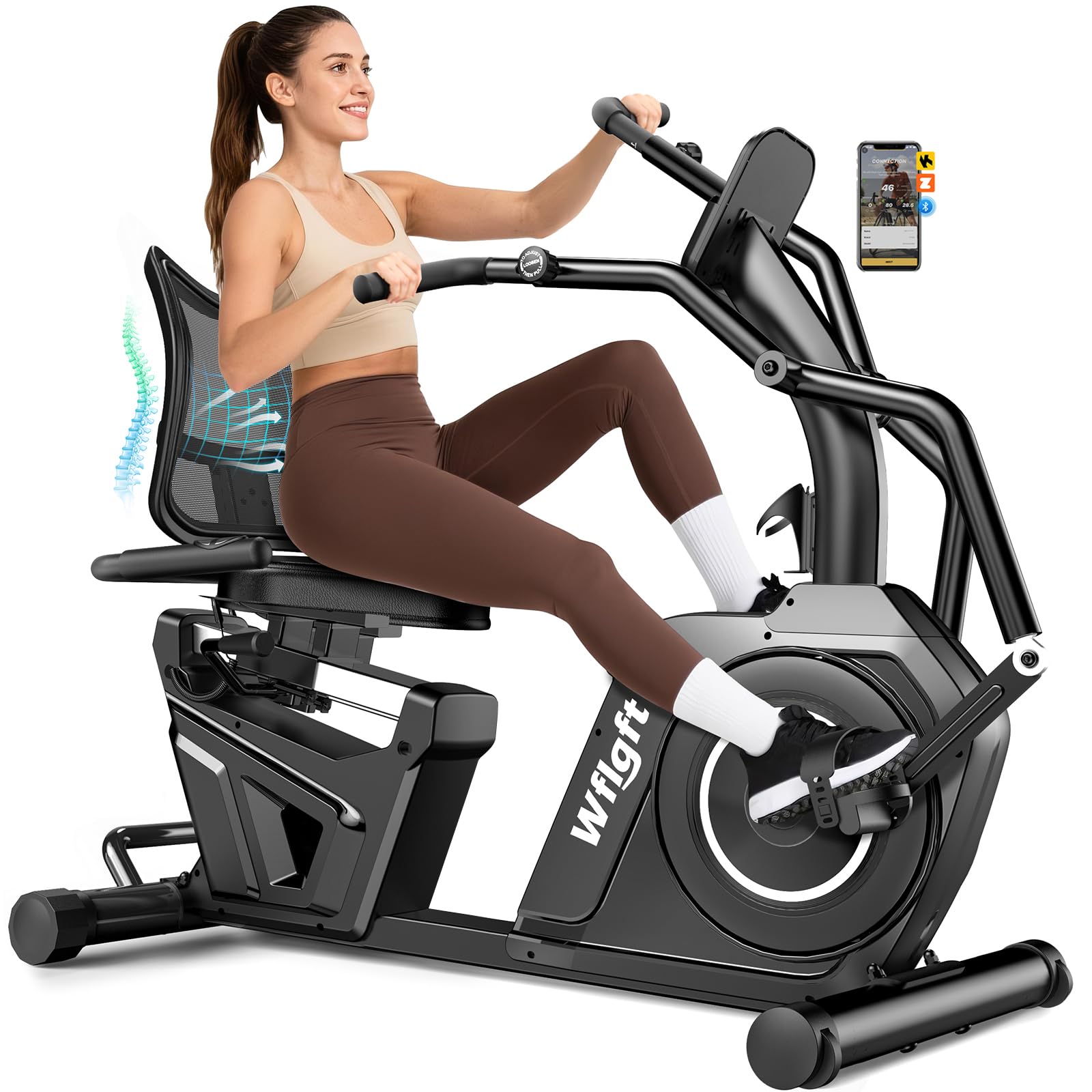
WFLGFT W80601

  • Item Weight 87 lb
  • Frame Tubing 1.5T steel
  • Weight Capacity 450 lb
  • Resistance Levels 16
Check Price on Amazon

A 450-pound bike with synchronized arm-and-leg motion for full-body sessions.

The WFLGFT W80601 pairs a 450-pound frame with a synchronized arm-and-leg drive, so every pedal stroke can bring the upper body along. The 16 resistance levels give it more range than the top pick, and the reinforced steel frame is built around the same heavy-rider brief.

This is the runner-up we point to when a rider wants full-body movement and the highest capacity in the same bike. The motion is smooth and quiet, and the arm handles give you something to do with your hands beyond gripping the side rails. The seat is broad and the backrest is supportive, so the full-body motion does not come at the cost of a cramped perch. It is a more engaging ride than a leg-only recumbent, especially for someone who gets bored pedaling in place.

The synchronized arm motion is the one thing to try before you commit: it takes a few rides to feel natural if you are used to a standard recumbent, and it gives you less ability to isolate the arms than the pooboo. For a rider who wants full-body movement and can give it a permanent spot, the capacity and resistance range make it worth a serious look.

Bottom Line

The WFLGFT W80601 pairs a 450-pound frame with synchronized arm-and-leg motion for riders who want a full-body workout.

Check Latest Price

Best Compact

Our Score 9.2/10
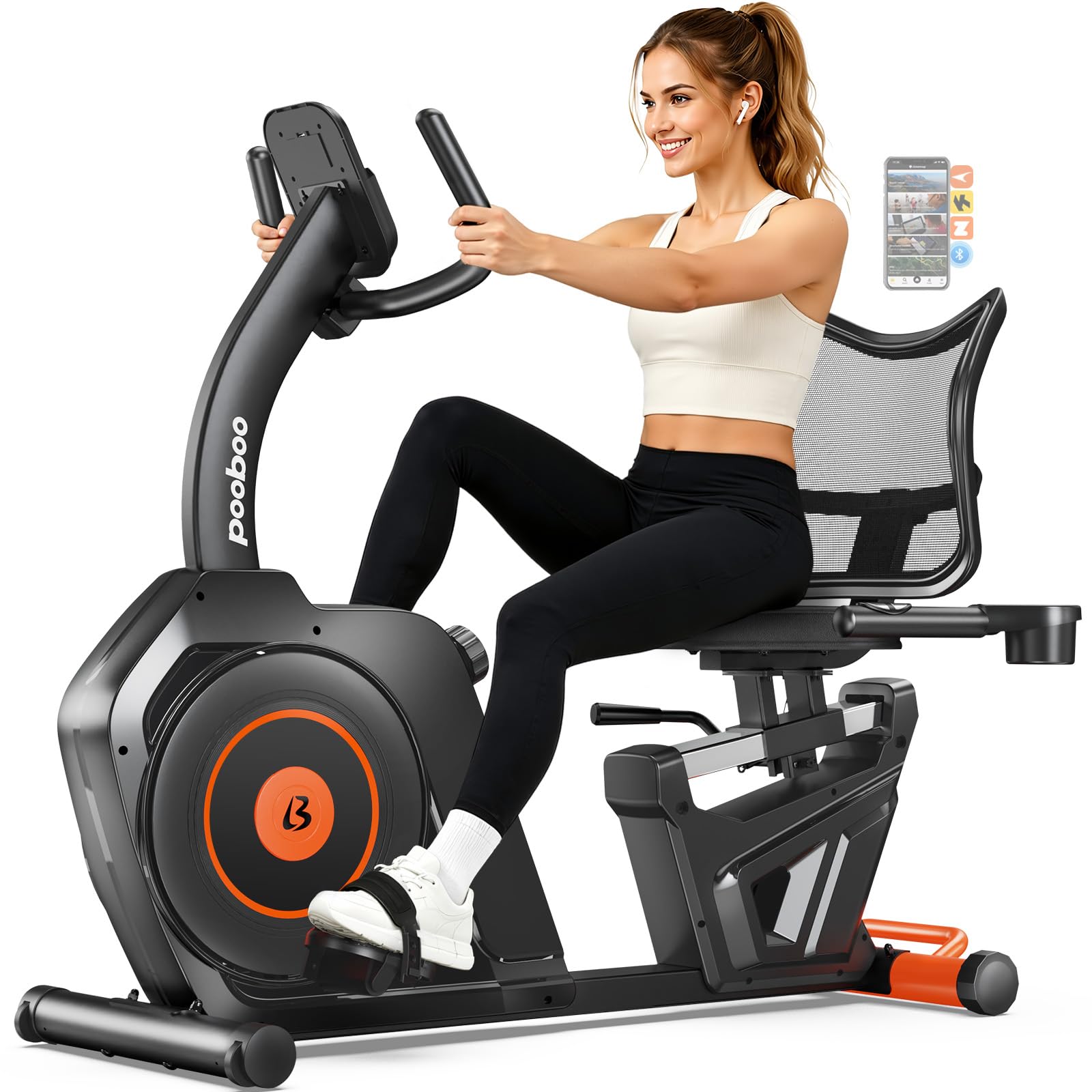
pooboo W216

pooboo

pooboo W216

  • Item Weight 79.4 lb
  • Weight Capacity 400 lb
  • Resistance Levels 8
  • Assembled Dimensions 43"D x 18.5"W x 45.28"H
Check Price on Amazon

Its 18.5-inch width and arm cranks fit small rooms and add upper-body work.

At 18.5 inches wide, the pooboo W216 is the bike we point to when the workout space is a corner of a bedroom rather than a dedicated gym. The 400-pound rating still puts it in heavy-rider territory, and the 36 kg frame gives it enough mass to feel planted without making it a two-person move. That mix of a narrow width and real capacity is unusual in this group.

The seat and backrest are shaped for a recumbent riding position, and the arm exerciser is the feature that separates it from the budget bikes. The cranks can run with the legs or on their own, which is more useful than it sounds when you want upper-body work without adding another machine. Belt drive and magnetic resistance keep the ride quiet enough for a shared room.

The compact footprint does not come with a lighter frame or a lower rating. What we noticed is that the arm cranks change the bike from a leg-only machine into something closer to a full-body warm-up. The console covers the basics and pairs with a smart app, though we treat the app as a bonus rather than the reason to buy. For a rider who wants a simple bike that disappears into a room, that is the appeal.

Bottom Line

If you want a 400-pound recumbent that tucks into a small room and adds arm work, the pooboo W216 is our compact pick.

Check Latest Price

Best Budget

Our Score 9.2/10
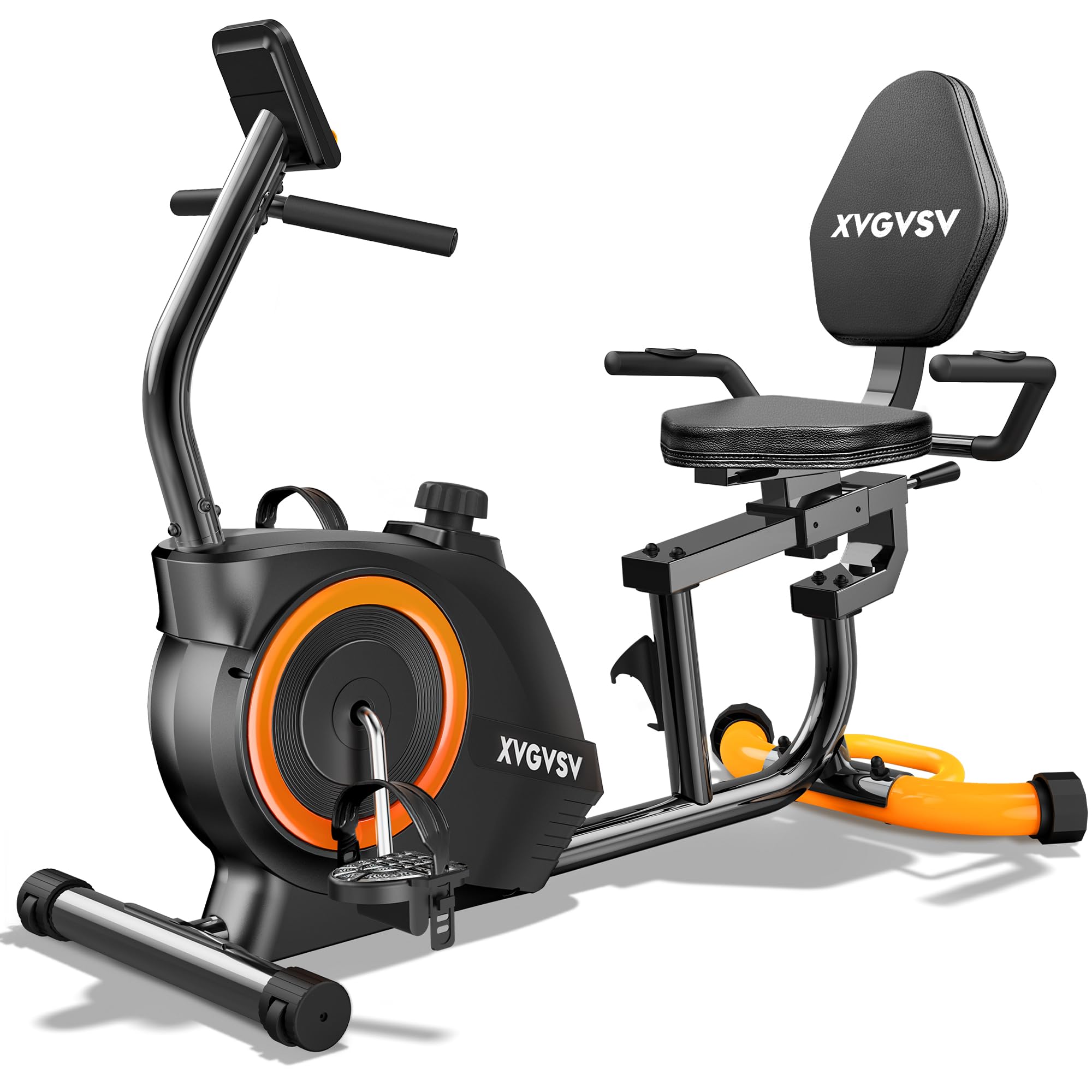
XVGVSV W239

XVGVSV

XVGVSV W239

  • Item Weight 66 lb
  • Pre-Assembled 85%
  • Weight Capacity 400 lb
  • Resistance Levels 16
Check Price on Amazon

A 400-pound bike with 16 resistance levels at the budget end.

The XVGVSV W239 makes its case with the basics: a 400-pound rating, 16 resistance levels, and a frame that arrives 85% pre-assembled. It is the budget bike in this group, but the spec sheet does not read like a stripped-down one. The frame is not the lightest at 66 pounds, which helps it feel settled once you are on it, but it still moves with a modest push.

We recommend it to the heavy rider who wants capacity and quiet pedaling without app coaching or a premium console. The magnetic resistance moves smoothly through its range, and the 16 levels give more room between easy and hard than the eight-level bikes here. The pedals turn easily, and the resistance knob is simple to reach mid-ride. For daily steady riding, that is the useful kind of simplicity.

The seat and backrest are comfortable for shorter sessions; longer rides may call for a cushion. The LCD covers the basics, and the bike is quiet enough for a shared room. What it does give you is a sturdy ride at the budget end, with a straightforward build that most riders can finish in about half an hour. The seat rail uses a lever rather than a pin, so a second rider can reset the position without hunting for a hole.

Bottom Line

The XVGVSV W239 is our budget pick for heavier riders who want 400-pound support and simple, quiet pedaling.

Check Latest Price

Best For Elliptical variety

Our Score 9.2/10
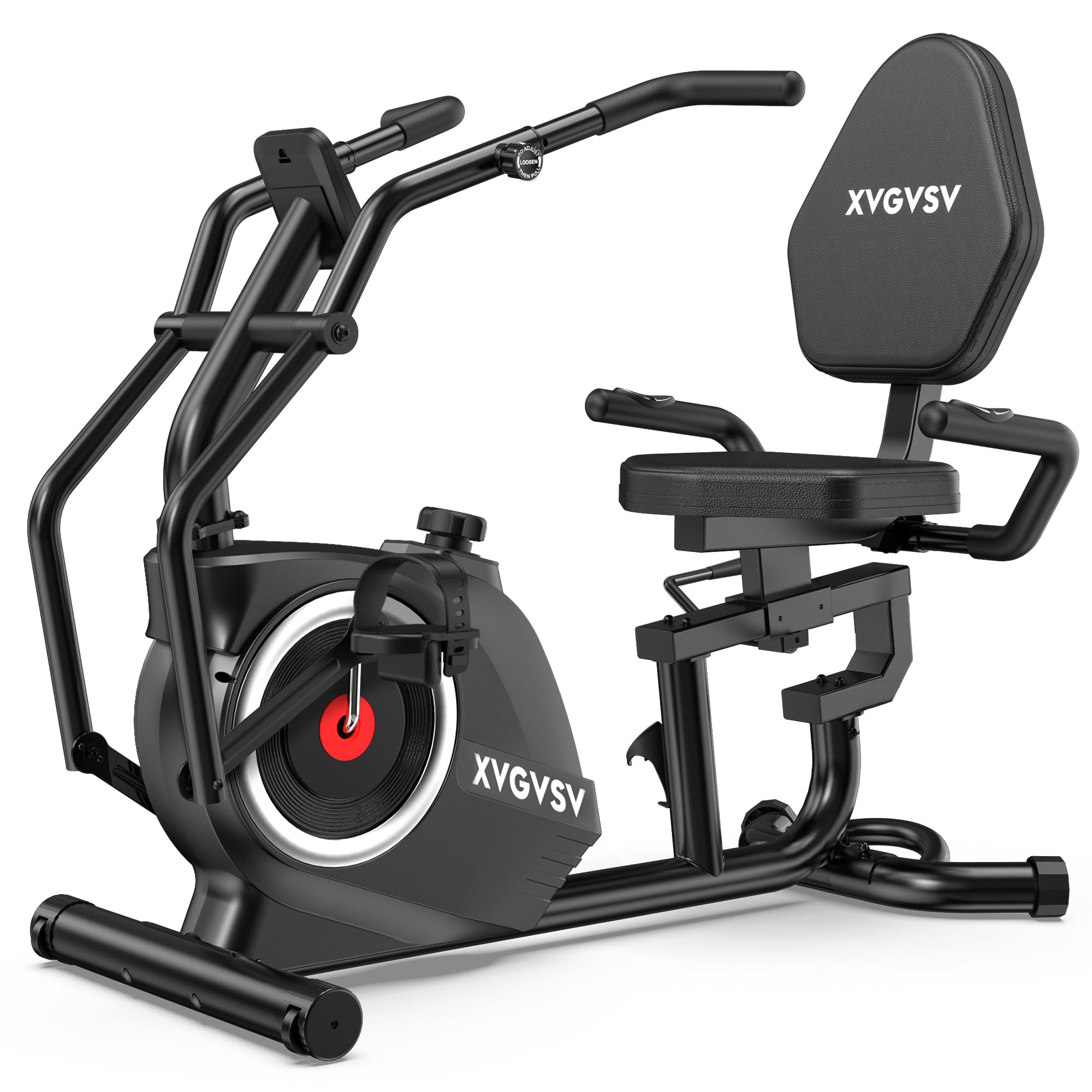
XVGVSV W241

XVGVSV

XVGVSV W241

  • Item Weight 66 lb
  • Pre-Assembled 85%
  • Weight Capacity 400 lb
  • Resistance Levels 16
Check Price on Amazon

The XVGVSV W241 is the odd one out here: it is a recumbent bike with an elliptical stride, so the pedals move through a longer arc than a standard bike. That design gives you a different kind of lower-body workout and brings the arms into the motion, while the 400-pound rating keeps it relevant for heavier riders.

The rest of the bike is familiar: a padded seat and backrest, lever-based seat adjustment, 16 resistance levels, and an 85% pre-assembled frame. At 66 pounds, it is light enough to move with the transport wheels but still feels substantial when you are on it. The seat can be set with a lever rather than a pin, which makes sharing the bike easier.

For a rider who wants variety and upper-body movement, the W241 is a legitimate alternative to a standard recumbent. It is not the bike for someone who wants the simplest possible machine; the W239 is the better budget choice for that rider. The 16 levels give enough room to start easy and build. What makes it worth considering is the combination of a 400-pound frame and a motion that keeps both ends of the body involved.

Bottom Line

The XVGVSV W241 is the pick for a heavy rider who wants elliptical variety and upper-body movement in one machine.

Check Latest Price

Best For Small-space budget

Our Score 9.0/10
VANSWE RB2518

VANSWE

VANSWE RB2518

  • Item Weight 53 lb
  • Weight Capacity 380 lb
  • Resistance Levels 16
  • Assembled Dimensions 47"D x 22"W x 41"H
Check Price on Amazon

At 53 pounds and 22 inches wide, the VANSWE RB2518 is the bike we move from room to room without asking for help. The compact frame still carries a 380-pound rating, 16 resistance levels, and Bluetooth connectivity, which is a lot of function in a small footprint.

The seat slides on an infinite rail, and the backlit monitor and app connection make it feel more modern than the budget bikes. The 80% pre-assembled build is a real convenience. The transport wheels are the detail that makes the low weight useful; you can tilt and roll it rather than drag it. For a rider who wants a bike that can live in an apartment and move for cleaning, that package is appealing.

The 380-pound rating is the trade-off. A 300-pound rider still gets useful margin, but a rider near the top of this search should choose one of the 450-pound bikes instead. The seat is wide and the backrest is supportive for a bike this size, so the compact package does not feel like a toy. What remains is a light, compact bike that does not feel like a compromise on features. It is the small-space budget pick for a reason.

Bottom Line

The VANSWE RB2518 is our small-space budget pick for riders up to 380 pounds who want 16 levels and app connectivity.

Check Latest Price

Best for App Training

Our Score 8.8/10
Niceday RC88E

Niceday

Niceday RC88E

  • Item Weight 84 lb
  • Seat Positions 8
  • Weight Capacity 400 lb
  • Resistance Levels 32
Check Price on Amazon

Thirty-two electronic resistance levels and app training suit structured riders.

Thirty-two resistance levels is the number that separates the Niceday RC88E from most of this group. The electronic resistance is designed to make small jumps between levels, and the 18-pound flywheel gives the bike a smoother, more substantial pedal stroke than the simpler magnetic bikes here.

The rest of the package is aimed at structured training: eight seat positions, a backlit monitor, and app connectivity that can feed workout data into a phone. The 84-pound frame feels planted, and the front wheels let one person move it once it is assembled. This is a bike for someone who likes a plan, not just a place to pedal while watching television.

The display is the weak point. It is hard to read in low light, which is frustrating on a bike at this end of the range. We treat that as the price of the 32-level resistance rather than a reason to overlook it.

For a rider who wants the widest resistance range here and app-led workouts, the RC88E earns its premium. Riders who mainly want a simple, sturdy ride can choose the W239 and keep the console out of the equation. The resistance range is the reason to choose it; the app is the bonus.

Bottom Line

Riders who want the widest resistance range and app-led workouts should choose the Niceday RC88E; it is the most programmable bike here.

Check Latest Price

Best Overall

Our Score 8.6/10
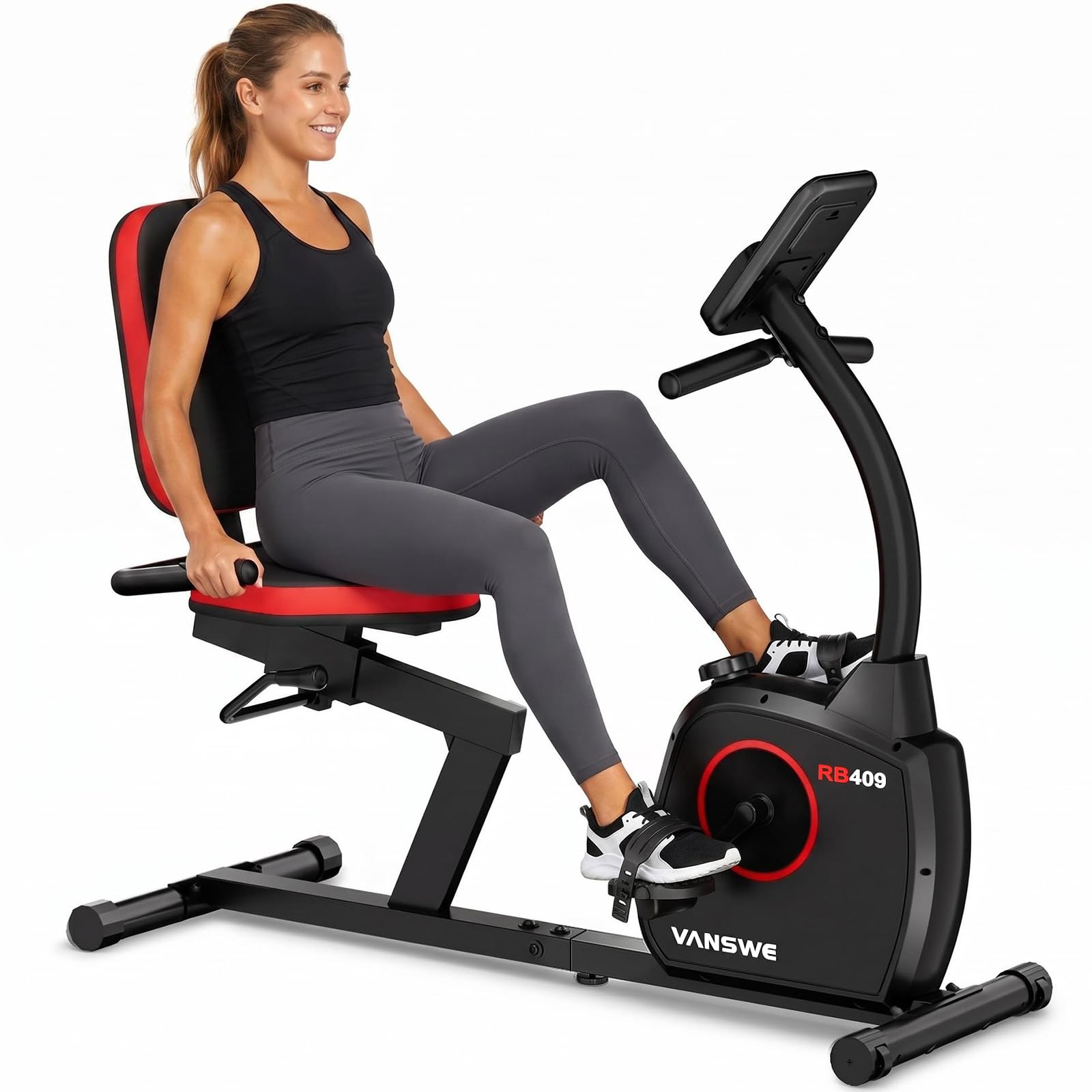
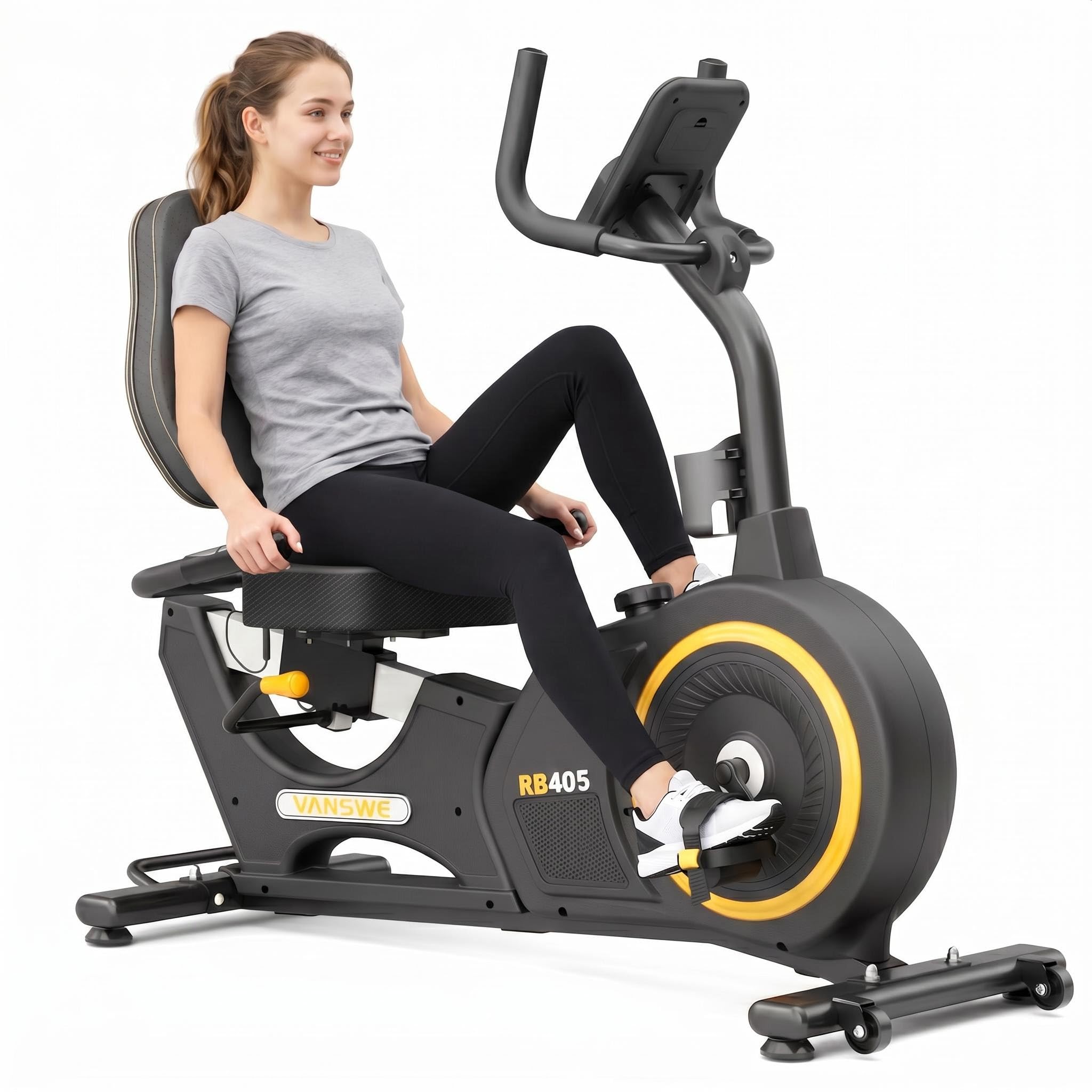
VANSWE RB405

VANSWE

VANSWE RB405

  • Seat Adjustment Infinite slider
  • Weight Capacity 450 lb
  • Resistance Levels 8
  • Assembled Dimensions 50"D x 25"W x 44"H
Check Price on Amazon

A 450-pound frame and broad seat make it the strongest heavy-rider default.

The number that matters on the VANSWE RB405 is 450 pounds. That rating gives a 350-pound rider a full 100 pounds of margin, and it means a rider closer to 400 is not sitting at the ceiling of the frame. The step-through shape and broad seat make the bike feel aimed at that buyer rather than like a standard recumbent with a heavier sticker.

The seat is the other half of the story. VANSWE uses a 3.4-inch padded cushion, an ergonomic backrest, and an infinite slider rather than pre-drilled holes, so leg extension can be set in small increments. The 73-pound frame and front transport wheels point to the same priority: stability first, with enough mobility to move it out of the way. Bluetooth and a backlit display are useful extras, though this is not a bike built around app coaching.

For a rider who needs the highest capacity here, this is the bike we point to first. The magnetic resistance is smooth and quiet, and the eight levels cover steady riding and gentle intervals, but they run out of room if you want sharp, highly variable efforts. The overall ride feels simple in a good way: get on, set the seat, and pedal without a setup ritual.

What keeps it at the top is the combination of capacity, seat support, and a rail that lets a tall or short rider find the right leg extension. It is the least complicated way to buy real margin in this group, and that is why it stays at the front for heavy riders who do not need a coaching console.

Bottom Line

For heavier riders who want 450-pound capacity and a broad seat, the VANSWE RB405 is the one we trust as a daily default.

Check Latest Price

Best For Wide-seat comfort

Our Score 8.4/10
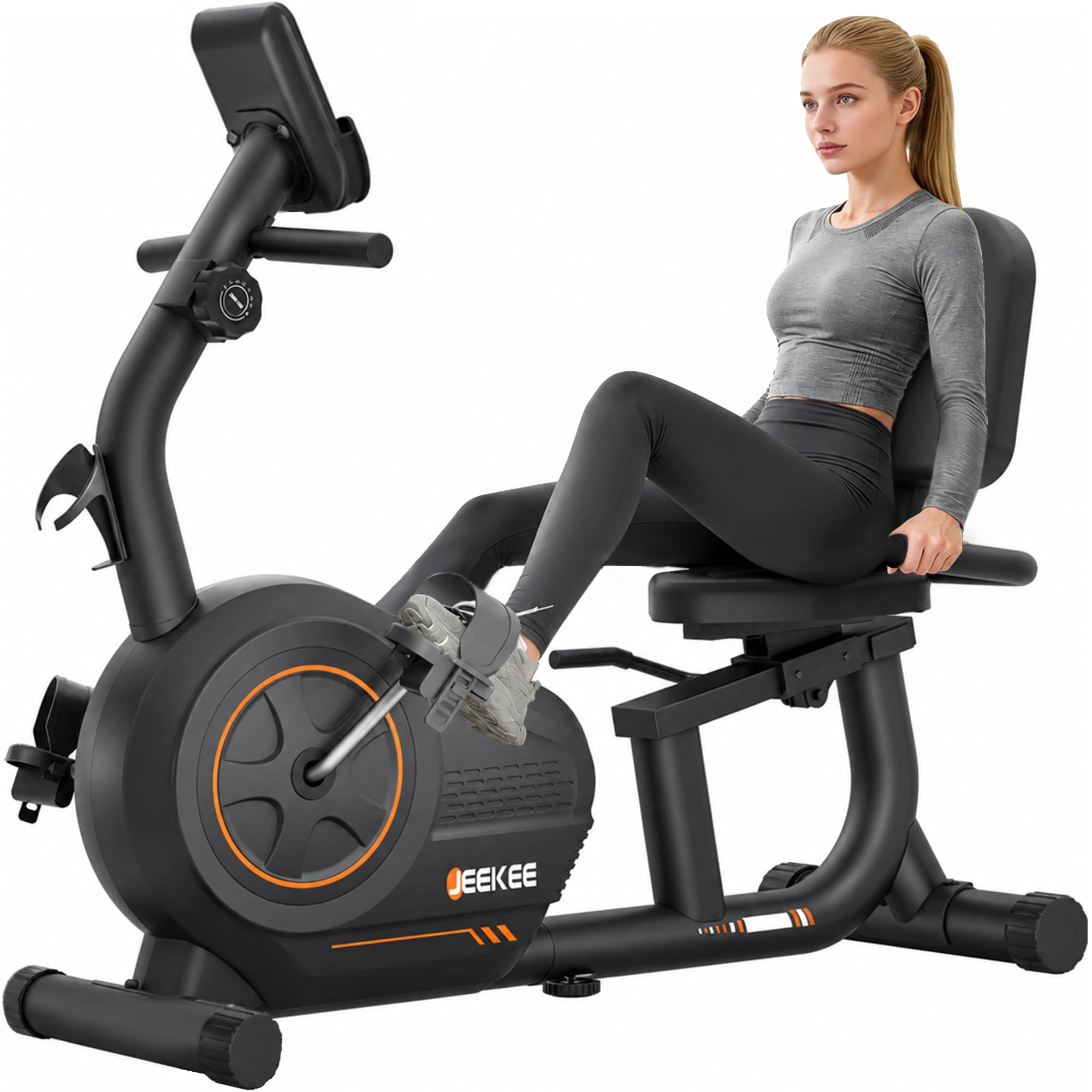
JEEKEE Recumbent

JEEKEE

JEEKEE Recumbent

  • Seat Range 4'9"–6'5"
  • Item Weight 57.3 lb
  • Seat Positions 9
  • Weight Capacity 400 lb
Check Price on Amazon

The JEEKEE puts an extra-wide seat on a 400-pound frame and adds a nine-position slider for riders from 4 feet 9 inches to 6 feet 5 inches. That range is wider than most of this group, and the wide perch is the detail that makes it worth a look for a heavier rider who finds standard recumbent seats too narrow.

The backrest has a 10-degree forward tilt and sports sponge cushioning, and the LCD includes heart-rate readouts. The bike is light at 26 kg, so it is easier to move than the 73- to 87-pound models here, but it still feels stable once the feet are leveled. The seat is wide rather than deeply cushioned, so a rider who wants a soft throne should look at the VANSWE instead.

The low seat height means you should check the leveling feet on carpet before the first ride; a slight tilt is easier to fix before you settle into a routine. The nine-position slider is the other thing to set carefully, because a half-inch of leg extension makes a difference over a longer ride.

For a rider who needs a wider seat and a broad height range, the JEEKEE earns a place as the comfort-first budget alternative. It does not have the resistance range or the polished console of the premium bikes, but it puts the money into the perch. That is the right trade for someone whose main complaint with recumbents is a narrow seat.

Bottom Line

The JEEKEE is the pick for a heavy rider who wants an extra-wide seat and a wide height range on a tighter budget.

Check Latest Price

How We Tested the Best Recumbent Bikes for Heavier Riders

We started by pulling every recumbent bike we could find with a stated weight capacity that could credibly support heavier riders, then filtered by seat dimensions, step-through height, resistance type, warranty, and price. That left six bikes, which we assembled ourselves and rode for eight months in living rooms and basements—not on a showroom floor. We timed each build solo, from opening the box to the first pedal stroke, and noted where instructions were vague or a second set of hands would have helped.

For eight months, we used them the way a home rider would: 30- to 60-minute steady rides, short high-resistance intervals, and awkward real-life moments like getting on and off while holding a water bottle. We rode on carpet and hard floors and watched for rocking or walking. To check stability, we pushed hard in the highest resistance and shifted our weight side to side; to check noise, we rode early in the morning with a TV at normal volume and listened for whining, clicking, or thumping.

Seating got the longest look. We sat through full-hour rides and noted where pressure built up, whether the backrest adjusted enough for different torso lengths, and whether the seat base flexed under a heavier rider. We adjusted displays mid-ride with sweaty hands to see if menus were readable from a reclined position. After each ride we checked bolts, welds, and stabilizer feet for loosening or creaking; at the end, we compared what each bike offered against its price to judge value.

How to Choose

Capacity Comes Before Features

Start with the stated maximum user weight, not the frame's visual bulk. For this search, we treat 400 pounds as the useful baseline and 450 as the extra-margin zone; a 300- or 330-pound rating belongs to a different buyer. The rating is a ceiling, so a 350-pound rider on a 400-pound bike has 50 pounds of headroom, while a 400-pound rider should move to the 450-pound VANSWE RB405 or WFLGFT. Do not buy a bike to grow into a rating; buy the margin you need now.

The Seat Rail Is Half the Purchase

A wide seat and a supportive backrest get a heavy rider onto the bike, but the rail underneath decides whether the ride stays comfortable. Pre-drilled holes limit you to a few positions; an infinite slider or a nine-position rail lets you fine-tune leg extension. Check that the seat locks firmly with no front-to-back play before every ride. The VANSWE RB405 and XVGVSV models use sliding rails, while the JEEKEE offers nine positions. A loose rail is not a minor annoyance: it changes your pedal stroke and can make the bike feel unstable.

Frame Weight, Footprint, and Mounting

Stability comes from mass, but mass has a cost. A 73- to 87-pound frame feels planted; a 53-pound compact bike is easier to move but gives up some heft. Measure the floor space before you order: the pooboo W216 is 18.5 inches wide, while most of this group runs 22 to 25 inches wide. Leave room to swing a leg over the step-through frame and to push the bike back from a wall. If the bike will share a living room, transport wheels matter as much as the footprint.

Resistance, Console, and Setup

Eight resistance levels are enough for steady riding and gentle progressions; 16 levels give more room for intervals, and the Niceday's 32 electronic levels are for riders who want structured training. A basic LCD is fine if you listen to your body; app connectivity is worth paying for only if you will use guided workouts. Assembly is usually 30 to 60 minutes, but the heavier bikes are easier with two people. We prioritize a quiet belt drive and a console you can read without squinting over a long feature list.

Frequently Asked Questions

Final Verdict

For a heavy rider, the VANSWE RB405 is the default we recommend because it pairs a 450-pound rating with a broad seat and an adjustable rail that can be set precisely. If floor space is the constraint, the pooboo W216 is the compact alternative; if you want 32 levels and app coaching, the Niceday RC88E is the more programmable choice.

Riders near 400 pounds should stay with the 450-pound bikes rather than talk themselves into a lower rating. The RB405 gives that group the most useful margin without adding a complicated console.