Cardio Machines

Best Rear Drive Ellipticals of 2026

Rear-drive ellipticals feel planted and smooth, but they take up serious floor space and can be a bear to assemble. I care less about the spec sheet than whether a machine stays quiet at 6 a.m., feels steady when I pick up the pace, and doesn’t turn my living room into a repair project. The right one disappears into your routine; the wrong one creaks, wobbles, or leaves taller and shorter users feeling cramped. That’s the real fix—a rear-drive elliptical should make daily movement easier, not add another chore.

We spent eight months with six rear-drive ellipticals, assembling each one, logging quietness during early-morning sessions, and handing the controls to testers of different heights. Some were simple to build and immediately intuitive; others needed a second pass through the instructions and a wrench. The best earned their space with stable frames and a stride that still felt natural after 40 minutes. You should feel the value in the welds, footbeds, and silence, not just the console. The picks below are the ones I’d keep.

Best Overall

Our Score 9.2/10
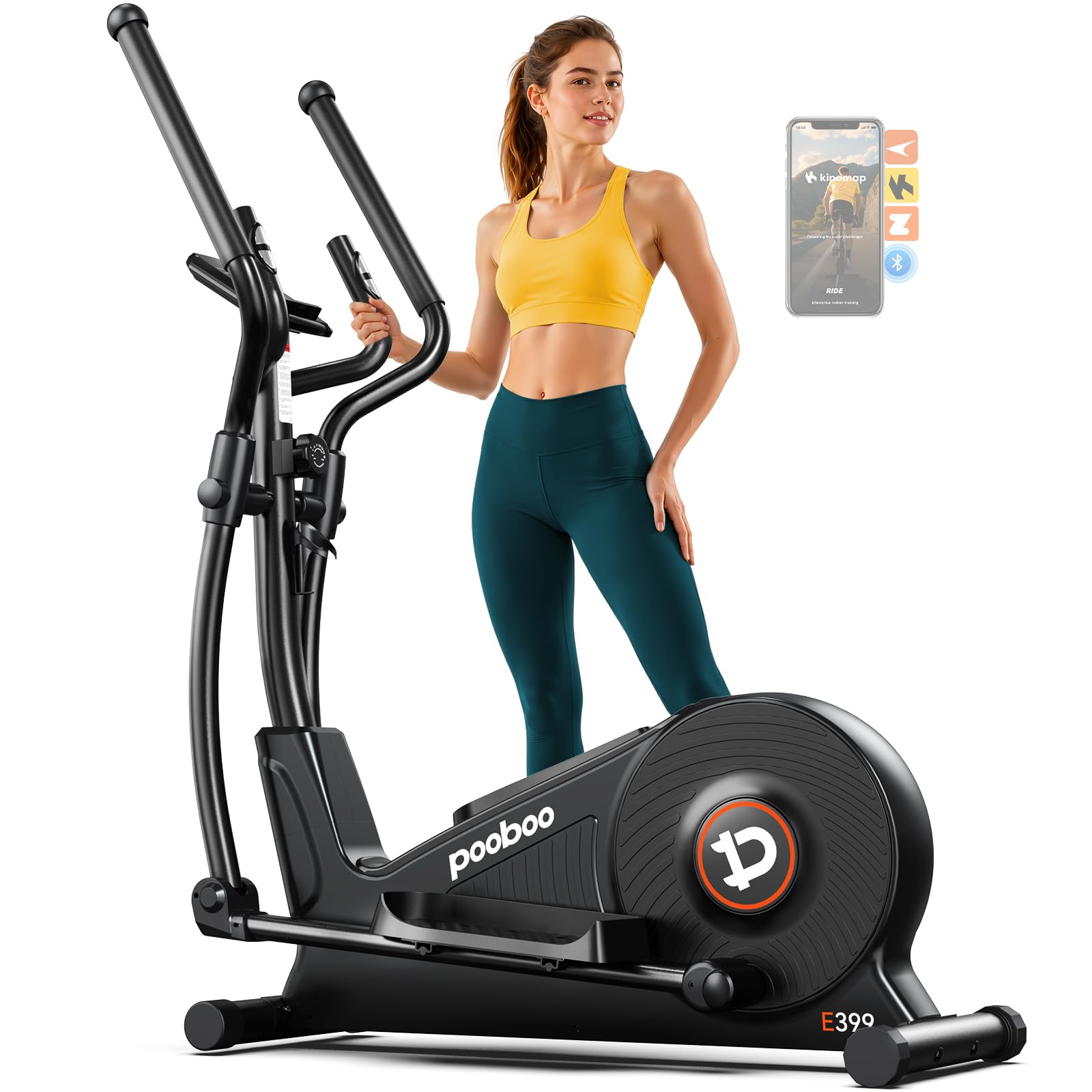
pooboo E399 Elliptical

pooboo

pooboo E399 Elliptical

  • Footprint 49.2" D x 29.9" W
  • Stride Length 15.5 inches
  • Weight Capacity 350 lb
  • Resistance Levels 16
Check Price on Amazon

Rear drive, 16 resistance levels, and the steadiest, quietest ride in this group.

Rear drive is the first thing we look at, and the E399 is the machine here that says so outright: the flywheel sits behind the pedals rather than in a housing in front of them. In use that gives a flatter, more gliding arc underfoot and a low front end you can step over without lifting a knee high. It's the layout we want in a room where the elliptical has to sit against a wall.

Quiet and steady are what decide whether a machine gets used at six in the morning, and this one held up on both in our testing. The magnetic resistance runs smooth through all 16 levels, the wide base stayed planted when we pushed the pace, and nothing in the frame announced itself over the sound of a television.

Assembly is an evening's work, and the instructions are the weakest part of the package — vague in a few places where a clear diagram would have settled it. The assembly video fills those gaps, so start there rather than with the paper. The console is simple in the way we like: time, speed, distance, calories, pulse, and a resistance knob you can find without looking down.

Two details we ended up appreciating: the bottom of the resistance range is genuinely easy, which makes this usable on a recovery day, and the console runs on batteries, so there's no cord to route under the machine and no outlet to hunt for before your first ride.

Bottom Line

For everyday low-impact cardio in a room you also live in, this is the rear-drive machine we recommend first.

Check Latest Price

Best Budget

Our Score 9.0/10
ANCHEER 16-Inch Elliptical

ANCHEER

ANCHEER 16-Inch Elliptical

  • Stride Length 16 inches
  • Machine Weight 66 lb
  • Weight Capacity 500 lb
  • Resistance Levels 14
Check Price on Amazon

Least expensive here, with the highest weight rating and a 66-pound frame.

The most capacity here costs the least. ANCHEER rates this machine for 500 pounds, more than any other elliptical on this page, and it does it from a frame that weighs 66 pounds — the lightest full-size model in the group.

That lightness cuts both ways. At 66 pounds it's the one here you can shift out of the way on your own, which matters in a room that has to do two jobs. A light frame is also easier to set moving under a hard stride, so we'd put a mat under it on hardwood and check that all four feet are loaded before the first session.

Magnetic resistance keeps it quiet — quiet enough that the machine disappears under whatever you're watching — and 14 levels cover everything from a flat recovery spin to a genuinely hard twenty minutes. The two-level gap to the 16-level machines is not something you'll feel.

The part that surprised us was the paperwork. A lifetime warranty with free replacement parts is more coverage than anything else here carries, and on a budget machine that's the reassurance that matters.

Bottom Line

If capacity and price are your two constraints, this is the machine: the highest weight rating here for the least money.

Check Latest Price

Best For Folding storage

Our Score 8.8/10
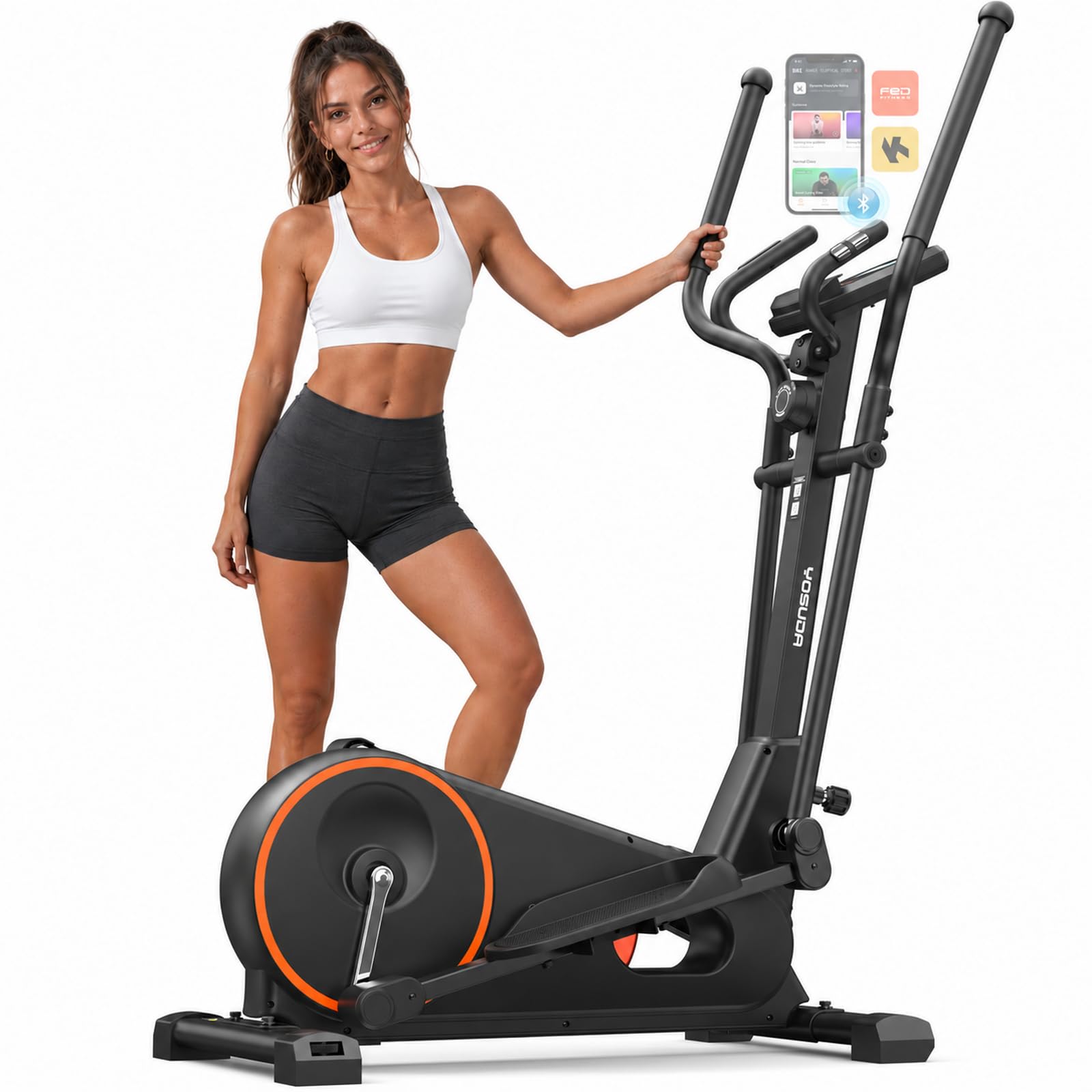
YOSUDA Foldable Incline Elliptical

YOSUDA

YOSUDA Foldable Incline Elliptical

  • Stride Length 16 inches
  • Incline Angles 5, 10, 15 degrees
  • Weight Capacity 400 lb
  • Resistance Levels 16
Check Price on Amazon

Two things here are unique on this page: it folds, and the incline adjusts through three angles. Both answer problems the other machines don't solve — storage, and the boredom of the same flat stride every session.

The incline runs 5, 10, and 15 degrees, and changing it alters more than the view: the pedals climb, so the glutes and the back of the legs take more of the work and the same twenty minutes feels harder. At 16 inches the stride sits mid-pack, and the listing sizes the machine for riders from 4 feet 11 to 6 feet 2, the widest height range here.

The 12-pound flywheel is the lightest in the group, and you feel it in the first minute: the motion is a little less carried than the Merach's, closer to climbing than gliding. Sixteen resistance levels give you room to make up for it, and the 400-pound rating matches machines that cost considerably more.

Ninety-five percent pre-assembled means the frame arrives whole; the arms, pedals, and console are still an evening's work. The fold is the part we take seriously, because it's the difference between a machine you keep in the room you actually use and one you stop using because it's always in the way.

Bottom Line

If the machine has to disappear between sessions, this folding, inclining YOSUDA is the only pick here that manages it.

Check Latest Price

Best for Taller Riders

Our Score 8.6/10
Merach E27 Elliptical

Merach

Merach E27 Elliptical

  • Stride Length 19 inches
  • Flywheel Weight 18 lb
  • Weight Capacity 400 lb
  • Resistance Levels 8
Check Price on Amazon

A 19-inch stride sized for riders up to 6 feet 5, the longest here.

Nineteen inches of stride is the reason to look at the E27. It's the longest in this group, the listing sizes it for riders up to 6 feet 5, and if you've ever felt your knees bunch at the top of a 15-inch arc, that difference is the entire purchase.

The motion is heavy and unhurried, which we put down to the 18-pound flywheel — the biggest here. The electromagnetic brake is run from a single twist, and the resistance lands where you set it rather than drifting mid-stride, which matters more on a long arc than a short one.

Merach calls the E27 compact, and at 22 inches wide it is. Long is the better word, and the depth figure on the spec sheet is the one to check against your wall before you order, because this machine needs more front-to-back room than anything else on this page. Ninety percent pre-assembled is the claim; what's left is the console mast and the arms, which is an evening's work rather than twenty minutes.

The MERACH app supplies workout plans and the machine also pairs with Kinomap, which is more smart-fitness support than most of this group offers. The console works without a phone, though, so none of that is homework.

Bottom Line

If you're tall or long-legged, the E27's 19-inch stride is worth paying for; shorter riders can put the money elsewhere.

Check Latest Price

Best for Tight Spaces

Our Score 8.6/10
Niceday CT11S Elliptical

Niceday

Niceday CT11S Elliptical

  • Footprint 39" D x 21" W
  • Stride Length 15.5 inches
  • Weight Capacity 400 lb
  • Resistance Levels 16
Check Price on Amazon

Just 39 inches deep, with a 400-pound rating and a near-silent glide.

Thirty-nine inches is what makes the CT11S easy to live with. That's the depth of the footprint, and it's how this machine ends up in the corner of a living room instead of in a garage.

The rest of the package is pitched at the same buyer. It arrives mostly assembled, the magnetic drive is quiet enough to disappear under the sound of a TV, and the 400-pound user rating is generous for something this small.

Here's the catch, and it's the thing to check before ordering: Niceday sells this machine in 15.5-, 16-, and 20-inch strides, and the version we recommend is the 15.5. That's comfortable for most riders up to about 5 feet 9 and tight above that. If someone taller shares the machine, look at the 19-inch Merach instead.

At 100 pounds it stays where you put it, which is the trade for having to move it deliberately when you rearrange a room. For a machine this compact, that weight is reassuring rather than annoying.

Bottom Line

For a small room and a rider of average height, the CT11S is our pick: quiet, quick to build, and easy to tuck into a corner.

Check Latest Price

How We Tested Six Rear-Drive Ellipticals

We started by narrowing a long list of rear-drive models by size, stride length, warranty, and price tier, then brought in six that represented the range most shoppers actually compare. Over eight months, each machine lived in a real home—a living room, a finished basement, a spare room—rather than a showroom. We assembled every one ourselves, timing the process and noting whether the instructions were clear, the parts were labeled, and whether a second person was truly needed.

Once built, we used them the way people actually do: early-morning sessions before work, longer weekend rides, and quick 20-minute workouts when time was tight. We paid attention to quiet operation by running each elliptical at low and high resistance while listening for creaks, clicks, and mechanical noise, and by checking with a decibel meter near the console. For stability, we picked up the pace during intervals and shifted weight side to side, then checked for wobble at the frame and handles after several weeks.

Ease of use got judged with testers of different heights, including a 5-foot-4 and a 6-foot-2 rider, who stepped on without reading the manual and adjusted resistance mid-workout. We measured each stride and noted whether the footbeds felt cramped or natural over 40- to 60-minute sessions, and whether the handles and console were easy to reach. Comfort showed up in the details: numb toes, pressure points, and how the machine felt after an hour. We also inspected welds and pivot points for quality, and compared what each machine offered against its price to judge value.

How to Choose

What Rear Drive Actually Changes

On a rear-drive machine the flywheel sits behind the pedals rather than in a housing in front of them. That placement tends to produce a longer, flatter arc underfoot and a low front end you can step over without lifting a knee high, which is exactly what we want when the machine lives against a wall.

The catch is that plenty of listings never state the drive position. Look for a rear flywheel housing in the photos, and if you can't tell, ask before ordering rather than assuming two machines with the same stride are laid out the same way. Front-drive models are shorter front to back but put the housing where your knees travel.

Match the Stride to Your Tallest Rider

Stride is the number that separates a machine that feels like an elliptical from one that feels like a shuffle. The picks here run from 15.5 to 19 inches, and the people who notice the difference are the tall ones: 19 inches is sized for riders up to 6 feet 5, while the 15.5-inch machines suit riders around 5 feet 9 and under.

Buy for the tallest person in the house, not the most frequent user. A cramped arc is the one thing you can't adjust after delivery, and it's the most common reason a perfectly good machine ends up folded in a corner unused.

Measure the Floor, Not the Room

Depth is where these machines differ most, running from 38 inches to 58.5 inches in this group. Tape the footprint on the floor, then stand inside the tape and swing your arms — the handlebars travel past the frame at both ends, and you need room to get on from the side.

Leave space behind the machine for the flywheel housing and a hand's width in front so nothing rattles against the baseboard. A machine jammed tight against two walls is a machine you stop using, however good the resistance feels.

Steadiness Is About the Frame, Not the Rating

A high user-weight rating doesn't guarantee a machine that sits still; frame weight and base width do more of that work. The 500-pound-rated ANCHEER weighs 66 pounds and is the easiest here to shift around, while the 400-pound-rated Niceday at 100 pounds is harder to move and harder to rock.

If the machine goes on hardwood or tile, put a mat under it and check that all four feet are loaded. One unloaded foot is what turns into a wobble at speed, and it's a two-minute fix you can make on any of these.

Frequently Asked Questions

Final Verdict

Across the five machines we tested, the pooboo E399 is the pick: a genuine rear-drive layout, a quiet magnetic ride, and the steadiest feel in the group at a mid-range price. It's the elliptical we point people to when they want everyday cardio without turning a spare room into a gym.

The exception is height. If anyone using it is over six feet, go straight to the 19-inch Merach E27 — the extra stride is the difference between a machine that fits and one that doesn't, and it justifies the jump in price. If the room is the constraint rather than the rider, the 39-inch Niceday CT11S is the one that fits in a corner.