Yoga & Mobility

Best Pilates Reformers of 2026

The first time a reformer's springs took over for my abs mid-leg-circle, I understood the appeal — and then I started shopping, and the questions arrived faster than the exercises. Would it fit in the spare room without becoming a permanent obstacle, would the carriage wake the neighbors every time I slid it, and would a machine at half the price still feel solid a year in, or start creaking like an old porch swing? A good reformer answers all three: it turns a corner of your home into a studio that's open whenever you are.

Over the past eight months, my team and I have assembled, adjusted, and logged hours on six reformers, from compact folding models to full studio-length frames. The lesson that surprised me most: the spring count on the spec sheet tells you less than how the carriage rides the rails — a smooth glide and honest, evenly graded resistance are what keep you coming back, not the number printed on the box. The six that made the cut are below, and each one earned its footprint for a different reason.

Best Overall

Our Score 9.6/10
LeisureKing Oak Reformer

LeisureKing

LeisureKing Oak Reformer

  • Frame Solid oak
  • Resistance 5 springs (3 red, 1 green, 1 yellow)
  • Folded Size 25.98 x 15.0 inches
  • Weight Capacity 440 lb
Check Price on Amazon

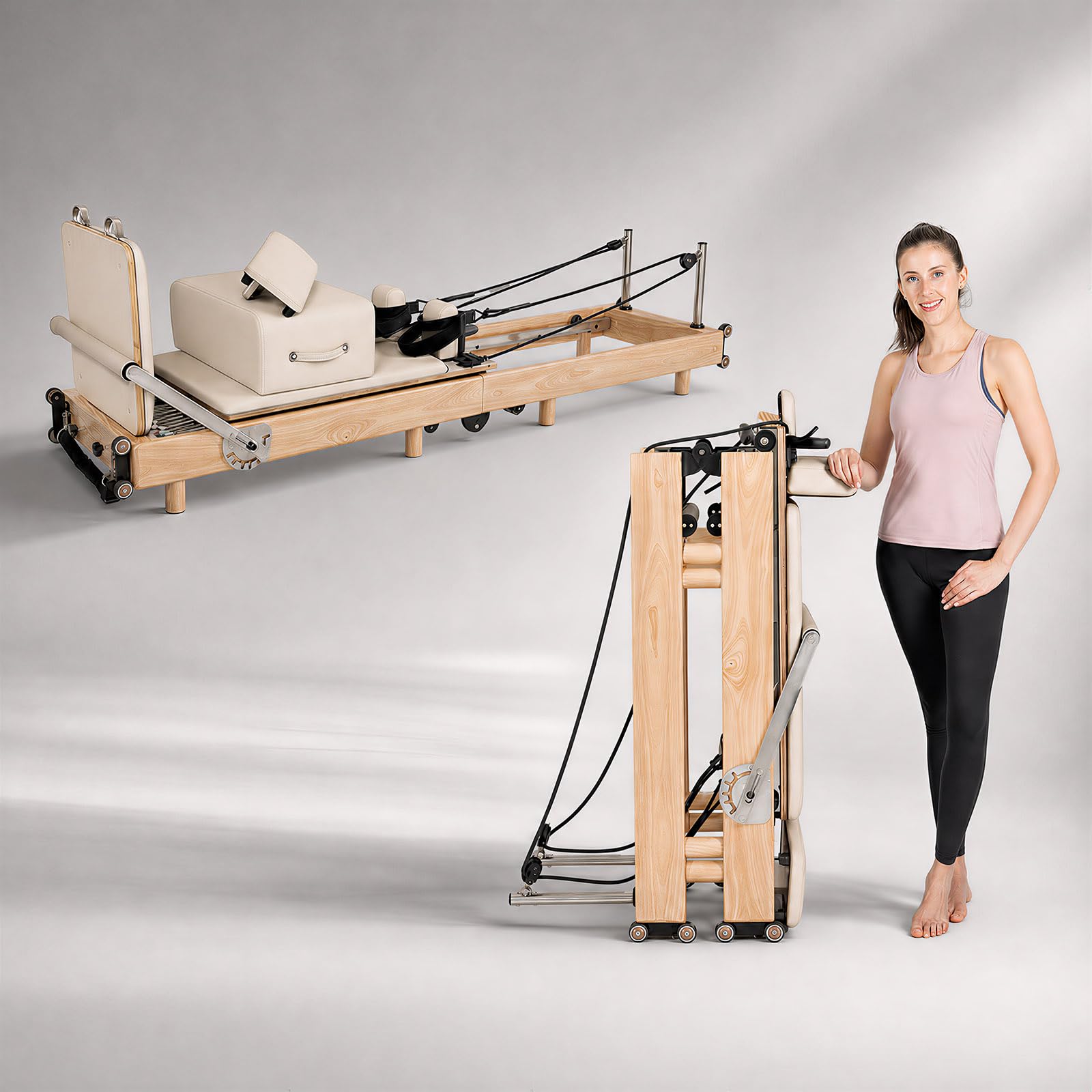
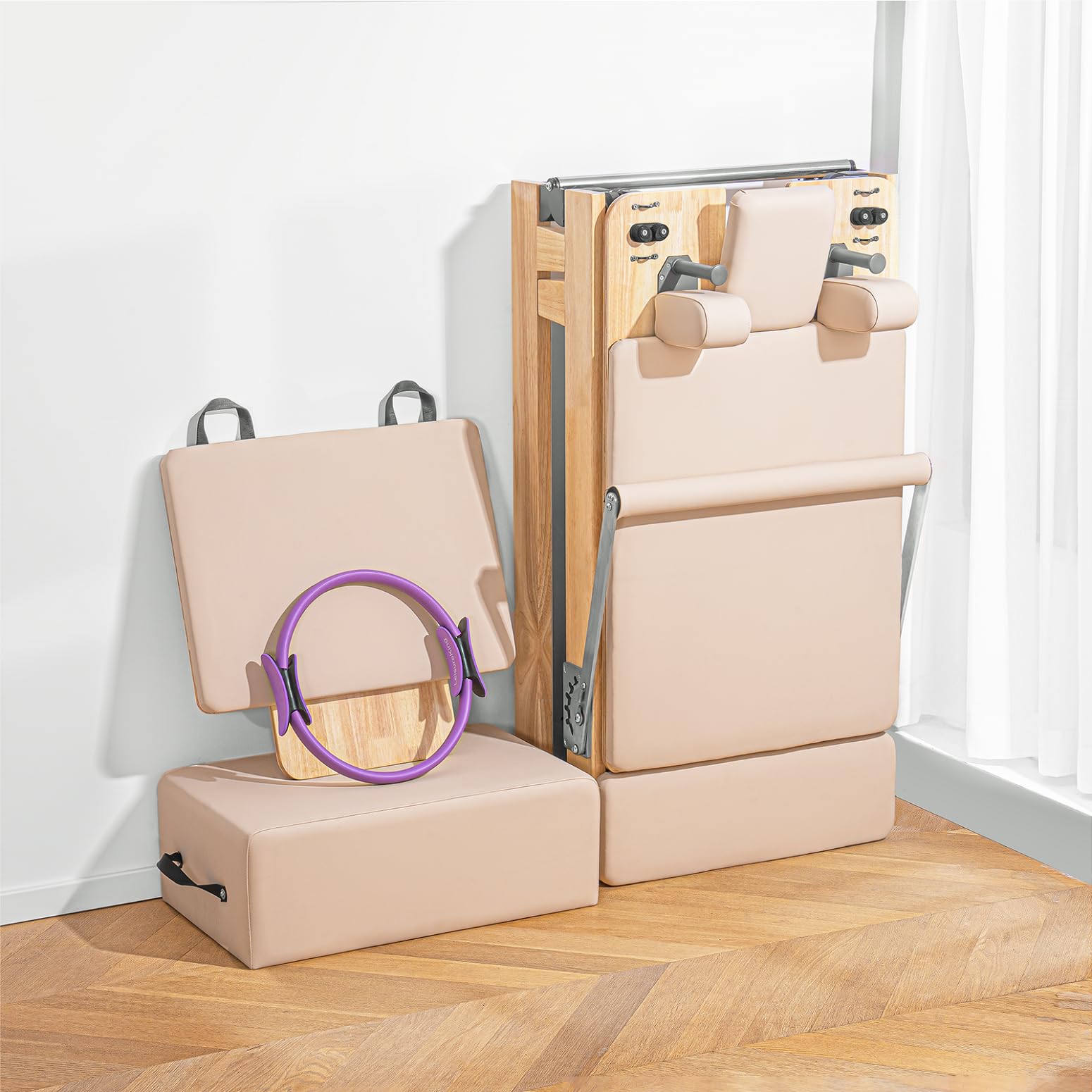
A studio-feel oak reformer that folds small and arrives mostly assembled.

The first thing we noticed about the LeisureKing is how little assembly it asks for. The oak frame arrives mostly together, and the final steps are connecting the shoulder blocks, handles, risers, and ropes. That matters in a category where a heavy frame can turn an afternoon into a project.

That head start is part of why it is our top pick. The solid oak frame, aluminum rails, and five-spring setup give it a ride that feels closer to studio equipment than the budget foldables here. We also appreciate the 440-pound capacity, which leaves room for shared use, and the included box, jump board, and foot strap, which broaden the workout without a second order. The folded footprint of 25.98 by 15 inches is genuinely useful in a spare room.

The carriage glide is smooth and quiet, and the five springs cover a useful range from lighter footwork to stronger arm work. We did notice that the machine is not light—143 pounds—so folding it is a two-person job for many households. That weight is the price of the oak frame and aluminum rails, and it makes most sense if the reformer lives in one room rather than moving daily.

What seals it for us is the way the machine feels in a room: substantial enough to trust for standing work, but not so clinical that it dominates the decor. The beige upholstery against the oak frame is the detail that makes it feel like furniture rather than a gym machine.

Bottom Line

The LeisureKing is our top pick for a home studio: it brings a studio feel, a compact fold, and a complete accessory set.

Check Latest Price

Best Budget

Our Score 9.4/10
Dpiolrcag Foldable Reformer

Dpiolrcag

Dpiolrcag Foldable Reformer

  • Frame Alloy steel
  • Resistance 4 springs (22 lb) plus 5 cords (15-27 lb)
  • Item Weight 70 lb
  • Weight Capacity 250 lb
Check Price on Amazon

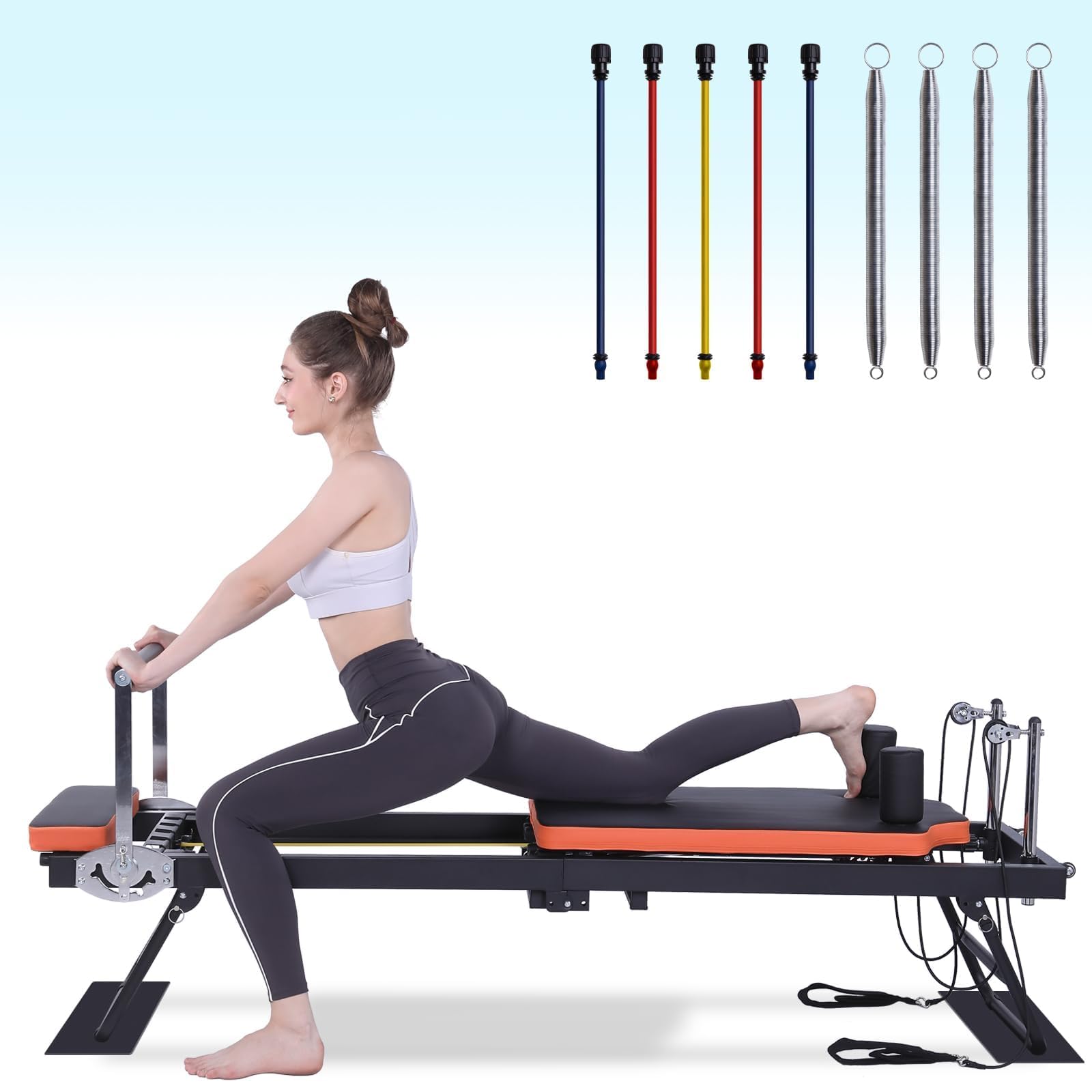
A budget-friendly folding reformer with springs, cords, and five resistance levels.

The Dpiolrcag is the reformer we point to when someone wants to try home Pilates without committing to a studio-priced machine. It is light enough to fold and move, simple enough to set up in a small space, and it gives you two ways to load the carriage rather than one.

The resistance system is the reason it stands out here. Four 22-pound springs and five cords ranging from 15 to 27 pounds create five levels, so you can start with cords for arm work and add springs for footwork as you get stronger. The 70-pound frame is manageable for one person, and the 90% pre-assembled build means the first session is not a weekend project.

The 250-pound user limit is the boundary that matters. It is fine for many smaller users, but it is not the machine for a heavy household or a very strong athlete. The padded mat and adjustable foot bar make it feel more finished than the budget price suggests. The wheels and folding frame are the details that make it a realistic spare-room machine rather than a permanent commitment.

Bottom Line

We think the Dpiolrcag is the best first reformer for a smaller user who wants springs, cords, and a low entry point.

Check Latest Price

Best Wooden Folding

Our Score 9.4/10
nexace Wood Folding Reformer

nexace

nexace Wood Folding Reformer

  • Legs 8 wood legs
  • Frame Solid oak
  • Resistance 6 springs
  • Weight Capacity 400 lb
Check Price on Amazon

A solid oak folding reformer with eight legs and six springs.

Eight wooden legs under a solid oak frame is the first thing you notice about the nexace, and it explains why the machine feels more planted than its folding mechanism suggests. The frame uses traditional joinery and a 400-pound capacity, and the extra legs spread the load across the floor.

The six springs give a broad resistance range, and the package includes a box, jump board, foot strap, and padded platform extender. We liked that the accessories arrive together; buying them separately can cost more than expected and delay the first full workout.

Folding the frame in half is useful in a spare room, and the carriage glide is smooth and quiet. The wood frame has a warm, finished look that makes it easier to leave out. The six springs are easy to read at a glance, which helps when you are switching between footwork and arm work.

That makes it a strong wooden folding option for a dedicated home studio, especially if appearance matters as much as storage. The eight-leg stance is the detail that sets it apart from the simpler four-corner foldables here. The taller jump board is the accessory we notice most, because it stands apart from the flatter boards in this group.

Bottom Line

The nexace is the wooden folding reformer we choose when a planted, eight-leg stance matters as much as storage.

Check Latest Price

Best for Cardio

Our Score 9.0/10
AeroPilates Premier 700

AeroPilates

AeroPilates Premier 700

  • Included Stand, cardio rebounder, neck pillow, DVDs
  • Footprint 86.25 x 23.5 x 36.5 inches
  • Resistance 4 elastic bungee cords
  • Weight Capacity 300 lb
Check Price on Amazon

Best for adding low-impact cardio with a rebounder and stand.

The AeroPilates Premier 700 makes the most sense when your idea of a reformer workout includes a raised heart rate. The cardio rebounder and stand turn the carriage into a low-impact cardio station, not just a spring-resistant bed. We found that the rebounder changes the rhythm of a session: you can alternate footwork with short rebound intervals without resetting the machine.

The frame is long and stable at 86.25 inches, with a 23.5-inch-wide platform, and the four bungee cords give a smooth, elastic resistance that suits flow and cardio better than precise heavy lifting. We liked the padded platform and footbar, and the included neck pillow and DVDs make the first few weeks less of a blank page. The fold-and-roll design is useful if the machine has to share a room.

This is our cardio pick, not our pure-strength pick. If you want the more linear, adjustable feel of metal springs, the LeisureKing is the better tool; if you want a reformer that doubles as a rebounder, this one earns its place. The rebounder is the accessory that makes a short interval session feel worth the setup.

The non-skid supports are the unglamorous detail that keeps the frame from walking during rebound intervals. That matters more on a rebounder than on a machine used only for slow footwork.

Bottom Line

We chose the Premier 700 for cardio intervals and rebound work; its rebounder is what earns it a place here.

Check Latest Price

Best Midrange Foldable

Our Score 9.0/10
PAETA 86-Inch Foldable

PAETA

PAETA 86-Inch Foldable

  • Frame Alloy steel
  • Height Fit Up to 5 feet 9 inches
  • Item Weight 109.3 lb
  • Weight Capacity 500 lb
Check Price on Amazon

A 500-pound-capacity folding reformer with height-adjustable stands.

The removable stands are the quiet advantage on the PAETA 86-inch folding reformer. Dropping the machine closer to the floor makes it feel more planted, and the six legs spread the load better than a simple four-corner frame. We also like that the lower setting makes mounting and dismounting less awkward for anyone with limited mobility.

For a midrange foldable, this is a lot of machine: a 500-pound capacity, piano-wire springs, and a carriage that folds away when the room needs to become something else. The 86-inch length gives most users a usable range of motion, and the six-leg stance stayed stable during our standing work. The height guidance is the catch—the listing caps users at about 5 feet 9 inches—so taller buyers should look at the longer PAETA wooden model or the LeisureKing.

The spring package gives a familiar reformer feel, and the carriage glide is smooth enough for controlled footwork. The included jump board adds variety, and the height adjustment makes the machine easier to share. The fold is the reason it can live in an apartment; the six-leg stance is the reason it does not feel like a compromise.

Bottom Line

For a midrange folding reformer with height-adjustable stands and a 500-pound capacity, this PAETA is the one we trust.

Check Latest Price

Best Wood-Frame Alternative

Our Score 9.0/10
PAETA 92-Inch Wooden

PAETA

PAETA 92-Inch Wooden

  • Frame Solid oak
  • Included Sitting box, jump board
  • Item Weight 140 lb
  • Weight Capacity 500 lb
Check Price on Amazon

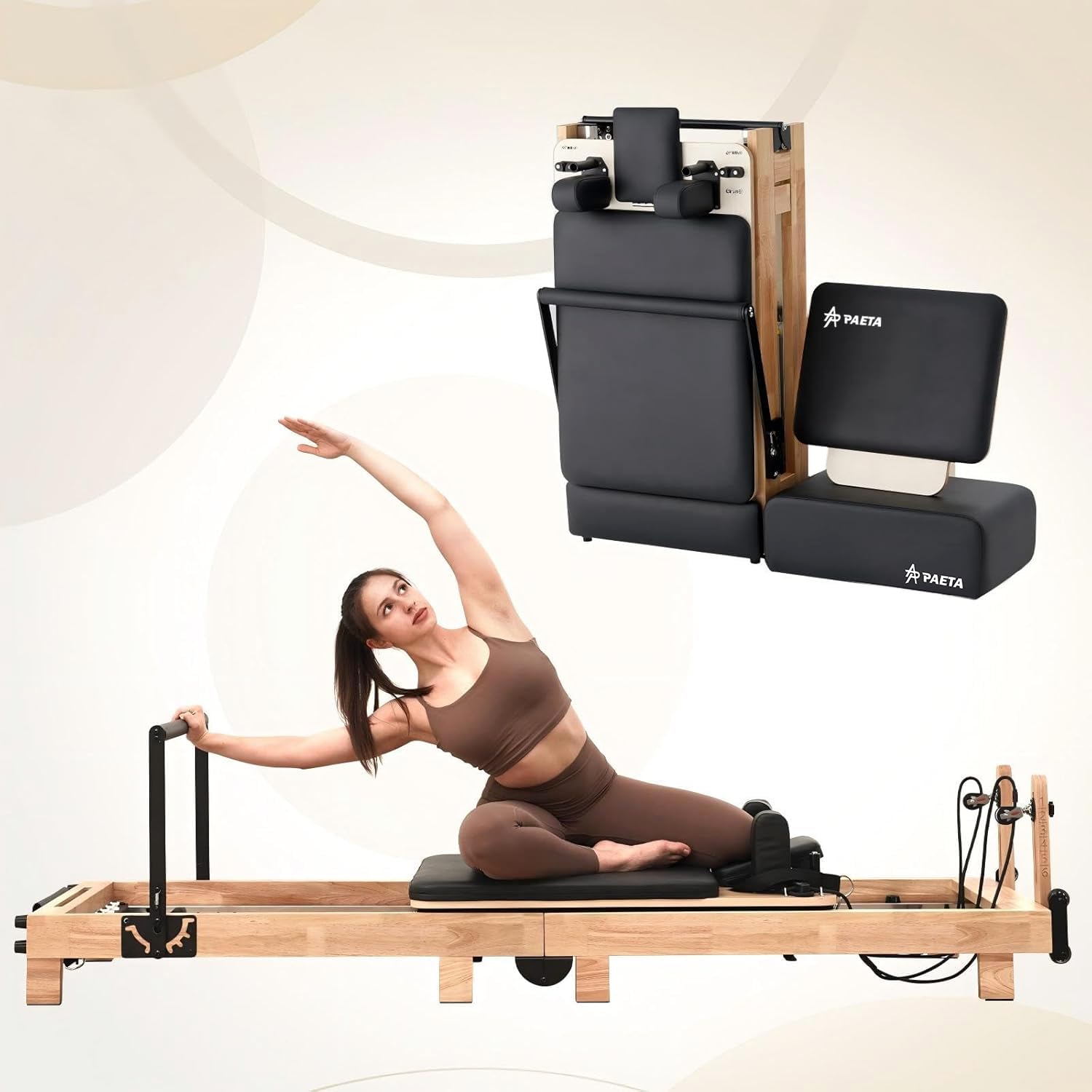
A long oak-frame reformer with a sitting box and jump board.

The PAETA 92-inch wooden reformer is the one that looks most at home in a living room rather than a gym. The solid oak frame and black finish give it a furniture-like presence, and the extended carriage gives taller users more room to work. It includes a sitting box and jump board, so the exercise range is broad from the first session.

At 500 pounds, the capacity is generous, and the spring resistance and padded shoulder rests cover the basics of a studio-style workout. The 92-inch length is the number to measure first: this is a machine that wants a dedicated wall, not a corner it has to share with a sofa. The adjustable headrest is a small comfort that matters in longer sets.

We recommend it for the home studio where the reformer can remain set up. It gives you the visual warmth and substantial feel of a wooden reformer without the brand-name premium of the Merrithew. If you need to tuck the machine away after every session, the LeisureKing's folding frame is the more practical choice.

Bottom Line

The PAETA 92 is our recommendation for a dedicated home studio where the oak frame can stay out and the included box gets regular use.

Check Latest Price

Best Premium

Our Score 8.8/10
Merrithew At Home SPX

Merrithew

Merrithew At Home SPX

  • Frame Aluminum rails
  • Included Box, roll-up pole, platform extender, straps
  • Resistance 5 springs (4 x 100%, 1 x 50%)
  • Weight Capacity 250 lb
Check Price on Amazon

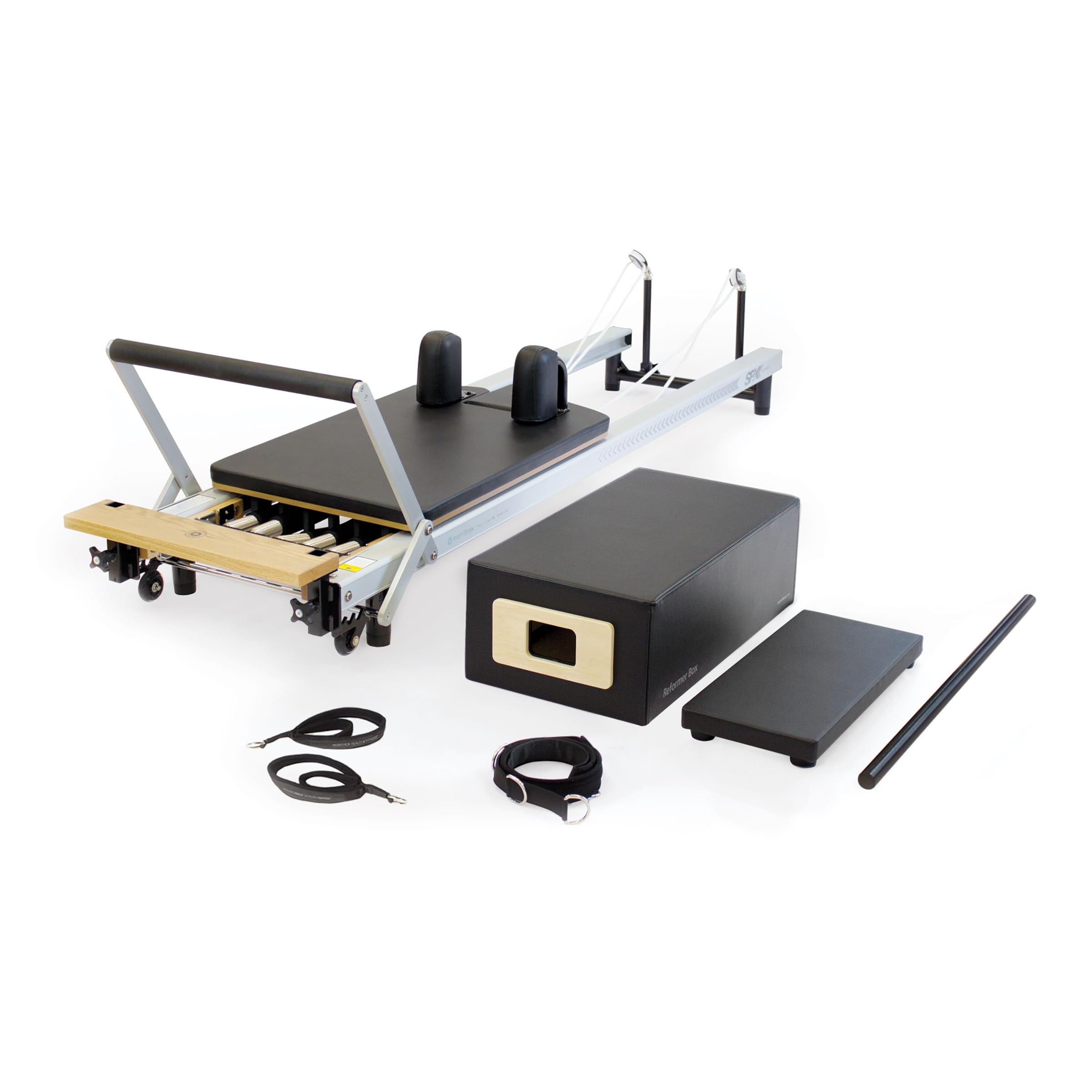
A brand-name home studio package with commercial-style rails and accessories.

The first number to check on the Merrithew At Home SPX is 250 pounds. That is the user weight limit on a machine priced like a serious investment, and it rules out a lot of shared-household use before you get to the carriage, springs, or finish. It is worth knowing before you fall for the finish, because the rest of the package is aimed at daily home practice.

What you get for the premium is a package that feels close to the studio equipment the brand is known for: aluminum rails, high-density foam padding, double-loop straps, a reformer box, a metal roll-up pole, and a padded platform extender. The five-spring set—four at full tension and one at half—covers a familiar range, and the carriage moves smoothly on the rails.

The rope system is more basic than the price suggests; the length adjustment is limited, which matters if users of very different heights share the machine. We see the appeal for someone who wants the Merrithew name and a complete accessory kit, not for a household that needs maximum flexibility. The 96.5-inch frame is long, so plan the room before the delivery.

This is our premium pick for the buyer who values the brand's studio lineage and wants a complete home package, but it is a narrow recommendation. The real luxury is the consistency: the rails, straps, and springs all feel like they belong to the same machine.

Bottom Line

Our take on the Merrithew is that it suits buyers who want a finished, brand-name studio kit and can work within its fixed fit.

Check Latest Price

Best For Basic home use

Our Score 8.6/10
AeroPilates 287

AeroPilates

AeroPilates 287

  • Resistance 3 elastic bungee cords
  • Item Weight 56 lb
  • Platform Width 17.5 inches
  • Weight Capacity 300 lb
Check Price on Amazon

The AeroPilates 287 is the machine we suggest when you want a simple reformer you can fold, roll, and forget about between sessions. At 56 pounds, it is one of the lighter machines here, and the foldable frame with wheels makes it easier to tuck against a wall. We think it is the right choice for basic home workouts, not for someone chasing a studio feel.

The bungee cords give a light, elastic resistance, and the padded foot bar and headrest cover the basics. We did miss the precise spring feel of the better reformers here, and the three-cord range runs out quickly for strong users. The included DVDs help a beginner start without building a routine from scratch. The wall chart is the low-tech extra we appreciate most: it gives you a sequence to glance at without opening a laptop.

Bottom Line

The AeroPilates 287 is the light, foldable reformer we suggest for a beginner who wants simple workouts and quick stowing.

Check Latest Price

How We Tested Six Pilates Reformers Over Eight Months

We started with a long list of about two dozen reformers and cut it to six, filtering for footprint, weight, height range, spring setup, and whether the machine could handle standing work as well as footwork. Then each one came into a home and had to earn its floor space.

Assembly came first. I timed each build solo, from cutting the tape to the first spring hookup, and noted where the instructions went vague or a second pair of hands would have helped. Then I weighed each machine, measured its footprint and folded depth, checked ceiling clearance for standing exercises, and rolled it through a doorway into a spare room to see how much furniture had to move.

Every session followed the same shape: a full footwork series, a long-box sequence, and standing leg presses at the heaviest spring setting, with a decibel meter on the floor beside the rail. I switched springs one-handed mid-exercise to see how fast the settings moved and whether resistance ramped evenly or jumped from light to heavy with nothing in between. A partner in the next room noted whether they could hear the carriage through the floor.

Sturdiness meant watching for frame flex and carriage shimmy under load; durability meant checking after every session for frayed ropes, slack springs, and new squeaks. For value, we tallied what actually came in the box — box, jump board, straps, warranty — against what the machine cost.

How to Choose

Fit the Reformer to the User First

Before spring count, check the two limits that decide whether a reformer is usable: height fit and user weight capacity. The PAETA 86-inch model caps users at about 5 feet 9 inches, while the PAETA 92-inch and the LeisureKing support up to 500 and 440 pounds. If two people share the machine, buy for the taller, heavier user and let the other adjust. A carriage that is too short forces you to shorten your stroke, which is a bigger compromise than losing a spring option.

Springs, Cords, and the Feel of Resistance

Metal springs give the linear, precise resistance most studio regulars expect. Bungee cords feel lighter and more elastic, which suits cardio and flowing movement; a mix lets you shift between the two. The AeroPilates Premier 700 uses four bungees, while the Dpiolrcag pairs four springs with five cords. We care less about the raw count than about how quickly you can change the setup. If a resistance change takes two hands and a minute, you will skip it.

Measure the Footprint and the Fold

Reformers are long: the machines here run from about 85 to 96.5 inches, before you allow room to mount and move the carriage. Folding helps only if the folded package is manageable. A compact fold is useful, but a 143-pound frame still takes two people to lift. Decide whether the reformer will stay out or go away after each session. If it stays out, prioritize stability and deck height; if it goes away, prioritize wheels and a lighter frame.

Assembly, Accessories, and Upkeep

Most home reformers arrive partly built. The LeisureKing comes 80% pre-assembled, and the Dpiolrcag arrives 90% pre-assembled; even so, allow an hour and a second person for a heavy frame. A box, jump board, and foot strap expand the exercise range, so price them in if they are not included. Check fasteners and spring clips monthly, and investigate new squeaks before they become wear. A quiet carriage is usually a maintained carriage.

Frequently Asked Questions

Final Verdict

LeisureKing is our first recommendation for a home studio. Its oak frame, five-spring resistance, and 440-pound capacity deliver a studio feel, while the compact fold keeps it practical.

If you want cardio intervals, the AeroPilates Premier 700 and its rebounder are the better fit; if you are buying your first reformer for a small space, the Dpiolrcag is the lighter, lower-cost way in. Pick the LeisureKing when the machine can stay out and you want the most complete home setup here.