Yoga & Mobility

Best Pilates Mats of 2026

A pilates mat is the one thing you're in contact with for every exercise, so the wrong one makes itself known fast: knees complain in kneeling work, hands slide in plank, and a squishy surface turns roll-ups into a wrestling match. The trick is balancing cushion with stability and grip, then finding a mat that rolls up small enough to carry and doesn't smell like a factory. That's a lot to ask, which is why quality varies so much. The right mat fixes all of that without turning your bag into a duffel.

I spent six months working through 12 pilates mats, from thick comfort-first styles to thin travel options, and the differences showed up within ten minutes of a session. Thickness and comfort matter, but a dense mat can feel more supportive than a soft one that bottoms out under your sit bones. Value matters too: a pricier mat earns it only by gripping bare feet, staying put during standing footwork, and holding its shape after repeated rolling. The picks below managed all that and felt easy to carry.

Best For Joint cushioning

Our Score 9.4/10
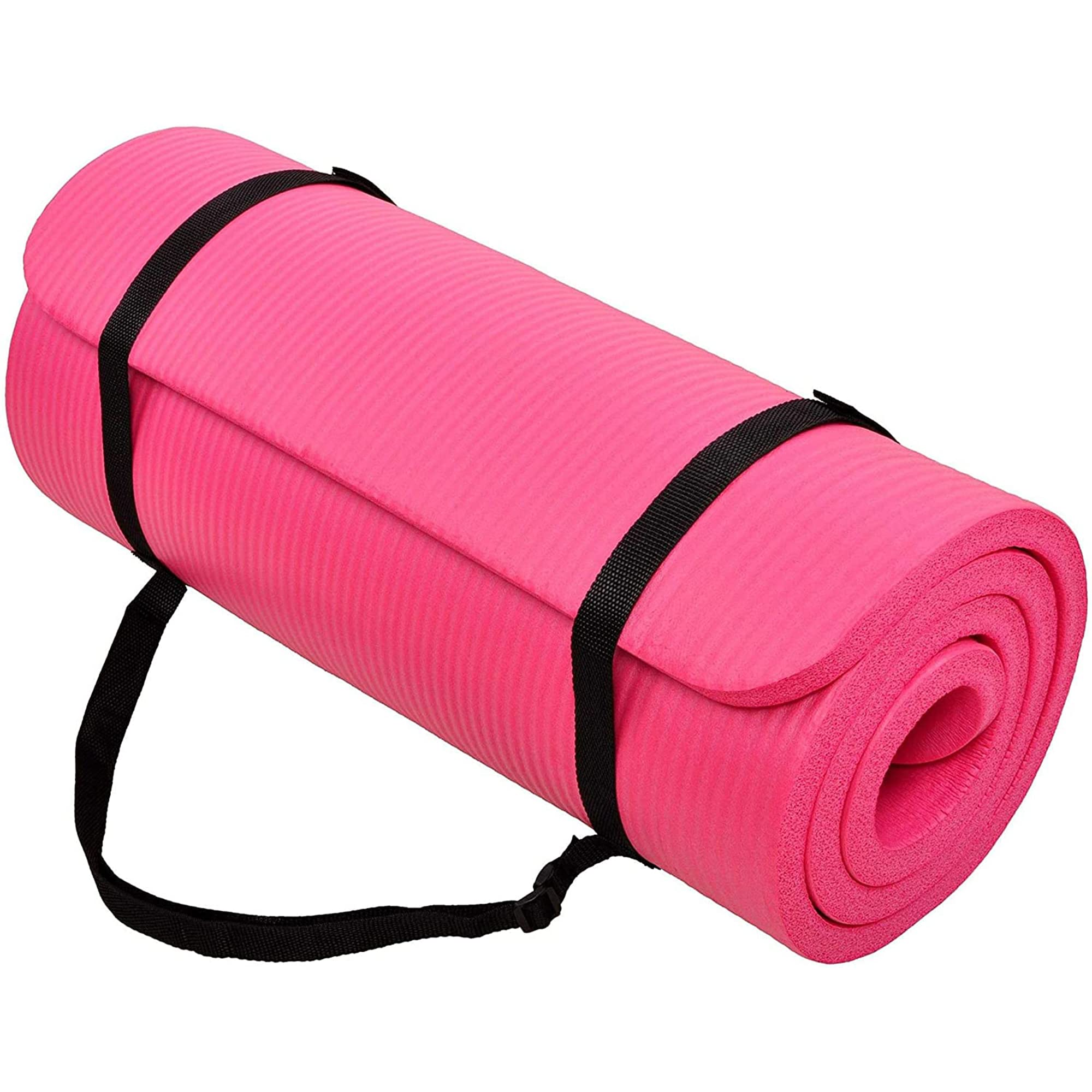
BalanceFrom 1-Inch

BalanceFrom

BalanceFrom 1-Inch

  • Weight 2.2 lb
  • Material Foam
  • Warranty 2-Year Warranty
  • Dimensions 71"L x 24"W x 1"Th
Check Price on Amazon

The BalanceFrom is not the mat we choose for a standing Pilates sequence, and that is the first thing to understand. The one-inch foam is a platform for floorwork: it cushions knees, hips, and spine on hard floors in a way that thinner mats cannot, and the 71 by 24-inch surface gives you room to stretch out. In our mat work, the double-sided texture stayed put on the floor, and the 2-year warranty is a useful backstop for a thick foam mat.

The density is what makes it work. It is supportive rather than bottomless, so you do not sink through to the floor in a bridge or a seated stretch. But that inch of foam also changes your relationship with balance. Standing poses feel wobbly, and transitions where you roll onto the feet lose some of the grounded feedback a 6mm mat provides. This is a specialist, not an all-purpose upgrade.

We also noted that the foam can tear if you are rough with it—fingernails, pet claws, and dragging it across a rough floor are the enemies. Treat it as a floorwork mat that stays at home, and it does its job well. If your Pilates practice is mostly matwork and your joints want more cushion, this is the one; if you need to stand and balance, start with the Gruper.

Bottom Line

We recommend the BalanceFrom for floorwork on hard floors, where its one-inch foam protects joints; it is not our choice for standing balance work.

Check Latest Price

Best For Printed motivation

Our Score 9.4/10
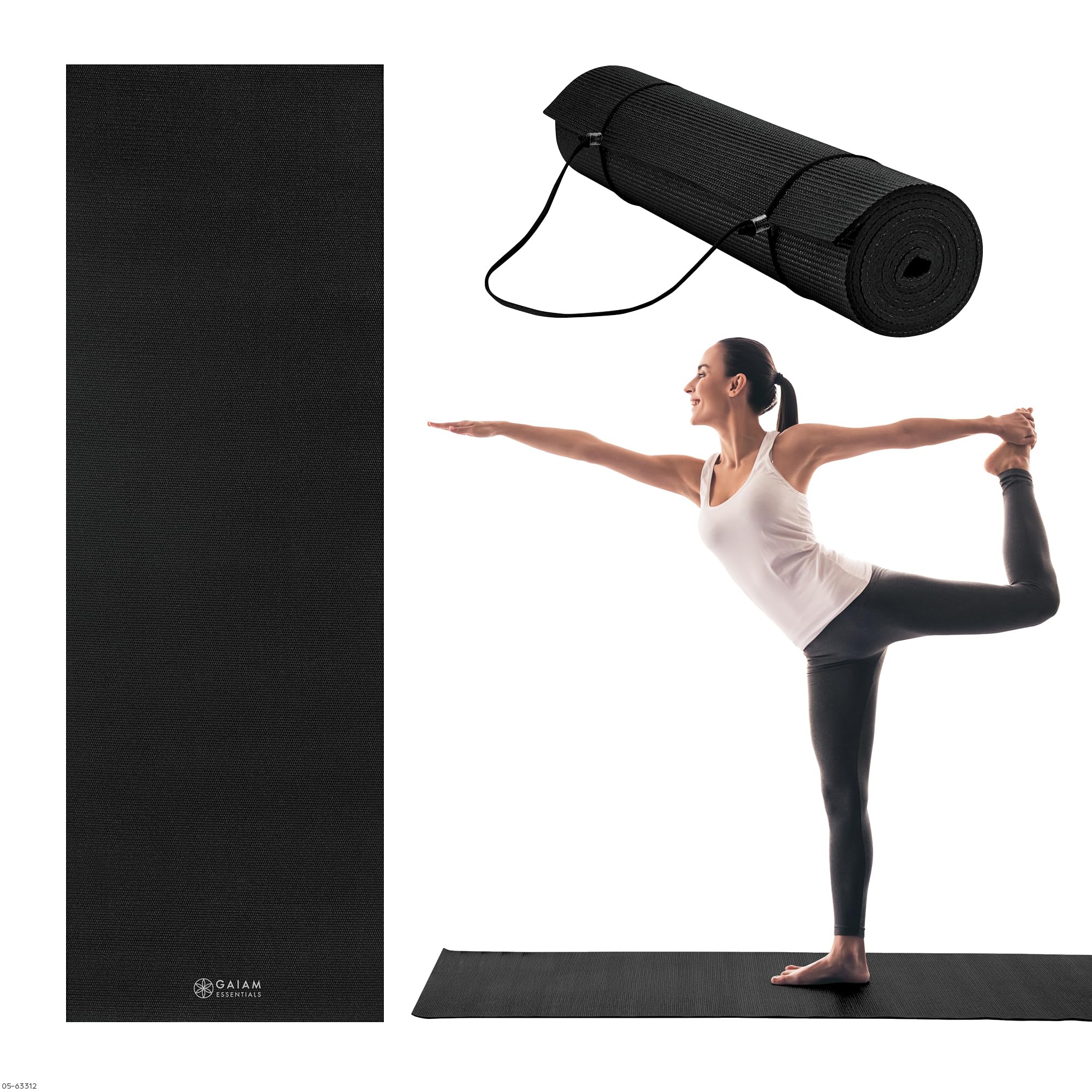
Gaiam Premium Print

Gaiam

Gaiam Premium Print

  • Weight 3.1 lb
  • Included Online yoga library
  • Material Polyvinyl Chloride
  • Dimensions 68"L x 24"W x 0.24"Th
Check Price on Amazon

The Gaiam Premium Print is the mat that makes a home practice feel less like a gym corner. The printed surface is genuinely attractive, and the 6mm PVC gives you a familiar, slightly tacky feel underfoot. At 68 by 24 inches, it is a little shorter than the 72-inch mats here, which is fine for average-height users but worth checking if you are tall or like a lot of room in supine poses. The 3.1-pound weight and included online yoga content make it a complete starter package.

We liked the cushioning more than we expected. It is soft enough for seated folds and knee-supported poses, but not so thick that you lose the floor. The texture grips well when dry, and the mat lies flat after unrolling. The trade-off is sweat: once hands get damp, the surface can get slick, and the PVC has a stronger initial odor than the TPE mats. Airing it out for a few days before the first session makes a difference.

If you want a mat that looks good in a small home space and you mostly practice dry Pilates or yoga, this is a pleasant choice. If you need a longer surface or a grippier top layer for sweaty work, the Gaiam Essentials or Gruper is the more practical pick.

Bottom Line

We suggest the Gaiam Premium Print for a home practice that wants visual lift and 6mm cushioning, provided you do not need extra length or wet grip.

Check Latest Price

Best Everyday Value

Our Score 9.2/10
Gaiam Essentials 6mm

Gaiam

Gaiam Essentials 6mm

  • Weight 3.5 lb
  • Included Carrying sling/strap
  • Material Polyvinyl Chloride
  • Dimensions 72"L x 24"W x 0.25"Th
Check Price on Amazon

A classic 6mm PVC mat with a carrying sling and enough cushioning for daily floorwork.

The Gaiam Essentials is the mat we reach for when we want a familiar PVC feel and do not need to think about it. The 6mm thickness is a true middle ground: more cushion than a travel mat, less marshmallow than the half-inch NBR options. The 72 by 24-inch surface gives average-height users room to move, and the 3.5-pound weight is light enough to sling over a shoulder without feeling like a load.

The texture is the classic Gaiam story: a slightly tacky surface that grips dry skin well and lets you feel the floor underneath. In our sessions it stayed flat after unrolling, which matters more than a sticky top layer when you are moving through a Pilates sequence. The included sling is basic but usable, and the PVC wipes down easily.

Where it gives ground is sweat. Once hands or feet get damp, the surface can turn slick, and the mat does not have the closed-cell refinement of the Manduka. The 6mm also has a firmer feel than the extra-thick mats, so if you have sensitive knees and do a lot of kneeling work, you may want more cushion. For daily mat Pilates, though, it is a dependable, no-drama choice at a budget-friendly price.

Bottom Line

We see the Gaiam Essentials as the dependable everyday PVC mat: 6mm of familiar cushioning, a usable sling, and minimal fuss for daily floorwork.

Check Latest Price

Best For Compact cushion

Our Score 9.2/10
CAP Barbell 1/2-Inch

CAP Barbell

CAP Barbell 1/2-Inch

  • Weight 2.16 lb
  • Included Carrying strap
  • Material Nitrile Butadiene Rubber
  • Dimensions 68"L x 24"W x 0.5"Th
Check Price on Amazon

The CAP Barbell is the quiet budget mat in this group: 68 by 24 inches, half an inch of NBR foam, and a carrying strap, with no fussy extras. The shorter length is the first thing we check. It is fine for average-height users, but if you are tall or do a lot of long supine stretches, the 71-inch Fitvids gives you more room at a similar price. What the CAP has going for it is a firmer, more stable feel than some half-inch mats—the textured surface stayed in place on our floor, and the 0.98 kg weight is easy to carry.

We used it for floorwork and found the cushioning balanced: enough for knees and hips, not so deep that every standing pose felt unstable. The NBR foam is softer than a 6mm PVC mat, so it is a better fit for gentle Pilates and stretching than for fast transitions. The carry strap is simple but works, and the surface wipes clean.

The caveat is durability. The foam can tear at the edges with rough handling, and the mat is not the one we keep for a studio floor with shoes or pets. For a spare mat, a travel mat, or a budget option for a shorter user, it is a solid pick. If you want the same idea with more length, the Fitvids is the better buy.

Bottom Line

We see the CAP Barbell as a simple budget cushion for shorter users and spare spaces, with a stable half-inch feel and a usable carry strap.

Check Latest Price

Best Premium

Our Score 9.0/10
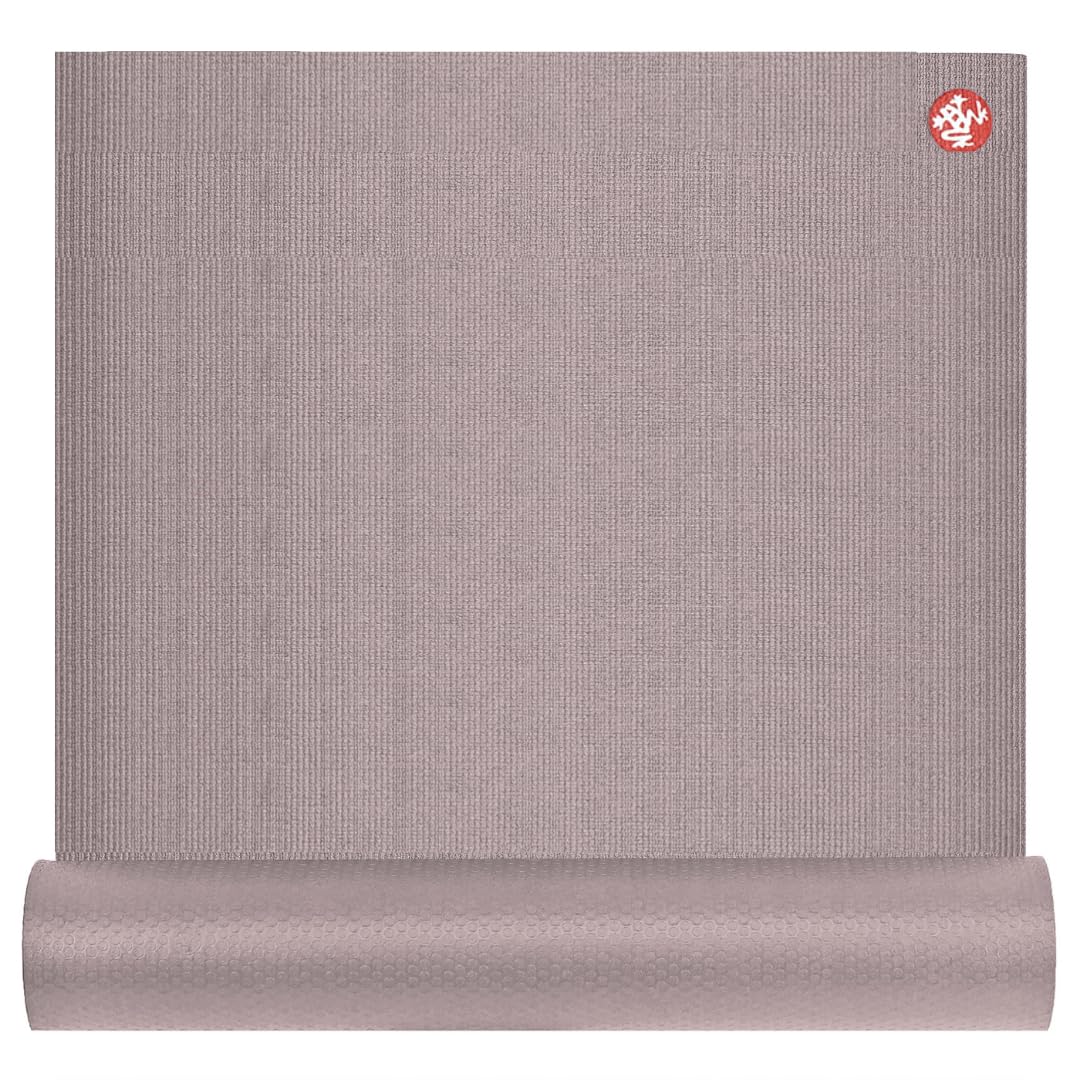
Manduka PRO

Manduka

Manduka PRO

  • Weight 7.5 lb
  • Material Polyvinyl Chloride
  • Dimensions 71"L x 26"W x 0.24"Th
  • Construction Closed-cell surface
Check Price on Amazon

Dense 6mm cushioning, a wider 26-inch surface, and lifetime construction for a dedicated home studio.

At 7.5 pounds, the Manduka PRO announces itself before you unroll it. That weight is the point: the 6mm pad is dense, not squishy, and the 26-inch width gives you more room for side-lying work and wide-legged seated poses. On a hardwood floor, the dot pattern on the bottom kept the mat from sliding during our standing sequences, and the closed-cell surface wiped clean after a sweaty practice.

We were surprised by how much the density changes the feel. Extra-thick NBR mats cushion by sinking; this one supports by staying firm. For Pilates, that is a useful distinction—knees and elbows get protection without the mat swallowing your balance. The trade-off is that it is a stay-at-home mat. Carrying it to a studio is a chore, and the price puts it in a different category from the rest of this list.

The grip is the thing to know before you buy. It starts out slick and needs a break-in period; even after that, damp hands can slide. This is not the mat we reach for during a sweaty flow. For dry Pilates work, the grip is fine; for hot yoga, plan on a towel or a different mat. If you want one mat to anchor a home studio for years, the Manduka is the premium pick. If you need to carry it, look at the Gruper.

Bottom Line

Choose the Manduka PRO if your mat stays at home and you want dense, wide, studio-style support; we think the weight and break-in grip are the trade-offs.

Check Latest Price

Best Budget

Our Score 9.0/10
Fitvids 1/2-Inch

Fitvids

Fitvids 1/2-Inch

  • Care Hand wash only
  • Included Carrying strap
  • Material Nitrile Butadiene Rubber
  • Dimensions 71"L x 24"W x 0.5"Th
Check Price on Amazon

Half-inch cushioning at a low price, with a strap for studio-to-home trips.

The Fitvids is the mat we hand to someone who wants cushion first. The half-inch NBR foam is deep enough that knees, hips, and elbows feel protected on a hard floor, and the 71 by 24-inch surface is long enough for most users without becoming a full studio platform. At this price, it is the least expensive way here to get that much padding, and the carrying strap makes the trip to class manageable.

We noticed the foam's softness immediately. It is plush under a kneeling lunge and forgiving in seated forward folds, but it also compresses under standing poses. For mat Pilates that stays on the floor—bridges, leg lifts, side-lying series—that is a fair trade. For standing balance work, the half-inch depth can feel less stable than a 6mm mat, and the surface has a little more give than we want under a single-leg stance.

The other thing to plan for is wear. The foam is soft enough that fingernails and pet claws can leave marks, and the textured top can get slick once you sweat. Ours has held up to regular floorwork, but it is not the mat we choose for a hot class or a rough studio floor. Think of it as a budget cushioning mat that is happiest at home or in a gentle class.

Bottom Line

We hand the Fitvids to cushion-first shoppers on a budget; its half-inch foam protects joints, though standing balance and wet grip are not its strengths.

Check Latest Price

Best for Beginners

Our Score 9.0/10
YOGATI Alignment Mat

YOGATI

YOGATI Alignment Mat

  • Weight 1.81 lb
  • Included Shoulder harness
  • Material Thermoplastic Elastomers
  • Dimensions 72"L x 24"W x 0.24"Th
Check Price on Amazon

Alignment lines help new Pilates students check hand and foot placement in every pose.

The YOGATI's alignment lines are the reason to look twice. Laser-etched center markings show where to place palms and heels, which is genuinely useful when you are learning Pilates and do not have a teacher adjusting you. We found ourselves checking hand position in plank and foot width in standing poses—small cues that make a new routine feel less vague. The 6mm TPE surface is firm enough to support those positions, and the 72 by 24-inch mat rolls up light.

At 820 grams, it is one of the easiest mats here to carry, and the shoulder harness is a nice touch for walking to class. The surface has a closed-cell feel that wipes clean, and the reversible two-tone design is more subdued than the brightest prints on this list. We appreciated that it does not arrive with the heavy chemical smell that some PVC mats have.

Grip is the caveat. The mat holds well when hands are dry, but damp skin can slide, and the 6mm thickness is not a plush knee cushion. If you need deep padding for sensitive joints, the BalanceFrom is the better tool. If you are new to Pilates and want help with alignment without paying for a studio mat, the YOGATI earns its place.

Bottom Line

We like the YOGATI for new Pilates students because the alignment lines teach hand and foot placement on a light, low-odor 6mm mat.

Check Latest Price

Best Overall

Our Score 8.8/10
Gruper Yoga Mat

Gruper

Gruper Yoga Mat

  • Weight 1.65 lb
  • Included Carry strap and storage bag
  • Material Thermoplastic Elastomers
  • Dimensions 72"L x 24"W x 0.24"Th
Check Price on Amazon

Grippy 6mm TPE, a carry bag, and low weight make it the easiest all-around choice.

We started with the 6mm TPE surface because that is the thickness that tends to suit mat Pilates: enough cushion for knees and hips, not so much that standing poses feel like a trampoline. The Gruper hits that balance. The textured surface has a closed-cell feel, and in our floorwork it stayed put on a wood floor without needing to be dampened first. The 72 by 24-inch footprint is standard without feeling cramped, and at 0.75 kg it is one of the easier mats here to roll up and carry.

What we kept coming back to is the bag. A lot of mats include a strap and call it a day; this one gives you a strap and a storage bag, which matters if the mat lives in a closet or rides in a car. The 6mm foam is firm enough that our hands did not sink through in plank, and the surface did not develop that slick, powdery feel some TPE mats get after a few sessions.

For most people buying their first dedicated Pilates mat, this is the one we point to. It is light, it covers the floor, and it does not make you choose between cushion and portability. If you mostly practice hot, sweaty flows or want a wider studio platform, the Manduka below is the upgrade; for everyday mat work, the Gruper is the sensible default.

Bottom Line

We recommend the Gruper to most Pilates shoppers: its 6mm TPE surface balances cushion and stability, and the bag makes it easy to live with.

Check Latest Price

How We Tested Pilates Mats

To build the shortlist, we looked at mats sold for pilates specifically rather than general fitness mats, then narrowed by thickness, surface texture, construction, weight, and price. We ended up with 12 mats and used each one for six months, rotating them through at-home sessions on hardwood and carpet, studio classes, and slower stretching and rehab-style floor work.

Thickness and comfort were judged in motion: kneeling work, side-lying leg series, roll-ups, and long holds where we noted whether knees and sit bones felt supported or the mat bottomed out. Stability and grip got the harder test — standing footwork, planks, and single-leg work barefoot and in socks, on hardwood and carpet, watching for sliding, bunching, or curling at the edges. I also rolled and strapped each mat, weighed it, carried it to class, and checked whether the carry loop dug in or the mat unrolled itself in transit.

Odor got its own check: we unrolled each new mat and smelled it at 10 minutes, 24 hours, and one week, then noted whether the smell faded or lingered. For durability and value, we inspected edges and surface wear after repeated rolling, left each mat rolled tight between sessions, and compared how each looked and performed against what it cost. The mats that made the list stayed flat, held their shape, and felt worth the space they took up.

How to Choose

Start with Thickness, Not the Label

Pilates asks for two things that pull in opposite directions: enough padding for knees, hips, and spine, and a firm enough surface to feel the floor in standing poses. A 6mm mat is the most versatile compromise, which is why the Gruper and Gaiam Essentials sit there. An 8–10mm mat adds cushion for sensitive joints but starts to soften balance work. A one-inch mat is a floorwork tool: the BalanceFrom is excellent for kneeling and seated series, but it is not the mat for a standing sequence. If your practice is mostly matwork, 6–8mm is the sweet spot; if you stand and balance, stay near 6mm.

Grip Depends on Dry Versus Damp

A surface that feels tacky on dry skin can turn slick once hands sweat, and that difference matters more than a 'non-slip' label. Closed-cell TPE and PVC mats generally wipe clean and hold well when dry; NBR foam can be softer and grippier at first but may pill or tear. The Manduka PRO needs a break-in period before it grips well, while the Gruper holds dry floors without much fuss. If you sweat heavily, plan on a towel or choose a mat with a closed-cell top and test it with damp hands before a class.

Length, Width, and Weight

Most Pilates mats run 68 to 72 inches long and 24 inches wide; the Manduka PRO adds two inches of width, which helps in side-lying and wide seated poses. If you are tall, start at 71–72 inches—the 68-inch Gaiam Premium Print and CAP Barbell are the ones to measure against your reach. Weight matters just as much if the mat commutes: the Gruper is 0.75 kg, while the Manduka is 7.5 pounds and wants to stay home. Choose the longest mat you can carry, not the thickest.

Material, Odor, and Care

NBR foam is soft and budget-friendly but can tear and may arrive with a chemical smell; PVC is tacky and durable but heavier and can also need airing out; TPE is lighter and usually lower-odor, which is why the Gruper and YOGATI use it. Whatever you choose, unroll and air out a new mat for a few days, wipe it with mild soap and water, and keep it out of direct sun. If smell or cleanup is a dealbreaker, TPE is the safer starting point.

Frequently Asked Questions

Final Verdict

For most people, the Gruper is the Pilates mat we recommend. Its 6mm TPE surface gives you enough cushion for floorwork without the wobble of a one-inch mat, and the bag and low weight make it easy to keep with your gear.

If your mat will live in one room and you want the widest, densest studio surface here, the Manduka PRO is the upgrade. If knee and hip cushioning is the whole point and you rarely stand on the mat, the BalanceFrom is the better tool.