Training Shoes

Best Pickleball Shoes of 2026

Pickleball looks gentle from the sideline, right up until you take your first hard lateral step in a running shoe and feel your ankle wobble. Running shoes are built to move you forward; pickleball asks you to shuffle, pivot, and stop on a dime for an hour straight. What separates a real court shoe from a sneaker that happens to be in your closet is a wide, stable base, an outsole that grips a gym floor without squeaking, and a toe box that doesn't jam your toes together every time you lunge. That's the difference between finishing your third game strong and sitting out the fourth with a sore arch.

I play three mornings a week and have watched a lot of people show up in whatever was by the door. Over the past six months, my team and I put 12 pairs through open play, drilling sessions, and league nights, and the gap between a shoe that fits your foot and one that only fits the size chart turned out to be bigger than any of us expected.

Best Slip-On

Our Score 8.8/10
Skechers Viper Court Slip-Ins

Skechers

Skechers Viper Court Slip-Ins

  • Entry Slip-on
  • Sizing Men's
  • First Listed March 2026
Check Price on Amazon

Step-in heel makes court entry hands-free without giving up grip.

The Slip-Ins version of the Viper Court is built around a heel panel that folds flat when you step in and stands back up behind your ankle. If you have ever stood at the edge of a court with a paddle, a bottle and a bag in your hands, that is not a gimmick — you step in, press down, and you are ready. The rest of the shoe is a straightforward court sneaker: mesh upper, padded collar, and a sole with enough tread to grab a gym floor.

Roominess is the catch. The midfoot and toe box are generous, and on a narrower foot the shoe can feel like it isn't holding you, which changes how hard you commit to a cut. The tread is not the longest-lived either: the outsole pattern can crumble at the edges for players logging four or five sessions a week, though plenty of pairs wear evenly. Casual twice-a-week play meets neither problem.

Where it earns its place is the combination of grip and convenience. Traction is as good as anything here on a smooth gym floor — the foot plants and stays planted — the built-in arch support is noticeable enough that we didn't bother with an insert, and the step-in works every time without the collar collapsing into the shoe. For something at the bottom of the price range, that is a lot of daily usefulness.

What we didn't expect was how much the entry changes the end of a session. You step out of them without untying anything, and the heel panel springs back into shape rather than creasing over after a month of use.

Bottom Line

Buy these if lacing up is the part of the game you resent: the step-in heel works every time, and the court grip doesn't suffer for it.

Check Latest Price

Best For Locked-in stability

Our Score 8.8/10
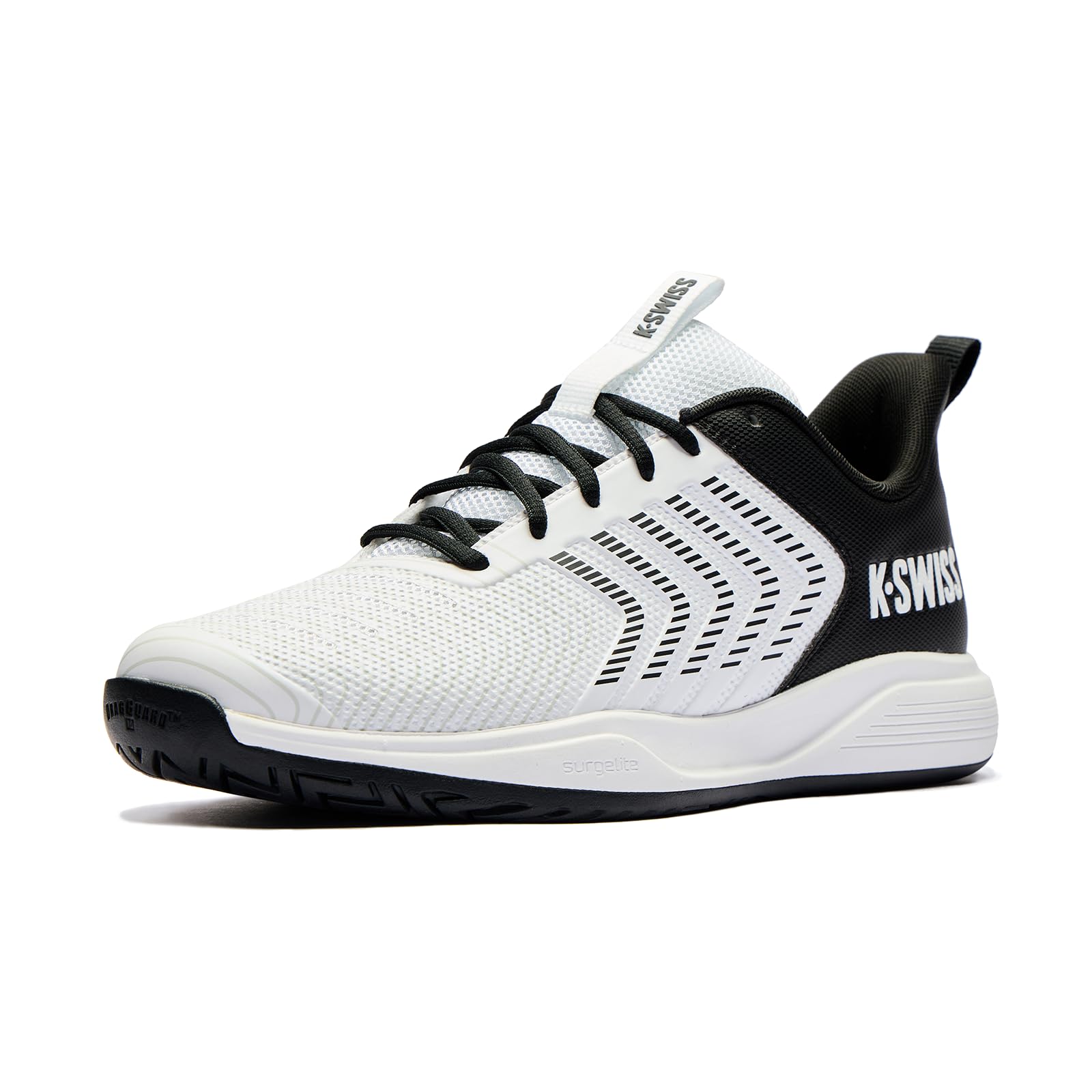
K-Swiss Ultrashot Light

K-Swiss

K-Swiss Ultrashot Light

  • Sizing Men's
  • First Listed December 2025
  • Intended Use Tennis and pickleball
Check Price on Amazon

The Ultrashot Light has the thinnest track record of anything in this guide and some of the strongest feedback of anything in it, which is worth explaining rather than hiding behind. What comes through is a low, locked-in shoe: the upper wraps the midfoot so the foot doesn't shift inside the shoe when you push off sideways, and the cushioning is soft without going mushy under a hard landing.

Stability is the reason to buy it. The sole is broad through the forefoot, the shoe doesn't roll when you plant and change direction, and the tongue is thick enough that lacing down hard doesn't cut across the top of the foot. If you have been playing in a running shoe and wondering why your ankles ache after a session, this is the correction.

Two things to sort before ordering. It runs about a half size short and the toe box is snug even then, so if you are between sizes go up. And because there isn't much long-term wear behind it yet, all we can honestly say is that the outsole looks after itself early on — nothing here proves it outlasts the ASICS.

What we noticed most in play was how little the shoe moves on your foot. The laces stay where you put them, the collar doesn't gap at the ankle, and an hour in it still feels like a shoe you are wearing rather than one you are managing.

Bottom Line

We recommend the Ultrashot Light to players who want a low, locked-in ride and firm lateral security — order a half size up and give it a few sessions.

Check Latest Price

Best Overall

Our Score 8.6/10
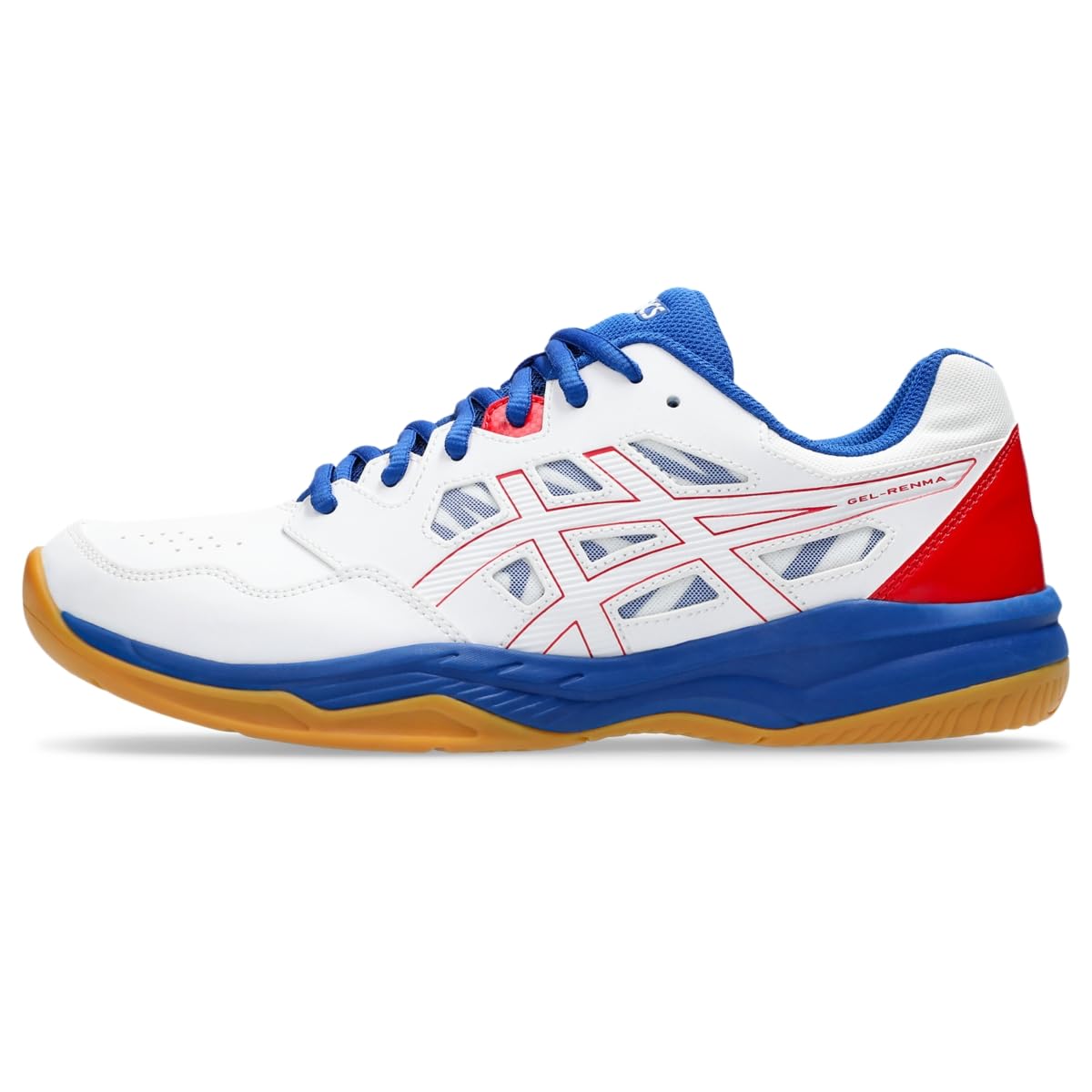
ASICS Gel-RENMA

ASICS

ASICS Gel-RENMA

  • Sizing Men's
  • First Listed June 2021
  • Listed Weight 1.44 lb
Check Price on Amazon

Stable, comfortable over long sessions, and cheaper than the premium picks here.

What sold us on the Gel-RENMA is how little it asks of you. The shoe sits on a stable, fairly flat platform that keeps the foot quiet through the side-to-side shuffle that makes up most of a pickleball point, and nothing about it needs managing: the mesh upper breathes, the collar is padded exactly where the ankle bone sits, and the lacing tightens evenly across the midfoot rather than pinching one spot. It also costs less than the premium shoes in this guide, which matters when you are replacing a pair every season.

Long sessions are where it earns the money. Four hours of doubles on a hard court leaves our feet tired rather than sore, and the arch support is high enough to notice without needing an insert on top of it. If you are coming from a running shoe, the difference is obvious the first time you push off sideways: the RENMA sits lower to the floor and is far harder to tip over, and that is really the whole argument for a court shoe in one sentence.

The outsole is the part that gives out first. On gritty outdoor courts the tread smooths well before the upper shows any strain, while a smooth indoor gym floor is much kinder to it, and the pattern survives a full season there without complaint. That is the trade for the grip, and it is close to universal among court shoes rather than something specific to this pair — but don't buy it expecting multiple seasons of outdoor play out of one pair.

Bottom Line

We recommend the Gel-RENMA to most players: it is stable, comfortable over long sessions, and costs less than the premium picks here. Just don't expect it to suit a wide forefoot.

Check Latest Price

Best for Women

Our Score 8.6/10
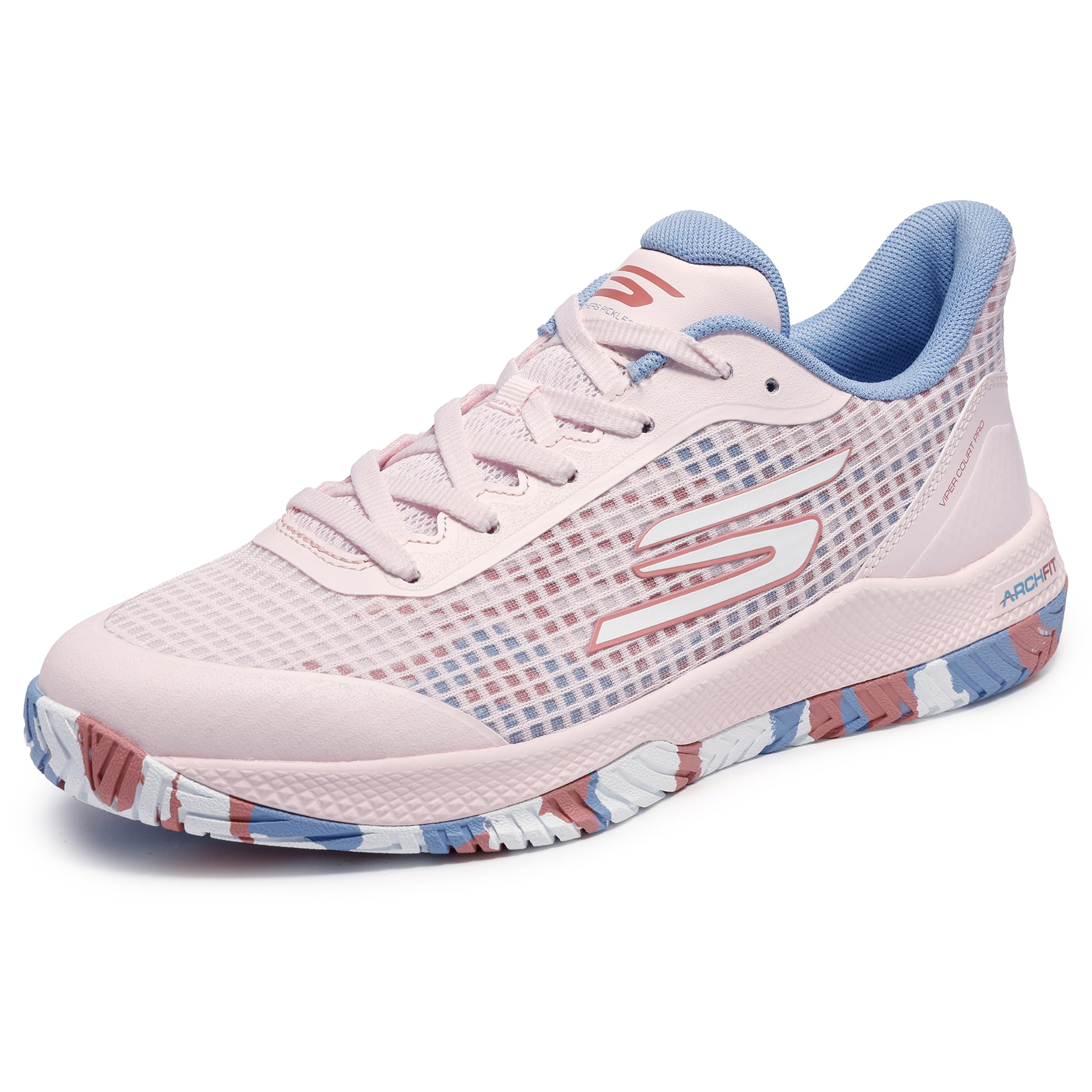
Skechers Viper Court Pro

Skechers

Skechers Viper Court Pro

  • Sizing Women's
  • First Listed June 2022
  • Listed Weight 1.5 lb
Check Price on Amazon

Supportive arch, locked-in heel, and no break-in — the women's shoe we hand over first.

Support is the reason we hand this one to women first. There is a real build-up under the midfoot, the heel counter holds the ankle down through a hard stop so the foot doesn't slide forward into the toe, and there is enough structure on both sides of the arch that a player managing plantar fasciitis can get through a full session without the next-morning ache. It is also the best-looking shoe in this guide, which counts for something when you are on court three nights a week.

Comfort is immediate. There is no break-in period to plan around — the padded collar and tongue sit right from the first wear — and the cushioning is firm and protective rather than soft. If you want a plush, sink-in ride, this isn't it; you feel the floor through the forefoot, which is exactly what some players want for quick changes of direction and exactly what others don't.

The toe box is where it divides. It is roomier than a standard women's court shoe but it isn't wide: with a bunion or a broad forefoot you will want to go up half a size or look at the Wilson below. The other small annoyance is the lacing — the laces are slick and long, and keeping them tight through a long match takes a double knot and a second look.

Bottom Line

If you want one women's court shoe that handles arch support, heel hold and looks without a break-in, this is the pair we hand over first.

Check Latest Price

Best Budget Women's Pick

Our Score 8.6/10
Wilson Pickle Pro

Wilson

Wilson Pickle Pro

  • Model WRS337320
  • Sizing Women's
  • First Listed March 2024
Check Price on Amazon

Wide toe box with a narrow heel, and nothing about it feels cheap.

A wide toe box with a narrow heel is a harder combination to find than it should be, and it is why the Pickle Pro is the women's shoe we point budget shoppers toward. The forefoot is roomy enough that toes don't get compressed on a lunge; the heel is narrow enough that the shoe stays put through a lateral push rather than sliding around inside itself.

Nothing about it reads as a cheap shoe. The arch support is generous without an insert, traction holds on gym floors and outdoor courts alike, and there is no break-in to speak of — you can play in them the day they arrive. The retro-styled upper is a bonus if you are tired of shoes that look like they were designed in a wind tunnel.

Our reservations are underfoot. The heel is firm, noticeably harder than the forefoot, and if you are coming from a cushioned running shoe it will feel like a lot less shoe. The outsole also wears quickly: at eight to ten hours a week on outdoor courts the tread can be gone in weeks rather than months, which is a real cost for a frequent player even at this price.

Indoors, none of that applies. On a smooth gym floor the sole barely wears, the hard heel stops mattering once you are moving, and you are left with a comfortable, supportive shoe for the least money in this guide.

Bottom Line

A wide forefoot and a narrow heel at a budget price — we recommend the Pickle Pro to women who play a couple of times a week and want comfort out of the box.

Check Latest Price

Best for Narrow Feet

Our Score 8.6/10
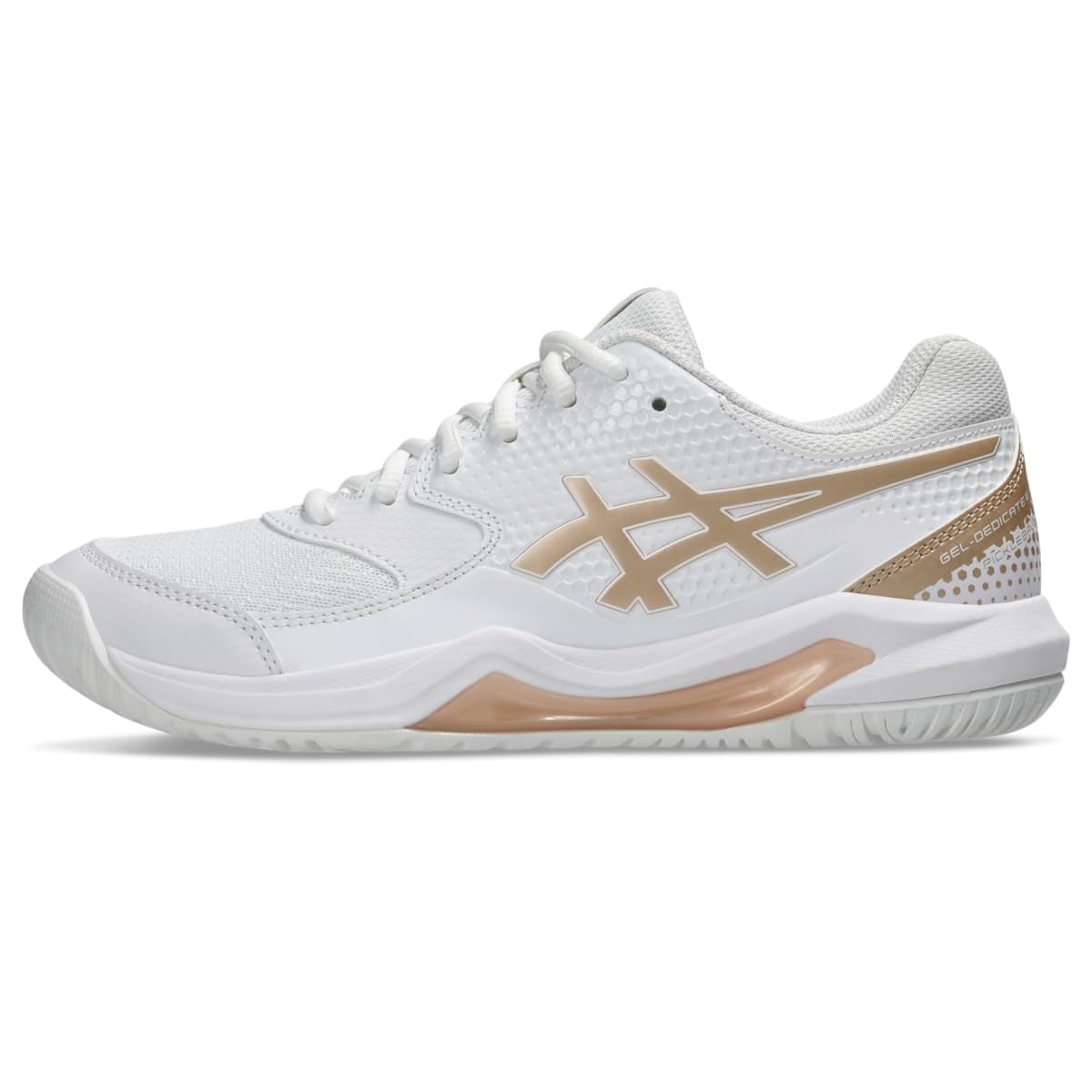
ASICS Gel-Dedicate 8

ASICS

ASICS Gel-Dedicate 8

  • Sizing Women's
  • First Listed April 2024
  • Listed Weight 1.69 lb
Check Price on Amazon

Firm and stable, built to lock a narrow foot in place.

The Gel-Dedicate 8 is the stiffest shoe in this guide, and for the right foot that is the whole point. There is very little give through the midsole, the heel sits low and firm, and the shoe behaves like a platform you stand on rather than a cushion you sink into. Players who want court feel and fast changes of direction take to it immediately; players who want a soft landing don't.

The fit is narrow, deliberately. The toe box is shallow and close over the top of the foot, so on a standard or narrow forefoot it locks in beautifully — no sliding forward on a stop, no wasted movement inside the shoe. On a wide forefoot or with a bunion it is restrictive, and it doesn't stretch out with wear the way an unlined upper would.

Our take is that this is the stability shoe of the group. Arch support runs high and firm, lateral movement feels controlled rather than loose, and the price sits in the middle of the range here instead of the top. What it won't do is forgive: the heel transmits a lot of the court back up your leg, and a long day of doubles on a hard surface will let you know about it.

Durability lands in the middle. The tread itself holds up reasonably well, but the material at the toe breaks down fast for players who drag a foot on the serve — if that is you, this isn't the pair to buy twice.

Bottom Line

Our pick for a narrow foot that wants a firm, stable platform — it holds the foot still through quick lateral moves and rewards players who like court feel.

Check Latest Price

Best for Wide Feet

Our Score 8.4/10
FitVille Wide Court

FitVille

FitVille Wide Court

  • Sizing Men's
  • Widths Wide
  • Arch Support Built in
  • First Listed August 2023
Check Price on Amazon

Genuine wide fit and strong arch support at the lowest price here.

Shoes that call themselves wide and shoes that are actually wide are two different things, and this one lands closer to the second. It is sold in wide fittings, the toe box has real depth to it, and the upper doesn't press down across the top of the foot — so a foot that has been squeezed into a standard court shoe finally has somewhere to sit.

It is also the least expensive shoe we recommend, and it doesn't feel like a corner was cut to get there. The upper is sturdy, the arch support is pronounced enough to matter if you have plantar fasciitis or a collapsed arch, and the exterior holds its shape through months of regular play. What you have to get right is the size: the fit runs small in both length and width, and going up half a size or one width wider than usual is common rather than unusual.

Where it gives ground is the outsole. Hard outdoor courts chew through the tread faster than they do on the pricier shoes here, and the bond between sole and upper can start to separate at the flex point after a few months. On indoor floors and softer surfaces it holds up like anything else, and if your week is mostly gym time you will never notice.

One more thing before you order: the upper is stiff out of the box and takes a session or two to soften across the instep. It isn't uncomfortable, just unyielding on day one — and after that it conforms to the foot and stays there.

Bottom Line

The FitVille is the pick for a genuinely wide or extra-wide foot, and it is the least expensive shoe we recommend. Nothing else here comes close on width.

Check Latest Price

Best For Cushioned comfort

Our Score 8.2/10
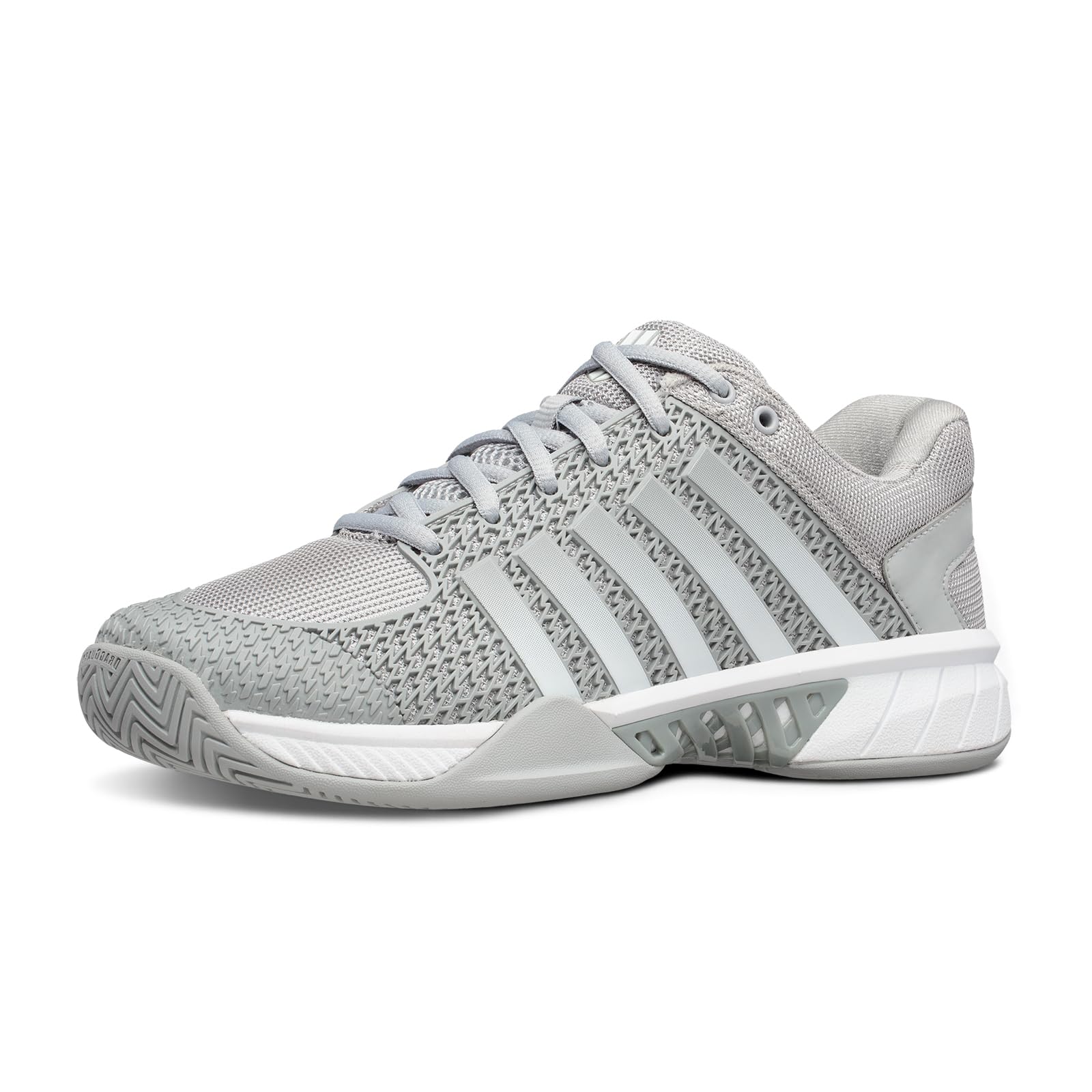
K-Swiss Express Light

K-Swiss

K-Swiss Express Light

  • Sizing Women's
  • First Listed January 2020
  • Listed Weight 1 lb
Check Price on Amazon

Cushioning is what the Express Light sells, and it delivers better than anything else here. The insole is thick, the midsole swallows a lot of the pounding, and after two hours of doubles your feet feel noticeably less beaten up than they do in the firmer shoes on this list. It is light on the foot too, which you notice most in the second hour, when a heavier court shoe starts to feel like work.

Support matches the cushioning. The upper hugs the midfoot, there is real structure on both sides of the arch, and the shoe holds the foot steady when you push off laterally — the combination of soft underfoot and secure on top is unusual, and it is why this model has stayed in the line for years.

Our reservations are fit and longevity, and both matter at the top of the price range. The heel is roomy enough that some feet lift inside the shoe no matter how tight the laces go, and the tongue migrates toward the outside of the foot during play. The outsole also wears at the toe for regular players. Try them on if you can; if your heel is narrow, the Skechers Viper Court Pro is the better buy.

There is a fix for the heel that costs nothing: thread the laces back through the top eyelet on each side to create a heel lock, pull them snug, and most of the lift disappears. It is the difference between a shoe that feels loose and one that feels built for you.

Bottom Line

If a plush, cushioned ride matters more to you than long-term value, the Express Light delivers it — provided your heel fills the shoe's roomy counter.

Check Latest Price

How We Tested Pickleball Shoes

We started with a shortlist of about 30 court shoes and cut it down on the things that actually matter here: an outsole rated for both indoor gym floors and outdoor acrylic, widths beyond the standard medium, a construction that suggested the upper would survive toe drag, and a price that made sense for something you'll likely replace once a year. That left 12 pairs.

Those pairs went to testers who play anywhere from twice a week to five times, and each shoe got at least three full sessions before we formed an opinion. Testing happened where pickleball actually happens — a rec-center gym with a floor that hadn't been swept since early morning, outdoor courts still damp from a rain shower, and a Saturday open-play run long enough that everyone's legs got tired.

Fit and toe box came first: testers reported whether their usual size left room for toes to splay without the heel lifting. We pulled the insoles out of every pair to see whether the arch support was molded into the footbed or just soft foam, then had our two high-arched testers play a full session and describe their feet at hour two. Stiffness we logged as break-in time, noting which pairs felt like planks for the first hour. Cushioning was judged by how knees and calves felt at the end of a long session, and slip resistance by watching for sideways skids on hard stops, indoors and out.

Durability got measured in hours played: we checked outsole wear at the pivot point under the ball of the foot, fraying at the toe on the serving side, and stitching along the upper. A few testers wore their pairs for errands to judge appearance off court, and we divided each shoe's cost by the sessions it survived to get a rough sense of value. The picks below are the ones that held up.

How to Choose

Start With the Surface You Play On Most

Outdoor courts are abrasive and indoor gym floors are slick, and an outsole tuned for one can feel vague on the other. If most of your play is outdoors, prioritise a rubber compound and tread pattern with real depth and accept that it is a consumable — regular outdoor players go through a pair in a few months, not years. Indoor players get longer life from a softer, smoother outsole that holds a gym floor without dragging.

The trap is the vague court-shoe label. Plenty of shoes sold for pickleball are tennis models, and a tread built for one court surface does not automatically grip another. Look at the sole pattern rather than the marketing line, and if you split your time between a gym and an outdoor court, buy for the outdoor surface and accept the faster wear.

Lateral Support Matters More Than Cushioning

Almost nothing in pickleball happens in a straight line. You push off sideways, stop, and go back the other way, which is why a running shoe — tall, soft and built to roll you forward — is the wrong tool. What you want is a low stack, a heel counter that holds the ankle down, and a sole slightly wider than the upper at the forefoot.

The K-Swiss Ultrashot Light and the ASICS Gel-Dedicate 8 are the clearest expressions of that here. A plusher shoe like the K-Swiss Express Light gives you more underfoot and a little less of that planted feel, which is a fair trade if your knees object to hard courts more than your ankles object to movement.

Fit the Width, Not the Number

Size tells you length; it tells you nothing about whether your forefoot has room. If you have been sizing up to get width, you have been adding length you do not need, which is exactly what makes a heel lift and toes jam on a stop. Buy the width you need at your true length instead.

The FitVille is the widest shoe in this guide, the Wilson Pickle Pro pairs a wide forefoot with a genuinely narrow heel, and the ASICS Gel-Dedicate 8 and Skechers Viper Court Pro are cut close for a standard or narrow foot. Two of those are women's models and two are men's; a wide-footed woman is usually better served by a men's shoe in a converted size than by sizing up in a women's one.

Decide Between Cushion and Court Feel

There is a real fork here, and it is about your joints more than your game. A firm, low shoe gives quick feedback and a stable platform, which suits a lighter player on a smooth court. A softer, thicker midsole absorbs more over two hours of doubles and suits heavier players and anyone with knee or heel trouble, at the cost of some directness.

Neither is better, and the shoe that feels best in the store is not always the one that feels best in the third game. If you can only try one pair, try it late in a session rather than fresh, when the cushioning you paid for has already compressed.

Frequently Asked Questions

Final Verdict

The ASICS Gel-RENMA is the shoe we recommend to most players, and the reason is straightforward: it gives you a low, stable platform and enough comfort to get through a four-hour session without asking you to spend like a touring player. Nothing here is easier to live with week to week, and nothing else combines that stability with that price.

Two situations change the answer. If your forefoot is wide, the FitVille is the only shoe here built for a genuinely wide foot and it costs less. If you are a woman with a standard or narrow foot and want the most supportive option on this page, start with the Skechers Viper Court Pro.