Outerwear & Layers

Best Merino Wool Base Layers of 2026

There's a specific kind of cold that only shows up when you stop moving. You've been hiking or shoveling or chasing a kid around a sledding hill, you're damp at the small of your back, and then you stand still for five minutes and the chill goes straight through you. That's not the weather's fault, it's the cotton T-shirt under your jacket. A merino wool base layer moves that moisture off your skin and holds warmth even when it's damp, which is why I stopped wearing anything else between October and April.

The catch is that merino isn't one thing. A featherweight layer and a midweight one behave like completely different garments, and a cheap one can feel scratchy at the neck while an expensive one wears through at the elbows in a season. Over the past eight months our team has worn 12 merino base layers through commutes, ski weekends, and a few memorably wet hikes, washing each one far more often than anyone should, and the good ones separated themselves quickly. Below are the ones worth your money, sorted by who they actually suit.

Best Overall

Our Score 9.4/10
MERIWOOL Men's Midweight Long Sleeve

MERIWOOL

MERIWOOL Men's Midweight Long Sleeve

  • Style Crewneck long sleeve
  • Weight Midweight
  • Material 100% merino wool
  • Department Men's
Check Price on Amazon

Soft, warm 100% merino that disappears under a shirt — just size up.

Midweight merino is the layer that does the most work in a winter wardrobe, and this MERIWOOL crew is the one we reach for first. It's warm enough for a 30-degree morning under a flannel and thin enough to vanish under a dress shirt, and because the knit is 100% merino rather than a blend, it handles sweat without going cold and clammy the way cotton does. The crewneck sits flat, too, which sounds like a small thing until you've spent a day with a collar bunching under a sweater.

What keeps it at the top of our list is how little it asks of you. The fabric is soft from the first wear, with none of the prickle people remember from old wool sweaters, and it doesn't hold odor the way polyester does — on a trip, that's the difference between packing two shirts and packing four. The wool content matters most at this price: blends are what usually turn up in the mid-range, and here the merino is the whole garment.

It's the layer we hand people who want one merino top to cover most of a winter — under flannel for a cold commute, under a shell on a lift, on its own on a sunny 50-degree hike. MERIWOOL also makes the same midweight merino as a men's pant, so building a two-piece is straightforward.

Bottom Line

The most complete merino top in this group: warm for its weight, soft from the first wear, and 100% wool at a mid-range price.

Check Latest Price

Best Premium

Our Score 9.4/10
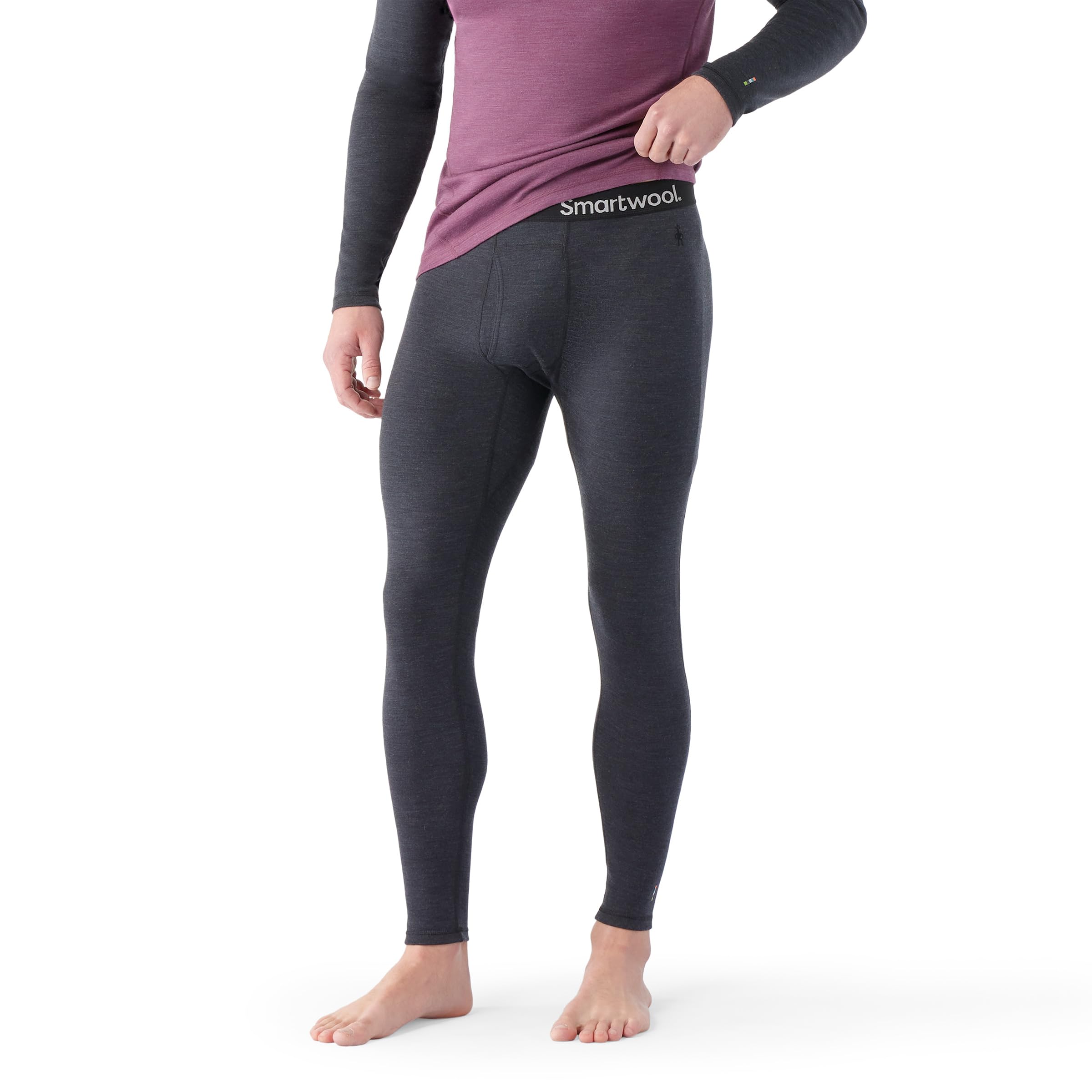
Smartwool Merino 250 3/4 Bottom

Smartwool

Smartwool Merino 250 3/4 Bottom

  • Fit Slim
  • Inseam 21.5 inches
  • Weight Merino 250 midweight
  • Material 100% merino wool
Check Price on Amazon

The 3/4 length skiers want: no bunching inside a boot cuff.

Twenty-one and a half inches of inseam is the whole idea here. That stops the bottom just above a ski or snowboard boot, so there's no fabric bunched at the cuff and nothing to chafe while you're tightening a buckle. Anyone who has wrestled a full-length long john into a boot will recognize the fix immediately.

Smartwool's 250 is a proper midweight — dense, smooth, dry-feeling against the leg, with warmth that doesn't come from bulk. We're also taken with the care label: this is the rare merino bottom that's machine wash and tumble dry, which in practice means it gets worn far more often than the pieces you hand-wash and drape over a chair.

The slim cut is genuinely slim through the thigh, so if you're between sizes or want a relaxed layer, size up or look at the Minus33 bottoms below. For skiing, riding, and any winter sport where your boots come up past the ankle, the shorter leg earns its place on its own.

Bottom Line

The bottom we point skiers to: a 3/4 cut that ends above the boot, in a dense midweight that survives the dryer.

Check Latest Price

Best For Ankle coverage

Our Score 9.4/10
Minus33 Men's Base Layer Bottoms

Minus33

Minus33 Men's Base Layer Bottoms

  • Style Long johns bottom
  • Material 100% merino wool
  • Department Men's
Check Price on Amazon

Full length is the reason to look at these instead of a 3/4 cut. Minus33's long johns are a full-length pair that reaches the ankle, which matters under street trousers, rubber boots, or any footwear that stops below the calf and leaves a gap between sock and hem.

The waistband is what we noticed first — a wide, flat band that stays where you put it instead of rolling, which is the difference between a bottom you forget about and one you're adjusting all day. The knit is soft, holds its shape through a day of wear, and slides under dress pants without a visible line.

What you're paying for is comfort, and it's unusually good comfort: a flat waistband and a leg with some room in it are the two things that decide whether long johns get worn or stay in the drawer. If your last pair rolled, twisted, or squeezed at the thigh, this is the one in our group that fixes it.

Bottom Line

A well-cut long john for anyone whose last pair rolled or squeezed — worth the money when fit is the problem, harder to justify when it isn't.

Check Latest Price

Best Budget

Our Score 9.2/10
Merino.tech Men's Long Johns

Merino.tech

Merino.tech Men's Long Johns

  • Style Long johns bottom
  • Material 100% merino wool
  • Department Men's
Check Price on Amazon

The cheapest way into real merino: light, warm, easy to layer.

The least expensive merino in this roundup is also one of the easiest to live with. These long johns are thin — thin enough to vanish under jeans, which is the entire point — and warm enough that you feel the difference the moment you step outside. Merino.tech also ships them with a pair of wool socks, a small gesture that makes a budget purchase feel less like a compromise.

We rate them as a daily-wear layer rather than a summit piece. The knit is light, so it layers under trousers without a bulge at the knee, and the waistband stays where you put it instead of rolling down through the day. Sizing runs a little big, so if you're between sizes, take the smaller one.

Where these win is the arithmetic: two pairs cost about what one premium bottom costs, which is the right way to buy a layer you plan to wear hard. Get them for cold snaps, ski weekends, and the trip where you need one more layer than you packed.

Bottom Line

The budget pick we recommend first: light, warm 100% merino long johns that layer under anything, best bought for trips and weekend wear.

Check Latest Price

Best for Women

Our Score 9.2/10
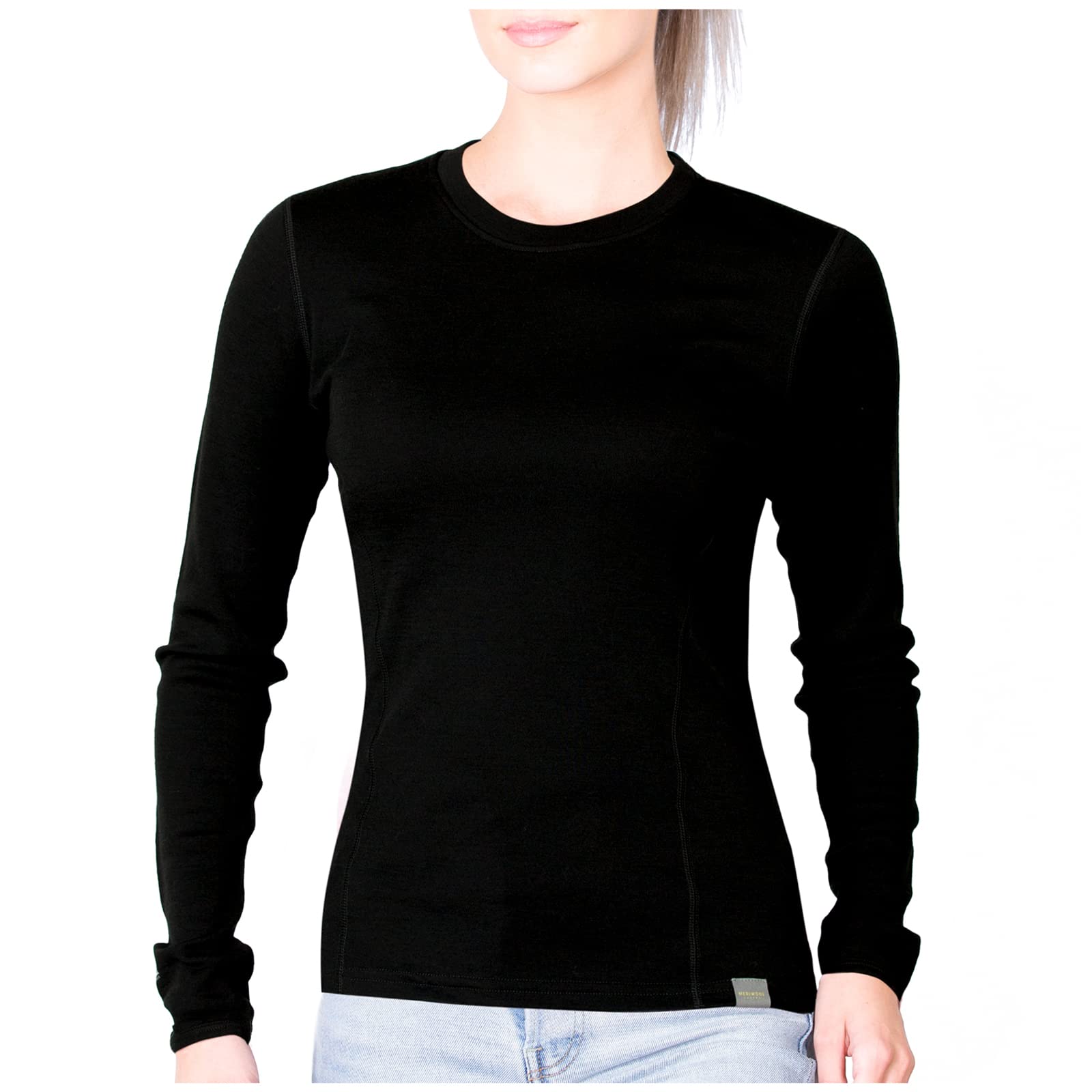
MERIWOOL Women's Midweight Long Sleeve

MERIWOOL

MERIWOOL Women's Midweight Long Sleeve

  • Style Long-sleeve thermal top
  • Weight Midweight
  • Material 100% merino wool
  • Department Women's
Check Price on Amazon

A women's cut that layers without riding up, itching, or showing.

Women's base layers tend to come in two flavors: technical and tight, or boxy and warm. This MERIWOOL top, our women's pick, lands in the useful middle — close enough to layer cleanly under a sweater, cut with enough room through the body that you forget it's there.

The knit is the same 100% merino midweight as the men's version, so you get real warmth from something this thin, no itch against bare skin, and none of the sour smell that follows a synthetic layer through a long day. The heathered colors are a genuine draw: they read as a normal long-sleeve tee, which makes this one of the few base layers here you can wear on its own without looking like you forgot to get dressed.

Sizing runs true, with room rather than compression, so it layers without leaving seams pressed into your shoulders, and it stays put instead of riding up under a midlayer. Wash it cold, lay it flat to dry, and it holds its shape. If you want one layer that works under a blazer on Friday and alone on a hike on Sunday, this is the closest thing in our group.

Bottom Line

Our women's pick: warm, soft 100% merino with a cut that layers under real clothes instead of fighting them.

Check Latest Price

Best Set

Our Score 9.0/10
Merino.tech Men's Base Layer Set

Merino.tech

Merino.tech Men's Base Layer Set

  • Style Top and bottom set
  • Material 100% merino wool
  • Department Men's
Check Price on Amazon

Top and bottom in one order, ready for a week in the cold.

Buying a merino top and a merino bottom separately is how a reasonable habit gets expensive. This set is the shortcut: one order, two matched 100% merino pieces in the same knit.

In use it behaves like a good travel layer. The fabric is soft enough to wear against skin all day, the top doesn't bunch under a midlayer, and the pair rolls into a corner of a pack without eating the space a fleece would. It's machine washable, which matters more on a trip than at home.

We think this is the smartest buy here for anyone building a winter kit from scratch. You settle both halves in one decision, pay less than the pieces cost separately, and get fabric that feels nothing like the cheap half of a bundle.

Bottom Line

The set we point first-time merino buyers to: one order, top and bottom, and a lower total than buying each piece on its own.

Check Latest Price

How We Tested Merino Wool Base Layers

We started by pulling together every merino base layer we could find between roughly 150 and 250 grams per square meter, the range that covers everything from a cool-weather run to a day standing around in the cold. We dropped anything with a heavy synthetic blend or a wool content low enough that it stopped behaving like wool, then narrowed by available sizes, seam construction, and price band. That left 12 layers, which we wore for eight months straight.

Each one went into real rotation: a 20-minute winter commute on foot, two ski weekends, a cold-rain hike, several nights sleeping in them, and a handful of Saturdays doing errands in 30-degree weather. We noted how quickly each felt clammy after a climb and whether it was still warm 20 minutes later standing still. Softness got judged at hour eight of a full day, paying attention to the neck seam, shoulders, and waistband rather than the first five minutes of wear.

For fit, we ordered our usual size and, where the brand allowed it, one size up in the same style, then checked whether sleeves rode up under a jacket, whether the hem stayed tucked, and whether the shoulders pulled when reaching overhead. Sizing was the most inconsistent part of the whole test, and a few layers shrank enough after the first wash to change how they fit. Thickness was judged by how much room each layer needed underneath a shell and whether it worked as a standalone top indoors.

Durability got the longest look. Every layer went through at least a dozen wash-and-wear cycles, and we checked elbows, underarms, and the seat for pilling, thinning, and stretched-out cuffs. To judge value, we worked out roughly what each layer cost per wear across the season rather than comparing price tags side by side. The ones still holding their shape by spring are the ones that made the list.

How to Choose

Start With Weight, Not Marketing

Merino base layers are sold by weight — roughly 150 to 200 for lightweight, 200 to 260 for midweight, 300 and up for expedition — and that number places a garment better than any claim on the label. Midweight is the right default for winter in most of the country: warm under a flannel or a shell, still thin enough to sit under a dress shirt. Lightweight suits high-output days when you'll sweat; the heavy stuff is for standing around in real cold.

The trap is that weights aren't standardized between brands, and a set can pair a heavier top with a lighter bottom while calling itself medium. Judge a piece by what you'll wear over it and how cold you actually get, not by the word on the tag.

Fit: Close Enough to Touch Skin

Merino moves moisture by contact, so a base layer has to sit against the skin — close, with no folds to bunch under a midlayer, but not tight enough to press at the shoulder or waist. Check sleeve and inseam length as carefully as chest size: a top that stops short of the wrist or a bottom that ends mid-calf leaves a cold gap exactly where you notice it.

Sizing advice has to be per-product, which is why ours differs from pick to pick. The MERIWOOL tops run small enough that we tell people to size up; the Merino.tech long johns run big enough that the smaller size is usually right. Start from the maker's chart, then adjust for the cut.

Tops, Bottoms, and Sets

Most people buy a top first, because it changes the most days, then add a bottom once they're spending real time outside in January. A set is the efficient route if you own nothing yet — Merino.tech's comes in under what the two pieces cost separately and settles both halves in one decision.

For bottoms, length decides more than fabric. A 3/4 cut like Smartwool's 21.5-inch inseam stops above a ski or snowboard boot and keeps fabric out of the buckle; a full-length pair covers the ankle and works better under trousers or rubber boots. Neither is better — they answer different questions.

Plan for Wear at the Friction Points

Merino keeps its warmth and resists odor, but a fine knit abrades. The failure points are predictable: inner thigh, seat, knees, elbows, cuffs, and anywhere a pack strap or waistband rubs. A thin pair worn daily from November to March will not last as long as a heavier pair worn on weekends, and careful washing doesn't change that.

So match the garment to the job. Buy the budget pair for trips and weekend use, and spend on the denser knit if the layer will be your daily uniform. Wash cold, use a mesh bag, and follow the care tag — the Smartwool bottom is the one piece here labeled for the tumble dryer, and most merino isn't.

Frequently Asked Questions

Final Verdict

Our pick for most people is the MERIWOOL men's midweight crew: warm for its weight, soft from the first wear, and 100% wool at a mid-range price. Skiers who want their cuffs clear of a boot should go straight to the Smartwool 3/4 bottom, and anyone outfitting a first winter kit gets the most for the money from the Merino.tech set.

Whichever you choose, order from the size guidance rather than habit — these pieces run differently from one another, and the fit is what decides whether a good base layer actually gets worn.