Training Shoes

Best Cross Training Shoes for Women, Tested of 2026

Cross training shoes ask for a lot: stability for heavy lifts, cushioning for box jumps, and flexibility to move laterally without fighting back. Most pairs lean too far in one direction — plush and wobbly, or firm and unforgiving. Over the past six months, I've worn 12 pairs through weekly strength sessions and HIIT classes, and the ones that worked shared a few traits: a supportive heel, a grippy outsole, and an upper that didn't pinch. The right pair fixes the constant shoe-swapping between the weight rack and the cardio corner.

I tested each pair on the same rotation: strength days with squats and deadlifts, HIIT classes with burpees and lateral shuffles, plus the walk to the gym. Some uppers stretched out within a month, some midsoles felt dead by week six, and a few pairs got more comfortable over time. I noted how they looked with leggings, whether the colorways matched online, and the price. With high arches, I paid attention to whether a shoe felt supportive or soft. The picks below are the ones that held up.

Best Overall

Our Score 8.8/10
Nike Metcon 6

Nike

Nike Metcon 6

  • Model Metcon 6
  • Sizing Scale Unisex, men's sizing
  • Listed Weight 1.63 lb
Check Price on Amazon

Stable enough to lift in, comfortable enough to finish the conditioning block.

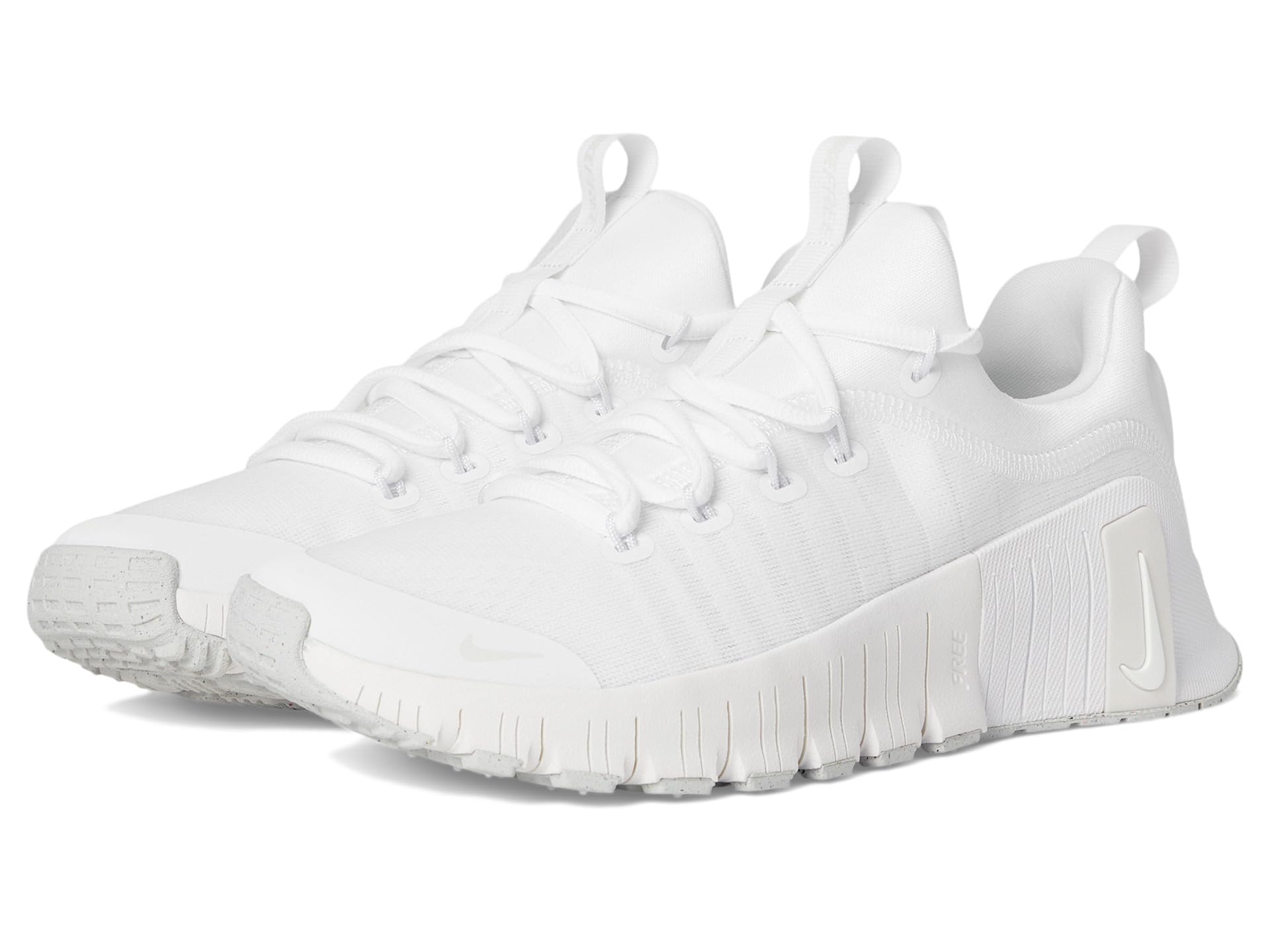
The Metcon 6 is the pair we reach for when a session starts under a barbell and ends in a circuit. It stays planted through squats and split work with very little of the roll to the outside you get from a cushioned trainer, and it doesn't turn into a brick once the conditioning block starts. That combination is why it leads this guide — most shoes this steady feel dead by round three.

The flat, planted base is the part that earns its keep. You feel the floor under your midfoot, which is what you want when you're driving out of a squat, and the shoe doesn't object when the same session moves into kettlebell swings and short sprints. We also paid attention to grip on rubber gym flooring, because a stable shoe that slides is no use at all.

Ordering takes one extra step. The Metcon is sold unisex on a men's scale, so convert before you buy — a women's 8 is roughly a men's 6.5 — and once you have, the length runs true. (The listing title calls it a football boot; ignore that.) There are no women's width options, so a very wide forefoot is better served by the New Balance below.

Bottom Line

If your week mixes barbell work with conditioning, this is the pair we tell you to buy: stable enough to lift in, comfortable enough to keep moving in.

Check Latest Price

Best For Wide feet

Our Score 8.8/10
New Balance 608 V5

New Balance

New Balance 608 V5

  • Model Number WX608UB5-225
  • Sizing Scale Women's
  • Listed Package Weight 2.4 lb
Check Price on Amazon

The 608 V5 has cross trainer in its name, and we'll be straight with you: it isn't the pair we lace up for a HIIT class. It's built like a supportive walking shoe — leather upper, a sole that barely gives — and that's also why it earns a place here.

Where it shines is fit. The toe box is genuinely roomy, which makes this the pair for wide feet, high insteps and anyone who has given up on women's trainers that pinch across the forefoot. The arch support is substantial enough for a ten-hour shift, and it's the least expensive shoe in this guide by a comfortable margin.

It's also the pair here that looks least like gym equipment. The leather finish reads polished enough for a workday, so it does double duty in a way the mesh trainers don't — we've worn it straight from a morning errand to an afternoon of standing, and it never looked out of place.

Bottom Line

The 608 V5 is our pick for wide feet and long days on your feet, and it's the least expensive way here to get a roomy, supportive shoe.

Check Latest Price

Best for Class-Style Workouts

Our Score 8.4/10
Nike Bella 7

Nike

Nike Bella 7

  • Type Training and workout
  • Model Bella 7
  • Sizing Scale Women's
Check Price on Amazon

Light, comfortable, and less expensive than our top pick for class-based sessions.

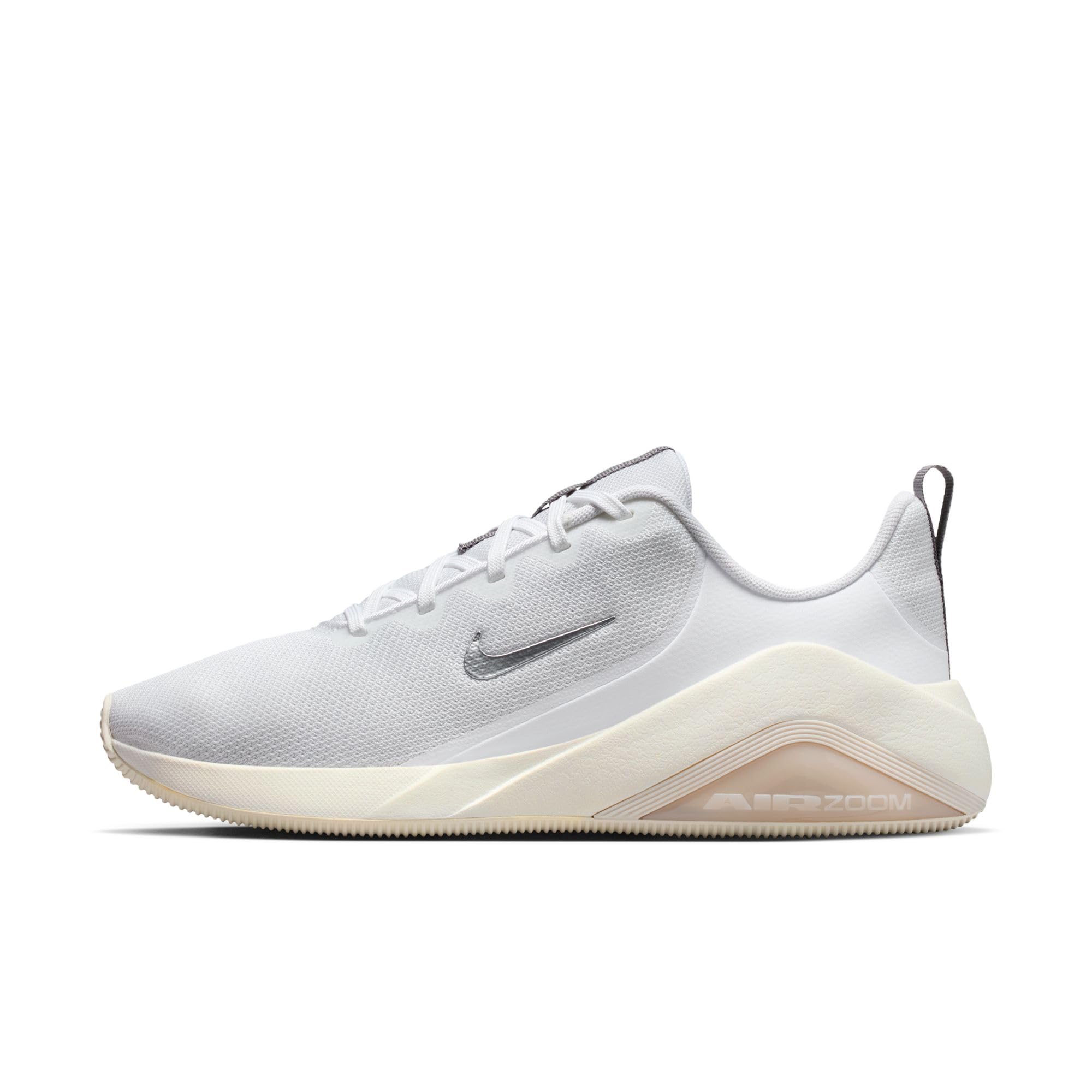
Think of the Bella 7 as the lighter half of our Nike pair. It's the shoe we take to a class that mixes light dumbbells with cardio, and it comes in lighter and less expensive than the Metcon. What it doesn't do is hold you steady under a heavy bar — that's the trade, and a fair one if your sessions are more movement than max load.

Comfort is where it wins. There's no break-in to speak of: no blisters, no pressure points, nothing that needs a week of short wear before a real session. The arch support is a genuine surprise for a shoe this light, and it's what makes the standing-around parts of a gym visit — the queue for a rack, the walk to the car — easy on your feet.

Fit is the risk. The length runs true for most people, but the shoe is narrow and snug across the top of the foot, and a wide forefoot will feel it before the first class is over. If you're between sizes and narrow-footed, take the larger one; if you're wide, skip this one and look at the 608 V5.

Bottom Line

Buy the Bella 7 if your training is classes and circuits rather than heavy lifting — it's the light, comfortable pair we keep going back to.

Check Latest Price

How We Tested 12 Pairs of Cross Training Shoes Over Six Months

I started by pulling together a shortlist of 12 pairs from brands our team already trusted, plus a few newer styles that kept popping up in reviews. We filtered by price, available sizes, and whether the shoe was actually designed for cross training rather than just running or lifting. Then I rotated them through my own schedule: three strength sessions a week, two HIIT classes, and the occasional weekend hike or errand run.

On the gym floor, I paid attention to how each pair handled squats, deadlifts, and lunges — whether the heel felt stable or squishy under load, and whether the toe box let my toes spread out. For lateral work, I did side shuffles and skater jumps, noting any slipping inside the shoe or rolling at the ankle. I checked stiffness by bending each shoe in half and seeing how it felt during split squats, and I tested cushioning by landing from box jumps and paying attention to my knees and lower back. I also wore them for full sessions and then ran errands afterward to see if any hot spots developed.

Over the six months, I checked durability by inspecting the outsole after rope climbs, looking for fraying at the flex point, and squeezing the midsole to see if it had packed out. I inspected stitching and upper materials for quality, wore each pair with everyday leggings to see how they looked, and tracked whether the colorways held up in daylight. Testers with flat, neutral, and high arches tried each pair to report on arch support and overall foot support — not just whether the shoe felt soft, but whether it actually held the foot in place. And I compared price against how each pair wore over time to judge value.

How to Choose

Match the Shoe to the Sessions You Actually Do

Two women can both call it cross training and need opposite shoes. If your week is built around squats, deadlifts, split work and loaded carries, you want a firm, flat platform that keeps your midfoot from rolling; cushioning is what you give up to get it. If your week is classes — light dumbbells, bodyweight circuits, cardio — a lighter, softer trainer keeps you comfortable for the full hour.

Be honest about the split, because most of us do more class work than lifting and buy for the opposite. The Nike Metcon 6 sits at the stability end of this guide and the Nike Bella 7 at the lighter end, which is why both are here.

Understand the Stiffness Trade-Off

Stiffness is the compromise nobody warns you about. A sole that resists flexing keeps you steady under load and fights you in cardio — bend the shoe at the ball of the foot before you commit and you'll feel which side of that line it sits on. You want some give there for jumping and sprinting, and very little give through the middle of the shoe for lifting.

The New Balance 608 V5 sits at the stiff end; the Bella 7 sits at the flexible end. Neither is wrong, but buying the wrong end for your training is the mistake.

Get the Sizing Scale and Width Right

Two fit traps catch women buying gym shoes. The first is the sizing scale: several training models are sold unisex on a men's scale, so a women's 8 is roughly a men's 6.5 — order the converted number, not your usual one. The second is width. Women's training shoes often run narrow through the forefoot and snug across the top of the foot.

If you have a wide forefoot or a high instep, start with a shoe built on a roomy last, like the 608 V5, rather than sizing up in a narrow one. Extra length won't fix a tight forefoot.

Decide What You're Paying For

Spending more buys a better midsole and a more durable outsole, but the gap isn't uniform across this set. The least expensive pair here has the roomiest fit and the stiffest sole; the most expensive has the firmest platform and the least cushioning. Neither is better in the abstract — they're built for different sessions.

Pick the construction that matches your training and accept what it costs, rather than buying the middle of the range and hoping. Run a thumb along the outsole edge where it meets the upper; that's where separation tends to start.

Frequently Asked Questions

Final Verdict

The Nike Metcon 6 is the pair we buy for a week that mixes barbell work with conditioning: it stays planted when you load it and stays comfortable when you don't. If your training is mostly classes and circuits, the Bella 7 gives you that comfort with less weight and less money, and you give up stability under a heavy bar to get it.

The New Balance 608 V5 is the wide-foot, long-shift choice — roomy, supportive and inexpensive — and we keep it out of the HIIT room.