Strength & Weights

Best Ceiling Mounted Pull Up Bars of 2026

The appeal of a ceiling-mounted pull-up bar is simple: it gets the bar out of your doorway and off your floor, so you can walk through a room without ducking. The worry is just as simple. Will it hold when you're at the top of a rep, and will installing it turn a weekend into a drywall repair project? I've hung bars in a garage with exposed joists and a basement with a finished ceiling, and the difference between a solid mount and a sketchy one comes down to hardware, alignment, and how honestly you read your ceiling.

Over eight months, my team and I put 10 ceiling-mounted pull-up bars through the same routine: measuring joist spacing, drilling pilot holes, and doing pull-ups, hangs, and slow negatives on each one. The best models felt worth the money and disappeared into the ceiling—no flex, no creaking, no wobble—and the worst made me double-check every bolt before each set. A quick piece of advice: ceiling height and joist direction matter more than the bar's finish, so find the joists before you buy anything. The picks below are organized by the installs they suit best.

Best For Grip training

Our Score 9.6/10
SELEWARE Heavy Duty Ceiling Mount Bar

SELEWARE

SELEWARE Heavy Duty Ceiling Mount Bar

  • Grip Positions Five, incl. ball grip
  • Drop Adjustment Four heights
  • Weight Capacity 400 lb
  • Joist Compatibility 12" and 24" studs
Check Price on Amazon

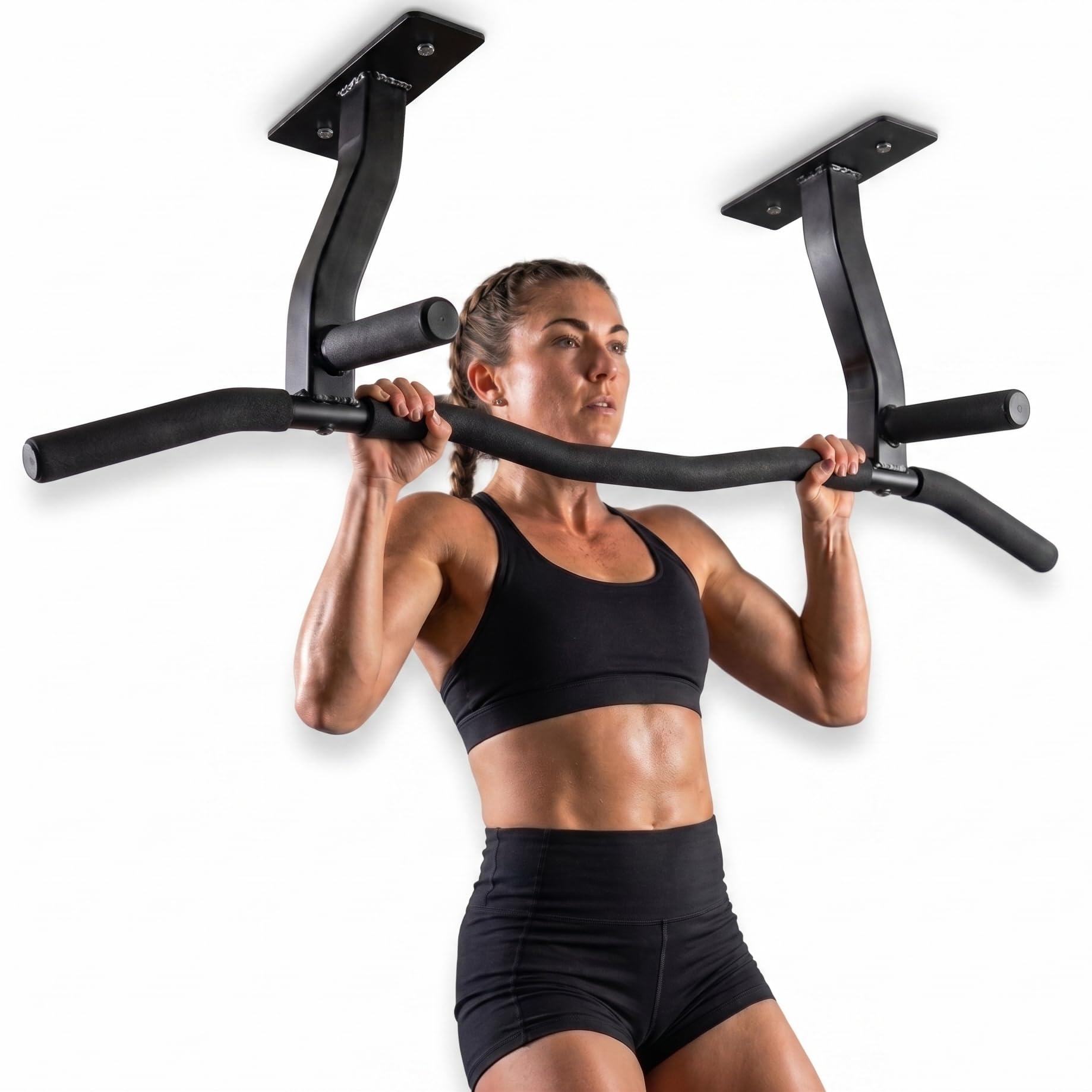
The pair of ball-shaped ends is what sets the SELEWARE apart. They turn the bar into a grip-strength station — hang from a couple of fingers, work a pinch — and they cap a frame with five positions in total, from wide to close to neutral.

The rest is solid in a plain way: welded steel with an electrophoretic coating that should hold up better than paint in a damp basement, a 400-pound rating, and mounting bases wide enough to catch studs at 12 or 24 inches.

Four height settings let you change the drop without drilling new holes. The handles are unknurled, though, and a roll of grip tape is the first thing to add if your hands sweat. For grip training and a household of mixed heights, it's the most interesting bar here; for pure pull-up volume, we prefer the top pick.

Bottom Line

The grip-training pick: ball ends, five hand positions, and a 400-pound frame with a coating meant for damp basements.

Check Latest Price

Best for High Ceilings

Our Score 9.4/10
Stud Bar Pull-Up Bar

Stud

Stud Bar Pull-Up Bar

  • Bar Width 48"
  • Mount Type Ceiling or wall
  • Weight Capacity 600 lb
  • Ceiling-To-Bar Drop 14" or 22"
Check Price on Amazon

A 48-inch welded bar with a 22-inch drop option for 9- and 10-foot ceilings.

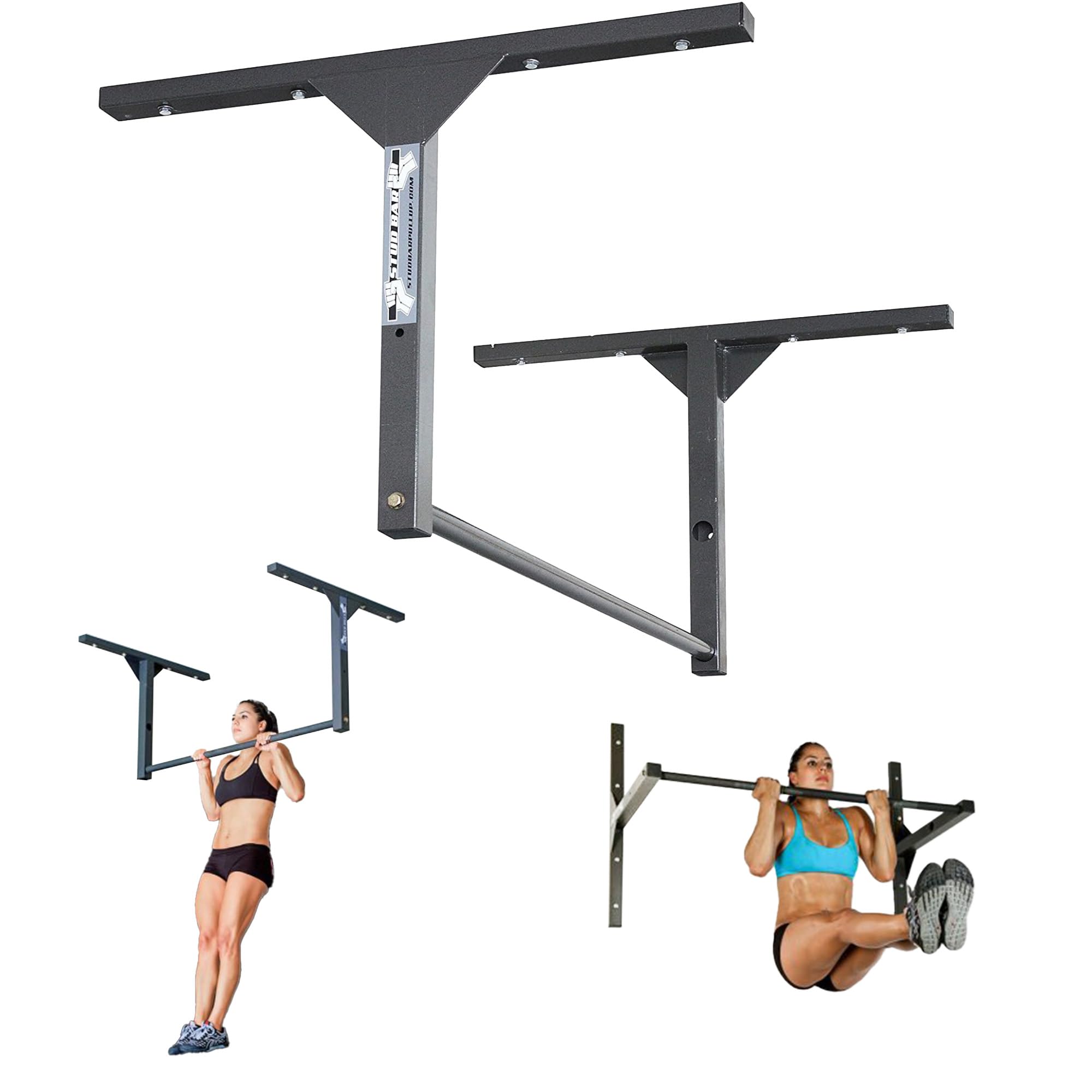
The Stud Bar sits at the top of the price range here, and you can see where the money went before you hang it: a 48-inch crossbar, 14-gauge welded steel with gusseted corners, a 600-pound rating, and a 27.8-pound frame that doesn't flex when you pull from the ends.

That width is the real argument. Forty-eight inches lets you take a genuinely wide grip and hang rings or straps alongside, and the 1.25-inch bar with its hammertone powder coat gives your hands texture to hold. Choosing between the 14- and 22-inch drop also makes this one of the few bars here that works under a 9- or 10-foot ceiling, where the shallower setting would put the crossbar above your reach.

For a garage gym where the bar stays up and gets used hard, this is the one we keep coming back to. Plan the install around its weight: 27.8 pounds overhead wants a second person, and the lag bolts need pilot holes drilled to full depth before you drive them, or a head snaps and the afternoon goes with it.

Bottom Line

For a high-ceiling garage gym and lifters who want a wide, rigid bar: 48 inches of welded steel with a 600-pound rating.

Check Latest Price

Best Overall

Our Score 9.2/10
Ultimate Body Press Ceiling Mount Bar

Ultimate Body

Ultimate Body Press Ceiling Mount Bar

  • Bar Width 42"
  • Weight Capacity 300 lb
  • Ceiling-To-Bar Drop 14"
  • Joist Compatibility 16" or 24" joists
Check Price on Amazon

Reversible risers fit 16- or 24-inch joists, and the 14-inch drop suits most garages.

Two measurements decide whether a ceiling bar works in your space: how far apart your joists sit and how far the bar hangs below them. Ultimate Body Press answers the first one better than anything else here — its risers flip to mount under 16-inch floor joists or 24-inch ceiling joists — and the 14-inch drop is a sensible middle ground for an 8- or 9-foot ceiling. That combination is why it's the bar we recommend to most people.

The 42-inch bar carries four grip positions, with angled grips that put your hands at a natural angle instead of locking them to a straight bar. The 300-pound rating is on the low end of this group, though that figure describes the steel rather than your ceiling, and the 10-year limited warranty runs longer than most here. A mounting template printed on heavy stock is a small thing that saves a large amount of swearing when you're marking holes above your head.

The fasteners are the one place we slow down before drilling. The bolts in the box don't always thread cleanly into the brackets, and a bar that won't tighten is a bar coming back down. Buy graded lag screws in the same size and set the included ones aside; it's the cheapest insurance on the whole project.

Bottom Line

Our default for most ceilings: the reversible risers fit 16- or 24-inch joists, and the 14-inch drop lands right for a typical garage or basement.

Check Latest Price

Most Grip Options

Our Score 9.2/10
Gronk Fitness Ceiling Mount Multi-Grip Bar

Gronk Fitness

Gronk Fitness Ceiling Mount Multi-Grip Bar

  • Frame Reversible for height
  • Mounting Span 48"
  • Grip Positions Angled multi-grip
  • Weight Capacity 800 lb
Check Price on Amazon

Angled, neutral, and wide grips on an 800-pound frame with a lifetime warranty.

Gronk builds its bar around grip variety. The frame steps through wide, neutral, and angled positions on a monkey-bar layout, so you can move from a wide pull-up to a hammer grip without changing equipment, and the 48-inch span between the mounting holes lines up with standard joist spacing.

It also carries the highest capacity here — 800 pounds on a 29-pound steel frame — with a lifetime warranty for residential use. Whether you need that much headroom is a fair question; what matters is that the capacity comes with a frame stiff enough that the ends don't flex when you pull hard.

Fitting it takes planning. The anchor spacing is worth measuring against your own joists rather than trusting the stated 48 inches, since a bracket half an inch off a joist is a bracket you're re-drilling.

If you train pull-ups seriously and want the grip menu of a gym rig in a garage, we think the Gronk earns its premium over the top pick. If you mostly do straight chin-up sets, it doesn't. One detail: the powder coat is smooth rather than knurled, so a strip of athletic tape on the straight sections is worth the minute it takes.

Bottom Line

The widest grip menu here and the highest capacity: a pick for lifters who want a garage rig rather than a single straight bar.

Check Latest Price

Best Adjustable Height

Our Score 9.2/10
Kipika 48-Inch Ceiling Mounted Bar

Kipika

Kipika 48-Inch Ceiling Mounted Bar

  • Bar Width 48"
  • Grip Styles Five
  • Weight Capacity 300 lb
  • Ceiling-To-Bar Drop 18" to 26"
Check Price on Amazon

Five drop positions from 18 to 26 inches put the bar within comfortable reach.

Most ceiling bars put the crossbar exactly where your ceiling says it goes. Kipika gives you five positions between an 18- and 26-inch drop, which is the difference between a bar you reach comfortably and one you jump for — the sort of thing that decides a basement install.

Five grip styles, a 48-inch bar, and four mounting holes in each foot make it the most adjustable bar here, and the welds and powder coat look the part. We like that the drop is set on the support arms before the frame goes up, so you aren't fighting an adjustment once it's carrying weight.

At 27 pounds it's a two-person lift, and the drop you pick should be locked in before the lag screws go in — changing your mind later means unloading the brackets. Mounting hardware for both wood and concrete comes in the box.

Bottom Line

The pick when your ceiling height is awkward: five drop positions from 18 to 26 inches let you put the bar where you can reach it.

Check Latest Price

Best For Starter setups

Our Score 9.2/10
Shnlie Joist Mounted Pull Up Bar

Shnlie

Shnlie Joist Mounted Pull Up Bar

  • Bar Width 42"
  • Grip Padding Six foam pads
  • Weight Capacity 440 lb
  • Ceiling-To-Bar Drop 13"
Check Price on Amazon

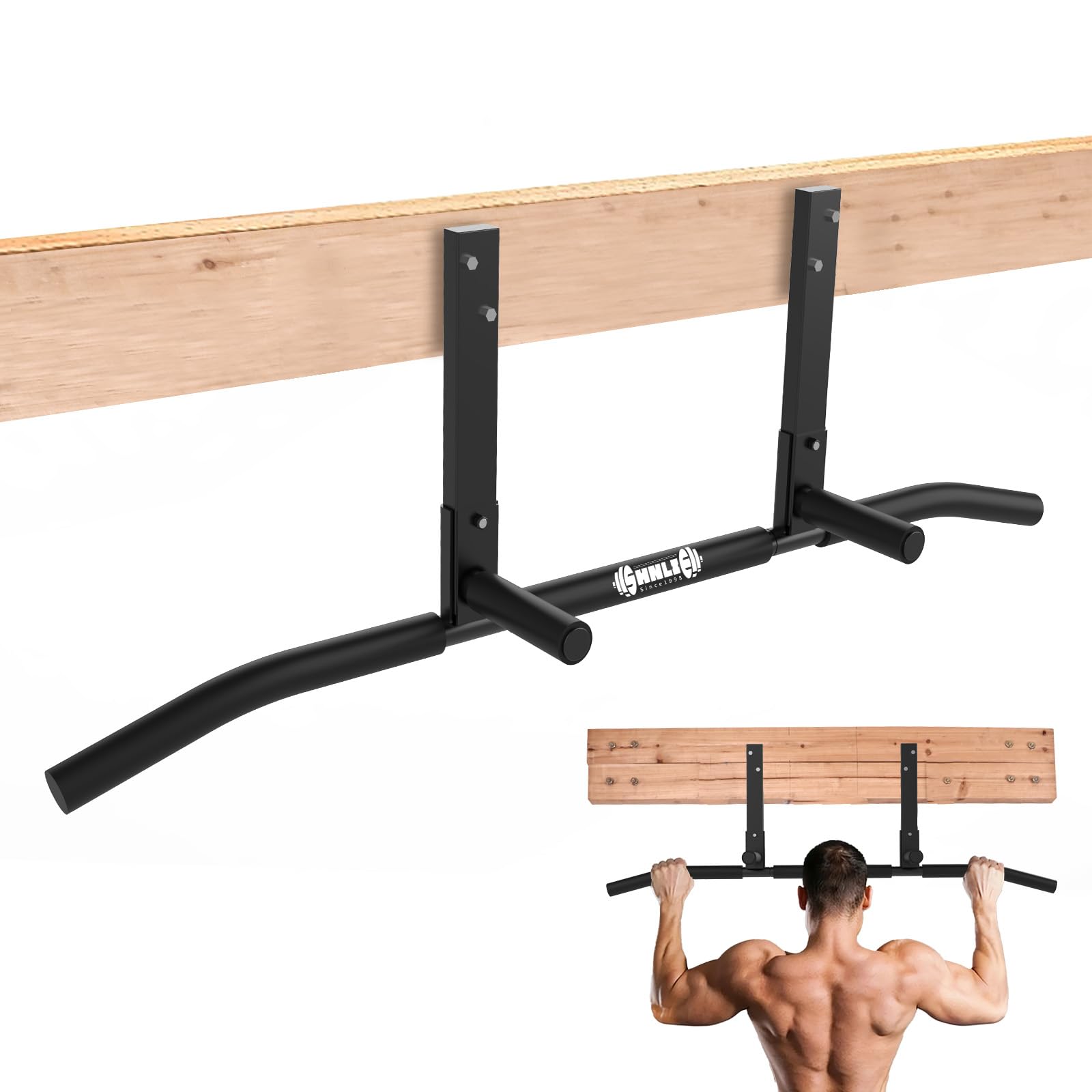
Shnlie makes the case for spending less: a 42-inch bar, a 440-pound rating, and six foam pads covering every grip position, on a frame that mounts straight to a beam. Nothing here is fancy, and for a first home setup nothing needs to be.

The frame is on the light side. Fastened into a solid joist it does the job; fastened to anything less, no rating on the box will save you, so find the beam before you find the drill. The six pads are the part we didn't expect to care about — comfortable bare-handed, which is more than the bare-steel bars here can claim.

Bottom Line

A cheap way onto the ceiling: 42 inches of bar, a 440-pound rating, and six padded grip positions for a starter setup.

Check Latest Price

Best For Low ceilings

Our Score 9.2/10
AmStaff Fitness Joist Mount Pull Up Bar

AmStaff Fitness

AmStaff Fitness Joist Mount Pull Up Bar

  • Bar Width 42"
  • Grip Diameter 1 1/4" padded
  • Weight Capacity 400 lb
  • Ceiling-To-Bar Drop 12"
Check Price on Amazon

Twelve inches is the shortest drop in this group, which keeps AmStaff's crossbar up close to the joists. On a low basement ceiling that's what you want: a deeper-hanging bar would leave you folded up to keep your feet off the floor.

The bar itself is 42 inches wide with a padded 1.25-inch diameter and 5-inch parallel grips — long enough to change hand position, and wide enough to reach across the shoulders. The supports are 1-inch by 1.75-inch steel, and the crossbar joins in the middle, which is the one place to watch alignment as you tighten.

Mounting into exposed joists is straightforward, and at 400 pounds the rating sits mid-pack here — plenty for a household bar without pretending to be a commercial rig.

Where it lands: a comfortable, compact bar without a headline number. It won't win a spec-sheet argument against the 48-inch frames here, but for a low-ceilinged room and a lifter who wants padding overhead, it's a sensible choice.

Bottom Line

For a low ceiling: 12-inch supports tuck the bar up near the joists, with a padded 42-inch bar and 400-pound steel.

Check Latest Price

Best Budget

Our Score 9.0/10
Fitarc Joist Mount Pull Up Bar

Fitarc

Fitarc Joist Mount Pull Up Bar

  • Grip Thickened foam
  • Bar Width 42.5"
  • Weight Capacity 440 lb
  • Ceiling-To-Bar Drop 12.9"
Check Price on Amazon

A wide 42.5-inch bar with a 440-pound rating, lag screws, and a budget price.

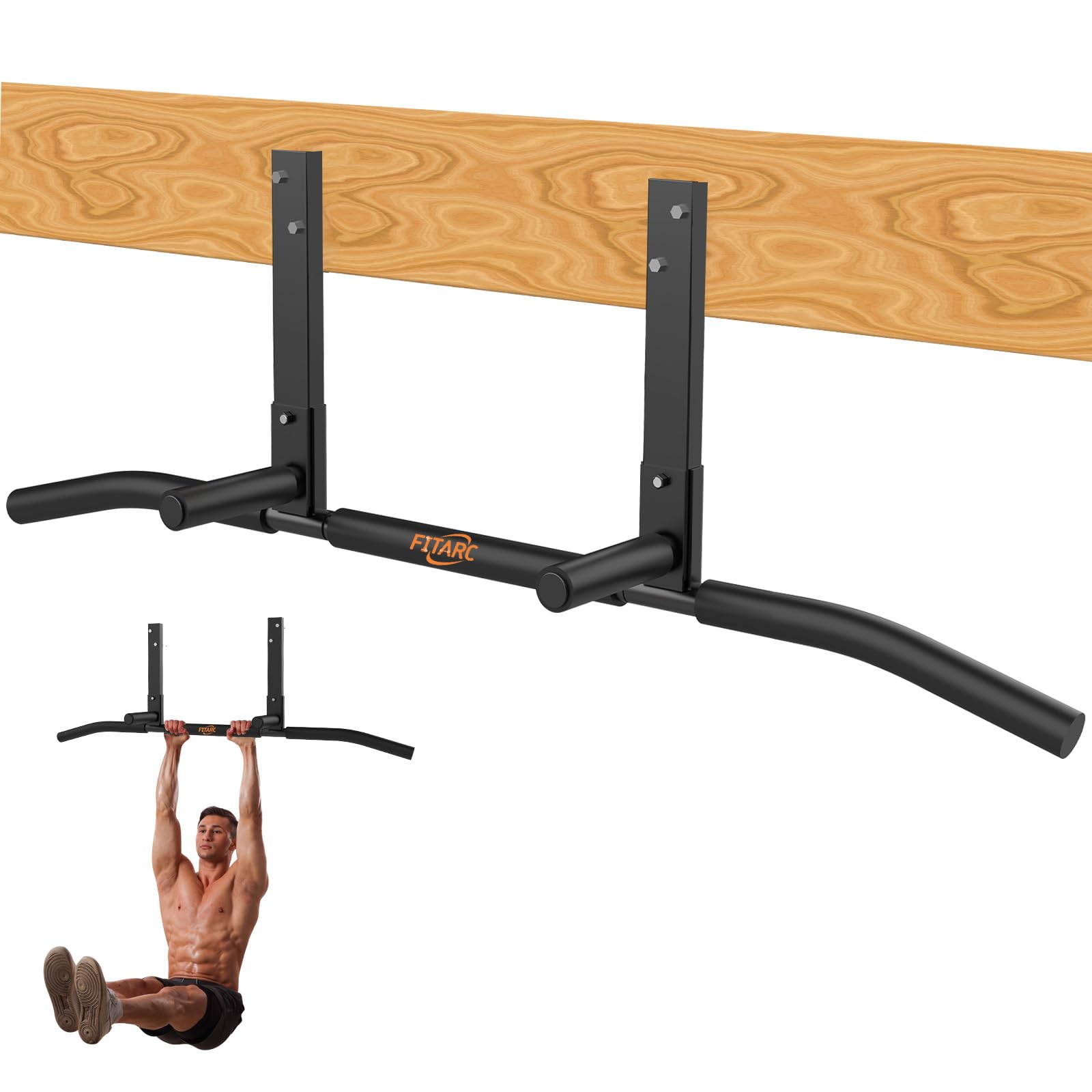
The budget pick of this group doesn't read like a compromise on paper: a 42.5-inch bar, a 440-pound rating that beats our top pick's, four padded grip positions, and lag screws included in the kit.

Where the saving shows is the finish. The welds are plain, the padding is foam that will flatten with use, and the powder coat marks when a wrench slips — the small stuff we expect a budget bar to skip. None of that changes the way it hangs. Bolted into a sound joist with good lag screws, it gives you a stable bar for not much money, and 440 pounds of rating is more than most households will ever ask of it.

Fitarc sizes this one for 8- to 9-foot beams, which covers most garages, and the 12.9-inch drop leaves your feet clear of the floor without putting the bar out of reach. In a room with a 10-foot ceiling you'll be jumping for it.

Bottom Line

The value pick: a wide 42.5-inch bar, a 440-pound rating, and lag screws in the box, for a budget-gym price.

Check Latest Price

How We Tested Ceiling-Mounted Pull-Up Bars

We started with a shortlist of bars that included mounting hardware, published weight ratings, and steel—not plastic—brackets. From there, we filtered by ceiling type, joist spacing, and whether the bar could be adjusted after installation. The final group was 10 bars, tested over eight months in a garage with exposed joists, a basement with a finished ceiling, and a spare room where the joists ran the wrong way for an easy install.

Installation was the first real test. We used a stud finder and a level on every ceiling, drilled pilot holes, and timed assembly from opening the box to the first hang. We noted whether the hardware bag matched the instructions, whether the lag bolts felt substantial or stripped, and whether the brackets lined up without forcing. Once mounted, I did dead hangs, pull-ups, and slow negatives, then checked every bolt for loosening. Bars that creaked or shifted got a second look—and sometimes a second set of anchors.

We also looked at build quality and durability: weld appearance, steel thickness at the mounting plate, powder coat chipping after repeated adjustments, and whether the bar spun or stayed fixed. For adjustable models, we changed width or height between sessions to see if the locking pins stayed tight. Finally, we compared what came in the box against the cost of buying better hardware separately—some bars needed upgraded bolts before I trusted them overhead. The bars that scored best were the ones that felt solid on day one and still felt solid after eight months.

How to Choose

Start With Your Joist Spacing

The bar hangs from your ceiling, but it holds because of two joists, so measure before you shop. Most homes run joists 16 inches on center; garages and older basements often use 24. Measure center to center across two joists, then compare that with the bar's mounting span — a 42- to 48-inch frame normally reaches across two joists, and the brackets have to land on wood rather than drywall.

The trap is assuming a ceiling-mount label means your ceiling. A bar drilled for 16-inch spacing won't line up on 24-inch joists without risers that flip or a wider base. If your spacing is 24 inches, buy a bar that states it: the Ultimate Body Press risers handle both, and the SELEWARE base covers 12 and 24 inches.

Match the Drop to Your Ceiling Height

The drop is the distance from ceiling to bar, and it decides two things: whether you can reach the bar and how much room your head has at the top of a rep. A shallow drop keeps the bar near the joists, which suits an 8-foot garage; a deep bar buys headroom but needs a taller ceiling and puts the crossbar lower, which is the reason the Kipika adjusts from 18 to 26 inches.

Fixed bars are simpler and stiffer, and for a single-height household that's usually enough. Where two people of very different heights share the bar, the four settings on the SELEWARE or the five on the Kipika save a step stool. Whichever you choose, set the drop before you drill — changing it later means taking the frame down.

Grip Positions, Bar Width, and Diameter

Width separates a bar you train on from a bar you hang from. Forty-two inches covers standard and close grips; 48 inches adds a genuine wide grip and room for rings or straps, which is the main argument for the Stud Bar and the Kipika. Then count grip positions: angled or parallel horns take strain off the wrists and let you train neutral.

Think about the surface too. Bare steel with knurling grips best and is hardest on your hands; padded foam is comfortable bare-handed and wears, especially in an unheated garage; a smooth powder coat looks good and turns slick, and a strip of athletic tape fixes that in a minute.

Weight Ratings and the Hardware That Holds You

Ratings across these bars run from 300 to 800 pounds, and they describe the steel, not the ceiling. A 300-pound bar lag-screwed into a sound joist is safer than an 800-pound bar bolted through drywall or a checked beam. Inspect the beam first, then read the rating.

The weak point in this category is fasteners, not frames. Included lag screws are often the cheapest part of the kit, and threads that don't engage cleanly leave a bracket that never pulls up tight. Buy graded lag screws in the same size, drill pilot holes to full depth, and the frame will do its job. Warranties are worth a glance as well: 10 years to lifetime on the better bars here.

Frequently Asked Questions

Final Verdict

Most people should start with the Ultimate Body Press. It covers both common joist spacings without adapters, hangs 14 inches down — right for an 8- or 9-foot garage — and backs a 300-pound frame with a 10-year warranty. That combination is why it's our top pick.

Two honest alternatives. If the budget decides, the Fitarc gives you a wider bar and a higher rating for a lot less money, and you give up finish and durable grips rather than function. If your ceiling runs 9 or 10 feet, the Stud Bar's 22-inch drop and 48-inch crossbar are worth the premium.